To help us provide you with free impartial advice, we may earn a commission if you buy through links on our site. Learn more

- Much improved Bluetooth range
- Far better precision find range
- Same design as before
- A little pricey
- Battery life has not improved
Apple’s AirTags (2nd) are simple devices that can help you locate lost or stolen items, and they work superbly well. You can use them to help you keep tabs on your keys at home, or secrete them around your valuable items, or luggage to help you track them down if they’re stolen or lost.
This new version doesn’t change much, but Apple has upgraded the internal electronics so that the range at which Bluetooth connection and UltraWideBand detection kicks in are both longer (up to 1.5x for the latter), and a 50% louder chime, all designed to make it easier than ever to find your stuff.

What do you get for the money?
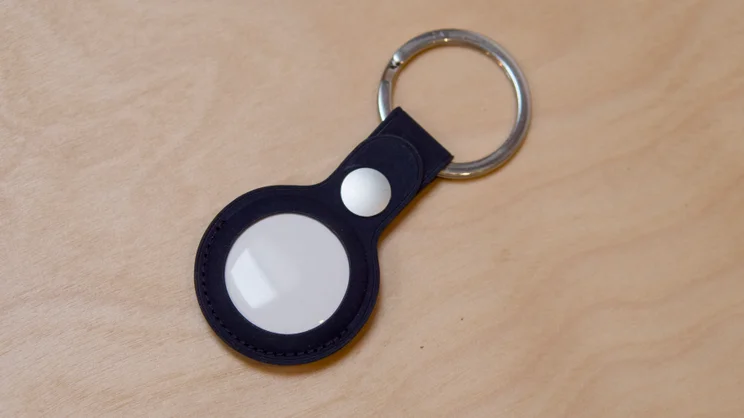
One AirTag costs £29 and a pack of four is £99. You’ll need to purchase a key fob or other mounting hardware to use them effectively as none are provided with the tags, but if you avoid the Apple-branded items, you don’t need to spend a huge amount of money.
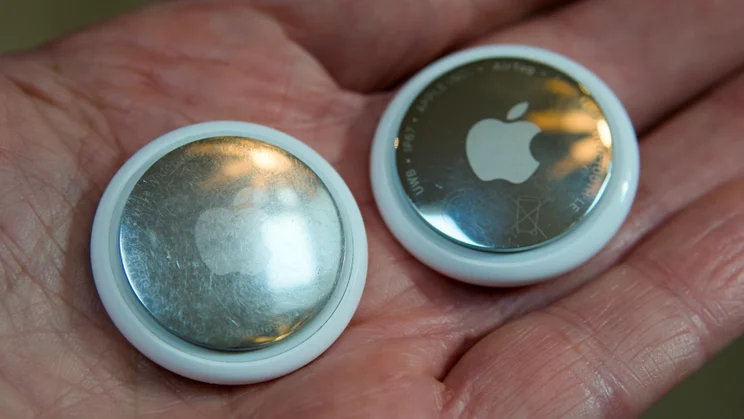
And since there’s no change in shape or dimensions of the 2nd gen tags – they’re the same 31.8mm-diameter, 8mm-thick rounded discs – all the existing accessories you can already buy for the older tags will fit the newer ones.
A quick hunt around on Amazon, revealed that there are multiple third party vendors selling multi-packs of AirTag keyfobs for less than a tenner, and adhesive AirTag holders for not much more.
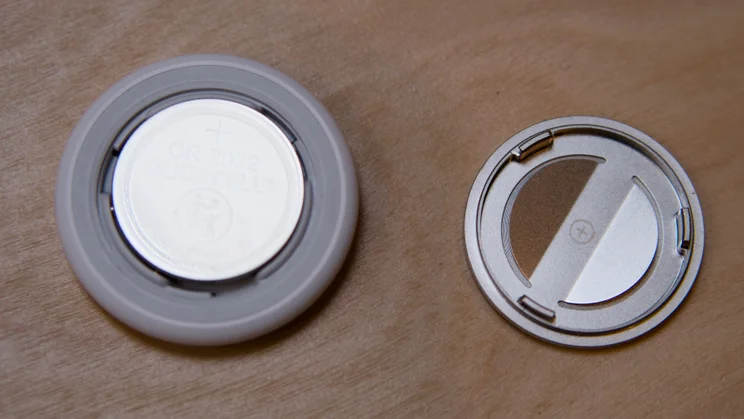
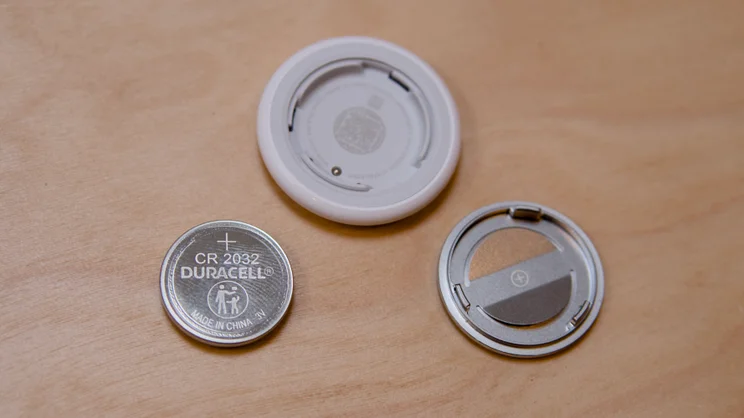
Each AirTag remains IP67 rated against dust and water ingress, so no need to worry about it getting wet – it will survive immersion in 1m of water for up to 30 minutes according to Apple. And, just like the original, it’s powered by a single CR2032 coin cell battery. The only differences, in fact, are to the aforementioned connection range and audio chime.
What did we like about it?
AirTags work brilliantly; we know this already. Because so many people have iPhones, you’ll be able to track lost or stolen belongings in most places, and in more densely populated areas it’s possible to nail down that location quickly and accurately.
They work even better for the humdrum task of locating misplaced items around your house, too. Turn on Find while walking from room to room and you’ll be tracking down the car keys in no time, complete with an arrow pointing you precisely in the right direction when you get closer. And, if you pop a tag in your bag, you’ll be notified if you leave it behind.
The second generation AirTag changes nothing about the way all this works, so how big a difference do the changes actually make? I tested range first, by placing both a 1st gen tag and a 2nd gen tag at the back of my house and then walking out the front door and across the street so I would be completely out of Bluetooth range. I then launched the FindMy app, selected the AirTag and tapped Find, then walked slowly towards it until my phone picked up a strong enough signal to report how far away it was, noted that distance in a spreadsheet, then kept walking until precision finding kicked in via the UltraWideBand chip. I repeated this for each tag five times and averaged the distance measurements in each case.
I saw more than a doubling of both the initial detection range and the precision find range, which you can see in the table below. Do be aware, though, these measurements weren’t taken in lab conditions – I saw quite a bit of variation from test to test – and your experience may vary:
However, the trend is clear, and my results suggest that Apple’s claims as to range are pretty conservative. It means that it should be even easier and quicker to locate your tagged items around the house, and it means that passers by with iPhones are also more likely to ping the location of lost items to the FindMy network as they come into range. It’s a win, win, win, win, win.
As for the new ‘louder’ audio tone the new AirTag emits, that’s not quite as impressive. It plays at a slightly higher pitch than the old one, sitting at around 3.1kHz compared to 2.8kHz for the older AirTag, and first impressions were that it was slightly louder but not 50% louder, as Apple claims. However, when recording the audio with the microphone on a MacBook Air positioned a metre away, the tone appeared to be quieter, comparatively, than that produced by the original.
I decided to verify this by placing a cushion on top of the tags and moving steadily away from them, playing the Find tone from each until I couldn’t hear it any more. In each instance, I found the older tag slightly easier to hear, although, to be honest, there wasn’t an awful lot in it; and as long as you’re in the same room or close by, you’ll be able to hear the chime from the new tag and locate whatever it’s attached to pretty easily.
What didn’t we like about it?
There are a couple of other frustrations with Apple’s AirTags, the first of which is price. At £30 each, or £100 for four, they are quite expensive compared with rivals. You can pick up a pack of four Chippolo One Spot trackers, for instance, for £44.90. They’re a generation old, yes, but a good deal cheaper than AirTags will ever be.
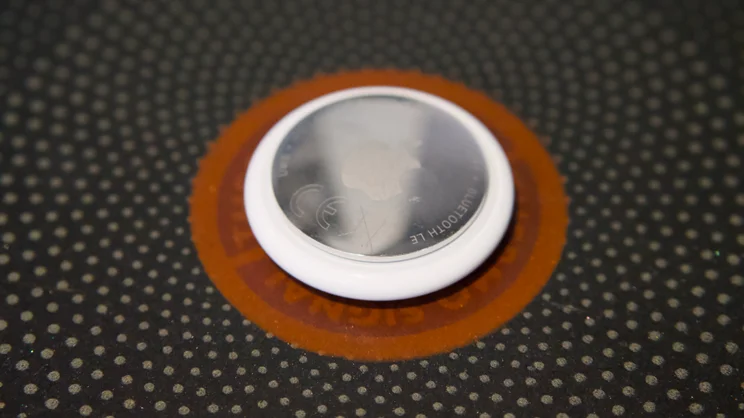
I’m not convinced by the physical design of Apple’s AirTags, either. The curved surfaces on the top and bottom might make them look nice but it also makes them trickier to stick neatly to flat surfaces. You’ll almost certainly need to spend extra money on dedicated mounts as a result.
Finally, the “more than a year” rating for the battery life hasn’t improved – it’s a pain having to run around replacing the CR2032 cells in all your tags every 12 months – although, in mitigation, the FindMy app will alert you when they are running low.
Should you buy the Apple AirTag (2nd Gen)?
None of these minor gripes, however, should put you off buying one, or more, of Apple’s 2nd gen AirTags. They work brilliantly and I can’t count the number of times they’ve saved me time hunting around the house looking for my keys over the years.
And even though they are a little pricey, once you’ve used them in anger a handful of times, you’ll not regret spending the money. With greater range than before and the same neat design, the AirTags (2nd gen) come warmly recommended.