To help us provide you with free impartial advice, we may earn a commission if you buy through links on our site. Learn more
- Fantastic pressure relief
- Good temperature regulation
- Relieves aches and pains
- Perhaps not enough support for heavier bodies
I’ve reviewed plenty of premium mattresses recently, but the DreamCloud Hybrid is a bit of a bargain, coming in at just under £500 for a double. Not only is it one of the best mattresses you can buy at this price, but it can also hold its own against other more costly offerings.
I was highly impressed with the DreamCloud Hybrid’s lumbar support, which is something I’m particularly fussy about. While it’s a fair bit firmer than the brand suggests, this mattress is a great all-rounder that should suit most people.
DreamCloud Hybrid mattress: What you need to know
Design
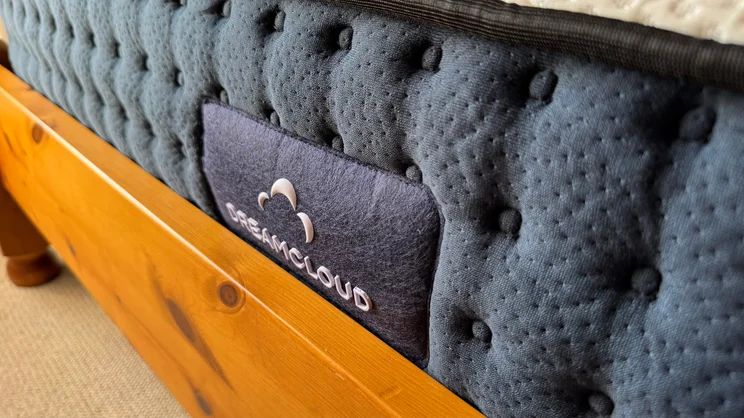
Like many hybrid mattresses, the DreamCloud Hybrid is made from a combination of foam and springs. It’s 25cm deep and comes available in four sizes, from single to super king.
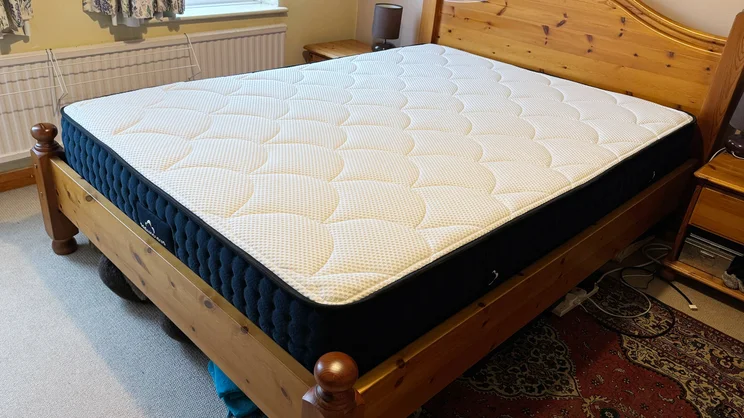
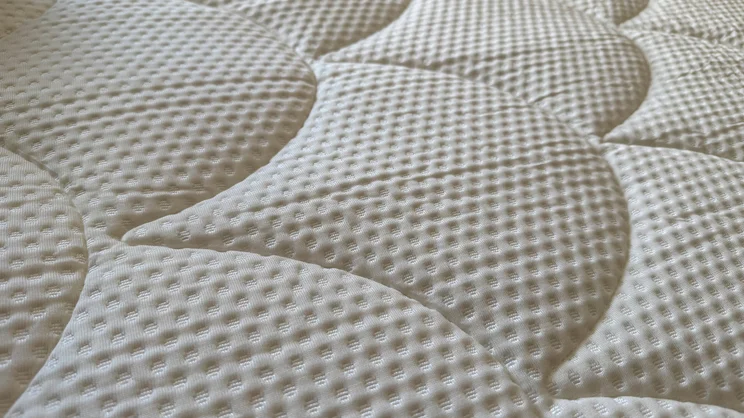
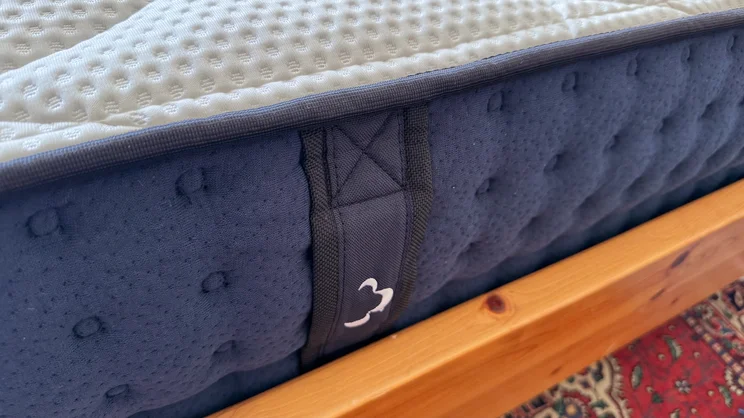
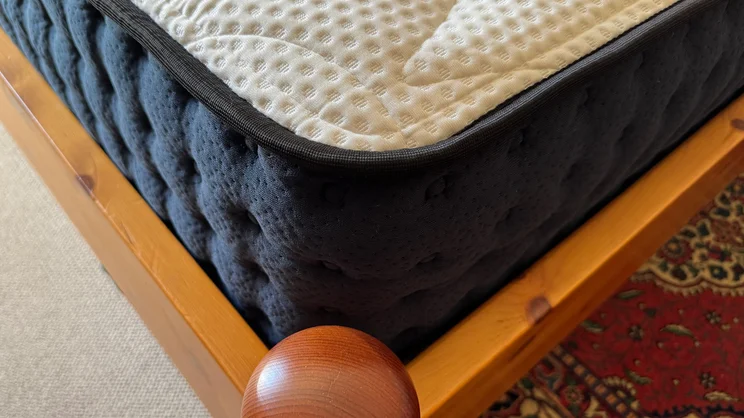
The Hybrid has a particularly luxurious cover that makes it look far more expensive than it is. This is made from a combination of quilted polyester and rayon, with neat piping round the edge and a slightly plush feel. Below this are two layers of memory foam, designed to contour to the body, provide pressure relief and promote spinal alignment while remaining breathable. This is followed by a layer of 15cm pocket springs – designed for support and to help minimise motion transfer – which are reinforced around the edges. Finally, a non-slip base keeps the mattress in place on your bed.
According to DreamCloud, the materials used in its mattresses are CertiPUR and OEKO-TEX certified, meaning they’re free from heavy metals, harmful dyes and ozone depleters.
Price and competition
The DreamCloud Hybrid starts at £349 for a single, rising to £499 for a double, £599 for a king and £699 for a super king; this is incredibly reasonable compared to some of the more premium bed-in-a-box brands we’ve reviewed, such as the Simba Hybrid (at £899 for a double) and the Panda Hybrid Bamboo mattress (£799).
Price wise, the DreamCloud Hybrid might be compared to the Emma Original mattress (also £499 in a double), as well as the Zoma Hybrid (£599) and the Happy Beds Annabel (£519). DreamCloud’s own Luxury Hybrid mattress, which we reviewed back in 2024, will also cost you £599 in a double.
Back when online bed-in-a-box brands were still new and exciting, we became accustomed to seeing almost constant sales and discounts. But for some brands, this has become a less frequent phenomenon. DreamCloud seems to keep its prices consistently affordable throughout the year rather than dropping them during major sales periods. However, it’s still worth keeping an eye out during events such as Black Friday, when you might be able to score a free bedding bundle.
As with its sister company Nectar, DreamCloud offers a forever warranty as well as a generous 365-night trial: one of the longest offered in the mattress industry. If you decide the mattress isn’t for you during this time, you can return it (for free) for a full refund.
Delivery
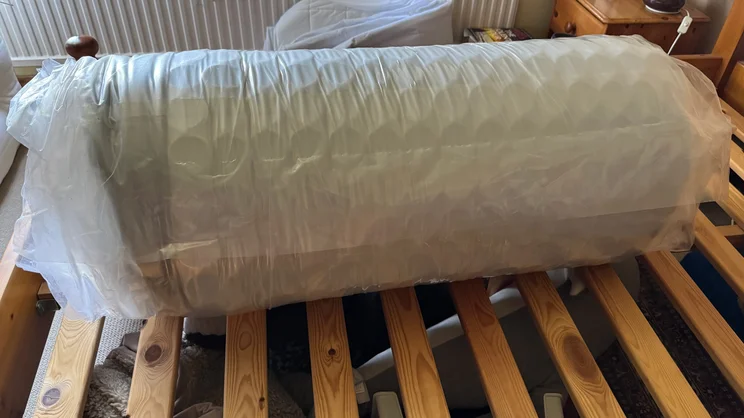
The DreamCloud Hybrid arrives rolled in a box, with standard shipping bringing it to your front door. You can upgrade to a two-man delivery service and room-of-choice delivery for £15 – which I’d strongly recommend paying if you’d rather avoid lugging a heavy box upstairs – and for an extra £60 you can have your old mattress removed .
Once unpackaged, I felt that the DreamCloud Hybrid took slightly longer to inflate than some other bed-in-a-box mattresses I’ve tested: it needed a full six hours before it could be slept on. Those with sensitive noses should also be aware that there was a noticeable off-gassing smell, although this faded after a couple of hours.
How I tested the DreamCloud Hybrid mattress
First and foremost, I test a mattress by sleeping on it, alongside my long-suffering husband. This allows us both to evaluate factors such as comfort and support, edge support, temperature regulation and motion isolation. I also determine value for money, by comparing the mattress’ price to those of its closest competitors.
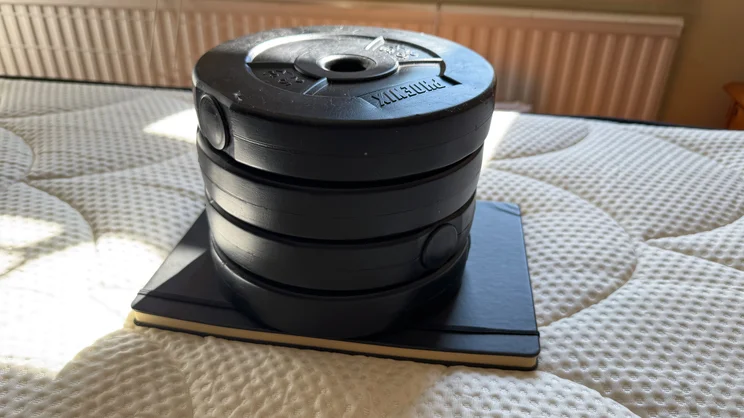
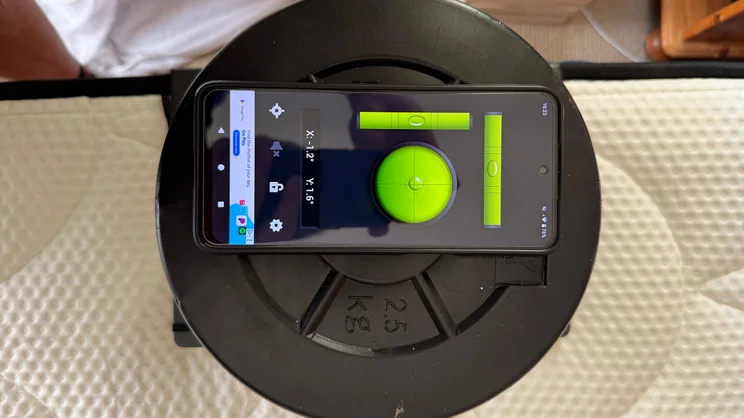
As anecdotal testing isn’t sufficient on its own, I also run standardised tests to obtain objective data that can be compared across all mattresses tested at Expert Reviews. I gradually place four 2.5kg weights on the bed, measuring the sinkage as I add more weight. I do this at shoulder height and at 3 inches from the edge of the bed to assess edge support. I also measure how much the total 10kg of weights causes the edge of the bed to tilt.
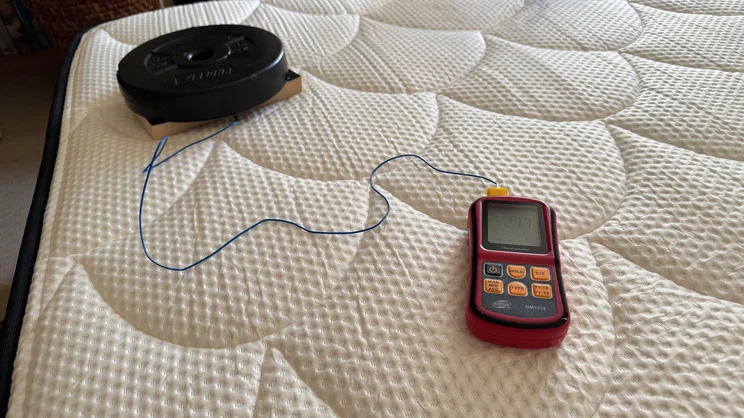
I carry out two tests with a digital thermometer – one for body heat and another using a heat pad – to see how much the mattress retains heat. For the former, I sit on the mattress with the thermocouple probe placed underneath me, until the thermometer reaches 30°C. After getting up, I then record the temperature decrease at one minute intervals for ten minutes. The heat pad test follows a similar process. After heating up the pad in boiling water, I place it on the surface of the mattress to heat it up. Once the temperature has stabilised and fallen to 50°C, I remove the heat pad and, again, record the temperature at one minute intervals for ten minutes.
Comfort and performance
Our standardised tests
With 10kg of weights on the surface of the mattress, I measured a sinkage of 21mm at shoulder height, and 20mm at three inches from the edge. These results were quite similar to those of more expensive pocket sprung mattresses I’ve tested, such as The Odd Company Blenheim (28mm and 20mm respectively) and the Hypnos Inspired By Nature 05 (20mm and 30mm). Sinkage was also similar to the Panda Hybrid, which was tested with 7.5kg of weights and sank 19mm in the centre (compared to the 18mm I measured on the DreamCloud Hybrid).
I tested this mattress during what were perhaps the hottest weeks of the summer. And despite my best attempts to lower it, the room temperature was a rather staggering 29°C during my temperature tests.
My body temperature test saw the temperature of the mattress surface drop from 30°C to 27.3°C after three minutes, where it stayed for the full ten minutes. In my heat pad test, the temperature fell from 50°C to 28°C after three minutes and down to 27.1°C after ten minutes. These results don’t necessarily compete with some of the best cooling mattresses but I felt it was slightly unfair to judge the mattress just by these results in exceptionally hot weather. As with every mattress I test, the real results lie in how well it aided temperature regulation for my husband and I during the night.
Is it comfortable?
I was impressed by how comfortable the DreamCloud Hybrid was, although I found the brand’s firmness rating – a ‘medium’ level of five out of ten – quite at odds with the actual feel of the mattress. For context, I found the DreamCloud Luxury Hybrid to be quite a bit softer than the Hybrid, even though the brand rates this as firmer at a six out of ten.
I found the DreamCloud Hybrid to be medium-firm and, when I asked some friends of varying height and weight to try it out for themselves, everyone agreed with this verdict. With that said, the DreamCloud Hybrid is an excellent option for curbing back pain, and I noticed an improvement almost immediately after sleeping on it. It’s a great pick for back sleepers and, perhaps surprisingly considering its firmness, for side sleepers too.
The top layer of memory foam has plenty of cushioning comfort and provides pressure relief where it’s needed. I wouldn’t necessarily recommend the mattress to heavier sleepers though, as they may sink too far into these foam layers, causing their hips to fall out of alignment. This could also be a problem for some stomach sleepers, unless they’re considerably lightweight.
Temperature regulation
Despite not excelling in our temperature tests, my hot-sleeping husband found the DreamCloud very comfortable overnight and didn’t feel that it retained heat. The cover and foam layers feel breathable, while the sprung layer does a great job of keeping air circulating.
On the other end of the scale, I didn’t find the mattress unpleasantly cold considering my reptilian nature. I think that, for the vast majority of people, it will do a good job of keeping the temperature regulated throughout the night.
Motion isolation and edge support
In my experience, DreamCloud mattresses offer excellent edge support. And thanks to its reinforced perimeter, the Hybrid mattress is not different. You’ll be able to make use of every inch of the mattress when lying on it, and it’s supportive and stable when sitting on the edge.
As the amount of foam in the Hybrid is quite minimal compared to some mattresses, very light sleepers may notice a fraction of motion transfer. But this is negligible, and I was pleased with the motion isolation the mattress offered.
Verdict
The DreamCloud Hybrid is an excellent all-rounder that should suit all but the heaviest of sleepers. There’s enough cushioning for side sleepers to feel comfortable and enough support underneath for back sleepers and lighter weight stomach sleepers to keep the lumbar region supported and spine aligned. The mattress also has excellent edge support and didn’t leave us feeling too hot at night.
The look and feel of the mattress belies its affordable price tag. But at just under £500 for a double, this is a very reasonably priced mattress that more than holds its own over some more expensive options. It’s a bargain really.