To help us provide you with free impartial advice, we may earn a commission if you buy through links on our site. Learn more
- Premium materials
- Very reasonably priced
- Great lumbar support
- Firmer than advertised
- Pillowtop may sag over time
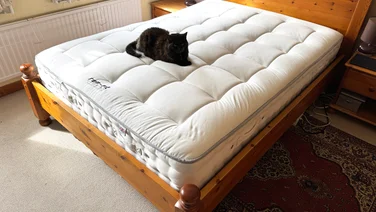
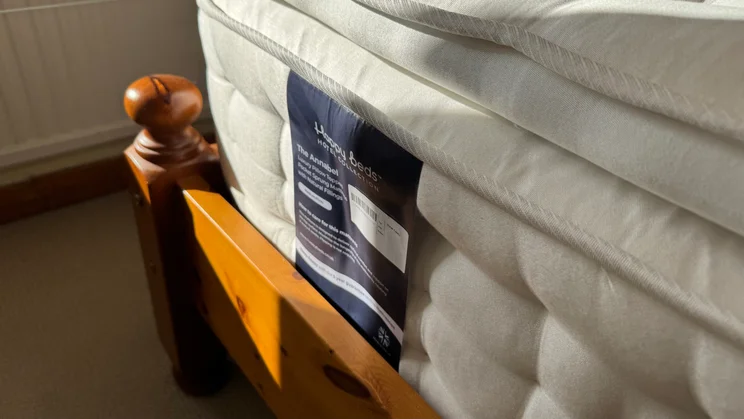
The Annabel is part of Happy Beds’ Insider Collection: a collection of eight mattresses that have been constructed from natural materials that are normally associated with luxury mattresses, but without the huge price tag. I’ll admit that I was a little sceptical when I first heard about this: you often get what you pay for, and quality materials usually come with a high price tag. Could the Annabel really compete with the best mattresses on sale?
The short answer is yes, and I was very pleasantly surprised by how well it performed – even if its “medium firm” label is a bit misleading. At £659 for a double, it’s incredibly well priced too. Read on to find out more…
Happy Beds The Annabel 2000 Pocket Spring Natural Pillowtop mattress: What you need to know
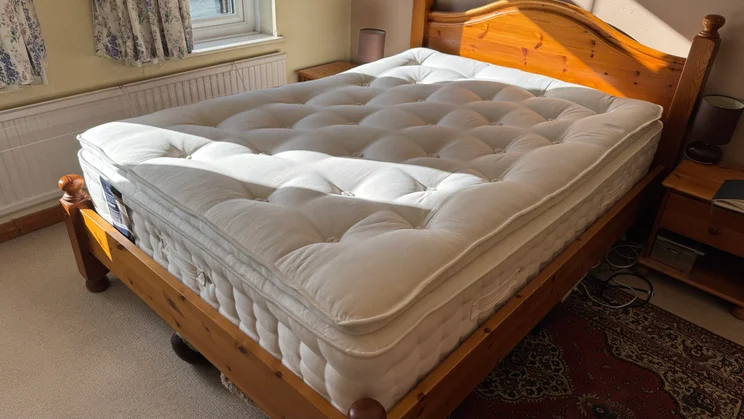
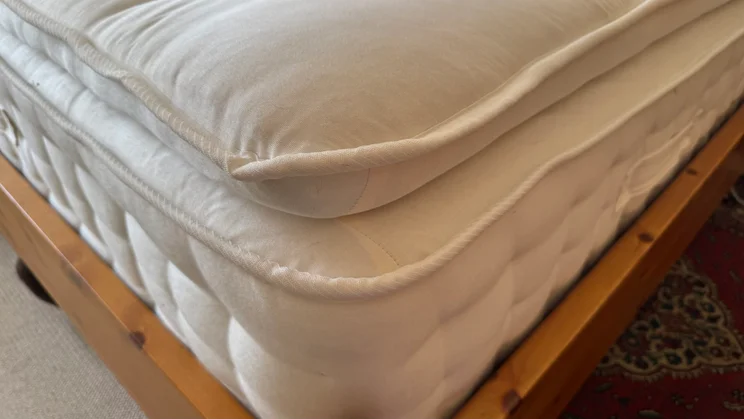
A hybrid mattress, the Annabel is made up of a combination of coils and other materials, including natural fibres (the pillowtop is filled with cashmere, silk and British wool blends), recycled fabrics, polyester and polycotton comfort layers. In a king size mattress, there are 2,000 adaptive pocket springs that are designed to support the body and relieve pressure points, sitting on additional comfort layers that make up the base of the mattress.
The Annabel arrived flat, as with many other natural mattresses I’ve tested, such as the REM-Fit Natural Lux Hybrid. We were given premium delivery (available from an extra £25), which meant that a two-man team delivered the mattress to our bedroom. You can opt for a cheaper standard delivery (from £10) but you won’t get the mattress delivered to your room of choice. Delivery was very efficient, with an email and text message a day before delivery giving me a two-to-three hour window.
The mattress arrives wrapped in plastic and can have a very strong wool smell for the first four or five days. This is quite normal with wool mattresses, but you should be prepared for your bedroom to have a slight whiff of the farmyard to begin with!
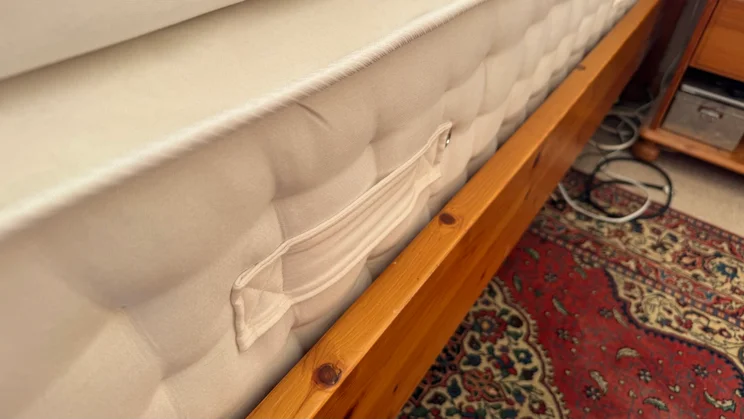
Conveniently, there are handles on all sides of the mattress, which makes it incredibly easy to move about and rotate as needed. Happy Beds recommends rotating the mattress to extend its lifespan, though doesn’t specify how frequently (in general, I’d recommend at least every three months. Returns wise, there’s unfortunately no trial period available, so you can’t try out the mattress before you commit to parting with your cash. If you want to return it, it must meet Happy Beds’ strict requirements, and you’ll need to organise the courier yourself.
Price and competition
The Annabel is incredibly well-priced for a mattress that’s made with a lot of natural materials. Prices start at £529 for a single, £659 for both a small double and a double, £729 for a king, and £849 for a super king. Add in the fact that you can often get it discounted (a double costs just £449 at the time of writing) and it’s even more of a bargain.
Even at full price, though, the Annabel is cheaper than many of its rivals. The Slumberland Air 6.0 Memory mattress comes in at £900 for a double, while the Silentnight Premier Inn 2.0 mattress is £749. Another mattress containing natural materials is the Simba Hybrid Pro. This is one of our favourite mattresses, thanks in part to its wool comfort layer, and costs £1,199 for a double. Finally, the aforementioned REM-Fit Natural Lux Hybrid mattress costs £950 (double) at full price. But like many other bed-in-a-box brands, it’s often on sale. Right now, for instance, a double is £665: much more in line with the Annabel’s RRP.
Comfort and performance
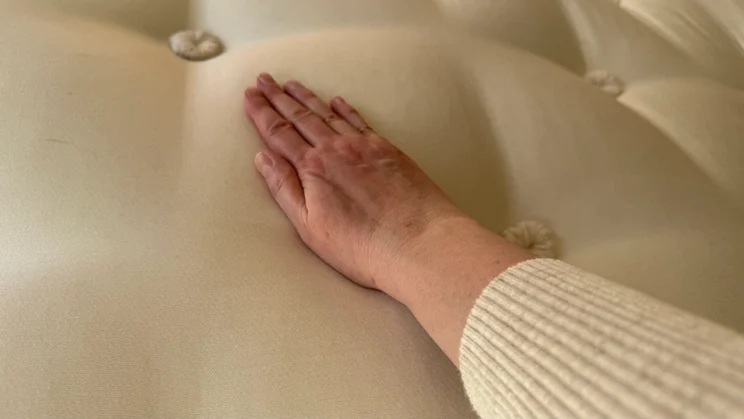
First things first – the Annabel is advertised as a medium firm mattress but I’m here to tell you that it’s very much a firm option. I’m a lightweight sleeper but both my husband, who is heavier than me, and friends who are of a larger build agreed on this front. This isn’t necessarily a bad thing, and the Annabel remains a fantastic pick for anyone suffering with back pain, but those who prefer softer comfort should be aware. While sleeping on my back, lumbar support was excellent and the mattress kept my spine aligned at all times.
Because the Annabel has a pillowtop design, I was expecting quite a lot of sink-in softness at the top of the mattress, but I was mistaken. I’m hesitant to recommend the Annabel to side sleepers of a lighter weight: while my husband found it perfectly comfortable, I got a bit of a dead hip when lying on my side. If you’re looking for a lot of contouring around your pressure points, you’d be better off with a mattress like the Emma Original Elite Hybrid.
This said, where the pillowtop did succeed was helping to reduce motion isolation, and absorbing most of the motion transfer from my husband rolling over at night. I think it will suit all but the most restless of sleepers. While I’m still on the subject of that pillowtop, I should add that I noticed some slight sagging after a month of sleeping on the mattress. This is a common concern with pillowtop designs, and I think you should be prepared for the longevity of the Annabel to be slightly shorter than mattresses sans pillowtop. That said, regularly rotating the mattress will also help to keep any sinkage even, preventing the build-up of dips and lumps.
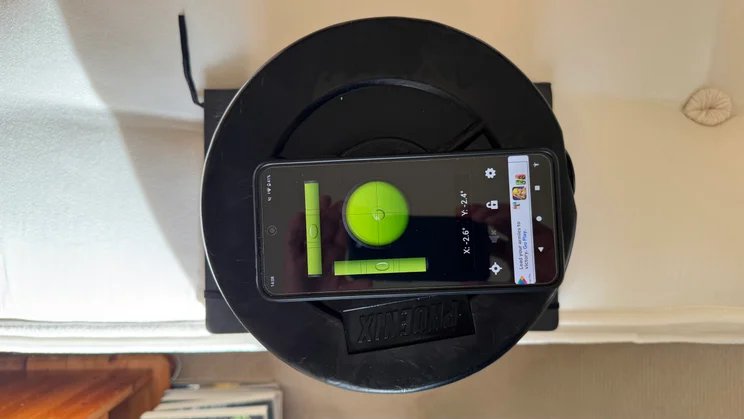
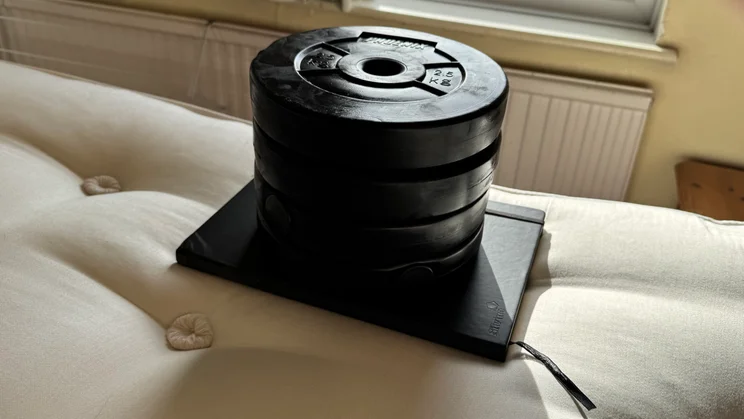
I carry out a number of standardised tests on mattresses I review, to see how they compare with each other. As I expected from a firmer mattress, sinkage was fairly minimal. Under 10kg of weights, the mattress only sank 12mm, and repeating this exercise three inches from the edge gave a result of 13mm. The Annabel does have excellent edge support, which allows you to use the full width of the mattress and sit comfortably on it (I should point out , however, that the mattress is 33cm deep, so shorter users might struggle to perch on the edge).
Lastly, I carried out temperature tests to see how well the Annabel dissipated heat (see our how we test mattresses guide for more details). During our body temperature test, the temperature dropped from 30°C to 23.2°C after a couple of minutes and fell to 22.5°C after 10 minutes. The heat pad test saw the temperature drop from 50°C to 28.8°C after three minutes, and to 27.4°C after 10 minutes.
Compared to a lot of mattresses I’ve tested, the Annabel didn’t perform brilliantly here and certainly wouldn’t rival any of the best cooling mattresses. However, at an ambient temperature of 22°C, the room it was tested in was slightly warmer than usual and the mattress still managed to dissipate the heat, if not as quickly as some rivals. More importantly, in real world testing, my husband (the hot sleeper) was perfectly comfortable and never felt clammy or too warm. With plenty of natural materials such as wool and cotton, the Annabel feels breathable, and I don’t think anyone except the very hottest of sleepers would get uncomfortably warm.
Happy Beds The Annabel 2000 Pocket Spring Natural Pillowtop mattress: Verdict
Thanks to its excellent support and premium natural materials, the Happy Beds Annabel 2000 Pocket Spring Natural Pillowtop mattress feels like a far more expensive mattress. And, more importantly, it’s extremely comfortable to sleep on. While lightweight side sleepers may find it too firm for a mattress labelled “medium firm”, I think back, stomach and average-to-heavier weight side sleepers will really enjoy this mattress. I was also impressed by how well it dealt with my lower back pain.
Considering how much the use of natural materials such as wool and cashmere can ‘up’ the price of a mattress, it’s particularly pleasing that Happy Beds have managed to keep the price so low. Add in the frequent discounts and this really is a bargain that should win a lot of support.