To help us provide you with free impartial advice, we may earn a commission if you buy through links on our site. Learn more
- Good temperature regulation
- Comforting pillow top
- Excellent combination of comfort and support
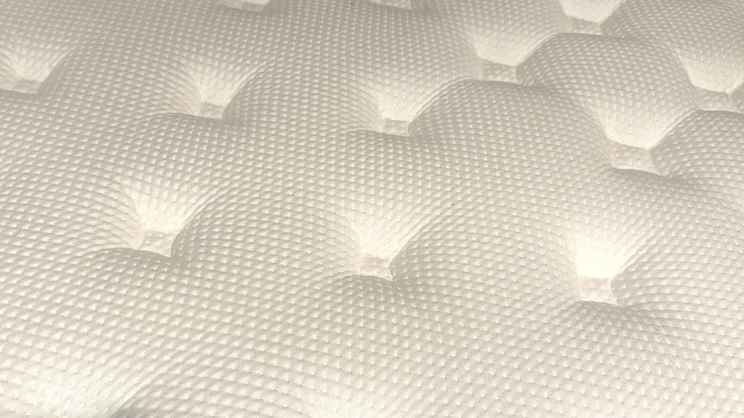
- Dimpled top could annoy lighter weight sleepers
- Lumbar support could be too firm for some sleepers
The manufacturers of one of our favourite value mattresses is back with a new premium offering. We gave the Origin Hybrid a five-star review and a Recommended award, alongside a spot on our roundup of the best mattresses you can buy.
While it doesn’t match the original Hybrid’s budget price-point, the new LumbarCloud mattress offers a great balance between comfort and support, with an impressive 11 layers to its construction. There’s a lot to like about it, and its ample support is great for back sleepers, but is it the right fit for you and your sleeping style?
Read on for my full review.
Origin LumbarCloud Mattress: What you need to know
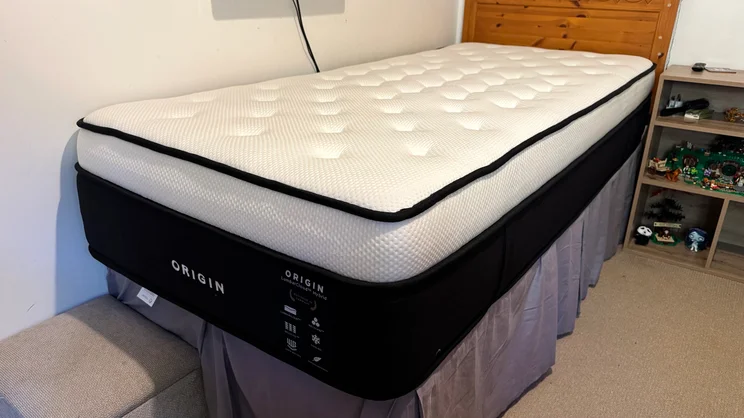
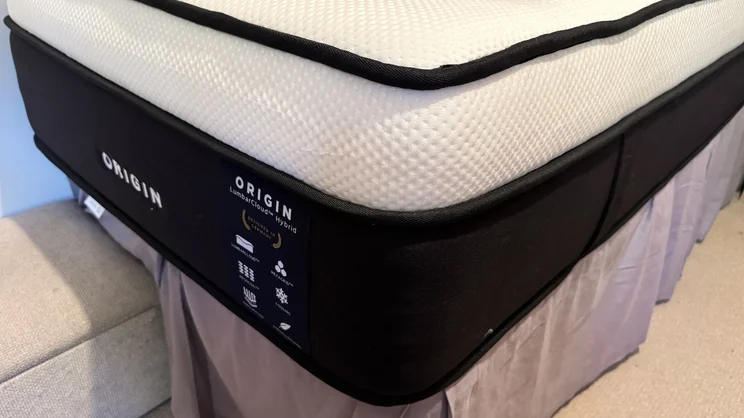
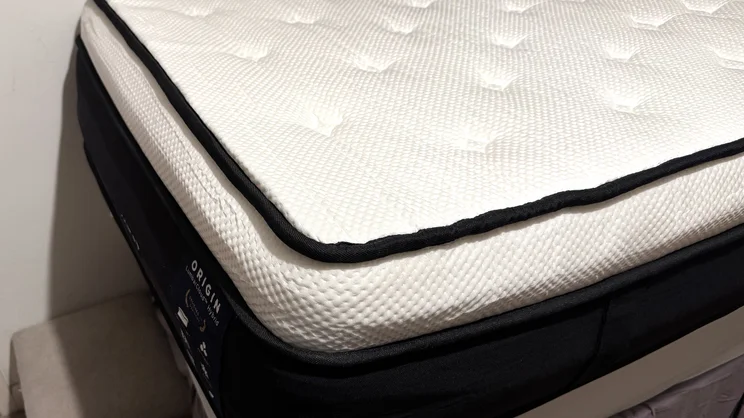
The Origin LumbarCloud is quite a “chonk” at 35cm deep. At the top you’ll find a pillow top, filled with soft fibres designed to regulate body temperature and keep you cool and comfortable. Also for temperature regulation are the several “phase-change cooling bands” underneath this top layer.
Phase-changing materials (or PCM) are designed to regulate your temperature as they change states (hence phase-changing), absorbing heat and cooling you down as they change from solid to liquid, holding onto this heat, and then gradually releasing it as they solidify. PCMs are more popular in mattresses over in the US; in fact, this is the first mattress we’ve tested to feature it.
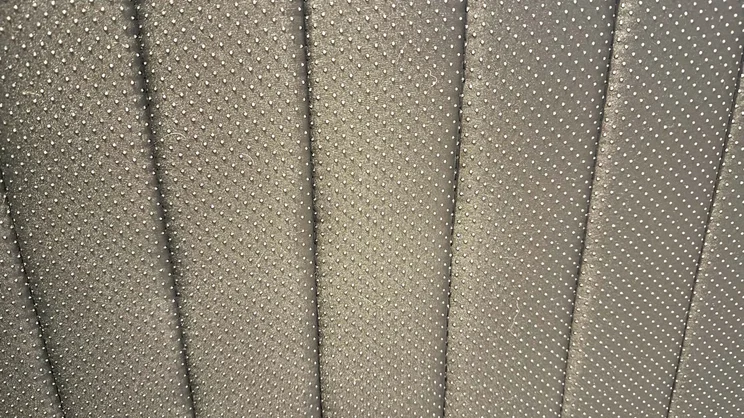
Next up is a layer of Kapok fibre: a lightweight natural fibre (derived from the seeds of the Ceiba pentandra tree) that’s again designed to help with cooling, ventilation and cushioning. Underneath this is a layer of latex infused with a “cooling gel”, followed by a layer of wool and bamboo fibres. Both of these are designed to add to the cooling and comfort of the mattress. The following gel layer, according to Origin, has been designed to offer a “floating, zero-gravity sensation” and Two layers of zoned micro springs provide support where needed, while Origin’s “HexaGrid” foam is designed to help with pressure relief. Under this is another layer of latex, this time infused with graphite, sitting on top of a “plush-top” micro spring layer that’s divided into ergonomic zones for targeted support. Finally, the mattress is held together with a dense foam base and is wrapped up in a breathable and hypoallergenic cover.
This all sounds hugely impressive, if a bit overwhelming, but the proof is in the pudding: the important thing here is how well all these layers translated to a good night’s sleep.
Price and competition
The Origin LumbarCloud isn’t the cheapest option on the market, especially when compared to the budget-friendly Origin Hybrid. At full price, it starts at £1,092 in a single, rising to £1,404 in a double, £1,475 in a king size and £1,509 in a super king. This makes it more expensive than many of its hybrid rivals including the Simba Hybrid Pro (£1,199 in a double), the Emma Original Elite (previously called the Hybrid Airgrid, £1,099 in a double) and the Otty Pure Hybrid (£625 in a double).
That said, like many bed-in-a-box brands, Origin will more-often-than not have some sort of discount on offer. At the time of testing, for instance, the LumbarCloud was £896 in a single, £1,208 in a double and £1,279 in a king size.
You also get a 200-night sleep trial with a money-back guarantee and free returns, plus free delivery,a 15-year warranty and an optional mattress removal service (available at checkout for an extra £54).
Comfort and performance
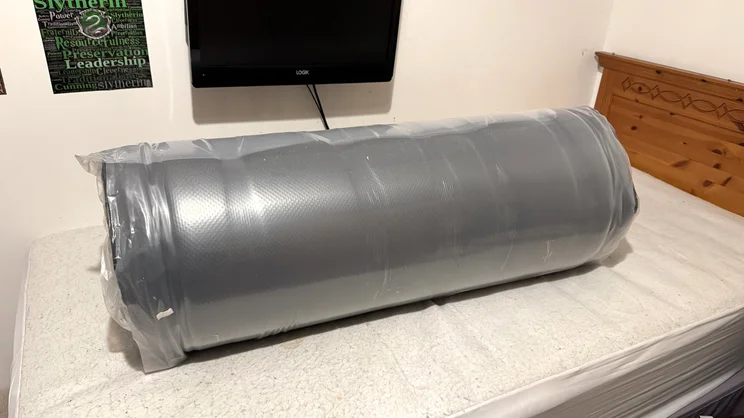
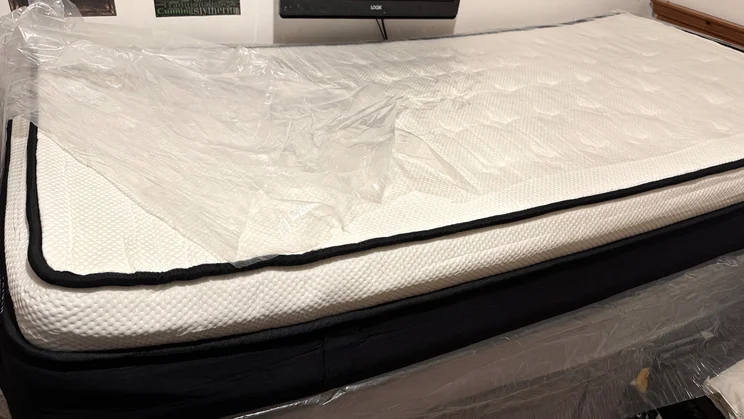
As with many modern bed-in-a-box mattresses, the Origin arrived vacuum-sealed and neatly rolled up in a box, which was delivered to our room of choice. It was then simply a matter of carefully removing and cutting open the plastic wrapping before allowing the Origin to fully expand. I put the Origin on the bed base in the morning, and while I would have been happy to sleep on it that evening, I gave it an extra 24 hours to allow it to inflate fully.
Because of its plush pillowtop design, I was expecting the Origin to be quite soft. When I first lay on it, I immediately felt the soft contouring where it’s needed, at the shoulders and hips. And lying on my back, I was hugely impressed by the lumbar support. As a lightweight sleeper with back pain, I often struggle to find mattresses that support me in the lower back, but the Origin performed brilliantly. For back sleepers, I’d argue it’s one of the best mattresses for back pain – though if you’re exclusively a side sleeper or a combination sleeper, I’d probably look to the REM-Fit 600 Lux Elite Hybrid instead. Interestingly, my husband, who is lucky enough not to suffer with any back pain at all, found the lumbar support on the Origin a little too firm, finding that it pushed his spine out of natural alignment. So, I would suggest that the LumbarCloud is best suited to those who appreciate firm support.
I did find the Origin a touch too firm when sleeping on my side but heavier users may have a better experience, and there’s still plenty of contouring from the pillow top. As it’s so supportive underneath, lightweight and average weight stomach sleepers should also feel supported, with hips kept raised.
It’s a good choice for restless sleepers too, as there’s plenty of motion isolation from the pillow top. However, I didn’t like how dimpled this top was, finding it quite noticeable when lying on the mattress. Admittedly, I was in the minority here: when I asked some others to try lying on it, there was no issue. But if you’re quite lightweight or sensitive, you may find this more bothersome.
Origin says that the mattress doesn’t need rotating at all, but I’d be wary of this claim, mainly due to the pillow top design of the LumbarCloud. Yes, the springs are very supportive but, over time, the pillow top is going to sag a little so rotating it may lengthen its lifespan. The mattress comes with handy handles to make this easier.
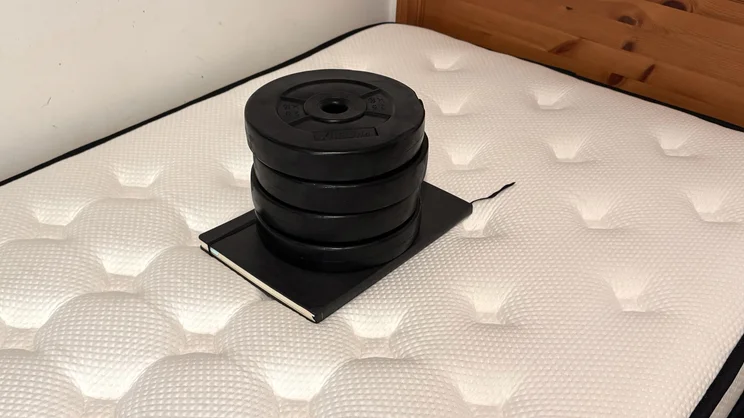
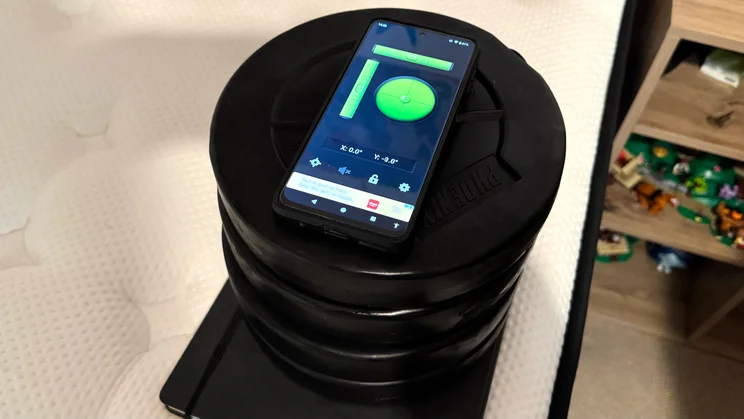
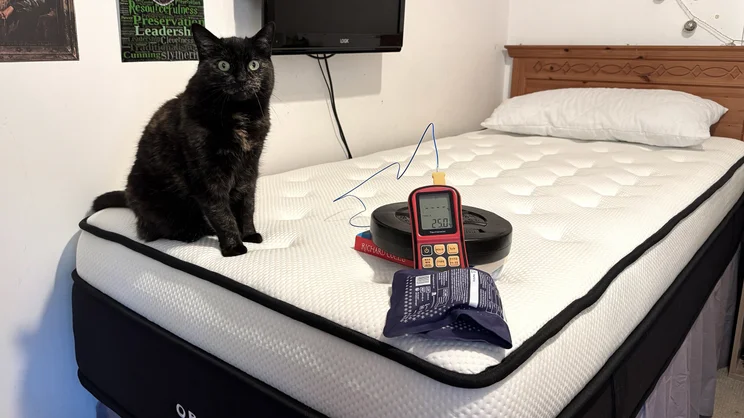
We carry out tests on all mattresses (see our how we test mattresses article for full details). I started with sinkage tests: a 2.5kg weight placed towards the middle of the mattress at shoulder height caused the mattress to dip by 3mm. Taking this up to 10kg resulted in a sinkage of 13mm. Moving towards the edge of the mattress, 2.5kg sank by 2mm and 10kg by 13mm. This consistency suggests great edge support on the LumbarCloud.
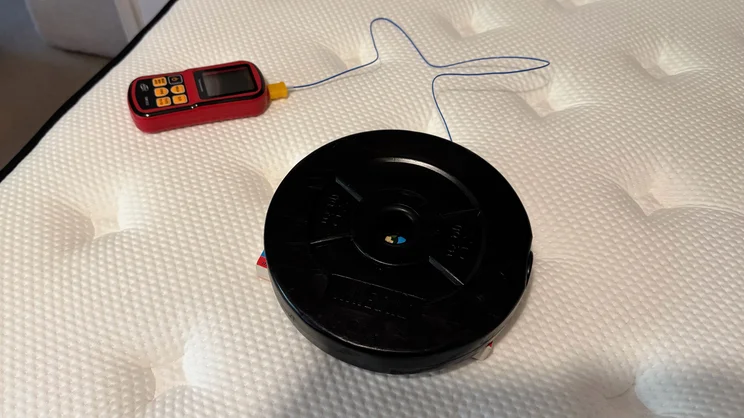
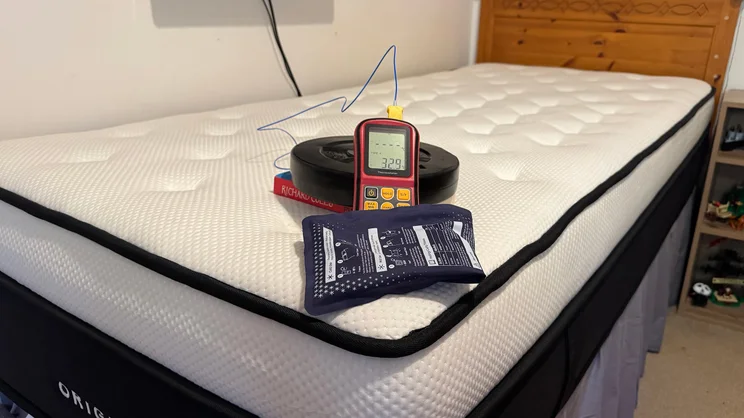
I also ran temperature tests, in a room that measured 17.3°C in winter. My body temperature test saw temperatures drop from 30°C (reached after sitting on the mattress) down to 23°C in three minutes, dropping further to 21.9°C after 10 minutes. After heating the surface of the mattress with a heat pad, temperatures dropped from 50°C to 26.6°C after three minutes and down to 23.6°C after 10 minutes.
These aren’t the lowest results I’ve seen (that honour belongs to the Dreams TheraPur mattress), but they were impressive enough that I’d feel confident recommending this mattress to hot sleepers. Temperature regulation was excellent in real world testing and my hot sleeping husband never felt too warm or uncomfortable. I can’t guarantee whether this is all to the credit of Origin’s use of “phase-changing cooling bands”, its choice of latex over memory foam, or the natural materials such as wool and kapok fibre. But it appears that the brand has chosen its materials very well.
Verdict
This is another great mattress from the Origin brand. If you’re a back sleeper with back pain, it’s a particularly good choice. It’s also got excellent motion isolation, edge support and temperature regulation which should appeal to a whole host of sleepers.
Of course, it’s not a cheap option, but I’d argue it’s worth the investment if you meet the above criteria, and especially if you buy it at a discount. If that’s too expensive though, there are plenty of cheaper hybrid mattresses that we rate highly, including the Premier Inn 2.0 (another great firm option), the Simba Hybrid Pro or the Emma Original (previously called the NextGen Premium).