To help us provide you with free impartial advice, we may earn a commission if you buy through links on our site. Learn more
- Stunning image quality in good and low light
- 2x zoom allows for close-up video
- 107GB of built-in storage
- No 2.7K video mode in landscape
- No IP rating
You don’t get to carve out your own niche very often in the world of technology. Usually, when someone has a great idea, it gets copied straight away, and that happens again, until there’s a whole swathe of similar products to choose from. With DJI’s handheld gimbal video camera, oddly, that hasn’t happened yet: the DJI Osmo Pocket 4 is still the only serious camera of its type on the market.
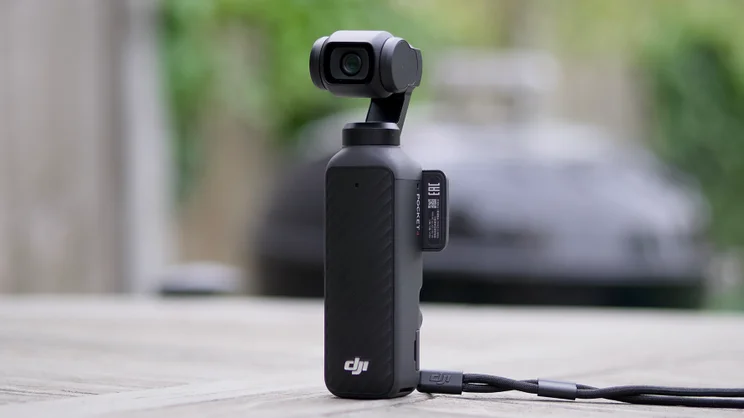
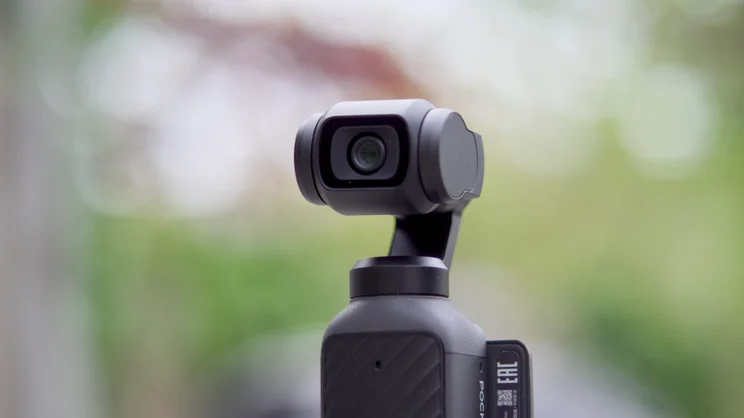
Like all the Osmo Pocket cameras that have gone before it, the Osmo Pocket 4 combines the talents of an action camera with a miniaturised gimbal arm to produce a camera that’s capable of capturing smooth, slick, professional footage from something you can stick in your pocket. Sounds outlandish, doesn’t it?
But this is a product that I’ve seen an increasing number of professional YouTube creators using to grab footage when they’re out and about, and I’ve seen loads of journalists using them at trade shows and events. It clearly scratches an itch for a certain type of content producer, and this new model brings a number of key improvements.
What do you get for the money?
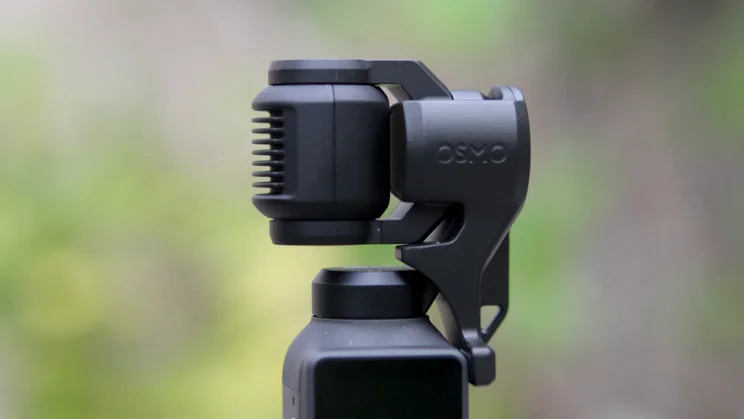
As with all of DJI’s products, the Osmo Pocket 4 is available in various bundles, or “Combos” as the company calls them, but I’d avoid the cheapest, most basic Essential Combo. It might cost less than the other two options (£429), but it omits the wrist strap and the gimbal clamp, which are essential to keep the camera unit and arm from flopping around in your pocket.
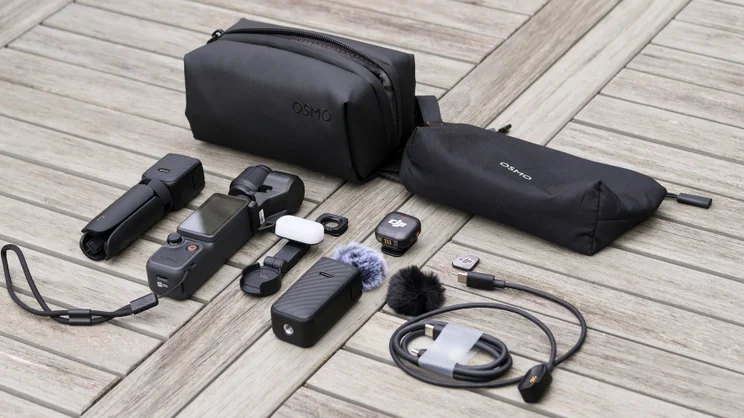
The Standard Combo is £445 and includes those two “extras” plus a carrying pouch, a clip-on handle with a 1/4in tripod thread and a stubby USB-C 3.1 cable. At the top of the tree is the Creator Combo, which costs £549 and adds a whole load of accessories, including the DJI Mic 3 Transmitter with two windscreens and various clips, a wide-angle lens attachment, mini tripod, magnetically attachable fill light and an extra pouch.
If you want to get into mobile vlogging and content creation in a serious way, the latter is a great-value package and the one DJI sent to me to test for this review.
So what’s new, exactly? First, the camera specs have been beefed up. The size of the sensor and aperture is the same – 1in CMOS and f/2.0 – but there’s a slightly improved 14 stops of dynamic range, you get 120fps 4K slow motion, double the frame rate than before, and the native resolution allows for still image capture at 7,680 x 4,320 and 2x lossless zoom in 4K.
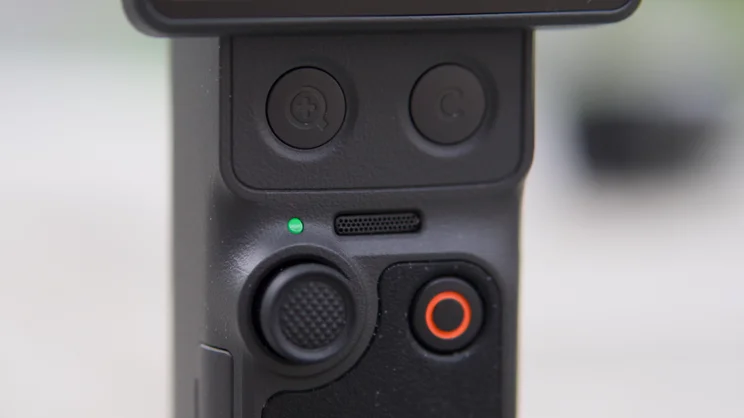
There’s a higher max bit rate of 180Mbits/sec, too, so videos shot in this mode should look cleaner and that new lossless digital zoom is accompanied by a dedicated zoom button.
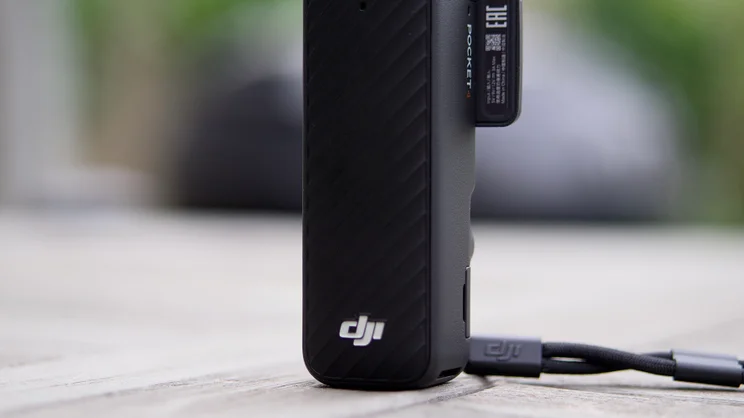
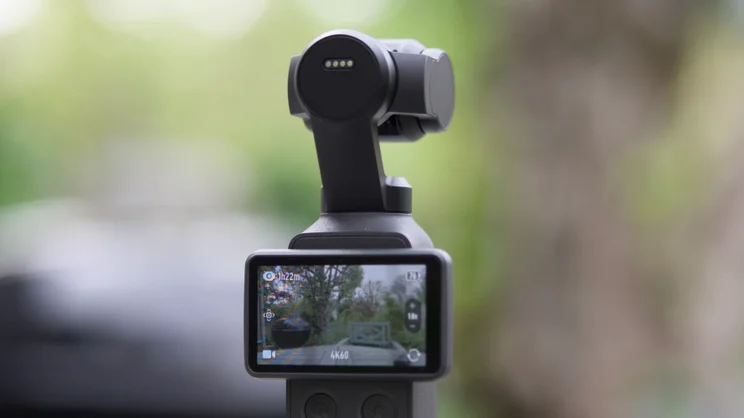
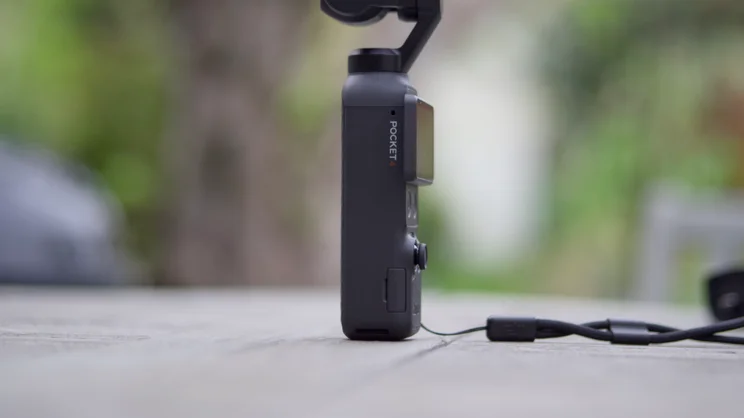
The whole unit is similar in size, but there are a few key physical differences. It’s a tiny bit taller and a few grams heavier, but not so as you’d notice any difference – and the touchscreen is the same – just rotate it to turn on the camera and rotate again to switch quickly to vertical video mode.
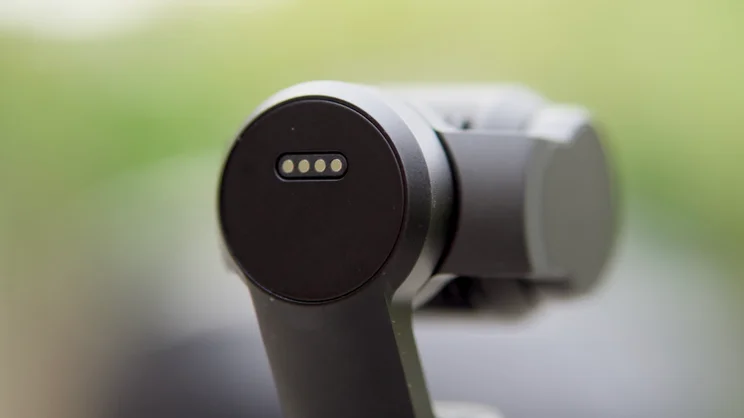
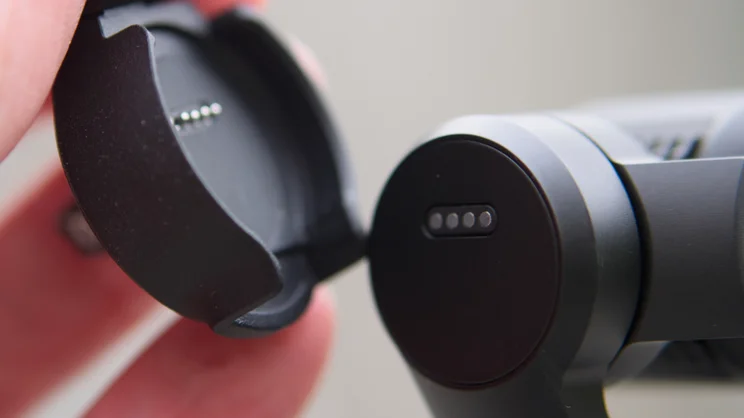
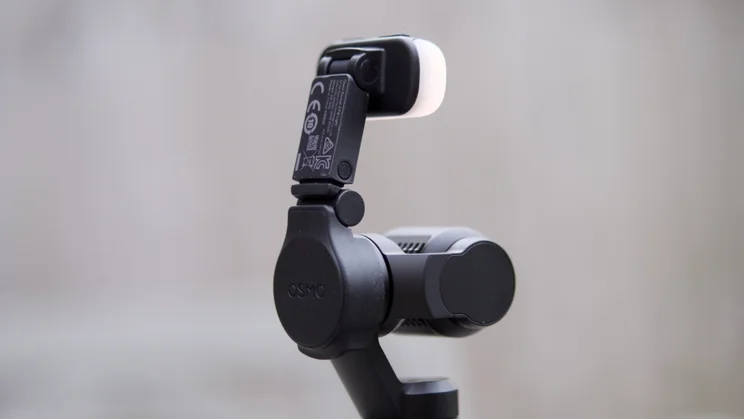
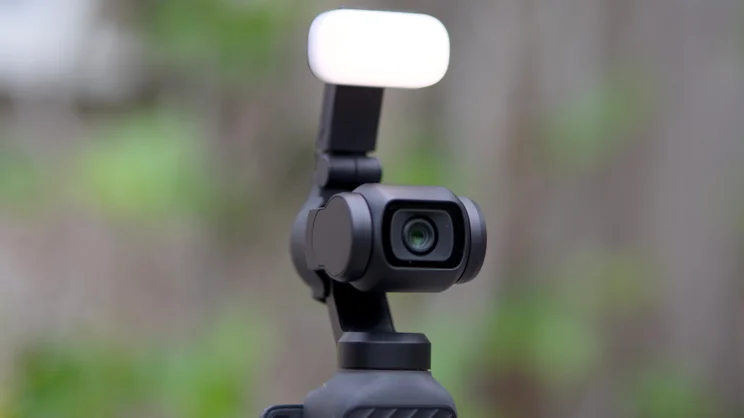
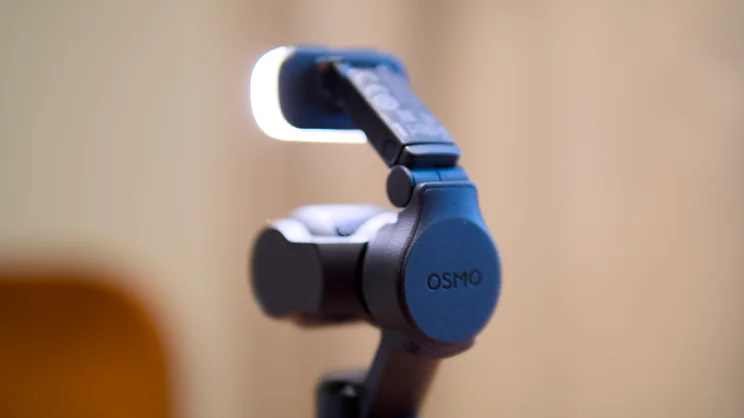
The touchscreen is brighter, though, at 1,000 nits (compared to 700 nits on the previous model) and there’s a new way of connecting powered accessories, via a series of magnetic contacts on the rear of the camera housing. The first accessory to take advantage of this is the cute, compact fill light, provided in the Creator Combo, which simply snaps on and offers adjustable brightness and colour temperature via a series of tiny buttons.
The Osmo Pocket 4 now comes with a healthy 107GB of internal storage to go with its microSD card slot, which supports up to 1TB of additional storage. The Pocket 3 had no internal storage at all. I don’t have much use for them, but there are a number of new Film Tone filters and beautification effects to play around with, as well.
And last, but by no means least, the new model has a higher capacity 1,545mAh battery, enabling up to 240 minutes of run time (40 minutes longer than the Pocket 3) and faster charging. In my testing, I found it took 13 minutes to charge to 50% and 29 minutes to 100%.
What do we like about it?
It all adds up to a pretty generous package of new features, any one of which you could use to justify an upgrade, but fundamentally, the appeal of the Pocket 4 remains as before. It provides a great way of capturing smooth, shake-free, professional-looking results in a highly convenient package.
Yes, you can get results as good – if not better – if you mount your phone in a handheld stabiliser, but you’ve got to have an expensive phone to do that, and the setup is still relatively bulky, whereas the DJI can just slip into your pocket. And everything about the controls makes it simple to capture top-quality footage quickly and easily.
And image quality is simply stunning. In good light, you’re getting sharp, punchy 4K footage at up to 60fps (or 120fps for slow motion), and it’s super impressive in low light. I took the camera with me to a couple of press events where the lighting was pretty poor, and the results the camera produced were seriously good – well exposed and clean with very little visible noise.
The 1in sensor means there’s a small degree of background bokeh blur (though you’ll need to temper your expectations here if you’re used to filming on full-frame cameras), which adds to the feeling of professionalism you get from footage. The additional dynamic range means the camera is a lot better at capturing scenes with bright and dark extremes.
And the lossless 2x 4K video recording is an absolute game-changer. It means you can get really close and show fine details, crop in for a more flattering portrait and still retain the same clean, crisp video quality.
Subject tracking couldn’t be simpler. Just double tap the touch screen and the camera will attempt to keep your subject in focus, and will track it as it moves. I found it generally worked reliably, and there are several different modes that allow you to keep full creative control over your footage while tracking.
Dynamic tracking is my favourite feature here, although it isn’t new. This enables you to lock the tracked object to a specific area of the frame – say the right or left side – but Face autodetect is great, too, and takes the faff of creating quick to-camera pieces. Simply spin the camera around to face you, and it will autodetect your mug and keep it in focus for as long as you have the mode enabled.
I love the fact that there’s plenty of internal storage, too, so I don’t have to worry about cards getting corrupted or being too slow. And, finally, the new fill light is great for use in emergencies. It’s no substitute for a proper studio light or natural daylight, but if you really can’t find a brighter spot, it’s a help in an emergency.
What could it do better?
When it comes to pure ergonomics, there’s one glaring omission on the DJI Pocket 4 that has plagued the camera since the beginning: there is no built-in lock for the gimbal arm when the camera is turned off.
You do get a Gimbal Clamp included in the box that you can clip onto the arm to stop it flopping around in your pocket, and this usefully also stops the display spinning around inadvertently. However, it’s clunky, easy to lose and a bit of a faff to attach. It’s even more of an issue that this clamp isn’t provided if you opt for the cheapest bundle.
I also found that tracking struggled a touch more in the 2x digital zoom mode than in 1x mode, and it’s worth noting that DJI has removed the ability to shoot in 2.7K when recording landscape and vertical video – it’s either 4K or 1080p in landscape now, and 3K or 1080p for vertical video and that’s your lot.
Other than that, I feel I ought to point out that the camera does not have an IP rating for dust and water resistance, so if that’s important to you, I’d suggest purchasing an action camera and gimbal combo instead.
Should you buy the DJI OSMO Pocket 4?
Those are, however, pretty minor gripes in the overall scheme of things; in every other respect, the Pocket 4 is a triumph. It’s a major upgrade on image quality, convenience, features and battery life, and it retains all the good stuff that made it great in the first place.
Two YouTube creators who are very happy owners of the Pocket 3 pre-ordered the new model after giving my review sample a quick test drive, and I imagine many others in their line of work will have done the same.
So, in answer to the question of whether you should buy one or not, the answer is an unequivocal yes. The DJI Osmo Pocket 4 cranks out superb quality images in a super-convenient, highly discreet package. It’s an easy five-star Best Buy recommendation from me.