To help us provide you with free impartial advice, we may earn a commission if you buy through links on our site. Learn more

- Competitively priced
- Takes very nice shots when used in the right environment
- Fun and easy to use
- You still can’t turn the flash off
- Overexposes in bright light
- Design isn’t very ergonomic
Fujifilm has been capitalising wherever it can on analogue nostalgia and the desire for something tangible, to varying degrees of success – the Mini Evo Cinema I reviewed a few months ago was a bit of a mixed bag.
However, for quite some time now, the fully analogue Instax Mini has been a firm entry-level favourite in almost every instant camera roundup out there. We reviewed the Instax Mini 12 back in 2023, awarding it four-stars as an affordable, easy-to-use compact camera.
Now, three years on, it has a successor: the Instax Mini 13. If you were hoping for big upgrades to performance and features, let me disappoint you now: very little has changed. This is a bit disappointing, least of all because one of the big letdowns of the Mini 12 has still not been resolved. Nevertheless, the Mini 13 is still one of the leading entry-level instant cameras on the market.
Fujifilm Instax Mini 13: What do you get for the money?
The Instax Mini 13 costs £80, the same launch price as the Mini 12. It’s a fully analogue point-and-shoot instant camera that uses the brand’s popular credit-card size Mini film stock, a 20-shot pack of which will cost you £15.
The Mini 13 has a lot in common with its predecessor. It has a 60mm lens with a preset focus range of 0.5m and beyond, with a close-up mode for shots ranging between 0.3m and 0.5m. It has an always-on flash, automatic exposure with speeds ranging from 1/2 second to 1/250 second, and a viewfinder with parallax correction (this was introduced with the Mini 12 to allow for greater framing accuracy when shooting close-ups). The Mini 13 is powered by two AA batteries, which are included in the box.
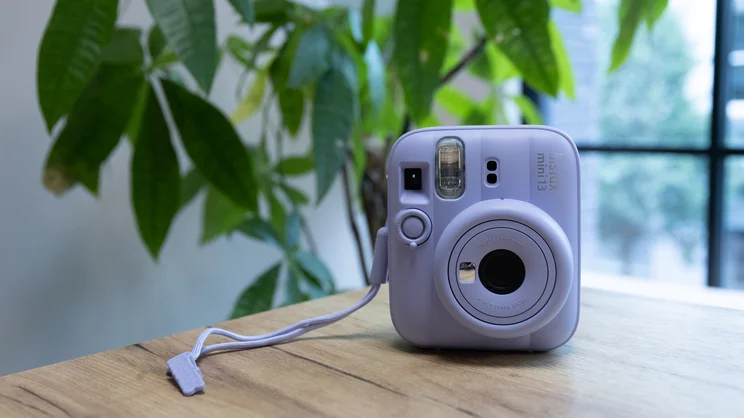
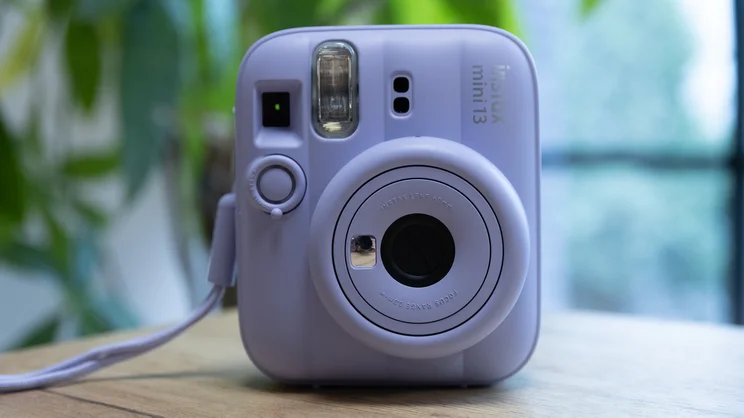
Where things start to differ is the exterior design. The Mini 13 is slightly bigger, and heavier, than its predecessor, measuring 106 x 125 x 68mm and weighing 327g (compared to the Mini 12’s 104 x 122 x 67 mm and 306g). Fujifilm has also replaced the mostly-flat surface of the Mini 12 with a “quilted” contoured texture. This doesn’t have any impact on the camera beyond a cosmetic one.
The big difference, however, is the addition of a dual self timer, a feature that was previously reserved for the more expensive Instax cameras. The Mini 12 was already optimised for selfies, with a tiny mirror on the ring of its lens, but the Mini 13 has been further enhanced with a choice of two-second or ten-second timers.
How did I test the Instax Mini 13?
Fujifilm sent me a sample of the Instax Mini 13, alongside a 20-shot pack of film, to test over a period of two weeks. During this time, I used the camera in a range of settings and environments: both inside and outside; during daytime and night; for portraits, selfies and still life shots.
In addition to assessing the quality of my pictures, I considered how easy the camera is to use, how versatile it is and how affordable it is in the wider instant camera market.
What’s it like to use?
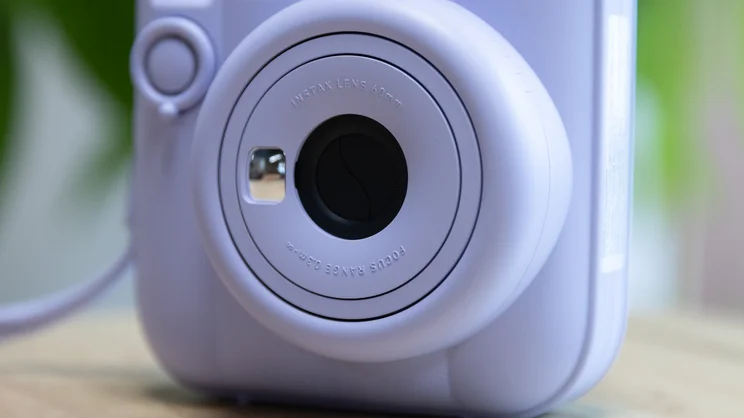
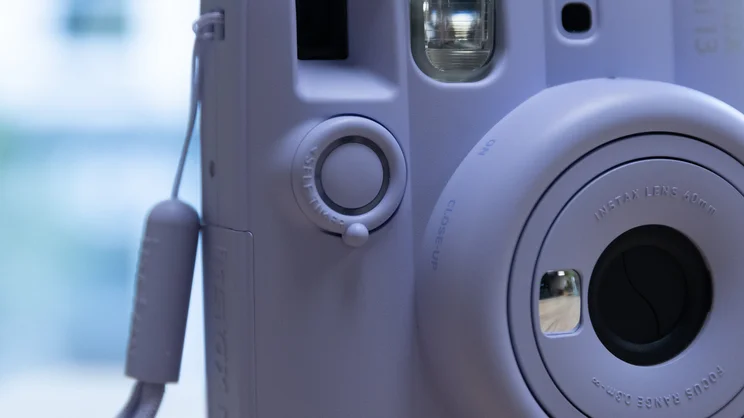
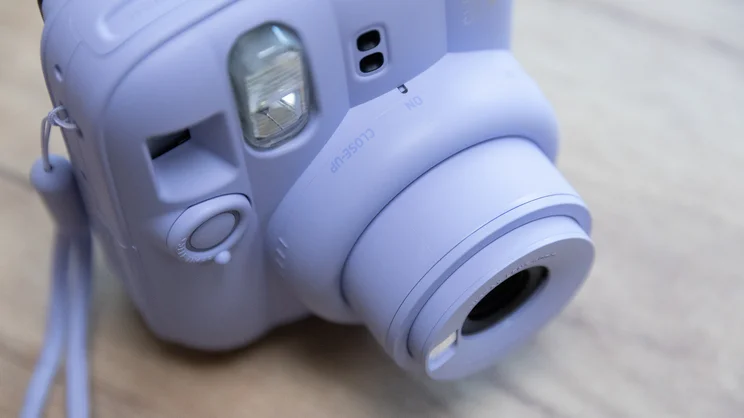
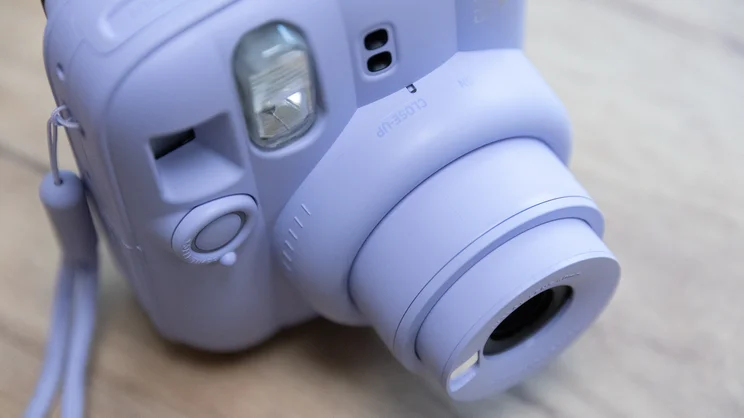
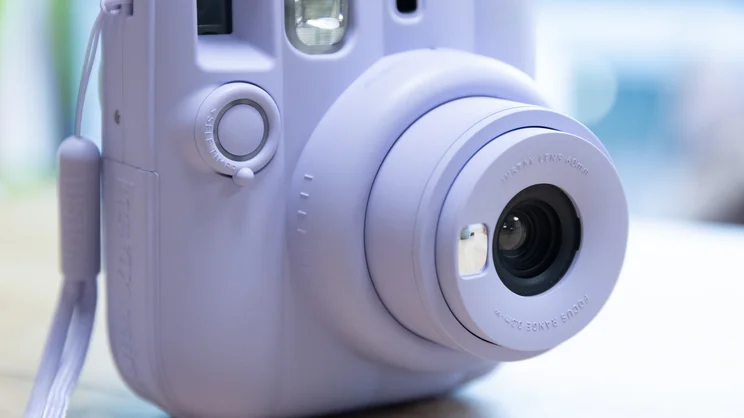
The simple controls make the Instax Mini 13 very easy to use. Around the lens is a dial with three points, labelled ‘off’, ‘on’ and ‘close-up’. Turning this dial one click to the left turns the camera on while extending the recessed lens and opening its protective screen, while a further click to the left activates closeup mode. To turn it off, simply turn the ring back to the right to retract the lens.
If it’s your first time using an Instax Mini camera, it might take you a moment to figure out the correct way round to hold it. During my testing, I’ve occasionally let friends use the Mini 13, and I’ve noticed that there’s an inclination to hold the camera horizontally, with the viewfinder in the top left-hand corner.
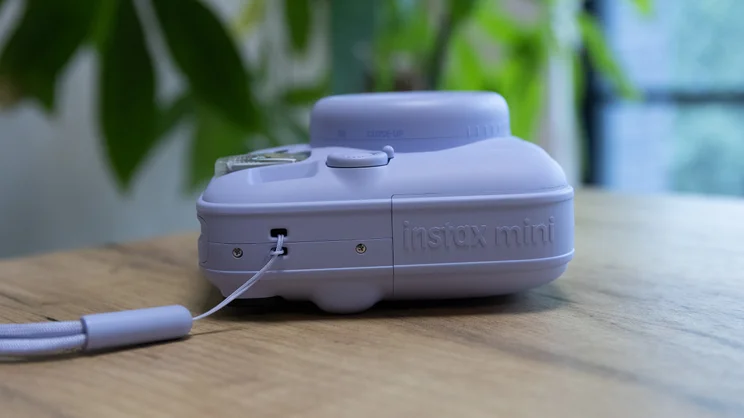
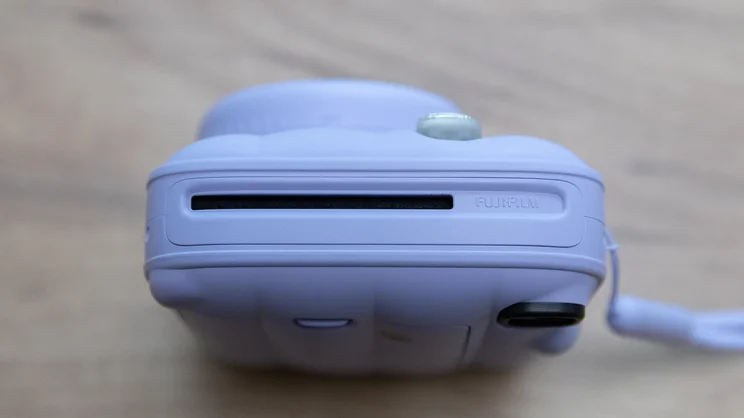
Of course, you can do this if you want, but Instax Mini film is optimised for small, portrait oriented photos – this means holding the camera with the viewfinder in the top right-hand corner and the printing slot at the top. This initial confusion is not necessarily helped by the skewed positioning of the Instax logo text, which – when the camera is upright – reads sideways.
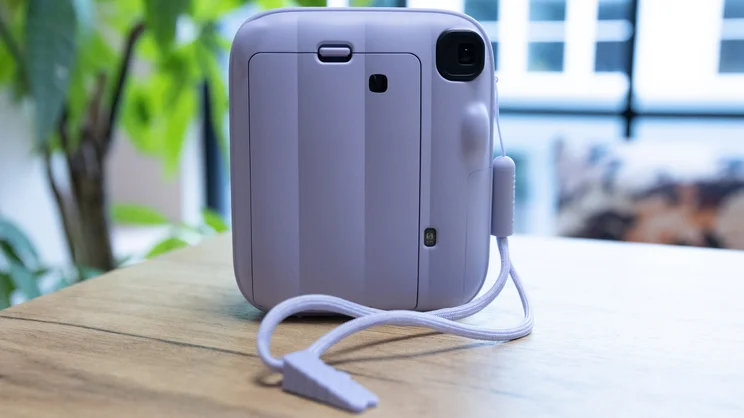
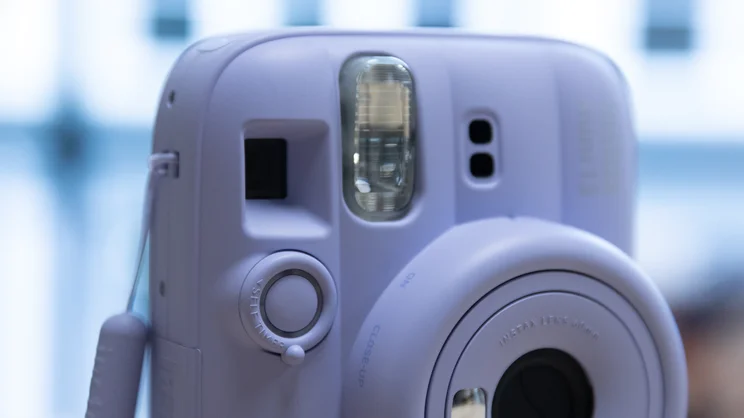
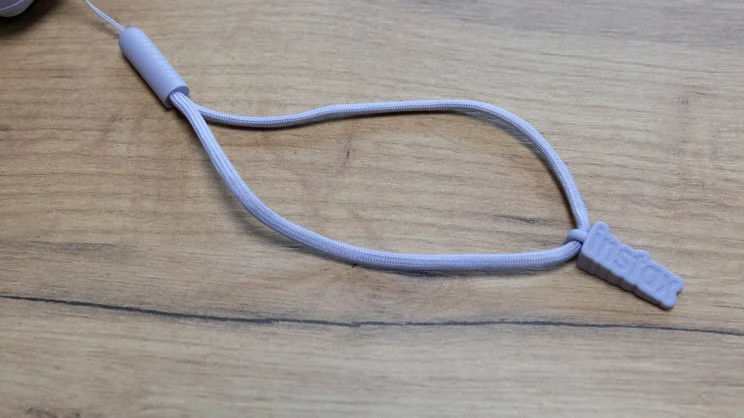
Despite the Mini 13’s ever-so-slightly beefier build, it’s still a compact camera. But its design – fun Gen-Z aesthetic aside – could be more ergonomic. There’s a slight protruding edge near the shutter button on which you can rest your thumb: this provides some stability, but it’s not a perfect solution. More helpful is the wrist loop that comes with the camera: while it would be even better if you could tighten it, I felt much more comfortable using the camera with this around my wrist. Also worth mentioning is the small plastic wedge at the end of the strap. More than just a bit of branding, this serves as a stand for the Mini 13 when using the self-timer mode – think of it like a tiny doorstop to prop up the camera.
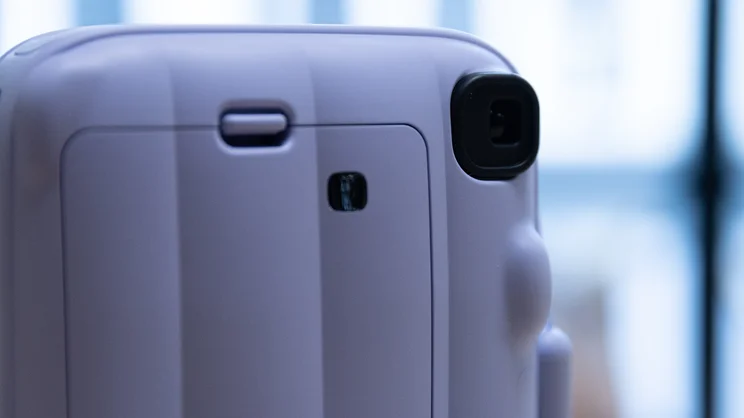
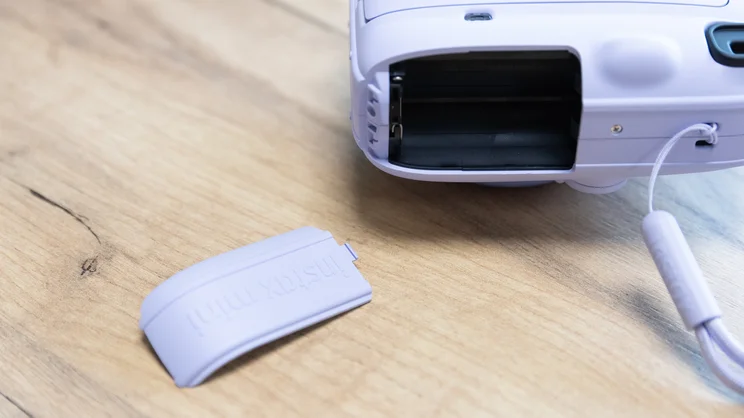
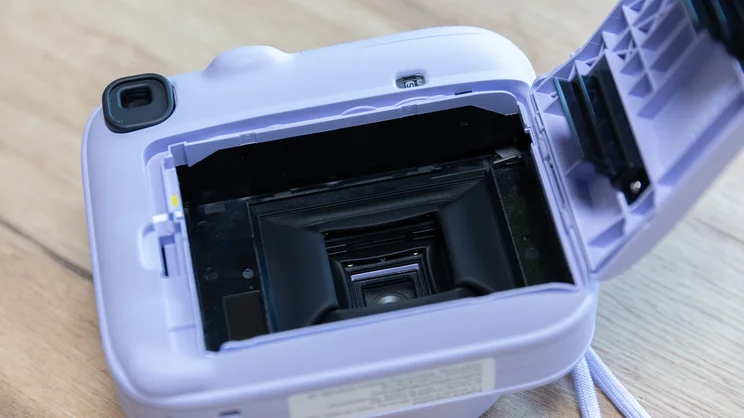
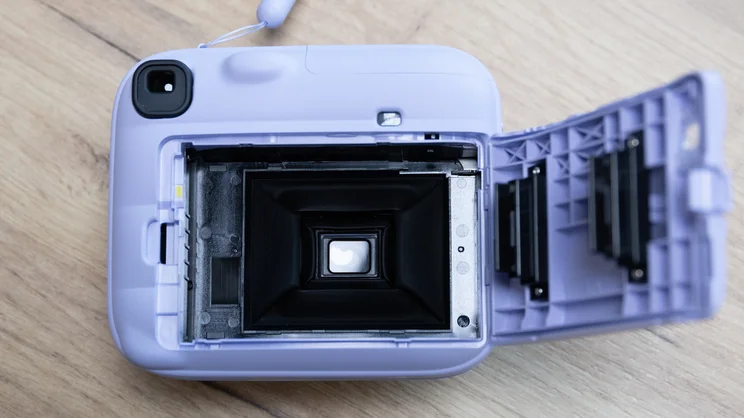
When it comes to taking photos, it really is as easy as pointing the camera and pressing the shutter button. You don’t need to adjust any exposure or shutter speed settings – the camera handles all that itself, automatically fine tuning shutter speed and flash level. Film is loaded easily into the back panel of the camera, and there’s a helpful counter window to let you know how many shots you have left. As with all analogue instant cameras, prints are dispensed automatically after the shot is taken, and Instax Mini film takes between 90 seconds and two minutes to fully emerge – with the full image becoming discernible around 40 seconds after the print emerges from the camera.
What of the new self-timer? I’m a fan. You can toggle this via a tiny dial around the shutter button. Twist it once to activate the three-second timer, or twist and hold for a couple of seconds to switch to the longer ten-second timer. The lens’ selfie mirror, which has become a staple of the Instax Mini range, is also very handy for lining up timed group shots.
It’s just a shame the timer has no audible countdown. With the ten-second timer activated, you get a visual indicator in the form of a flashing LED ring around the shutter button – it’s fine, but it might not be easily visible at range or in bright light.
Does it take good photos?
I got some really nice photos out of the Instax Mini 13, as well as a few duds. I’ll get the latter over with first. In bright light, the Mini 13 has the tendency to produce overexposed pictures: a problem it shares with its predecessor.
This isn’t helped by the fact that you can’t turn the flash off, which seems to me like a rather glaring oversight. When Fujifilm first announced the Mini 13, I hoped the brand might have remedied this with a flash that you can toggle on and off. But I suppose old habits die hard.
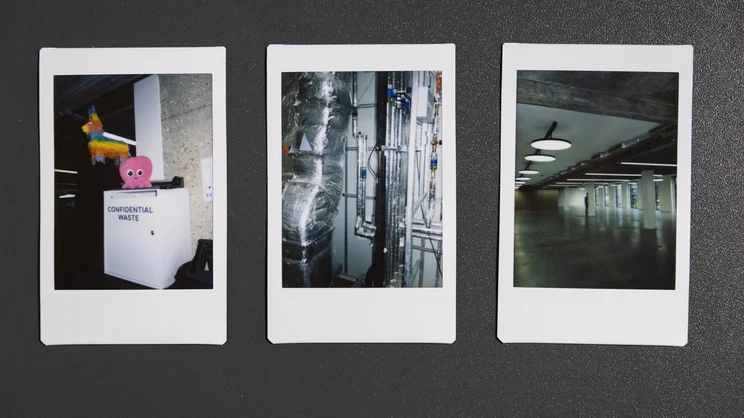
If you’re looking to get razor-sharp shots, you might also be left disappointed. For one, image size certainly lives up to the camera’s name: the images produced by the Instax Mini 13 measure 6.2 x 4.2cm within the print’s overall dimensions of 8.6 x 5.4cm. That aside, it’s generally not the best camera for capturing fine details, which can get lost in the grain.
Then again, this isn’t a camera designed for nuanced scenes or sweeping landscapes. The Instax Mini 13 shines when it comes to capturing moments and memories as tangible snapshots, particularly when you have friends and family as subjects.
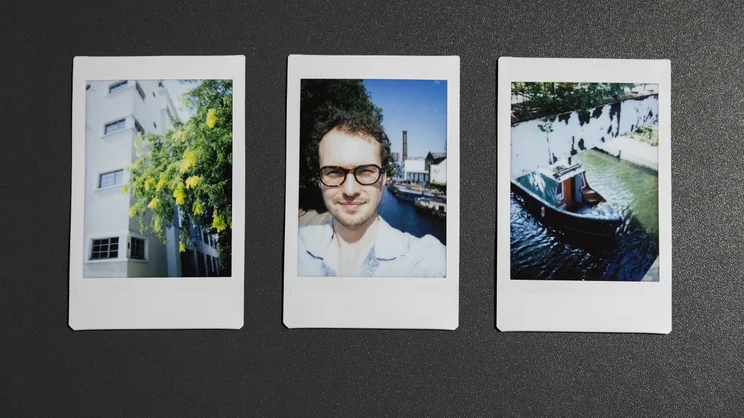
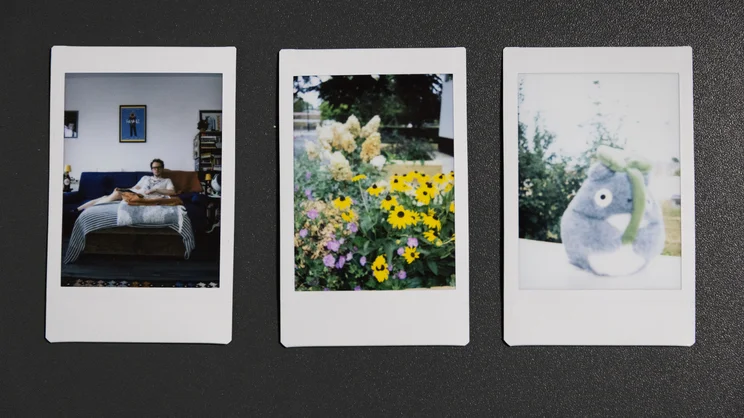
Over the past two weeks of testing, it’s produced some lovely portraits. At the risk of coming across as too saccharine, they’re the sort of photos that you want to keep in your wallet or in a photobook. Occasional overexposure aside, I was also impressed with the quality of selfies: the camera’s close-up mode is well optimised for getting faces sharply in focus when shot at arm’s length.
Finally, what the Mini 13’s images lack in detail, they make up for in vibrance. Some of my favourite shots were those of flowers and foliage, in which colours really stand out.
Is it good value for money?
Despite the minimal upgrades, I was expecting a price hike to accompany the Instax Mini 13. But Fujifilm’s decision to match the £80 launch price of its predecessor is a pleasant surprise. And while the Mini 12 has been cheaper than its RRP for quite some time now, the new camera still represents an affordable entry into the world of instant photography.
Its closest competition is perhaps Polaroid, which recently launched the third generation of its compact Go camera, also priced at £80. What you need to bear in mind, though, is the price of film. Instax is a much more affordable option in this respect: a 16-shot pack of Polaroid Go film is £19 (almost £1.19 per shot), while a 20-shot pack of Instax Mini film is £17 (85p per shot).
Should I buy the Fujifilm Instax Mini 13?
Focusing on the limitations of the Instax Mini 13’s photos means ignoring what the camera does well. Using an analogue instant camera to capture memories is a joy – and, in my opinion, much more fun and rewarding than Fujifilm’s “Hybrid” Instax cameras.
Sure, when compared side-by-side with the Instax Mini 12, it’s not the most exciting upgrade. But this is still the cheapest Instax camera, and one of the most affordable and accessible ways for beginners to explore instant photography.