

To help us provide you with free impartial advice, we may earn a commission if you buy through links on our site. Learn more
- We’ve reviewed more than 85 TVs over the past four years and use both objective and subjective testing methods to assess televisions across a range of metrics.
- We measure peak brightness, colour and greyscale accuracy, colour gamut coverage and input lag to provide objective benchmarks for panel performance.
- Our reviewers, who have decades of experience testing TVs, also watch countless hours of real-world content on different platforms when reviewing a particular set.
- Gaming functionality, sound quality and smart features, including which streaming services are supported, are also analysed during our review process.
- We currently recommend the Samsung S95H or Samsung S99H as the best TVs overall for their stunning picture quality, immersive sound, and comprehensive suite of gaming features.
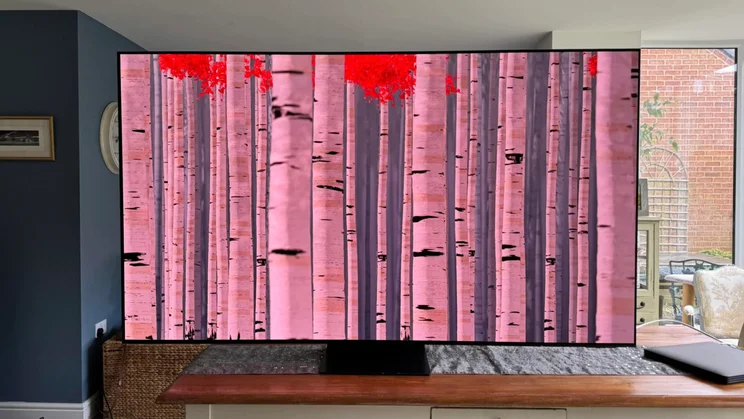
Watching movies, shows, sports or playing the latest games on one of the best TVs will make it feel like you’re right in the heart of the action. We think the Samsung S95H and Samsung 95H, which have the same specs but a slightly different design, deliver an incredible sense of immersion through their picture and audio quality and are the TVs we recommend right now.
They’re pretty pricey options, however, and may not be perfectly suited to your needs. Fortunately, there are numerous manufacturers producing televisions at a wide range of price points, meaning you’ve got a huge number of options to choose from. Such a choice can be overwhelming, but that’s where we come in.
Our experts have tested and reviewed TVs from all of the big brands – and some of the less influential players, too – so we’re in an unbeatable position to provide you with informed, impartial buying advice. Below is a list of the best TVs we’ve tested, with short reviews that highlight how they performed in our tests and what makes them appealing.
If you’re not sure what you’re looking for and want to learn more about TVs, our buying guide will tackle the key considerations when purchasing a new television.
Best TV: At a glance
- Best TV overall: Samsung S95H | Check price
- Best TV for gaming: LG C6 | Check price
- Best budget TV: Sky Glass Air | Check price
How we test TVs
All of the televisions listed below have undergone rigorous testing using an X-Rite colorimeter and Portrait Displays’ Calman colour calibration software.
- We test numerous aspects of SDR and HDR performance, including peak brightness, colour gamut coverage, and colour and greyscale accuracy. This involves using the SDR and HDR toolkits in Calman Ultimate with a colorimeter.
- We also watch a huge amount of content on the TVs we review. This content ranges from shows on terrestrial channels to films on streaming services such as Netflix, Disney+ and Amazon Prime Video – if we find issues, we tell you about them.
- Gaming functionality is tested with a TV connected to a current-gen console, either the PlayStation 5 or Xbox Series X.
- Audio quality is assessed with a wide variety of movies and music. We watch many types of content during testing and try out every supported audio format.

Using the above methodology to test TVs, we can provide data-led reviews that focus on key performance indicators. The data we collect is used to compare different models, so we don’t rely on subjective judgments to determine the quality of any given television.
The best TVs we’ve tested in 2026
1. Samsung S95H/S99H: Best TV overall
Price when reviewed: From £2,199 (55in) | Check price at Samsung
- Supremely bright and colourful
- Great for gaming
- Fantastic connectivity
- No Dolby Vision
Reviewed by John Archer
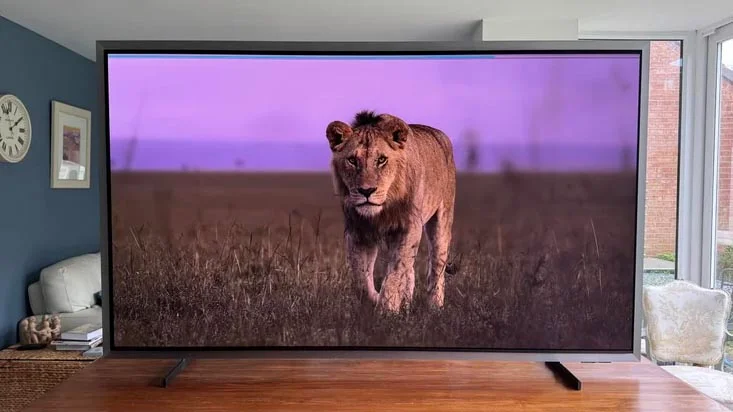
The latest iteration of Samsung’s flagship S95 series is our number one TV all-rounder. But before I get into why, I should say we haven’t actually reviewed it. We reviewed the S99H, which has the same specifications but has a “FloatLayer” frame around the panel. If you want a TV to mount on your wall, or one with a striking design, go for the S99H, but the cheaper S95H is the way forward for most people.
I’m going to state performance figures for the S99H, but they should be nigh-on identical for the S95H. The quantum dot OLED panel is bright, reaching 2,800cd/m2 on a 10% window in HDR Filmmaker Mode and up to 4,450cd/m2 on a 2% window in Standard mode. It also covers 89% of the BT.2020 colour space: only RGB Mini LED TVs can achieve more than that. Finally, it’s extremely accurate, recording Delta E errors of under 1.5 in all of our greyscale and colour performance tests while in Filmmaker mode.
The result is a jaw-dropping visual spectacle, and with first-rate gaming features, a comprehensive smart platform courtesy of Tizen, and connection options galore via the OneConnect Box, the Samsung S95H and S99H are supreme all-rounders.
Read our Samsung S99H review from April 2026
Key specs – Screen sizes: 55in, 65in, 77in (tested) and 83in; Display type: OLED; Resolution: 4K/UHD (3,840 x 2,160); HDR formats: HDR10, HLG, HDR10+ Advanced; HDMI inputs: 4 x HDMI 2.1; Operating system: Tizen OS
2. Sky Glass Air: Best budget TV
Price when reviewed: From £6/mth (43in) | Check price at Sky
- Can be paid for monthly
- Very easy to use
- Impressive sound and picture quality
- No gaming features to speak of
- Only three HDMI ports
Reviewed by Jonathan Bray
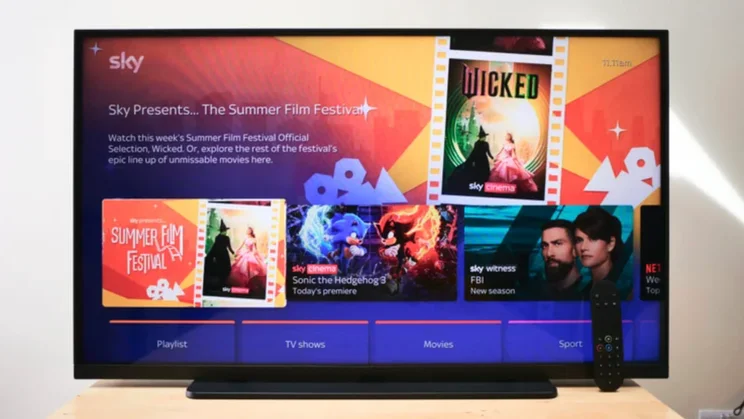
The Sky Glass Air is the first TV you should consider if you’re on a budget, as you can pay for it in instalments starting from just £6/mth. It’s a brilliant choice for ease of use and those who love the Sky TV ecosystem, thanks to its content assortment.
It’s also an impressive performer. We measured brightness in Extra Vivid mode at 460cd/m2 and Delta E errors of 2 for greyscale and 1.9 for colours in its Movie mode. So, regardless of whether you want a punchy, vivid picture or to retain artistic intent, the Air has you covered. And it’s got you covered for less than the price of a pint a month if you go with its smallest screen size.
Read our Sky Glass Air review from August 2025
Key specs – Screen sizes: 43in, 55in, 65in; Display type: QLED; Resolution: 4K/UHD (3,840 x 2,160); HDR formats: HDR10, HLG, Dolby Vision; HDMI inputs: 2 x HDMI 2.0, 1 x HDMI 2.1; Operating system: Sky OS
3. TCL C7K: Best mid-range TV
Price when reviewed: From £599 (50in) | Check price at Currys
- Sensational brightness
- Loads of gaming features
- Superb value
- Only two HDMI 2.1 ports
- Average audio
Reviewed by Andy White
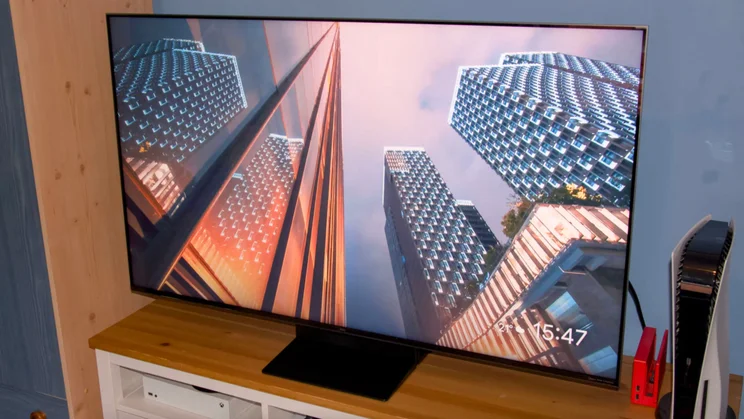
We define a mid-range TV as one that costs between £500 and £1,000, and no TV we’ve tested in that price range has performed better than the TCL C7K. It’s capable of outputting a frankly ridiculous amount of brightness; we measured peaks close to 2,820cd/m2 on a 10% window and 889cd/m2 on a full-field pattern in its Standard mode. It aced the reproduction of colours and greyscale in Filmmaker Mode, too, with Delta E errors well under the visible threshold of 3.
That combination of brightness and accuracy enables the C7K to produce vivid pictures rich in contrast and detail, and this translates to every type of content, including gaming. The dedicated Game mode’s ability to render 4K/60Hz graphics in just 9.5ms makes this a compelling mid-range choice for gamers and film buffs alike.
Read our TCL C7K review from October 2025
Key specs – Screen sizes: 50in, 55in (tested), 65in, 75in, 85in, 98in and 115in; Display type: QD Mini LED; Resolution: 4K/UHD (3,840 x 2,160); HDR formats: HDR10, HLG, Dolby Vision; HDMI inputs: 3 x HDMI 2.0; Operating system: TiVo OS (with Freely)
4. LG C6 OLED: Best TV for gaming
Price when reviewed: From £1,199 (42in) | Check price at John Lewis
- Fast refresh rate and low input lag
- Accurate Filmmaker Mode
- Comprehensive smart platform
- Reflection handling could be better
Tested and reviewed by Andy White
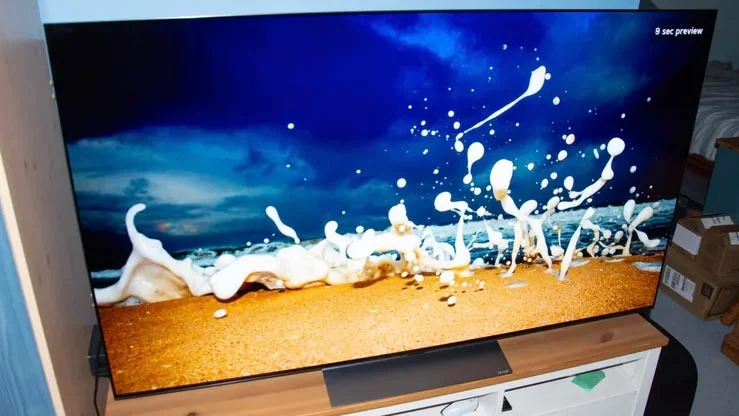
LG OLEDs have always been a strong choice for gaming; the brand was one of the first to embrace four HDMI 2.1 ports on its premium tellies, and its Game Optimiser mode and game dashboard blazed a trail for many other manufacturers to follow.
The C6 may not be the highest-tier option in its OLED range, but its gaming performance is superb. In Game mode with Boost mode engaged, I recorded input lag under 10ms (9.2ms to be exact) and images retained all the visual flair they demonstrated in the picture presets designed for watching regular TV. Brightness is strong (up to 1,400cd/m2), OLED’s infinite contrast and perfect blacks are a big draw, and colour reproduction, while not laser-accurate in the Game preset, conveys mood and setting excellently.
While “Best for gaming” is the award we’ve bestowed on the C6, it’s also a first-rate option for general viewing. So, if you’re looking for a versatile performer available in a range of popular sizes, it should be near the top of your list.
Read our LG C6 OLED review from June 2026
Key specs – Screen sizes: 43in, 48in, 55in, 65in (tested), 77in and 83in; Display type: OLED; Resolution: 4K/UHD (3,840 x 2,160); HDR formats: HDR10, HLG, HDR10+ Adaptive; HDMI inputs: 4 x HDMI 2.1; Operating system: webOS
5.Samsung R95H: Best TV for bright rooms
Price when reviewed: From £3,099 (65in) | Check price at John Lewis

- Incredible colour range
- Exemplary gaming support
- Effective anti-glare finish
- Some colour exaggerations
Tested and reviewed by John Archer
The Samsung R95H is our top pick for bright rooms for two key reasons: its peak and full-field luminance are high, and it handles reflections remarkably well. We recorded a brightness of 2,200cd/m2 on a 10% window, while the R95H delivered around 700cd/m2 on an entirely white screen. Its anti-glare filter was described as “remarkably effective at suppressing reflections” by reviewer John Archer, who stated that “even very bright objects in your room don’t get between you and what you’re watching.”
As with the S95H/S99H QD-OLED, the Filmmaker Mode renders greyscale and colours extremely accurately, with a ColorMatch HDR result of 3.5 the only time the R95H strayed above a visible Delta E error of 3. The R95H also shares the smart platform, gaming features and connectivity strengths of its OLED stablemate, so regardless of whether you go with that or this Micro RGB marvel, you’re in for a viewing treat.
Read our Samsung R95H review from April 2026
Key specs – Screen sizes: 65in, 75in (tested) and 85in; Display type: Micro RGB Mini LED; Resolution: 4K/UHD (3,840 x 2,160); HDR formats: HDR10, HLG, HDR10+ Advanced; HDMI inputs: 4 x HDMI 2.1; Operating system: Tizen OS
TCL X11L: Best large-screen option
Price when reviewed: From £3,999 (75in) | Check price at Currys
- Sensationally bright
- Surprisingly accurate
- Impressive gaming performance
- A few audio niggles
Tested and reviewed by John Archer
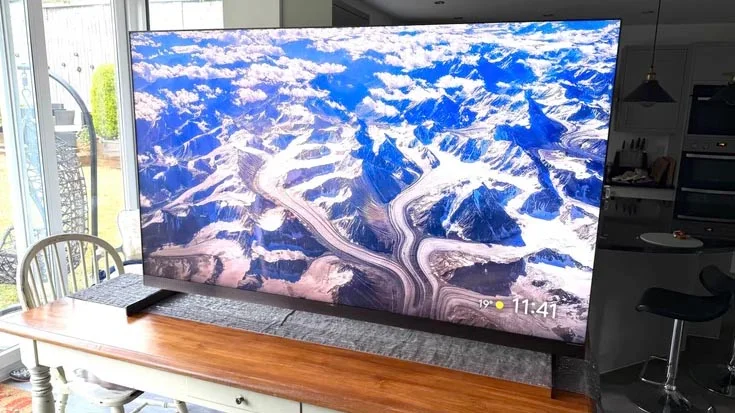
The TCL X11L is the only Super Quantum Dot Mini LED TV we’ve tested so far, but if its performance in our testing is anything to go by, the technology is here to stay. The 75in we reviewed pumped out peaks of nearly 7,000cd/m2 in Standard mode, an insanely high value that allows the TV to successfully render HDR content mastered in 4,000 nits without tone mapping or clipping. If you go for one of the even larger models, this brightness figure spikes, with the 98in screen reaching 10,000 nits.
Bumper brightness is backed up by impressive Filmmaker accuracy; the X11L scored under 3 in our greyscale, saturation sweep, ColorChecker and HDR ContentColour tests. You’ve also got over 10,000 dimming zones in the TV’s backlight, and these are controlled very handily to delight in the Standard and Filmmaker presets. Vivid is less enjoyable, but it’s easy enough to avoid. And, with low lag, room-filling Bang & Olufsen-tuned sound from the integrated 3.1.2-channel audio system, and a monolithic aesthetic, the X11L is a super-sized TV with showstopping appeal.
Read our TCL X11L review from August 2026
Key specs – Screen sizes: 75in (tested), 85in and 98in; Display type: SQD Mini LED; Resolution: 4K/UHD (3,840 x 2,160); HDR formats: HDR10, HLG, HDR10+ Advanced, Dolby Vision; HDMI inputs: 4 x HDMI 2.1; Operating system: Google TV
7. LG G5 OLED: Best TV for wall mounting
Price when reviewed: From £1,500 (55in) | Check price at LG
- Stylish design
- Bright, colourful pictures
- Top-notch gaming spec
- Colour banding in Filmmaker Mode
- Not the best for off-axis viewing
Reviewed by John Archer
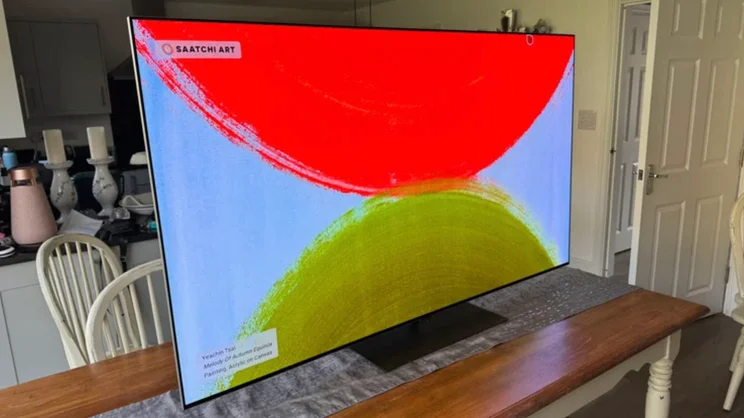
If you’re looking for a premium TV to mount on your wall, look no further than the LG G5. Its narrow frame and slender, flat rear make it perfect for hanging flush on your wall, and the panel can be transformed into a personalised canvas via LG’s Gallery+ app. This can be used to have the G5 masquerade as a piece of art when not in active use, blurring the lines between TV and aesthetic installation. You will need to pay a subscription fee for the full version, though.
When functioning as a TV, the LG G5 excels. It covers 99% of the DCI-P3 colour gamut, almost 84% of the wider BT.2020 spectrum, and hits over 3,000cd/m2 of brightness on a 5% window in its Vivid preset. Its bright, super-saturated pictures are a joy to behold, subtle yet bold and cinematic.
Read our LG G5 review from March 2025
Key specs – Screen sizes: 48in, 55in, 65in (tested), 77in, 83in and 97in; Display type: OLED; Resolution: 4K/UHD (3,840 x 2,160); HDR formats: HDR10, HLG, Dolby Vision IQ; HDMI inputs: 4 x HDMI 2.1; Operating system: webOS
8. Samsung QN900F: Best 8K TV
Price when reviewed: From £1,799 (65in) | Check price at John Lewis
- Incredible 8K upscaling
- Brilliantly controlled backlight
- Top-notch connection options
- Expensive
- Limited native 8K content
Reviewed by John Archer
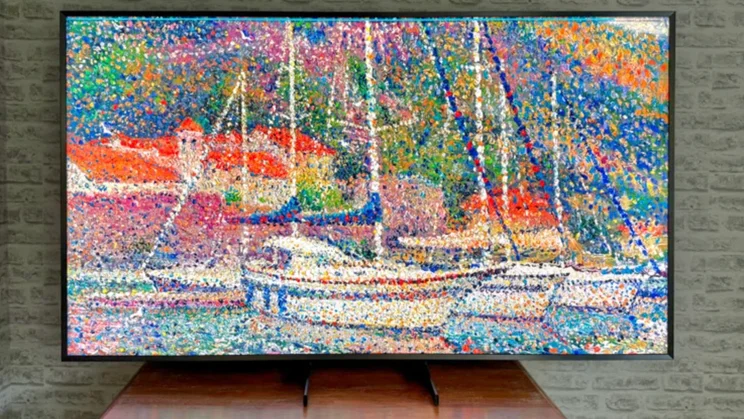
The Samsung QN900F upscales content to its panel’s 8K resolution better than any other TV we’ve tested, making it our number one pick in this category. Even Standard Definition content was made to look engaging, as Samsung’s AI-powered processor created millions of additional pixels with remarkable skill. Feeding it 4K images results in a big leap in detail, sharpness and three-dimensionality as the TV seeks to make things look as close to native 8K as possible.
The QN900F also scored highly in our objective tests. Colours were accurately reproduced in SDR, with a ColorChecker test in Filmmaker Mode returning an impressive score of 2.4, and the display can retain almost 1,000cd/m2 of full-field brightness when pushed to its HDR limits. This TV is the most conclusive evidence yet that 8K TVs are viable, despite the limited amount of native 8K content.
Read our Samsung QN900F review from September 2025
Key specs – Screen sizes: 65in, 75in (tested), 85in; Display type: Mini LED; Resolution: 8K (7,680 x 4,320); HDR formats: HDR10, HLG, HDR10+; HDMI inputs: 4 x HDMI 2.1; Operating system: Tizen OS
How to choose the best TV for you
What TV resolution do I need?
High-definition TVs currently fall into three categories: Full HD, 4K and 8K. Unless you’re buying a very small or massive (75in or larger) model, a 4K TV is the best choice.
- Full HD/FHD or 1080p has 1,920 x 1,080 pixels. These days, only the cheapest (and often the smallest) TVs use an FHD/1080p resolution.
- Ultra HD/UHD, more commonly referred to as 4K (3,840 x 2,160 pixels). This is the sweet spot for 99% of consumers, and most TVs are 4K these days.
- 8K (7,680 x 4,320 pixels) is expensive, and there still isn’t a huge amount of native 8K content, meaning the benefits in picture quality rely heavily on a TV’s upscaling capabilities.
What size TV should I buy?
The size of the TV you buy should be dictated not only by the size of your room but also by how far away you intend to sit from it.
- To get the full benefit from a 4K HDR set, you need to sit close enough for your eyes to appreciate the increased picture clarity that 4K brings over Full HD. Buying a 4K TV that’s too small for your room may mean that it won’t look much better than your old Full HD TV.
- Why? Our eyes can only distinguish between lines and dots up to a fixed distance. Think of it like a pointillism painting – from far enough away, you can no longer make out the individual dots on a Georges Seurat landscape.
Check out our How TV screens are measured: Why screen size matters article for more information.
How can I watch 4K content?
There are plenty of ways to watch 4K TV and movies these days. You can buy a subscription to a streaming service, such as Netflix or Disney+; buy digital content via stores such as Amazon Prime Video or Apple’s iTunes Store; or purchase 4K Blu-ray discs to play in a compatible 4K Blu-ray player.
- You may need to purchase a premium subscription to access 4K content, as most standard subscriptions will only provide Full HD streaming.
- Even if you do pay for 4K streaming, not every film or programme is available in 4K on these streaming services. If you want to watch in 4K HDR and have Dolby Atmos sound, you may need to buy the movie separately from stores such as Apple’s iTunes Store.
- Most popular TV series and movies also get a 4K Blu-ray disc release, which deliver the best video and audio quality, but bear in mind that you’ll need a dedicated Blu-ray 4K player – older Blu-ray players will not support 4K discs.
How fast does my internet connection need to be for 4K?
If you want to stream 4K content via the internet, you will need a fast broadband internet connection. Around 30 to 40 Mbits/sec is probably a safe minimum, but you’ll need a faster connection if other people in the house will be streaming concurrently or using the connection for gaming.
Are some TVs better for gaming?
Yes. If you want to see the latest AAA console and PC games in all their 4K HDR high framerate glory, you need a TV which supports key gaming features, such as:
- Multiple HDMI 2.1 ports
- ALLM (Auto Low-Latency Mode) support
- VRR (Variable Refresh Rate) support
- A 120Hz panel or above
If gaming is one of your top priorities, read our best TV for gaming roundup.
What else do I need to know before I buy a TV?
What’s the difference between OLED, QLED and Mini LED TVs?
Flat-screen TVs use two main types of panel technology: Liquid Crystal Display (LCD) and Organic Light-Emitting Diode (OLED). The former sees LEDs illuminated by a backlight in the TV, whereas the latter are self-emissive, so no backlight is required.
LCD LED TVs can be further divided into categories. Those that use a Quantum Dot filter are referred to as QLED TVs, while Mini LED TVs operate on the same principle as basic LED TVs but use much smaller diodes in their backlight.
Each technology has advantages and disadvantages. You can read about the differences between OLED and Mini LED in detail in our OLED vs Mini LED article, but here’s a basic summary:
QLED
Provides additional brightness, more vibrant and more accurate colours than basic LED TVs.
Mini LED
Very high peak brightness and the ability to retain that brightness on a full-field pattern. Smaller LEDs mean more can be fitted into a panel of the same size, allowing for more independent dimming zones and improved contrast control. This makes them a great choice for rooms with lots of ambient light.
OLED
Because the LEDs can be “turned off” entirely, OLED TVs can achieve a perfect black level and effectively infinite contrast. They also have better viewing angles than their standard LED counterparts and are generally slimmer and more stylishly designed. However, they’re not as bright as Mini LED TVs, and suit darker rooms best.
What is HDR, and why does it matter?
HDR stands for High Dynamic Range, an image and video format that can express a wider range of colour tones than Standard Dynamic Range. If you’re looking for the most visually impressive TV experience, you’ll want to ensure that you’re watching HDR material on a TV that supports HDR. All the options on the above list do.
Because of the wider range of colours available in HDR, there’s more contrast between the light and dark areas in images and colours in general look more realistic and engaging. The difference between a scene in SDR and HDR is often night and day.
There are several different HDR formats. While you’ll get an improved experience with the rarely used HLG and HDR10, which is supported by most TVs, you’ll want to look out for HDR10+ and Dolby Vision. Those two formats use metadata to determine how a screen displays HDR material, articulating brightness, contrast and colours to reflect artistic intent.
What kind of apps do smart TVs have?
Most new TVs are equipped for wireless (or wired) networking, enabling you to connect them to the internet and your home network. This lets you stream multimedia content from your home computer and access online smart TV portals.
Some TVs have excellent smart hubs that let you access catch-up services such as Netflix, Disney+, BBC iPlayer, ITV Hub, All 4, Amazon Prime Video, Now, social networking tools and on-demand movies, while others only offer iPlayer, Netflix and YouTube video streaming.
Most TVs can also play videos, music and photos directly from a memory card, portable hard disk or USB flash drive. Our reviews tell you what each TV can do and how well it works.
What ports and connections do I need?
You’re almost definitely going to have at least one other device you want to connect to your TV, so it’s important to choose a model with enough inputs.
HDMI is the connection of choice for virtually all modern devices, including game consoles, Blu-ray players and digital set-top boxes.
We suggest a minimum of three HDMI inputs, which should cover the basics and leave a spare port in case you want to connect a camcorder or digital camera.
Look out for an HDMI input with an enhanced Audio Return Channel (eARC) or Audio Return Channel (ARC). These let you send sound from the TV back down the HDMI cable to a connected amp, so you can get better sound for TV programmes without introducing more cabling.
For future-proofing, HDMI 2.1 is preferable if you’re after the latest gaming features. The reason is simple: HDMI 1.4 only supports frame rates up to 30fps. HDMI 2 adds support for frame rates up to 60fps, while greatly increasing the maximum audio throughput. The advent of HDMI 2.1 means that TVs with those ports can deliver 4K resolution at 120Hz.
USB ports are fairly common on modern TVs. If you have a spare external flash drive, it can record programmes, eliminating the need for a dedicated set-top box. You will need to format it for your particular TV, though. Alternatively, you can use USB ports to play your own media files from your PC. Some TVs support a wider range of file formats than others, but our reviews tell you which formats each TV supports. If you want to browse the web, USB ports are also useful for connecting a keyboard and mouse.
Should I worry about the length of the warranty?
If you’re spending a decent chunk of your hard-earned money on a new television, you want the longest warranty possible. This will ensure you’re covered if anything goes wrong with the set.
Most retailers offer at least a one-year warranty, which is in line with the manufacturer’s warranty.
John Lewis is a little different, however, and provides a five-year guarantee on all of the TVs it sells.
That’s a pretty compelling reason to buy your next TV from John Lewis, and as such, we’ve included links to products on the John Lewis website where possible. If the TV is cheaper elsewhere, we’ve also linked to the retailer with the best price.


