To help us provide you with free impartial advice, we may earn a commission if you buy through links on our site. Learn more
- Powerful clean
- Helpful real-time brushing feedback
- Decent app
- Astonishingly expensive
- Glass charging stand is awkward
Philips is one of the most recognisable names in the electric toothbrush market. Its Sonicare range has more sonic toothbrushes than are convenient to list, and its 9000 series represents the premium end of dental care.
The latest-generation Sonicare DiamondClean 9900 Prestige is the brand’s “smartest toothbrush” and also one of the most expensive brushes I’ve come across. It’s a hefty investment even when discounted; at full price, it’ll set you back over half a grand.
However, you get loads of features for your money, and many of them genuinely help you take consistently good care of your teeth. The Sonicare DiamondClean 9900 Prestige is an undisputed triumph for dental hygiene. But unless you’ve got money to burn, it isn’t a purchase to make lightly.
Philips Sonicare DiamondClean 9900 Prestige: What you need to know
“Philips Sonicare DiamondClean 9900 Prestige” is a mouthful – pun not intended. So, throughout most of this review, I’ll call it the 9900 Prestige.
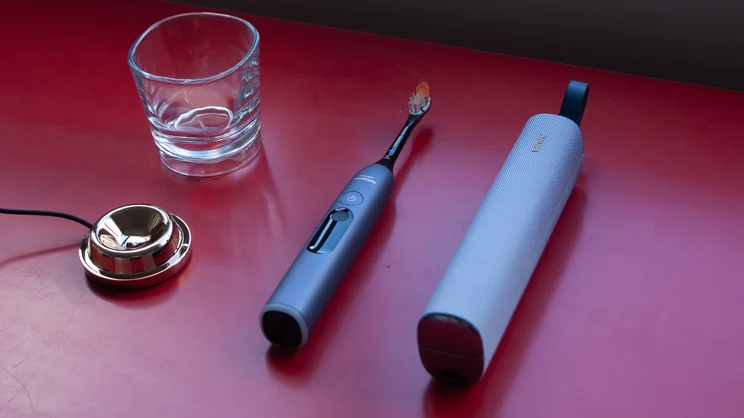
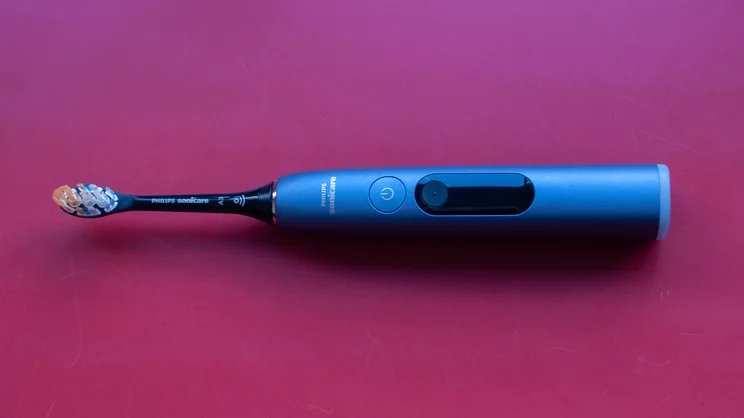
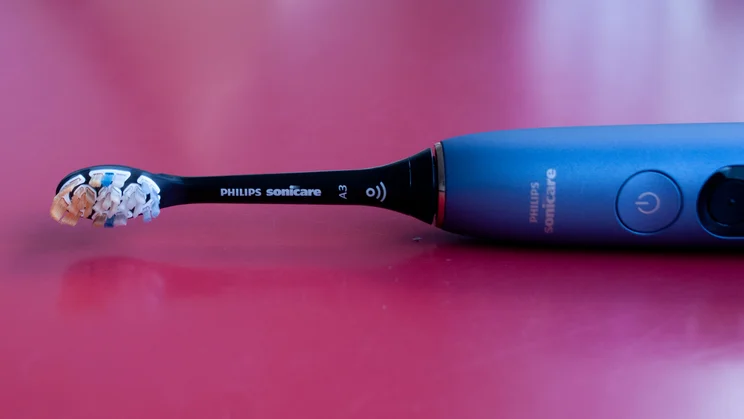
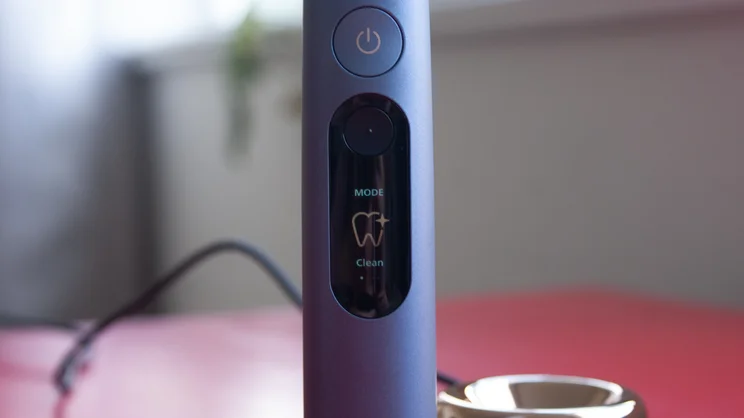
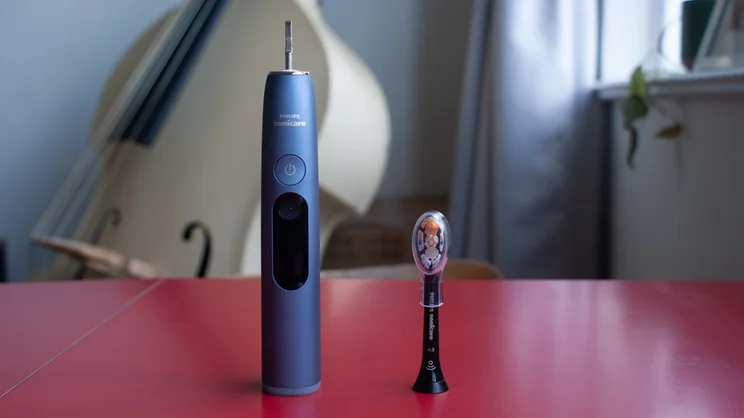
It’s a smart sonic toothbrush that’s got all the essential features, and then some. Its digital touchscreen display lets you swipe through the brush’s various presets and settings, including vibration intensity and feedback modes. Above the display are two buttons: the first navigates the settings menu, the second starts and stops the brush.
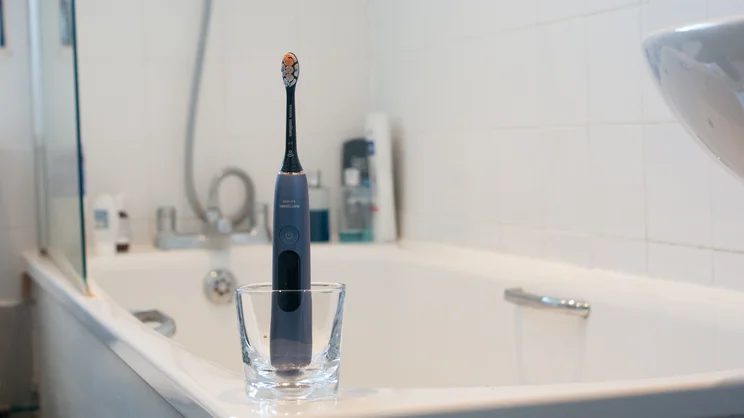
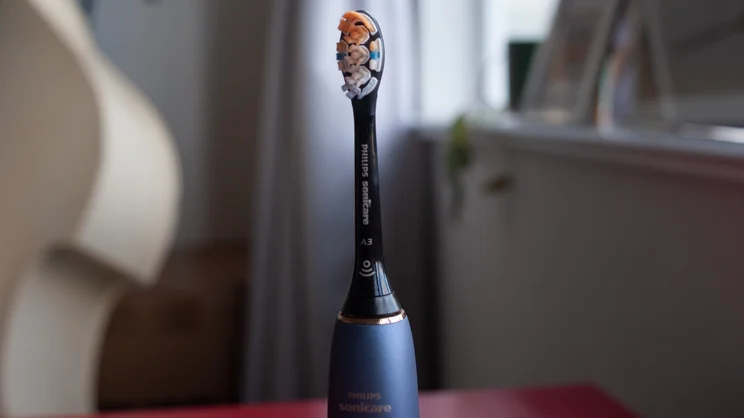
With the brush head included, the 9900 Prestige is around 24cm tall, between the Suri Pro 2.0 (22cm) and the Oclean X Pro 20 (25.5cm). It weighs just over 131g: not the lightest in the hand but not too cumbersome either, and well below the 170g stainless steel Laifen Wave Pro. The matte-finish body comes in three colours: “Quartz Black”, “Silver White” and “Storm Blue”.
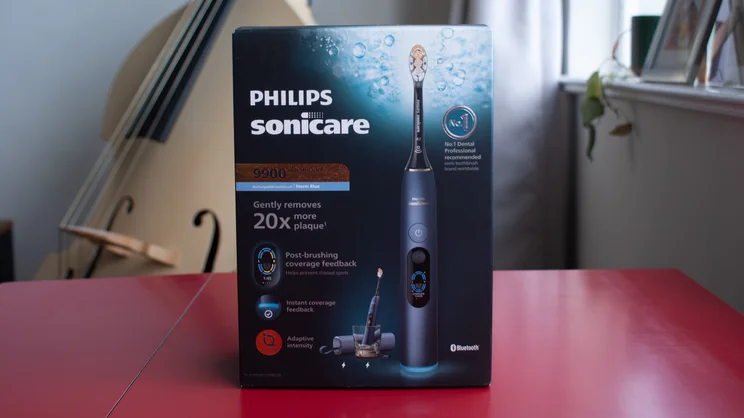
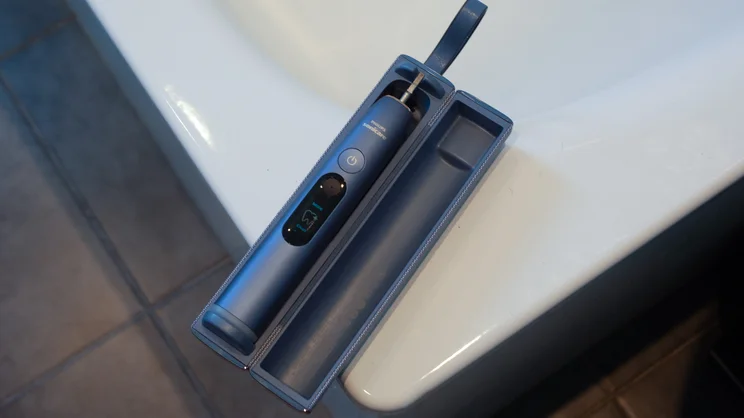
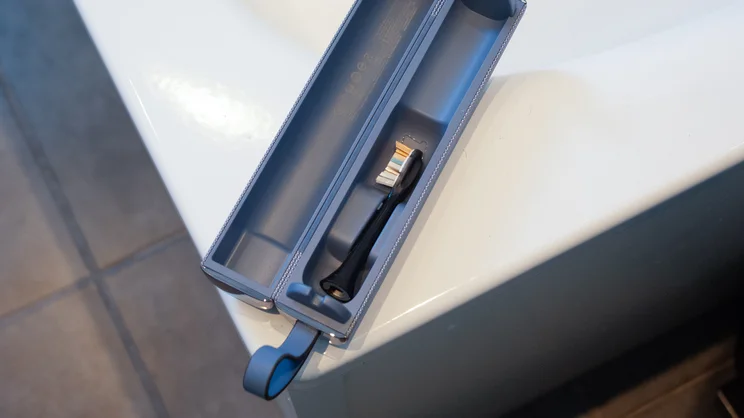
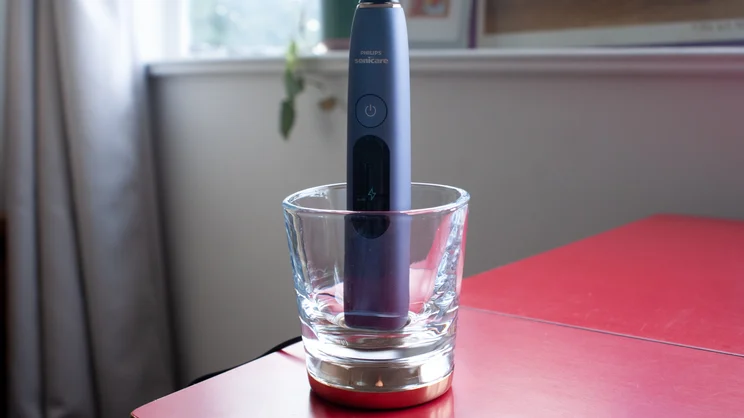
The toothbrush comes with a travel charging case (colour-matched to your chosen brush) and a two-part wireless charging stand comprising a base and glass cradle.
At RRP, the toothbrush and its accessories cost £600. I’ve specified RRP because we’re used to seeing electric toothbrushes discounted during deals events like Black Friday. In fact, when I began reviewing the 9900 Prestige, you could get it for £338. That’s still a significant investment, but a more palatable one (pun not intended, again).
You can also rent your toothbrush with a £25/mth subscription Philips calls “Try & Buy”. You can cancel at any time during the subscription period (18 months), or buy the brush by paying off whatever cost remains.
What features does it have?
When it wakes from standby, the Prestige 9900’s screen displays at-a-glance information on battery life, Bluetooth connectivity and remaining sessions for the current brush head (these count down from 180 with each brush).
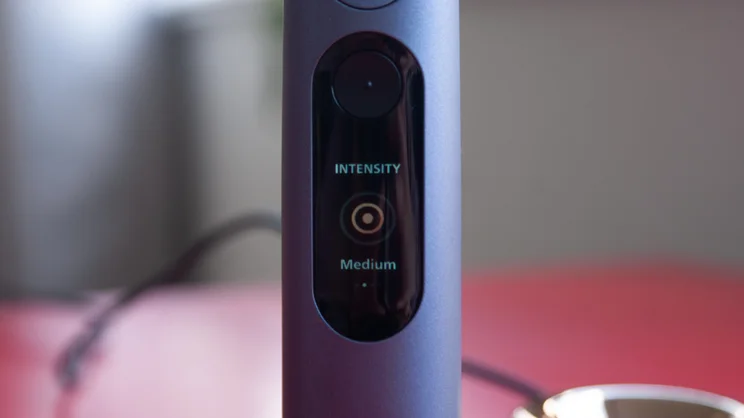
After this, you can access the menu. Eight brushing modes (Clean, Deep Clean, White, Gum Health, Sensitive, Max Care, Comfort and Polish) and three brushing intensities (Low, Medium and High) are available.
The main variable across brushing modes is the timer. For instance, “Clean” lasts the standard two minutes while “White” allows an extra 40 seconds “to focus on polishing your front teeth”, helping to remove surface stains. Some modes affect vibration patterns: “Sensitive” and “Comfort” dial things down for a gentler clean, and “Polish” introduces “polishing pulses” to the vibrations.
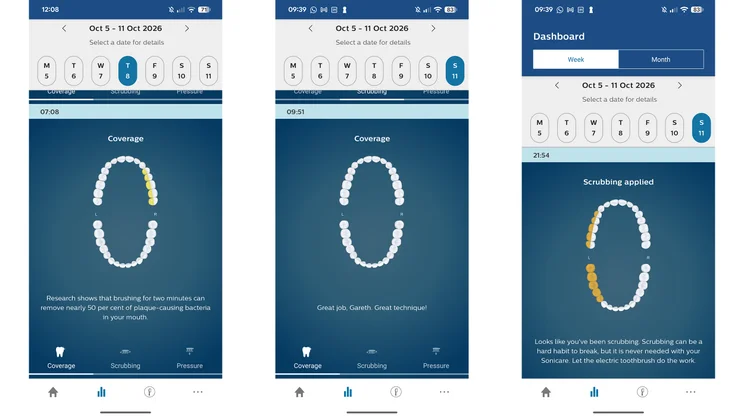
A standout feature of the 9900 Prestige is “Instant Feedback”: real-time brushing guidance, indicated via a ring light at the base of the brush. There are three modes: “Coverage”, which uses motion-sensing tech to indicate which areas of your teeth you’ve covered or have yet to brush via a blue or yellow light; “Scrubbing”, which alerts you with a red light when “excessive brushing motion” is detected; and “Pressure + SenseIQ”, which monitors applied pressure. You can also choose to turn Instant Feedback off.
The latter feedback modes alert you with a beep every 20 seconds when it’s time to move to the next area of your teeth (marking six distinct brushing areas). The Coverage mode beeps each time you’ve successfully brushed one of 12 zones, with a final cheerful chirp to indicate when you’ve achieved full coverage.
After each session, the 9900 Prestige displays brushing coverage on a tiny diagram on its screen. It will also warn you if you need to reduce pressure or scrubbing. All of this data is available in the app too.
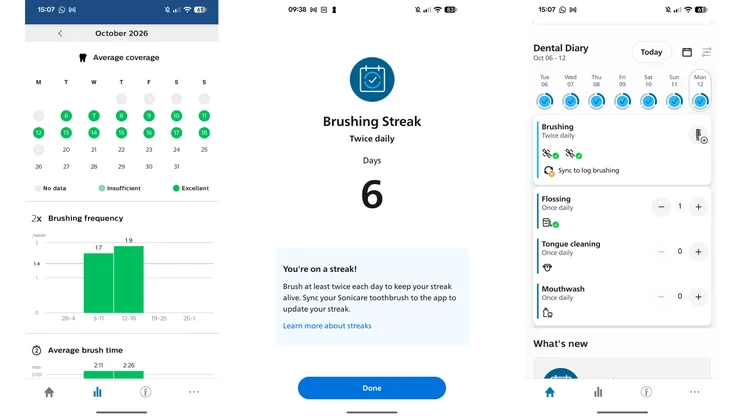
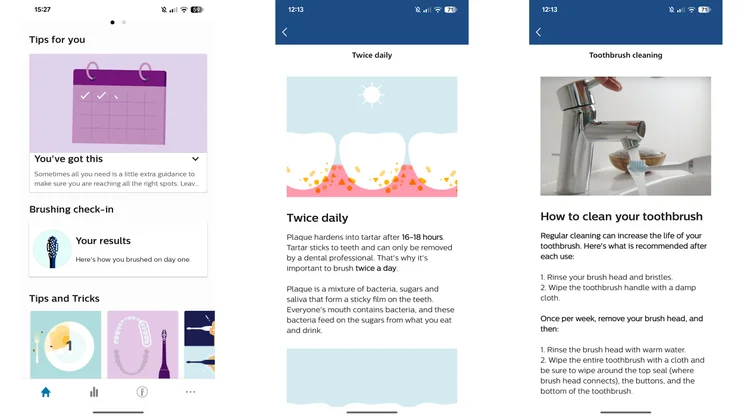
The Sonicare app also lets you track your brushing via a Dental Diary. This lets you monitor coverage, scrubbing and pressure via detailed diagrams and in-app guidance. You can view live feedback as you brush, and the app also provides “Tips and Tricks” for better brushing, oral health and brush maintenance.
How I tested the Philips Sonicare DiamondClean 9900 Prestige
I test electric toothbrushes through daily use over several weeks. During this time, I note how easy and comfortable they are to use and how clean my teeth feel after brushing, ensuring I use the toothbrush’s full range of features. For this toothbrush, this meant using its range of brushing modes, Instant Feedback features and companion app.
I test a toothbrush’s battery life by running it continuously from a full charge, counting how many two-minute brushing sessions it completes before it dies. To gauge how well the brush cleans my teeth, I use plaque-disclosing tablets that temporarily stain my teeth either red or blue to indicate new or existing plaque. I can see how well the brush performed by chewing one after brushing.
What’s it like to use?
Comfort, ease of use and accessibility
I found the 9900 Prestige very easy to use and quickly got accustomed to programming its various settings and brush modes.
Its vibrations can get pretty powerful; I found the Medium setting a good middle ground, powerful enough for a great clean (more on this later) without feeling uncomfortable. I’d advise not standing too close to the mirror, though, if you don’t want it sprayed with spittle at high speeds.
Since the 9900 Prestige is taller than my regular toothbrush (the Suri Pro 2.0), manoeuvring it around my mouth was a little tricky at first, particularly around the palatal surface of my back teeth. But this has become easier the more I’ve used the brush.
One thing I didn’t like about the 9900 Prestige is the charging stand, which consists of a wireless charging base (attached to a USB Type-A cable, with no plug supplied) and a glass tumbler that sits on top of the base and acts as a cradle for the brush to stand in vertically. It all looks neat and fancy, but it’s not the most practical or stable solution. The first time I charged the brush with it set up on my living room floor, it toppled over inside the glass several times when I walked past.
Feedback modes
The Instant Feedback modes are a really neat feature. They give genuinely useful guidance based on common brushing mistakes, and the ring light’s placement is well thought out: it’s very easy to keep an eye on the base of the handle in a mirror reflection.
For most of my time reviewing the 9900 Prestige, I used the Coverage mode, which tracks your brushing across 12 different areas of the teeth. I was initially sceptical about this mode, but found its motion-based tracking impressively accurate.
That said, it’s not so comprehensive that you can afford to rely on it blindly. You still need to use your common sense and judgement: for instance, on a few occasions when brushing my molars, the 9900 Prestige alerted me that I’d covered the whole area, even though I knew there were some areas on the palatal surface that I hadn’t quite reached while focussing on the crowns. In short, Instant Feedback is great for tracking overall coverage, providing a rough map for brushing and alerting you to spots that you habitually miss, but it’s not gospel.
What’s the app like?
Before I discuss the Sonicare app, I want to state that I’m averse to companion apps for every conceivable household device. They often feel unnecessary and, in many cases, offer a long list of smart features you won’t use.
However, if you keep a hawk’s eye on every facet of your health, there’s a lot to like about the Sonicare app. I don’t, but I like it too.
Will I check it every day and update my Dental Diary every time I floss or use mouthwash? No. But the interface is intuitive, most features are useful, and it helps spot unhealthy brushing habits you might not realise you have.
How well does it clean?
Importantly, the 9900 Prestige provides an excellent clean. As I said above, it’s powerful, and my teeth felt nicely polished after almost every use.
For the most part, I didn’t notice much variation between brushing modes, beyond changes in brushing session duration. “If you’re going to stick to one mode,” Philips suggests, make it the Clean setting. I agree: using this on Medium intensity with Instant Feedback in Coverage mode gave me a consistent, comprehensive clean. If you’ve missed a spot when the two minutes are up, the brush asks whether you want to continue until you’ve hit full coverage, before logging the session as completed.
Disclosing tabs test
As with all the electric toothbrushes I review, I tested the 9900 Prestige’s cleaning quality using disclosing tabs to reveal lingering plaque after brushing.
The results were impressive, with very few remaining stains indicating new plaque: just a few small spots around my upper left incisors, between the teeth where flossing would normally clean and on the top of a couple of crowns. Overall, I was very pleased.
What’s the battery life like?
Last, but not least, is battery life. This was actually one of the first things I tested when I started reviewing the toothbrush. I did a battery rundown test from a full charge, running the toothbrush repeatedly on Clean mode at its lowest intensity setting, and with Instant Feedback on Coverage mode by default.
The battery lasted 160 sessions, which is 320 minutes (five hours and 20 minutes), or 80 days of brushing. An impressive result: longer than the Suri Pro 2.0’s 140-minute battery life and not too far behind the Laifen Wave Pro’s 376 minutes.
Of course, results will differ when using the toothbrush as intended. I’ve used it daily for just over a week (sometimes more than twice a day) and the battery has dropped from full to 53%. That’s much closer to Philips’ 14-day battery life claim. I’d expect a smart toothbrush to fall short of a more barebones model here, especially one with a touchscreen display and ring light, so this result isn’t particularly surprising.
If a long battery life is your top priority, I’d usually recommend steering clear of fancy features. That said, the travel charging case makes charging the 9900 Prestige while on holiday less of a hassle (though I wish this used a USB-C cable rather than Philips’ two-pin adapter).
Should I buy the Philips Sonicare DiamondClean 9900 Prestige?
The 9900 Prestige is a very good smart sonic toothbrush; I’ve no doubts about that. I haven’t rated it higher simply because I think its price is too steep. If it made biannual dentist visits obsolete, then perhaps. But the 9900 Prestige won’t magically remove the need for £45 checkups and £70 hygienist appointments.
If its price tag doesn’t deter you, go for it: this highly advanced, effective toothbrush is unlikely to leave you disappointed with its features and performance. However, there are much cheaper ways to achieve good dental care.
My favourite, the Suri Pro 2.0, is £105 (with charging case included), while the Ordo Sonic Edge is a great budget option at £15. If you’re desperate for a Philips toothbrush, consider one of the many other Sonicare models. We gave the Sonicare DiamondClean 9000 Special Edition five stars and a Best Buy award, and you can often get this for around £120. Meanwhile, the DiamondClean 8000 costs half as much as the 9900 Prestige and still offers plenty of smart features and brushing feedback.