To help us provide you with free impartial advice, we may earn a commission if you buy through links on our site. Learn more
Screenshot
- Simple to set up
- Extremely quiet
- Only leaves tiny borders
- Struggles on bumpy lawns
- Can’t mow in the dark
- Setup requires Wi-Fi and Bluetooth
Many robotic lawn mowers promise ease of setup, but not all deliver. Boundary wires, confusing apps and unexplained technical gremlins can all frustrate. But with the Eufy C15, there are some very bold claims, and I’m particularly interested to see whether those claims hold water.
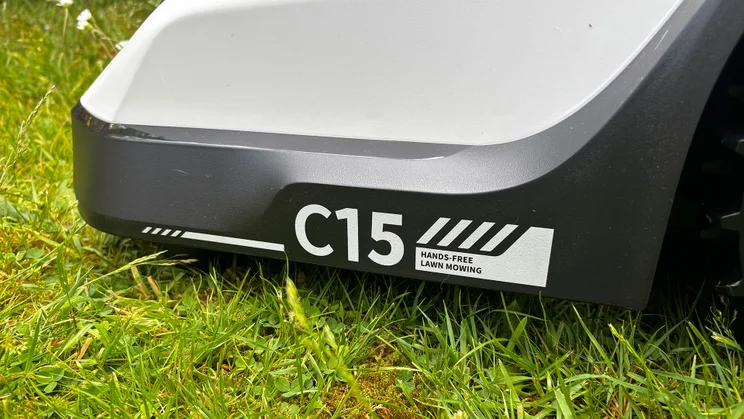
The C15 is the smaller sibling to the E15 and E18, and that means it can tackle areas of up to 500m2, rather than the 800m2 and 1,200m2 of its more expensive relatives. Still, 500m2 is more than enough for many homeowners.
I was able to get the C15 mowing in a matter of minutes, thanks to its ability to map and mow at the same time. It could be perfect for the impatient gardener. But does that make it the mid-weight robotic mower to choose? I’ve put it to the test on multiple lawns to find out.

What do you get for the money?
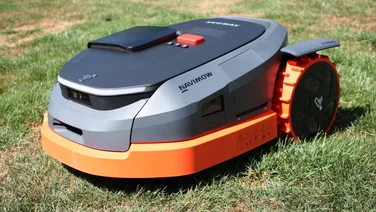
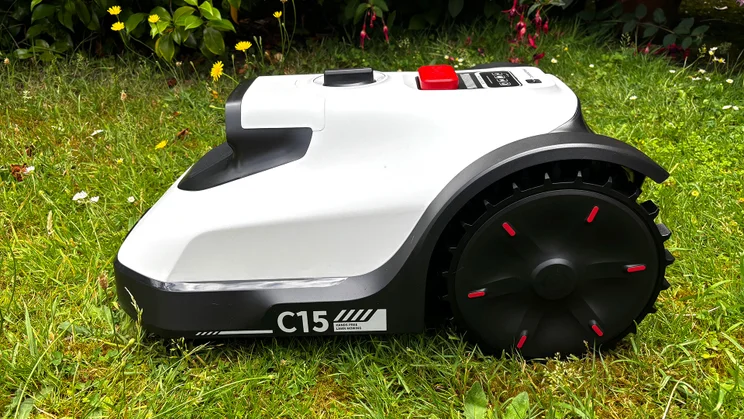
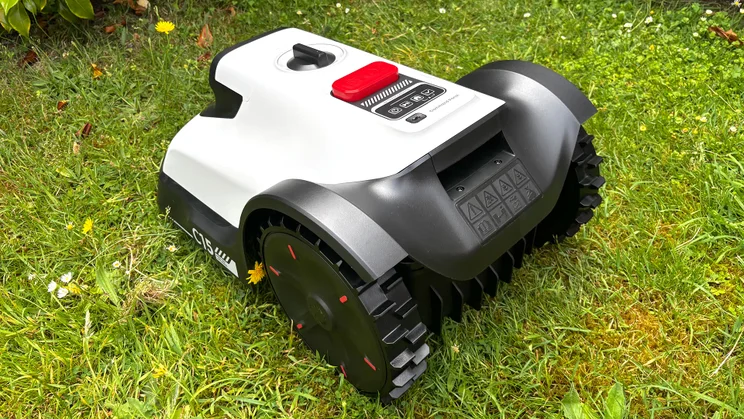
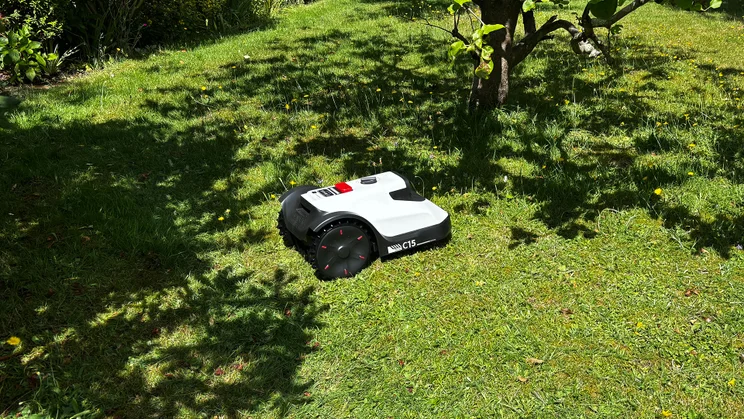
I tested the Segway Navimow X430 recently, which is a gargantuan mower in every sense of the word. By comparison, the Eufy C15 is a lightweight. It tips the scales at just 11kg, and is about two-thirds of the size.
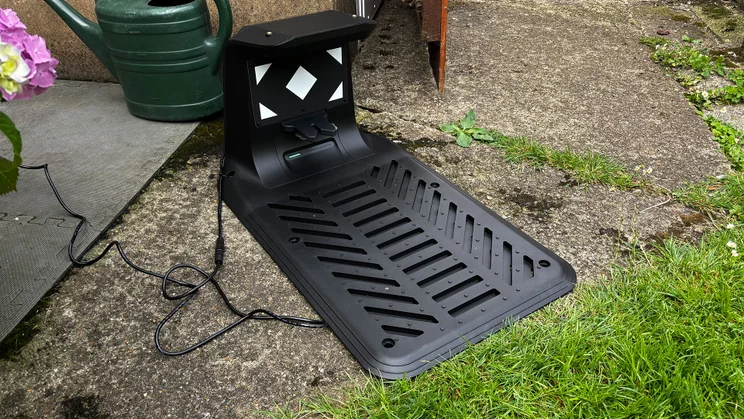
Open the box and you’ll find the mower, the charging base station and its ground anchors, plus a shelter that attaches with bolts. All that’s left is to plug it in using the supplied PSU.
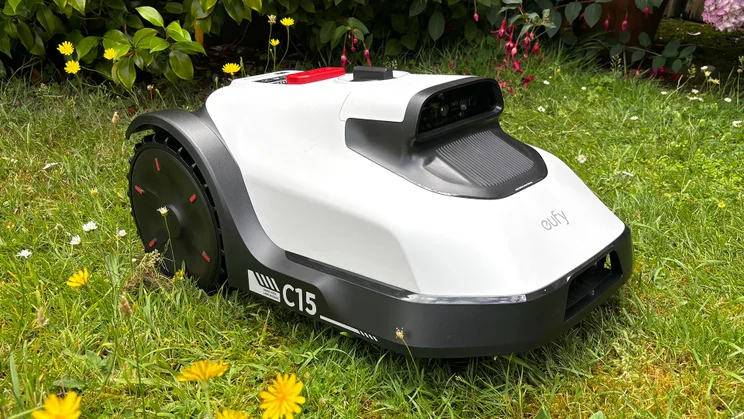
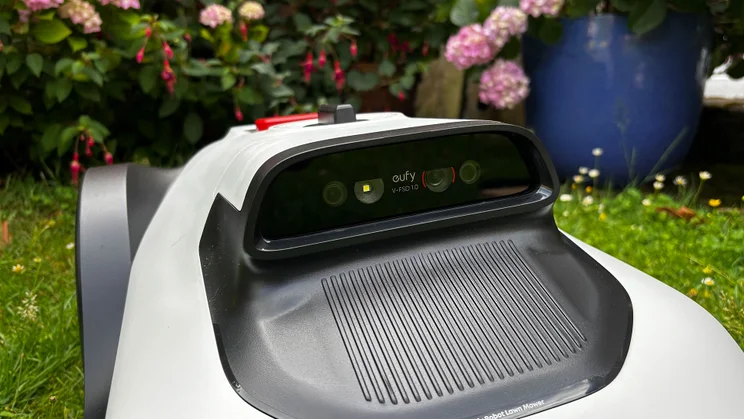
The Eufy C15 doesn’t require boundary wires because it uses cameras with AI tech to map the garden and provide obstacle avoidance. It also means you don’t have to rely primarily on satellite positioning, which cuts down the complexity, particularly on larger lawns.
Screenshot
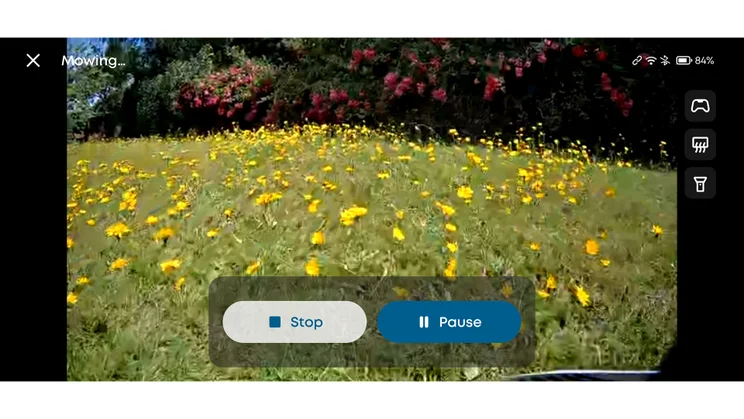
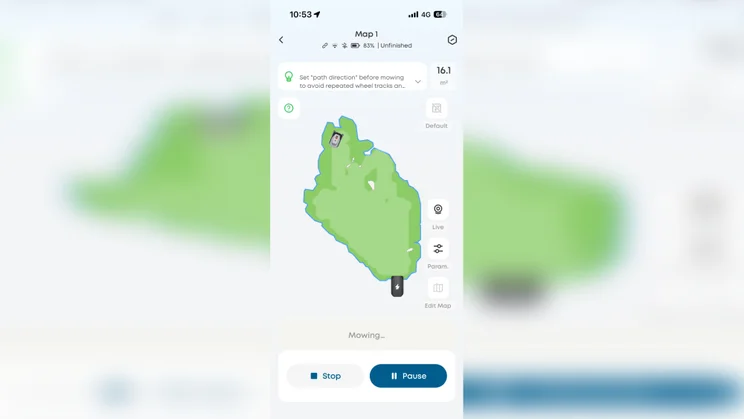
It partners with Eufy’s app, which is easy to use, with a friendly look and feel. It allows you to map multiple zones and set different mowing schedules for each; establish no-mow zones; and its live-view function allows you to see what the mower sees when you’re away from home.
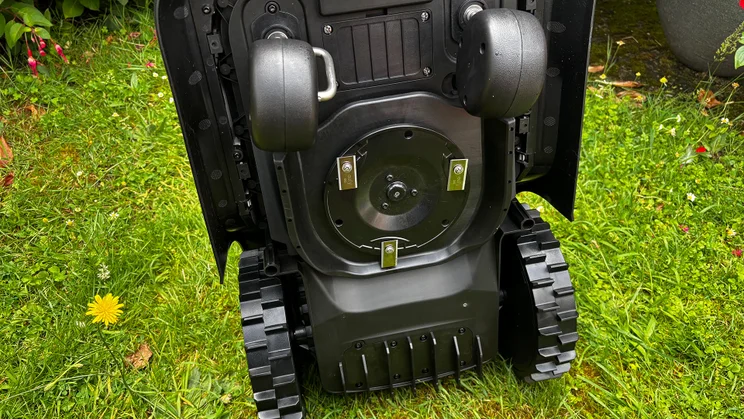
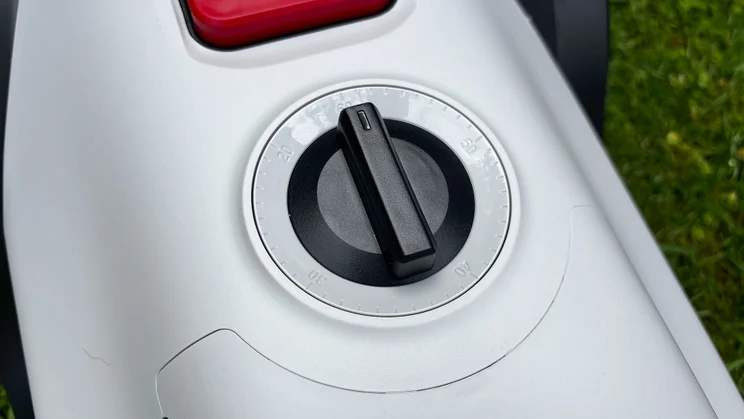
You can select a cutting height from 20-60mm and while it won’t mow in low-light or rainy conditions, it has an automatic recall mode, so there are no concerns about it coming to harm. I like that it has two large, treaded rear wheels, but the fronts are smooth like a Little Tikes Cosy Coupe car, and articulate like a shopping trolley. It can only tackle slopes of around 18 degrees, though, so if your garden is hilly, you might find it struggles.
Screenshot
Is it difficult to set up?
In a word, no. In fact, this may well be the Eufy’s USP. You position the base station, plug it in, attach the shelter with four bolts and offer the mower up to the charger’s contacts.
Once mated and the app is downloaded, it’s a case of walking through the straightforward steps to connect it to your Wi-Fi. This, however, could represent a slight hiccup depending on how far you are from your router, meaning you could be into a world of Wi-Fi extenders. I didn’t have a problem here, because I positioned the Eufy close to my house.
Another issue you may encounter, though, is the shape of the power supply’s plug. I found it a fraction too large to seat fully into my external plug socket, which meant it was quite easy to knock out.
Screenshot
Beyond that, though, things are pretty painless. You add the mower from the app, press a couple of buttons on the mower to establish the Wi-Fi connection and you’re ready to go. From that point, you have two options: you can either map and mow at the same time to get you going quickly, or choose to map only, which takes longer but is slightly more accurate.
I tried both modes on different lawns and I’m inclined to agree, but I had little to complain about in either setting. The quality of the mapping was good; it faultlessly identified borders on its first attempt, and I didn’t need to intervene. Even in a large garden, it didn’t lose its position.
I was able to choose whether the base unit was on or adjacent to the lawn, or had to travel across a path to reach it. But once mapped, I was able to add no-mow zones, split the map and set different mowing schedules.
Screenshot
In everyday use, I found it easier to start proceedings using the app than by simultaneously pressing the buttons on the mower, mainly because they’re partially obscured by the shelter. Like other robotic mowers, there’s a big red stop button on the top, and it’s possible to pause the mower using the app or a physical button.
I particularly like the live view option. This beams footage from the camera to your phone making it easy to track its movements. I did find this to be rather signal-dependent, though.
If there was a frustration with the app, it prompted more firmware updates than I would’ve expected. Maybe I tested it on a bad day.
It takes around 100 minutes to charge the 24v, 4.2Ah battery, which has a runtime of around 100 minutes.
How did I test the Eufy C15?
I tested the Eufy C15 in the same way as I test all the robot mowers I review: by setting up using the mower as any consumer would, being careful to take note of how easy or difficult the setup process was and how the mower performed during the time I had to test it.
For this particular mower, I had it on test at the same time as two other robot lawn mowers (the Segway Navimow X430 and the Bosch VISIMOW18V-100) and reviewed all three over the course of a couple of months during June and July 2026.
I used each mower on a couple of different lawns to see how they would cope, taking particular note of how efficiently they mowed, how long the battery lasted in each case, how good object avoidance was, and how closely the mower was able to mow to edges.
When testing any robot lawn mower, I also consider how much it costs and how this compares to some of its closest rivals in a fiercely competitive market, as well as additional factors such as how easy it is to carry around and how good the accompanying app (if any) is.
How well does it mow the lawn?
I was impressed with the efficiency with which the C15 cut, making long, sweeping runs before executing something akin to a three-point turn, which Eufy says is kinder to the lawn than a simple U-turn. That’s a good balance, because its compact dimensions mean it’s at home on small gardens where changes of direction are more common, and its common sense, straight-line efficiency makes it useful at cutting larger areas.
Like many other robotic mowers, it requires grass to be cut at a reasonably consistent length, which meant it struggled on a lawn with tall dandelions. Here, it seemed to take a rather erratic approach to business, tackling one particular area before disappearing to focus on somewhere else before returning. That meant the battery expired before it had cut the entire lawn, although it retained enough power in the tank to return to the base unit to charge.
Screenshot
On lawns that were more consistent in length, however, there were no such problems. It cut the lawn in long, straight runs, impeded only when its (very good) obstacle avoidance tech kicked into life. I also found it cut very close to the borders, with a gap of around 5-10cm, although it did leave a longer clump of grass around a rotary washing line pole. That’s standard for mowers of this type, though.
At no point did it bother flower beds, and it successfully negotiated taller, dangling plants.
I noticed a bit of wheel slip on dry grass around a rabbit bolt hole, but the Eufy was able to get moving quickly. It did, however, determine that it had been ‘lifted’ on one bit of sun-scorched lawn which required a tap of the resume button. Had I not been around, it would have stopped the day’s mowing.
Screenshot
Another observation I have is that it sets its primary direction based on the orientation of the base unit. So because, on one lawn, I had placed it on an area of hardstanding which was diagonal to the lawn, it then proceeded to mow diagonally. I didn’t find this a particular issue, although it can reduce its efficiency due to an increased number of turns required.
When running, it achieved a very good cut, and I was pleased that it didn’t waste time and effort on a dead patch where some patio furniture had been placed.
Should you buy the Eufy C15?
There’s no shortage of robotic mowers capable of covering around 500m2, which makes this a challenging part of the market. While both are cheaper, the Bosch Indego S+ 500 requires a boundary wire to be installed to prevent it wandering into your shrubberies, and the Worx Landroid M500 Plus WR165E mows in a more haphazard way. The Honda Miimo 70 Live, meanwhile, is significantly more expensive.
To say that the Eufy C15 performs very well against them is doing it a disservice, because it is very good indeed. It’s spectacularly easy to use, and mows very well indeed. If you have a flat lawn, this could well be the mower to choose; if you live on a hill, things might be rather different.
It dealt with edging very well, was able to get extremely close to paths, and left just enough near flowerbeds to avoid trimming overhanging flowers. I found it was very easy to trust its decision-making very quickly.
At £999, the Eufy isn’t cheap, but its obstacle avoidance is excellent – so much in fact that I didn’t really need to set any no-mow zones. It’s worth noting that the Worx requires a £199 add-on to do this, which sets its price much closer to the C15.
Screenshot