To help us provide you with free impartial advice, we may earn a commission if you buy through links on our site. Learn more
- Dual drawers
- Dishwasher-safe parts
- Easy to programme
- 1hr max cooking time
- Touchscreen can be over-sensitive
- Minimal instructions provided
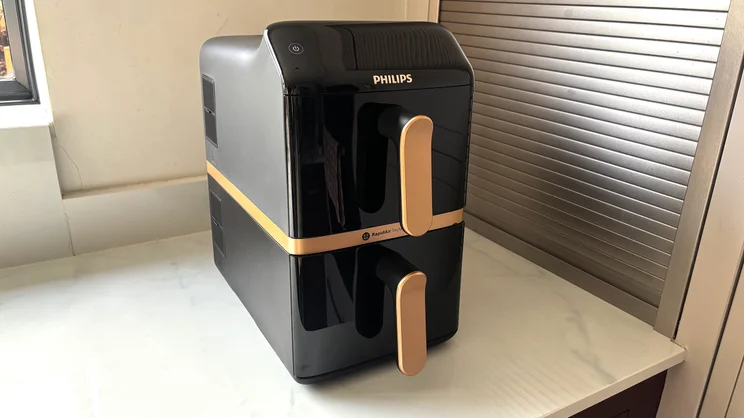
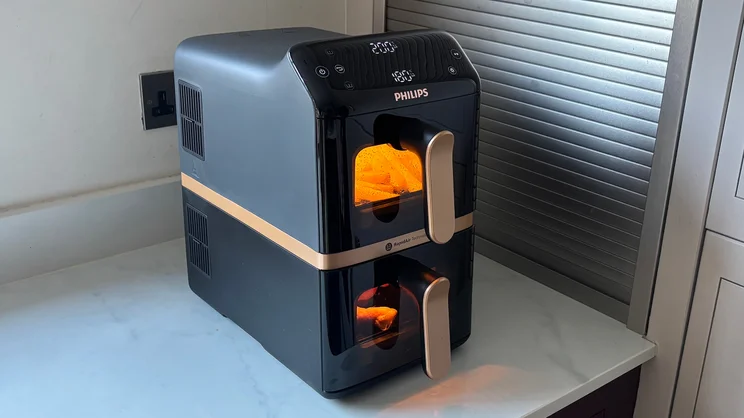
At first glance, the Philips 4000 Series Stacked Dual Basket Air Fryer might not seem especially revolutionary. However, as the brand’s first stacked air fryer, it marks a departure from the side-by-side dual-drawer appliances previously on offer, such as the Philips 1000 Series FlexDrawer Dual Basket Air Fryer.
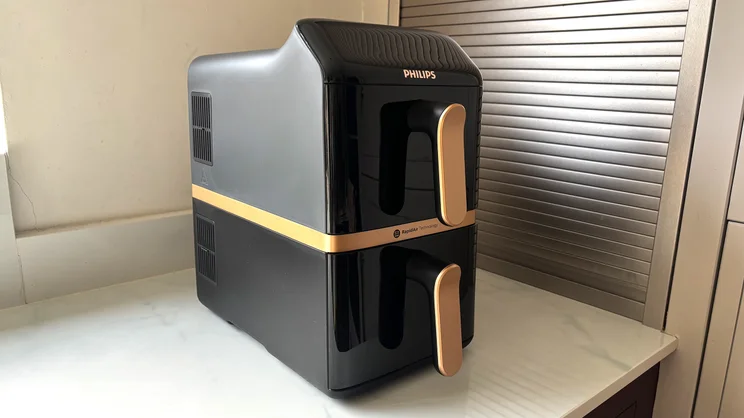
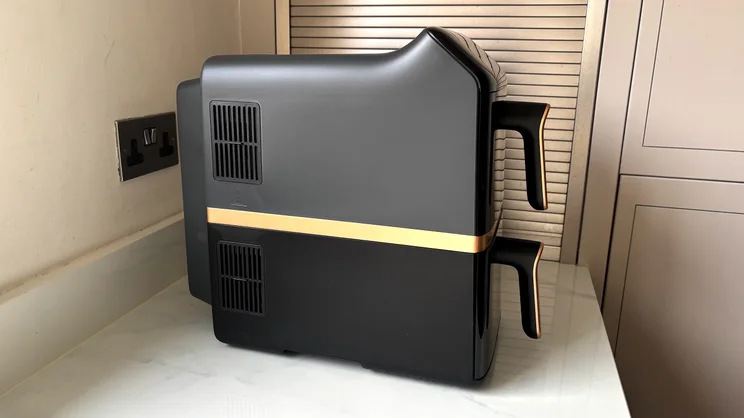
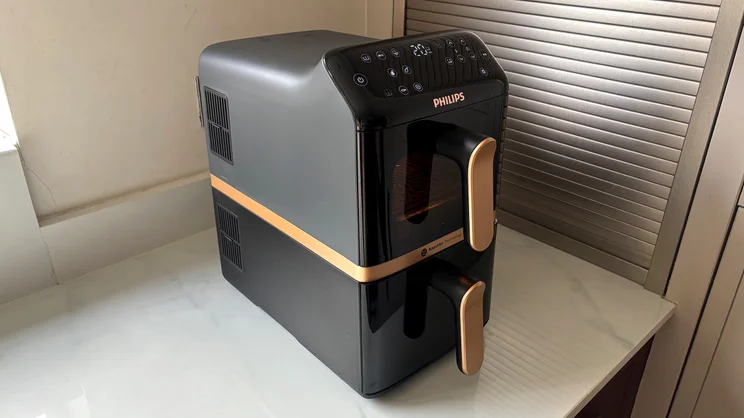
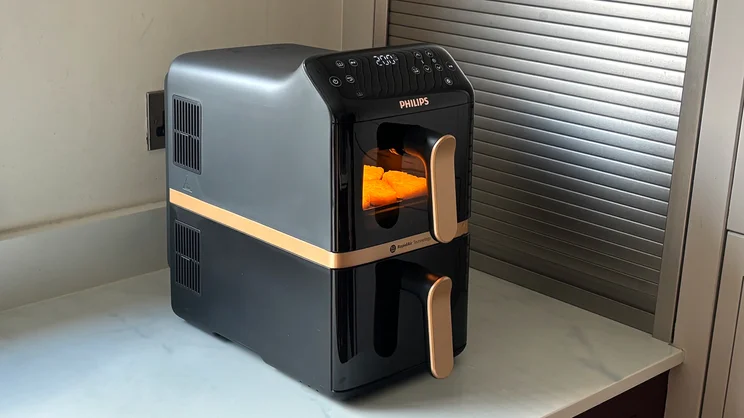
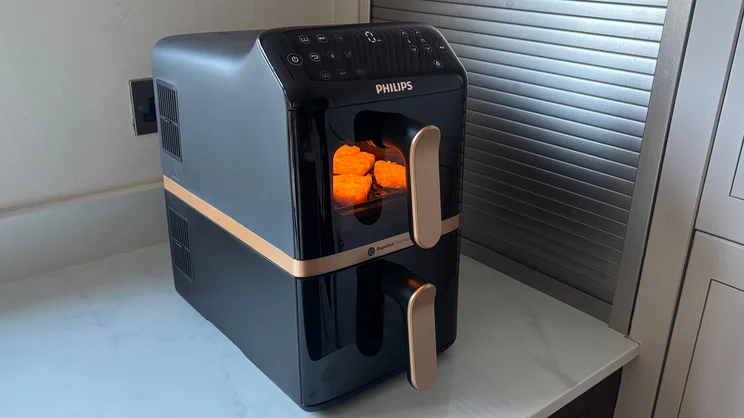
Instead, the double drawers of the 4000 Series Air Fryer are stacked vertically, transforming the footprint from wide to narrow, with no real compromise on capacity. Just like some of the best dual air fryers, the Philips 4000 Series Stacked Dual Basket Air Fryer has two equally sized drawers, each offering 5l of space. This means that you could cook up to 1kg of fries, 24 chicken drumsticks, or two whole small chickens – making it ideal for families.
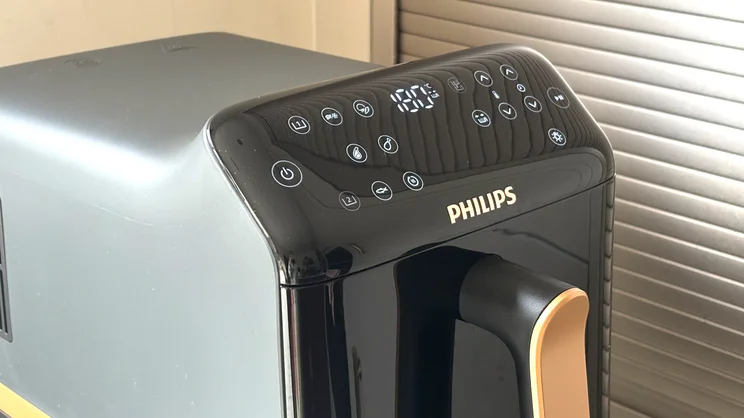
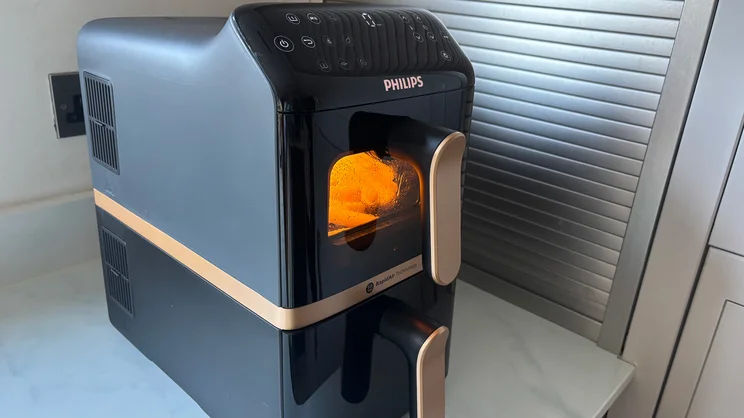
The range of programmes is similarly family friendly. Themed more around food types than function, there are six presets including a handy reheat mode, as well as buttons for matching settings and syncing cooking finish times. An internal light and windows make it easy to keep an eye on progress too.
In testing, the Philips 4000 Series Air Fryer delivered a good performance, and proved simple to programme even without the instructions at hand. While not completely faultless, its clever design, low maintenance and decent capacity could easily be reasons to buy.
Philips 4000 Series (NA462) Stacked Dual Basket Air Fryer: What do you get for the money?
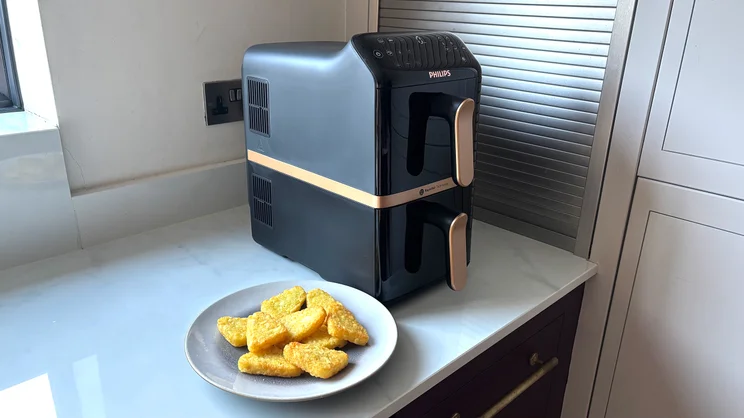
The most noticeable feature of Philips 4000 Series Stacked Dual Basket Air Fryer is its size. At 23.3 x 46.9 x 39.9cm (WxDxH), its maker estimates that its footprint will save up to 45% of surface space when compared to other Philips side-by-side models.
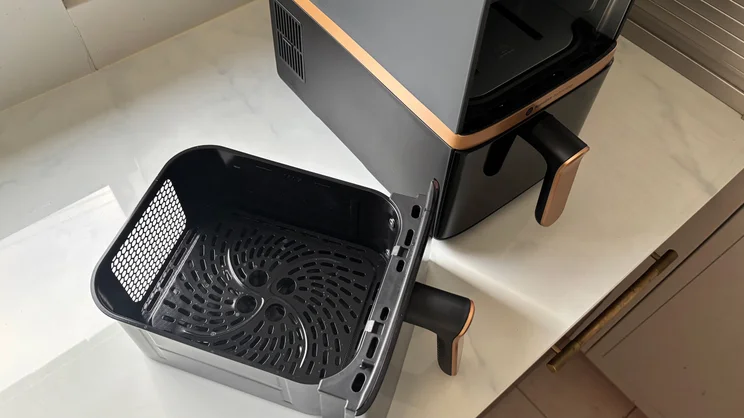
Even with more diminutive dimensions, it’s fairly deep on the average worktop, but a big plus is that it vents at the left-hand side, not at the back. While you’ll still need to think about where you place it, this does mean that you don’t need as much clearance at the rear. It’s a little heavier than some air fryers, at 8.98kg, but feels reassuringly robust for it. There’s plenty of capacity inside – five litres in each interchangeable drawer – complete with ceramic non-stick plates.
Programme-wise, there isn’t swathes of choice, suggesting that this is an air fryer suited to everyday meal prep rather than adventurous cooks. There are five pre-sets dedicated to specific foods (frozen potato-based snacks, steak, fish, vegetables and chicken drumsticks) as well as a reheat function. This aligns with the air fryer’s maximum runtime of one hour – this also means it’s also not suitable for dehydrating, proofing or fermenting, even though the lowest temperature is 40°C (the highest is 200°C).
However, there’s still plenty of functionality: buttons to sync the finish time of both drawers, or to copy their settings, make it useful for busy lifestyles. Plus, there’s a back button for correcting programming mistakes. A shake option serves as a useful reminder to turn foods while there are clear toggle up/down buttons for both time and temperature. Each drawer has a window too, which can be illuminated with the internal light. There’s also a two-year warranty.
The 4000 Series Stacked Dual Basket Air Fryer costs £270 at full price, and is available from a number of retailers such as Currys, Amazon and John Lewis, as well as directly from Philips (where, at the time of writing, it will cost you £258). It’s worth noting that, at 2,750W, this air fryer is more power-hungry than others: from cold, one hour’s usage of both drawers at 200°C consumed 1.326kWh of electricity. At a rate of 25p per unit, this would cost around 33p. Compare this with the Tower Vortx 11 Litre Dual Layer Air Fryer that I reviewed last year: with both drawers running at 200°C for one hour, this used 0.931 kWh of electricity (around 23p at a rate of 25p per unit).
What’s it like to use?
The Philips 4000 Series Stacked Dual Basket Air Fryer is a great example of how easy an air fryer can be to programme. And for the most part, it’s fairly clear what each button does. This is fortunate, because the included instructions are pictorial and frustratingly brief. Like some other Philips air fryers, you’ll need to download the full manual online to get the most from it. This is worth doing just to clarify what each programme’s purpose is: for example, it might not be immediately obvious from its icon that the chicken preset is set specifically for drumsticks and not other sections of poultry. Similarly, while there’s a table of times and temperatures for foods in the physical instructions, this is skimpy: more information supplied in the full manual.
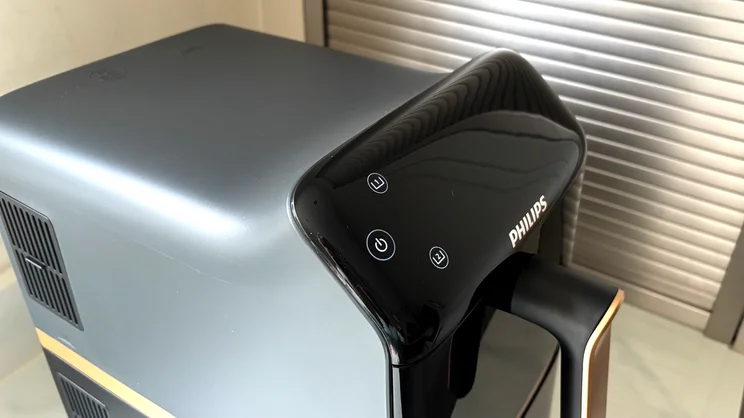
When it came to actually programming the 4000 Series, the only other issue I noted was a frustratingly oversensitive touchscreen. Often, I would hit the start button to begin cooking, and it would register twice, starting then stopping operation.
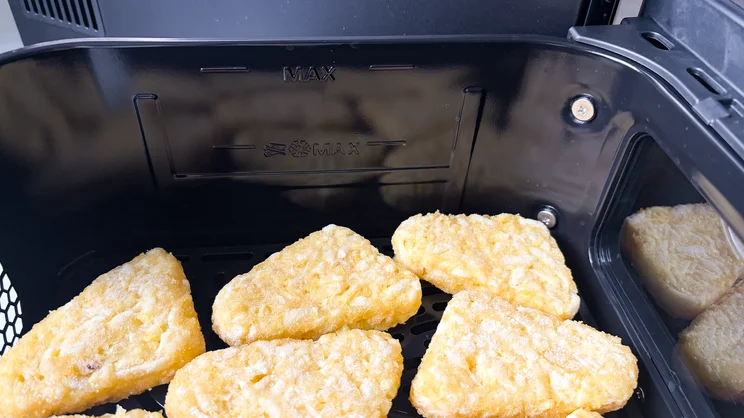
Inside each drawer, there are two max fill levels: the lower one for frozen food, while the other is a maximum overall. This is helpful for those who may not have the time to weigh out foods, or those who prefer a visual reference. I also liked that both the cooking plates and the drawers are dishwasher safe: some air fryer drawers with windows can only be cleaned by hand, which can be quite laborious considering how greasy these windows can get. It’s not all bad if you don’t have a dishwasher, though: I found that the parts were simple to wash in the sink, and the non-stick coating made this less of a chore.
How well does it cook?
Overall, I found that the 4000 Series handled its cooking tasks well, although some of the preset programmes may need a tweak. For example, I found the ‘frozen potato-based snacks’ setting didn’t need to be as long for the hash browns I cooked, while the timer on the chicken setting needed extending significantly for a whole bird (as I mentioned above, this is only intended for 1kg of drumsticks). Like with many air fryers, I’d suggest checking on food as it cooks rather than always using the set time and temperatures.
The preset parameters for the frozen potato programme are 26 minutes at 200°C – both longer and hotter than I would normally choose for hash browns, so I shortened the time to 18 minutes. Nine hash browns fitted in the drawer comfortably. By default, the air fryer will alert you to shake your food twice: once halfway through cooking, which is when I turned the hash browns over, and again with five minutes of cooking to go.
I found it a little annoying that the air fryer constantly beeps at you while the drawer is removed – several hash browns can take a while to turn over – but it’s reassuring that you’ll always know if a drawer isn’t closed properly. After cooking time has elapsed, the hash browns were perfectly golden brown at the corners, crisp on the outside but not too hard, and fluffy on the inside.
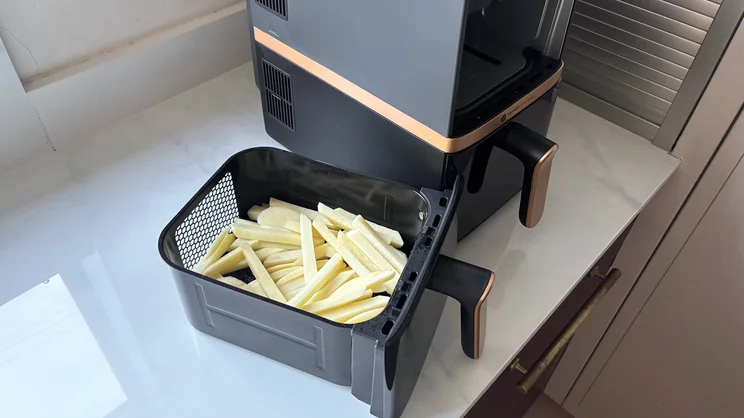
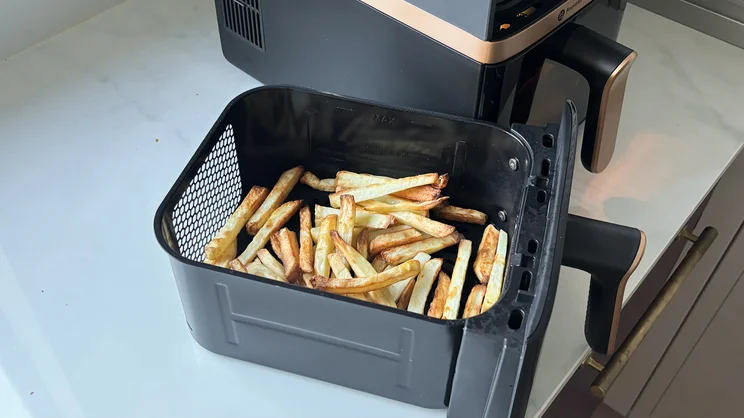
While there’s prep guidance for making fresh chips in the full instructions, there are no specific settings or suggestions when it comes to the time and temperature to use. Because of this, I used my preferred temperature of 200°C for 30 minutes, shaking multiple times throughout. The finished batch was mostly consistent, with a few paler pieces, but otherwise well-cooked, brown and crispy at the ends. Some chips had a bubbled surface and most were fluffy in the middle, but a slightly longer cooking time at a lower heat could be just as effective an option (with credit to Philips, the full manual advises against frying fresh potatoes any higher than 180°C, to reduce the production of acrylamide).
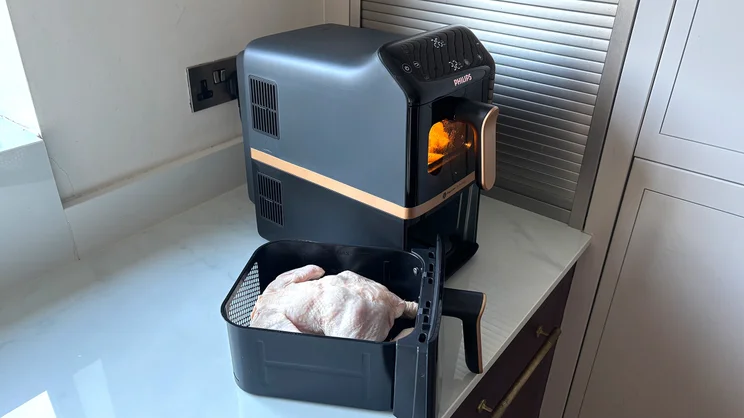
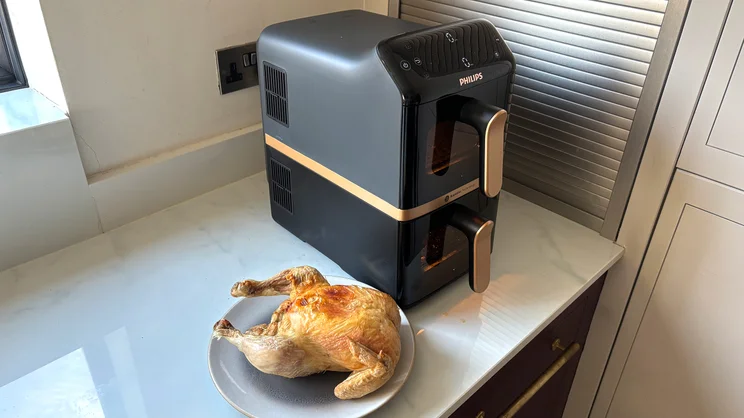
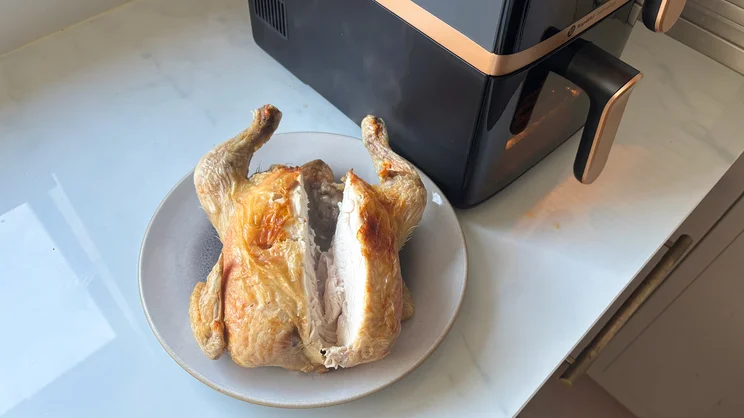
Both drawers are deep enough to accommodate a small whole chicken, although there’s no cooking guidance for this. I roasted a 1.5kg bird, using the chicken drumstick programme’s default temperature of 180°C raised from 32 minutes to the maximum run time of 1 hour. The programme’s shake alert, which sounded halfway through cooking, I used as guidance to turn the chicken over. This, and the alert when the air fryer has finished, are loud enough to be heard in a busy kitchen, but not too harsh. The resulting chicken was well-cooked, with clear juices, brown, crisp skin and no pink flesh remaining. This was a good performance, but I would have appreciated more specific guidance in the instructions.
Should you buy the Philips 4000 Series (NA462) Stacked Dual Basket Air Fryer?
It’s a shame there isn’t more cooking guidance included with the Philips 4000 Series. From a setting point of view, it’s good for those new to air frying, but beyond that, achieving the best results relies on some experience.
That aside, the 4000 Series is a great fit if counter space is limited but you’re still keen on a Philips dual drawer model. There’s plenty of capacity for families, it’s a breeze to programme, low maintenance (compared to handwash-only air fryer drawers) and durable. With its 10l total capacity, it’s also a sensible upgrade from a smaller air fryer.
Price-wise, it’s similar to rival stacked models, such as the Ninja DoubleStack XL air fryer, as well as other Philips dual drawers, such as the Philips 5000 Series. For those whose budget won’t stretch, a more affordable stacked air fryer, such as the Tower Vortx 11 Litre Dual Layer Air Fryer T17190, offers slightly more capacity at a lower price.