
To help us provide you with free impartial advice, we may earn a commission if you buy through links on our site. Learn more
- Exceptional value for money
- Includes battery and charger
- Pleasingly chunky controls
- So-so build quality
- Not especially powerful
- Sub-par ergonomics
There’s something baked into the human psyche that drives us to choose something bigger, more highly-specified or more powerful than we really need. But often that leads to extra expense, which is a waste if you don’t really need those capabilities. A Ferrari might make you feel good, but all that engineering and expense is pointless if you only drive it to pick up a bottle of milk each morning.
So then, the Vonhaus G-Series 20V Max hedge trimmer. It costs £60, comes with a battery and charger and could be the ticket if you just need to tidy up your box hedging a few times a year. That will suit a great many people, but what if you need to ask a little more of it?
I’ve put the G-Series 20V Max through its paces during a slightly mercurial spring to tell you whether this bargain tool deserves a place on the list of best hedge trimmers to buy.
What do you get for the money?
Given the paltry price tag, the answer you might expect is ‘not a lot’. But for a sub-£60 hedge trimmer to come with both a battery and a charger is impressive: some tool brands will charge more than that for just the power pack.
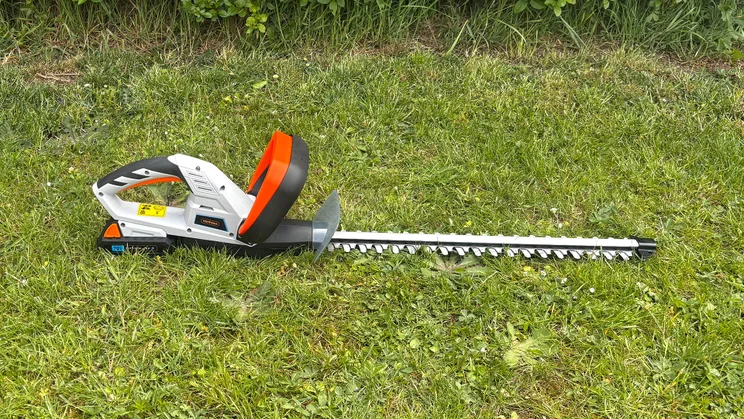
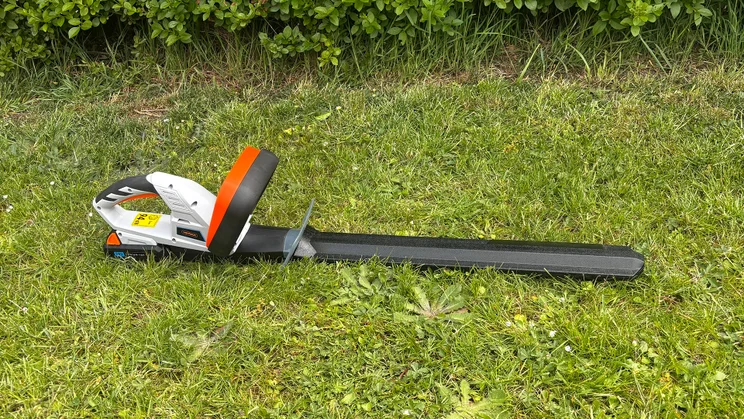
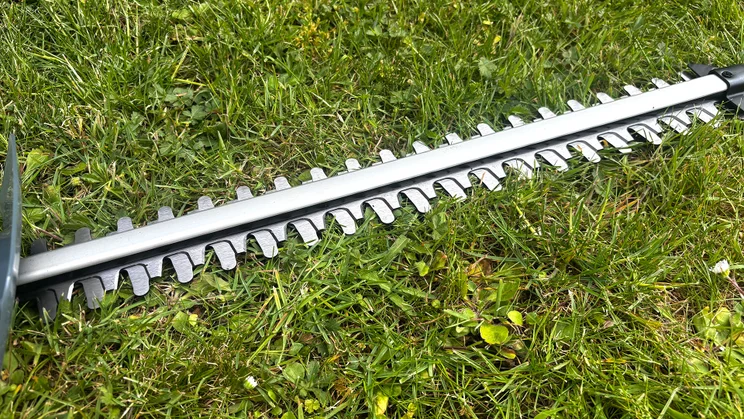
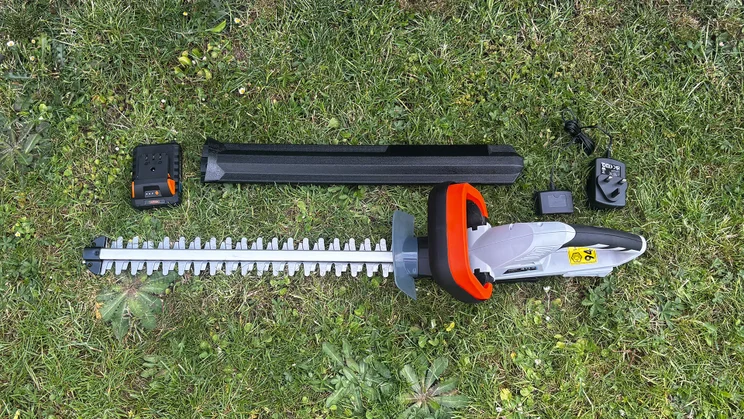
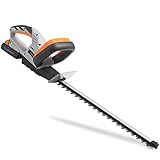
Open the rather basic brown cardboard box and you’re presented by a trimmer, a 1.5Ah battery, a small charger and a manual. The Vonhaus’s 45cm blade is protected by a cover: it feels cheap, but seems up to the job. I like that it has an eyelet to hang the entire shebang on the wall.
The battery even comes with almost a full charge, so not only do you get everything you need in one box, but you can get trimming pretty much straight away.
Vonhaus’s hedge trimmer measures a relatively compact 84cm and its blade moves at 1,400spm (strokes per minute). That’s a long way off more trimmers costing four times the price, but it beats the £100 Ryobi RY18HT40B by a full 100spm – even if the ability to trim hedges with branches of up to 14mm in diameter is less than its lime-green rival.
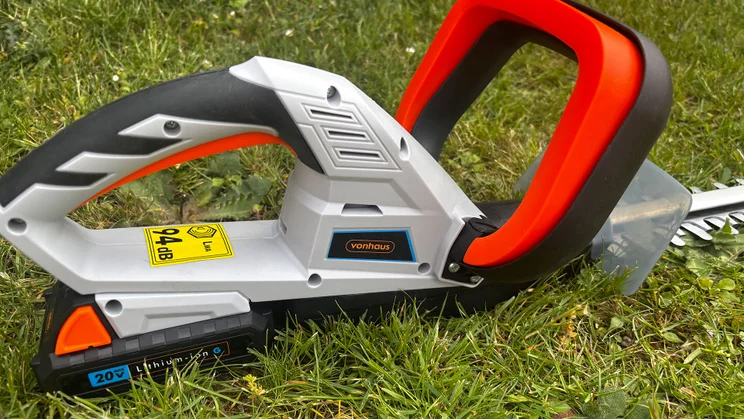
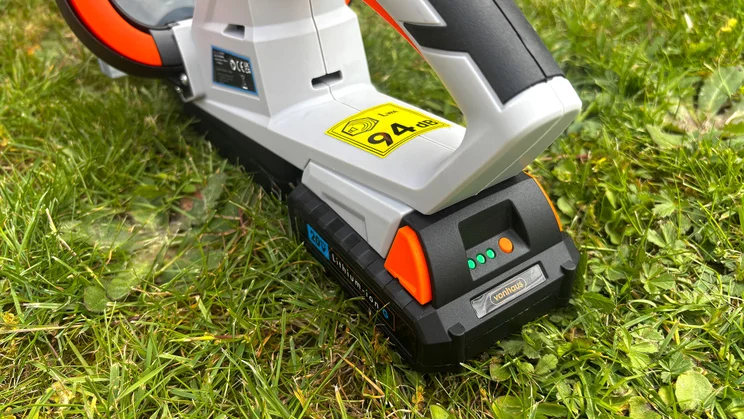
There’s a tip guard to avoid damaging walls or fences, and a blade guard to protect your foremost hand from debris when holding the front trigger. That trigger doesn’t feel like the last word in quality, but it’s large and because it stretches all the way around the front handle, it’s easy to press. There’s a rear handle, too, and the battery slides into the base of the body.
What’s it like to use?
Although the instructions suggest you need to fit the blade guard, it comes fully assembled. I was pleasantly surprised with the ergonomics, and I like that while you need to hold both triggers – one with each hand – it doesn’t matter in which order you do it in. There’s no lock, though, nor a safety position for the battery.
I also like that the body is set at a slight angle to the blade, making it less likely you’ll bash your (gloved) hands on the freshly-cut hedge. There is a significant ‘but’, though, and that’s because the front and rear handles are very close together, and that means it’s harder to get leverage on the trimmer making it more tiring to use than its 2.5kg heft may suggest.
I’d like a little more weight at the battery end because it feels a little nose-heavy. That’s not really an issue when cutting horizontally across the top of a box hedge, but makes vertical cuts a little more tiring.
The rear handle feels nice to press, but the forward handle feels flimsy. Indeed on one occasion, I knocked it and the handle popped out past its bump stop, meaning I had to gently persuade it back into its correct position. I found the blade cover very difficult to refit after use, too.
It doesn’t sound like a particularly sophisticated machine in use, but the 45cm blade means you can get a reasonable reach on a single pass.
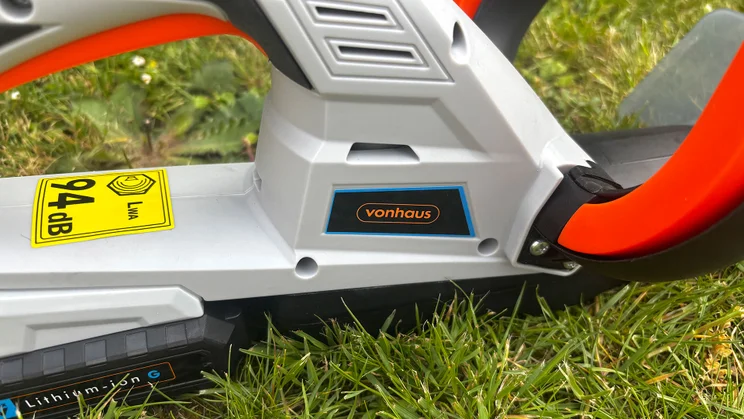
The battery is easy to locate and remove by squeezing a pair of release buttons. Three bright green LEDs illuminate at the touch of a button to show the charge level.
How powerful is it?
I found that compared to more expensive machinery, it required repeated passes to remove the amount of foliage I wanted from a box hedge; a higher no-load speed may well help here. But here’s the rub: at just £60 – including the battery and charger, and free delivery if you order through Vonhaus – it’s easy to cut it some significant slack.
Before
After
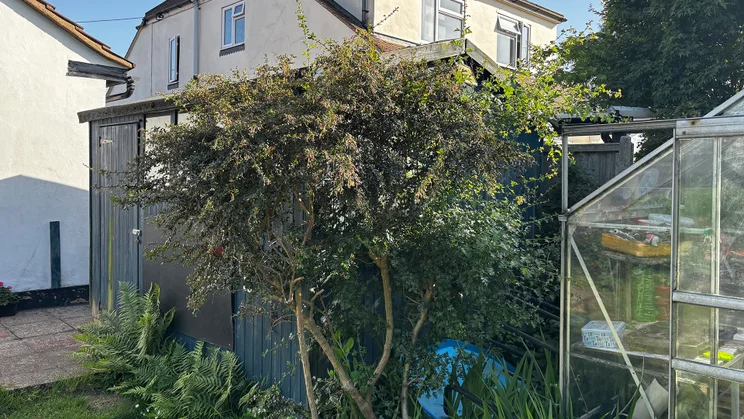
Even though it took a little longer than I’d hoped, the Vonhaus 20V Max did a reasonable job of trimming box hedges, brambles and some berberis, but struggled a little when cutting back an established laurel. I did find it slower than the budget Ryobi RY18HT40B.
I recorded 82dBA in a no-load test, and my measured vibration level of 9.5m/s² is only slightly higher than the Ryobi – although at no point did I find it became an issue. Under government guidelines, it would take 2hr 12min to breach daily exposure limits.
Is the battery life good?
Vonhaus quotes a 50-minute runtime, which was close to my own no-load test, where the battery expired after 51 minutes. That’s more than the 44 minutes the Ryobi ran for. If you need to run for longer, Vonhaus charges £25 for a 2.0Ah battery or £43 for a 4.0Ah pack – significantly less than Ryobi will charge.
A full charge takes an hour, which is similar to most other low-cost hedge trimmers. But unlike the Ryobi, you can’t purchase a rapid charger.
Should you buy the Vonhaus G-Series 40V Max hedge trimmer?
Does the Vonhaus G-Series 20V Max do the job? If you need something extremely cheap for light duties, it’s easy enough to recommend, particularly if you have a small garden. But even at the bargain price of £60 it’s hard to ignore the smaller, but similarly specced Ryobi RY18HT40B – particularly as it comes with a battery that’s more versatile thanks to the range of products in its ecosystem.
How I test hedge trimmers
Every hedge trimmer I test battles the same varied set of shrubs in mine and my neighbours’ gardens over the course of around a month: laurel, box, privet, holly and hawthorne. I also run the same battery tests on every trimmer: my battery tests are no-load (that is, the trimmers are not actively cutting hedges), which guarantees the fairest possible proving ground and the best possible basis for comparison.
While I use the trimmers, I’ll be assessing ergonomics, ease of use and performance, and to paint a fuller picture I also measure vibration and noise levels when operational.


