To help us provide you with free impartial advice, we may earn a commission if you buy through links on our site. Learn more
- Easy to use
- Makes good coffee
- Vast range of drink choices
- Some questionable design quirks
- Espresso enthusiasts will find lack of control frustrating
- Pricer than the Luxe Café Premier
The Ninja Luxe Cafe Pro is a coffee machine for in-betweeners. People who want great coffee – and like the idea of the espresso brewing process – but who might be intimidated by the sheer complexity of it all and would like a little help, please.
It’s a machine that lets owners do the tactile things: grind the beans, tamp the grounds and lock the portafilter into the grouphead, while the machine handles more tricky aspects, such as determining the appropriate grind size, and steaming the milk to an appropriate texture.
It’s not without its irritations, and it’s these that are likely to irk the more seasoned espresso drinker. Nevertheless, the Luxe Cafe Pro is a comprehensive, easy-to-use machine that’s ideal for those looking for a “dumbed-down” barista experience.
Ninja Luxe Café Pro Series ES701UK: What do you get for the money?
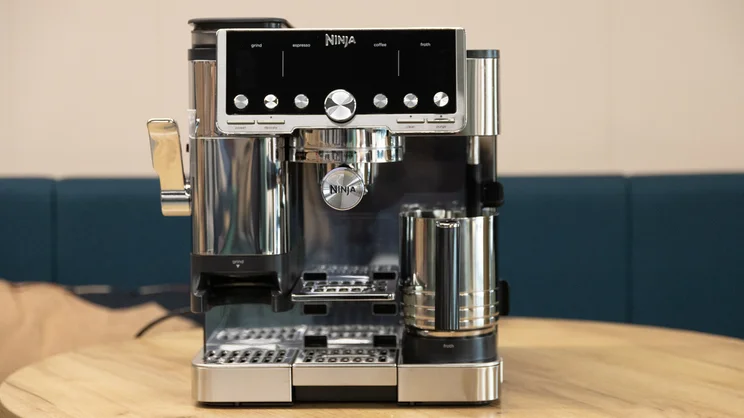
The Luxe Café Pro is a semi-automatic machine that sits somewhere between a bean-to-cup and manual espresso machine. It has an in-built grinder with 25 grind settings, an integrated tamping lever, and automatic milk steaming wand.
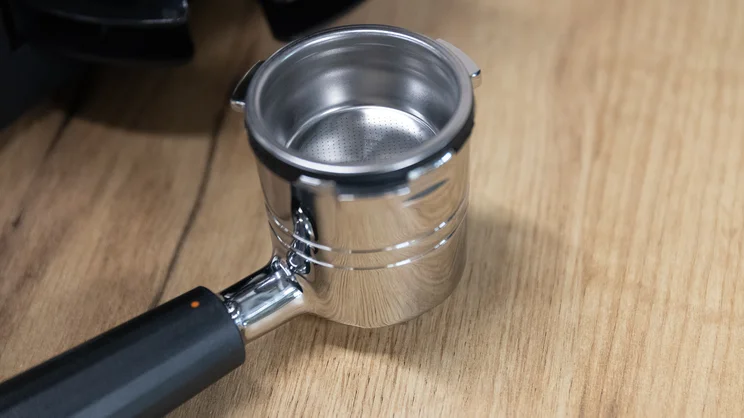
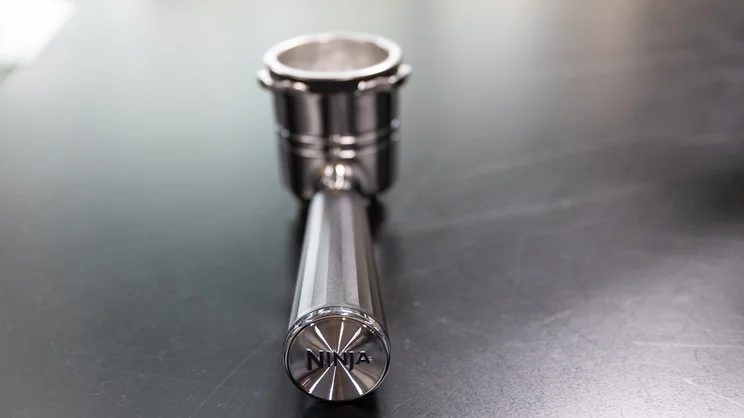
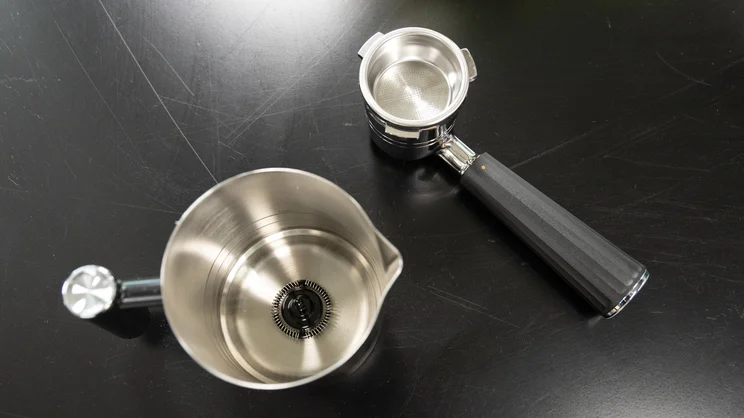
Its 53mm portafilter is on the small side, but it’s unusually deep compared to those of standard espresso machines, and you have a choice of three baskets to put in it with single, double and “Luxe” single-wall options provided in the box. Luxe is Ninja’s name for what is, essentially, a quad espresso basket.
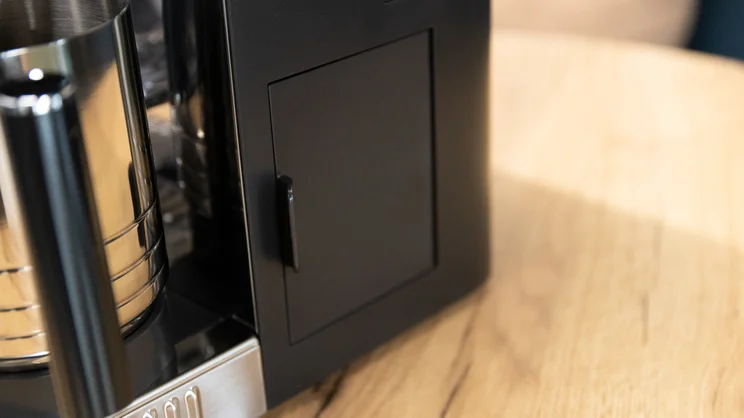
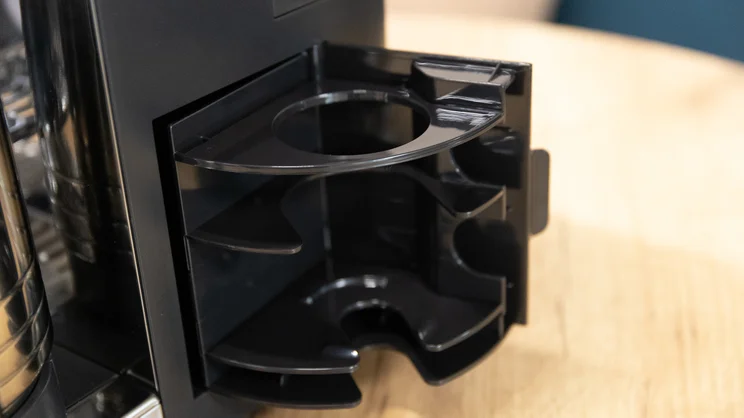
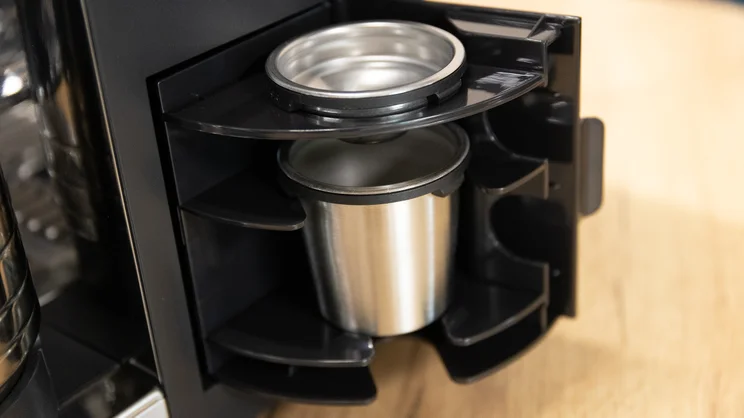
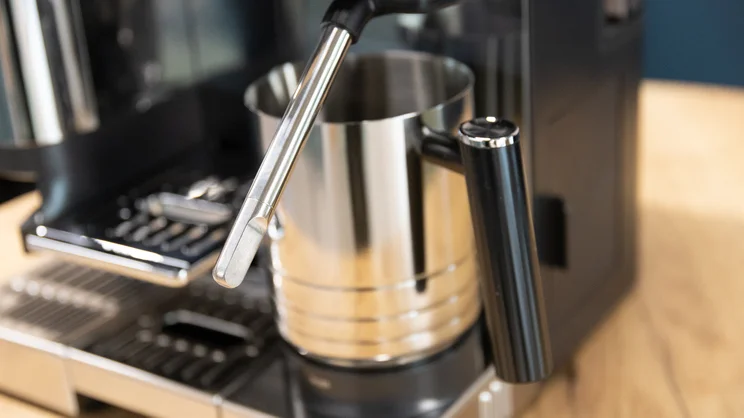
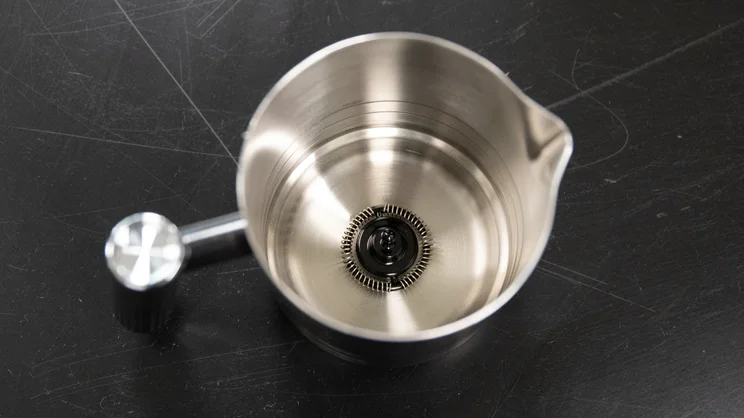
There’s also a compartment in the right-hand side of the machine for storing the baskets that aren’t in use. And Ninja provides a chunky milk steaming jug as well as some tools for setting up and cleaning your machine, including descaling powder and tablets, a brush, and a water hardness testing kit.
The Pro is an upgraded version of the Luxe Café Premier that we reviewed in 2024. The main differences are a wider selection of drinks – ristretto and lungo have been added – and a new milk frothing preset for “Extra-thick froth”. The Pro’s integrated tamper replaces the separate spring-loaded “assisted tamper” of the Premier (one upgrade I’m not a huge fan of, but more on that later). And, at £700, it costs £150 more than its predecessor’s RRP – although, at the time of writing, you can currently get the Premier for just £480.
Elsewhere, however, the features offered by the Luxe Café Pro are the same. Most notably, Ninja’s “Barista Assist” makes a comeback. This is designed to make life easier for those new to brewing espresso: it “monitors and adjusts brew temps and pressures” and suggests a grind size following a few calibration shots.
What’s it like to use?
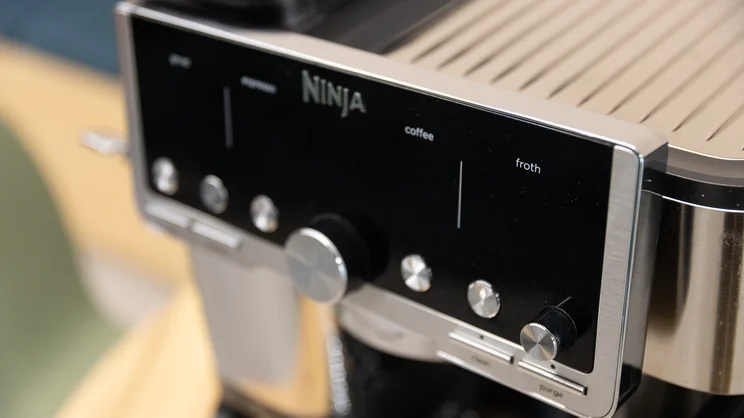
When I first came face-to-face with the Luxe Café Pro, my initial impression was that the control panel looked crowded and overwhelming. But it didn’t take long to get used to it: all the buttons are clearly labelled and it’s easy to switch between drinks.
Going through the motions to pull a shot of espresso is equally straightforward, from adjusting grind size in accordance with the Barista Assist recommendation, to locking the portafilter into the group head and starting the brewing process. The machine holds your hand throughout, alerting you if you’ve strayed too far from the correct path. For instance, if you attempt to remove the portafilter from the grinder cradle before tamping it twice, the machine will let you know by emitting a low, unpleasant beep.
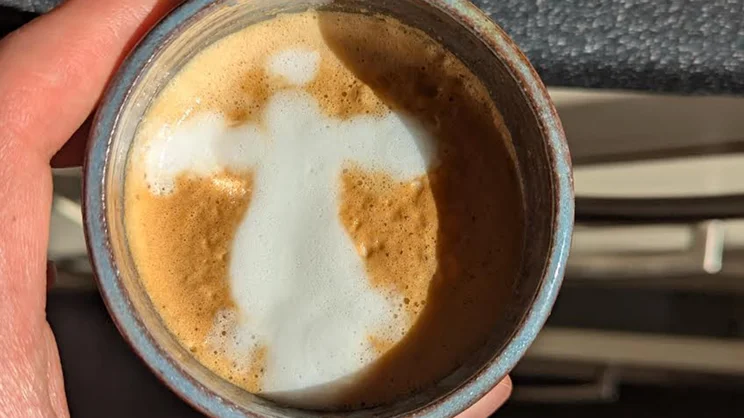
Automatic milk frothing is pretty good too, and I got decent results when making flat whites, cortados and cappuccinos with both whole dairy milk and oat milk. On one occasion, I used the milk steamer separately to make a chai latte and the results were just as impressive. As with the Premier, you can tell the machine whether you’re using dairy or plant-based milk, but I’m not entirely sure how this affects the steaming process. And while my attempts at latte art remain abysmal, I am improving. Check out my depiction of the crucifixion of Christ below.
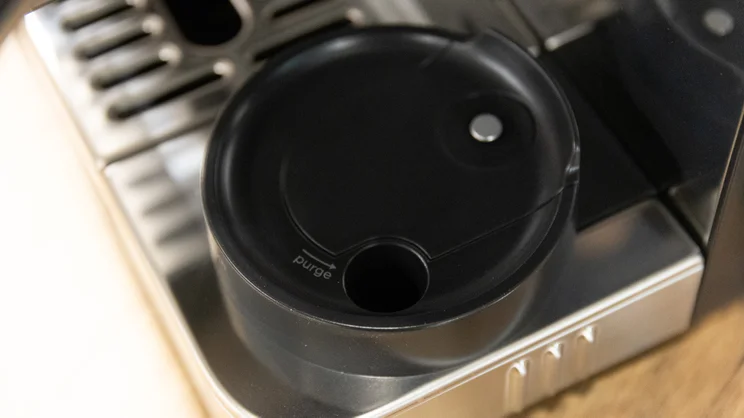
I also really like that, once you’ve finished frothing your milk and have moved the steaming wand back to its original position, it will automatically purge itself with water to keep things clean.
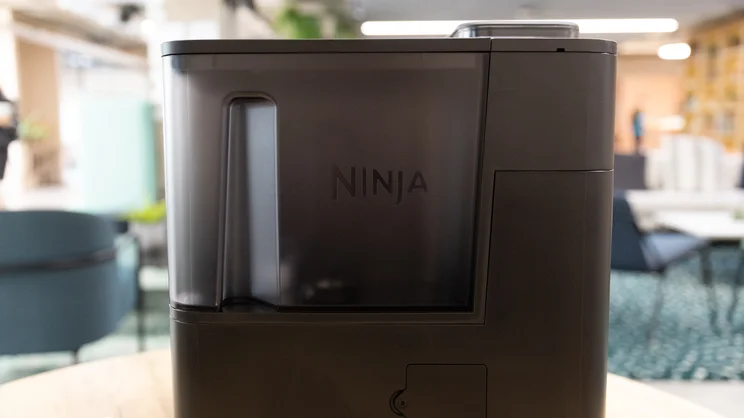
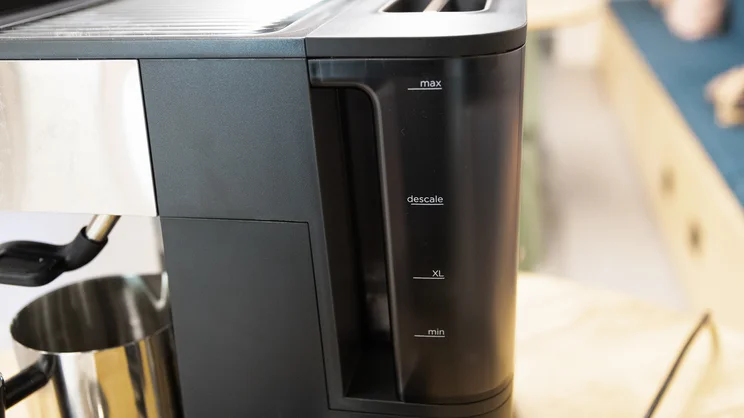
This inevitably means that you’ll be emptying the drip tray pretty frequently – with regular use, I’ve found myself doing so a couple of times a week – but that’s pretty easy. A bright orange water level indicator lets you know when the drip tray is full, the whole thing slides out easily, and its contents can be poured out of a spout in the back corner. I found this to be a relatively tidy process, save for the occasional spillage when transporting the tray from the machine to the sink – to minimise risk of this, my advice is to empty it before it’s full to the brim.
What could it do better?
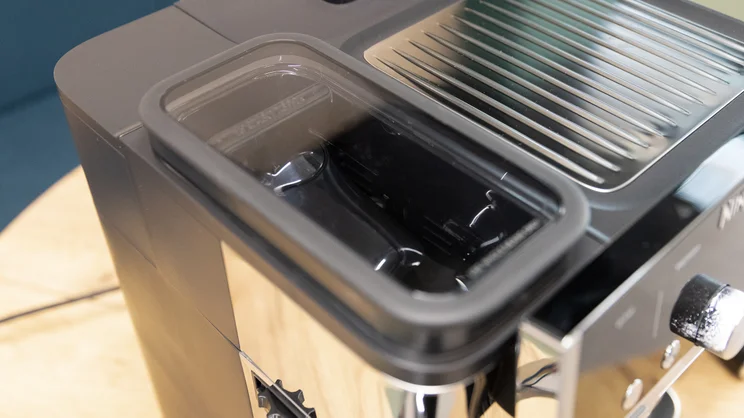
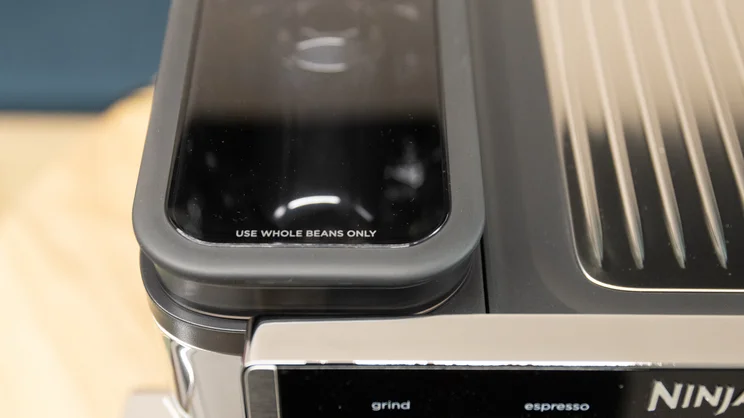
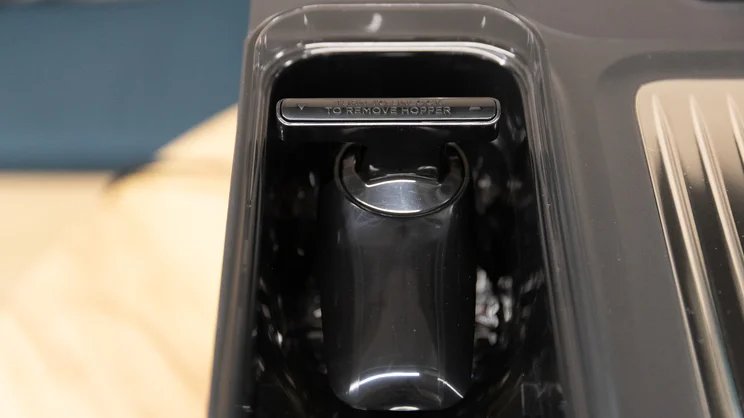
Despite all this, there are a few design quirks about the Ninja Luxe Café Pro that regularly frustrate me. First of all, there’s no indicator to let you know when you’ve almost run out of beans. Sure, plenty of coffee grinders don’t offer this feature, but it’s more irksome in the case of the Luxe Café Pro since the hopper is recessed into the top of the machine – making it difficult to eyeball how much you have left. Be sure to keep track of how many espressos you’ve pulled, or you’ll easily get caught short in the middle of grinding coffee for a shot – as I have on several occasions.
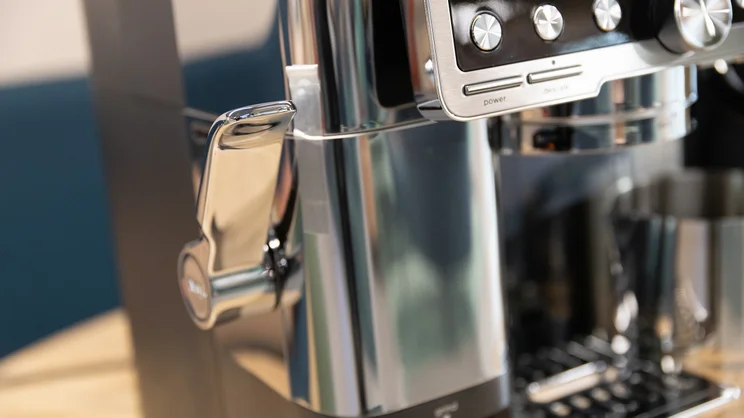
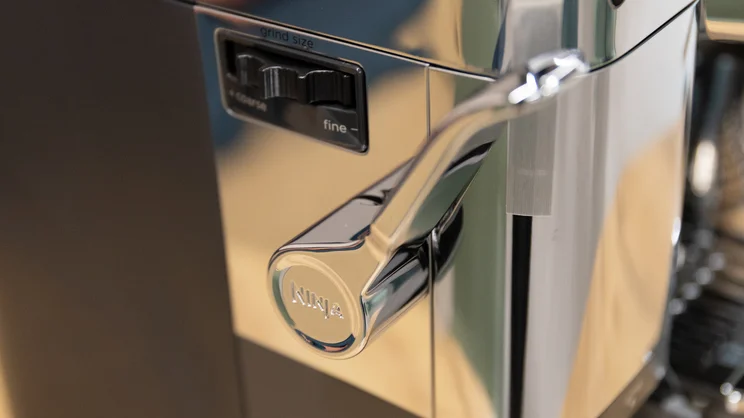
As I said above, I also don’t like the machine’s integrated tamper. The chunky lever on the side of the machine feels very plasticky, and it’s not always easy to gauge how much pressure you’re applying, particularly as the tamper itself is hidden from view within the machine. I’m not entirely sure why Ninja decided to do away with the separate spring-loaded tamper in favour of this integrated one. It may be an attempt to refine the convenience the machine offers, but this backfires for those who want to have more precise control – a point I’ll be returning to.
Furthermore, while the Luxe Café Pro’s portatfilter has a dual spout design, it’s very difficult to fit more than one espresso cup underneath it. This is an issue James Hoffman pointed out in his review of the Luxe Café Premier, so I was keen to see if Ninja has since resolved it. Unfortunately, the bulk of the grinder is just too close to the grouphead. Because the portafilter locks at an angle, I did just about manage to squeeze two espresso cups underneath it, but it wasn’t a comfortable fit and I had to constantly monitor the pour and adjust cup placement to minimise spillage.
My final complaint concerns the grinder adjustment. Quite troubling was that, on more than one occasion, the grind setting jumped by one step in the middle of the process without any intervention on my part. That’s obviously not great for consistency.
What does the coffee taste like?
Our espresso tests
When it comes to testing espresso, consistency and repeatable results are key. To that end, I’ve spent a lot of time pulling shot after shot of espresso with the Ninja Luxe Café Pro, measuring shot time, puck temperature and yield ratio. For the most part, I followed the machine’s own grind recommendations. Results have been mixed, and I’ve found the Barista Assist’s suggestions are not always consistent – interestingly, recommended grind size frequently fluctuates between shots, the cause of which may be inconsistent tamping pressures.
That said, through consistent use, I have been approaching some form of consistency, which is, after all, the ultimate goal in espresso brewing. See the table below, which records the results from my most recent batch of espresso tests:
| Ninja Luxe Café Pro: Espresso tests | |||||
|---|---|---|---|---|---|
| Shot | Puck temperature before brew (C°) | Puck temperature after brew (C°) | Shot time (secs) | Ground coffee weight in (g) | Espresso weight out (g) |
| 1 | 31 | 70 | 34.45 | 17.6 | 64.7 |
| 2 | 27.2 | 70.5 | 31.59 | 18.2 | 62.7 |
| 3 | 34.9 | 71.2 | 29.18 | 17.4 | 60.1 |
| 4 | 32.8 | 74.1 | 25 | 17.8 | 59.9 |
For these tests, I used a cheap Lidl own-brand dark roast, ground at setting 10. As you can see from the table, the results weren’t perfect, with variations in temperature and shot time, and yield ratios that fall way out of the 1:2.5 that’s considered an ideal for double espresso.
I’ll admit that my temperature test, which consisted of measuring the temperature of the coffee puck before and after pulling the shot, was not the most accurate solution, so I can forgive some variation here. And as I’ve already mentioned, it was difficult to ensure tamping pressure remained perfectly consistent across tests, so this may well have had an impact, too.
Nevertheless, these overextracted results were a bit disappointing, particularly for a semi-automatic machine that’s designed to be ideal for beginners who are approaching manual espresso brewing for the first time. I’m by no means a skilled barista, but this shouldn’t really matter.
At the same time, it’s also clear that the Luxe Café Pro is not for those who want control over their espresso right down to the minutiae. I can foresee dedicated espresso enthusiasts, those who find it rewarding to tinker with their machine until they achieve the perfect result, getting irritated with the Barista Assist’s automatic adjustments and suggestions. But then again, such enthusiasts are more likely to purchase a second-hand Gaggia Classic or a Rancilio Silvia and modify it to get what they want, than they are to buy a Ninja machine, so perhaps this is a moot point.
What’s the grinder like?
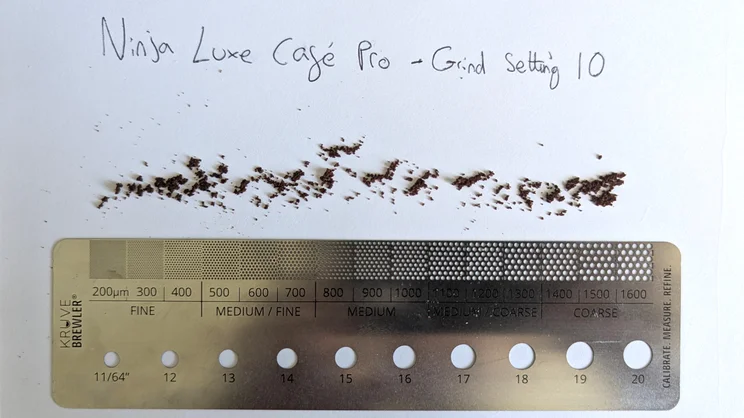
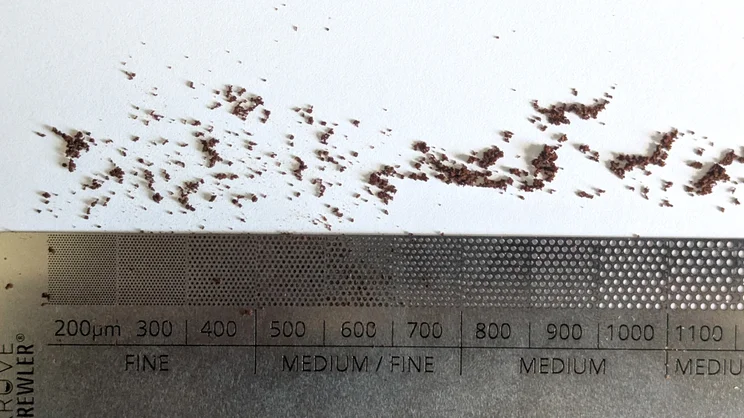
Aside from the lack of indicator to let you know when you’re almost out of beans, I found the Luxe Café Pro’s grinder pretty consistent and unproblematic. I ground some coffee at setting 10 – around the middle of the grinder’s range and the Barista Assist recommendation for a double shot at the time of testing – and measured the results alongside the Kruve Brewler.
The above results were consistent, measuring around 500/600µm, which falls within Kruve’s own recommendations for espresso (200-700µm).
How does it fare in daily use?
Using the Ninja Luxe Café Pro day-to-day to make my morning coffees was a slightly different story. As I said above, I’ve made some pretty good cortados and flat whites and, for the most part, I’ve been happy with its performance. While I carried out my espresso tests on cheaper coffee, I also used much better roasts from Craft House, Origin and Caravan on the Luxe Café Pro, and I don’t feel that these were wasted.
It’s held up as far as other drinks are concerned too. The separate water spout for americanos works well, as does the Luxe portafilter basket for filter brewing. I also gave the cold pressed espresso setting a go, pulling a shot over ice before pouring over some cold milk foam. I must admit I was very impressed with the results. There is the sense that the Luxe Café Pro is trying to be all things for all people, which isn’t always a good thing. But, for £700, the variety of drink choices means you’re getting quite a bit for your money.
That said, it’s also true that the Premier model delivered much the same, so you should ask yourself whether you want to pay an extra £150 for the luxury of being able to make ristrettos and extra thick foam. Using the former setting, I managed to brew a couple of decent “Magic” coffees, which – if you’re unfamiliar with the concept – are basically flat whites with ristretto rather than espresso. The extra-thick foam I’m less fussed about: I think the choices the premier provided before were already comprehensive enough.
Should you buy the Ninja Luxe Café Pro Series ES701UK?
The Luxe Café Pro is far from a perfect espresso machine, and the frustrations I had with its design cast its £700 price tag in a rather dour light. Grumbles aside, though, there’s still a lot to like about it. You get a very comprehensive range of drink choices, it’s easy to use and milk steaming is impressive.
It is a bit more of an investment over the Premier (which remains a good choice if your budget won’t quite stretch to £700), but if the simplified barista experience appeals to you – and you can forgive some of the quirks I discussed in this review – it’s a fine machine.