To help us provide you with free impartial advice, we may earn a commission if you buy through links on our site. Learn more
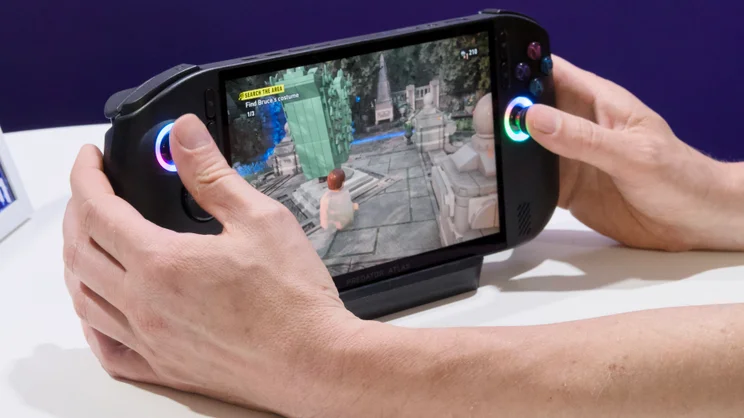
At Computex a couple of weeks ago, Intel took the wraps off its Arc G3 chipsets, the first of its processors fully targeted at mobile gaming. And ever since, I’ve been itching to get my hands on the one of new devices based on those new chips.
Fortunately, I didn’t have to wait too long. An invitation from Intel dropped into my inbox to try out the new handhelds at the Intel Extreme Masters 2026 competitive gaming event in Cologne a couple of weeks a go and I didn’t have to be asked twice to say yes.
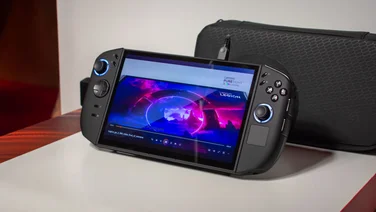
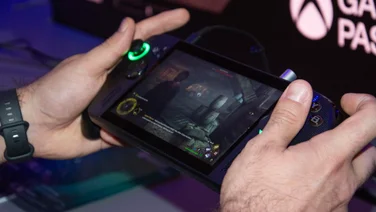
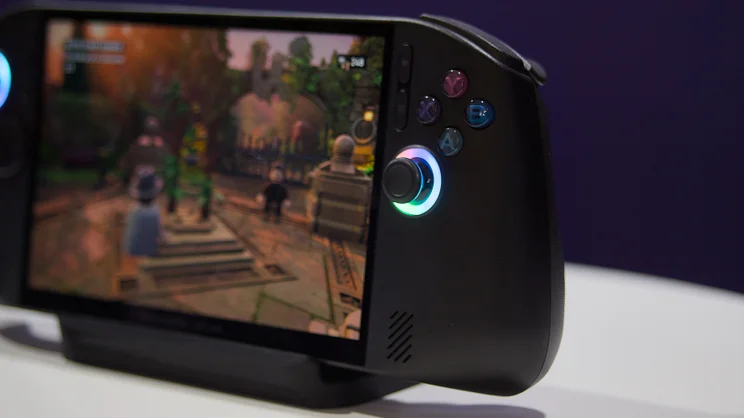
I was not disappointed. But before I get onto my hands-on experiences with the devices themselves – I was able to put both the Acer Predator Atlas 8 and the MSI Claw 8 EX AI+ through their paces – let me explain, for a moment, why the Computex announcements got me so excited.
Intel Arc G3 and Arc G3 Extreme
It’s mainly down to the silicon powering these two devices: the Intel Arc G3 and G3 Extreme, both based on the Panther Lake series of CPUs that I was first shown back in October 2025. With much of the focus of that generation of laptop processors on gaming capabilities and efficiency, it didn’t take much of a leap on my part to see that this generation was going to be particularly suited to gaming handhelds.
And so it has proved. The new Arc G3 Extreme is, essentially, a mildly tweaked version of the top-end Core Ultra 9 388H laptop chip: it has half the performance cores and a slightly slower max boost clock frequency (4.7GHz), but the same number of efficiency (8), low-power cores (4), Xe3 GPU gaming cores (12).
Given the gaming capabilities of the Core Ultra 9 388H and its efficiency, it looks like the ideal chip to put inside a gaming handheld. You can check out my review of the Asus Zenbook Duo (2026) to get an idea of how powerful it might be
Even the less powerful, non-extreme Arc G3 looks like a decent offering. With the same number of CPU cores and a negligible difference in clock speed, the only major difference is the GPU, which features two fewer Xe3 cores (10) running, again, at a slightly slower max frequency. It will probably be around 16-17% slower in games, but consoles housing the chip ought to be a whole lot cheaper.
And that’s significant when you find out just how expensive the first devices, based on Arc G3 Extreme, are going to be.
| Intel Arc G3 | Intel Arc G3 Extreme | Intel Core Ultra 9 388H | |
|---|---|---|---|
| CPU cores | 14 (2p, 8e, 4lp) | 14 (2p, 8e, 4lp) | 16 (4p, 8e, 4lp) |
| CPU max Turbo frequency | 4.6GHz | 4.7GHz | 5.1GHz |
| GPU | Arc B370 (10 Xe3 cores) | Arc B390 (12 Xe3 cores) | Arc B390 (12 Xe3 cores) |
Acer Predator Atlas 8 vs MSI Claw 8 EX AI+
I’m going to start this section by pointing out something quite important. Although these two handhelds look and, critically, feel quite different, there is ultimately not much difference between them when it comes to the hardware and that means, ultimately, that the gaming experience should be, largely, the same.
The devices I tried out at IEM 2026, had an Arc G3 Extreme chip under the hood, 8in 120Hz IPS Full HD touchscreens (1,920 x 1,200) with anti-glare coatings and an 80Wh battery. There is some difference in memory and storage configurations. The Predator comes with 24GB of RAM and up to 1TB of storage, the MSI up to 32GB and up to 2TB.
However other specs match feature for feature. Both have two Thunderbolt 4 ports, both have Micro SD card expansion slots, although the MSI supports Micro SD Express here for ultra fast transfers and both support USB-C based charging at up to 65W speeds.
There is a lower power, cheaper variant of the Acer Predator Atlas 8 coming out with the standard Arc G3 chip inside, but I wasn’t able to test that out at this event.
| Acer Predator Atlas 8 | MSI Claw EX AI+ | |||
|---|---|---|---|---|
| Display | 8in 120Hz (VRR) IPS 1,900 x 1,200 touchscreen | 8in 120Hz (VRR) IPS 1,900 x 1,200 touchscreen | ||
| Processor | Intel Arc G3 or Arc G3 Extreme | Intel Arc G3 Extreme | ||
| RAM | Up to 24GB | Up to 32GB | ||
| Storage | Up to 1TB | Up to 2TB | ||
| Connectivity | Thunderbolt 4 USB-C x2, 3.5mm audio, Wi-Fi 7, Bluetooth 5.4 | Thunderbolt 4 USB-C x2, 3.5mm audio, Wi-Fi 7, Bluetooth 5.4 |
Performance
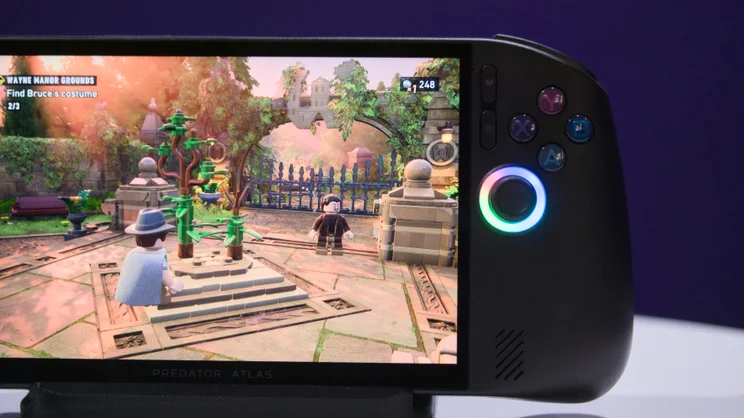
Alas, I am not allowed to talk precise benchmark numbers just yet, but what I can say is that both devices performed really well in my experience with them. I was able to play F1 2025, Forza Horizon 6 and Lego Batman, Legacy of the Dark Knight and all ran pretty much flawlessly at native 1,920 x 1,200 resolution.
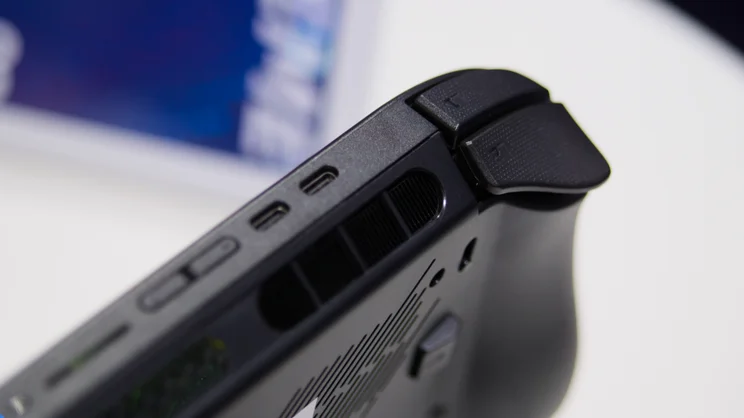
And while the room I was in soared above 30 degrees I didn’t feel either machine got overwarm, either. In Turbo mode, both MSI and Acer handheld were kicking out a fair amount of warm air from the vent at the top edge, while the grips and controls remained comfortable to the touch.
It’s impossible to gauge battery life accurately in such a short time, so I’ll leave that to another day, but put it this way – I wasn’t too perturbed by the rate at which the battery gauge was declining, despite me running each console in max Turbo mode at full native resolution.
It’s also good to know that if your battery life is running low, both machines put battery saving measures at your fingertips, with the ability to cap the frame rate right down to 30fps, reduce the resolution and the refresh rate of the display. All you have to do is bring up the quick settings menu using one of the four fascia shortcut buttons and tinker until you’re happy with any performance compromise you might have made.
Ergonomics
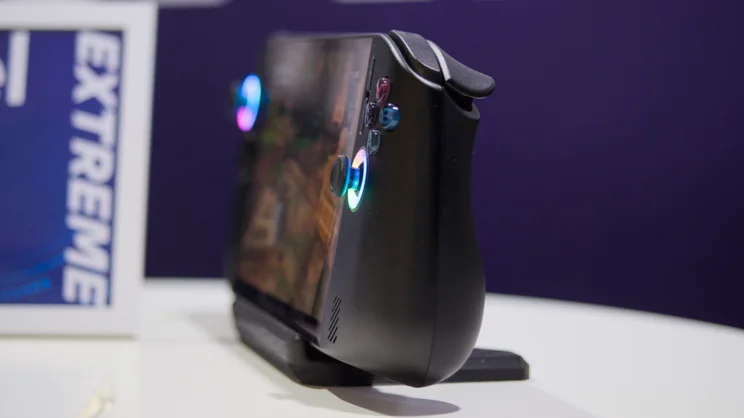
It’s in the area of ergonomics and feel that the two devices differ the most. I spent at least half an hour with each in the Intel booth at IEM 2026 and, although both felt great in the hand, I preferred the slightly more boring-looking Acer handheld. The critical difference for me was in the triggers.
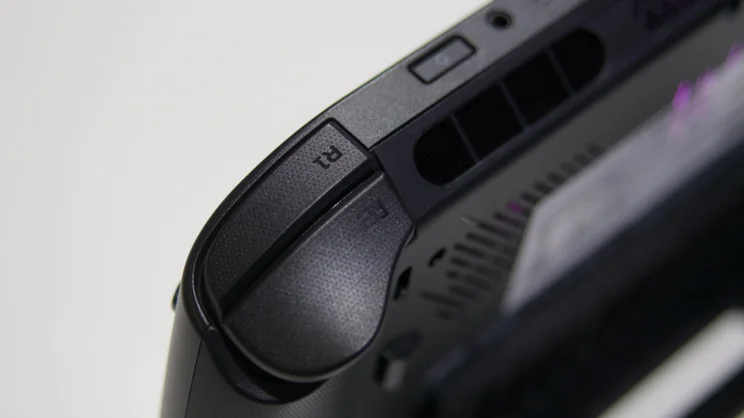
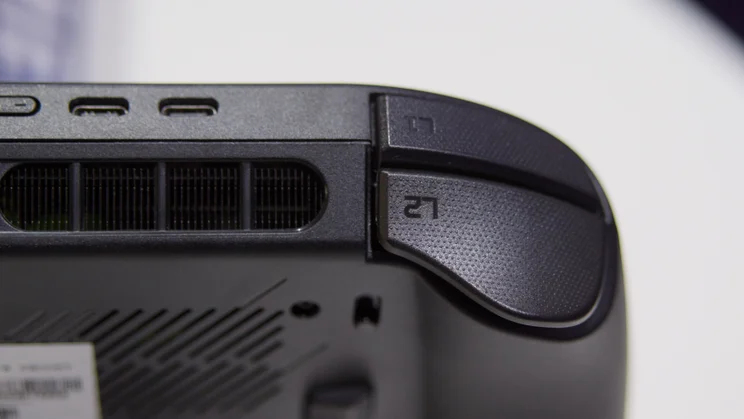
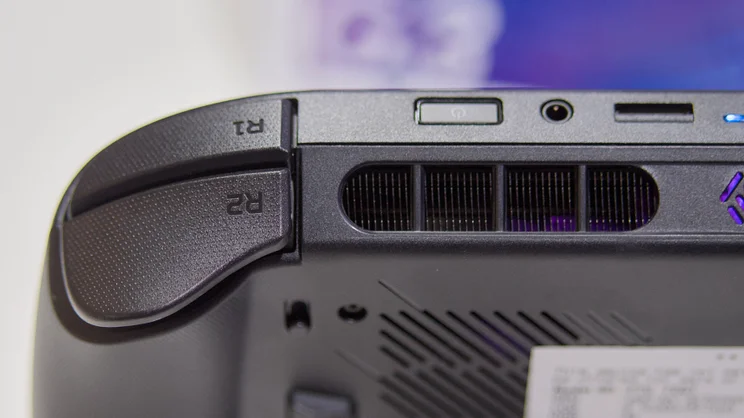
Both use accurate hall-effect sensors to sense movement, but the MSI’s were too stubby for my liking. Your mileage may vary here, but while trying (and failing) to set a decent lap time at Spa, my fingers kept ending up slipping down to the corner of the triggers, which was a pretty uncomfortable experience. Another one-up for the Acer here is the ability to flick a switch on the rear to limit the travel of the triggers – ideal for games where fast shooting is necessary.
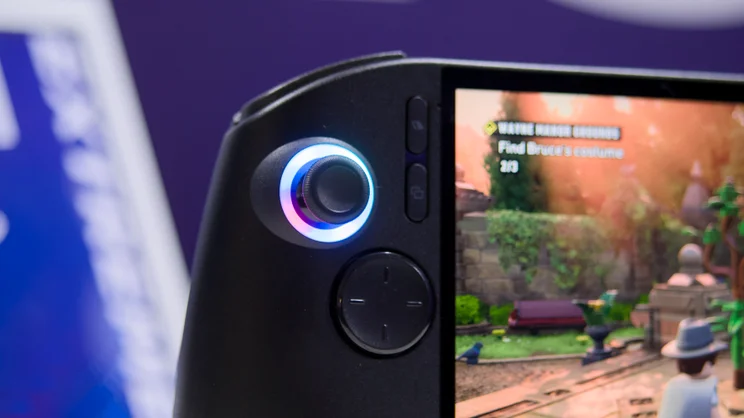
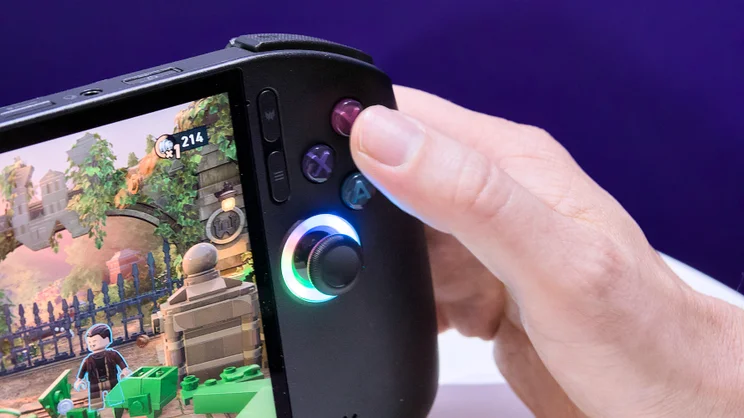
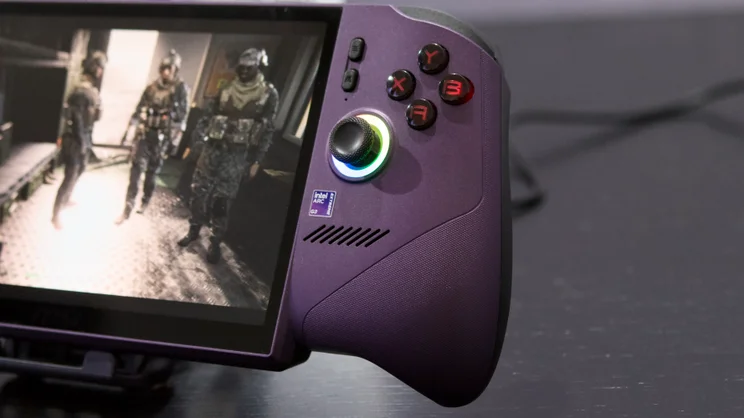
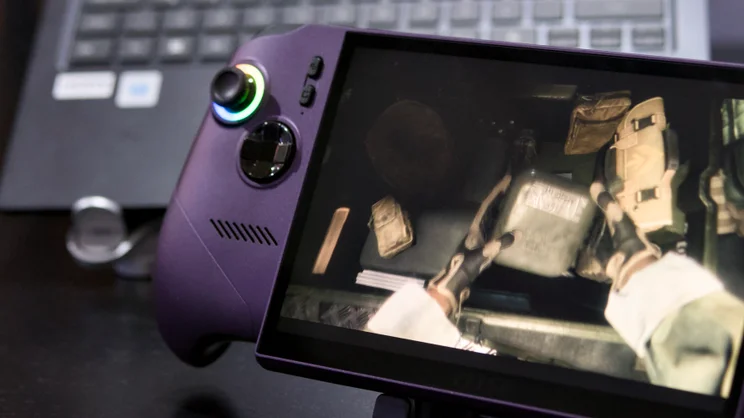
As for the rest of the buttons and controls, both devices felt great to me. The buttons were clicky and responsive, and the control sticks responsive and accurate in feel. And everything was in its right and proper place: two control sticks in their usual places, slightly vertically offset; a d-pad on the left and ABXY buttons on the right; hall-effect triggers on the rear and shoulder buttons on the top edge; and, lastly, a pair of buttons at the rear of each grip.
One thing to note here, though: after initial criticism over its choice to specify regular analogue sticks on its Arc G3 Extreme-based console, Acer says it will now upgrade those to featuring TMR (tunneling magnetoresistance) sensors. The standard (much cheaper, apparently) Arc G3-based console, will still have analogue sticks, which are more prone to drift than TMR or hall effect sticks.
Design
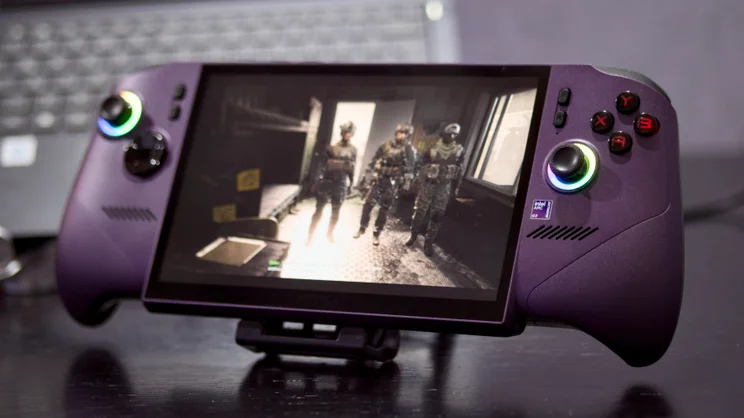
The MSI wins this category hands down for me, from the more attractive purple colour to the way the screen juts out from the body of the console at its bottom edge, MSI has done a fine job of setting the Claw 8 EX AI+ apart from the competition. It simply looks like the more expensive machine, with more interesting textures all round and a slightly more flared profile to the grips.
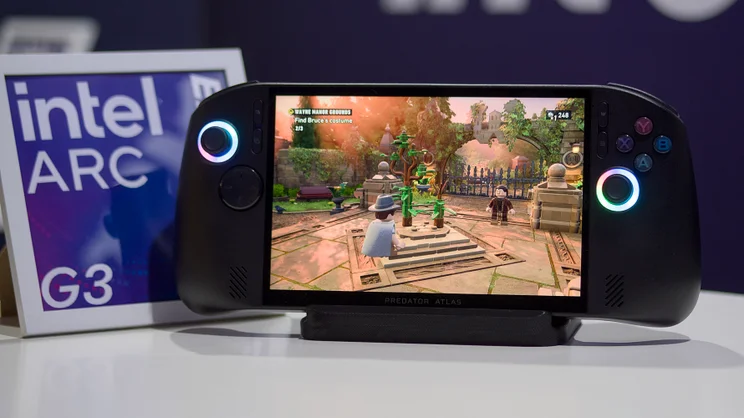
The Acer, on the other hand is black, bland and altogether uninspiring. Although you’ll probably forget how it looks once you’ve got stuck into your inflight gaming session.
Prices and early verdict
In summary, if you were sceptical about Windows-based handheld gaming before, I don’t think there’s any need to be any more. Both of the handhelds I tried were competent, comfortable and responsive gaming machines and I’d be happy to take them on my travels.
However, whether I’d be willing to stump up the prices being asked right now is very much in doubt. The MSI Claw 8 EX AI+ is set to cost €1,649 (around £1,400), and although Acer has not announced UK pricing just yet, I’d be surprised if it was much below this. And I can’t see even the standard Arc G3 dipping much below the £1,000 mark.
That’s a huge amount of money for a gaming handheld, and more than a little disappointing. But maybe the prices will come down eventually, once AI has stopped driving component prices so high.