To help us provide you with free impartial advice, we may earn a commission if you buy through links on our site. Learn more















- Excellent, punchy sound
- Big, vibrant display
- Flagship performance at a great price
- Xiaomi’s HyperOS still a drag
- Ultra-wide camera feels pointless
- Much more expensive than before
Other brands might bandy around the ‘Ultra’ label like it’s going out of fashion, but Poco only employed it for the first time earlier this year. Now the Xiaomi-affiliated budget phone maker has issued a swift(ish) follow-up to the Poco F7 Ultra with the Poco F8 Ultra.
It’s a bigger upgrade than you might expect. Not only are you getting top-level performance in the F8 Ultra, but also a much more appealing design and an absolutely enormous battery.
With pricing taking a corresponding hike, however, the series is now closer to the genuine flagship brigade in virtually every sense. As such, expectations have risen.
Poco F8 Ultra review: What you need to know
Despite their budget pricing, Poco phones have always nodded towards flagship phones when it comes to performance. The Poco F8 Ultra maintains that laser-like focus, with the same Snapdragon 8 Elite Gen 5 chip that powers the OnePlus 15.
This impressive component is backed by a 6,500mAh battery, with 100W wired and 50W wireless charging ensuring that it doesn’t take an age to get back up to 100%. These are all impressive specifications.
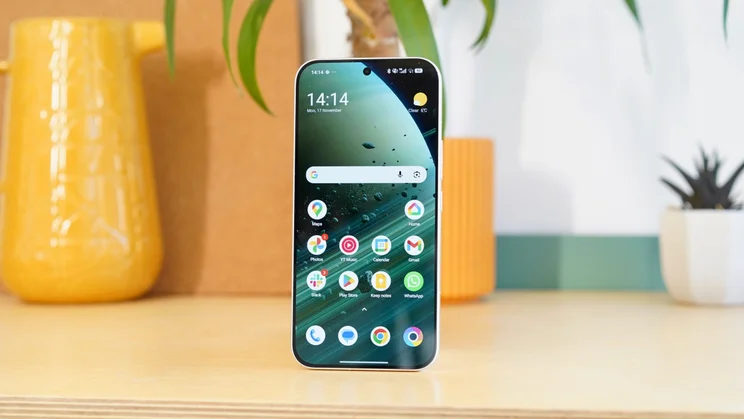
The display maintains that premium feel – a large 6.9-inch 120Hz OLED with a sharp 1200 x 2608 (aka 1.5K) resolution and a bolstered 3500 nits peak brightness.
This year’s Ultra model gets a nicely rounded triple-50-megapixel camera set-up, with a telephoto camera that now extends to a 5x optical zoom. There’s a 32-megapixel selfie camera around front.
Poco F8 Ultra review: Price and competition
At £749 for the base model with 12GB of RAM and 256GB of storage, and £799 for the 16GB/512GB step-up option, the Poco F8 Ultra is £100 more expensive than its predecessor. However, it still just about undercuts the traditional flagship pack.
The closest thing I’ve seen to this recently is the Nubia Z80 Ultra – another big and bold performance-focused Android phone that packs similarly attention-grabbing specifications. Indeed, Nubia’s phone starts from £579, making it considerably more accessible than the Poco. However, the company’s blocky design work is an acquired taste, its selfie camera is nigh-on useless, and its UI might be even fussier than Xiaomi’s.
The OnePlus 15R could be another ‘almost-flagship’ phone to rival the Poco F8 Ultra, and will likely sell for a similar price. However, it won’t be hitting the UK until January. Reports suggest it might not have quite the same level of specifications, although a monstrous battery seems likely.
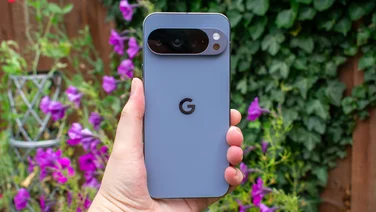
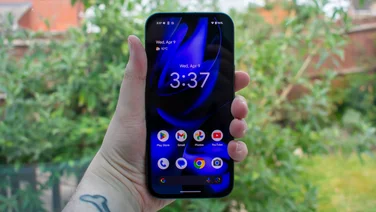
Otherwise, we have entry-level flagships from the big three around this price, with the Google Pixel 10, Samsung Galaxy S25 and iPhone 17 all starting at £799 for their respective 128GB models.
Poco F8 Ultra review: Design and key features
The Poco F7 Ultra’s design was either bland or gaudy, depending on the colour you opted for. Either way it was big, heavy, and somewhat charmless.
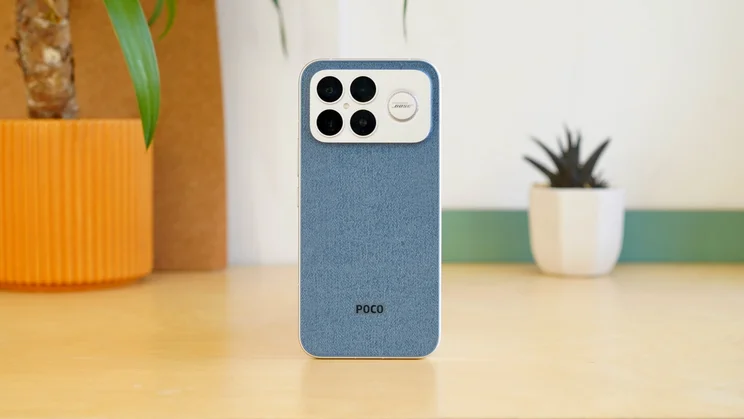
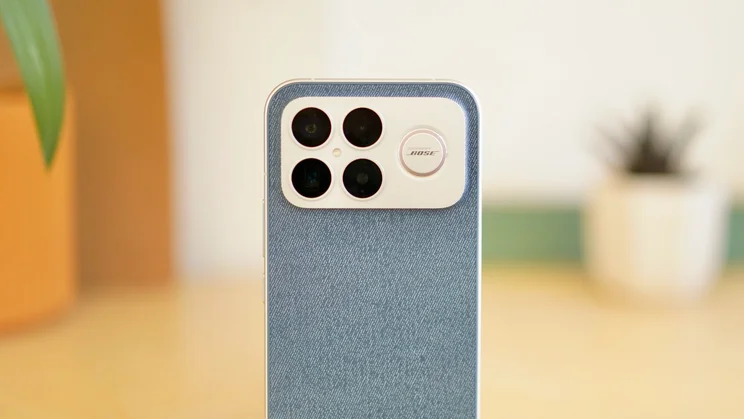
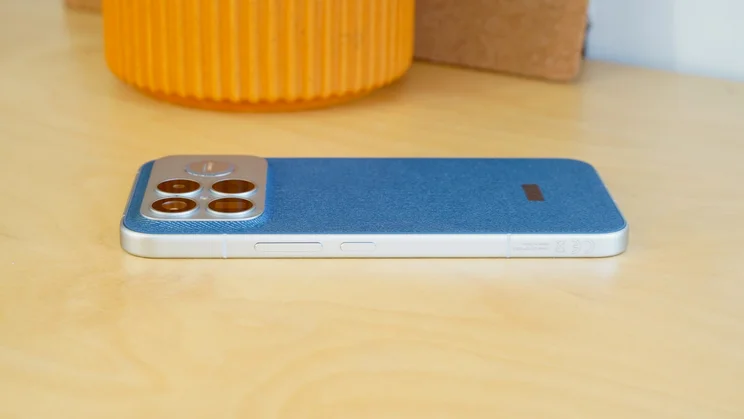
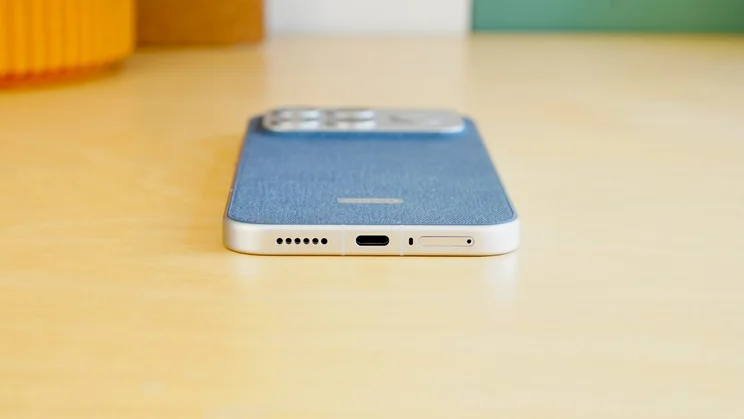
Is the Poco F8 Ultra the most improved design of the year so far, then? It’s perhaps a little too in thrall to the iPhone 17 Pro in shape and layout for that, but I still like it a lot. Its width-spanning camera module lends balance, both to the design language and quite literally when the handset is sat flat on a table. I even like the little ‘Sound by Bose’ flourish that highlights the phone’s bolstered sound.
The American audio specialist has lent its expertise in the shape of a compact sub-woofer, which adds some welcome low-end heft to the Poco F8 Ultra’s stereo sound output. You won’t be holding any parties with this phone, but it does make those YouTube videos sound a lot fuller.
But my favourite design flourish is the use of a denim-like material on the back of the phone. In a somewhat similar way to the OnePlus 13 and recent Motorola phones like the Razr 60 Ultra, this material adds a dash of personality, as well as making it more comfortable (and grippier) to hold. Paired with an aluminium frame, and with a nice even bezel around front, this doesn’t feel like a phone that’s cutting corners.
This remains a big phone, though, with a fairly substantial weight of 218g and a thickness of 7.9mm. It’s a media specialist through and through, and there are some major benefits that accompany these extra grams, as we’ll go on to discuss.
On the software side of things, Xiaomi’s HyperOS 3.0 isn’t my favourite Android 16 treatment. It’s robust enough, extremely customisable, and responds smoothly to your touch inputs. But the style of its various icons, wallpapers, and menus – all heavily indebted to Apple’s iOS – falls some way short of Google’s pure Pixel ideal.
There’s the usual raft of bloatware, with apps such as AliExpress, Amazon Music, Facebook, LinkedIn and TikTok all coming preinstalled. Xiaomi also supplies a bunch of its own apps, including a needless web browser, its own store app, and a dedicated Poco Community app. The AI offering includes the usual collection of hard-to-find writing and transcription assistance, alongside photo editing tools, dynamically created wallpapers and a smart settings search.
Poco F8 Ultra review: Display
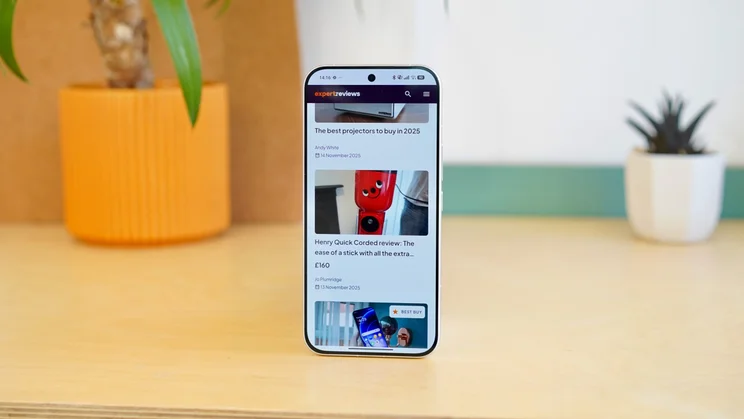
With that booming sound output, it would have been a shame if the Poco F8 Ultra’s screen didn’t deliver. Thankfully, it really does. It’s a huge 6.9-inch OLED with a 2,608 x 1,200 resolution and a fluid 120Hz refresh rate. It’s worth acknowledging that, yes, the screen isn’t as sharp as its QHD+ predecessor, but it’s a bigger, brighter, more vivid panel that still proves plenty sharp.
This is Poco’s first use of a so-called ‘HyperRGB’ display, which employs a full RGB subpixel structure, resulting in a vibrant yet efficiently produced picture. Colour accuracy is impressive in the phone’s default colour mode, attaining an sRGB gamut coverage of 99% with a volume of 104.3%, and an excellent average Delta E colour variance score of 1.11. The target for the latter is 1 or under, so this is a high grade panel.
Dolby Vision, HDR Vivid, and HDR10+ support should see you taking full advantage of those distinct colours. With a bolstered peak brightness of 3500cd/m2, any HDR video content really sings here, and it can also hit 2000cd/m2 in sunny conditions with HBM. With autobrightness off, I measured a respectable maximum brightness of 611cd/m2.
Finally, Xiaomi is one of the best manufacturers on the block when it comes to its consideration for eye health, and the F8 Ultra’s 2,560Hz PWM helps to reduce eye strain.
Poco F8 Ultra review: Performance and battery life
Poco has always placed performance right up there as a priority alongside value for money, so you’d better believe its latest Ultra phone is rapid. It utilises Qualcomm’s latest Snapdragon 8 Elite Gen 5 chip, which places it among the fastest phones on the market.
Our Geekbench 6 and GFXBench benchmark tests confirm that its CPU and GPU performance is up there with the OnePlus 15 – another phone that uses this chip. While it’s only slightly faster than the Samsung Galaxy S25 Ultra in multi-core CPU terms, it’s quite a bit quicker on single-core, getting within spitting distance of the imperious iPhone 17 Pro Max.
Those GPU tests, meanwhile, show the Poco F8 Ultra to be a graphical powerhouse. The off-screen tests in particular, which really let that chip stretch its legs, are right up there with the OnePlus 15 and above the iPhone 17 Pro Max, not to mention the Android flagship crowd from earlier in 2025.
I’ve found that phones running Qualcomm’s latest chip are capable of running lavish FPS Destiny: Rising on Max frame rate (aiming for 90fps) and Ultra rendering quality, and the Poco F8 Ultra doesn’t let the side down. It’s a sterling gaming device, especially with that huge display and punchy sound output.
With the Snapdragon 8 Elite Gen 5 emerging as a somewhat toasty runner, performance will take a hit in extended gaming sessions, but the Poco remains fast enough that only hardcore gamers should notice. I’d point such people in the direction of the RedMagic 11 Pro with its active cooling system.
While the Poco F8 Ultra’s 6,500mAh battery is no longer big enough to wow us – phones are now starting to hit 7,000mAh and beyond – it’s still well above the average capacity. In our usual looping video test, with airplane mode active and the screen brightness set to 170cd/m2, the F8 Ultra lasted 29hrs 32mins.
I won’t judge it too harshly against the OnePlus 15, our new champion and a total outlier on 45 hours. However, the fact that it falls an hour shy of the Poco F7, which packed the same size of battery, as well as the Samsung Galaxy S25 Ultra with its significantly smaller 5,000mAh cell is just a teensy bit disappointing. Its little brother, the Poco F8 Pro, also pips it.
In practical use, the Poco F8 Ultra yields very good results. On a day of moderate-to-heavy usage, with 4hr 30mins of screen on time, I was left with a healthy 58% left in the tank by the time I put the phone down for the night.
Wired charging support of 100W will get you a full charge within 45 minutes, while 50W wireless charging is also pleasingly rapid. In both instances, though, you’ll need to provide the bespoke HyperCharge charging solution yourself, as there’s nothing but a cable in the box.
Poco F8 Ultra review: Cameras
The Poco F7 Ultra’s camera yielded solid results, but nothing that really chimed with the Ultra branding. This year, the Poco F8 Ultra has upped its game in a couple of ways, though it still isn’t ‘Ultra’.
Chief among these improvements is the move to using the very same 50-megapixel Light Fusion 950 main camera with OIS that you’ll find in the more premium Xiaomi 17 series. It produces vibrant, sharp shots full of contrast.
I was impressed by the experience of capturing night shots, too. Not only was the process a lot quicker than your average mid-range phone, but the clarity of the shots was impressive, picking out the murky details and the pin-prick-like stars on an unusually crisp night.
Xiaomi’s telephoto sensor is a similar 50-megapixel unit to before, but this time it’s allied to a full 5x periscope lens. Shots at 2x, 5x, and even 10x look good. Any further brings in the noise.
The quality of the 50-megapixel ultra-wide camera is an obvious drop-off from the main sensor, as is so often the case. But the weird thing is that it doesn’t even offer a particularly wide angle, rendering it somewhat pointless.
Selfies from the 32-megapixel front camera pack in natural colours, though I found that subjects (i.e. my face) looked somewhat soft – and not merely due to my usual winter podge. Xiaomi’s algorithm handles selfie portrait shots nicely, though, with decent subject separation.
We don’t get support for 4K/120fps video recording, despite that ninja Snapdragon 8 Elite Gen 5 chip. However, the usual 4K/60fps footage looks fine. We’re not talking iPhone 17-good, but then, show me the Android phone that is.
Poco F8 Ultra review: Verdict
After a somewhat tentative debut, Xiaomi’s second attempt at a budget-friendly Ultra phone shows far more confidence in the concept. Its design is bold without being brash, the new display is big and bright, the sound output is excellent, and performance is among the very best phones on the market.
Camera quality has taken a marked step forward, though I still wouldn’t class it as an ‘Ultra’ experience in the traditional sense. Battery life, too, is good rather than great, especially given the size of the cell. Away from the hardware, HyperOS continues to be a difficult UI to warm to, but it’s adequately fluid and customisable.
All of these improvements need to be taken within the context of a significant price bump, however. As a media-focused smartphone, it’s difficult to think of a phone that hits as hard as the Poco F8 Ultra for the money, but it doesn’t quite prompt the same price tag double take as some of its more affordable brothers.