To help us provide you with free impartial advice, we may earn a commission if you buy through links on our site. Learn more
- We have tested over 500 Android phones, covering everything from entry-level budget picks to the most premium flagships.
- All models are put through the same rigorous testing process, assessing their displays, design, cameras, performance, battery life and software.
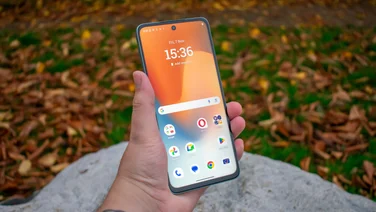
- Our favourite Android phone is the Google Pixel 10. It has excellent cameras, PixelSnap magnetic wireless charging and the best Android software around, including Gemini AI a fantastic seven years of updates.
- Read on to see which other Android phones we recommend for all budgets.
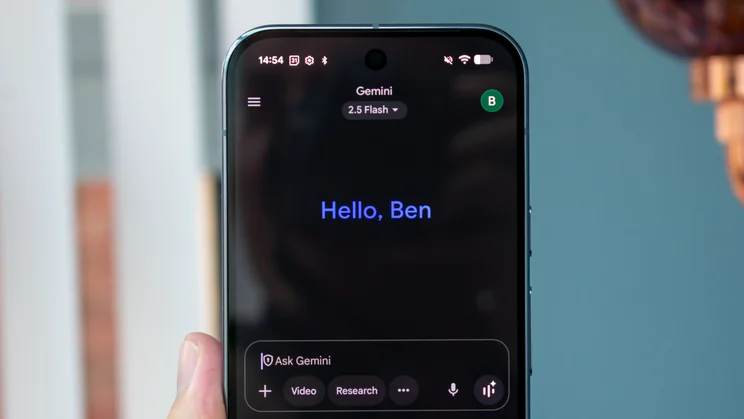
We’ve tested a vast number of the most popular smartphones over the years and right now, the best Android phone you can buy is the Google Pixel 10. It has the most accessible software, a top-tier update schedule, one of the brightest, most colour-accurate displays around and outstanding cameras, including a 5x telephoto shooter.
If that, doesn’t quite hit the spot, then you can explore all of our recommendations below where you’ll find quick summaries of our top-rated phones and quick links to our buying advice further down the page. We have options for all budgets, ranging from the best value-for-money models to the pinnacle of flagship luxury.
Best Android phones: At a glance
- Google Pixel 10: Best Android phone overall | Check price
- OnePlus 15: Best Android phone for battery life | Check price
- Google Pixel 9a: Best mid-range Android phone | Check price
- Samsung Galaxy S25 Ultra: Best premium Android phone | Check price
How we test Android phones

- Performance: We compare relative performance with the Geekbench (CPU) and GFXBench (GPU) applications.
- Display quality: We use an X-Rite colorimeter to measure brightness, contrast and colour accuracy.
- Battery life: We test with repeatable in-house benchmarks.
- Camera quality: We test all of the phones’ available lenses in a variety of settings.
- User experience: We use the phone as our day-to-day handset, and evaluate whether the manufacturer has made useful (or unhelpful) tweaks to the standard Android UI.
You can read more about our in-depth testing methodology in our detailed explanation of how we test smartphones.
In the more than two decades that we’ve been putting products through their paces, our experts have tested and reviewed over 600 mobile devices. Our proprietary testing process is exhaustive and built around facts and data, meaning that you can be sure our final verdict is both fair and reliable.
We take our editorial independence seriously and our recommendations cannot be bought. Regardless of brand or popularity, a device that doesn’t live up to our high standards during the testing process will not earn our stamp of approval.
The best Android phones you can buy in 2026
1. Google Pixel 10: Best Android phone overall
Price when reviewed: £799 | Check price at John Lewis
- Great for… excellent software and new telephoto camera
- Not so great for… middling battery life and rivals are faster
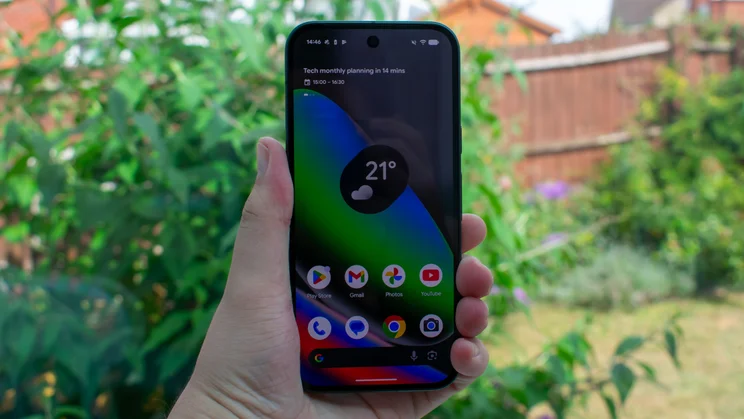
Google develops Android so it’s unsurprising that the Pixel 10 has outstanding software. This version of Android 16 is slick, accessible and versatile, with useful new features like Magic Cue that dynamically provides information from your apps to you, without you having to switch pages. Another big tick here is the seven years of OS updates, security patches and Pixel drops.
Even more exciting are PixelSnap – built-in magnets that open the door for magnetic accessories and wireless charging – and the new 10.8MP telephoto camera. The latter joins an already accomplished camera array, which now offers crisp 5x optical zoom shots in addition to gorgeous dynamic range and outstanding night photography.
The new Tensor G5 chipset performed decently in testing but you can get faster for this kind of money, and the battery proved rather middling in our standard testing. Neither of these are dramatic enough to undermine everything the Pixel 10 gets right, however: for the best Android experience around, Google’s Pixel 10 takes the win.
Read our 2025 Google Pixel 10 review
Key specs – Processor: 3.78GHz Google Tensor G5; RAM: 16GB; Display: 6.3in, 2,424 x 1,080; Storage: 128GB, 256GB; Cameras: 48MP, 10.8MP (5x telephoto), 13MP (wide); Operating system: Android 16; Weight: 204g

2. OnePlus 15: Best Android phone for battery life
Price when reviewed: £849 | Check price at Amazon
- Great for… class-leading battery life and exceptional performance
- Not so great for… not the best zoom photography or software support
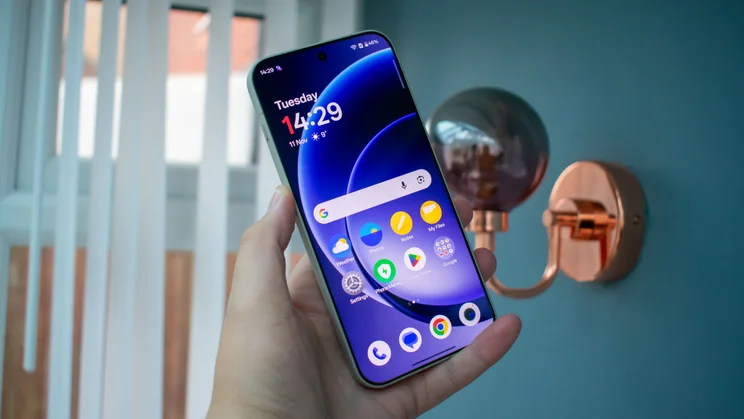
Between its massive 7,300mAh battery capacity and the excellent power efficiency of the new Snapdragon 8 Elite Gen 5 chipset, the OnePlus 15 absolutely demolished our in-house battery test. It ran our standard looping video for over 45 hours, beating the next-best result by more than seven hours and delivering the best battery life we’ve ever recorded.
The new Snapdragon chipset also topped the class for performance, with better CPU speeds and offscreen gaming framerates than any other Android phone we’ve tested. Going hand-in-hand with that power is the personalised Mind Space AI, which works with the versatile Plus Key (replacing the alert slider) to intelligently group, summarise and recall your screenshots and voice notes.
Software support isn’t as good as other flagships, only getting you four years of OS updates, and despite that camera array generally producing sharp pictures with gorgeous colour and lighting, zooms past 30x aren’t the best you can get for this price. For battery life, however, this long-lasting champion is the phone to beat.
Read our 2025 OnePlus 15 review
Key specs – Processor: 4.61GHz Qualcomm Snapdragon 8 Elite Gen 5; RAM: 12GB, 16GB; Display: 6.78in, 2,772 x 1,272; Storage: 256GB, 512GB; Cameras: 50MP, 50MP (3.5x telephoto), 50MP (wide); Operating system: Android 16; Weight: 211g

3. Samsung Galaxy S25 Ultra: Best premium Android phone
Price when reviewed: £999 | Check price at John Lewis

- Great for… four excellent rear cameras and bundled stylus
- Not so great for… not the brightest display and S Pen no longer has Bluetooth
The Samsung Galaxy S25 Ultra earns its name (and place on this list) with a fantastic four-lens rear camera suite, including a pin-sharp 200MP main camera and two telephoto shooters. Between them, these cameras deliver outstanding zoom photography, with much better detail retention over 30x zooms than rivals, and shooting all the way up to 100x. Video is also top-notch, with options for 8K, LOG and 10-bit HDR recording.
The Snapdragon 8 Elite chipset delivered fantastic performance and battery life in our testing, yielding some of the best results we’ve ever recorded. Software is also some of the best around: the OneUI launcher is refined and accessible and Samsung has pledged seven years of updates.
The massive 6.9in display is crisp and produces punchy colours, but peak brightness isn’t up to the same level as other flagships, topping out around 1,200 nits in our testing. And while you still get a bundled S Pen stylus, it no longer supports Bluetooth.
Read our 2025 Samsung Galaxy S25 Ultra review
Key specs – Processor: 4.47GHz Qualcomm Snapdragon 8 Elite for Galaxy; RAM: 12GB, 16GB; Display: 6.9in, 3,120 x 1,440; Storage: 256GB, 512GB, 1TB; Cameras: 200MP, 50MP (5x telephoto), 10MP (3x telephoto), 50MP (wide); Operating system: Android 15; Weight: 218g

4. Google Pixel 9a: Best mid-range Android phone
Price when reviewed: £449 | Check price at John Lewis

- Great for… outstanding battery life and seven years of software support
- Not so great for… no telephoto camera and dull design
The Google Pixel 9a offers so much flagship-level quality that it handily bats away any other competition in its price range. Chief among these is the software, which includes Google’s excellent Gemini AI and class-leading seven years of updates. The display is also a cut above, hitting over 1,800 nits in our brightness testing and demonstrating excellent colour accuracy, with an average Delta E of just 0.67.
Perhaps the most impressive result we recorded, however, was the battery life. The Pixel 9a lasted for more than 34 hours in our standard battery test – one of the best results we’ve seen from phones of any price. Add in brilliant gaming performance and outstanding cameras, and the Pixel 9a offers a ridiculous level of quality for its price.
It isn’t much to look at, with a rather plain design, and some rivals include telephoto cameras, so it’s a shame that Google doesn’t here. It’s hard to care about that, though, when everything else here is such a success.
Read our 2025 Google Pixel 9a review
Key specs – Processor: 3.1GHz Google Tensor G4; RAM: 8GB; Display: 6.3in, 2,424 x 1,080; Storage: 128GB, 256GB; Cameras: 48MP, 13MP (wide); Operating system: Android 15; Weight: 186g

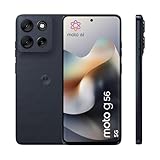
5. Motorola Moto G56: Best cheap Android phone
Price when reviewed: £158 | Check price at John Lewis
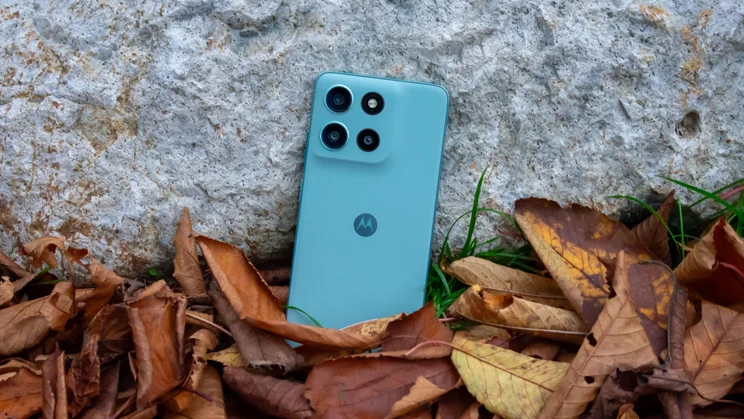
- Great for… big, bright display and unrivalled durability
- Not so great for… middling battery life and only two OS updates
Nothing else in this price range can take a beating like the Motorola Moto G56. The dust and water resistance rating of IP68/IP69 is stronger than some flagship phones, certifying it as dust-tight and able to withstand both submersion and high-pressure jets of water, and there’s a layer of Gorilla Glass 7i sitting over the display for scratch protection – far from guaranteed at this price.
Said screen is a big 6.78in panel that delivers vibrant colours and decent peak brightness, hitting over 800 nits in our testing. The selfie camera sitting at its crest is one of the best at this price, capturing natural skin tones and sharp detail, and the main lens on the rear is equally strong, delivering better night shots than most budget handsets.
Performance and battery life proved to be only okay in our testing, neither aggressively bad nor notably good, and Motorola is only committed to two years of OS updates, but for this low price, the Motorola Moto G56 is still a bargain.
Read our 2025 Motorola Moto G56 review
Key specs – Processor: 2.6GHz MediaTek Dimensity 7060; RAM: 8GB; Display: 6.72in, 2,400 x 1,080; Storage: 256GB; Cameras: 50MP, 8MP (wide); Operating system: Android 15; Weight: 200g
6. Samsung Galaxy Z Fold 7: Best foldable Android phone
Price when reviewed: £1,549 | Check price at John Lewis
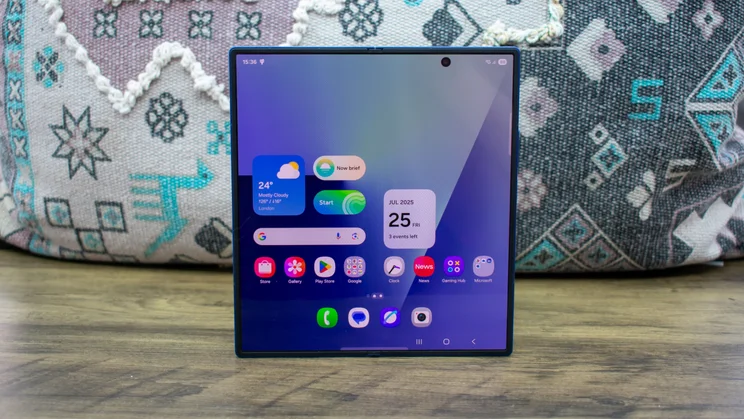
- Great for… fantastically powerful and ridiculously slim
- Not so great for… not fully dust-proof and very expensive
Foldable phones have made huge leaps in recent years and none exemplify this more than the Samsung Galaxy Z Fold 7. The build is incredibly thin and lightweight, measuring just 4.2mm unfolded and weighing 215g – less than plenty of non-folding phones. It’s also nicely robust, with an IP68 dust and water resistance rating and a layer of Gorilla Glass Ceramic 2 sitting over the display.
The Snapdragon 8 Elite for Galaxy chipset delivered the best performance speeds we’ve ever recorded on a foldable phone, as well as decent battery life, running our standard looping test on the main display for over 23 hours. The massive 200-megapixel main camera also proved impressive, capturing beautifully detailed shots with vibrant colours and broad dynamic range.
The main thing holding it back is the price – foldables are still very expensive – and it wouldn’t have hurt to see the IP rating upgraded to be fully dust-tight. But if you fancy the format and want the best there is, the Samsung Galaxy Z Fold 7 is undoubtedly top of the game right now.
Read our 2025 Samsung Galaxy Z Fold 7 review
Key specs – Processor: 3.1GHz Google Tensor G4; RAM: 8GB; Display: 8in, 2,184 x 1,968 (cover: 6.5in, 2,520 x 1,080); Storage: 256GB, 512GB, 1TB; Cameras: 200MP, 10MP (3x telephoto), 12MP (wide); Operating system: Android 16; Weight: 215g
How to pick the right Android Phone for you
How much should I be spending?
Android phones stretch from sub-£100 budget handsets to four-figure flagships, so the answer to this is really how much you are willing to spend. You can get a very competent Android phone for not very much money, but if you want all of the latest and most advanced features, expect to spend more for the privilege.
It’s also worth noting that the pricier handsets tend to receive more years of software support, keeping them up to date with the latest security updates, the latest features and the newest versions of Android for longer than their more affordable counterparts. It may be worth spending more upfront to get a phone that’ll remain up to date and usable for longer than a cheaper alternative.
What features should I look out for?
Putting aside more niche functions such as wireless charging and integrated AI, these are the main things to bear in mind when choosing your new Android smartphone:
Display
There are two main types of display you’ll see here – LCD panels are more common on cheaper phones, while AMOLED’s tend to be pricier, but offer better contrast and a deeper black level. You can tell a lot about a phone’s display from its specifications – resolution tells you how sharp it is, refresh rate will indicate how smooth it is to interact with – but crucial elements such as brightness and colour accuracy require hands-on testing. We evaluate both of these during the review process, and you can see the exact results for individual handsets by checking the full reviews.
Cameras
There’s one area in phone cameras which is mostly exclusive to flagships, and that’s telephoto zoom lenses. If you want crisp, highly detailed zoom images, you’ll simply have to spend a little more. Everyone else, however, can find some excellent cameras in the more affordable ranges too; we include camera samples in all of our standalone reviews which you’ll find links for on this page, so check the images out before you settle on your new phone.
Battery life
Smartphone battery life has improved over the years, but we’re still living in a world where a charge may only just get you through the day. Phone battery sizes are measured in milliamps-per-hour (mAh) and while larger cells tend to last for longer, that’s not always the case. We test every phone with the same battery test, so if in doubt, check out the full review to see how well a phone compares to its competitors.
Performance
As a general rule of thumb, more expensive phones will tend to come with higher-performing chipsets. However, budget and mid-range platforms have improved to a point where you don’t need the most expensive phone on the market to enjoy a smooth, hitch-free user experience. Unless you plan on regularly playing graphics-intensive phone games or running multiple demanding apps at once, don’t feel pressured into going for the biggest and most expensive handsets.
Software
These phones are all Android devices, but they can look and feel quite different. Certain manufacturers – notably Samsung, OnePlus, Honor and Xiaomi – put their own customised “skin” on top of the Android OS, while the likes of Google and Motorola use stock Android (or near-stock) to deliver a more consistent experience for their users. All the phones on this list run the same apps, however, so this is mostly a case of personal preference.
Storage
Cheaper phones will tend to offer one or two storage varieties, usually 128GB or 256GB, while more expensive models can get 512GB or even 1TB variants. While it can be tempting to go for the bigger capacity models for future-proofing, watch out for models that also let you add a microSD card – the maximum capacity for these is usually up to 1TB, so this can be a more cost-effective way to expand your phone storage.