To help us provide you with free impartial advice, we may earn a commission if you buy through links on our site. Learn more












- Impressive performance
- Outstanding battery life
- Big, beautiful display
- Software still too cluttered
- Underwhelming cameras
- Quite bulky
Early signs are that 2026 is a year of smartphone stasis, with spiking costs leading some manufacturers to essentially repackage the same phone and label it as new. Trust Xiaomi’s Poco brand to shoot for something a little more ambitious.
The Poco X8 Pro Max is the first ‘Max’ device in the series, promising pumped up performance whilst retaining its mid-market pricing. If you want the fastest phone possible for well under £500, it could be your best option right now.
Poco X8 Pro Max review: What you need to know
Poco’s MO is keenly priced performance, and the Poco X8 Pro Max takes the Xiaomi-owned brand’s middle offering to new heights. It lives up to its Max branding with a large 6.83-inch AMOLED display, flagship-grade IP69K dust and water resistance, an enormous 8,500mAh battery and formidable 100W wired charging.
You can also expect outsized performance for the money, courtesy of a potent Dimensity 9500s processor, paired with a generous 12 or 16GB of RAM. The baseline model also supplies a capacious 256GB of internal storage, which can be doubled up to 512GB if you wish.
One element that’s decidedly non-Maximal is the X8 Pro Max’s stripped-back photographic set-up. There’s a 50-megapixel main camera, an 8-megapixel ultra-wide, and a 20-megapixel selfie cam.
Poco X8 Pro Max review: Price and competition
At a starting price of £469, the Poco X8 Pro Max is the most expensive X-series model we’ve ever seen by quite some margin. The Poco X8 Pro (no Max) costs just £349, while the preceding Poco X7 Pro landed at just £309.
Phones are undoubtedly getting more expensive right across the board, but even at this price the Poco X8 Pro Max remains smack back in the middle of the smartphone market, costing half the price of an iPhone Air or a Google Pixel 10 Pro.
It’s positioned to undercut the Nothing Phone (4a) Pro, the Google Pixel 10a, and the (soon to be replaced) Samsung Galaxy A56, all of which carry slightly more expensive £499 launch prices.
Poco X8 Pro Max review: Design and key features
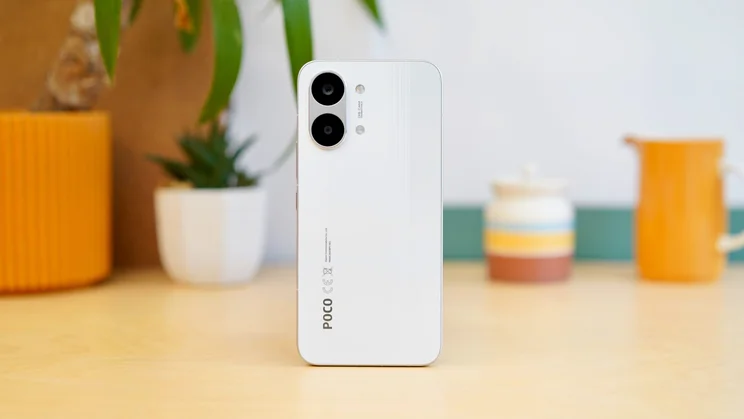
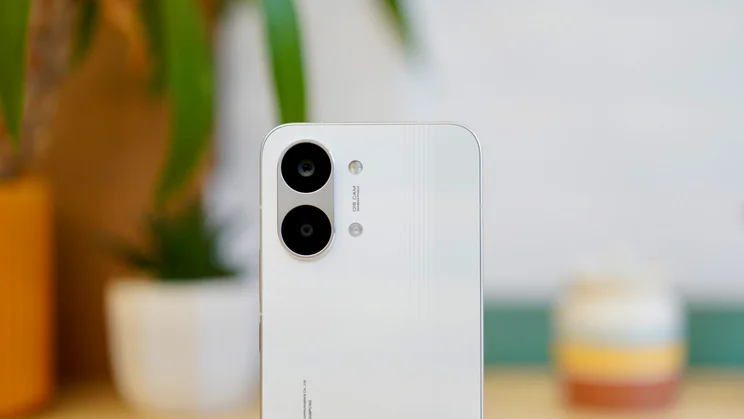
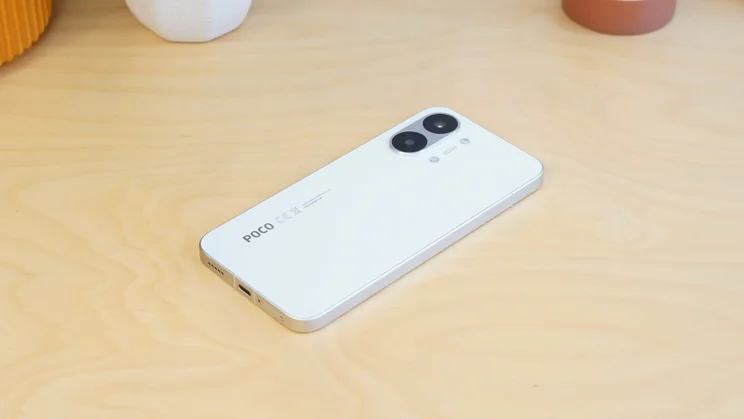
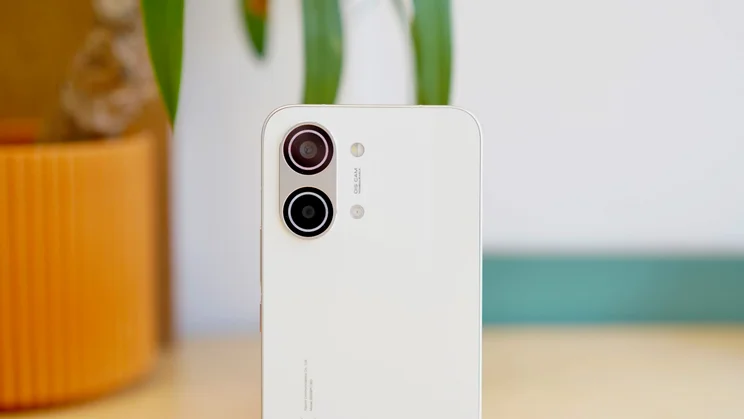
The Poco X8 Pro Max represents a subtle evolution of the brand’s design language. It’s a lot like the Poco X7 Pro before it, with a flat-edged iPhone-esque body and a similar vertical pill-shaped double camera module.
This is an altogether more premium piece of kit, though, as befits its Pro Max status. Rather than plastic, its rim is made of metal, while its rear panel is glass. It also gains extensive water resistance, covering IP66, IP68, IP69, and IP69K – better than most flagship phones.
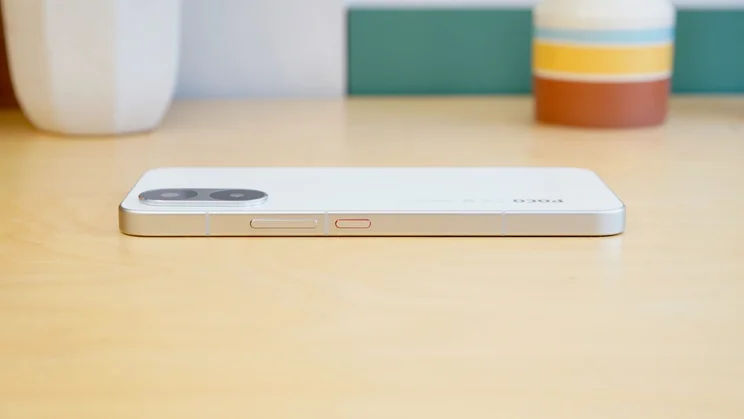
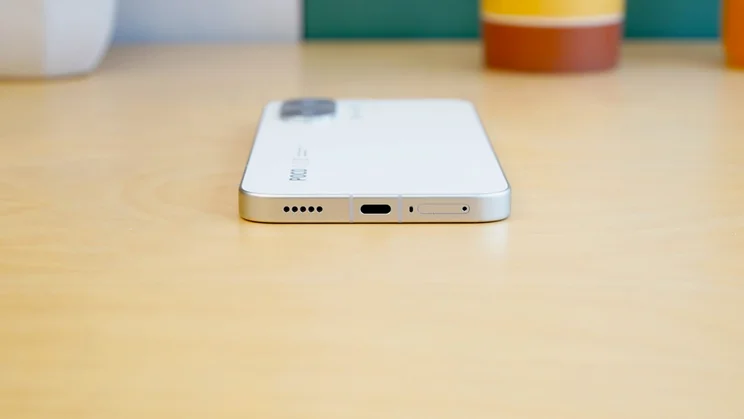
Points of interest around the rim of the phone include a hint of red around the clicky power button on the left edge, an IR blaster on the top edge (great for replacing that lost TV remote), and a pair of edge-mounted stereo speakers that output a decent level of clarity and spaciousness for the money. The twin camera modules, meanwhile, feature customisable RGB lighting rings that can respond to different notifications, which is potentially useful for those who place their phones face down when not in use.
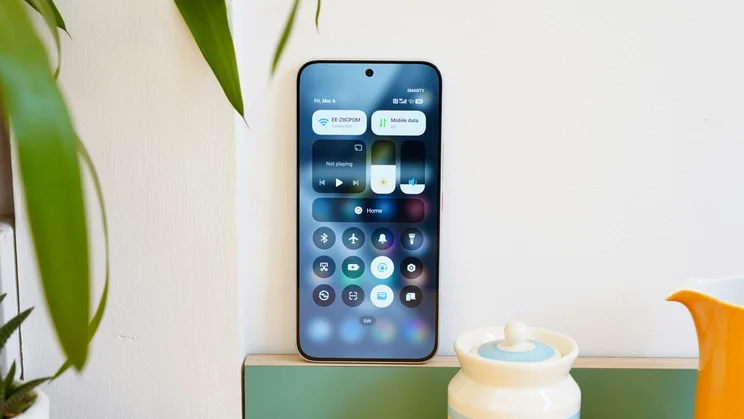
Around the front of the phone, the screen bezels aren’t completely uniform, but the difference is sufficiently subtle. Meanwhile, under the display sits a speedy and secure ultrasonic fingerprint sensor, which is another flagship-grade flourish.
I weighed the phone in at around 219g, which is a little heavier even than the Samsung Galaxy S26 Ultra. It certainly earns its Max designation, but that applies to the high-quality feel of the phone as much as its bulk.
As always, Poco’s software fails to match up to its hardware. Xiaomi’s HyperOS 3.0 is fast and functional, with ample personalisation potential and a smattering of the usual AI tools should you wish to indulge. But it’s also very busy and filled with bloatware, with the likes of Temu, TikTok, Booking.com and Facebook cluttering up the home screen, not to mention a folder filled with rubbish games.
Meanwhile, four years of operating system updates and six years of security patches is fine, but falls short of the seven year support promise for the Pixel 10a and Galaxy A56.
Poco X8 Pro Max review: Display
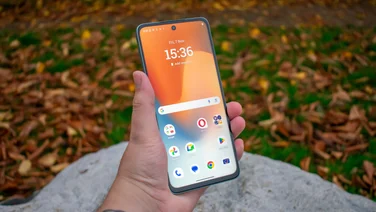
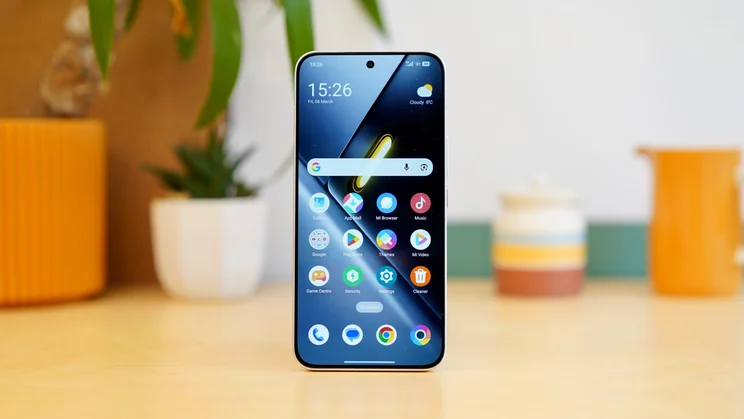
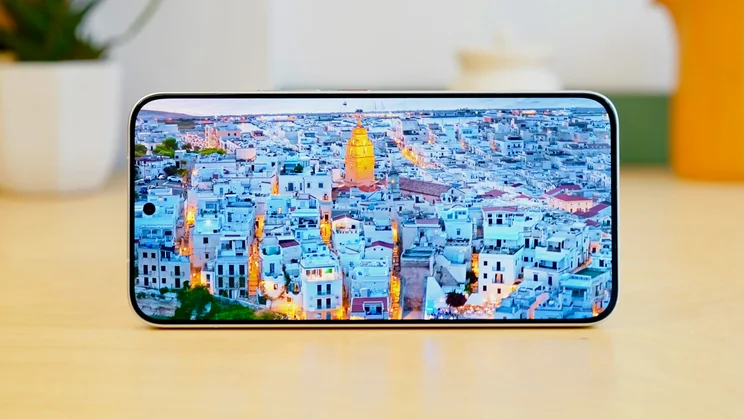
Max by name, Max by display. Poco’s series-topper crams in a large 6.83-inch OLED display with a sharp 1,280 x 2,772 (1.5K) resolution.
The refresh rate maxes out at a standard 120Hz, while the brand claims that it can hit 3500 cd/m2 brightness in peak conditions – which means limited portions of the screen during HDR playback. Dolby Vision, HDR10+, and HDR Vivid are all supported.
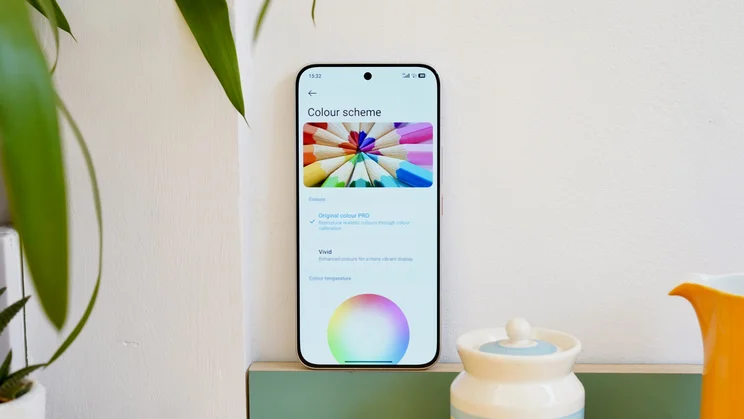
In my own testing, with autobrightness turned off, I recorded a maximum brightness of 629cd/m2, which is around a 23% increase on the Poco X7 Pro. Colour accuracy is excellent, with an sRGB gamut coverage of 98.4% against a volume of 102.2%, and an average Delta E score of 1.1. Gratifyingly, this was in the default Original Colour Pro colour scheme, so I didn’t need to mess around in the Settings menu to achieve a nice natural output.
Poco screens often punch above their weight, and that remains the case with the brand’s new Max model.
Poco X8 Pro Max review: Performance and battery life
Poco hasn’t quite given its new phone Max power, but the phone’s Mediatek Dimensity 9500s chip acquits itself extremely well for the money – especially with a decent 12 or 16GB of RAM at its disposal.
An average Geekbench 6 CPU multi-core benchmark score of 8597 represents a massive 38% boost over last year’s Poco X7 Pro. It’s also approaching twice the score achieved by the Pixel 10a, and nestles itself neatly between the Google Pixel 10 and the OnePlus 15R – two phones that cost hundreds of pounds more.
When it comes to throwing graphics around, the Poco X8 Pro Max scores an average of 20,838 in Geekbench 6 Vulkan GPU. That’s about double the Pixel 10a score. In practical terms, I was able to play rounds of Destiny Rising nice and smoothly on top Graphics Mode and Rendering Quality settings, though the Frame Rate was restricted to Standard. It’s just a notch or two below the big boys.
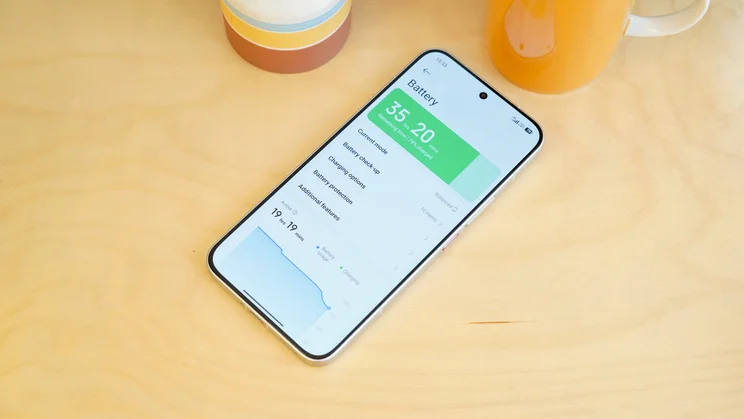
Even more eye-catching than the Poco X8 Pro Max’s performance output is its battery. At 8,500mAh, this is the largest smartphone battery I’ve ever used, putting even the OnePlus 15’s might 7,300mAh cell in the shade. It didn’t quite match that phone in our looping video battery test, but at 39hrs 20mins it’s way better than the Poco X7 Pro and just about pips the frugal Pixel 10a, while falling just shy of the Honor Magic 8 Lite.
Poco has given its phone sufficient wired charging grunt to match that capacity, to the tune of 100W. Plugging in a suitable charger (I used a Xiaomi 120W brick), the Poco X8 Pro Max got from empty to 59% in 30 minutes, and progressed to a full charge in about an hour. That’s nothing spectacular, but it trounces the Pixel 10a, and is generally quite impressive given the mammoth capacity.
Poco X8 Pro Max review: Cameras
The Poco X8 Pro Max’s photographic offering is decidedly mini. There are just the two cameras around back, and both are fairly humble. They include a 50-megapixel 1/1.95″ main sensor with an f/1.5 aperture and OIS, and an 8-megapixel 1/4.0″ ultra-wide with an f/2.2 aperture.
There is no dedicated telephoto camera, though that’s still far from being a common or expected feature at this end of the market. There’s a pretty ordinary 20-megapixel camera around front. It all seems very similar to the Poco X8 Pro and indeed the Poco X7 Pro before it.
Though the main sensor here is slightly different – a Light Fusion 600 – the results are similarly so-so. Shots taken in good lighting with the main sensor are reasonably detailed and well exposed. The ultra-wide loses a lot in terms of detail and dynamic range, though the tone gets within the same ballpark as the superior main sensor, which is far from a given in a cheaper phone.
Zooming in is possible, courtesy of familiar cropping techniques on the main sensor, but detail starts to fall apart noticeably beyond 2x (below). The Camera app marks out 5x and 10x options in the UI, but I wouldn’t recommend making use of them.
Night shots taken with the main sensor do a fair job of brightening up the scene, making good use of the Dimensity 9500s to achieve acceptable shutter times, but you’ll notice a certain graininess appearing in the skies.
That 20-megapixel front camera does an acceptable job with selfies, though it’s a small sensor with no autofocus, so you shouldn’t expect miracles. There’s an annoying beautifying effect applied by default, though it’s set relatively low. Portrait mode does quite well at isolating the subject (that’s you) from the background, which likely speaks to parent company Xiaomi’s excellent image processing algorithms.
Video capture extends to 4K and 60fps, and I was reasonably pleased with the quality of the footage. Audio capture, too, seemed suitably precise.
Poco X8 Pro Max review: Verdict
The Poco X8 Pro Max is another excellent-value proposition for those who demand a little more performance from their mid-range phone. As the first Max in the series, it comfortably lives up to its name, offering a big and beautiful display, outsized performance, and epic stamina from a ginormous battery – albeit with a correspondingly inflated price.
It’s a shame the cameras didn’t receive a smidgen of this Max love, even if we fully accept that this isn’t traditionally a priority for the Poco brand. The software, too, continues to be a weak point for Poco, as it is for the wider Xiaomi family.
Still, if you have less than £500 to spend on your next phone and you want to go as big and fast as possible, buying the Poco X8 Pro Max would be a power move that we fully endorse.