To help us provide you with free impartial advice, we may earn a commission if you buy through links on our site. Learn more












- Strong performance,
- Brilliant screen
- Improved build quality
- More expensive than before
- Xiaomi’s HyperOS is messy
- Little to shout about on the camera front
Poco’s mid-range smartphone offering this year is dominated by its first ‘Max’ offering, but be sure to make a little space on your shortlist for the regular Poco X8 Pro. It might not be as big or powerful as its brother, but it still offers plenty of interest for anyone looking to get change from £400 on their next phone.
With impeccable build quality and the kind of specifications that blur the lines between cheaper phones and those knocking on the door of flagship status, it’s got a lot going for it. Familiar Poco problems prevent it from being an automatic pick, but there’s a lot to appreciate here.
Poco X8 Pro review: What you need to know
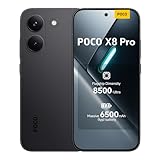
We’ve come to expect a level of performance from Poco phones that seems to exceed their price tags, and the Poco X8 Pro lives up to the brand’s reputation. For well under £400 you’re getting a phone that’s powered by a capable Dimensity 8500-Ultra chip, fronted by a bright 6.59-inch OLED display, and driven by a large 6,500mAh battery with support for 100W wired charging.
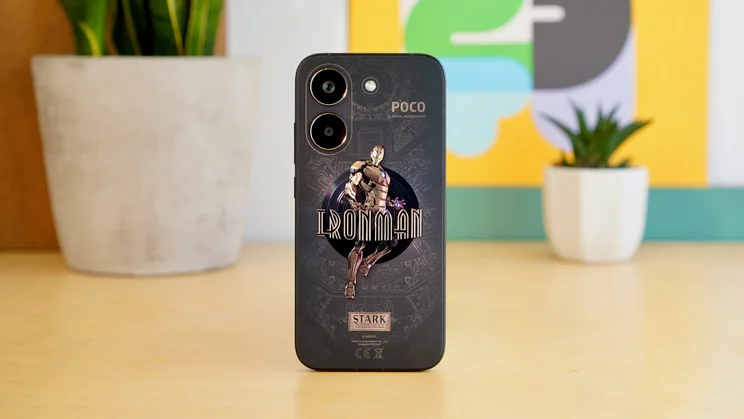
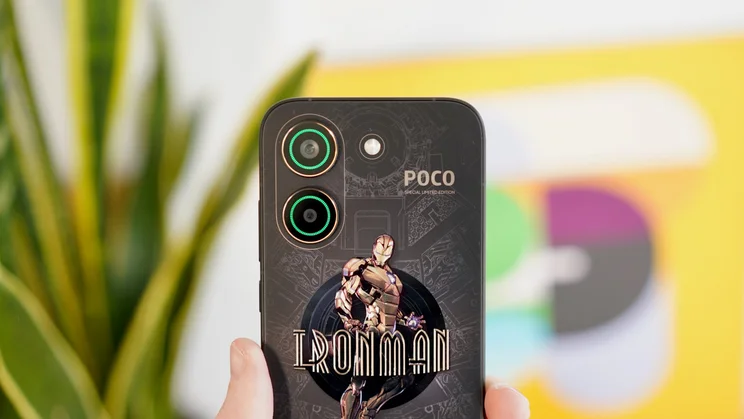
There are three memory variants here in the UK: one with 8GB of RAM and 256GB of storage, another with 512GB of storage, and a range-topping model with 12GB of RAM and 512GB of storage. There’s also a special Poco X8 Pro – Iron Man Edition (tested here) that essentially pairs that top spec with a special decal inspired by Marvel’s armoured hero, though it won’t be available to buy in the UK market.
The camera system for each of these variants involves a 50-megapixel main camera, an 8-megapixel ultrawide, and a 20-megapixel selfie camera, much like that of the Poco X7 Pro before it.
Poco X8 Pro review: Price and competition
I have mixed feelings about the Poco X8 Pro’s £349 starting price. On the one hand, this represents a significant £40 price hike on last year’s Poco X7 Pro. Phones are set to be more expensive across the board in 2026 thanks to spiking component prices, but it’s still an unwelcome increase.
Conversely, this makes the Poco X8 Pro £120 cheaper than the Poco X8 Pro Max, and I can’t in all conscience tell you that the larger model offers a 34% better experience. In fact, it feels very similar in most of the ways that count.
Also in the Poco X8 Pro’s favour, this starting price – and indeed the two step-up models at £399 and £429 respectively – means that the phone undercuts the Google Pixel 10a, which starts from £499. It’s more of a direct competitor to the Nothing Phone (4a), the OnePlus Nord 5, and the Honor Magic 8 Lite.
Poco X8 Pro review: Design and key features
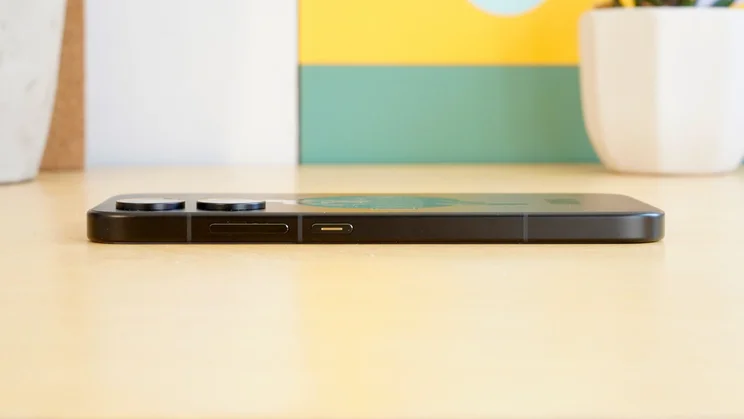
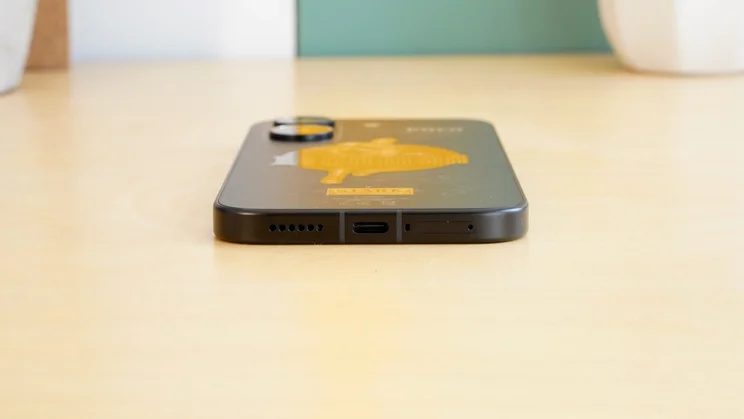
The Poco X8 Pro shares its basic design with the Poco X8 Pro Max. It’s got a similar flat metal frame – albeit one that’s ‘only’ IP68 rated – with glass to the rear and front. This is an upgrade on the plastic-heavy Poco X7 Pro, and might well be worth the £40 price bump in itself.
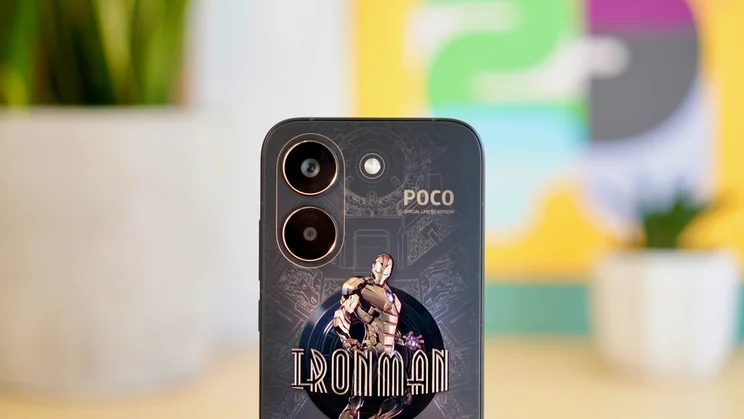
There are Black, Mint Green, and White colour options, but I was sent the special Iron Man edition, which won’t be available to buy here in the UK. All it really adds is a shiny Iron Man decal, a Stark Industries logo, a Poco Special Edition symbol, and some gold detailing. I found it to be more than a little tacky, and thus no great loss to my home country.
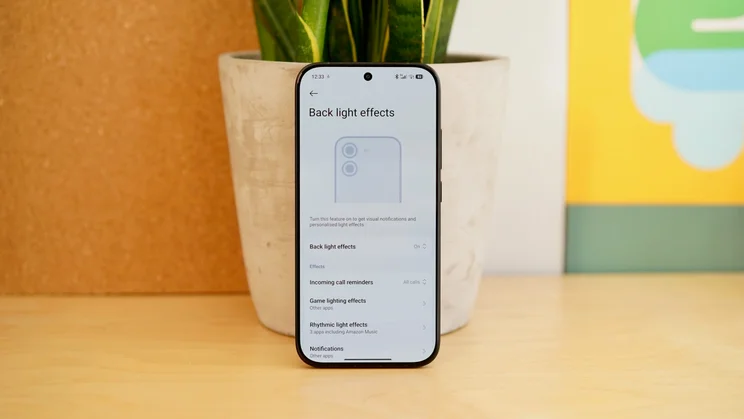
You might expect the Max model to hold exclusive rights to Poco’s new Dynamic RGB lighting system, but it’s right here on the regular Pro too. This takes the form of two sets of LED lights surrounding both camera modules, which can then be set to light up in a variety of colours when certain notifications or functions are in operation. It’s useful if you habitually put your phone face-down when it’s not in use, but otherwise is a bit of a gimmick.
The in-display fingerprint sensor is a regular optical sensor, so you don’t get the Max’s extra-secure ultrasonic version. Not that this really matters, as it remains quick and reliable.
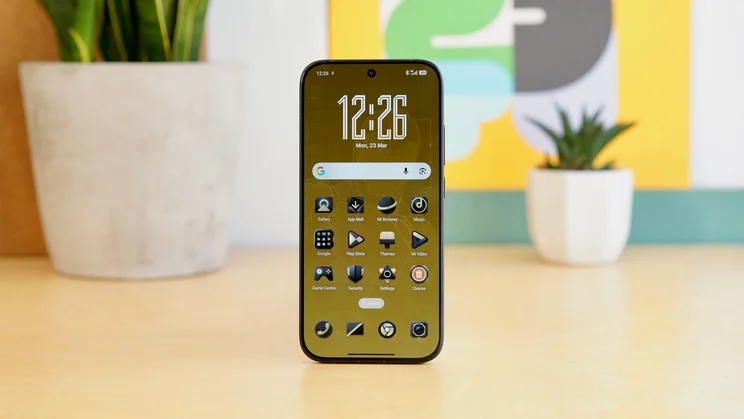
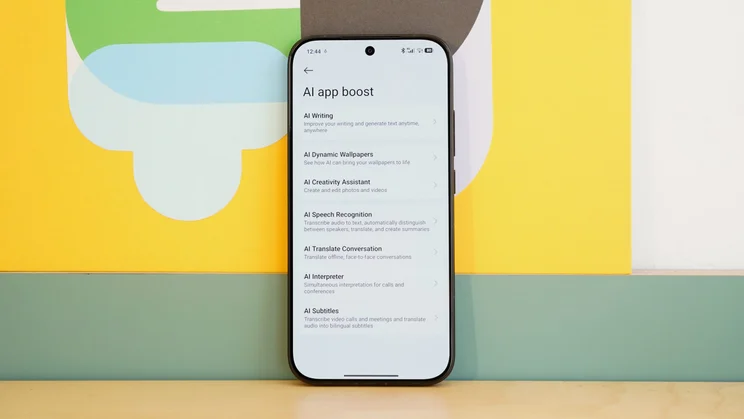
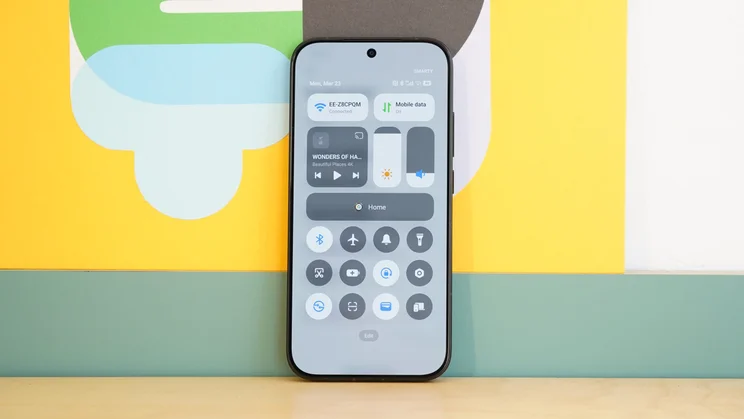
There’s Android 16 straight out of the box, together with Xiaomi’s HyperOS 3 UI. The latter is far from my favourite take on Google’s OS, with too much visual clutter and extraneous apps. My test model came with third party apps such as Temu, Booking.com, Microsoft’s Copilot and OneDrive, Netflix, and Spotify pre-installed, as well as a folder full of ropey games.
Poco is offering four years of operating system updates and six years of security patches. It’s not a terrible provision, but it can’t hope to match the flat seven-year support promise of the Google Pixel or the six years afforded to Samsung’s Galaxy A series.
Poco X8 Pro review: Display
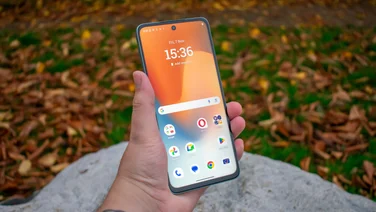
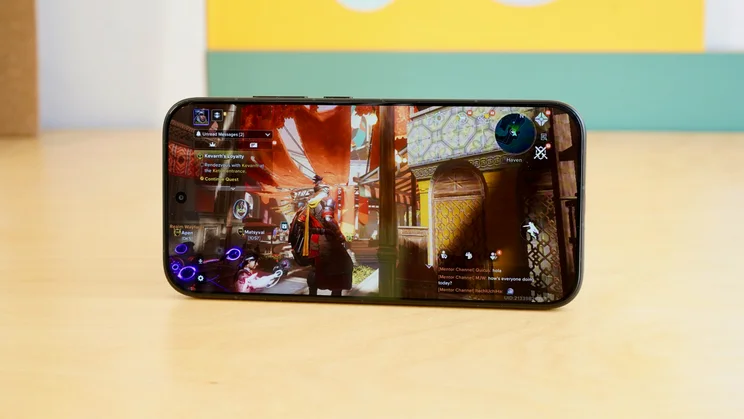
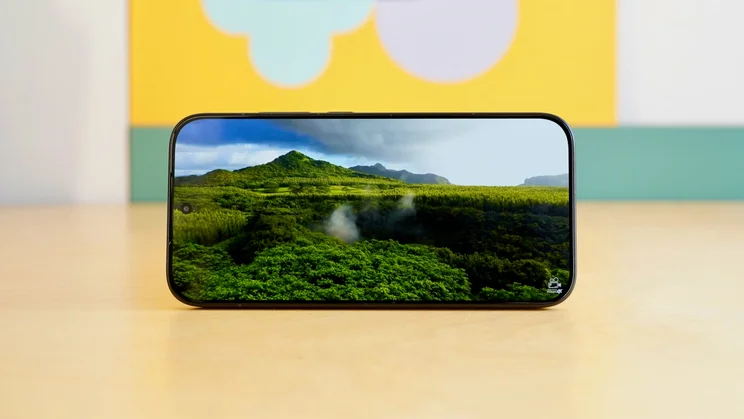
The Poco X8 Pro’s display also gets remarkably close to the quality of the Max’s version. It’s a 6.59in OLED, so not quite as big, but it’s just as sharp (1.5K) and equally fluid (120Hz).
It also gets just as bright, with the same stated 3500 nits peak in HDR scenarios. With autobrightness turned off, I measured a maximum brightness of 611cd/m2, which is within the same ballpark as its Max brother.
Colour accuracy is similarly impressive, too. I measured an sRGB gamut coverage of 99.2% against a volume of 103.7%, with an average Delta E score of 0.97 (1 being the ideal). Poco offers this nice, natural look as default, too, through its well-calibrated Original Colour Pro colour scheme.
It’s another fabulous screen from Poco, and it’s gratifying to find that all you’re giving up compared to the Max is a little real estate.
Poco X8 Pro review: Performance and battery life
The Poco X8 Pro runs on a MediaTek Dimensity 8500-Ultra chip, which is less advanced than the Pro X8 Max’s Dimensity 9500s. It dropped well short of its brother in our Geekbench 6 CPU and GPU benchmark tests, by between 20 and 36%.
Even still, it trounces all of the direct rivals mentioned above – the Nothing Phone (4a), the OnePlus Nord 5, and the Honor Magic 8 Lite – in CPU terms. Rather embarrassingly for Google, it also smashes the Pixel 10a in both multi-core CPU and GPU terms, and the latter by around 50%. It passes the feel test too, remaining fast and fluid when flitting between apps and navigating around those busy screens and menus, while Destiny Rising runs well even on maxed out graphical settings.
It’s worth issuing the caveat that I was using the top spec, which packs in 50% more RAM (12GB) than the two others I suspect most people will be using. Even so, I feel confident recommending the Poco X8 Pro to anyone looking for the best performance possible for less than £400.
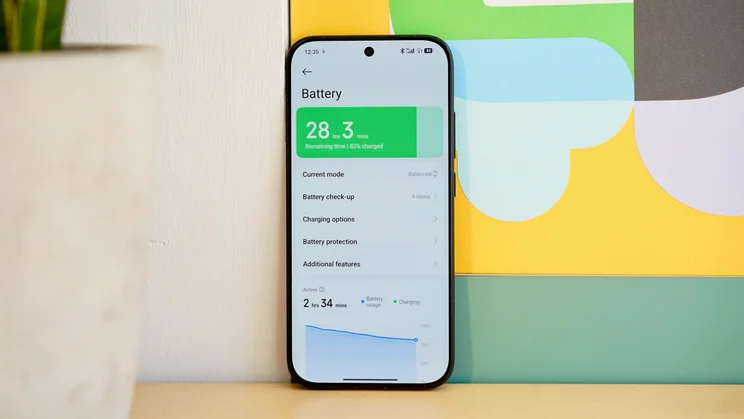
Battery performance isn’t quite as impressive, but it’s solid enough. The Poco X8 Pro’s 6,500mAh battery might not be anywhere near as capacious as the Max’s – precious few phone batteries are – but it’s still enough to make most flagship phones look a bit silly. However, in our usual looping video test it lasted 26hrs 23mins, which drops it far behind the OnePlus Nord 5, the Honor Magic 8 Lite, and the Google Pixel 10a, but ahead of the Nothing Phone (4a).
Charging speeds are very good, with 100W HyperCharge support getting you from empty to 77% in 30 minutes. You’ll need to provide your own charger, though.
Poco X8 Pro review: Cameras
Poco has done precious little with its camera set-up since the Poco X7 Pro. The Poco X8 Pro features the same 50-megapixel 1/1.95in Sony IMX882 main sensor with an f/1.5 aperture and OIS, and the same 8-megapixel 1/4.0in ultra-wide with an f/2.2 aperture. You also get the same 20-megapixel selfie camera on the front of the phone.
The only improvements, then, are provided by the use of a more capable image processor, as well as any algorithmic upgrades Poco has come up with in the intervening 12 months. Feed it with sufficient light, and the main sensor can take some handsome shots, with sharp detail and vibrant colours, that occasionally come undone on exposure in the low spring sun. Night shots look perfectly acceptable, losing a certain amount of detail but brightening things up without making everything look too unnatural.
There’s no telephoto camera here, but 2x shots crop in well on that main sensor without losing too much sharpness. 5x and 10x shots are noticeably softer, as you might expect. The dedicated 8-megapixel ultra-wide is the weakest link here, struggling with detail, exposure, and dynamic range compared to that main camera. With that said, Xiaomi’s image processing does a fair amount of heavy lifting in striking a tone that’s reasonably consistent with the main camera.
Selfies don’t have the richest skin tone or the finest detail, with the fixed focus lens capturing slightly flat shots. However, they’re perfectly usable on the usual social media and messaging apps, while the portrait mode does well to separate your subject from the artificially blurred out background.
Video capture extends to 4K at 60fps, which is better than the Nothing Phone (4a). Footage captured in this mode is steady and smooth, though somewhat susceptible to wind noise.
Poco X8 Pro review: Verdict
Poco has turned out another affordable performance beast in the X8 Pro, sporting the kind of high-performing components and aggressive pricing that fans of the brand will be well familiar with by now.
We’ve basically seen this all before in previous models, though there’s been a commendable uptick in build quality to justify the small bump in price. I would have liked to have seen more progress made in the camera department, while Xiaomi’s software remains some of the least likable on the market, but it’s difficult to argue with the sheer level of performance on offer here – not to mention the quality of the screen – for less than £400.
While the Poco X8 Pro Max will undoubtedly steal most of the attention, I’d encourage you to not sleep on the regular Poco X8 Pro. It offers a broadly comparable experience for significantly less money, all while catching a lot of its lower-mid-range rivals flat footed.