To help us provide you with free impartial advice, we may earn a commission if you buy through links on our site. Learn more






- Brilliant battery life and speedy charging
- Attractive and robust design
- Bright, punchy display
- Colour option limitations
- Big generational price increase
- Some camera flaws
It might not carry the iconic name recognition of the Razr line, but Motorola’s Edge series has consistently been delivering solid mid-range phones for a few years now. The Motorola Edge 70 Fusion continues this trend by being the first in its range to offer a choice of battery capacities: you can buy either the slimmer, lighter model with a 5,200mAh cell or opt for the slightly chunkier version with a hefty 7,000mAh battery.
As for the rest of the package, there’s a lot to like, with fast charging, decent cameras, a lovely screen, accessible software and a slick design that is more robust than we tend to see in this price range. On the other hand, the Edge 70 Fusion costs quite a bit more than its predecessor. Is there enough quality here to justify the higher price? Let’s dig in.
Motorola Edge 70 Fusion: What you need to know
Regardless of which battery capacity you choose, the rest of the hardware remains the same: charging supports up to 68W wired (there’s no wireless charging), and the processor is a 2.5GHz Snapdragon 7s Gen 3 chipset, backed up by 8GB of RAM and 256GB of internal storage.
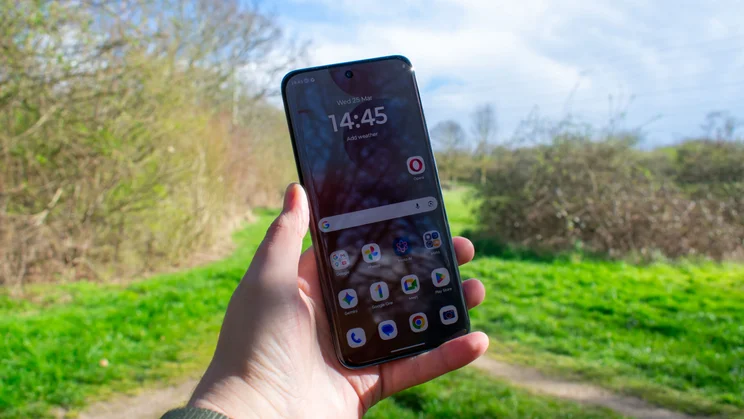
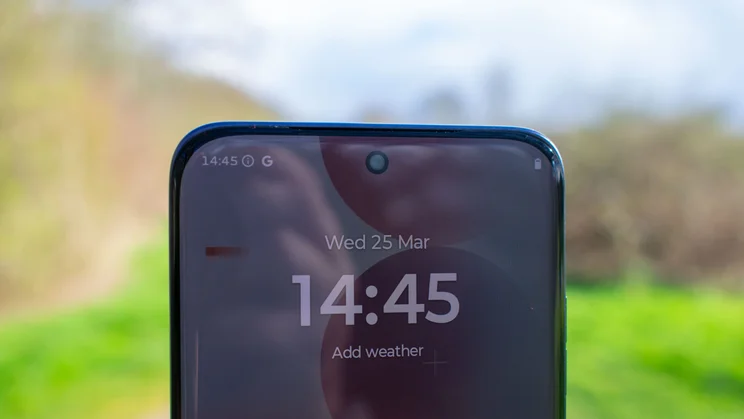
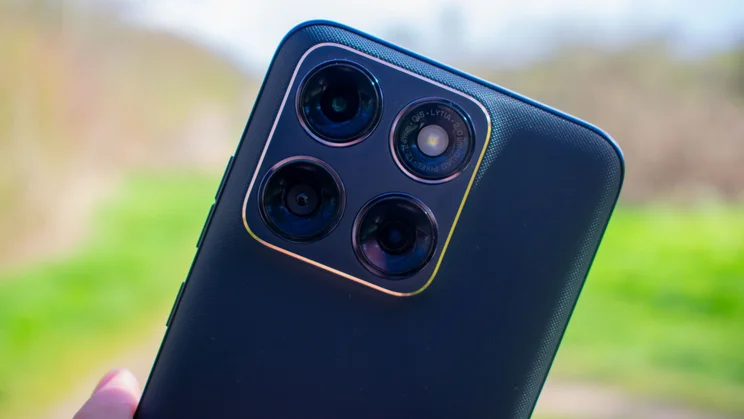
The display is a 6.78in AMOLED panel with a resolution of 2,772 x 1,272 and a 144Hz peak refresh rate. There’s a 32-megapixel selfie camera nestled in a hole-punch notch near the top of the display, and over on the rear, we have a 50-megapixel main camera complemented by a 13-megapixel ultrawide lens.
Price and competition
The pricing for Motorola’s Fusion models has been all over the place. Last year’s Edge 60 Fusion retailed for £300, while the Edge 50 Fusion before it cost £350. This year, we’ve got two prices: the model reviewed here (with the massive 7,000mAh battery) costs £380, while the slimmer version with a 5,200mAh battery is marginally cheaper, at £370.
There are several strong options in this price range, each excelling in a different area. The most direct rival to the Edge 70 Fusion is the Honor Magic 8 Lite, which has an even larger 7,500mAh battery, twice the storage capacity at 512GB and a superior six years of software support. Best of all, it’s currently cheaper, at just £350.
The Google Pixel 10a is a bit of a stretch, as it starts quite a bit more expensive, at £499 for the 128GB model. If you want the best under £500, however, this is it: the cameras and software support are class-leading (though there’s no telephoto), and performance and battery life are up there with the best.
The Nothing Phone (4a) only recently launched, starting at £349 for the 128GB model, and offers up the unique Nothing aesthetic, useful AI features and a gorgeous 3.5x telephoto camera.
Finally, the dark horse is the OnePlus Nord 5, which started closer to Pixel pricing before being slashed to just £338 for the 256GB model. The key strength here is power, with better speeds and gaming performance than anything else in this price range.
Design and key features
The extra tenner aside, three compromises come with choosing the larger battery version, two that are expected and one that feels unnecessary.
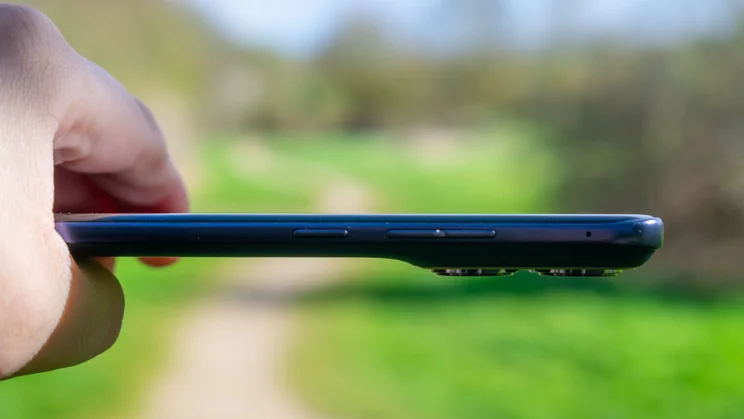
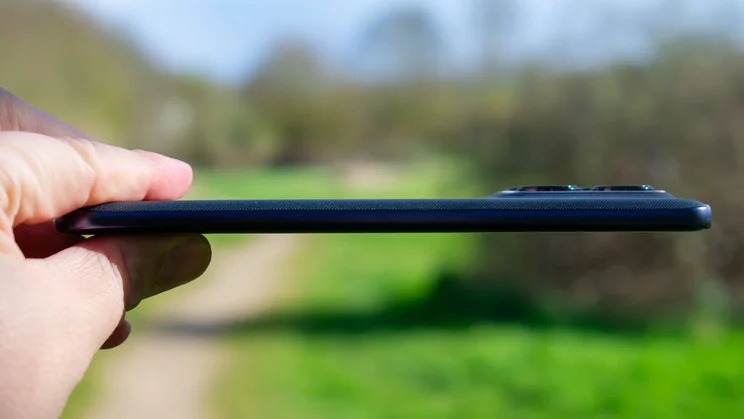
First of all, that bigger battery takes up more space, so this version is both thicker (8mm vs 7.2mm) and heavier (193g vs 177g) than the model with a 5,200mAh battery. The footprint is otherwise the same, measuring 163mm high and 76mm wide.
Having spent some hands-on time with both versions, I can attest to the beautiful lightness of the 5,200mAh model, but the 7,000mAh is no chunk either, still sitting comfortably on the lighter end of the smartphone scale.
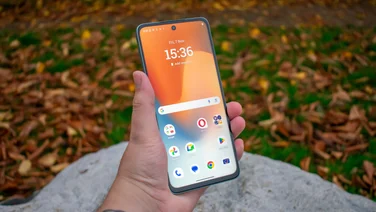
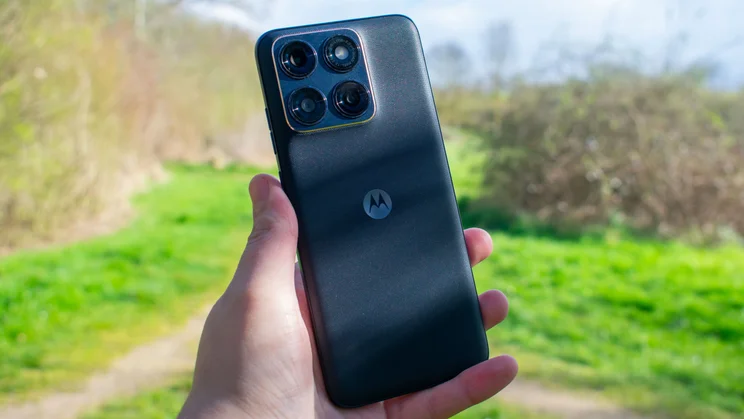
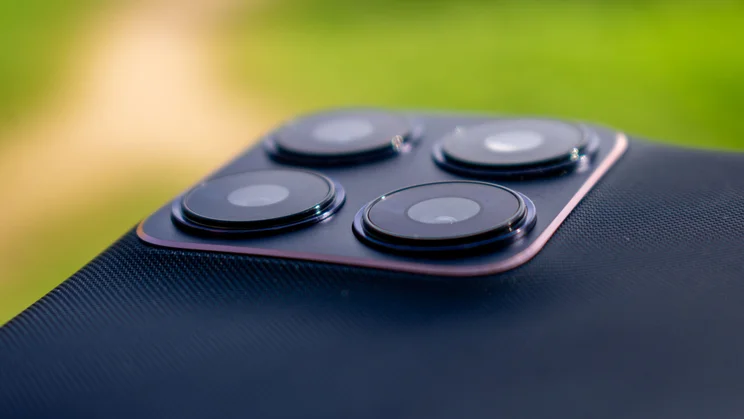
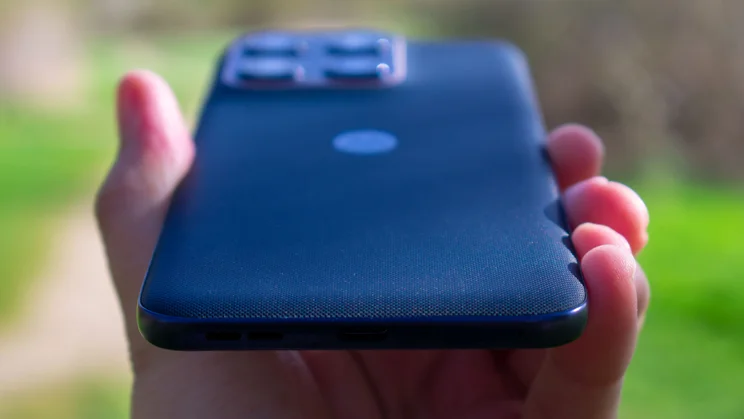
The compromise that feels silly is that the 7,000mAh version only comes in one colourway. It’s a striking blue-toned black – Pantone Silhouette to give it its full name – and is coated with a luxuriously soft and tactile nylon-esque material. Topping it off is a subtle bronze accent line bordering the camera housing. It’s an elegant and sleek design, no doubt.
The problem is that the 5,200mAh model gets three further Pantone-approved colour choices: Sporting Green, Orient Blue and Country Air. Punchy colour choices are one of the biggest lures of Motorola phones, so it’s a shame to see the 7,000mAh version saddled with a single choice – and the least vibrant option, at that.
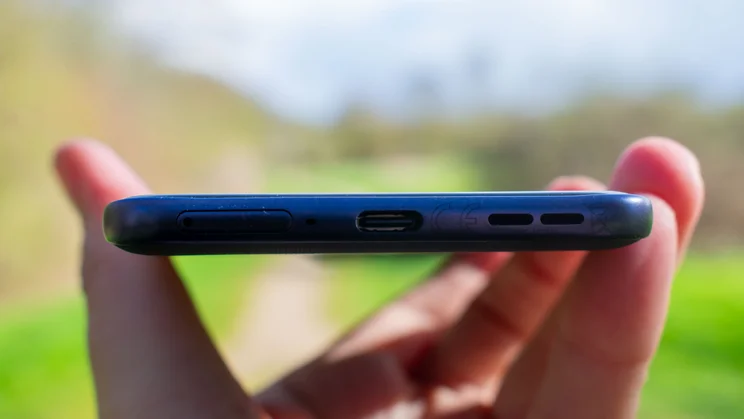
Otherwise, the design is identical on both. The display and rear are both curved on all four sides, so the plastic edges are quite skinny, there’s a layer of Gorilla Glass 7i protecting the screen from scratches, and the dust and water resistance is rated at IP68/IP69. This means it’s fully dust-proof and can handle both high-pressure jets of water and full submersion (up to 1.5m for 30 minutes).
Features are the usual grab bag, with just power and volume buttons on the right edge (no AI button to speak of here), an optical fingerprint sensor beneath the display, speedy face unlocking via the selfie camera and support for Bluetooth 6.0 and Wi-Fi 6e.
The software is Android 16 with Motorola’s own unobtrusive HelloUI sitting over the top. This is one of the cleanest versions of Android and comes with blissfully few preinstalled apps. Software support is fine enough, with three years of OS updates and six of security patches promised, but the Honor Magic 8 Lite leads this price range with six years of both pledged.
Display
The curved AMOLED display did a good job of ignoring my palm in testing, with no instances of accidental pressing, and more broadly, it is a generally lovely screen. The 2,772 x 1,272 resolution is beautifully crisp, and the peak 144Hz refresh rate is super smooth. Brightness impressed, too, hitting a solid 453cd/m2 on manual mode before soaring to an outstanding 1,439cd/m2 on adaptive brightness with a torch shining on the light sensor. For such a cheap phone, that’s a very good result.
Motorola offers three colour profiles, with Vivid and Radiant offering different levels of saturation for more punchy colours (I prefer Vivid’s slightly less overdone colouring for streaming and gaming), while Natural aims for authenticity. On the latter profile, I recorded an impressive sRGB gamut coverage of 99.9% with a total volume of 103.7%. The average Delta E colour variance score of 1.39 is a little higher than our target of 1 or under, but it isn’t far enough off for colours to look out of place.
Performance and battery life
The Snapdragon 7s Gen 3 chipset inside the Edge 70 Fusion is a solid performer, with a peak clock speed of 2.5GHz and 8GB of RAM and 256GB of storage in its corner. General use is reasonably fluid, opening and hopping between apps with minimal pause, and as you can see below, the Geekbench 6 scores are in the same ballpark as the Nothing Phone (4a) and Honor Magic 8 Lite for single-core operations, with the multi-core scores coming in a little higher on the Motorola.
Both the Google Pixel 10a and the OnePlus Nord 5 are way out in front of the Edge 70 Fusion, however. This is quite forgivable in regard to the Pixel – it costs over £100 more – but discounts have made the OnePlus a keen threat. If you want the fastest performance in this price range, that’s the way to go.
It’s a similar story for mobile gaming enthusiasts: pick up a Pixel 10a if your budget can stretch that far, otherwise you’ll be happy with the OnePlus Nord 5. The Motorola Edge 70 Fusion handles lightweight games well enough, and I even got it to trundle through Asphalt Legends at a fairly solid 30fps, but anything more strenuous will start to show the cracks.
Now we come to the main reason to buy the Edge 70 Fusion. The enormous 7,000mAh battery is one of the biggest on any phone I’ve tested and delivers some of the best battery life in its price range. It ran our standard looping video battery test for a total of 37hrs 30mins, coming in just behind the Honor Magic 8 Lite and Google Pixel 10a.
Once depleted, the battery supports wired charging up to 68W. This is reasonably nippy, bringing the battery from empty to 50% in 26 minutes in my testing, with a full charge taking around an hour. By comparison, the Pixel 10a takes roughly 1hr 30mins for a full charge, while the Magic 8 Lite needs 1hr 22mins to hit 100%.
Cameras
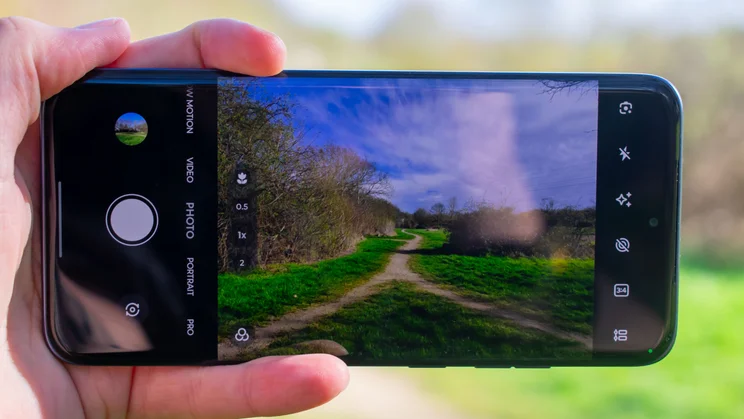
For the most part, the main camera is the same setup as found on the Edge 60 Fusion – and the Edge 50 Fusion, for that matter. It’s a 50-megapixel, 1/1.56in sensor with support for both optical image stabilisation (OIS) and phase detection autofocus (PDAF). The only difference this year is the aperture, which has widened ever so slightly, from f/1.9 to f/1.8.
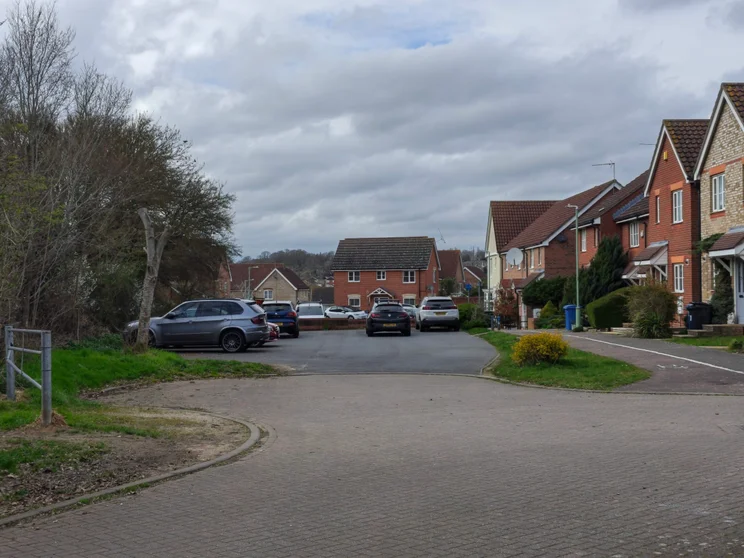
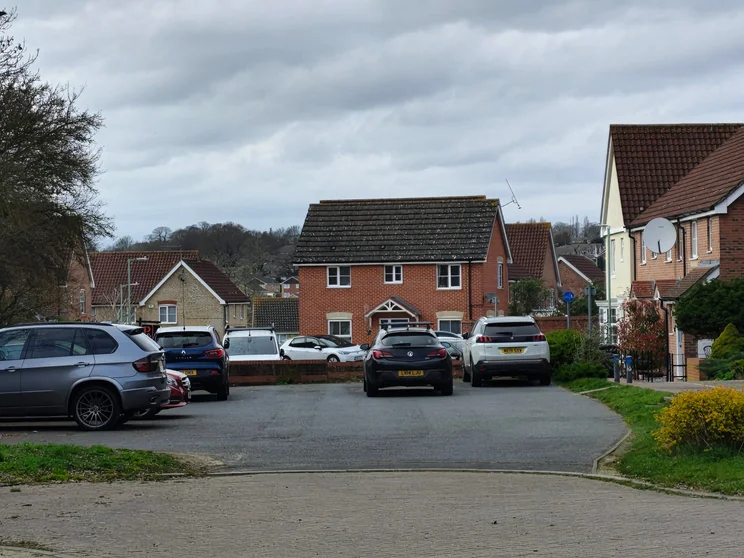
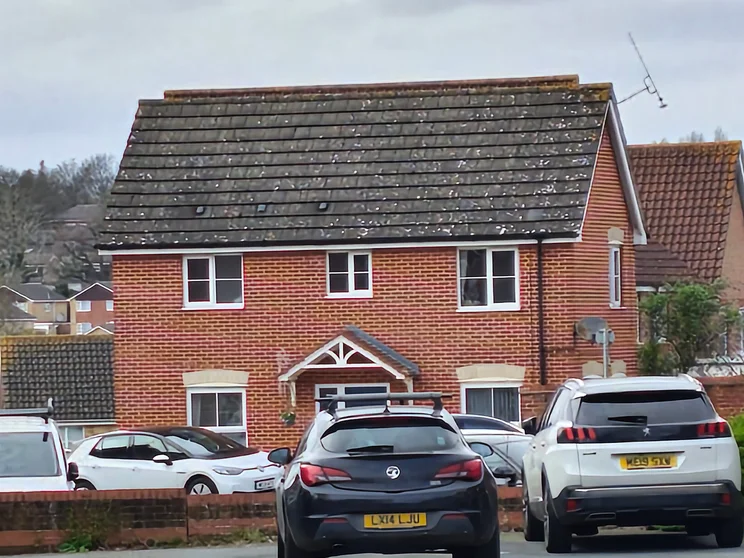
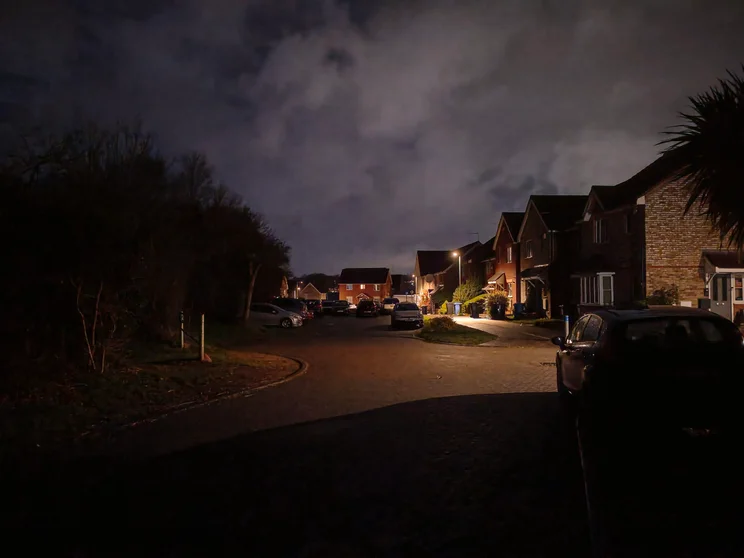
A wider aperture means better light intake, which means better clarity overall, especially with night photography. So let’s start there. The artificial brightening is broadly effective, and colouring remains pleasingly natural, with an acceptable level of detail in the better-lit areas. You can see below, however, how much visual noise winds up in the sky:
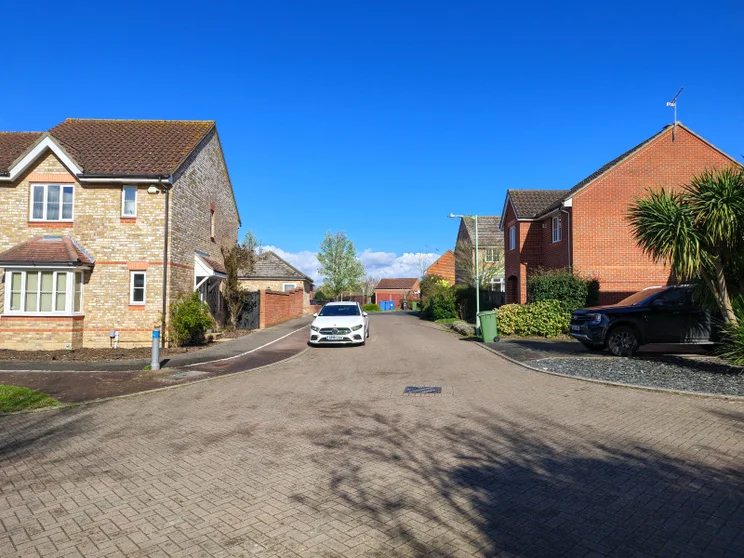
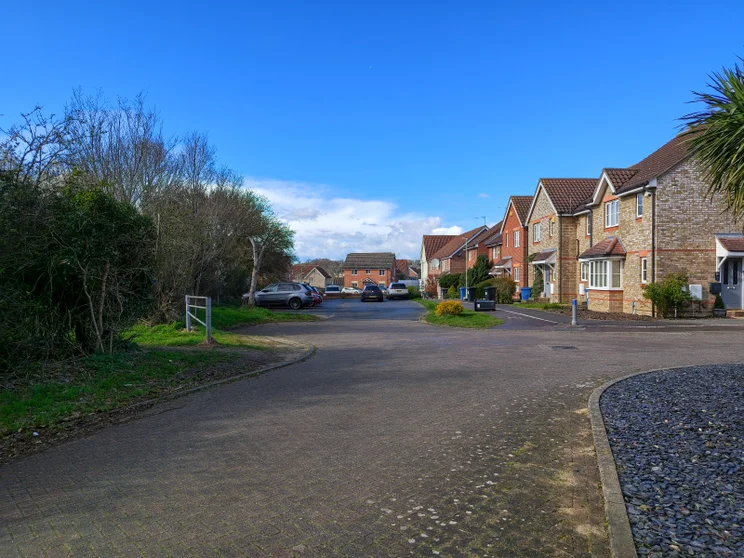
Things look better in good lighting, with decent exposure balancing and good dynamic range maintaining cloud definition in bright, wintry skies. Colouring is gorgeous, too, and detail is nice and sharp, particularly with objects in the foreground of the shot.
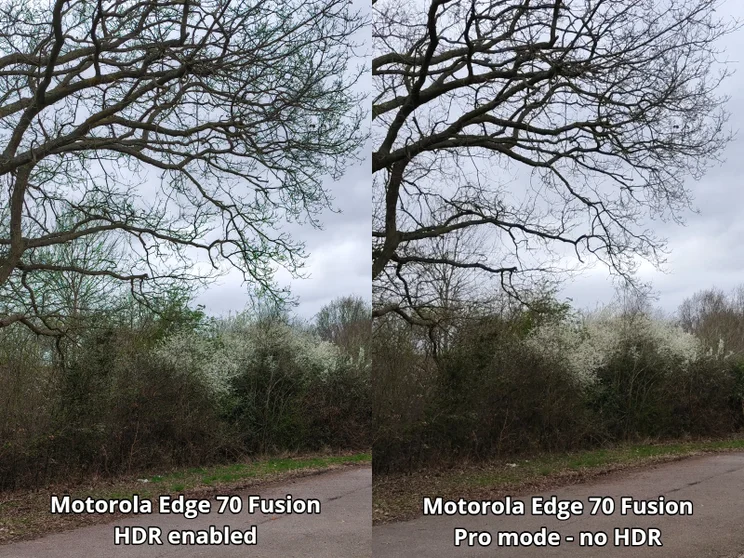
The only thing that stood out to me during testing was that the HDR processing has a habit of producing an unnatural green glow when trying to enhance finer details (such as spindly tree branches) against a very bright background (such as a white cloudy sky). It’s not massively jarring, and I only encountered it under these specific circumstances, but still worth noting.
The 13-megapixel (f/2.2) ultrawide camera has been around since the Edge 50 Fusion, so it would have been nice to see some upgrade in the two generations since. Even so, it’s a fine enough lens, with a colour tone closely aligned to the main sensor and reasonable detail maintained throughout.
Macro photography is also handled by the ultrawide and, despite only using a 13-megapixel sensor, the results aren’t half bad. Just check out the excellent wood grain definition in this close-up of a signpost:
The 32-megapixel (f/2.2) selfie camera is one of the better ones in this price range, capturing solid portraits with natural-looking skin tones and recording video up to 4K/30fps, just like the rear camera. This is better than the Nothing Phone (4a) and Honor Magic 8 Lite, both of which only offer 1080p on their front-facing cameras, but the OnePlus Nord 5 and Pixel 10a both shoot 4K at 60fps on their rear cameras – the OnePlus even reaches these heights on the selfie camera.
Motorola Edge 70 Fusion: Verdict
The Motorola Edge 70 Fusion is a well-rounded mid-range phone; the battery life is fantastic, charging is nice and nippy, performance is decent enough for this kind of money, the display is sharp and capable of excellent brightness, and the cameras are, for the most part, better than we usually see in this price range. If you’re looking for a reliable camera and excellent stamina for under £400, the Edge 70 Fusion will serve you well.
But standing in its way is the Honor Magic 8 Lite, which achieves slightly longer battery life while also offering twice the storage capacity, improved software support and, at the time of writing, a lower asking price of £350. I was less impressed with the cameras, however, with the ultrawide in particular being one of the weakest I’ve tested. If camera quality is a high priority for you, I’d still stick with the Motorola Edge 70 Fusion.