To help us provide you with free impartial advice, we may earn a commission if you buy through links on our site. Learn more







- Slim and lightweight build
- Excellent performance
- Decent battery life
- Hefty price increase
- Basically the same as last year
- Rivals have better cameras
You almost have to feel a little sorry for the Samsung Galaxy S26 Plus. It’s the smartphone equivalent of being invited to a wedding last-minute because they needed a seat-filler, and begrudgingly going along while knowing that nobody really wanted you there.
Last year’s release of the Samsung Galaxy S25 Edge was supposed to be the dawning of a new era, with the ultra-slim model being groomed to replace the Plus variant in the yearly Galaxy S release schedule. Pitiful sales quickly put an end to that plan, however, and Samsung hurriedly brought the S26 Plus out of retirement.
And it feels just as superfluous as you’d expect, costing too much and offering too little, with neither the bells and whistles of the Ultra model nor the compact appeal of the standard Galaxy S26. It’s a solid enough phone in most regards, but it lacks distinction – in short, there’s a reason that Samsung was gearing up to abandon the Plus model.
Samsung Galaxy S26 Plus: What you need to know
As I have just finished writing about the Galaxy S26, there are extremely few upgrades to discuss this year. In fact, the Galaxy S26 Plus is even less of an improvement than its compact sibling – the bar was extremely low, and the Plus model still managed to trip over it.
In fact, the only difference between the Galaxy S26 Plus and last year’s Galaxy S25 Plus is the processor. We now have the 3.8GHz Samsung Exynos 2600 running the show. Take that off the board, and this is identical to the S25 Plus: same dimensions, same display, same cameras, everything.
It’s also very similar to the smaller and cheaper Samsung Galaxy S26, using the same processor and cameras, with the only differences being that the Plus model is bigger (unsurprisingly), has a larger, sharper display and a slightly bigger battery.
Price and competition
In reverting from the Edge model to the Plus, Samsung clearly forgot to amend the pricing, because the Samsung Galaxy S26 Plus now starts at the same £1,099 as the S25 Edge did last year. That’s for 12GB of RAM and 256GB of storage, with the 512GB version priced at £1,249. Those prices are £100 and £150 more than the S25 Plus, respectively.
This bump puts it up against some stiff competition in the flagship space. My favourite pick is the OnePlus 15, which starts at £849 for the 256GB model or £979 for the 512GB version. This gets my vote due to its outstanding performance, class-leading battery life, versatile cameras and gorgeous 165Hz display. The main downside is that its software support falls short of Samsung’s pledge.
For a more direct comparison, the Honor Magic 8 Pro matches Samsung’s seven-year software update pledge and costs a little less than the S26 Plus, with the sole 512GB model priced at £1,099. That same price will also get you the 512GB Oppo Find X9 Pro, or Apple fans can nab an iPhone 17 Pro – albeit with 256GB of storage.
Design and key features
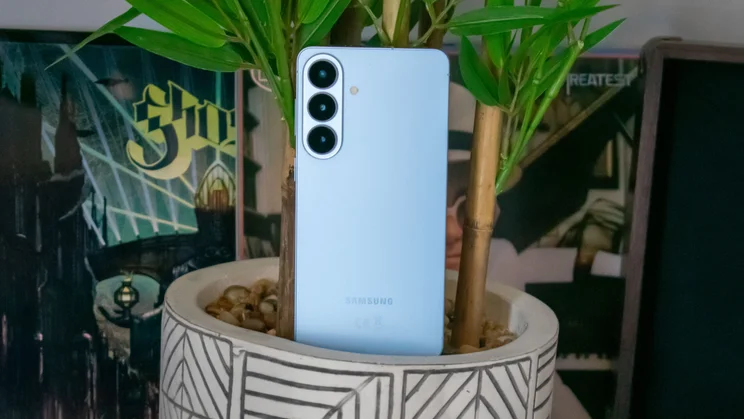
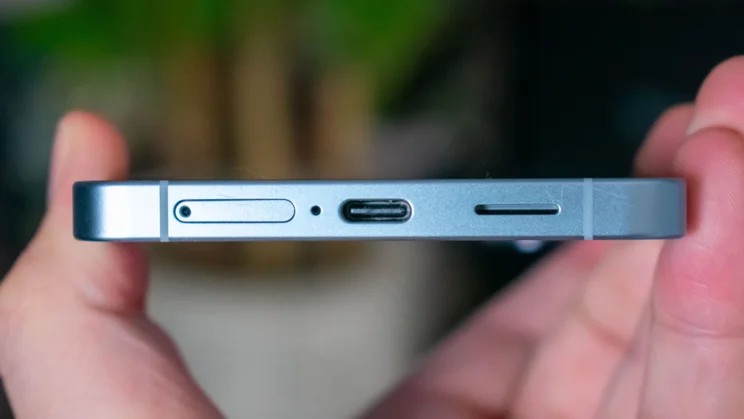
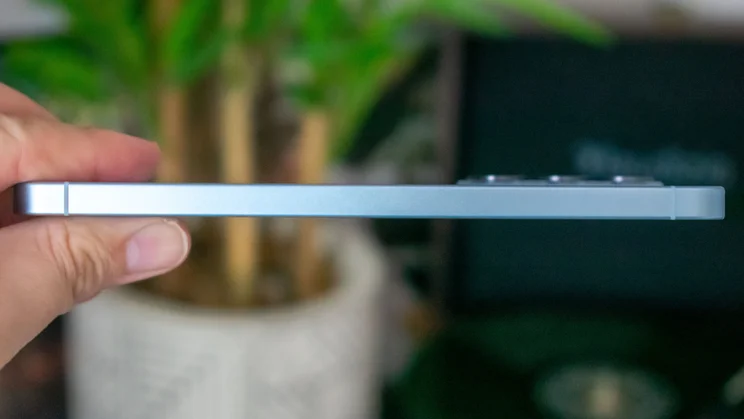
As mentioned above, the dimensions are identical to last year’s model, down to the millimetre. It measures 76 x 7.3 x 158mm (WDH) and weighs 190g. There’s a layer of Gorilla Glass Victus 2 on the front and rear, a matte Armour Aluminium frame and an IP68 dust and water resistance rating.
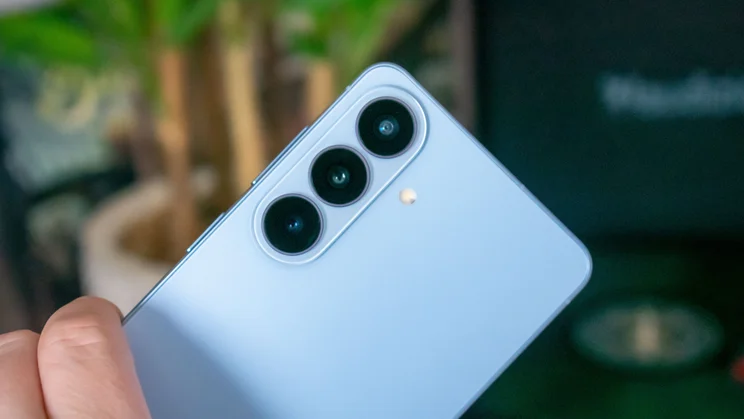
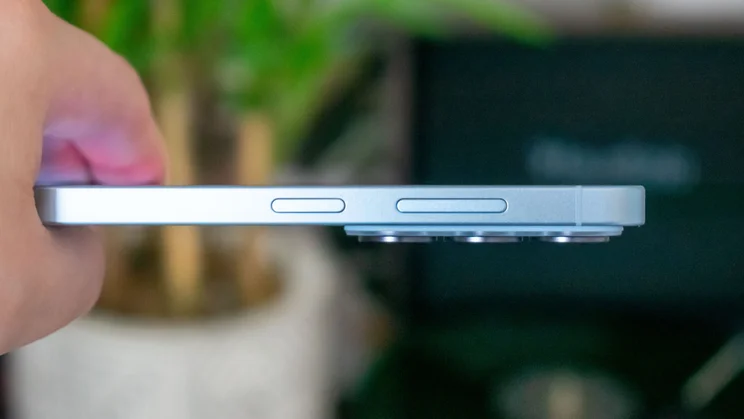
Just as we saw with the Galaxy S26 Ultra and then the standard S26, the Plus also makes a minor change to the rear camera layout, wrapping the floating lenses in a pill-shaped glass housing. This traffic-light style is aesthetically pleasing enough, but it does nothing to help with the phone’s stability on a flat surface – desk texters, be prepared for some wobbling.
The argument could be made that a fresh swatch of colour choices counts as a generational change, but that’s really scraping the bottom of the barrel. My review unit came in the lovely sky blue shade, and you can also get black, white and cobalt violet at most retailers, while the pink gold and silver shadow styles are exclusive to Samsung.com.
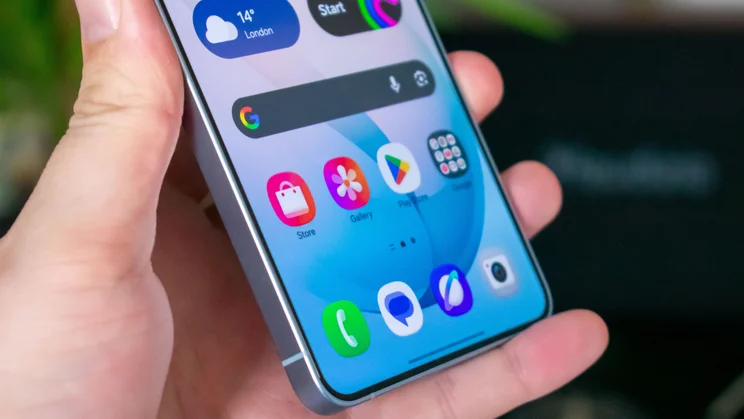
The things that remain the same as last year are very good, at least. The ultrasonic fingerprint sensor proved lightning fast and accurate in my testing, and face unlocking via the selfie camera was consistently strong, too. Bluetooth 6.0 and Wi-Fi 7 are both supported, and the software once again carries Samsung’s seven-year update roadmap.
Display
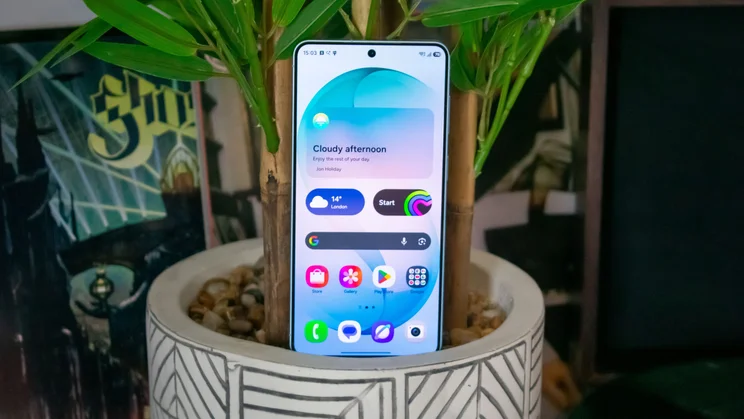
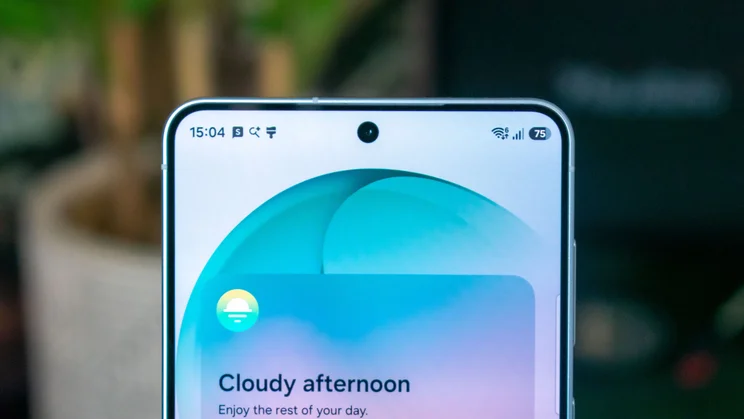
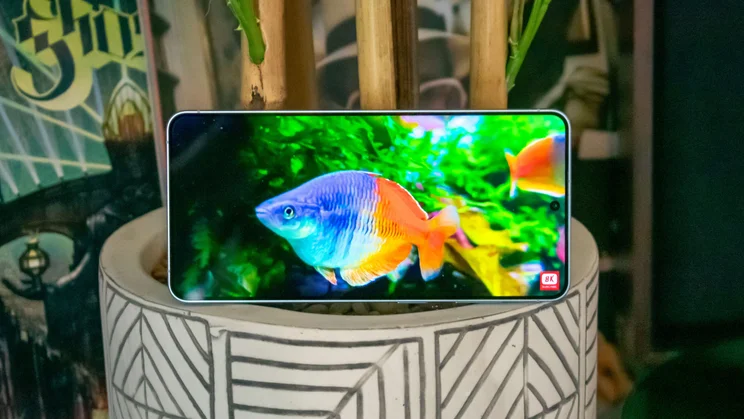
Dimensions aside, the display is one of two ways in which the Galaxy S26 Plus differs from its compact little brother. This 6.7in AMOLED screen has a far sharper 3,120 x 1,440 resolution, for a pixel density of 516ppi (pixels per inch), with the same dynamic refresh rate up to 120Hz. Brightness is decent here, too, hitting 1,300cd/m2 on adaptive brightness with a torch shining on it and rising to an excellent 2,062cd/m2 when displaying HDR content.
The default Vivid profile is excellent for gaming and streaming, pairing nicely with the loud, clear stereo speakers, but you’ll want to switch over to the Natural profile for more authentic shades. Here, I recorded an sRGB gamut coverage of 99.3% and a volume of 103.5%, with the average Delta E coming back at 1.77. We’re looking for 1 or under there, so that isn’t the best accuracy I’ve ever recorded, but it’s not erroneous enough to be a problem.
Performance and battery life
The Samsung Galaxy Exynos 2600’s peak clock speed of 3.8GHz isn’t as high as some rivals, with most surpassing 4GHz, but it has the benefit of being a ten-core chipset, where most others are octa-core. The result is that while the Galaxy S26 Plus isn’t the best performer with single-core operations, it passes the competition when it comes to multi-core tasks.
In the Geekbench 6 CPU tests, the Honor Magic 8 Pro and OnePlus 15 – both using the ultra-powerful Snapdragon 8 Elite Gen 5 – performed better in the single-core portion, with leads of 18% and 14%, respectively, but the Galaxy S26 Plus took a small lead in the multi-core test, beating the Honor by 6% and the OnePlus by 5%.
The iPhone 17 Pro, meanwhile, proved to be the best in class for single-core operations (as Apple phones tend to do), with a lead over the S26 Plus of 24% – but multi-core falls short by 9%, showing the Androids to be better bets for more complex tasks.
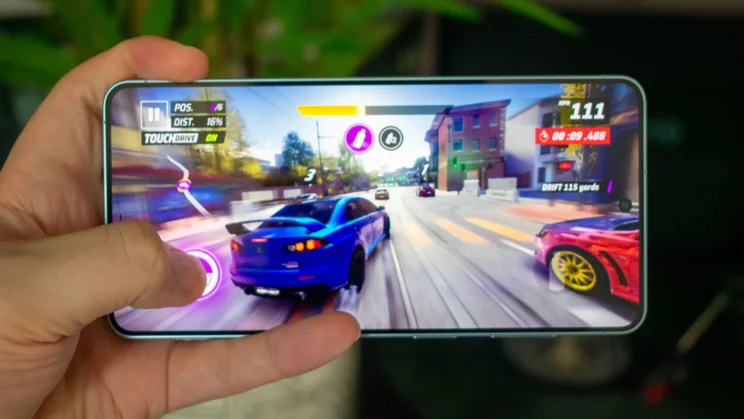
Gaming performance is decent but not class-leading, with Geekbench 6 Vulkan scores that broadly line up with the rest of the Android competition (iPhones run a different test, so we can’t directly compare here). In practice, I ran the Galaxy S26 Plus through my usual tests of Genshin: Impact and Asphalt Legends and found framerates to be consistent and textures crisp – though I had to keep Genshin’s graphics on default to avoid overheating.
The other way in which the Plus model differs from the standard S26 is the battery size. Where the latter uses a dinkier 4,300mAh cell, the S26 Plus has a 4,900mAh battery. It also has a larger display to illuminate, so it ended up performing roughly the same as its little brother in our standard looping video battery test, tapping out at just over 33 hours.
This is an excellent result, but several phones in this price range are starting to bring in much higher battery capacities with silicon content, delivering some truly exceptional results in this test. In particular, the Oppo Find X9 Pro and OnePlus 15 storm far ahead of the pack, both surpassing the 40-hour mark.
Charging is at least a little faster than the S26, with the 45W wired provision bringing the battery from empty to 50% in 20 minutes and reaching 100% after roughly 1hr 10mins.
Cameras
Not only are the cameras on the Samsung Galaxy S26 Plus the same as those on the S25 Plus last year, but they’re also identical to the cameras on the standard (and cheaper) Galaxy S26. We have a 50-megapixel (f/1.8) main camera, joined by a 10-megapixel (f/2.4) 3x telephoto and a 12-megapixel (f/2.2) ultrawide on the rear, with a 12-megapixel (f/2.2) selfie shooter around the front.
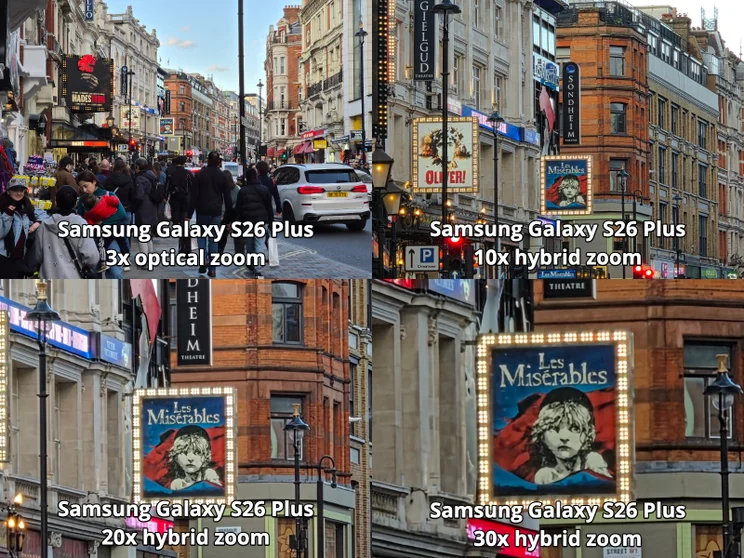
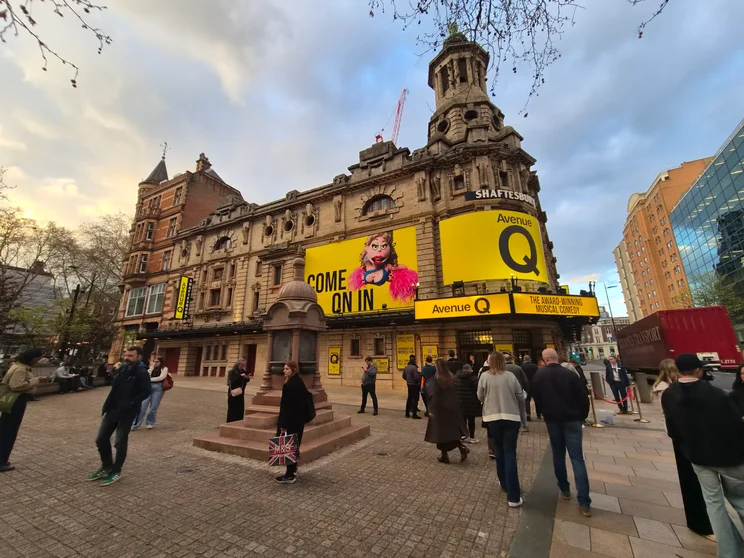
I took these cameras out for a spin on a little jaunt around the West End and, while none deserved a standing ovation, they didn’t have me reaching for the rotten tomatoes, either.
The main shooter proved adept at capturing crisp detail and bold colours in my testing, fully realising the many theatre facades that I stopped and snapped with rich contrast and broad dynamic range.
Admittedly, I gave the night camera a tricky task, trying to balance the exposure of shop lights, street lights, car headlights, and the giant (and very bright) sign for the Devil Wears Prada musical, but it did a fairly decent job at keeping everything in check. Colouring veers a little hard into the purple, but detail is solid, and the shadows are nice and moody, without excess noise.

The 10-megapixel (f/2.4) 3x telephoto camera is a little light on pixels compared to some of the competition – both the Honor Magic 8 Pro and Oppo Find X9 Pro use 200-megapixel sensors – so detail isn’t as razor-sharp as it could be, but otherwise, this is a solid sensor, with good colouring and well-balanced exposure.
One area in which the Galaxy S26 Plus falls behind the competition is zoom photography. Just like the standard S26, it only shoots up to 30x, and results past 10x rapidly lose definition, whereas rivals like the Honor Magic 8 Pro and Oppo Find X9 Pro go much farther (100x and 120x, respectively), with stronger clarity in that 20-30x range.
The ultrawide also has fewer pixels than the competition (12 compared to 50 on both the Honor and the Oppo), so once again, detail is a little soft, with blurring around the edges. The colour tone is decent, at least, looking roughly in line with the main sensor, and strong contrast makes shots look nice and punchy.
Video is better than rivals in some ways and worse in others. On the one hand, you’ve got options to shoot in 8K/30fps and LOG format, both of which most others at this price lack, but you don’t get 120fps recording for the 4K setting. It’s a solid video suite overall, though, especially for those who like granular control in post-production.
Samsung Galaxy S26 Plus: Verdict
Samsung bumping the Galaxy S26 Plus up to the same price as last year’s S25 Edge feels like a Hail Mary: it knows that this is the least popular model in the series and only loyalists who are already sold on the format can be relied upon to buy it. So why not try to squeeze a little more out of them to make up for the inevitably mediocre sales numbers?
If that describes you, enjoy. You’ll be overpaying but end up with a solid phone that ticks the basic boxes well enough. If not, you can do better than this. Pick up the Honor Magic 8 Pro if you want better cameras while keeping the same software support, or go for the OnePlus 15 to net class-leading battery life – albeit with slightly weaker software support.
Whichever way you slice it, there’s very little reason to buy the Galaxy S26 Plus, and, at this point, it feels best for Samsung to put its middle child out to pasture.