To help us provide you with free impartial advice, we may earn a commission if you buy through links on our site. Learn more












- Bright, accurate display
- Excellent zoom camera, particularly in low light
- Full seven-year software support
- Europeans get short-changed on specs
- Busy UI with too much AI for AI’s sake
- No 8K video
The Honor Magic 8 Pro is a sophisticated flagship phone that’s gunning for contention with the Samsung Galaxy S26 Plus and the rest of the large Android flagship crowd.
Make no mistake, it’s aiming for the big boys with its top-of-the-line specs, including a stunning display and a seriously well-equipped camera. In this sense, and with its familiar design, it can be seen as a subtle refinement of the Honor Magic 7 Pro before it.
That inherent similarity results in some familiar grumbles, though the Magic 8 Pro as a whole presents a clear step forward. It’s a more viable contender than ever.
Honor Magic 8 Pro review: What you need to know
As tends to be the case with UK and European versions of Chinese phones, we’re getting a slightly slimmed-down package with the Honor Magic 8 Pro. There’s just the single variant of the phone in these markets, taken from the middle of the Chinese range, with 12GB of RAM and a healthy 512GB of internal storage. Regardless of region, the Honor Magic 8 Pro is powered by Qualcomm’s latest Snapdragon 8 Elite Gen 5 processor.
Another noteworthy difference is the size of the battery, which drops 13% from the China-exclusive 7,200mAh capacity to a still-healthy 6,270mAh. This is accompanied by rapid 100W wired charging (down from 120W in the Chinese model) and 80W wireless charging. There’s no charging brick in the box.
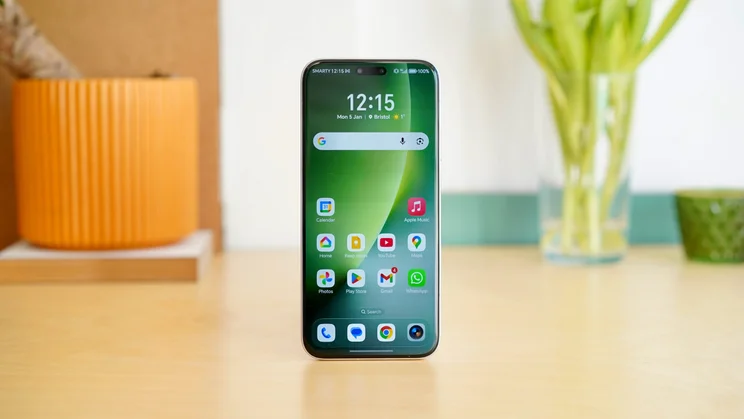
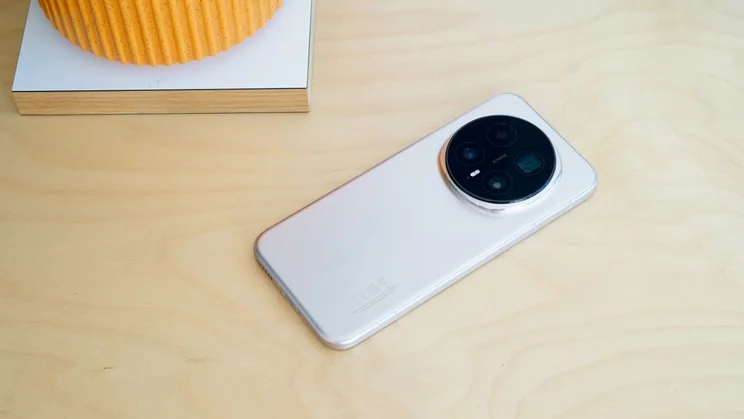
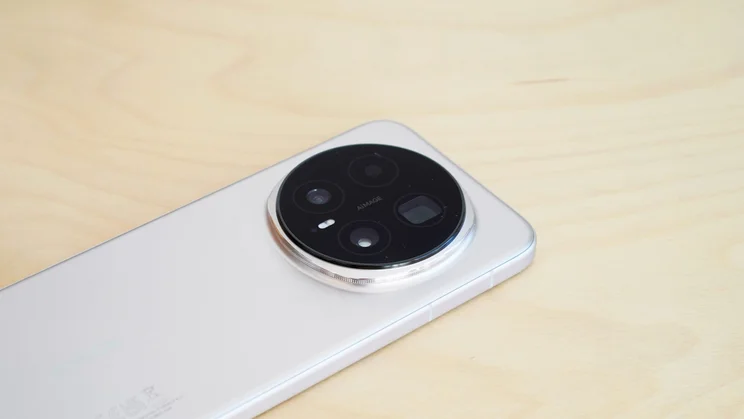
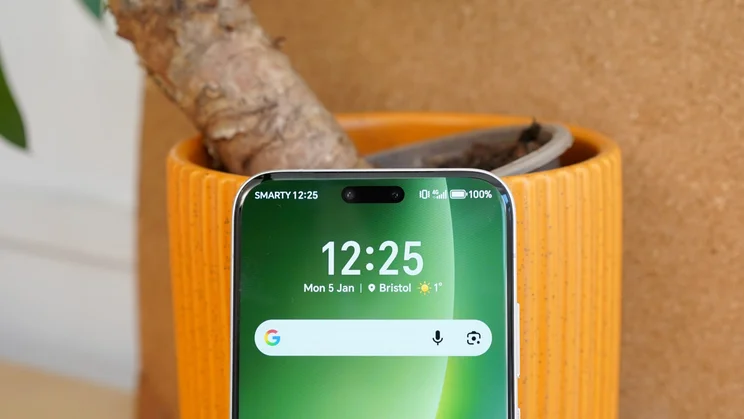
The 6.71in OLED display offers a sharp 2,808 x 1,256 resolution, LTPO flexibility between 1 and 120Hz, and a bolstered peak brightness. You also get the company’s signature (among Android manufacturers at least) 50-megapixel front camera, stashed in a slightly expanded pill-shaped notch alongside a TOF 3D sensor for secure facial recognition. Around back, there’s a 50-megapixel main camera, a 200-megapixel 3.7x periscope telephoto, and a 50-megapixel ultra-wide.
Honor Magic 8 Pro review: Price and competition
Honor has kept its pricing pleasingly static for yet another year, though this is by no means a cheap phone. At £1,099 for the sole UK model, it costs the same as the iPhone 17 Pro and the Samsung Galaxy S25 Edge.
What’s interesting, though, is that the Honor Magic 8 Pro’s technical specs and feature set place it in competition with the more expensive iPhone 17 Pro Max, the Google Pixel 10 Pro XL, and the (soon to be replaced) Samsung Galaxy S25 Ultra. Relatively speaking, it’s actually pretty great value, especially when you factor in the 512GB of storage that comes as standard.
Glance in the opposite direction, and the Honor Magic 8 Pro finds itself undercut by cheaper full-sized flagships like the OnePlus 15 and the Samsung Galaxy S25 Plus. A more direct competitor is the Oppo Find X9 Pro, which offers a broadly similar spec list at exactly the same price.
Honor Magic 8 Pro review: Design and key features
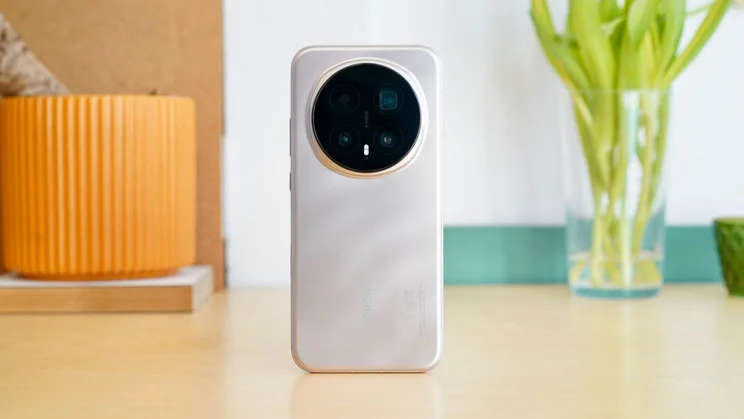
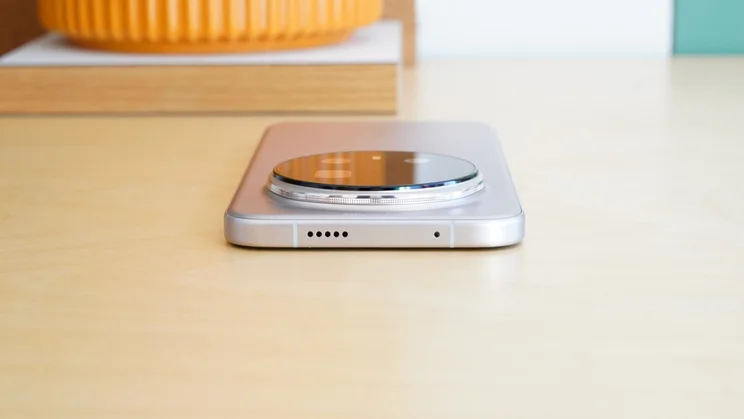
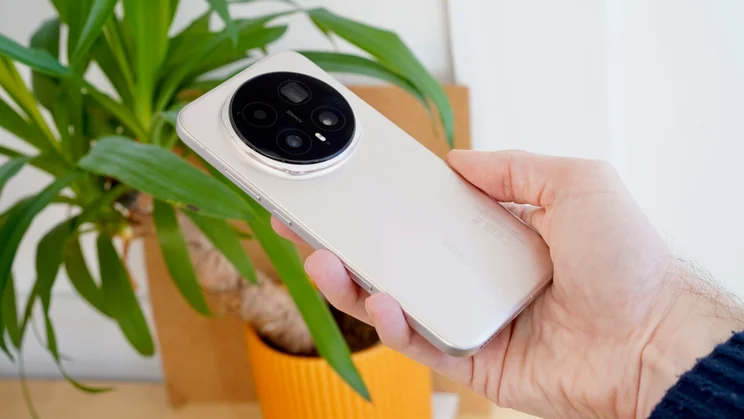
Honor has stuck with a familiar design language for the Magic 8 Pro. At first glance it looks a lot like the Honor Magic 7 Pro before it, with the same silky-touch rounded rear glass panel and the same squared circle camera module, covered by a single unifying pane of glass over a black surround. What it doesn’t look like is an iPhone, a Samsung, or a Pixel phone, which is a quiet win in my book.
Looks can be deceiving, though, as the Honor Magic 8 Pro makes some fundamental changes. It’s smaller than before in every direction, with measurements of 161.15 x 75 x 8.4mm rendering it quite manageable for a big phone. It still feels hefty, but a weight of 213g is a full 10g lighter than its predecessor (and 6g lighter than the Chinese model with its larger battery).
Honor’s NanoCrystal Shield glass makes a return to the front and rear of the device, boasting SGS 5-StarDrop Resistance Certification. The brand has also gone above and beyond the call of duty on water resistance, too, with a comprehensive rating of IP68/IP69/IP69K that exceeds most competitors. The latter rating is a new addition, ensuring that the phone is protected against high-temperature water sprays – kitchen and car wash workers take note.
This is just one of a number of flourishes that continue to mark Honor’s work apart from the crowd. It baffles me that more Android manufacturers don’t follow Apple’s lead in supplying a secure 3D facial recognition system. Honor continues to stick to its guns, at least for its flagship range, and it makes both unlocking and payment authentication way more intuitive than the usual fingerprint crowd – though the latter is also an option here if you prefer.
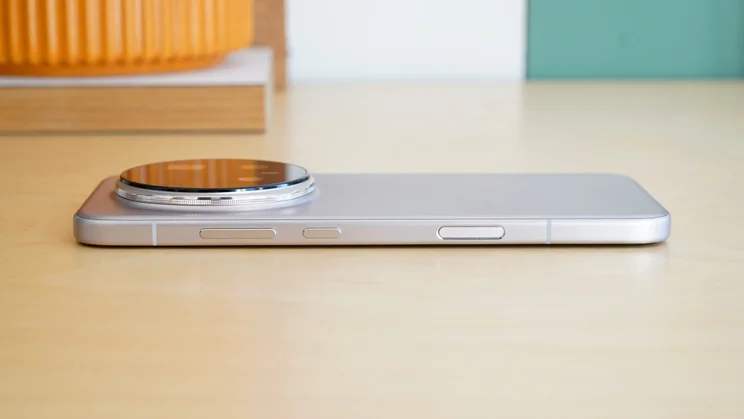
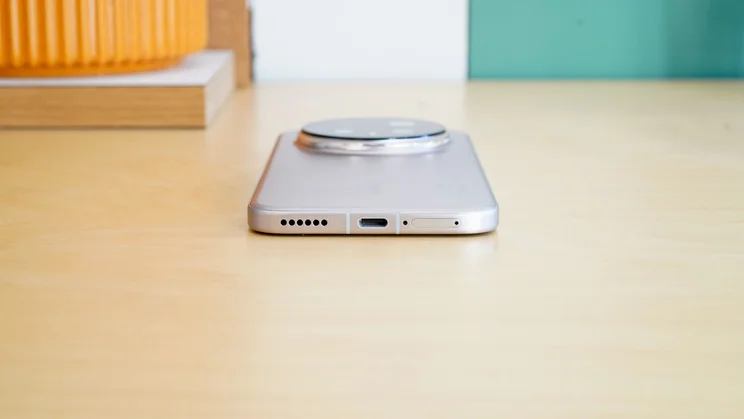
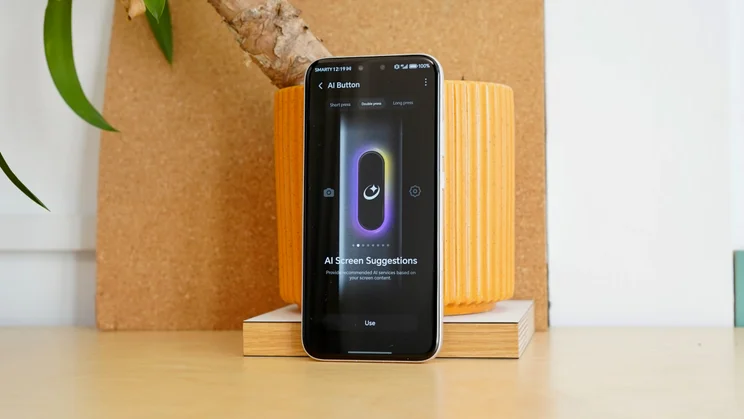
Less unique is the provision of an IR blaster on top of the phone (Xiaomi also tends to offer such a feature), which allows you to take control of TV and Hi-Fi equipment without reaching for a discrete remote. Honor has joined the growing swell of manufacturers in adding a new mappable button to the right edge of the phone, too. The company refers to it as its AI Button for the speedy access it grants you to various AI functions, but it’ll also serve as a shutter button in the camera app.
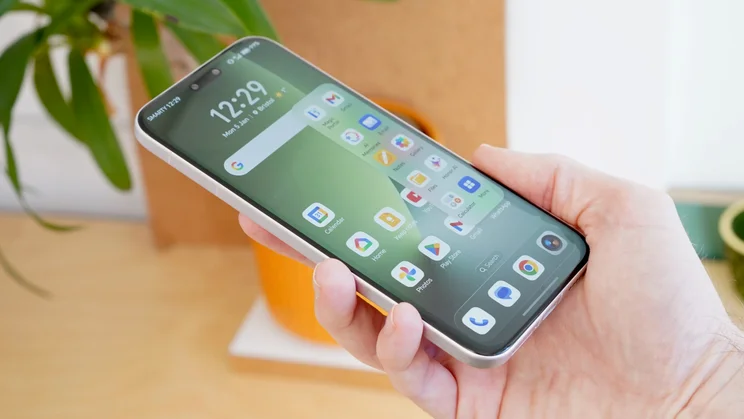
MagicOS 10 doesn’t exactly revolutionise Honor’s custom UI. It remains fast and fluid and relatively free of bloatware. Out of the box, aside from its own suite of apps and those of Google, you only have to contend with Facebook across the two home screens. But it’s still not the most visually appealing interface on the market, and Honor seems wearyingly keen to slap the ‘AI’ term on anything it can – a space-hogging ‘AI Suggestions’ folder on the main home page, for example, or an AI Space app that stuffs smart home controls in with the aforementioned IR remote function.
The AI feature-set itself is comprehensive, which is to say that you probably won’t use most of what it has to offer. Do you feel the burning need for real time AI Deepfake detection and AI Voice Cloning Detection for your video calls? What an excitingly precarious life you must lead, if so.
Elsewhere, the usual AI photo editing tools are here, while AI Memories offers a speedy three-fingered screenshot tool that employs AI to parse the content. We’ve seen variations of this sort of thing before, not least from Google Gemini, which is also tightly integrated. The AI Settings Agent, meanwhile, offers an assistant that will adjust the phone’s various settings using natural language – in theory at least. Within just a small handful of experimental attempts I was twice told that manual adjustment was required, rendering it somewhat less useful than it should be.
Perhaps the biggest improvement here is the extension of Honor’s software support promise to a Google and Samsung-matching seven years. It’s now up there with the very best on this count, at least.
Honor Magic 8 Pro review: Display
The display used in the Honor Magic 8 Pro is ever so slightly smaller than its predecessor at 6.71 inches, but that’s the only hint of regression – and even then, it remains plenty big enough for mixed use. This is a bold, sharp 2,808 x 1,256 OLED with all of the flexibility that LTPO technology provides, able to switch from 1 to 120Hz according to the task.
4,320Hz PWM Dimming makes a return, making it easier on the eyes at low brightness levels. Talking of which, Honor has boosted the HDR peak brightness to a stated 6,000cd/m2, which is among the best out there. In sunny conditions, with autobrightness on, it should hit 1,800cd/m2. With autobrightness off, I measured it hitting 794cd/m2, which is indeed an improvement on its predecessor.
There’s an expanded roster of three selectable colour mode presets. If the default Vivid strikes a false note for you, there’s Normal and Professional to choose from. Failing that, you can go hands-on and tweak things to your liking. Using the Professional setting, I found the colours to be extremely accurate, with an sRGB gamut coverage of 99% and a volume of 100.8%. An average Delta E colour variance score of 1.03 is excellent, with the ideal being close to 1. Again, this represents an improvement over the Magic 7 Pro.
Honor Magic 8 Pro review: Performance and battery life
Qualcomm’s Snapdragon 8 Elite Gen 5 hasn’t exactly been blowing us away with its performance gains – especially with its tendency to run a little toasty – but it still remains one of the fastest chips on the market. It grants the Honor Magic 8 Pro a level of CPU performance that’s up there with the OnePlus 15 as the quickest we’ve seen from Android, and keeping pace with the iPhone 17 Pro Max more broadly.
GPU results aren’t quite as impressive, falling almost 10% short of the OnePlus 15 in the key GFXBench GL Car Chase offscreen result, but still beating the iPhone 17 Pro Max and last year’s Android flagship crowd. It’s capable of running Destiny: Rising smoothly on Max frame rate and Ultra rendering quality.
As with the previous model, Honor has opted to equip the Magic 8 Pro with a much smaller battery in the European model. Whereas the Chinese model gets a whopping 7,200mAh cell and the so-called global model gets a similar 7,100mAh unit, my UK model comes with a ‘measly’ 6,270mAh silicon-carbon battery. It’s not measly at all, of course, but the disparity is pretty notable – especially with the OnePlus 15 wowing us all with its epic 7,300mAh stamina and the Oppo Find X9 Pro hitting 7,500mAh.
While European Honor fans can justifiably grumble about being second class citizens for another year, it’s far from terrible news. The Honor Magic 8 Pro has strong stamina, lasting 33hrs 16mins in our standard looped video test. That’s almost two hours longer than the Honor Magic 7 Pro, and four hours longer than the Poco F8 Ultra, which has the same processor and a larger 6,500mAh battery. It does drop slightly short of the Samsung Galaxy S25 Ultra, however, and it’s well behind both the iPhone 17 Pro Max and – of course – the OnePlus 15 and the Oppo Find X9 Pro.
This kind of score means ample potential for two-day stamina in all but heavier use cases. When you do run out, there’s support for 100W wired charging and 80W wireless. Yes, China gets 120W support, but it does have that extra capacity to deal with. You don’t get a charging brick in the box, however, which you might need to factor into the cost of the phone. I only had a 120W Vivo charger to hand, which powered the phone from empty to 66% in 30 minutes, and to 100% in less than an hour.
Honor Magic 8 Pro review: Cameras
Honor has used the same 50-megapixel 1/1.3in main camera sensor as the Magic 7 Pro. That’s the same size as the equivalent component on the Samsung Galaxy S25 Ultra, though much less pixel-packed. It also lacks the Magic 7 Pro’s variable aperture, which is more of a shame in terms of differentiating itself from the crowd than it is a major practical loss.
The 200-megapixel 1/1.4in telephoto sensor and the 50-megapixel 1/2.88in ultra-wide sensor are also carried over from the Magic 8 Pro’s immediate predecessor, but the former now extends to a 3.7x optical zoom (up from 3x in the Magic 7 Pro).
New here is the Magic Colour colour engine, which adds several AI-derived options to the various photographic tone templates: Romantic Blue, Golden Autumn, and Warm Sunset. You can also upload your own custom templates, based on your favourite photos, to capture a similar tone at a tap.
I took the Honor Magic 8 Pro and an iPhone 17 Pro on a long weekend break to Edinburgh, and shot 100 or so similar snaps with both. It revealed the Honor to be a decent operator in good to moderate lighting, albeit with the default tendency to overbrighten scenes and bleach out skin tones versus the iPhone’s more naturalistic approach. Expanding some shots taken indoors with the main camera, I noticed more pixelation and aggressive processing than on the iPhone 17 Pro, but also less noise.
Where the Honor really comes into its own is with its telephoto camera, which absolutely trounces its iPhone equivalent for detail – especially when the lighting is less than ideal. Honor has taken to labelling this zoom camera, like the main one, a ‘Night’ camera, and I don’t think that’s a baseless gimmick. If night-time zoom photography is your thing, the Honor Magic 8 Pro is an excellent option. Just don’t bother zooming too far beyond 10x, as things tend to get rather soft, regardless of Honor’s claims of an ‘AI Super Zoom’ system.
As for the 50-megapixel front camera, it’s merely adequate compared to the iPhone 17 Pro’s class-leading front sensor, which has it beaten for subject detail and colour depth. Still, it’ll serve you perfectly well.
4K footage at 60fps (it goes all the way up to 120fps) looks reasonably sharp and stable, though there’s still no 8K option like you get on the OnePlus 15 and the Google Pixel 10 Pro XL. It can’t hold a candle to the iPhone 17 Pro for overall quality, either. On one particularly challenging cityscape scene that I recorded, with failing light and a large amount of buffeting wind, the Honor Magic 8 Pro exhibited large amounts of noise – both of the audible and visual variety – that simply weren’t anywhere near as evident on the equivalent iPhone recording.
Honor Magic 8 Pro review: Verdict
The Honor Magic 8 Pro doesn’t take too many steps forward, but those that it does are meaningful. While its design and basic approach are familiar from last year’s model, it’s made genuine progress with competitive software support, a brighter and more accurate screen, and a significantly larger battery. Performance is excellent, too, while the camera system continues to offer a lot to like – especially when it comes to shooting with the telephoto camera in less-than-ideal lighting.
It still exhibits a few too many of the quirks that we’ve come to expect of Honor phones, with an excess of AI gimmicks and the tendency to treat Europeans as second class citizens – it irks that we get fewer storage options and a much smaller battery than everyone else. But that distinctive Honor flavour generally works to the positive, creating a flagship phone that feels just a little bit different to the usual contenders.