To help us provide you with free impartial advice, we may earn a commission if you buy through links on our site. Learn more








oplus_3147808


- 200MP telephoto camera
- Outstanding performance
- Enormous battery
- OnePlus 15 is better value
- No 8K video
- Extremely cluttered software
After last year’s rocky return to the UK flagship market, Oppo has found its feet with the confident and classy Find X9 Pro. From a much stronger processor to an immense 200-megapixel telephoto camera to the largest battery of any phone I’ve reviewed, there are improvements to be found in just about every corner.
A small price increase means it’s up against the best flagships around – including a superb-value rival from Oppo’s sister company, OnePlus – but hardware and software upgrades put the Find X9 Pro in a strong position to compete with the industry’s heavy hitters.
Oppo Find X9 Pro: What you need to know
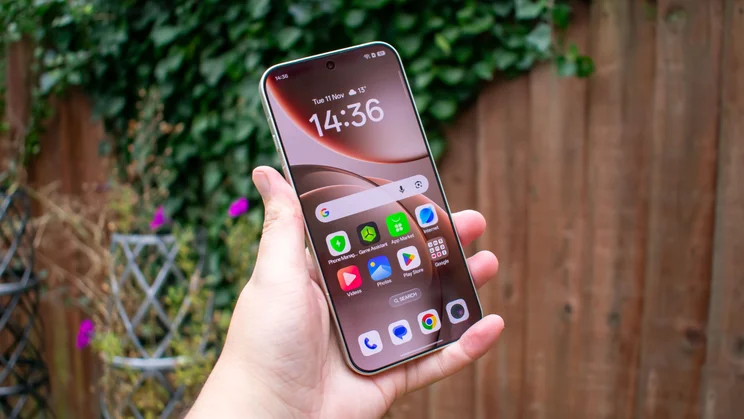
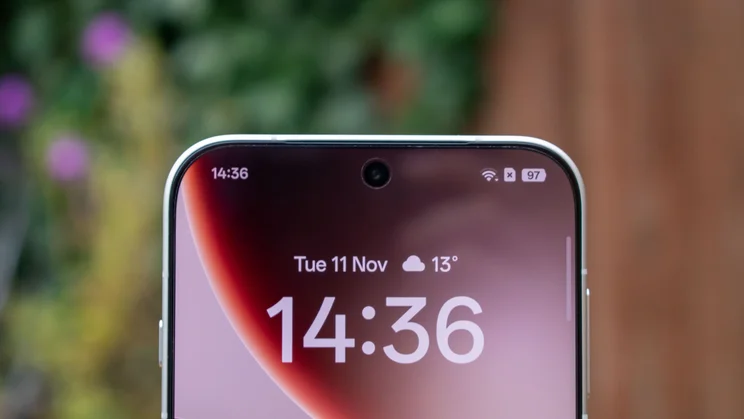
The new 200-megapixel telephoto camera offers a 3x optical zoom and sits alongside a 50-megapixel main camera and a 50-megapixel ultrawide lens, with a 50-megapixel selfie camera in a hole-punch notch atop the display. The screen itself is a 6.78in AMOLED screen with a 2,772 x 1,272 resolution and a maximum refresh rate of 120Hz.
Running the show is the new MediaTek Dimensity 9500 chipset, clocked up to 4.21GHz and backed by the same 16GB of RAM and 512GB of onboard storage as last year. What’s very different, however, is the battery; where the previous model used a 5,910mAh cell, the Oppo Find X9 Pro has an enormous battery capacity of 7,500mAh. Charging once again extends to 80W wired and 50W wireless, though you’ll need a compatible SuperVOOC charger to reach these speeds.
Price and competition
The Oppo Find X9 Pro starts a little higher than its predecessor, with the sole 512GB model costing £1,099 – last year’s Find X8 Pro was £1,049. As far as price hikes go, this is relatively minor, and it doesn’t keep the Find X9 Pro from being one of the more reasonably priced flagships.
Samsung’s Galaxy S25 Ultra is our favourite phone overall right now, and since it came out almost a year ago, it’s had plenty of time to get some good discounts. The 512GB model is currently down to the same £1,099 as the Find X9 Pro, or there are 256GB and 1TB variants available for £999 and £1,299, respectively.
oplus_3147808
The iPhone 17 Pro Max is more recent and has a starting price of £1,199. That’s only for the 256GB model; the 512GB version costs £1,399, the 1TB is £1,599, and, for the first time on a smartphone, there’s a 2TB model that will set you back an eye-watering £1,999.
Finally, the biggest threat comes from inside the house, with Oppo’s subsidiary, OnePlus, launching an absolute bargain of a flagship with the OnePlus 15. As well as delivering the best performance and battery life we’ve ever recorded, the OnePlus 15 also maintains the cutthroat pricing of its predecessors: the model with 12GB of RAM and 256GB of storage is £849, while the 16GB/512GB version is £979.
Design and key features
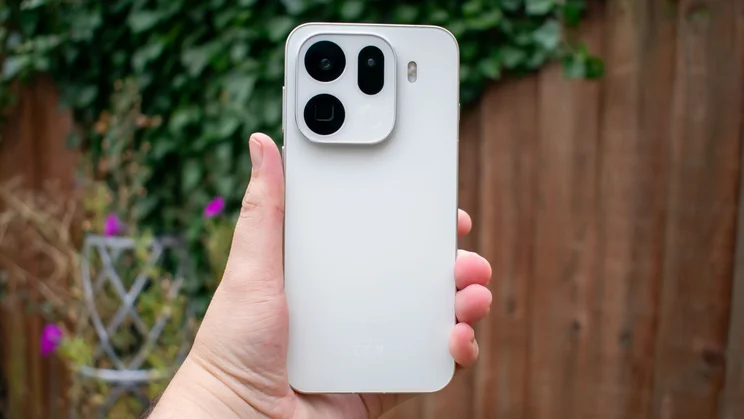
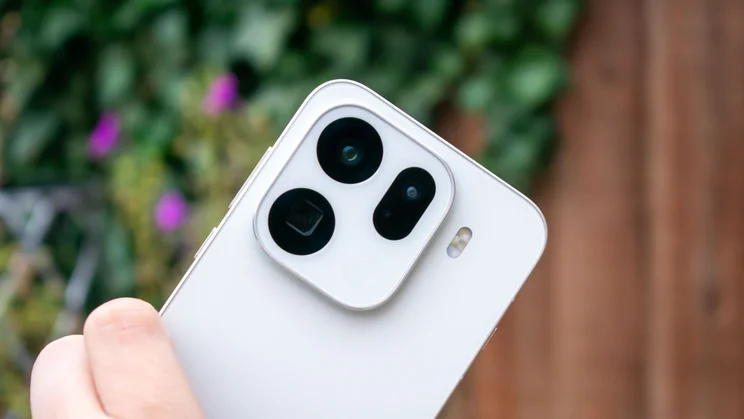
If you’d forgotten that OnePlus is a subsidiary of Oppo, the concurrent launches of the Oppo Find X9 Pro and OnePlus 15 are a good reminder. Much like its OnePlus doppelganger, the Oppo Find X9 Pro has undergone quite a stark design overhaul, flattening out the edges and the rear and swapping the Find X8 Pro’s large, central circle camera module for a rounded square in the top-left corner.
I like this camera module better than the OnePlus 15’s, as it plateaus slightly from the backplate, creating a more cohesive look than the OnePlus version, which feels a little slapped on for my tastes.
oplus_3147808
Despite the design changes, it has roughly the same measurements as its predecessor, at 77 x 8.3 x 161mm (WDH) – though it’s a fair bit heavier, with the scales tipping at 224g, compared to the X8 Pro’s 215g.
The matte aluminium frame and matte glass on the rear both feel suitably premium, though the latter is no longer officially named protective glass, whereas the Find X8 Pro used Gorilla Glass 7i on its rear. The glass over the display is upgraded here, at least, from 7i to Gorilla Glass Victus 2, and the phone is rated IP68/IP69 for dust and water resistance.
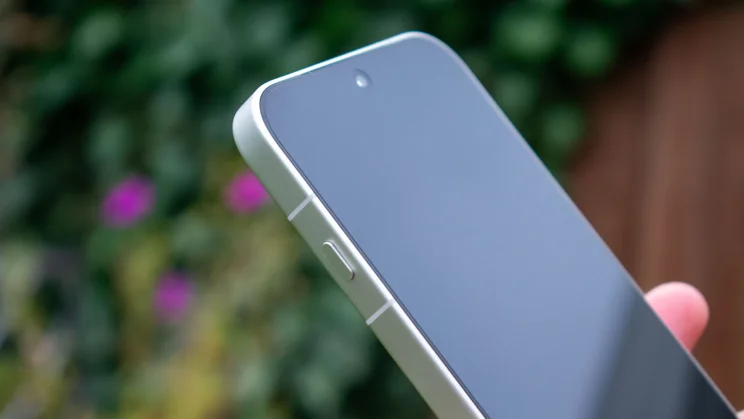
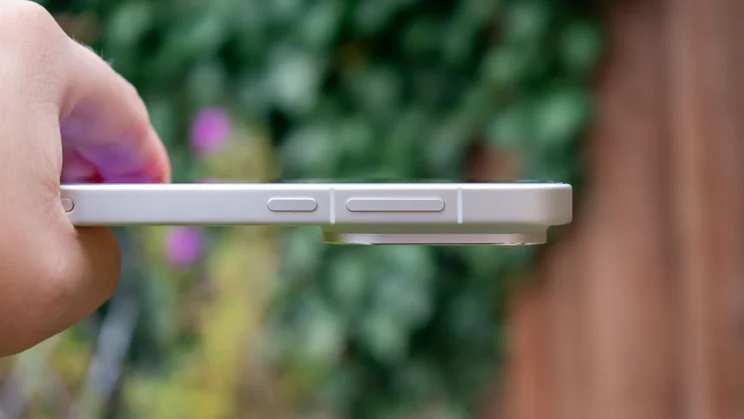
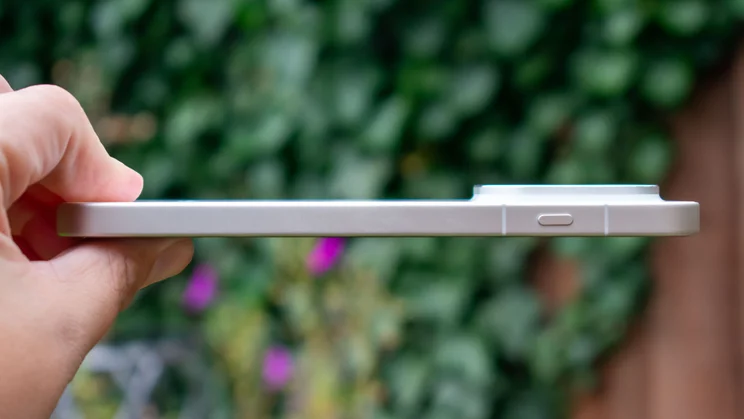
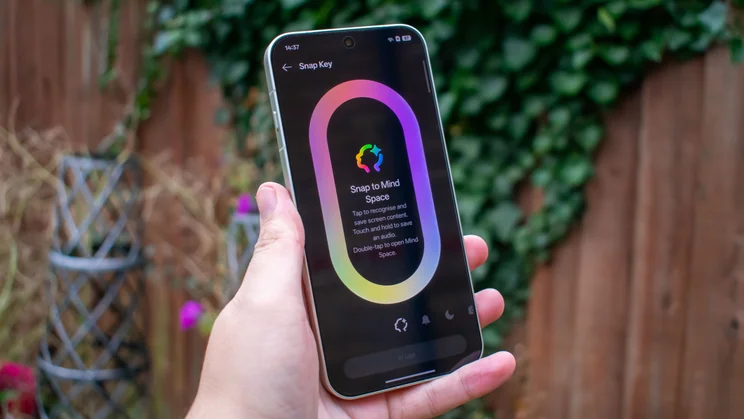
Another tell-tale sign of Oppo and OnePlus being two sides of the same coin is that, like the OnePlus 15, the Oppo Find X9 Pro has ditched its iconic alert slider in favour of a multi-functional button – though it’s called the Snap Key here, instead of the Plus Key. This button can still be set to switch between loud, vibrate and silent, as well as toggling the torch, taking screenshots or, the default, saving content to the Mind Space.
oplus_3147808
Mind Space is an AI feature shared across Oppo and OnePlus, so it works the same here as it does on the OnePlus 15, capturing, assessing and organising your screenshots and voice notes into easily parsable folders to be searched through. It’s one of my favourite implementations of AI, as it’s useful when you want it and unintrusive when you don’t.
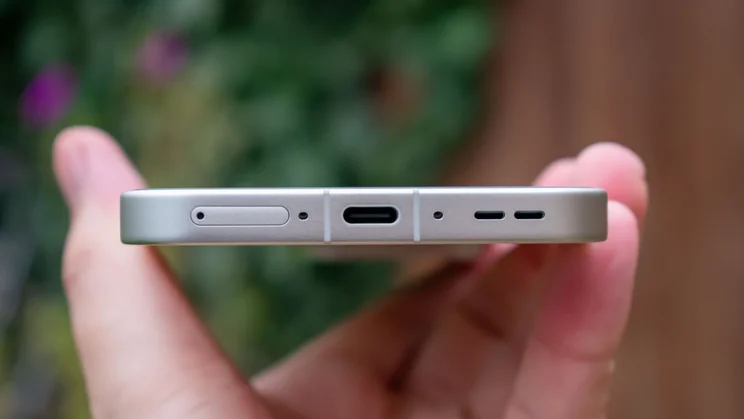
Otherwise, features are as expected: the under-display ultrasonic fingerprint sensor and face unlocking via the selfie camera are suitably nippy, and connectivity now extends to Wi-Fi 7 and Bluetooth 6.0.
The software is ColorOS 16, based on Android 16, with Oppo committing to five years of OS updates and six years of security patches. That’s fine enough, and matches the pledge of OnePlus, but the likes of Google, Samsung and Honor all offer seven years of both for their respective flagships. I’m also not thrilled about the sheer volume of bloatware stuffed into the Find X9 Pro, with the likes of Booking.com, Temu and Ali Express clogging up the homescreen upon boot.
Display
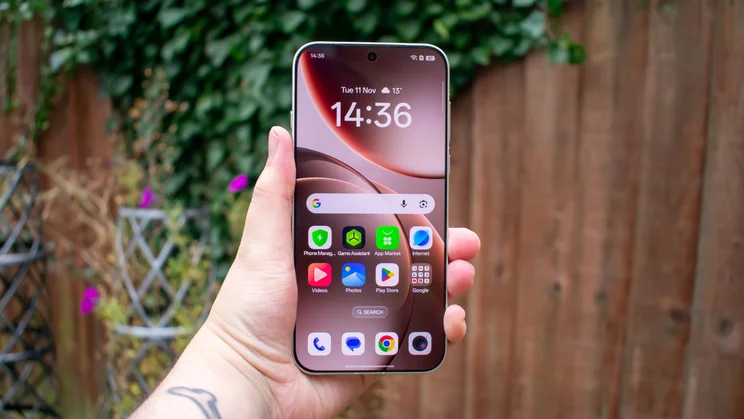
The 6.78in AMOLED display is mostly the same as last year’s model, which isn’t a problem because that was already an excellent screen. The resolution is 2,772 x 1,272, with super-skinny 1.15mm bezels making the screen space feel a little bigger than before, and the dynamic refresh rate tops out at 120Hz.
Brightness is broadly the same too, hitting 769cd/m2 in manual brightness mode and rising to 1,103cd/m2 on adaptive with a torch shining on the light sensor. When displaying HDR content, I recorded a dazzling peak of 2,357cd/m2.
oplus_3147808
There are three colour profiles to choose from, with Vivid dialling the colours up for more impactful streaming and gaming, while Natural and Standard aim for more authentic sRGB reproduction. The default Standard profile does a great job at this, but I got slightly better results from Natural. Total gamut coverage was measured at 96.5% against a volume of 99.9% and an average Delta E colour variance score of 0.92 reflected excellent colour accuracy.
Performance and battery life
One of my biggest issues with last year’s Oppo Find X8 Pro was that it felt underpowered compared to other phones around this price. As such, it’s great to see the MediaTek Dimensity 9500 used in the Find X9 Pro deliver such substantial performance improvements.
In the Geekbench 6 CPU tests, the Find X9 Pro outperformed its predecessor by 42% in the single-core benchmarks and 29% in the multi-core, greatly strengthening its position to compete with similarly priced rivals. The iPhone 17 Pro Max, for instance, was only 6% faster in the multi-core test, while the brand-spanking-new Snapdragon 8 Elite Gen 5 chipset in the OnePlus 15 only surpassed the Oppo’s multi-core scores by 10%.
We don’t see as big an improvement on the gaming side of things – but then, the Find X8 Pro performed reasonably well here last year. The onscreen results are capped at 60fps for all options here except the Samsung, so they aren’t representative of overall power.
Look instead at the offscreen results, and we see that the Oppo Find X9 Pro is a little better than the Find X8 Pro and comes within spitting distance of both the iPhone 17 Pro Max and the Samsung Galaxy S25 Ultra – though the OnePlus 15 is still far out in front.
Perhaps the most exciting detail of the Oppo Find X9 Pro’s spec sheet was that it would be bringing an enormous 7,500mAh battery to Europe – one of the first of its kind to reach our shores. As expected, this gargantuan capacity helped it smash our standard battery test, lasting for a phenomenal 42hrs 32mins.
That isn’t quite the longest-lasting phone we’ve ever tested – the OnePlus 15 lasted a few hours longer than the Oppo, despite having a marginally lower battery capacity of 7,300mAh – but it is still an excellent silver medalist.
Cameras
If you aren’t here for the 7,500mAh battery, then you are surely here for the 200-megapixel telephoto camera. Backing up those oodles of megapixels are a decently wide f/2.1 aperture and optical image stabilisation (OIS).
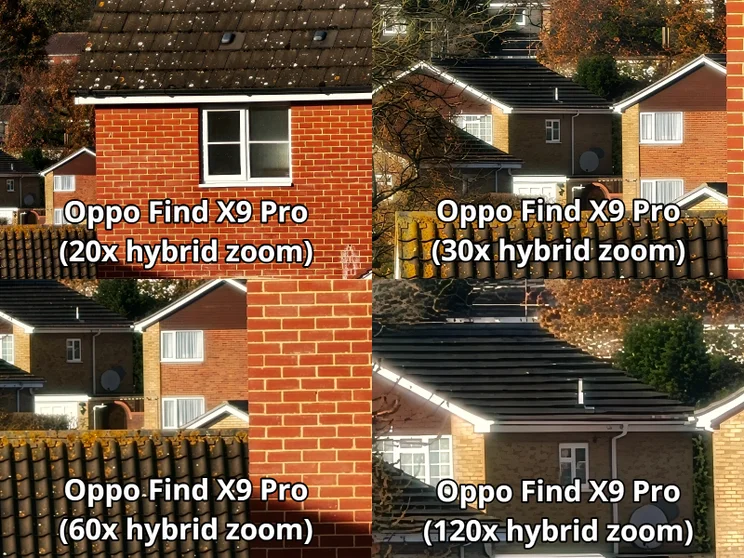
The combined result is incredibly sharp, beautifully lit zoom shots, with optical 3x snaps (above) and cropped 6x hybrid zooms (below) being particularly impressive.
As is always the case, we start to lose definition beyond that point. The Find X9 Pro can zoom all the way up to 120x, and while the results at maximum magnification are legible enough, they’re massively smoothed out in some areas while showing excessive oversharpening in others. Stick to around 30x for the best results.
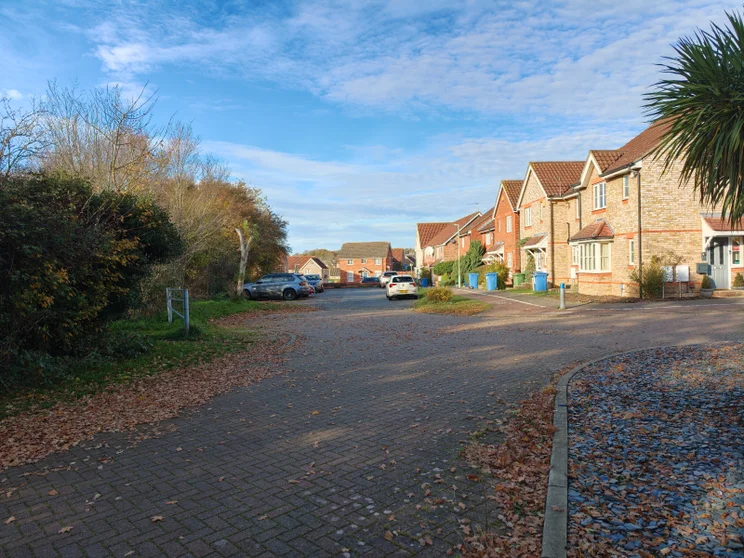
The 50-megapixel main camera has plenty of quality. Between the massive 1/1.28in sensor and the broad f/1.5 aperture, light capture is exquisite, delivering pin-point details and outstanding dynamic range. Just look at the shot below: from the individual blades of grass to the rocks on the path to the berries in the bushes, definition is excellent, and the lighting is perfect.
Night photography is decent, with effective brightening, solid detail levels and no major visual noise clogging up big blocks of darkness, but the colour tone is a little overblown in places.
The 50-megapixel (f/2.0) ultrawide lens is one of the best of its kind that I’ve ever tested. Detail is razor sharp, even managing to keep definition in those tricky corner areas, and the colouring is near-enough identical to the main camera.
We have yet another 50-megapixel lens on the front, with an f/2.0 aperture, that captures gorgeous selfies with rich skin tones and fantastic detail.
And rounding out this excellent suite of cameras is video that captures 4K footage up to 120fps, including Dolby Vision HDR and an option to shoot in LOG for greater colour grading. The only thing missing is 8K video, which most rivals around this price include.
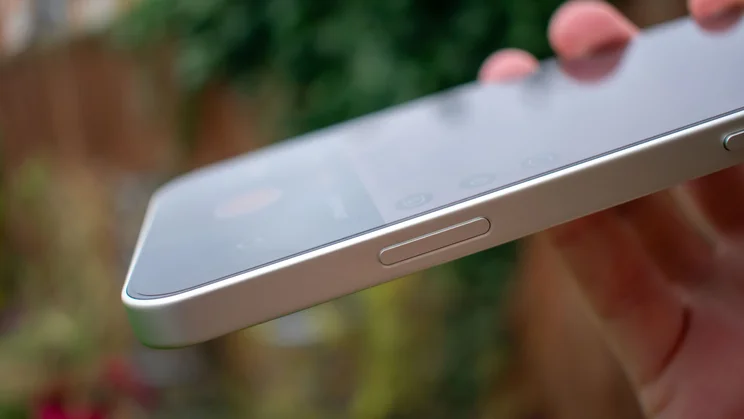
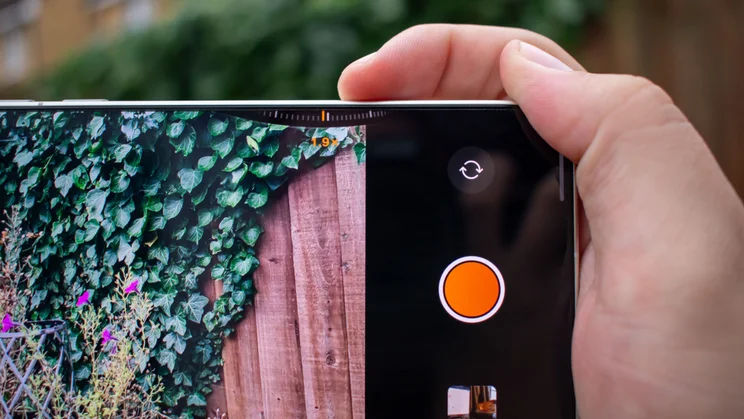
I’m also not a fan of the placement of the camera control button – low down on the right edge. While that’s roughly in the ballpark of where your finger sits when shooting in landscape mode, it’s a little too high up to comfortably reach, meaning that you need to consciously extend your finger every time you want to use it. In the end, I just reverted to onscreen controls, which felt much more accessible.
Oppo Find X9 Pro: Verdict
The accomplished camera offering is easily the greatest strength of the Oppo Find X9 Pro, with gorgeous detail across all the lenses and a wonderfully versatile selection of video recording options. Add in the far more powerful processor, the accessible and unobtrusive AI, the enormous battery with excellent stamina and the brilliantly bright and colour accurate display, and the Oppo Find X9 Pro is a huge success.
Better still, it undercuts the top dogs for value, getting you 512GB of storage for less money than the likes of Samsung and Apple charge for 256GB. The OnePlus 15 is better value overall, with similar quality across the board for over £100 less, but the Oppo Find X9 Pro is right up there as one of the most well-rounded and appealing alternatives to the Galaxys and iPhones of the world.