To help us provide you with free impartial advice, we may earn a commission if you buy through links on our site. Learn more
- Our experts have reviewed more than 600 smartphones over the years, including over 80 Samsung handsets, ranging from entry-level budget models to the most premium flagships
- We put each of them through the same rigorous testing process, delivering fair, definitive reviews that are based on factual data
- Right now, the best Samsung phone to buy is the Samsung Galaxy S26 Ultra, as it combines class-leading performance and outstanding cameras with excellent battery life and the innovative new privacy display feature
- Read on to see our other favourite Samsung handsets, including the best compact, best foldable and best affordable alternatives
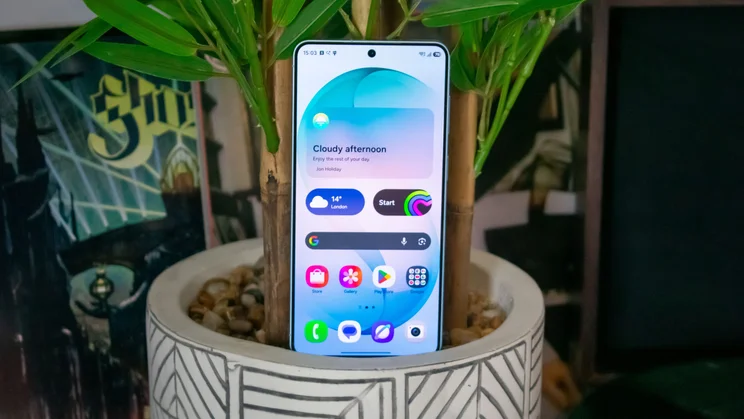
We test and review all of the best Samsung phones every year and, perhaps unsurprisingly, the most appealing of the bunch right now is the Samsung Galaxy S26 Ultra. This is the pinnacle of Samsung’s flagship series, with the biggest display, best performance, strongest cameras and longest battery life.
If that isn’t the one for you, Samsung has many more excellent phones, including outstanding foldables, slim and lightweight compact phones and solid mid-range phones for those who don’t want to pay flagship prices. Check out our full selection below, as well as a detailed rundown of how we test Samsung phones and a full buying guide that covers all the main details to bear in mind when choosing your next smartphone.
Best Samsung phone: At a glance
- Best overall: Samsung Galaxy S26 Ultra | Check price at John Lewis
- Best mid-range: Samsung Galaxy A57 | Check price at John Lewis
- Best budget: Samsung Galaxy S24 (refurbished) | Check price at Back Market
How we test Samsung phones
As with all smartphones, we start testing Samsung handsets by downloading the Geekbench and GFXBench apps from the Google Play Store. Testing the CPU and GPU, respectively, these apps produce a set of scores that we use to compare the phone to other Samsung models and similarly priced competitors. For the display, we use a colorimeter and DisplayCal software to measure how accurately colours are reproduced, as well as results for the contrast ratio and maximum brightness.

That same DisplayCal software is then used to set the brightness to 170cd/m2, in order to maintain consistency across devices for our battery test. We then engage flight mode and run our standard looping video, noting the timestamp at which the phone died. Finally, we look to the cameras, taking a wide range of shots with all the lenses, including interiors, landscapes, low-light and portraits. We’ll also shoot some rapid panning video to judge the efficacy of the stabilisation.
Our team of experts have reviewed over 600 smartphones across more than two decades, putting each through our own rigorous testing procedure to deliver fair, in-depth reviews that are built around facts and data.
Our verdicts are entirely independent and agnostic to brand notoriety: even high-profile manufacturers like Samsung are not immune to negative reviews if the phone doesn’t live up to the hype.
The best Samsung smartphones you can buy in 2026
1. Samsung Galaxy S26 Ultra: Best Samsung phone overall
Price when reviewed: £1,279 | Check price at John Lewis
Reviewed by Ben Johnston
- Great for… class-leading performance and useful privacy display
- Not so great for… some rivals have higher battery capacities
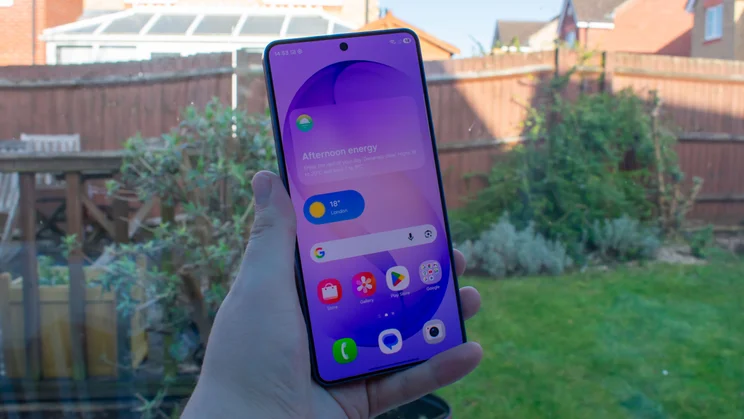
The Galaxy S26 Ultra isn’t just the best Samsung handset you can buy, it’s the best Android smartphone on the market. The blisteringly powerful Snapdragon 8 Elite Gen 5 for Galaxy chipset delivered the fastest speeds we’ve ever seen, battery life is excellent, the display is massive, sharp and wonderfully bright and, for those who enjoy such things, Galaxy AI is one of the most fleshed-out on-device intelligence packages around.
The cherry on top is the new Privacy Display, which dynamically dims the whole display, or just the notification bar, to viewers from the sides, while still keeping the image clear when viewed head-on. It’s the first hardware innovation from Samsung in quite some time and it’s a very handy tool for keeping prying eyes away from your passwords and text chats.
Such is the quality of the Galaxy S26 Ultra that we had very few complaints in our review. The left-aligned camera housing makes it wobble a little on flat surfaces and some rivals achieve even greater battery life, thanks to the use of Silicon-Carbon battery technology but otherwise, the Galaxy S26 Ultra is the ultimate Samsung smartphone and broadly just one of the best phones around right now.
Read our March 2026 Samsung Galaxy S26 Ultra review
Key specs – Processor: 4.74GHz Qualcomm Snapdragon 8 Elite Gen 5 for Galaxy; RAM: 12GB, 16GB; Display: 6.9in, 3,120 x 1,440; Storage: 256GB, 512GB, 1TB; Cameras: 200MP, 50MP (5x telephoto), 10MP (3x telephoto), 50MP (ultrawide); Operating system: Android 16; Weight: 214g
2. Samsung Galaxy A57: Best mid-range Samsung phone
Price when reviewed: £479 | Check price at John Lewis
Reviewed by Ben Johnston
- Great for… brilliant battery life and extensive software support
- Not so great for… weak ultrawide and macro cameras
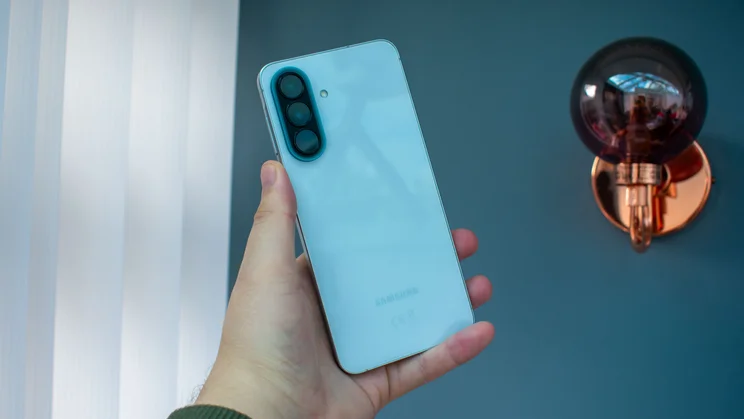
The Galaxy A57 shows just how much quality Samsung can deliver for half the price of its flagships. The build is incredibly slim and lightweight, with sturdy Gorilla Glass on the front and rear and an IP68 dust and water resistance rating.
Performance from the Exynos 1680 chip proved faster than the previous generation in our testing and the 5,000mAh battery let the Galaxy A57 run our looping video battery test for almost 32 hours, an excellent result for a phone of this price. Also impressive is the six years of OS updates and security patches offered – something few other brands can match at this price point.
While the 50-megapixel main camera proved adept at delivering crisp, colourful shots in both good lighting and after dark in our testing, the ultrawide and macro cameras felt poor by comparison. Even still, the Galaxy A57 is a great mid-range alternative for those who don’t want to pay S-series prices.
Read our April 2026 Samsung Galaxy A57 review
Key specs – Processor: 2.9GHz Samsung Exynos 1680; RAM: 8GB, 12GB; Display: 6.7in, 2,340 x 1,080; Storage: 256GB, 512GB; Cameras: 50MP, 12MP (ultrawide), 5MP (macro); Operating system: Android 16; Weight: 179g

3. Samsung Galaxy Z Fold 7: Best foldable Samsung phone
Price when reviewed: £1,599 | Check price at John Lewis
Reviewed by Ben Johnston
- Great for… ridiculously thin, lightweight build and impeccable performance
- Not so great for… expensive and not fully dustproof
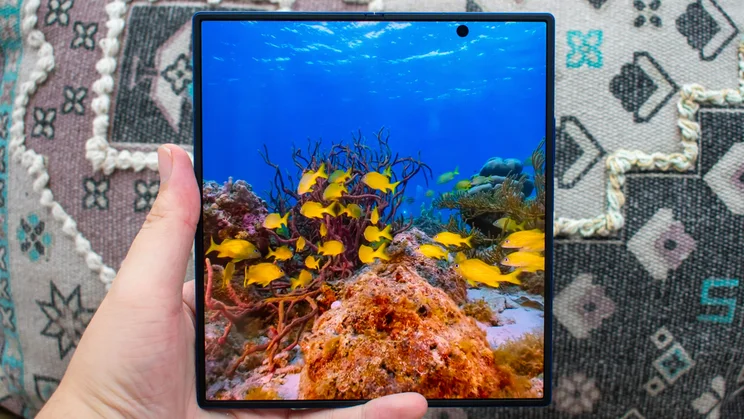
Foldables have come a long way in the past few years and none represent the absolute pinnacle of the form quite like the Samsung Galaxy Z Fold 7. It’s Samsung’s slimmest and lightest yet, measuring just 4.2mm unfolded and weighing a mere 215g (just 1g more than the Galaxy S26 Ultra).
Despite its physics-defying dimensions, the Galaxy Z Fold 7 is also impressively powerful, delivering the best Geekbench 6 scores we’ve ever seen from a foldable. Battery life did well too, running our looping video test on the massive 8in main display for 23.5hrs, and the 200-megapixel main camera produced exquisite detail in our test photos.
It’s undeniably expensive, and it would have been nice to see Samsung achieve a full IP68 dust and water resistance rating like the Google Pixel 10 Pro Fold, but if you fancy a foldable Samsung, the Galaxy Z Fold 7 is simply unrivalled.
Read our July 2025 Samsung Galaxy Z Fold 7 review
Key specs – Processor: 4.47GHz Qualcomm Snapdragon 8 Elite for Galaxy; RAM: 12GB, 16GB; Display: 8in, 2,184 x 1,968 (internal), 6.5in, 2,520 x 1,080 (external); Storage: 256GB, 512GB, 1TB; Cameras: 200MP, 10MP (3x telephoto), 12MP (ultrawide); Operating system: Android 16; Weight: 215g

4. Samsung Galaxy S26: Best compact Samsung phone
Price when reviewed: £879 | Check price at John Lewis
Reviewed by Ben Johnston
- Great for… perfect compact design and powerful performance
- Not so great for… not the fastest charging
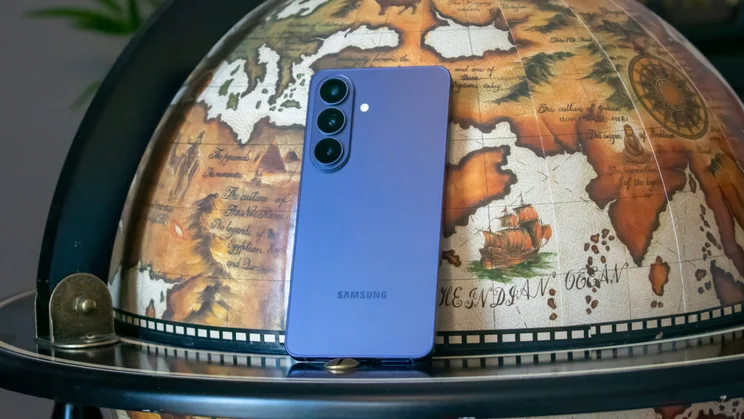
The Samsung Galaxy S26 is, put simply, the best compact phone around. It’s an absolute pocket rocket, pairing outstanding slimness (7.2mm thick) and featherlight weight (167g) with incredible performance. In our Geekbench 6 tests, the S26 achieved faster multi-core CPU speeds than anything else in its price range, and gaming saw Genshin: Impact run on the highest graphics settings at a smooth 60fps.
Battery life is brilliant, too, lasting for over 32 hours in our looping video test and the camera suite, while unchanged from the past few generations, is still brilliant. Night photography is crisp, shots in good lighting are beautifully coloured and portrait shots are sharp and striking. Add in Samsung’s standard flagship seven years of software support, and the Galaxy S26 is the ultimate choice for anyone who’s sick of big, bulky phones.
Flaws are few, too. Charging isn’t as fast as some rivals, at only 25W wired, 15W wireless, and there aren’t many upgrades over the previous generation. Otherwise, this is a wonderfully well-rounded phone and the last word in compact flagships.
Read our April 2026 Samsung Galaxy S26 review
Key specs – Processor: 3.80GHz Samsung Exynos 2600; RAM: 12GB; Display: 6.3in, 2,340 x 1,080; Storage: 256GB, 512GB; Cameras: 50MP, 10MP (3x telephoto), 12MP (ultrawide); Operating system: Android 16; Weight: 167g

5. Samsung Galaxy S24 (refurbished): Best budget Samsung phone
Price when reviewed: £322 | Check price at Back Market

Reviewed by Jon Mundy
- Great for… same cameras as the S26 and access to Galaxy AI
- Not so great for… potentially weaker battery life
The Samsung Galaxy S24 was the first generation of flagships to receive Samsung’s extensive seven-year software support roadmap. As such, even a couple of years later, it’s still well worth considering, as it will remain updated until 2031. Better still, you can pick one up refurbished (at excellent quality) for peanuts.
Despite that price, this is very much still a flagship: in our testing, the Exynos 2400 chipset delivered speeds that remain competitive with plenty of today’s phones – it’s faster than the Google Pixel 10, for instance – and gaming proved to be buttery smooth in practice. The cameras are identical to the Galaxy S26, so you’re still getting the same level of photographic quality, and you even get access to Galaxy AI features like live translation and note summaries.
The one caveat here is that, despite battery life proving strong in our testing, this is a refurbished phone, so it’s likely that it won’t be quite up to the 27hr standard we recorded. Still, Back Market guarantees that refurbished phones sold have retained at least 80% of their battery capacity, so the potential hit to stamina is still very minor compared to how much money you’re saving by going refurbished.
Read our February 2024 Samsung Galaxy S24 review
Key specs – Processor: 3.2GHz Exynos 2400; RAM: 8GB; Display: 6.2in, 2,340 x 1,080; Storage: 128GB, 256GB; Cameras: 50MP, 10MP (3x telephoto), 12MP (ultrawide); Operating system: Android 14; Weight: 167g
How to pick the right Samsung phone for you
How much should I be spending?
Samsung is best known for its flagships, and with good reason. At the top end of the market, the South Korean manufacturer is one of the best you can get, regularly landing at the top of our best smartphone roundup. These handsets regularly retail for four figures, however, so aren’t for the faint of heart or light of wallet.
Brands like Google and Motorola tend to offer better value with mid-range and budget phones but there are still some Samsung options that are worth considering if you’re particularly attached to the brand. None of these dip below the £300 mark, however, so if you’re set on a Samsung, you’ll need to be ready to spend at least that much.
What features should I look out for?
The latest flagships and foldables get Galaxy AI integrated, offering features like Google’s Circle to Search and Live Translate, but cheaper handsets don’t currently offer this – and are unlikely to for the foreseeable future. Otherwise, these are the key specs that you’ll want to look out for when shopping for a Samsung phone:
Display: As we haven’t gone below a certain price point, we’ve only got OLED displays on this list. Beyond that, keep an eye on the resolution and refresh rate, to see how sharp the screen is and how smooth scrolling will be, respectively. Brightness and colour accuracy are part of our core display testing so if you want to double check either, follow the links to our full reviews to check out the results.
Cameras: Like Google and Apple, Samsung flagships offer some of the very best cameras in the business, with far-reaching telephoto cameras, excellent low-light photography and realistic portrait shots. Lower down the pricing ladder, you sacrifice the first two fairly quickly but will still find solid shooters with good colours and detail, as well as acceptable portraits. Once again, we always thoroughly test cameras, so you can see our test shots in the full reviews to see for yourself.
Performance: One area in which Samsung phones tend to be ahead of the pack is performance. The flagships especially are frequently top of the class, and even the more affordable models manage above-average results in our testing. Our full reviews show how each model compares to similarly priced rivals but for your own assessment, a higher clock speed (measured in GHz) generally means that a phone has more raw processing power.
Battery life: Battery capacity is measured in milliampere-hours (mAh), and once again, the higher the number, the bigger the battery. Things like the processor’s power efficiency and the resolution of the display can impact how quickly the battery drains, so it’s not always the case that larger cells last for longer. We also fully test battery life so you can check out the full review to see how long a particular phone lasted in our standardised test.
Software: All of these phones run on Android with Samsung’s One UI launcher over the top, so use will be near-enough identical, whichever you choose. The only difference will be software support. Cheaper phones are generally supported for fewer years, usually getting three or four OS updates, while Samsung’s latest flagships and foldables are all promised a massive seven years of support. So essentially, you get more bang for your buck if you’re willing to put down a larger sum upfront.
Storage: If you do go for one of the top-end Samsung phones, you get a lot more choice when it comes to storage variants. The most expensive phones offer models with up to 1TB of onboard storage, while cheaper phones tend to only offer 128GB and/or 256GB. The upside of the more affordable models, however, is they sometimes support microSD cards, allowing you to expand the storage by up to 1TB yourself. So if you need a high-capacity phone but aren’t fussed about other flagship features, it can be more cost-effective to get a cheaper phone and just fit it with a 1TB microSD card.