To help us provide you with free impartial advice, we may earn a commission if you buy through links on our site. Learn more








oplus_2097152






oplus_2097152

oplus_2097152

oplus_2097152

oplus_2097152

- Robust design
- Good-quality display
- Solid, if not exceptional stamina
- Robust design
- Good-quality display
- Solid, if not exceptional stamina
Oppo has impressed us all with its premium flagship Find X9 series this year, offering a pair of phones that can stand toe to toe with anything that Apple or Samsung have to offer. The Oppo Reno 16 Pro should have been an easy sell: a more approachable alternative with a light-heavyweight’s posture and middleweight pricing.
That it’s not comes as both a disappointment and a surprise, if only a mild one. The 2026 component supply crisis seems to have struck again, resulting in a massively hiked price over last year’s Oppo Reno 13 Pro. That’s not to let Oppo entirely off the hook, however – the Chinese manufacturer has arguably misplayed its hand here.
Oppo Reno 16 Pro: What you need to know
The Oppo Reno 16 Pro is powered by a MediaTek Dimensity 8550 processor, backed by 12GB of RAM and a generous 512GB of internal storage.
Oppo has upped its game on the battery side, with a 6,000mAh cell for the UK and European model. Rather, annoyingly, this is smaller than the 6,700mAh battery of the Chinese model, which is the one I was sent for review – something that’s worth noting when we come to discuss its stamina.
oplus_2097152
oplus_2097152
oplus_2097152
oplus_2097152
oplus_2097152
There’s 80W wired charging regardless of the model, though again the UK and Europe miss out on a charger in the box, unlike the Chinese model. Both models omit wireless charging.
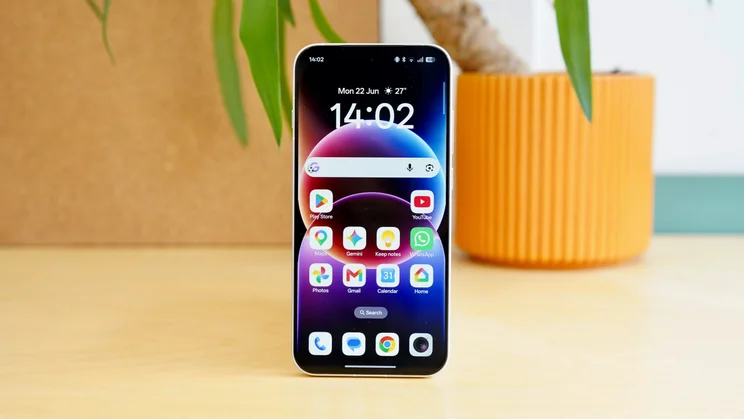
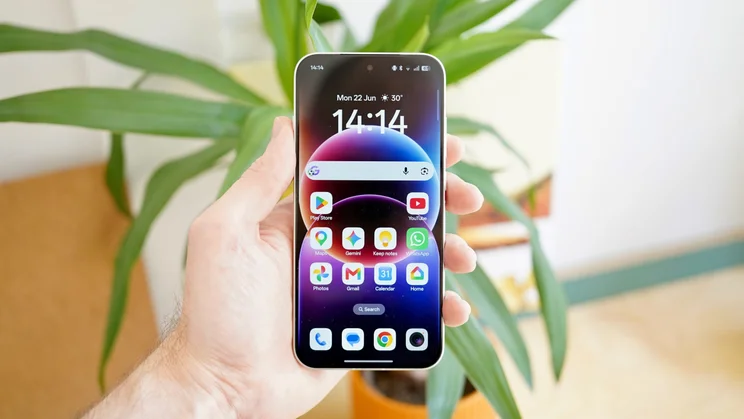
Oppo has shrunk things down for its latest model, with a 6.32in AMOLED display that maxes out at 2640 x 1216 and 144Hz.
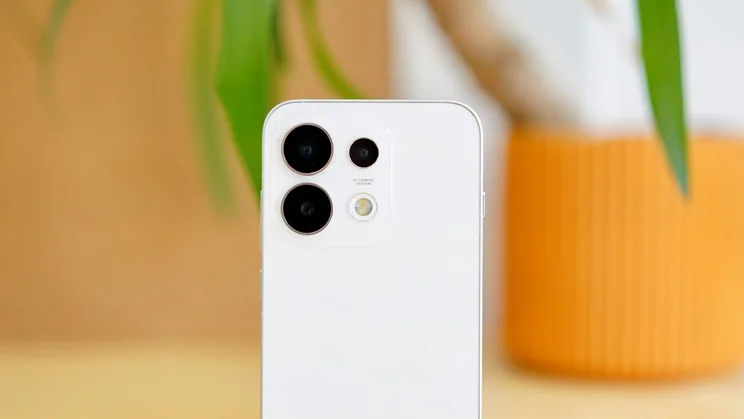
There are three rear cameras, led by a 200-megapixel (f/1.8) main shooter, with a 50-megapixel (f/2.8) 3.5x telephoto lens and a 50-megapixel (f/2.0) ultrawide camera. There’s a 50-megapixel selfie camera with an f/2.0 aperture around front.
Price and competition
Oppo’s global launch roadmap is about as arcane as it gets. The Oppo Reno 16 Pro is the direct follow-up to the Oppo Reno 13 Pro (don’t ask where the 14 and 15 got to), which came to the UK in April of 2025.
Such previous models existed in the grey area between mid-range and flagship. The Oppo Reno 16 Pro, however, has made a bold step forward into flagship territory – at least when it comes to pricing. After a brief discount period, the sole 512GB model will cost a not inconsiderable £899.
oplus_2097152
oplus_2097152
oplus_2097152
oplus_2097152
oplus_2097152
That’s a massive £250 more than the Oppo Reno 13 Pro’s launch price last year. All of a sudden, the range is mixing with outright flagship heavyweights. It finds itself slap back in the middle of the 256GB (£799) and 512GB (£999) variants of the iPhone 17, while it’s the same price as the 256GB Google Pixel 10 and just £20 more than the 256GB Samsung Galaxy S26.
Elsewhere, the 256GB OnePlus 15 will set you back £849 (if you can find one), as will the 512GB variant of the Xiaomi 17T Pro. The Honor 600 Pro costs £899, just like the Oppo.
Design and key features
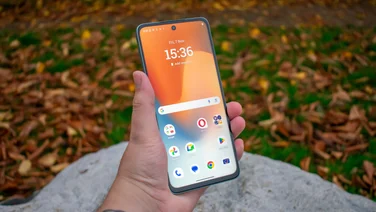
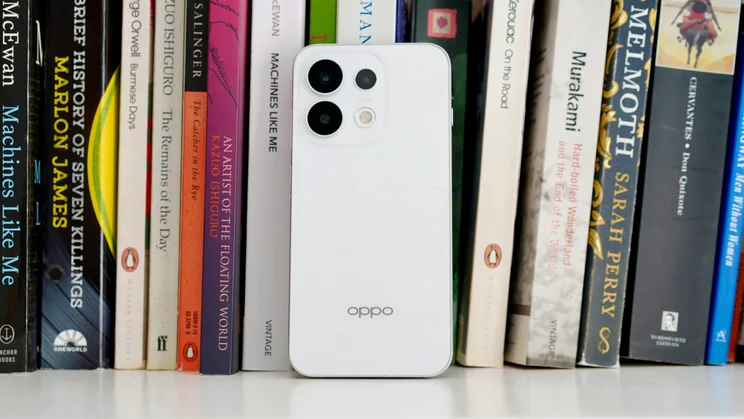
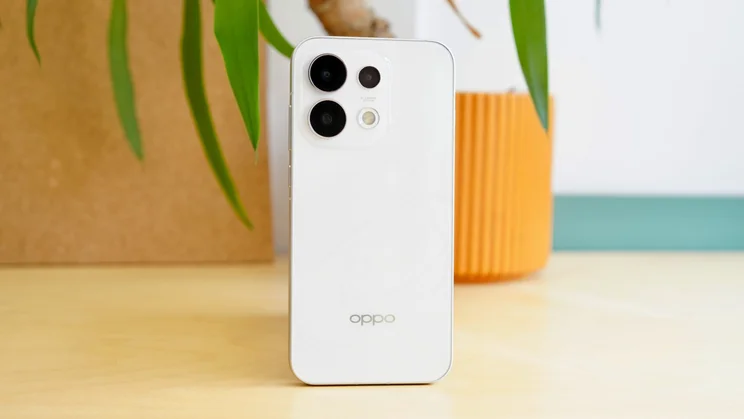
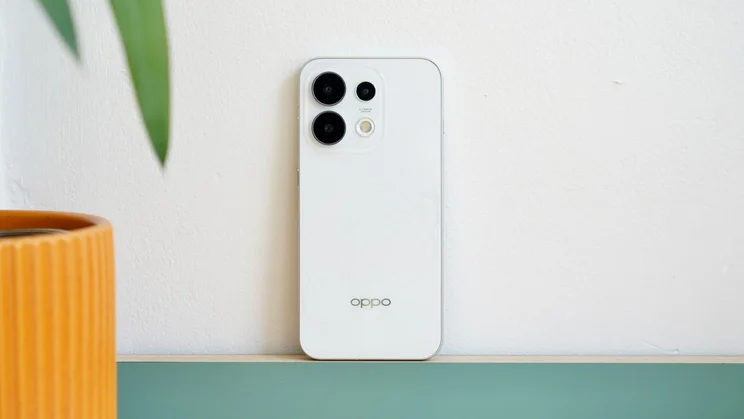
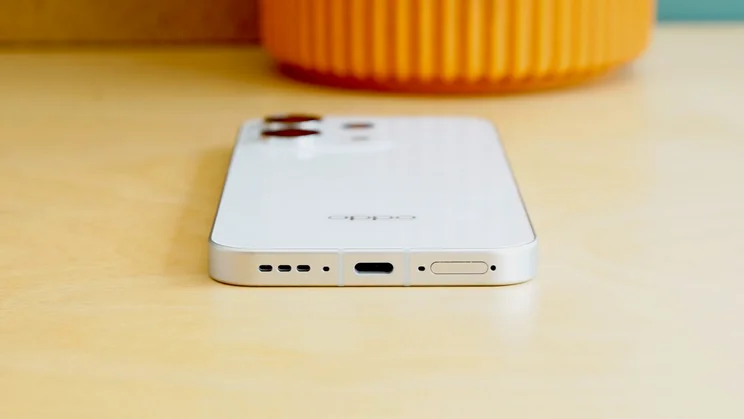
At first glance, the Oppo Reno 16 Pro looks quite a lot like its predecessor (not to mention the Oppo Find X9 Pro). It’s got the same basic iPhone-aping look, with a flat metal rim and flat glass surfaces.
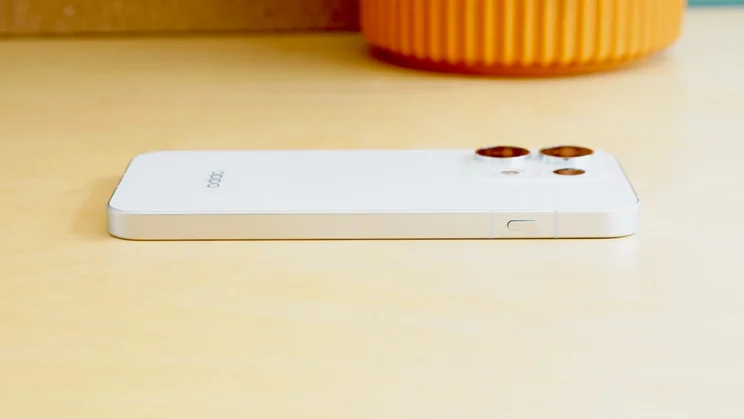
It features a much smaller 151.21 x 72.42mm footprint than before, albeit with a thicker body. My Pop White model measures 8.36mm thick and weighs 191g, while the Starlight Black model is a little skinnier, at 8.2mm, and weighs a couple of grams less, at 188g.
oplus_2097152
oplus_2097152
oplus_2097152
oplus_2097152
oplus_2097152
The reason the white model is slightly heftier comes down to a new 3D Pop Planet Design, which adds a little optical illusion to the rear cover. It resembles a simple sketch of a planet that appears to stand out from the actual surface of the phone, complete with convincing shadow effect. It’s a novel touch, but one that I found to be a little tacky.
Still, it’s well constructed, with an aluminium frame and a cold-sculpted glass back. There’s a comprehensive IP66, IP68, IP69, and IP69K dust and water resistance rating, too.
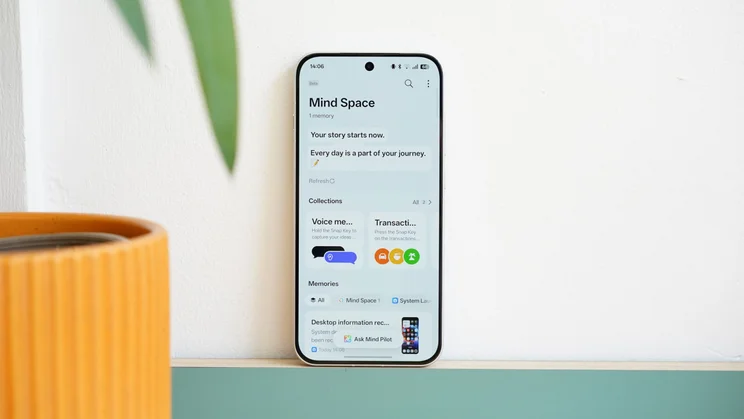
Oppo has brought its AI Snap Key across from the Find series, granting quick access to the company’s Mind Space tool (think AI-assisted contextual screenshots and voice memos) by default. I’m glad to report that it’s customisable, so you can reassign it to the camera or flashlight if you prefer.
oplus_2097152
oplus_2097152
oplus_2097152
oplus_2097152
oplus_2097152
ColorOS 16 ships on top of Android 16 here, and it’s precisely what we’ve come to expect of an Oppo UI – slicker and more fluid than much of the competition, yes, but also cluttered with way too many first and third party app icons. The provision of 6 years of support for the OS and 5 years of security updates is one of the better ones, if not quite top-tier.
Display
The reason for that smaller chassis becomes apparent the first time you fire up the Oppo Reno 16 Pro. It’s got a much smaller display than its predecessor, shrinking right down to 6.32 inches. This places it in the compact phones category alongside the Google Pixel 10, Samsung Galaxy S26, Xiaomi 17, and of course the iPhone 17.
It’s a nice display to use, with a sharp maximum resolution of 2640 x 1216 – though annoyingly, in one of several moves that suggests a curious lack of confidence in its battery management, Oppo makes you manually activate this full resolution in the settings menu. You’ll need to do the same thing for the always-on display, too.
oplus_2097152
oplus_2097152
oplus_2097152
oplus_2097152
oplus_2097152
The maximum refresh rate of 144Hz is somewhat misleading, as it only applies in limited gaming scenarios. Indeed, in the accompanying review guide, Oppo mentions that it’s “only effective in Mobile Legends: Bang Bang”. This isn’t a true LTPO panel either, but rather it can flit between 60/90/120/144Hz as the task requires.
I recorded a top brightness (with autobrightness toggled off) of 595cd/m2, which is broadly in line with Oppo’s prediction. It should hit 1800cd/m2 in high brightness mode, which makes it great for these scorching UK summer days. Colour accuracy is impressive too, with a coverage of 99.6% and a volume of 104.1% in Oppo’s default Standard colour mode, and a 0.87 average Delta E colour variance score.
Performance and battery life
The cracks start to show with the Oppo Reno 16 Pro’s performance. To be clear, the MediaTek Dimensity 8550 chip found here is far from a poor component, especially when backed by 12GB of LPDDR5X RAM. But you can get much faster for similar money.
One stark comparison is the Xiaomi 17T Pro, which launched recently for a lower asking price and the superior MediaTek Dimensity 9500 chipset. In our standard Geekbench testing, the Xiaomi 17T offered twice the single-core CPU performance, 55% more multi-core pop, and 51% more GPU grunt. Also damning is a comparison with the similarly priced OnePlus 15 – made by an Oppo sub-brand, no less – which absolutely obliterates its cousin using a genuine flagship Snapdragon 8 Elite Gen 5 chip.
Indeed, the Oppo Reno 16 Pro is down there with the Google Pixel 10 near the bottom of the £800-£900 performance pack. As much as we like the Pixel 10, performance is not its strong suit. Much like the Pixel 10, it’s difficult to fault the Oppo Reno 16 Pro’s smooth performance in the hand, and it’s capable of running Destiny Rising on maxed out graphical settings. But it’s found wanting in the bangs-per-buck stakes.
It’s a little more competitive on the battery life front, but not without some caveats. My model ships with a 6700mAh battery, but the UK and European market gets a smaller 6000mAh cell. I can’t speak to the latter, but the larger capacity model secured a score of 30hrs 24mins in our looping video test. That’s a solid result, but remains a good six hours short of the Xiaomi 17T Pro and a massive nine hours shy of the Honor 600 Pro.
While 80W wired charging will secure you a 50% charge in 30 minutes and a full charge in about an hour, you’ll have to supply the charger yourself in the UK and Europe. More problematically, there’s no wireless charging provision at all, which is a seriously retrograde omission in a £900 phone.
Cameras
Oppo has fitted the Reno 16 Pro out with a new 200-megapixel main camera, but it’s not quite the premium component that it sounds like. At 1/1.56”, this is a smaller sensor than that of the Samsung Galaxy S26 Ultra and indeed the Oppo Find X9 Ultra.
It’s still capable of capturing nice sharp shots in good lighting, but I found the HDR compensation to occasionally fall short of the best when shooting on particularly bright days. Night shots are far from the best I’ve seen, with noticeable grain visible in the skies.
Moving to the other camera sensors, I noticed instances where the level of exposure could be inconsistent between the various zoom lengths. At other times, they were nicely balanced, so it seems to be a quirk of Oppo’s image processing.
I was quite happy with the quality of the landscape shots taken with the 50-megapixel ultra-wide, which look nice and sharp with relatively little distortion. Zoomed shots taken with the 50-megapixel telephoto look good too, from its native 3.5x optical zoom length right through 7x and even 10x. They get increasingly fuzzy beyond that point, however, right up to a hopeless 120x maximum zoom.
Selfies from the 50Mp front camera look rich and detailed, aided by autofocus. There’s a good portrait mode that really makes the subject pop against a blurred background, and I appreciated the three levels of zoom on offer – cropped as the 1x and 2x options may be.
Video recording goes right up to 4K and 60fps, which is pretty typical for a phone of this price.
Oppo Reno 16 Pro: Verdict
Whether through unfortunate timing or poor judgement, the Oppo Reno 16 Pro is an underwhelming proposition. The main issue is its massively hiked asking price compared to its immediate predecessor, the Oppo Reno 13 Pro, but that wouldn’t necessarily be such an issue if the accompanying upgrades had managed to keep pace. They have not.
While the design and general feel of the phone are good, performance is some way short of what’s obtainable for similar or even less money elsewhere, while the phone’s camera system and stamina are solid rather than outstanding.
Oppo’s decision to offer a split battery offering continues to irritate, meaning that customers in the UK and Europe are getting a second-tier experience. The omission of wireless charging, meanwhile, is completely baffling in a £900 phone.
It isn’t a bad phone by any means, but the Oppo Reno 16 Pro simply doesn’t put together a sufficiently compelling package to justify its sudden ascent to the flagship class.