To help us provide you with free impartial advice, we may earn a commission if you buy through links on our site. Learn more

I’ve been reviewing smartphones long enough to witness the emergence of on-device AI first-hand. My initial response was one of scepticism and ecological concern, and while there has been the odd feature that I’ve begrudgingly conceded to be somewhat useful, the evolution of AI has, for the most part, done nothing to improve my opinion of its existence.
Now, the inevitable impact that AI was always going to have has begun to reverberate through the tech world, with the dawn of RAM-ageddon. The scarcity of in-demand components has pushed prices up in all corners, affecting everything from phones and laptops to video game consoles – including Sony and Microsoft upping the cost of the PlayStation 5 and Xbox Series X, despite both originally launching almost six years ago.
The price increases were bad enough but things are taking an even more concerning turn now, and it could be an indication that the state of affordable tech as we know it is about to change for the worse. Let’s talk about Nothing cancelling the CMF Phone 3 Pro.
What happened to the CMF Phone 3 Pro?
It was just last year that Nothing made a huge splash in the budget phone market with the arrival of the CMF Phone 2 Pro. For those of us who were used to seeing more modest handsets in this price range, the Phone 2 Pro was a revelation, with features like an AMOLED display and a 2x telephoto camera making it feel far more premium than its original £219 launch price suggested.
Indeed, our reviewer Jon Mundy awarded the CMF Phone 2 Pro five stars and our Best Buy award, calling it “arguably the best budget phone on the market right now”. This sentiment was echoed across our industry, with the Phone 2 Pro featuring prominently on best budget phone roundups far and wide.

Well, it looks like we don’t get to have nice things in the AI era. After an initial rumour that the release of the CMF Phone 3 Pro was to be delayed, Nothing eventually came out and said that the handset was being scrapped entirely.
In a post on Twitter (X if you’re nasty), Nothing co-founder Akis Evangelidis wrote that “we were working on a successor but with memory prices where they are right now, we can’t build a phone that feels like a genuine step forward at a price that makes sense for CMF.”
Evangelidis was quick to clarify that the CMF by Nothing brand is far from dead, with “several new products launching as well as some entirely new categories,” but I can’t help but feel that this is a canary, coughing its last in the coalmine. The promise of feature-rich budget phones that the Phone 2 Pro appeared to herald feels well and truly dead, and I’m left wondering when – not if – the next budget phone will fall to the relentless plague of RAM-ageddon.
How did AI cause the RAM shortage?
I’ve used that term a couple of times now, so what exactly is RAM-ageddon?
Despite its whimsical, 90s action flick-sounding name, this phenomenon is actually a troublesome symptom of a world-wide case of AI fever.
Whispers of a global RAM supply issue began back in 2025, with the enormous growth in demand for AI data centres putting huge pressure on the manufacturing pipeline for components, particularly RAM.
In addition to using up vast amounts of space, electricity and water, AI data centres also require immense levels of computer memory to allow large-language models like ChatGPT, Gemini and Claude to run the trillions of operations that they perform every second.

This requires the centres to be kitted out with High-Bandwidth Memory (HBM), and, in their goldrush of greed, AI companies proved more than willing to pay the big bills in order to secure memory ahead of the competition.
That means that supplying data centres is far more lucrative for RAM manufacturers Samsung, SK Hynix and Micron than simply producing DRAM for the consumer tech that we all enjoy, and pipelines have been swiftly turned towards meeting the seemingly endless demands of AI companies (and reaping the rewards from their equally deep pockets).
To maintain a shred of fairness, RAM manufacturers are working on opening new fabrication facilities, though even with this in mind, SK Group Chairman Chey Tae-won said that the global chip wafer shortage is likely to persist until 2030. Even then, will the additional manufacturing capacity be used to supply DRAM once again and stabilise the price crisis, or will the suits with dollar-signs for eyes take the more profitable route and turn these towards supplying data centres, too? Who can say.
Is it solely the fault of AI?
Of course not. AI is an easy scapegoat (and I love bagging on it as much as the next luddite) but the real issue here is greed. Like Spirited Away‘s No-Face devouring everything in the bathhouse to satiate his newly endless hunger, AI companies are growing at an unsustainable rate, lacking cohesive and stringent regulation, and gobbling up resources while leaving the rest of us very much in the lurch.
RAM and other technical components are obviously not as much of a concern in this regard as the devastating amount of power and water that are sucked up by these enormous data farms, but in the specific circumstance that we’re discussing here, it’s a problem. Budget tech is a huge part of the industry, making things like phones and laptops accessible to people who can’t afford the kinds of prices we seem to be heading towards, and it’s troubling to see such a key sector teetering on the edge of a cliff.
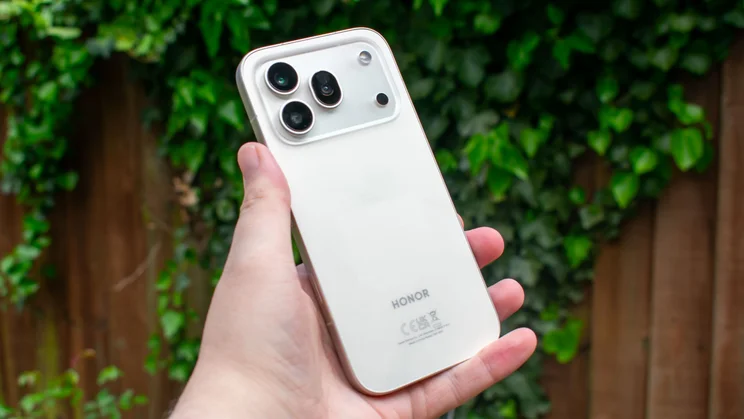
Beyond the AI companies, we can blame the RAM manufacturers for chasing profits at the expense of an apparently fragile global supply chain, and of course, tech manufacturers like Apple, Samsung, Google and Microsoft. When these companies are posting year-on-year profit increases that number in the billions of dollars, it feels like they are in a better position to absorb the additional cost of the parts than you, the consumer.
This is particularly galling on the part of Samsung, as the huge increase in its operating profit for the past year (roughly 33% up from 2024) is due in no small part to its Device Solution division, which produces, among other things, HBM and other RAM solutions. And yet the start of this year saw it upping the price of the Galaxy S26 series, due to a global shortage of parts, for which Samsung itself is partially responsible. Excellent.
What does this mean for budget phones?
Nothing good, I’ll tell you that for free. But it would be hyperbolic and fear-mongering of me to imply that budget phones and other such affordable tech will soon disappear from shelves forever – let me be clear, I don’t think that will be the case.
Instead, what we’re likely to see is a global exercise in compromise. Maybe we will be forced to move the goalposts of what we consider to be budget, or perhaps cheaper handsets will return to the days of running on 4GB or 6GB of RAM, having spent the past few years upping to 8GB or even 12GB in some rare cases.
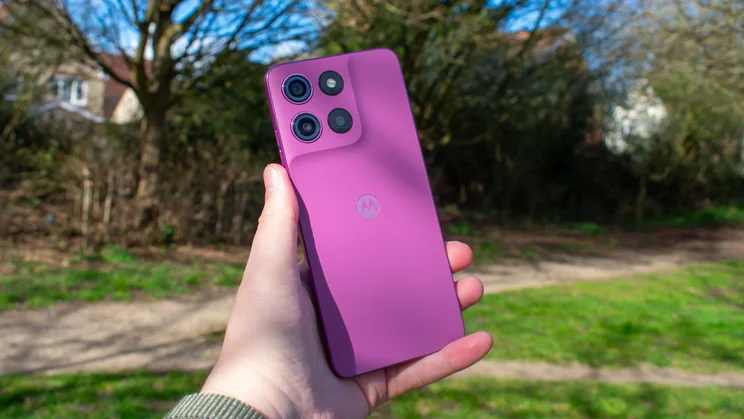
Most likely, it will be a combination of the two, with some previously affordable phones nudging closer to mid-range pricing while others maintain cheaper price tags by sacrificing the amount of memory they provide.
Either way, it appears that for the time being, the rise of AI will continue to come with the decline of quality budget tech. As always, my recommendation is that anyone struggling with the prices of new smartphones take a look at slightly older or even refurbished handsets when buying their next phone.
Last year’s Google Pixel 9a, for instance, is down to its cheapest price on Amazon (just £306 at the time of writing) and is barely a downgrade from this year’s Google Pixel 10a. Or you could get one refurbished in excellent condition from Back Market for £292.
Whichever avenue you choose, it’s becoming more and more difficult to recommend new phones, and judging by the state of global RAM supply and the ongoing AI boom, I don’t see that changing any time soon.