To help us provide you with free impartial advice, we may earn a commission if you buy through links on our site. Learn more








- Thinnest foldable on the market
- Immensely powerful
- Phenomenal battery life
- Hefty asking price
- CPU throttling by default
- No camera upgrades
The Honor Magic V6 is the latest combatant in what has, for a while now, been a dead-heat race between Honor and Samsung for foldable phone supremacy (thanks for showing up Google, have a seat).
Samsung took the win last year, with the refined Galaxy Z Fold 7 just pipping the Magic V5, but the Magic V6 has the mettle to snatch the crown this time around. With a larger battery, powerful new chipset, stylus support and once again the slimmest build on the market, Honor’s latest foldable is, in many ways, the peak of the format thus far.

Honor Magic V6: What you need to know
The processor is upgraded to the latest Snapdragon 8 Elite Gen 5, clocked at up to 4.61GHz and backed by 16GB of RAM and 512GB of storage space. The battery is new, too, with the silicon-carbon cell packing a devilishly good new capacity of 6,660mAh (up from 5,820mAh last year) and charging now extends to 80W wired and 66W wireless.
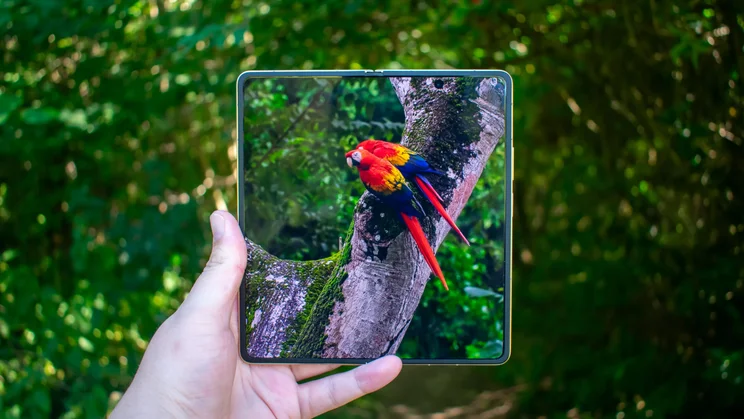
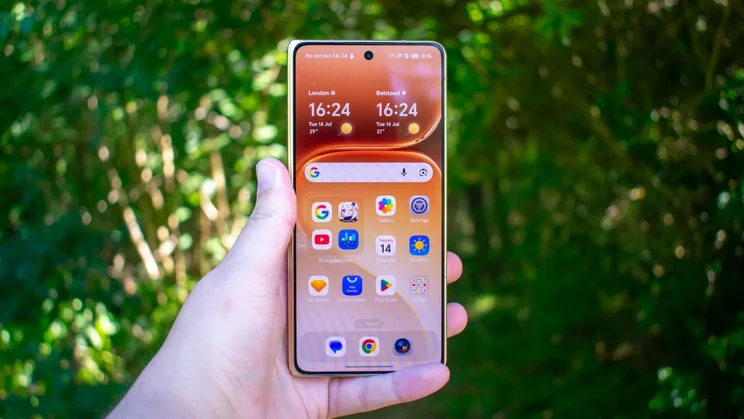
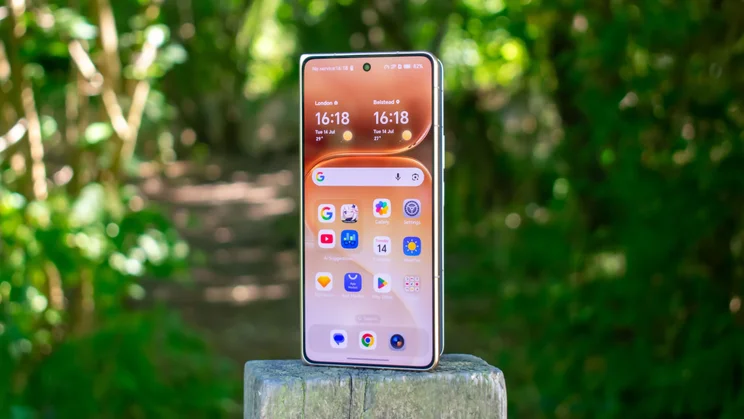
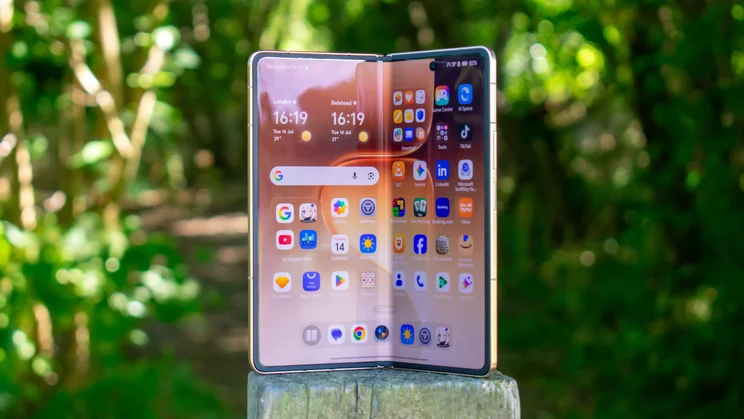
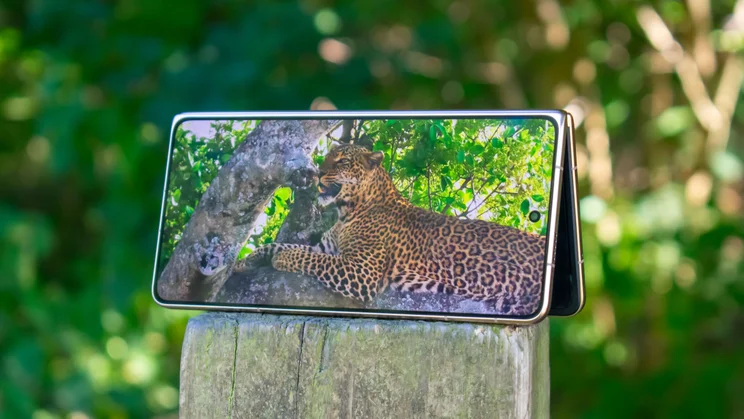
The cover display is once again a 120Hz LTPO OLED panel, but it’s now a larger 6.52in across the diagonal, with a 2,420 x 1,080 resolution and has a higher peak brightness of 6,000 nits. The 7.95in foldable main display can apparently get almost as bright, rated up to 5,000 nits, and retains the same 120Hz refresh rate and 2,352 x 2,172 resolution as its predecessor.
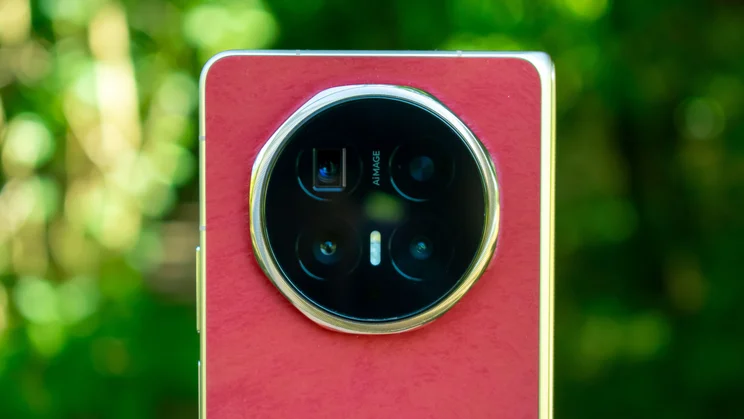
There’s once again a 20MP selfie camera on each display, and over on the rear we have the same triple-camera set-up as the previous generation: a 50MP main lens, a 64MP 3x periscope telephoto camera and a 50MP ultrawide shooter.
Price and competition
Honor is being a little tricksy with its pricing here. Technically speaking, the Magic V6 retails for £1,999, which is a cool £300 more than the starting price of the Magic V5 last year. Prices have been rising in all corners thanks to a shortage of key components, so odds are good that Samsung and Google will also be raising prices for their foldables later this year, but we’ll have to see who ends up being the best-value once the dust has settled.
With that being said, Honor is running an early bird sale through to the end of July, which gets you £500 off, bringing the price down to £1,499. Beyond that, who knows where the price will end up? The recent Honor 600 and 600 Pro both launched for much higher prices than their predecessors but were swiftly discounted in the following weeks. Perhaps the Magic V6 will follow a similar trajectory.
As for rivals, the main offenders haven’t released 2026 models yet, so we can only compare to last year’s Samsung Galaxy Z Fold 7 and Google Pixel 10 Pro Fold, which cost £1,799 and £1,710, respectively, for the same 512GB of storage.
New on the scene this year is the Motorola Razr Fold, the debut book-style foldable from the brand that has been nailing the clamshell format for years with the likes of the Razr 70 Ultra. There’s only one model, also with 512GB of storage, and it costs £1,799.
Design and key features
Google may have been the first to nail a fully dust-proof foldable with the Pixel 10 Pro Fold, but Honor has now followed up with a more robust IP68/IP69 rating for the Magic V6.
In addition to being fully dustproof and able to withstand submersion in 1.5m of fresh water for up to 30 minutes, like the Pixel, this rating adds protection against high-pressure, high-temperature jets from any direction. That may not be a daily concern for most people, but it’s nice to have nonetheless.
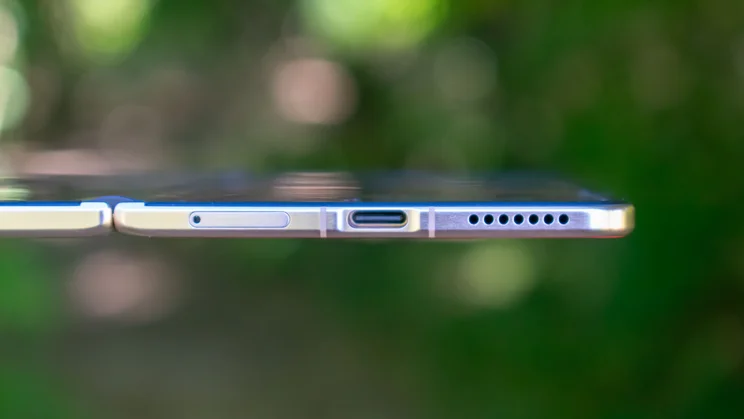
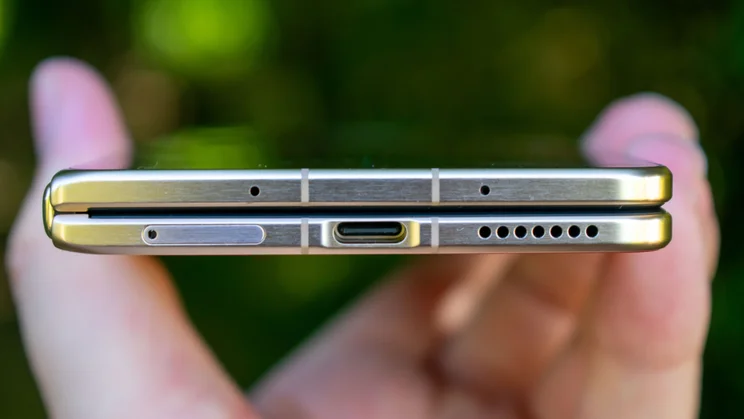
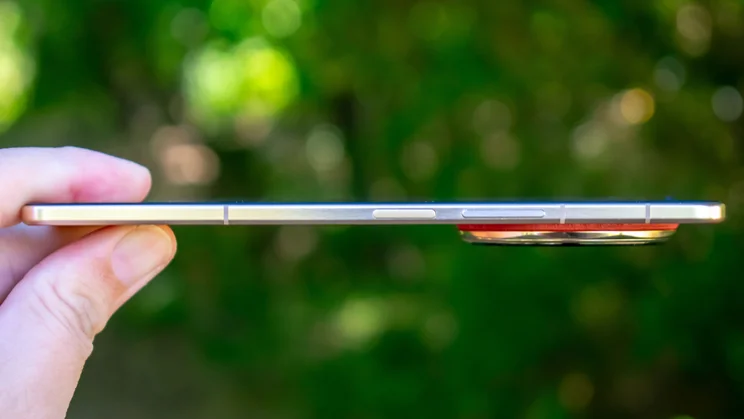
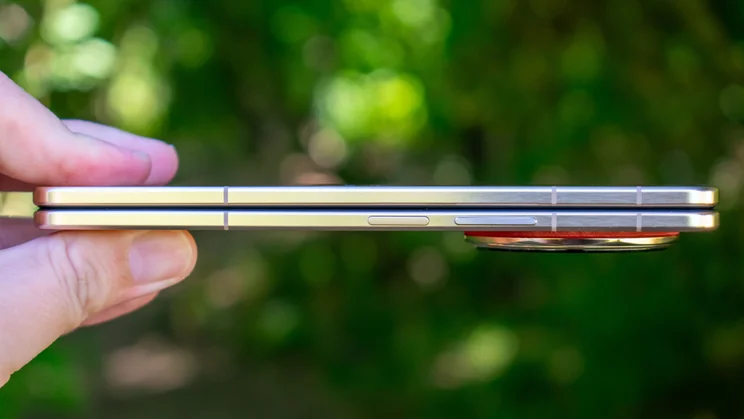
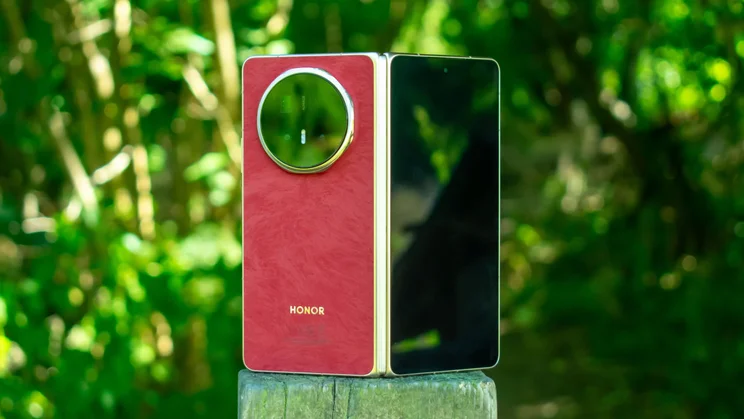
The Magic V5 already held the record as the thinnest foldable on the market, and now Honor has lapped itself, with the Magic V6 unfolding to a ludicrous 4mm thickness – at this point, there’s barely a hair’s breadth on either side of the 2.6mm-thick USB-C port.
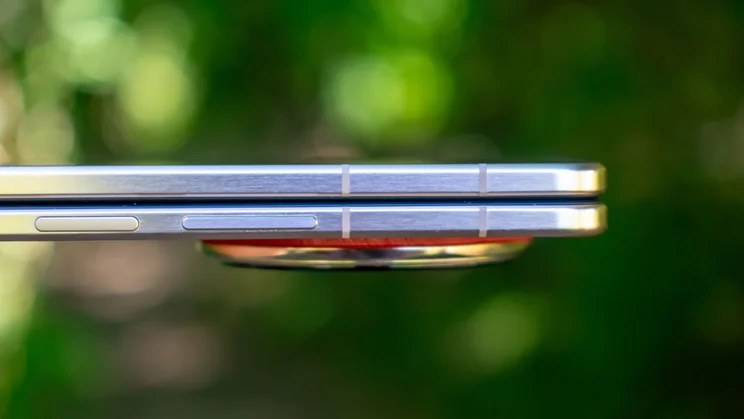
Folded, the Magic V6 measures 8.8mm thick, and the camera housing adds a couple of extra millimeters – though to Honor’s credit, this feels less pronounced than previous generations, too. It still weighs roughly the same, though, at 219g.
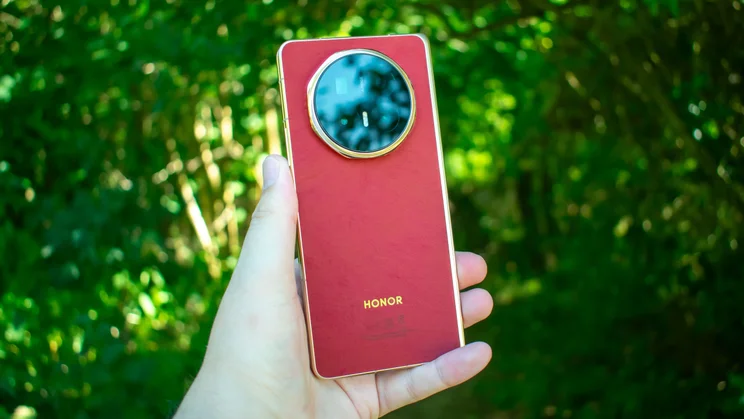
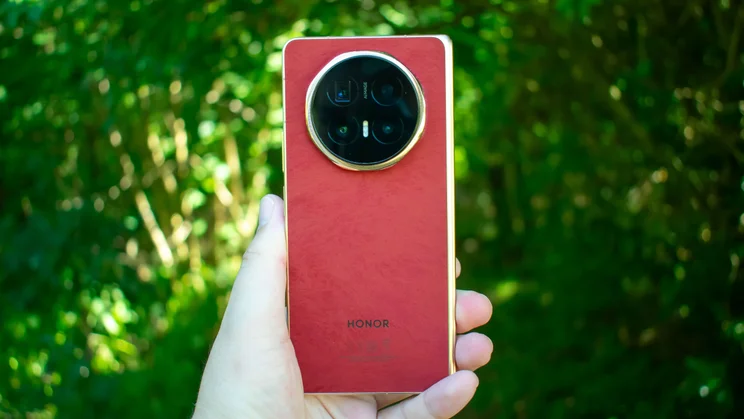
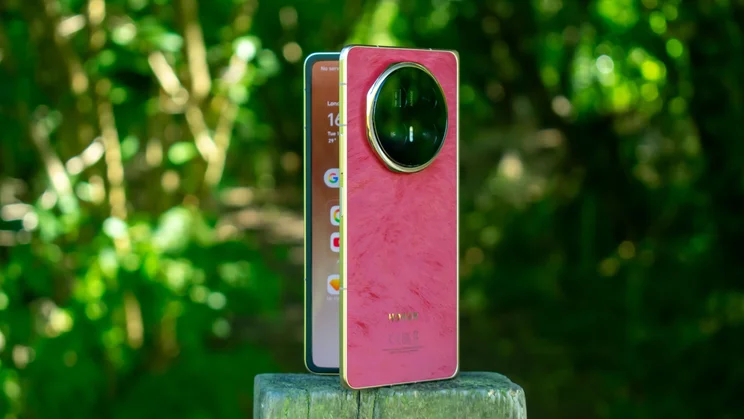
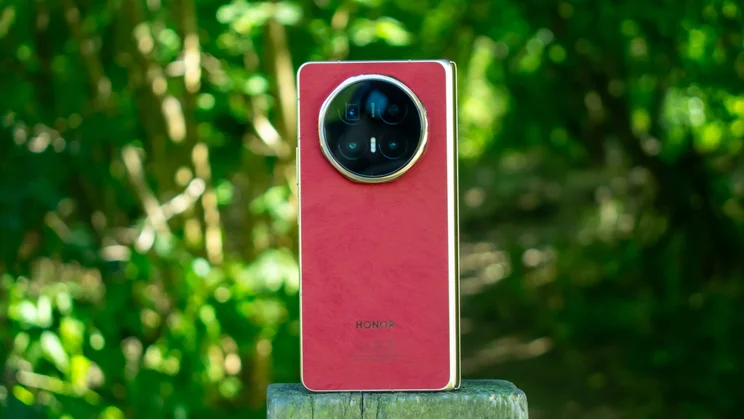
These measurements are specific to the “stark white” model, which is only available directly from Honor’s own website. You can also get the Magic V5 in the classy red colourway seen here, as well as a gentle gold and standard black. These three colourways have slightly different physical specs, measuring 4.1mm unfolded, 9mm folded and weighing 224g.
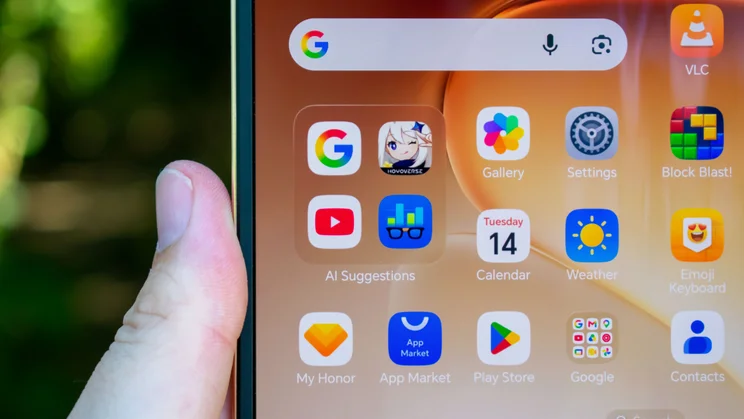
The phone runs Honor’s MagicOS 10.0 software, which is based on Android 16 and, just like Google and Samsung, Honor has pledged seven years of OS updates and security patches, keeping the Magic V6 up-to-date through to 2033. It’s a solid enough launcher, but there’s far too much bloatware, and the AI-focused design can get fussy and cluttered quickly.
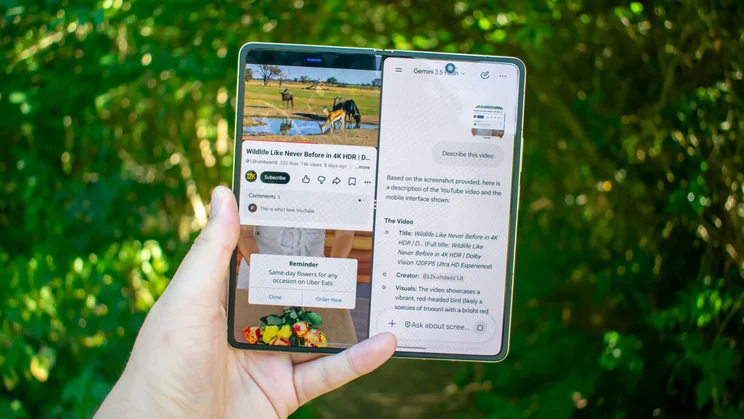
With that being said, one new AI-adjacent feature is actually useful: “fast flex” activates when you slightly fold and then unfold the phone from the main display, and it opens Gemini in a split-screen with compatible apps. It’s a clever, intuitive use of the foldable format and offers a quick way to ask specific questions about content from your apps without needing yet another external button to hail the AI.
Displays
Both displays are as strong as ever, nicely sharp, smoothly responsive and extremely bright. When playing HDR content, I recorded a peak of 1,062cd/m2 on the large folding display, while the cover screen hit a brilliant 1,906cd/m2. Anecdotally, I used both screens outside on a very sunny day and the adaptive brightness was more than enough to keep them clearly visible.
The crease down the main display is essentially invisible with the screen lit up, and it’s great to see stylus support returning – that was a real blow for Samsung fans last year – but it’s a shame Honor still doesn’t bundle the foldable-specific Magic Pen in with the phone. You can add one when buying the Magic V6 directly from Honor, at least, for a discounted £41.
There are three colour profiles to choose from, with Vivid dialling up the saturation, Natural presenting more muted, realistic tones and Professional being tuned for accuracy to the sRGB colour space. I put the latter to the test and found it hit the mark, recording an average Delta E of 0.74 on the cover display and 0.79 on the inner one – the target is 1 or under, so both performed beautifully.
Performance and battery life
The Honor Magic V6 is fitted with the top-of-the-line Snapdragon 8 Elite Gen 5 chipset, clocked up to 4.61GHz and backed by 16GB of RAM and 512GB of storage space. In other words, it’s packing a serious wallop.
At least, that’s the idea. In practice, the Honor Magic V6 uses a laptop-style battery management system that has the ability to rein in the CPU’s power to preserve battery life, and on the standard “balanced” setting, it delivered solid, if unremarkable, Geekbench 6 scores comparable to a decent mid-range phone.
The phone was still nippy and smooth in this setting, so it feels like a decent middle ground for non-intensive daily use, but you’re not laying out a couple of grand for “good enough”, so I switched the battery mode over to “performance” and ran it again.
These results were much more in line with my expectations, landing the Honor Magic V6 among the top echelon of smartphones, nipping at the heels of the Samsung Galaxy S26 Ultra and the iPhone 17 Pro Max at the very front of the pack.
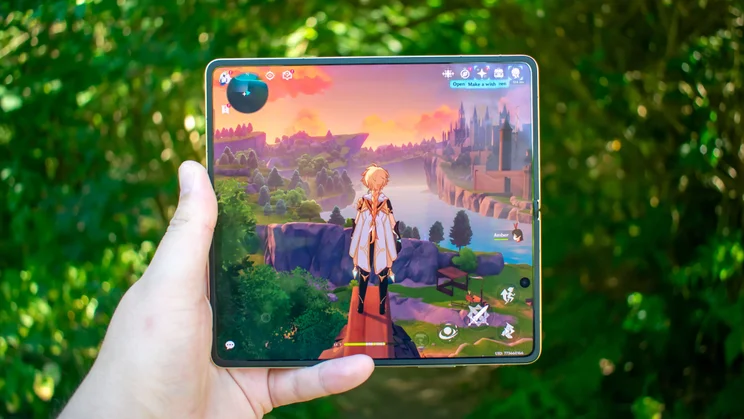
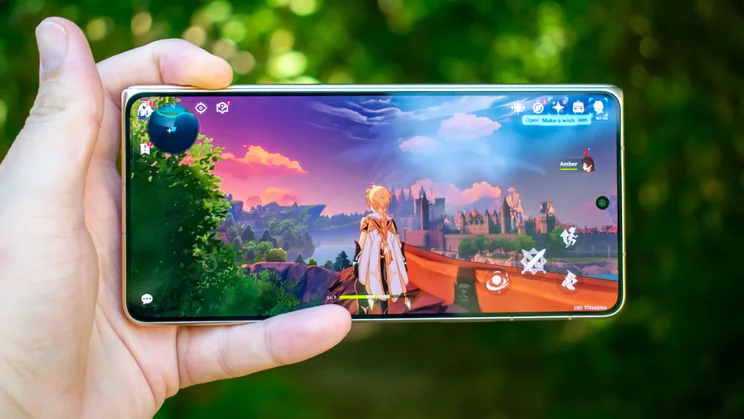
It’s the same story on the gaming side of things, with the Magic V6 scoring just below the Galaxy S26 Ultra in the Geekbench 6 Vulkan GPU test. In practice, I played a few hours of Genshin: Impact on the highest graphics settings and, though the app warned me that the phone would overheat, I found that framerates stayed consistent and the phone never got uncomfortably warm.
Full disclosure, I’ve switched back to balanced mode for the battery tests – running a simple video on a loop really doesn’t need that much horsepower, and it’s the default setting so it feels best suited.
And as impressive as the Magic V6 is in most other areas, its battery life may be the banner feature, as it’s simply phenomenal. The foldable main display ran our looping video test for a fantastic 26hrs 36mins, the longest I’ve seen from any full-sized foldable phone.
Of course, you won’t just be using that display, and the cover screen went even further, playing the video for a whopping 39hrs 34mins, which is up there with some of the best battery life results I’ve recorded from any phone ever.
The 80W wired charging is only applicable to compatible chargers, presumably those produced by Honor, so my Motorola charger mostly languished around the 21W mark. Even still, this charged the phone up in a reasonable timeframe, hitting 50% after roughly 30mins and reaching 100% after 1hr 15mins.
Cameras
For the most part, the cameras are identical to those on the Magic V5. The only difference is actually a minor downgrade – the 50-megapixel ultrawide lens has a marginally narrower aperture of f/2.2, compared to f/2.0 last year.
I didn’t find this difference to be impactful at all, with the final images still coming out nice and bright, with a colour tone that broadly matches the main lens and solid detail in the centre of the frame – although, as with most ultrawide cameras, the corners do get a little blurry.
The 50-megapixel (f/1.6) main camera captures vivid and detailed shots in good lighting, with crisp focus and and broad dynamic range. The colour tone may be a little oversaturated for some tastes, but this is mostly going to come down to personal preference.
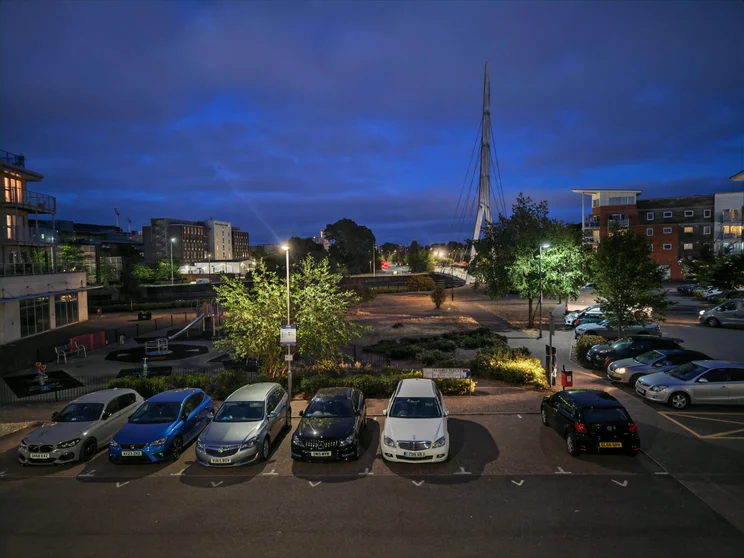
Things continue to look good after dark, with the night photography mode producing sharp and detailed shots with natural colouring. There’s a little more visual noise in the sky than there needs to be but it’s far from bad enough to be a distraction.
The 64-megapixel (f/2.5) 3x telephoto camera completes the set, and this versatile lens is well-suited to snapping striking portraits or getting in close for some exquisite macro photos. Just like the main lens, the telephoto supports both optical image stabilisation (OIS) and phase detection autofocus (PDAF), which makes it well-suited to snapping moving objects – like this rose, which was gently swaying in the wind:
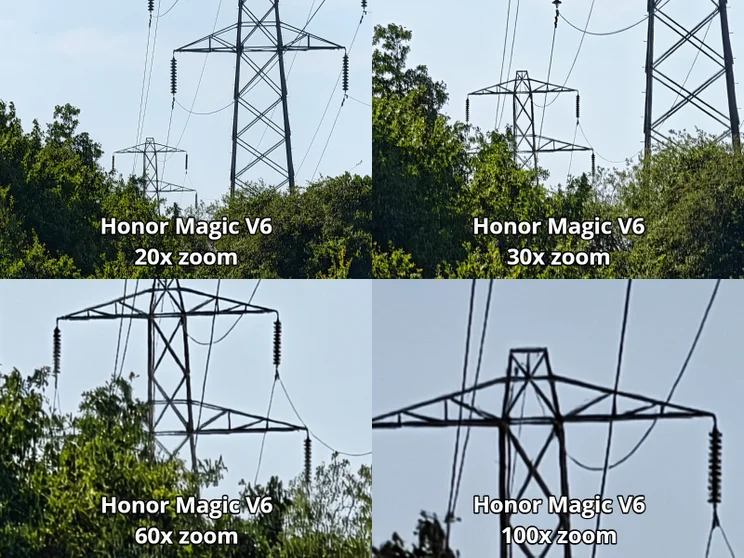
The zoom goes all the way up to 100x, and past the 6x mark, you can opt to engage the AI Enhanced Zoom feature, which tries to tidy up blurry shots. I find that this tends to do more harm than good, however, with results looking very artificial and oversharpened.
Without the AI’s guiding hand, zoom photography does get a little muddy towards the upper limit but, as you can see below, shots up to around the 20x mark still retain a good amount of detail.
Video is mostly decent, shooting up to 4K/60fps on the rear cameras, and you get a 10-bit HDR option, but the Samsung Galaxy Z Fold series goes just a little further. For starters, it supports 8K video at 30fps, and has LOG recording, giving you greater control over the colour grading in editing. The Honor Magic V6 has none of this.
Honor Magic V6: Verdict
So the camera suite, while exceedingly competent, isn’t quite the most complete that you can get from a foldable, and the software isn’t as refined an experience as the Pixel Fold or Galaxy Fold. But these aren’t major grumbles, however, and there’s otherwise nothing to dislike about the Magic V6.
Both displays are sharp, bright and colour accurate, the performance is exemplary (though admittedly a little fiddly, with the manual battery management feature) the build is wonderfully slim and impressively durable and battery life is outstanding, delivering the best stamina of any foldable yet.
Samsung will likely prove the “cheaper” option this year, but if you don’t want to settle for 256GB of storage, the Honor Magic V6 is a better pick overall for sheer quality.