To help us provide you with free impartial advice, we may earn a commission if you buy through links on our site. Learn more










- Fantastic battery life
- Gorgeous cameras
- Brilliant performance
- Big price increase
- Very few upgrades
- HyperOS needs refining
It feels like just last week that I was reviewing Xiaomi’s latest T-series phones, and it turns out that’s because the Chinese brand has dramatically moved up the release date of the Xiaomi 17T and 17T Pro. Instead of launching in early Autumn, as previous generations have, the 17T series is following hot on the heels of the flagship Xiaomi 17 duo, which only launched back in February.
Whatever reason Xiaomi had for this choice, it puts the 17T Pro in a tricky position, with its huge price increase placing it in contention with the compact Xiaomi 17, and in my opinion, this weakens the appeal of both devices in one fell swoop.
The Xiaomi 17T Pro is powerful, long-lasting and packs some excellent cameras, but ongoing software woes and this latest price bump do serious damage to its appeal. At best, it serves to make the non-Pro Xiaomi 17T look even better by comparison.

Xiaomi 17T Pro: What you need to know
This is quite the departure from last year, where I was lauding the Xiaomi 15T Pro as “all the phone most people need” in my five-star review. Pricing aside, the biggest reason my perspective has shifted so dramatically is simply that the hardware has not.
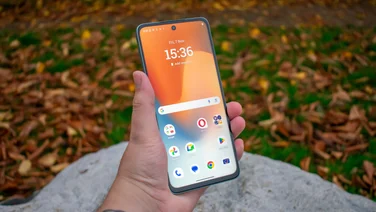
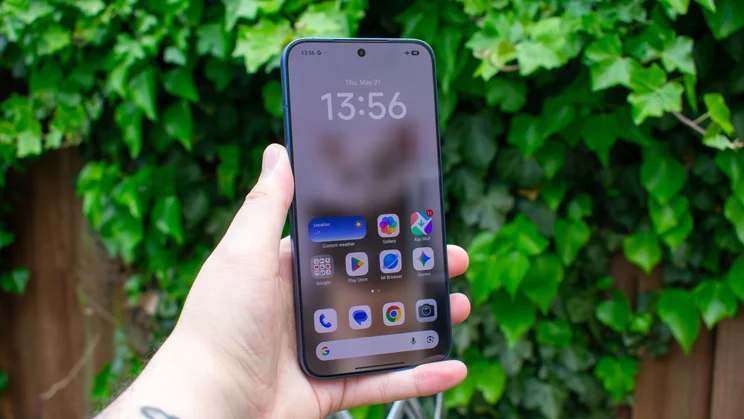
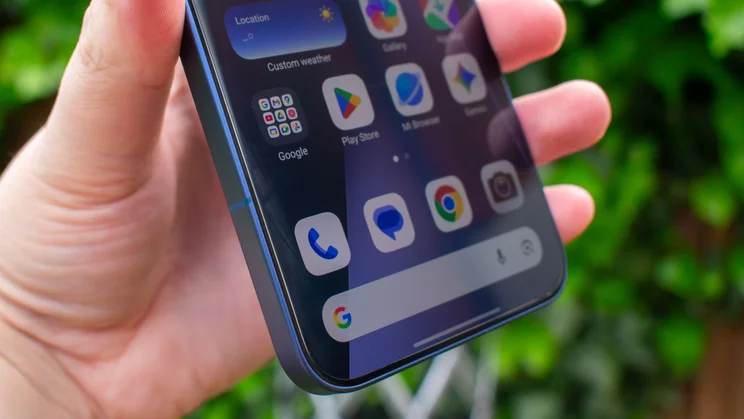
The display is identical to last year (albeit still very good): it’s a 6.83in AMOLED screen with a 2,772 x 1,280 resolution and peak refresh rate of 144Hz. The only minor change here is that peak brightness has nudged up from 3,200 nits to 3,500 nits.
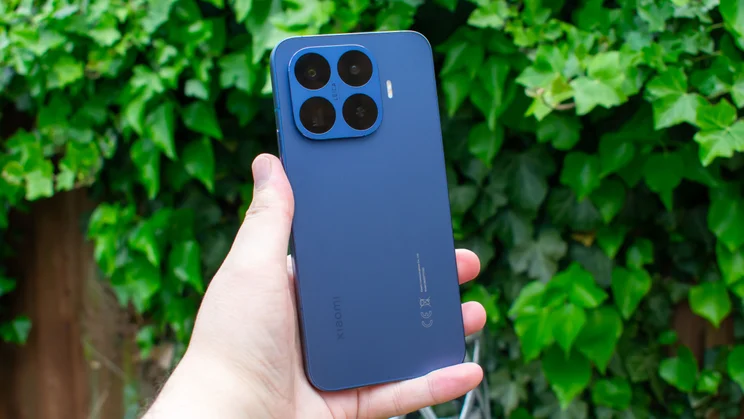
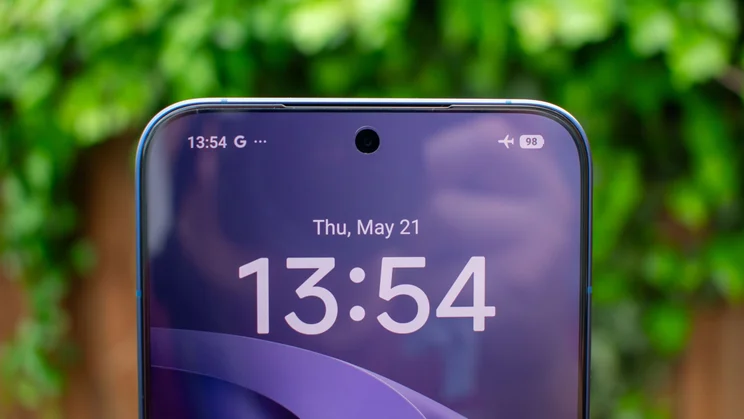
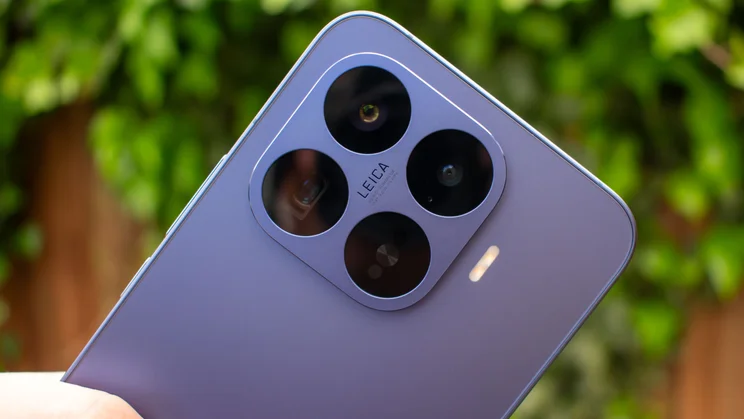
The same 32-megapixel (f/2.2) selfie camera year sits atop the screen, and the lenses on the rear are unchanged, too: the main camera is a 50-megapixel (f/1.6) lens, and it’s joined by a 50-megapixel (f/3.0) 5x telephoto and 12-megapixel (f/2.2) ultrawide.
The only area in which we see movement is the internal components. The standard generational processor upgrade replaces the MediaTek Dimensity 9400+ with the Dimensity 9500; this has a higher peak clock speed of 4.21GHz (up from 3.73GHz) and is again backed by 12GB of RAM and 256GB, 512GB or 1TB of storage.
Best of all is the battery, which is now a massive 7,000mAh Si-Ca (silicon carbon) cell that supports faster 100W wired charging and, once again, 50W wireless charging.
Price and competition
In fairness to Xiaomi, price rises are a plague that is spreading throughout the tech world this year, and it feels like nobody and nothing is safe. The Xiaomi 17T Pro starts at £799 for the 256GB model, with the 512GB version at £849 and the top-tier 1TB version now £999. The first two are £150 more than their respective counterparts from last year, and the latter is £200 more expensive.
The other side of the coin from the Xiaomi 17T Pro is the Honor 600 Pro, another potential heir to the mid-range crown that has seen its price bumped up into flagship territory for this generation. It started life at a hefty £899 for the sole 12GB/512GB model, but Honor appears to have quickly realised the folly of this high price, as it’s now available for £699 – a far more appropriate price.
Whether or not Xiaomi follows suit remains to be seen. For now, its £799 starting price places it firmly among entry-level flagships. The T-free Xiaomi 17 itself is a threat here, currently discounted to just £699 for the 256GB model or £799 for the 512GB.
We have more compact heavy hitters in the iPhone 17, starting at £799 for 256GB of storage, and the Samsung Galaxy S26, which costs £879 for the 256GB model. The OnePlus 15 is also lurking at around this price bracket, overshadowing the competition with blisteringly fast performance and class-leading battery life – you can nab the 256GB version for £849 or fork out £979 for the 512GB model.
Design and key features
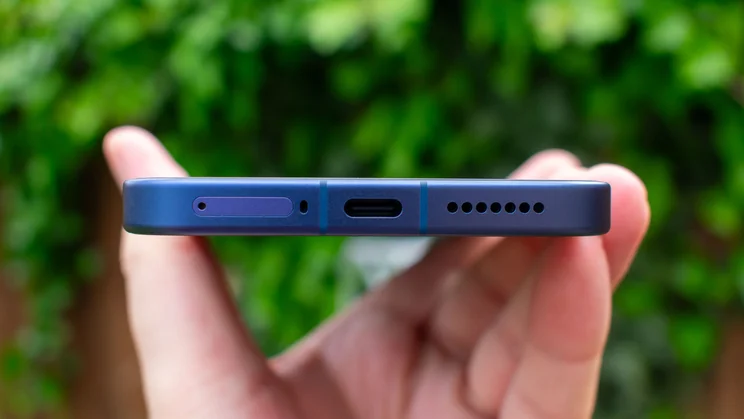
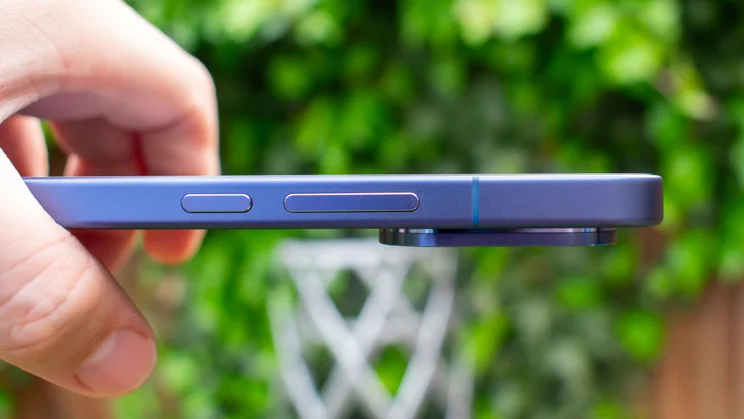
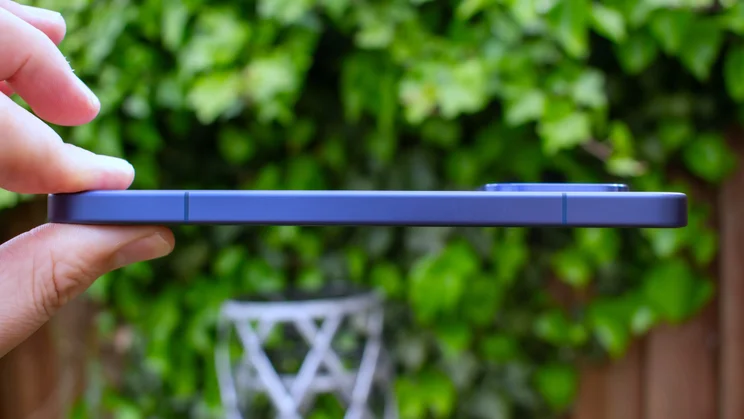
The beauty of silicon-carbon technology is that smartphone companies can produce batteries that have much higher capacity without requiring a lot more space. So despite a battery capacity increase of 1,500mAh, the Xiaomi 17T Pro is near-enough the same size as its predecessor. It has a 78 x 162mm footprint (WxH) and is only marginally thicker, at 8.2mm. It weighs a little more than the 15T Pro, upping from 210g to 219g.
The aluminium frame is nicely solid and looks the part, with its brushed finish, but it’s disappointing to see Xiaomi once again trotting out the plastic-composite rear for such an expensive phone – though perhaps this is unsurprising, since Xiaomi used the same material on the even pricier Xiaomi 17 Ultra.
There are arguments to be made for this being more durable than standard glass rears, as the plastic elements make it less prone to shattering, but it does feel like plastic in the hand and I’ve seen reports of users finding the rear of the Xiaomi 15T Pro very easy to damage, and prone to scratches and other such blemishes. On the cheaper Xiaomi 17T, this is easier to overlook, but when we’re talking this kind of money, Xiaomi really should be fitting the Pro with more premium materials.
The dust and water resistance rating remains flagship-worthy, at least, with the IP68 certification meaning that it is fully dust-proof and able to withstand submersion in 1.5m of water for up to 30 minutes.
Biometrics via the selfie camera facial recognition and the under-display optical fingerprint sensor proved to be reliable and speedy in my testing (though as I noted with the standard Xiaomi 17T, the fingerprint sensor could do with being a little higher up the screen), and connectivity covers the same Bluetooth 6.0 and Wi-Fi 7 as last year.
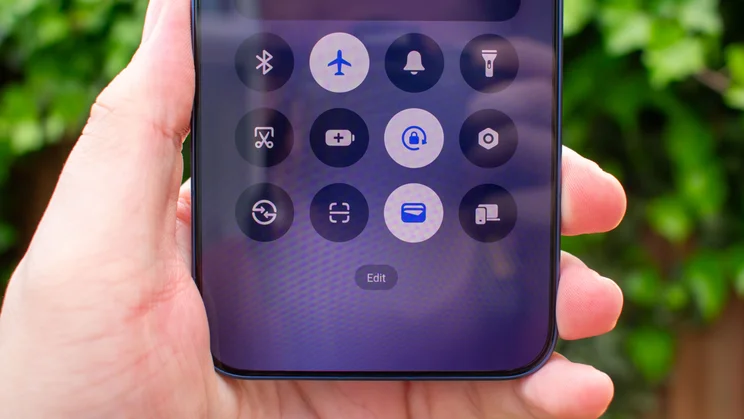
HyperOS 3 might be a cleaner more refined version of Xiaomi’s phone OS but I still don’t get on with it. I can acknowledge that it’s slicker and more confident in its style than previous generations, while still holding that the design dances between unintuitive and messy. There’s also too much preinstalled bloatware and an unnecessary excess of AI slop at every turn.
Worse still is software support, which offers the same four years of OS updates and six years of security patches as the standard 17-series. For this kind of money, there are plenty of rivals that do better, with both Samsung and Google pledging seven years of both for their respective entry-level flagships.
Display
I test a lot of smartphone screens in my day-to-day, and I do not say this lightly: Xiaomi is easily one of the best in the business at tuning smartphone displays. In particular, I’m a big fan of the Original Colour Pro colouring that’s set as default – it reproduces the sRGB colour space with laser-accuracy. With my trusty colorimeter, I recorded a gamut coverage of 97.8% and a volume of 99.6%, and the 0.85 average Delta E is right in the pocket for our target of 1 or under, indicating excellent accuracy.
I appreciate this colour profile so much that I don’t think you even need the alternative Vivid mode – all of my streaming and mobile gaming still looked gorgeous or Original Colour Pro.
Beyond this, the screen benefits from a crisp 1,280 x 2,772 resolution, nippy 144Hz peak refresh rate and 3,840Hz PWM dimming, intended to reduce eye-strain when viewing at low brightness.
Speaking of which, in the other direction, I recorded maximum brightness at 580cd/m2 with auto brightness disengaged, rising to 1,036cd/m2 with adaptive brightness switched on and 1,896cd/m2 when displaying HDR content. The latter is a bit lower than I recorded on the 15T Pro but still decent enough.
Performance and battery life
The MediaTek Dimensity 9500 chipset is a solid improvement over last year’s model; in the Geekbench 6 CPU tests the 17T Pro delivered scores that were 16% and 20% better than the 15T Pro in the single- and multi-core benchmarks.
Not only are these excellent speeds compared to the previous generation, they place the Xiaomi 17T Pro within reach of some seriously powerful flagships: the Xiaomi 17’s multi-core scores are only 6% better, the OnePlus 15 is about 9% faster and the iPhone 17 Pro’s results were only 3% better. That’s quite the accomplishment for the Xiaomi 17T Pro.
Interestingly, this performance improvement doesn’t translate to the gaming side of things; in the Geekbench 6 Vulkan GPU test, the Xiaomi 17T Pro scored near-enough identically to the 15T Pro. That’s a little disappointing, and does mean that it can’t match the gaming prowess of phones like the Xiaomi 17 and the OnePlus 15.
It’s still a solid performer, playing my test games – Asphalt Legends and Genshin: Impact – smoothly enough on their default graphic settings, but those looking for the most powerful gaming performance possible may want to consider going in a different direction.
As much as the performance improvements are appreciated, the banner feature here is the 7,000mAh battery. These silicon-carbon cells are cropping up more and more in modern smartphones and the results are consistently impressive. We can add the Xiaomi 17T Pro to that list, having run our looping video battery test for a fantastic 36hrs 41mins.
That’s more than 9hrs better than its predecessor and one of the strongest results in this price range, just falling a little short of the very impressive Honor 600 Pro. Of course, the OnePlus 15 reigns supreme, holding its position as the longest-lasting phone we’ve ever tested with a result of over 45 hours.
Last year saw the wired charging speed downgraded from 120W to 90W, and now Xiaomi has yo-yoed a tiny bit and knocked it back up to 100W. This was very much needed to keep the 17T Pro from being drastically slower to hit 100% than its predecessor, and it does the trick. It took 23mins on charge to fill the battery to 50% in my testing, while a full charge took just a hair over an hour.
Cameras
Not to sound ungrateful (I’m very happy with the new battery and its performance) but it would have been nice for the cameras to be shown the same love as the internal components. Specifically, my issue is that the excellent 5x telephoto camera has now been added to the cheaper Xiaomi 17T, making its camera suite almost identical to the Pro.
Considering the gulf in price, the Pro model really needed a little something extra in the photography department to justify it costing so much more than its younger brother.
One such area that would have benefitted from a glow-up is the 12-megapixel (f/2.2) ultrawide camera. This lens is fine, with a colour tone that’s consistent with the main camera and okay levels of detail, but it’s also the same ultrawide that appeared on the Xiaomi 15T Pro, the 14T Pro and the 13T Pro. Come on Xiaomi, it’s time to upgrade.
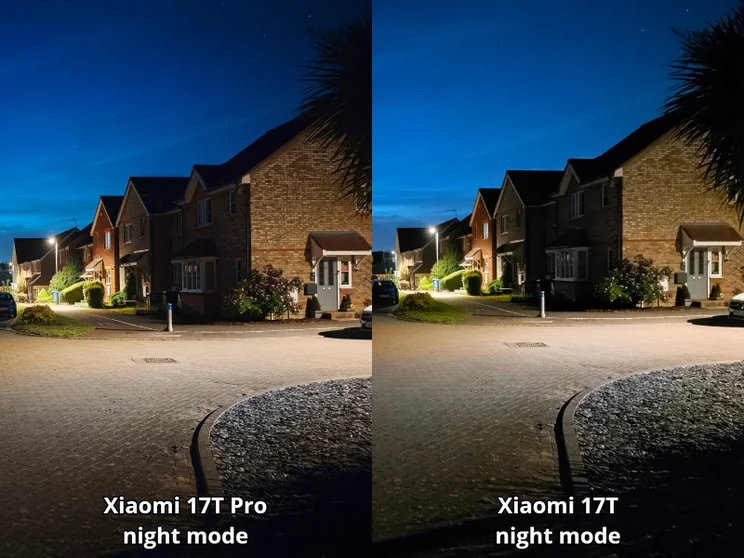
The main camera is the only lens that differs on the Pro model, with a slightly wider f/1.6 aperture (compared to f/1.7 on the standard Xiaomi 17T). This technically allows for greater light intake and we see the small, but appreciated effect of this with night photography.
As you can see below, the Xiaomi 17T Pro etches out just a tiny bit more detail than its little sibling after dark – most notably in the brickwork of the street and house on the right here:
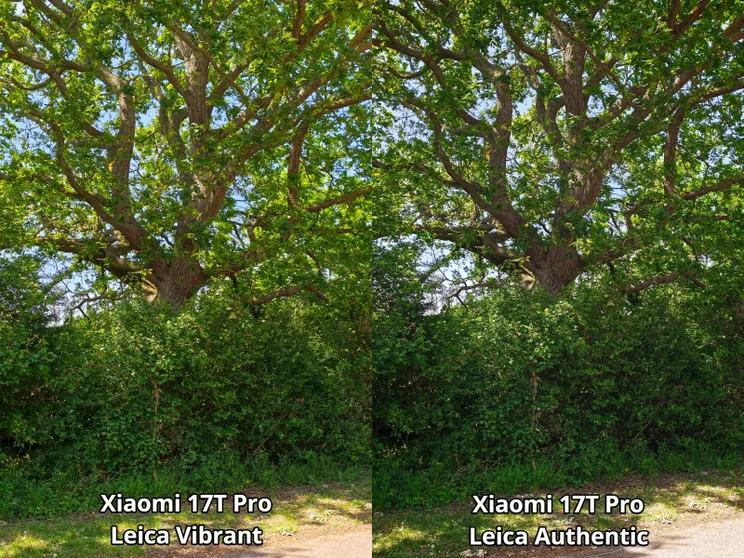
In good light, the 50-megapixel main camera is consistently good at producing bright, punchy shots with gorgeous dynamic range and excellent detail. The colouring is also better than I sometimes see on Xiaomi phones: more natural and less oversaturated. You still get the option to shoot in the Leica Vibrant colour mode if you prefer more punchy shades but I’m happy to see Leica Authentic doing what it says on the tin.
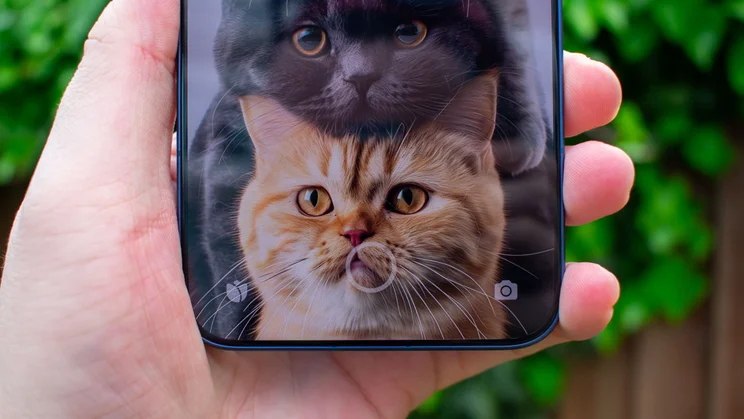
I was psyched to see the f/3 50-megapixel 5x telephoto shooter added to the standard Xiaomi 17T, having become a big fan of it on the 15T Pro last year. So my feelings here are mixed; it continues to be an excellent lens, capturing exquisite portraits (as you can see below) but it also feels less like a must-have here, because why would you not just save money and get the cheaper model?
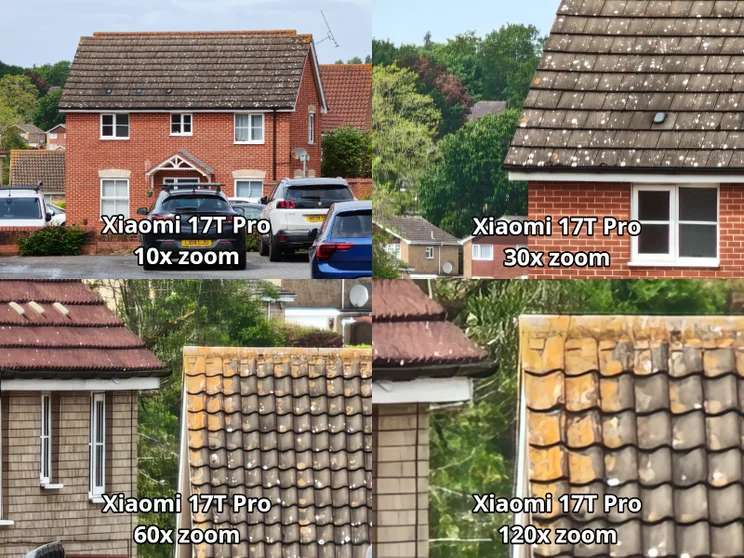
Digital zooming has been upped to 120x but, as tends to be the case, you won’t get particularly good results at this magnification. Shots between 10x and 40x are still solid though, with reasonable detail retention and consistent colour reproduction.
The 32-megapixel (f/2.2) selfie shooter is perfectly competent, producing natural-looking skin tones and shooting video up to 4K at 30fps or 1080p at 60fps.
The one area in which the camera suite is notably superior on the Pro is video. As well as shooting 4K up to 120fps, the Xiaomi 17T Pro can also record 8K footage at 30fps, alongside 10-bit HDR video at 4K/60fps and LOG capture for greater control in editing.
Xiaomi 17T Pro: Verdict
The Xiaomi 17T Pro feels like an excellent alley that fumbled the oop. The hardware, despite only improving on last year in a couple of places, is strong across almost the entire board. Performance rivals some of the best phones in the business and battery life is massively improved. Even the cameras, where I’d liked to have seen some upgrades, don’t actively do anything wrong.
The proverbial fumble here is completely tied to the price. The forces that are putting pressure on phone prices the world over are far out of Xiaomi’s control, so perhaps it’s a little unfair to lay the blame for this at its feet, but we aren’t here to feel sorry for multi-million pound companies. We’re here to decide if you should buy the Xiaomi 17T Pro, and the answer to that is probably not, no.
If you really fancy it, save some cash and get the standard Xiaomi 17T – it’s barely a downgrade but costs quite a bit less. If you’re brand agnostic, I’ll say what I always say when we’re judging phones in this price range right now: you won’t find better value for money than with the OnePlus 15.