To help us provide you with free impartial advice, we may earn a commission if you buy through links on our site. Learn more








- Class-leading performance
- Very good battery life
- Killer cameras
- Display resolution downgrade
- Fiberglass rear feels cheap
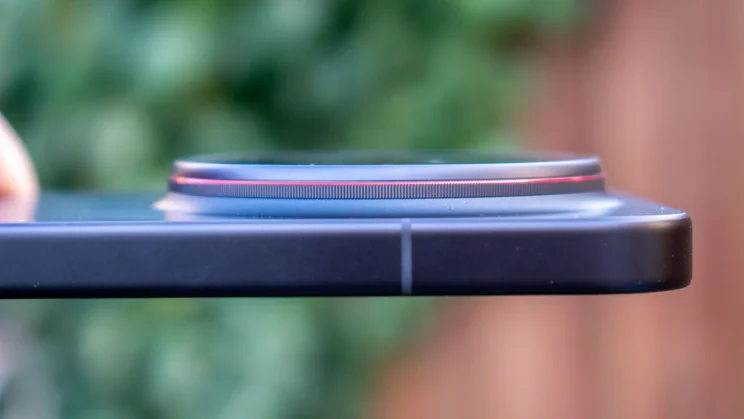
- Bulky camera housing
Though the brand has a relatively strong foothold in the UK market at this point, the Xiaomi 17 Ultra is only the third generation Ultra to reach our shores. This is, barring some China-only releases, the pinnacle of Xiaomi’s smartphone output, with everything and the kitchen sink being thrown at the specs sheet to compete with the most powerful handsets in the game.
At least, that was my impression last year; the Xiaomi 15 Ultra was a hardware force to be reckoned with that had more than enough strength to stand toe-to-toe with the best of Samsung and Apple’s output. Things aren’t drastically different this year but there are some areas in which the 17 Ultra downgrades from its predecessor – and in so doing, potentially puts itself at a disadvantage next to the Samsung Galaxy S26 Ultra and iPhone 17 Pro Max.
Xiaomi 17 Ultra: What you need to know
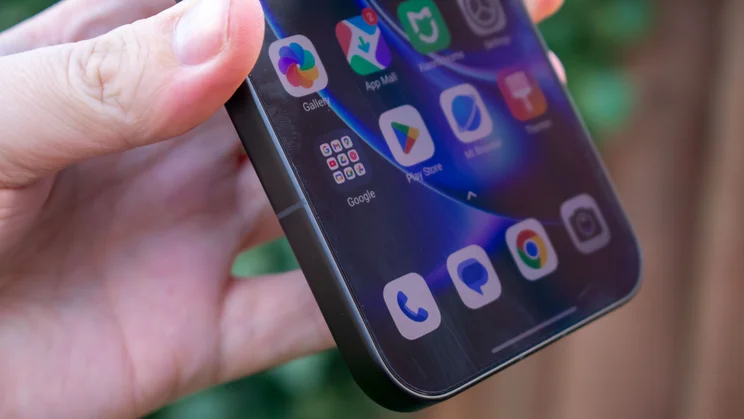
The first thing that caught my eye is that the display resolution is massively reduced here compared to the 15 Ultra (Xiaomi skipped the 16 series to better position its phones as rivals to the iPhone 17 series).
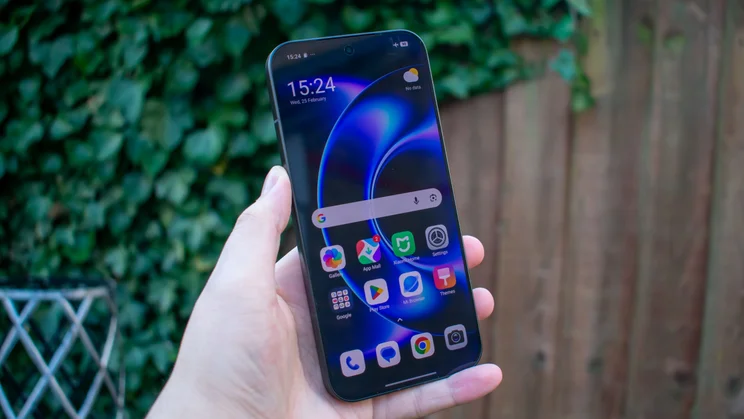
Where the 15 Ultra had a razor-sharp 3,200 x 1,440 resolution – broadly matching the Galaxy S25 Ultra – the Xiaomi 17 Ultra’s screen is 2,608 x 1,200. It’s also larger, at 6.9in vs 6.73in, which means that the PPI (pixels-per-inch) is quite a bit lower; 416ppi is fine enough but, compared to the 522ppi of the 15 Ultra, it feels like quite a drop.
Now, compared to the iPhone 17 Pro Max – which appears to be the benchmark that Xiaomi is most interested in – this isn’t really a problem, as Apple’s powerhouse has a similarly specced screen, with a resolution of 2,868 x 1,320. It just means that next to the 1440p screen on the Galaxy S26 Ultra, the Xiaomi 17 Ultra feels a tad lacking.
The other major change is with the camera system. Where the 15 Ultra had four cameras on the rear, including two telephoto lenses – again, just like the Galaxy S25 Ultra – the 17 Ultra only has three cameras on the rear.
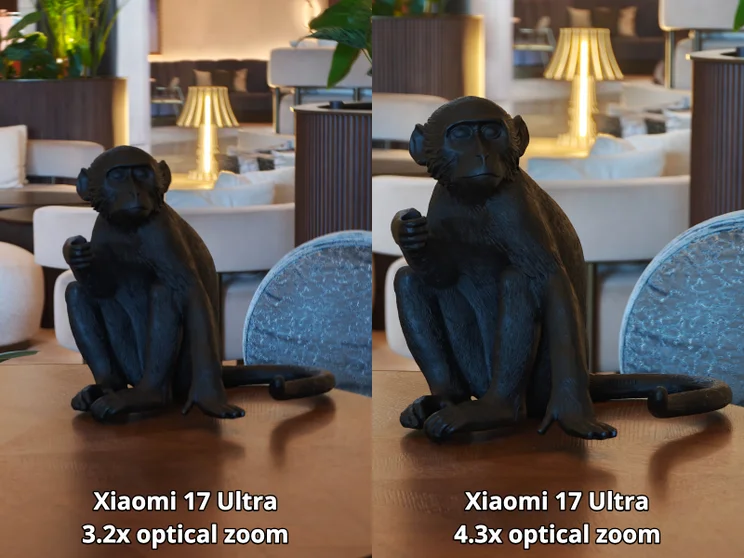
There is an asterisk to that, however. The 200-megapixel telephoto camera now features a variable focal length that allows for seamless transition between 3.2 and 4.3x optical zooms. Considering that the previous two lenses offered 3x and 4.3x optical zooms, respectively, one could argue that this is simply consolidation, rather than consolation.
Elsewhere, the shiny new Snapdragon 8 Elite Gen 5 chipset is tucked away inside, backed by 16GB of RAM and either 512GB or 1TB of storage. The battery is also new, with a larger 6,000mAh cell (compared to the 5,410mAh unit in the 15 Ultra) that supports 90W wired charging and 50W wireless.
Price and competition
The Xiaomi 17 Ultra costs £1,299 at launch, which is the same starting price as its predecessor. That gets you 512GB of storage, while the beefier 1TB model costs £1,499.
This kind of money means that the Xiaomi 17 Ultra is stepping to the very best – and like it or not, that means it’s up against Samsung and Apple. The Galaxy S26 Ultra was announced mere days before the Xiaomi, and starts at £1,279. That’s with 256GB of storage, however, you’re looking at £1,449 for 512GB and a whopping £1,699 for 1TB.
The iPhone 17 Pro Max, meanwhile, has been on shelves for a few months now, and costs £1,199 for 256GB of storage, £1,399 for 512GB and £1,599 for 1TB. This is also the first smartphone to offer a hefty 2TB of storage – but it’ll cost you. Specifically, you’re looking at £1,999 for the privilege.
So while the Xiaomi 17 Ultra doesn’t have as cheap a starting price as either of its main rivals, it does prove to be far more cost-effective for users who need higher storage capacities.
Design and key features
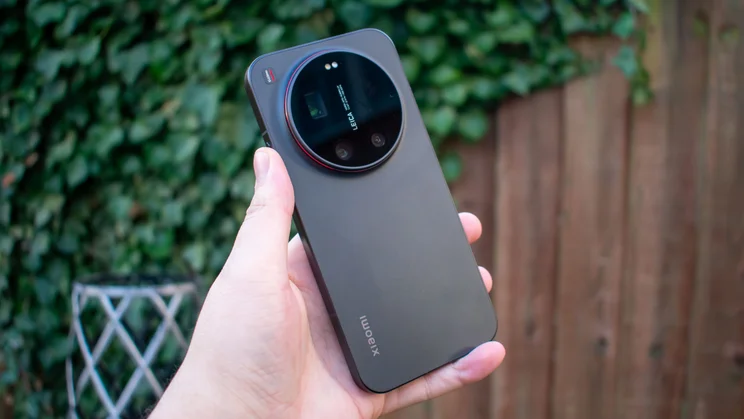
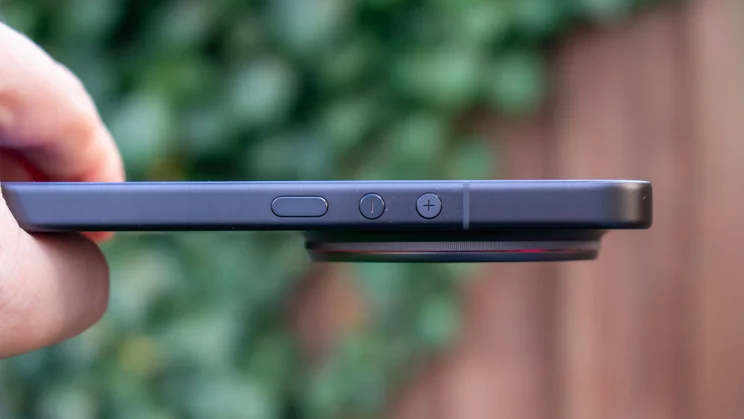
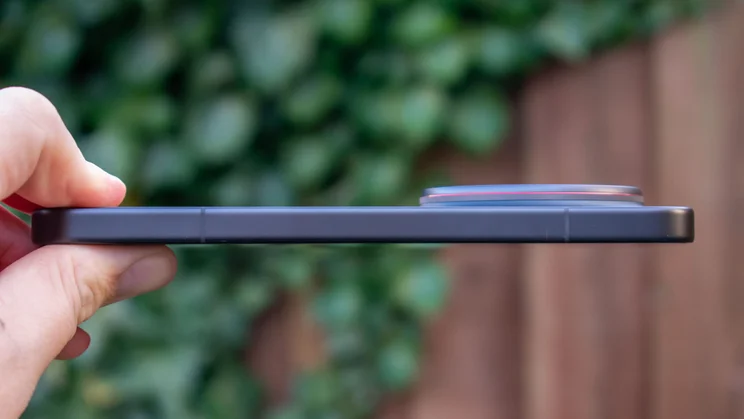
Xiaomi touts this as the slimmest, lightest Ultra model to date; it measures 78 x 8.3 x 163mm and weighs either 218g (for both the black model reviewed here and the white version) or 219g for the Starlit Green design. Both of these are fairly substantial drops from the 15 Ultra, which was quite chunky, at 9.4mm thick, and weighed 226g.
I definitely noticed this difference when using the phone, it sat more neatly in my hand and even after extended gaming sessions and long walks snapping photos, I never felt burdened by the weight of it.
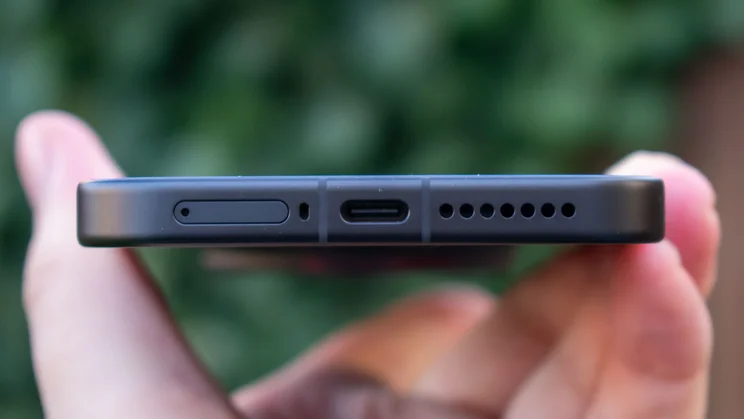
The frame is sturdy aluminium, there’s a layer of Xiaomi’s Shield Glass 3.0 over the display for scratch protection, and the phone is rated IP68 for dust and water resistance, meaning it’s dust-tight and can be submerged in 1.5m of water for up to 30 minutes. So far so good.
One element of the design that’s raising some eyebrows, however, is the use of fiberglass on the rear of the phone. While this isn’t as low quality as the “plastic” that rumours indicated would be used, it still doesn’t feel particularly premium in the hand, especially compared to the silky smooth frosted glass used on the standard Xiaomi 17.
Another concern on the rear is the camera module. This raised circular platform is housing one fewer lens now – though, in fairness, it does need space for the moving aperture on the telephoto – so it would have been nice to see its footprint reduced a little. As it stands, the camera housing is still prone to getting caught on a pocket edge every now and then.
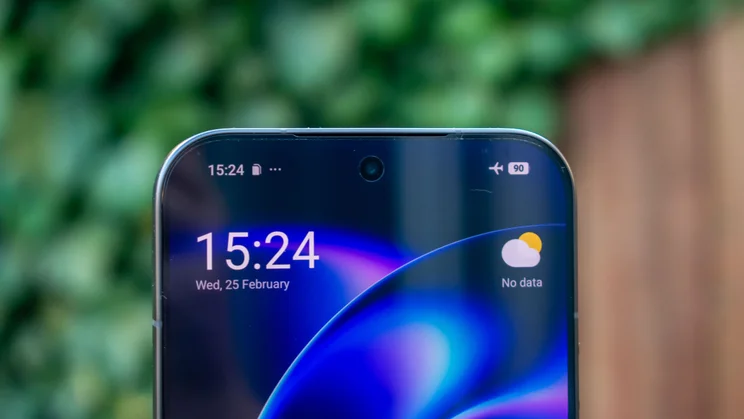
Features are on the better side of things, with a nippy ultrasonic fingerprint sensor in the display, equally efficient face unlocking via the selfie camera and, most notable of all, a 3D TOF sensor. This is incredibly rare among Android phones and allows you to use secure facial authentication for banking apps and the like, in the same way Apple’s TrueDepth camera system supports.
My only quibble with the features is that, at the time of writing, it’s looking like the Xiaomi 17 Ultra only supports up to Bluetooth version 5.4, whereas the 15 Ultra supported 6.0. Not the biggest issue and unlikely to affect most people but, once again, just an odd feeling of downgrading for such an expensive phone.
On the software side of things, the Xiaomi 17 Ultra releases with HyperOS 3.0, based on Android 16, and is set for 4 years of OS updates and 6 of security patches. This is another area in which Xiaomi is really behind the competition – Samsung, Google and Honor all offer seven years of updates for their flagship phones.
Broadly, I’m also just not a fan of HyperOS. It feels messy and disorganised, so intent on copying Apple that it loses everything that works so well about the stock Android software, and it arrives absolutely flooded with bloatware.
Display
The resolution drop is a disappointment, and I’d fault nobody for wanting the highest quality available for this kind of money – you’ll find a more favourable pixel per pound ratio with the Samsung Galaxy S26 Ultra – but otherwise, this is a very good screen. Peak brightness recorded at 1,061cd/m2 on adaptive mode with a torch shining on the light sensor, while firing up my HDR brightness test saw it top out at 2,014cd/m2.
Colour accuracy is right on the money, too. Xiaomi has thankfully simplified its colour profile selection from six down to the only two you really need; Vivid is ideal for making colours pop in your games and streaming shows, while Original Colour Pro shoots for authenticity. On the latter, I recorded an sRGB gamut coverage of 98% with a volume of 102.1% and the average Delta E colour variance score came back at 0.97 – we’re looking for 1 or under here, so that speaks to excellent colour accuracy.
Performance and battery life
The Snapdragon 8 Elite Gen 5 is the most powerful processor known to Android phones right now, and the Xiaomi 17 Ultra might just be the best showcase yet of its raw speeds.
In the Geekbench 6 CPU tests, the 17 Ultra achieved the highest result of any phone we’ve tested in the multi-core portion, as well as the best result for an Android phone in the single-core test – Apple’s iPhone 17 Pro Max just about held onto its edge there.
Though I haven’t tested it yet, it’s worth noting that the Samsung Galaxy S26 Ultra, which uses a slightly overclocked “for Galaxy” version of the Snapdragon 8 Gen 5, will likely surpass these scores. However, I’d also like to point out that when we’re talking about these kinds of speeds, that difference is unlikely to be noticeable in daily use. The Xiaomi 17 Ultra has all the power you’ll need and then some.
In tandem with that healthy 16GB of RAM, the Snapdragon 8 Elite Gen 5 also makes the Xiaomi 17 Ultra a gaming powerhouse. I booted up Genshin: Impact and cranked the graphic settings up to 11 to put it to the test, and frame rates remained excellently smooth and fluid, even during some of the more chaotic (and visually demanding) battles.
Backing up my hands-on testing is the result in the Geekbench 6 Vulkan GPU test. Here, higher numbers indicate smoother, more efficient graphics gameplay, and the Xiaomi 17 Ultra got one of the best results I’ve ever recorded – only getting slightly pipped by the OnePlus 15.
Having recently tested a few phones with batteries that exceed 7,000mAh in capacity, I may have become a bit spoiled. The Xiaomi 17 Ultra’s result of 34hrs 29mins is certainly nothing to sniff at – but when phones like the OnePlus 15 and Oppo Find X9 Pro are exceeding 40 hours in this test, I can’t help but be a little disappointed.
When you’re paying this kind of money, you want the best. And the Xiaomi 17 Ultra is very good for battery life, but it’s not the best.
The upside of that smaller battery is that charging is generally pretty nippy. 24 minutes on charge brought it up to 50% but things slowed down a little from there, with a full charge taking 1hr 10mins. Still, if you need a quick top-up, it’s nice and efficient.
Cameras
After taking the cameras out for a spin, I’ve decided that the consolidation of the telephoto cameras is no real loss – both magnifications work excellently and offer different enough results to be worth including, and you get 85mm and 90mm focal lengths in-between the extremes for good measure.
You can see below how each frames the portrait differently, and just how much exquisite detail that 200-megapixel sensor captures.
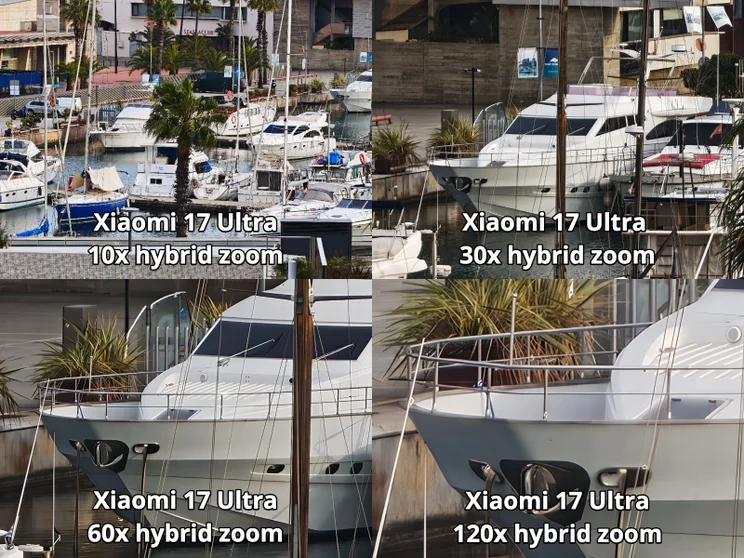
Beyond the optical zooms, the Xiaomi 17 Ultra can hit a hybrid zoom up to 120x. At that extreme, you’ll see some fairly heavy-handed AI intervention to combat the oversharpening, but I was generally impressed with the quality of shots up to 60x.
The 50-megapixel main camera impressed, too, plucking out plenty of detail and balancing tricky lighting conditions like a bright grey winter sky.
Night photography is one of those areas in which the phone does what it intends to do well, but whether or not you like the results is a matter of personal taste. The detail retention is solid but the brightening is a little overzealous for my taste, losing that ”night” feel. The colours are a little overly saturated, too.
The ultrawide is decent enough, with a colour tone that matches the main lens and solid detail in the middle of the frame, but the edges show some AI smoothing that seems to be trying to counteract the traditional blurring we see in these spaces from widened shots.
Finally, video recording is up there with the best, shooting 8K at 30fps, 4K up to 120fps, and including options for 10–bit HDR recording and Dolby Vision footage.
Xiaomi 17 Ultra: Verdict
I have my problems with the Xiaomi 17 Ultra – the software is still among my least favourites, the camera module is too chunky and the lower screen resolution and cheap feeling of the fiberglass rear don’t befit a phone of this price. But even still, it gets enough right elsewhere to earn my recommendation.
Performance is among the best of any phone that we’ve tested to date, the cameras are sharp, versatile and accessible, battery life is decent and great strides have been made to deliver a slimmer, lighter and altogether more manageable flagship phone. Most importantly, however, is how much cheaper it is than rivals’ 512GB and 1TB configurations. If you tend to need more space on your phone, I’d say save yourself between £100 and £200 and pick the Xiaomi 17 Ultra over the latest Samsung or Apple phones.