To help us provide you with free impartial advice, we may earn a commission if you buy through links on our site. Learn more




- Vibrant colour choices
- 1080p display at least
- MicroSD slot and headphone jack
- No OS updates
- Achingly slow
- 60Hz display
- No 5G
Most modern smartphones, even the majority of those towards the cheaper end of the spectrum, achieve such a base level of competence these days that you’d be hard pushed to find one that is actively bad – worst case scenario, you end up with a middling handset that will serve you fine, but other options would have been better.
And then we have the Motorola Moto G17. This is a budget phone that is determined to see how much (or how little, to be precise) it can get away with, stripping back to a barebones experience and somehow managing to feel like bad value despite its dirt-cheap price.
It is the sum calculation of Motorola’s worst instincts and I am taking time out of my busy schedule to enforce this very important point: do not buy the Motorola Moto G17.
Motorola Moto G17: What you need to know
Mileage varies massively with the ultra-budget Moto G line, and I’d be lying if I said that the Moto G17 was the first of its kind to disappoint me, but I can’t recall ever being so utterly baffled by a budget phone’s audacity.
Normally, I’d list what a phone offers in this section but, as you may have already surmised, this is set to be quite a negative review, so let’s instead go over what it lacks.
There’s no 5G support, the display is limited to a 60Hz refresh rate, the 2.0GHz MediaTek Helio G81 Extreme chipset (named ironically, I assume) makes using the phone frustratingly slow and the meagre 4GB of RAM does nothing to improve matters.
Most damning of all is that Motorola is offering up no OS updates, despite releasing the Moto G17 with the already outdated Android 15 platform.
Price and competition
The Motorola Moto G17 launched with an asking price of £150 back at the end of January (I’ve been very busy), and frankly I am astounded that it hasn’t been massively reduced in the time since then. I still wouldn’t be recommending it but it would be a little less egregious at £100.
Let me put that price into context. For just £9 more, you can get Motorola’s far superior Moto G56, which supports 5G, is faster, has a smoother 120Hz display, takes better pictures and actually receives OS updates – albeit only to Android 17.
More to the point, you can head over to Back Market and pick up a refurbished Google Pixel 7 in good condition for that same £150 (at the time of writing). Despite being three generations old, the Pixel 7 still offers software support until late 2028, has superior performance, better cameras and a far nicer AMOLED display.
If it was my money – or, indeed, a friend or family member asking for my humbly expert opinion – the refurbished Pixel is a far more appealing option. If you’d prefer a new phone, go for the Moto G56.
Design and key features
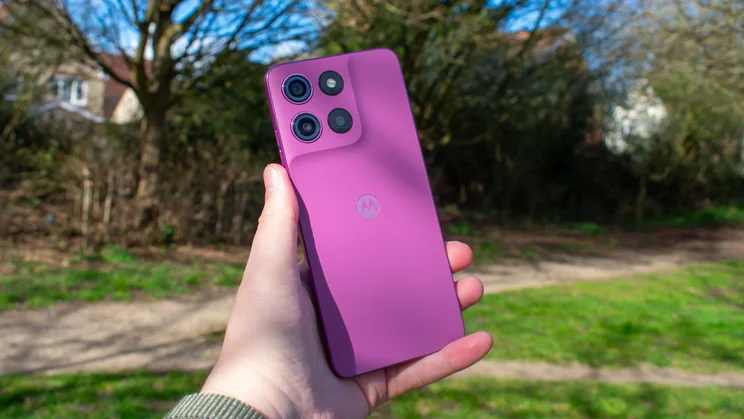
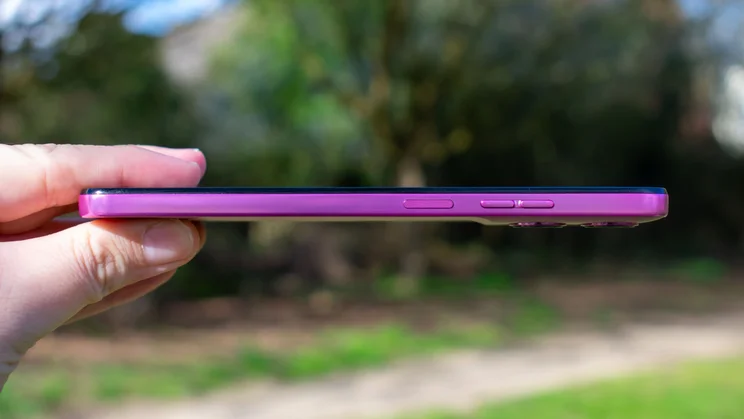
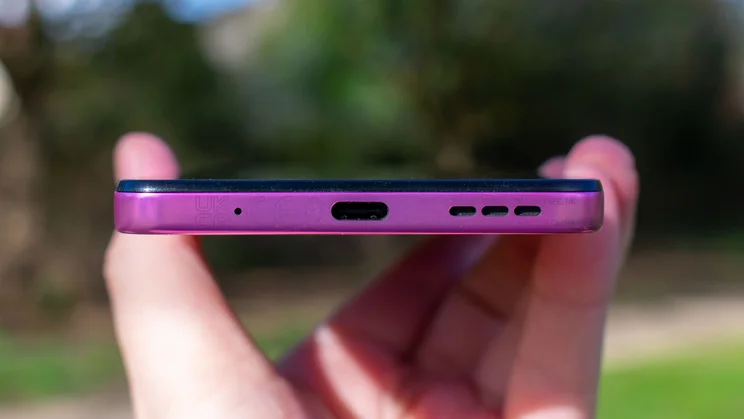
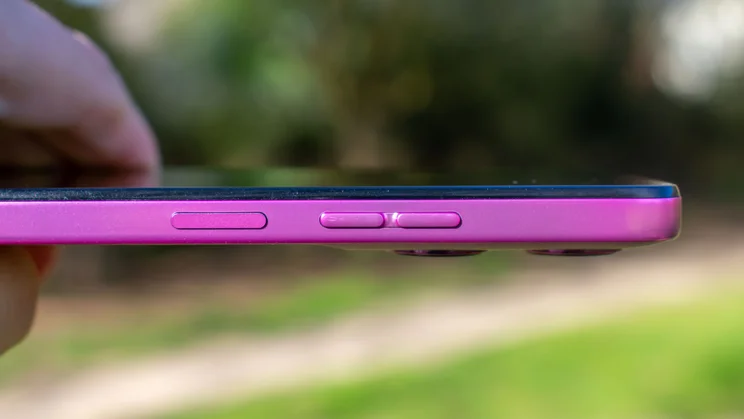
Motorola, for all of its sins that we will be delving into throughout this review, knows how to design a budget phone. And indeed, the Moto G17 doesn’t look too bad at first glance. It’s reasonably slim, with its 76 x 8.2 x 166mm dimensions snuggling neatly into the hand, and it tipped my scales at 191g, which isn’t bad, either.
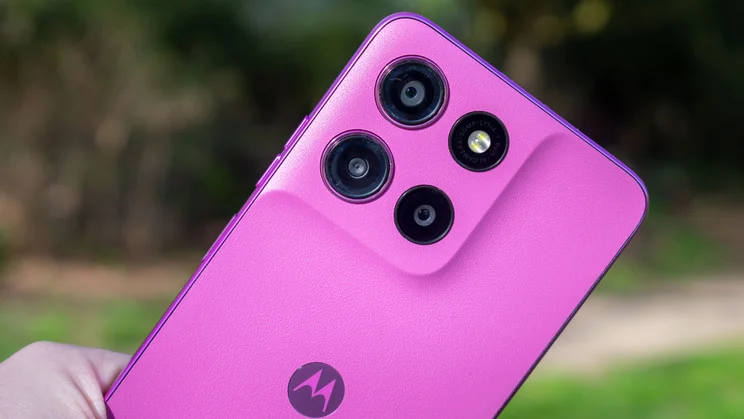
The frame is a glossy plastic and the rear is coated with the cheapest version of Motorola’s vegan leather; it feels more rough than pricier models but is still fine enough. You even get some solid protective features, with Gorilla Glass 3 over the display for scratch protection and an IP64 dust-proof and splash-resistant rating.
The colors are decent, too. My review sample came in this lovely pink-ish Bordeaux colourway, but you can also pick the vibrant Alaskan Blue or the more subdued Evening Blue – all Pantone-approved shades, as with most Motorola phones these days.
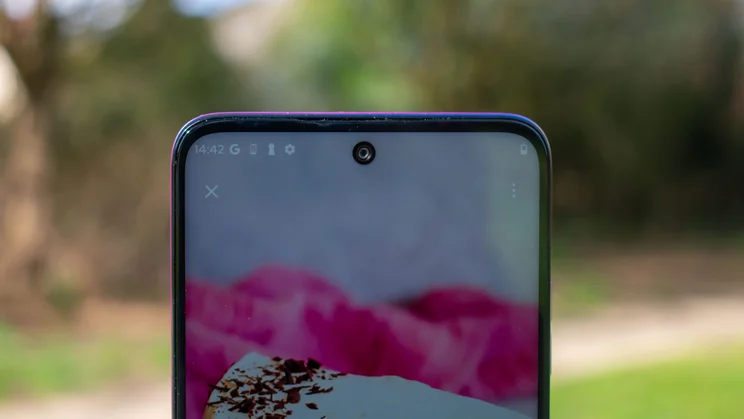
Features are fine, with a fingerprint sensor in the power button on the right edge and reasonably efficient face unlocking via the selfie camera, Bluetooth 5.4 and Wi-Fi 5 connectivity and a pair of stereo speakers that supposedly support Dolby Atmos – keep your expectations in check here, they sound fine but not much more than that.
Something actually positive to note here is that Motorola has included a microSD card slot that allows you to expand the 128GB of internal storage by a further 1TB, as well as a 3.5mm headphone jack. Both are quite rare for phones these days.
Back to the negatives, Motorola already has a reputation as not being the best for software support – four-figure flagship phones like the Motorola Razr 60 Ultra are being paired with paltry three years of OS updates, while rivals Samsung, Google, Honor all support phones that cost hundreds less for a blanket seven years. Even when the support is there, users report massively delayed updates across the entire range of Motorola phones, sometimes taking months longer than rival brands.
Even by these incredibly low standards, the Moto G17 falls laughably short. It launched with Android 15 – never mind the fact that Android 16 started rolling out some seven months earlier – and will be receiving no OS updates. You do get two years of security patches, at least, but that too is well behind the curve. By comparison, the Moto G56 was pledged two OS updates and four years of security patches from release.
Display
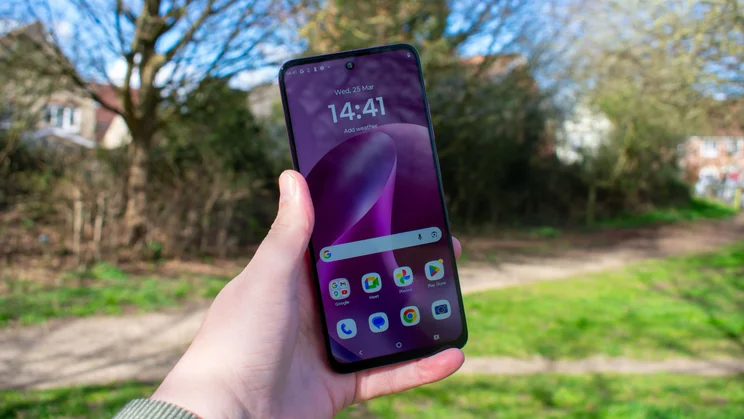
The display is probably the most acceptable part of the Moto G17. It has a 1080p resolution and is capable of decent brightness, hitting 645cd/m2 on manual mode and rising to 886cd/m2 on adaptive brightness with a torch shining on the light sensor.
Colours feel fine enough in general use – you have the Vivid profile by default, punching things up, but there’s also Natural for more authentic shades – but digging in with my trusty colourimeter showed some flaws. On the Natural profile, I recorded an sRGB gamut coverage of 92.5% with a volume of 94.5%, which isn’t great but not that much worse than the Moto G56 (93.5% and 96.2%, respectively).
More of a problem was the average Delta E colour variance score, which came back at 2.26, worse than the Moto G56’s (already too high) result of 1.72 and quite far from our target of 1 or under.
Rounding out the list of problems is a soft contrast ratio of 1,122:1, which results in text and icons lacking the sharpness you’d expect from other smartphone screens, and a mediocre black level of 0.37cd/m2, which means that areas that are supposed to be jet black instead appear as dark grey.
Worst of all is the 60Hz refresh rate, a relic of the past that has all but been permanently ditched from Android phones (Apple is more stubborn, sticking with 60Hz on the £499 iPhone 17e). If you have experience with a 90Hz or 120Hz display, you’ll feel this downgrade immediately, and it makes an already slow phone feel even more laggy and clunky. What’s most egregious is that the Moto G13, two generations ago, had a 90Hz refresh rate – albeit with a weak 720p resolution.
Performance and battery life
I have to catch myself when going from testing flagship phones to assessing the performance speeds of dirt-cheap handsets like the Moto G17 – it can be quite akin to pulling off the motorway directly into a school zone.
Even with expectations tempered into fairer territory… the Moto G17 is painfully slow. In the Geekbench 6 CPU tests, it showed precisely zero improvement over the Moto G13 – again, a phone from two generations back. You can see below how much better performance is on the Moto G56, with a staggering lead of 231% in the single-core results and 171% in the multi-core.
Things pick up with lightweight gaming, at least. RAM boost diverts power to reduce the lag, making things like Candy Crush run relatively smoothly. Anything more heavy-duty than that is beyond the G17’s capabilities but, in fairness, I wouldn’t expect a phone of this price to handle detailed 3D games.
The 5,200mAh battery is on the better end of things but stamina relies on decent power efficiency from the processor, too – and we’ve already covered how unimpressive that is. So we don’t get class-leading battery life here but a result of 21hrs 59mins is fine: it’s a little better than the Moto G13 and falls in the same neck of the woods as the Moto G56 and just a bit behind the Google Pixel 7.
Charging technically supports up to 18W but it managed to eke up to 20W in testing with my 120W charger, bringing the battery up to 50% in around 44mins. It slowed down to roughly 10W from there, taking 1hr 38mins to hit 100%. By comparison, the Moto G56’s 30W charging gets the job done in 1hr 15mins.
Cameras
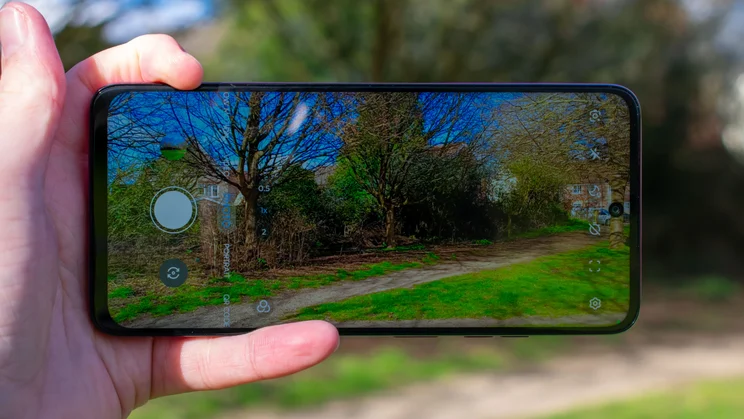
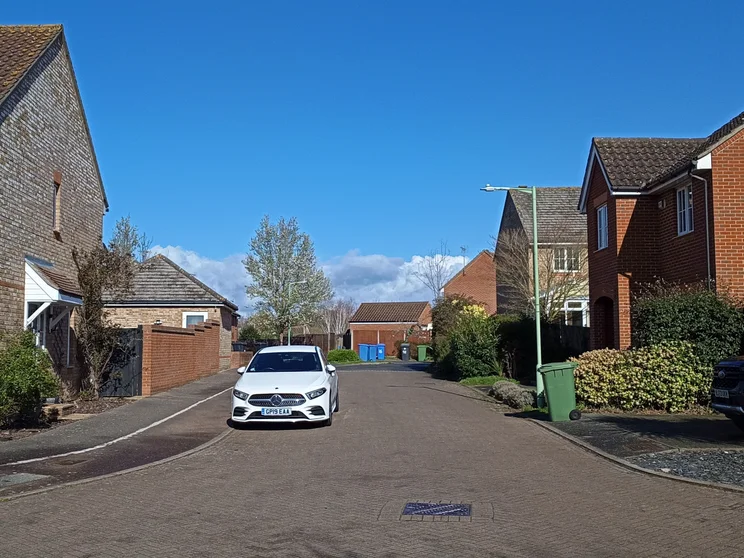
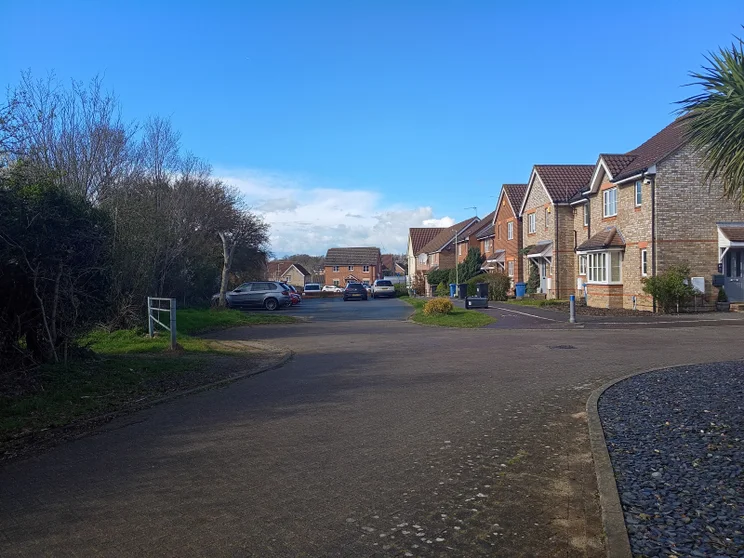
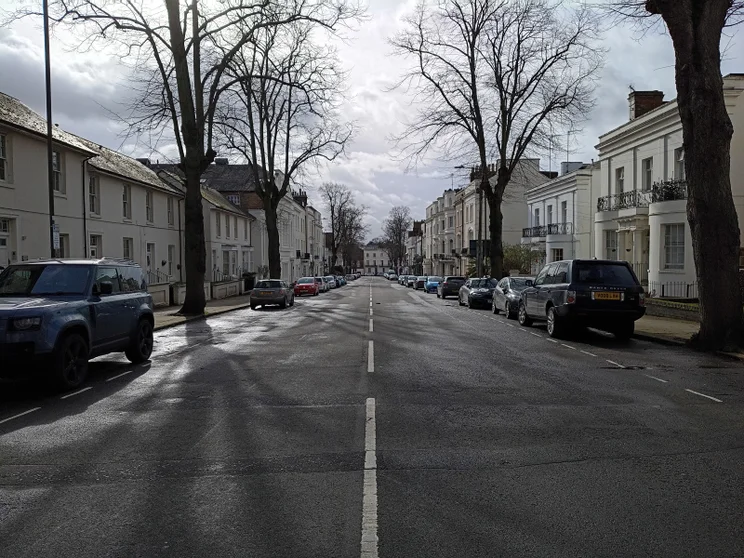
The 50-megapixel (f/1.9) main camera produces shots that, much like the phone itself, look fine enough at first glance, but fall apart under closer inspection. The colouring is nice and punchy and exposure is generally well handled, but the level of detail is rather weak and I noticed a fair amount of visual noise in the skies of several shots.
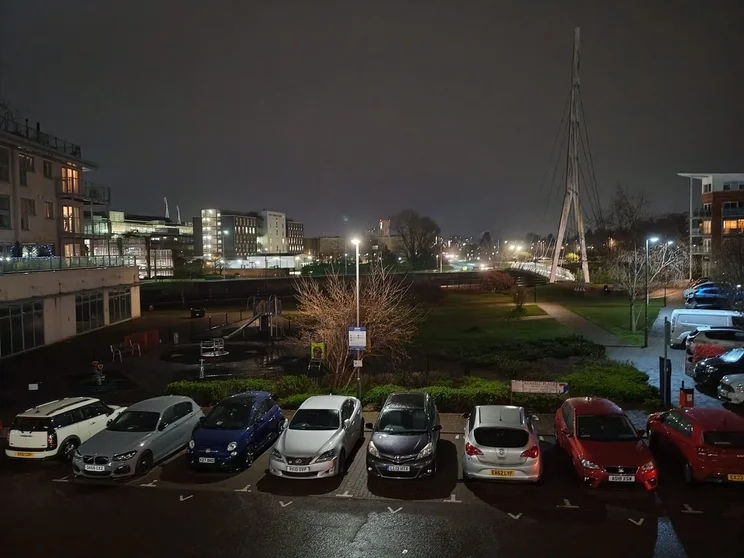
That much visual noise in good lighting left me with little faith in the night mode and, sure enough, skies are flooded with visual noise here too and detail is mediocre throughout. Colouring isn’t the most vibrant but with several good light sources around, the exposure isn’t bad, at least.
The 5-megapixel (f/2.2) ultrawide feels superfluous. Colouring is fine enough on bright days but the level of detail is abysmal. The visual noise is even worse here, too – you can see below just how mediocre the results are:
Detail is a little better on the 32-megapixel (f/2.2) selfie camera, and skin tones are acceptable, but the processing for portrait shots is rather hit and miss. See below, for example, where the object separation has decided that the tree in the distance is part of my hair, giving me an Alfalfa-esque sticky-out bit.
Video is a meagre as it gets, recording 1080p at 30fps front and rear. Results are middling on the detail front and quite choppy, with the lack of any kind of stabilisation apparent. You honestly won’t fare much better with the Moto G56 (these are very cheap phones, after all) but that at least shoots 60fps on the rear camera.
Motorola Moto G17: Verdict
I really wanted to rate this one star, just on principle. It’s an insultingly mediocre offering from one of the most established brands in the business who really should know better. But my cooler head prevailed and I landed on two stars – for all of its many faults, the Moto G17 functions as a phone, has okay battery life, a serviceable display and takes reasonable pictures with the main lens. It is an exercise in achieving the absolute bare minimum.
The complete lack of OS updates is enough by itself for me to recommend you avoid this phone like the plague but the soft 60Hz display, sluggish performance and mediocre cameras are further nails in a well-deserved coffin. Your money is better spent on the Motorola Moto G56 or, if you’re open to a refurbished phone, the Google Pixel 7 – both are far better value for this price.