To help us provide you with free impartial advice, we may earn a commission if you buy through links on our site. Learn more
- Compact and well made
- Great performance
- Good results with the main camera
- Display limited to 60Hz
- Mediocre battery life
- No telephoto or ultrawide camera
The iPhone 17e is the cheapest iPhone you can purchase. It’s £200 cheaper than the iPhone 17 and costs £400 less than the iPhone Air; and, as a result, it’s a lot more limited than those phones. But, in some ways, that doesn’t really matter.
Apple has made all the cuts in places that are – well – just about acceptable and the result is a smartphone that will remain desirable to the iPhone-buying masses, especially at £599. But unlike the surprisingly wonderful MacBook Neo, the iPhone 17e does not stand out as a value champion; there are plenty more viable Android handsets jockeying for position as the best mid-range smartphone.
What you need to know
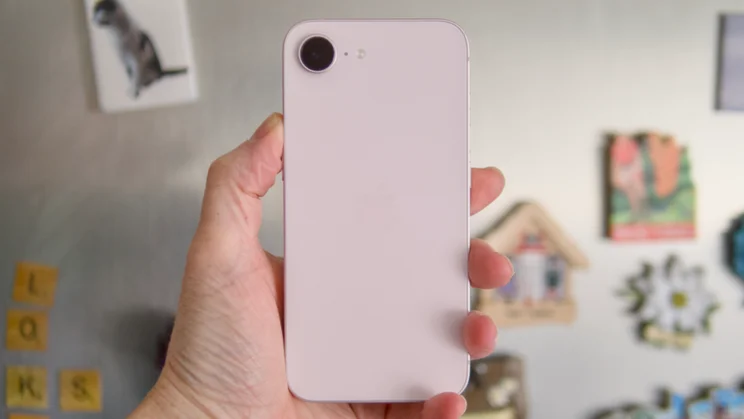
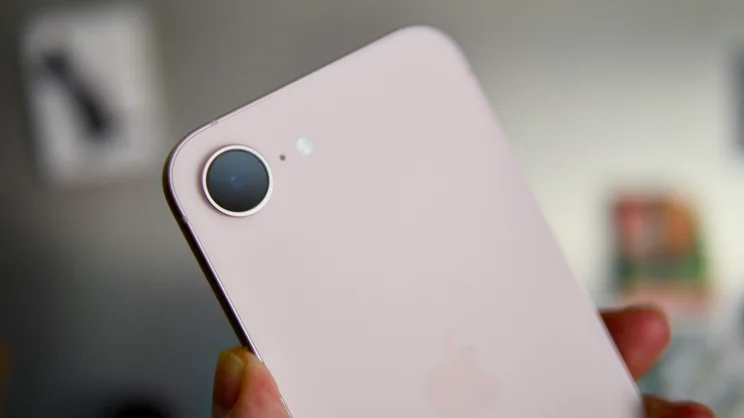
There are three key pieces of information that prospective purchasers of the iPhone 17e need to know before splashing the cash. The first is that it only has one camera – no telephoto or ultrawide. The second is that its battery life is mediocre (more details below). And the third is that the display only refreshes at 60Hz.
There are other cutbacks, of course, but these are relatively minor compared to the big three. And if any of these are dealbreakers for you, you need to look elsewhere: up the iPhone range the 17 or 17 Pro, or sideways at one of the many Android alternatives.
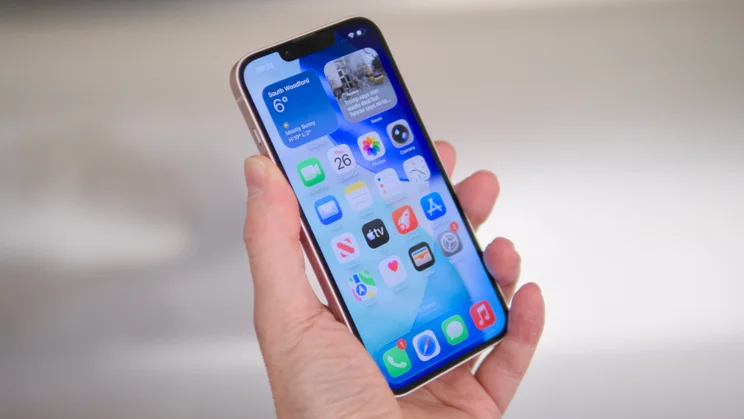
Otherwise, the iPhone 17e is definitely one for your shortlist: a smartphone running iOS 26 with a 6.1in OLED display, the same base Apple A19 processor at its heart as the one in the iPhone 17, 8GB of RAM and 256GB of storage on the base variant, plus a single 48MP Fusion Camera that produces, in the main, great photos.
Price and competition
You probably already know this, but it’s worth reiterating: the base 256GB iPhone 17e is £599, or £200 less than the standard iPhone 17, which is a pretty big price gap. If you’re looking to save money and only an iPhone will do, the lack of an ultrawide camera and shorter battery life isn’t going to hit too hard. Neither is a disastrous shortcoming.
However, when you put the iPhone 17e in the company of its main Android rivals, then the conversation gets a little tougher. Phones such as the Google Pixel 10a (£499), the OnePlus 15R (B0FVY9QBPH £519), the Xiaomi 15T Pro (B08NB4WG5X from £499) and the Nothing Phone (4a) Pro are all good bets here and all are more fully equipped than the iPhone 17e – and cheaper.
The Nothing Phone (4a) Pro and Xiaomi 15T Pro, are of particular note because, both include telephoto and ultrawide cameras to supplement their 50MP main shooters. Both also have larger screens with 144Hz refresh rates, while the OnePlus 15R has much longer battery life. None have access to the Apple App Store or run iOS, of course, which will be enough to put off fans, but Android does have its advantages. Gemini is superior to Siri for starters – and you can download and install pretty much any app from Google Play anyway.
Design
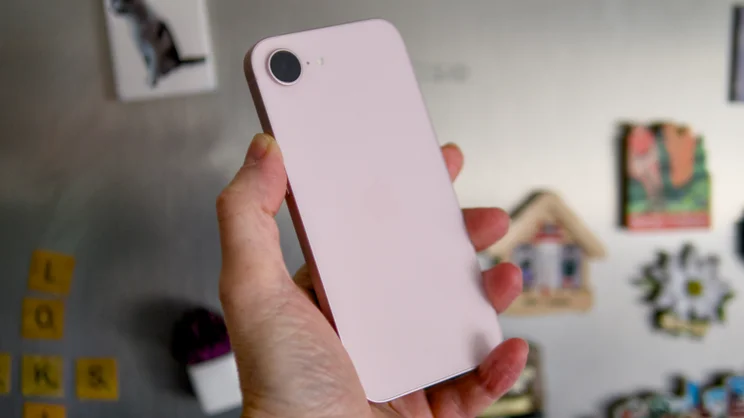
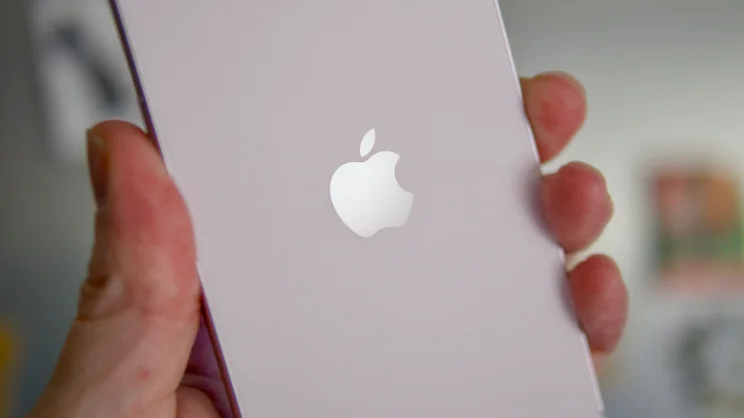
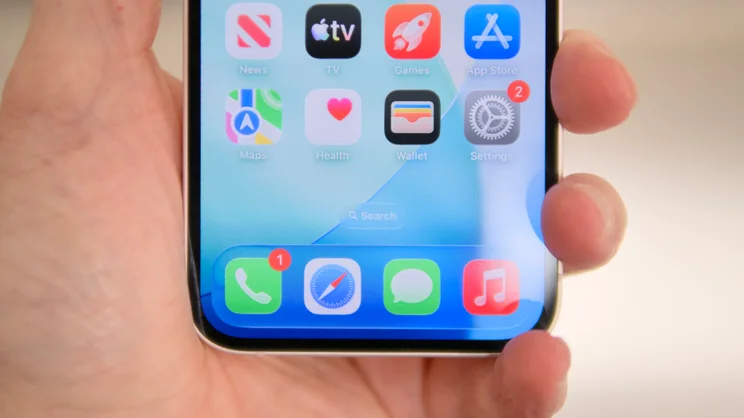
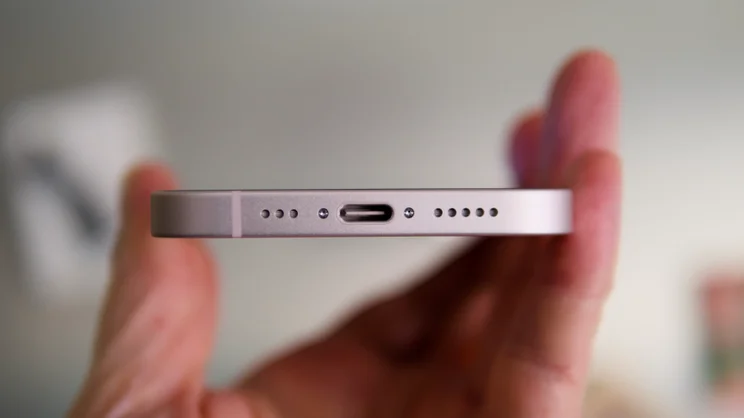
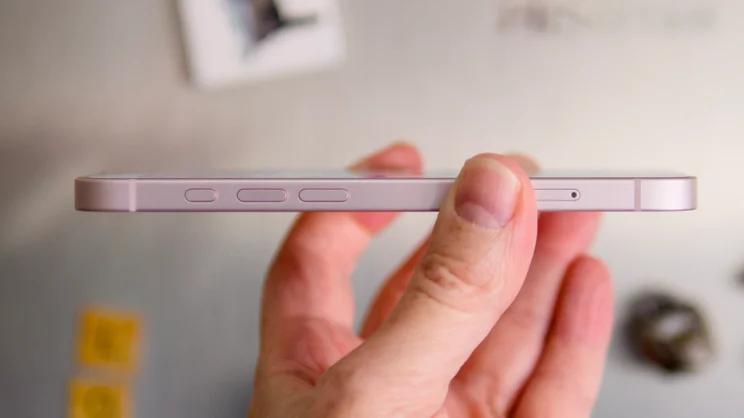
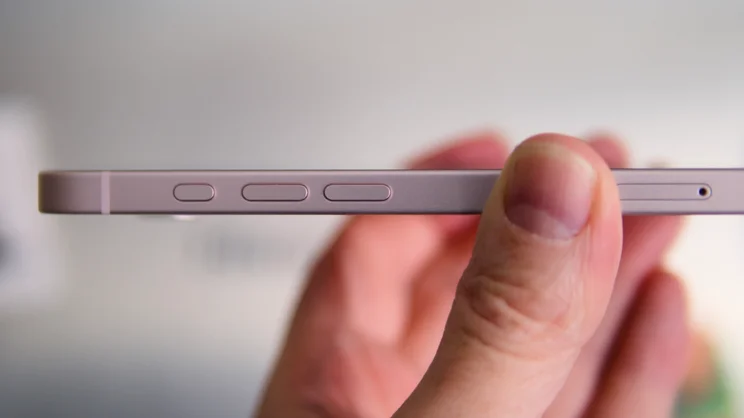
Physically, the iPhone 17e is unadventurous, but it is classic Apple and there’s nothing wrong it it at all. The frame is constructed from matte-finish aluminium that feels soft and silky under the finger, the rear from frosted glass. And the buttons are all in familiar places: the Siri button on the right and the volume and customisable Action key on the left. The Camera Control button has been sacrificed at the altar of the cost cutting gods, however.
Durability is decent. There’s IP68 dust and water resistance (meaning it’s dust tight and can be submerged in 6m of water for up to 30 minutes) and the screen is protected by Ceramic Shield 2, which should protect the expensive display from scuffs, cracks and scratches. Don’t be tempted to skip getting a case for this phone, though, as the rear glass isn’t as tough, and it will be probably be expensive to replace. Apple is charging £145 for the official iPhone 17 replacement.
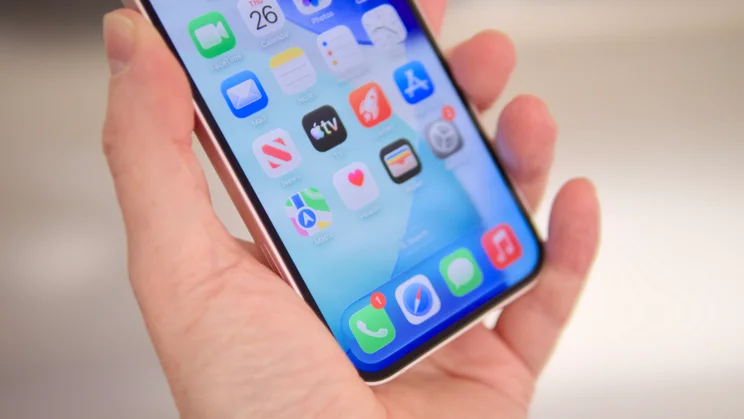
That’s a shame because I think the new “soft pink” colourway (the phone is also available in white and black), as pictured in this review, is rather fetching – and it’s great at resisting greasy fingerprint marks, too.
Display
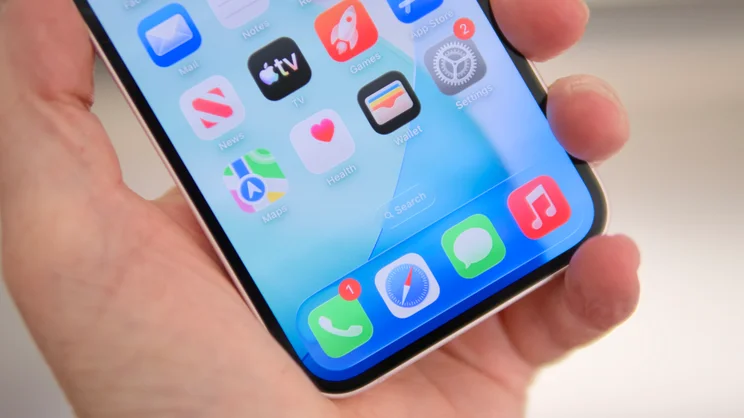
The display is at once both inferior and superior to the iPhone 17’s. I’ll start with the negatives, and there are a few: first, it only refreshes at 60Hz, where its pricier sibling refreshes at up to 120Hz, and this is something you really notice if you have any experience with 90Hz or 120Hz phone screens.
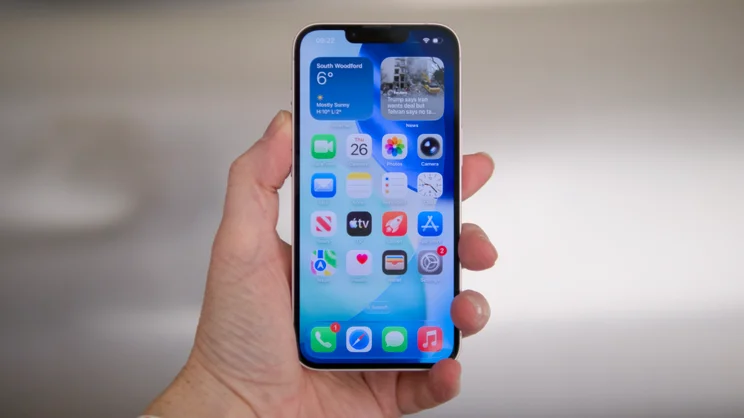
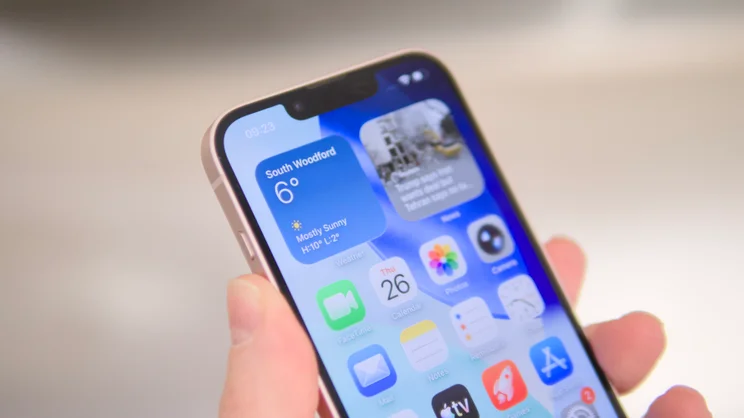
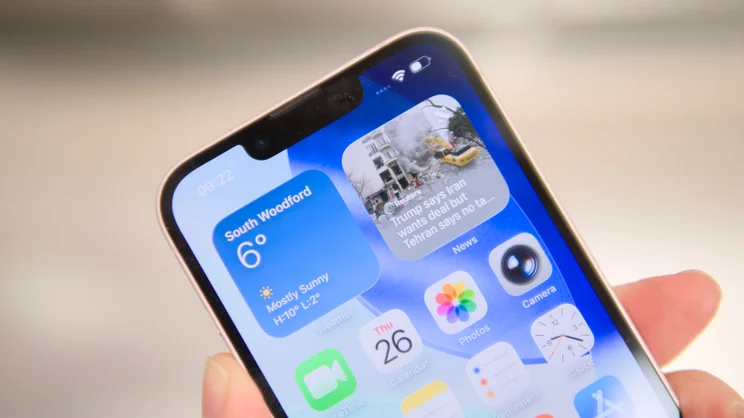
Second, it lacks the iPhone 17’s full-screen, always-on display, which is one of my favourite features of that particular handset. I’ve really missed it when using a phone without it in the past and it’s a shame Apple chose not to include it here. Third, the large bathtub notch remains, which both eats into your screen real estate and is a signal that the phone has neither the iPhone 17’s Dynamic Island notifications nor its snazzy zooming and panning Centre Stage selfie camera.
Still, I did say there were positives, didn’t I? The first of these is the size. Like the iPhone 16e that preceded it, the iPhone 17e has a 6.1in screen, making this the smallest phone in Apple’s current lineup as well as the cheapest. No, it isn’t the titch that the iPhone 13 mini was, but this is about as small as modern smartphones tend to get.
The second is that it’s still a decent screen once you’ve got your peepers locked on it. Brightness peaks at a measured 1,078cd/m2 during HDR content playback (you’ll need the phone in auto brightness mode in bright ambient light to experience this), contrast is as always with OLED effectively perfect, colours look lovely and vivid and colour accuracy is excellent.
For SDR material, I recorded an average Delta E of 0.98, which is basically as good as it gets. And it’s a stunner for watching HDR movies and TV shows on, too.
Cameras
The same theory holds true for the camera, which has weaknesses and strengths. It’s obvious to see where it falls short: there’s no telephoto or ultrawide camera and I’ve already mentioned the lack of Centre Stage camera on the front. That leaves us with one 48MP f/1.6 26mm main camera on the back, and one 12MP f/1.9 True Depth, Face ID camera on the front.
I’m not sure that this would be an issue had Apple specified the same hardware as in the iPhone 17 or iPhone Air, but it hasn’t. The 17e’s camera has a smaller, 1/2.55in sensor (the 17’s is 1/1.56in), it only has standard OIS not sensor-shift tech, which means less light gathering capability and that, in turn, means lower quality in bad or low light.
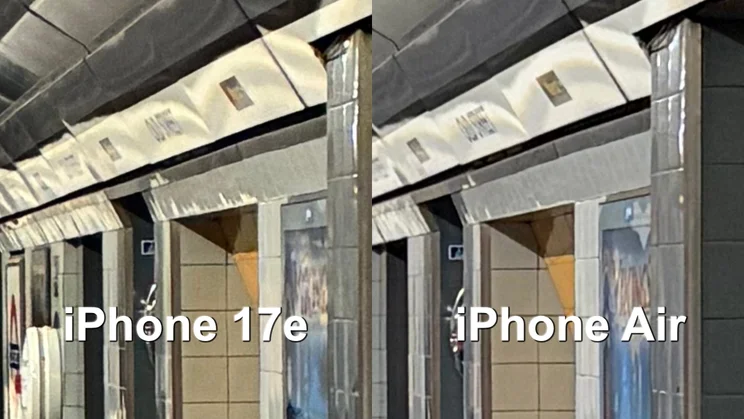
Still, the ISP (image signal processor) in the A19 processor will be doing much of the heavy lifting here, and I don’t think that the differences I found in testing would be hard to live with. I’ve compared the 17e’s output the iPhone Air’s below, and although there are clear areas of difference, you can only see them when you inspect the results closely.
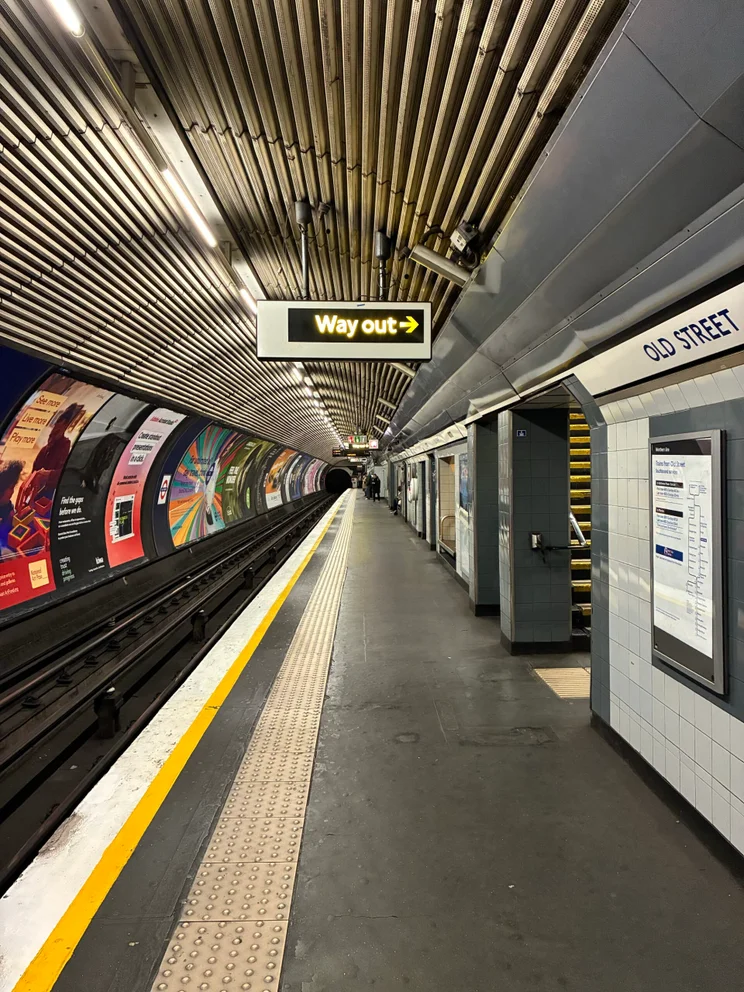
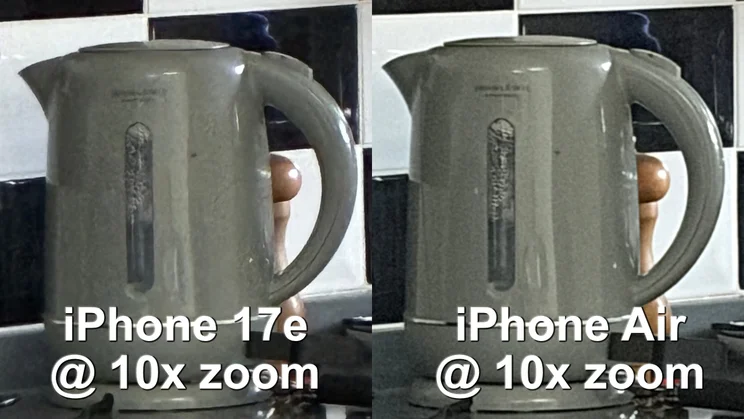
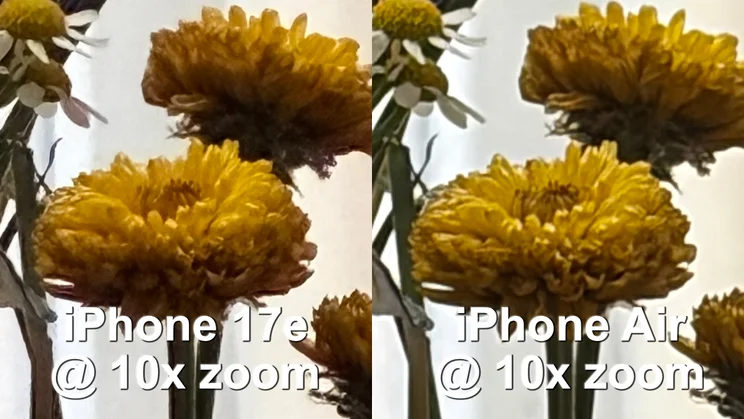
The bigger difference comes when you push the digital zoom levels to the maximum 10x magnification in marginal lighting. That’s a recipe for pixelated nastiness even in the pricier iPhone Air, and here it’s a bit worse. A big difference? No, but it is there, nonetheless.
What is nice, however, is to see Apple extend its excellent 4K Dolby Vision video capture capabilities all the way down to its cheapest handset. This is a great phone for shooting video for social media on, although note that Apple is slowing losing its advantage over Android phones in this regard.
The Xiaomi 15T Pro for one is capable of capturing 8K 30fps video at around this price and 4K at up to 60fps, has gyroscopic EIS and is capable of shooting 10-bit HDR10+ footage.
Performance
This is one area where the iPhone 17e beats all comers at its price and, in fact, gives barely anything away to the £200 more expensive iPhone 17. Both employ the same Apple A19 processor with the same 8GB of system RAM – a hexacore processor with two performance cores running at 4.26GHz and four efficiency cores running at 2.60GHz. The iPhone 17 does show a small advantage in the benchmarks, but that’s not something you’re likely to notice in day-to-day use.
There is a more notable difference between the two phones when it comes to graphics performance, though, and this is because the iPhone 17e has a five-core GPU where the iPhone 17 has a six-core part. However, I don’t think many will be complaining about the graphics capabilities of the iPhone 17e. As the Geekbench 6 GPU chart below shows, it can still mix it with the best Android phones in the business, and given the display caps performance at 60fps anyway, I think this is a sensible bit of cost-cutting from Apple.
A little less forgivable is the battery life on this phone, which by modern standards is below average. In our video rundown tests – which we run with the screen set to a brightness level of 170cd/m2 (with a full white screen) – it lasted 23hrs 58mins.
While that’s an improvement over the iPhone 16e, which lasted 22hrs 38minutes, it’s not a big one, and it falls a long way short of most Android rivals at around this price and the iPhone 17. The OnePlus 15R lasted more than ten hours longer than the iPhone 17e (37hrs 9mins) and the Xiaomi 15T Pro lasted around 28hrs. To be fair to it, though, it is a little better than the Google Pixel 10 in this regard.
Apple iPhone 17e review: Verdict
All of this doesn’t matter a great deal, though, because Apple has taken care of the most important factor with the iPhone 17e: price. At £200 less than the iPhone 17, it almost doesn’t matter that the battery life isn’t brilliant, the display is limited to 60Hz and that there is only one camera. People are going to buy this phone anyway because it is an iPhone – and there is nothing egregiously wrong with it.
However, what I would say is that, if you are willing to look outside the narrow confines of Apple’s ecosystem, there is much more value for money to be had in the Android space at around this price point. Nothing is doing stirling work in proving that smartphones in 2026 don’t have to be boring and in the Nothing Phone (4a) Pro is being generous in providing a telephoto camera for the money as well.