To help us provide you with free impartial advice, we may earn a commission if you buy through links on our site. Learn more





- Skinny and lightweight build
- Excellent battery life
- Fantastic performance
- No more 128GB model
- Very few upgrades
- Relatively slow charging
Given how much similarity there is across the spectrum of smartphones today, it always surprises me a little that there isn’t anything quite like the Samsung Galaxy S26.
There are other compact phones, sure, but none of them cram quite the same amount of quality into as svelte a frame as Samsung does. It’s one of the easiest recommendations to make: anyone who’s sick of bulky and chunky smartphones need look no further than the Samsung Galaxy S26.
This lack of competition can be a bit of a double-edged sword, however, as it sometimes causes Samsung to rest on its laurels. Case in point, the S26 is barely an upgrade over its predecessor. So while it is undeniably the best compact phone you can buy, it doesn’t feel like the best value for money.

Samsung Galaxy S26: What you need to know
The Samsung Galaxy S26 is one of the most marginal updates that I’ve seen in recent memory. It is different from last year’s Galaxy S25 in exactly three ways:
The display is ever so slightly bigger, at 6.3in compared to 6.2in. The processor is the new Samsung Exynos 2600 (here in the UK, at least, some markets get the Snapdragon 8 Elite Gen 5), and the battery is a tiny bit bigger – 4,300mAh, up from 4,000mAh.
After seeing the Samsung Galaxy S26 Ultra make big hardware strides with the interesting new Privacy Display, it’s a real shame to see Samsung coasting with the rest of the lineup.
Price and competition
Here’s the part that stings – Samsung has dropped the entry-level 128GB model, meaning that the Galaxy S26 now starts at £879 for the 256GB model, with the 512GB version costing £1,049.
Its main rival, the iPhone 17, made a similar move last year, except Apple went a little more cutthroat with its approach, offering up the 256GB model for the same £799 that the 128GB version had cost the previous year. That means that, in a bizarre twist of fate, the iPhone 17 is better value for money than its Android rivals. What a world.
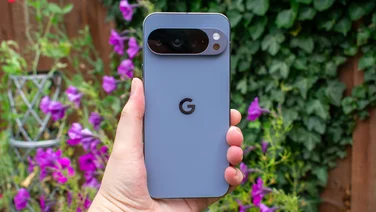
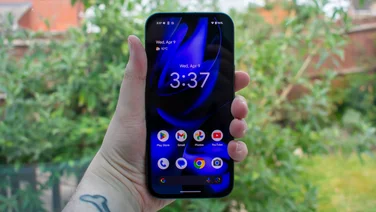
Speaking of Android rivals, the other member of this exclusive little club is the Google Pixel 10, which still offers up a 128GB model, again for £799. The 256GB version, meanwhile, costs £899. The Xiaomi 17 is well worth considering, too: for £899, you can get the model with 12GB of RAM and 256GB of storage, while the 512GB model costs £999.
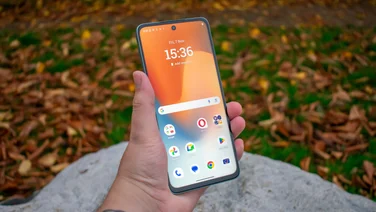
Finally, it’s not a compact phone, but the OnePlus 15 is always worth considering when talking about this kind of money. It starts at £879 for the model with 12GB of RAM and 256GB of storage, or you can get the 16GB/512GB version for £979.
Design and key features
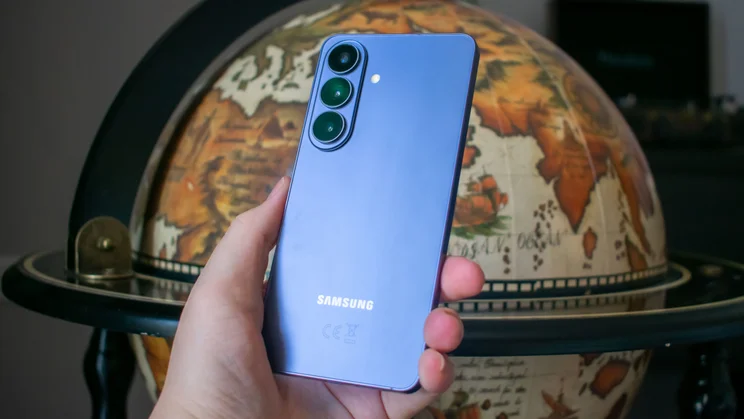
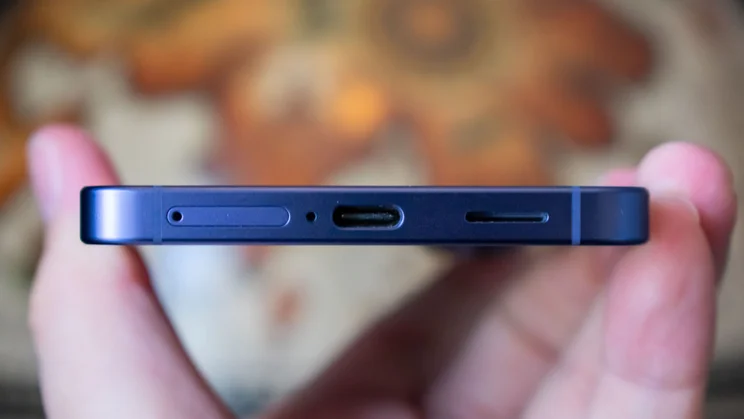
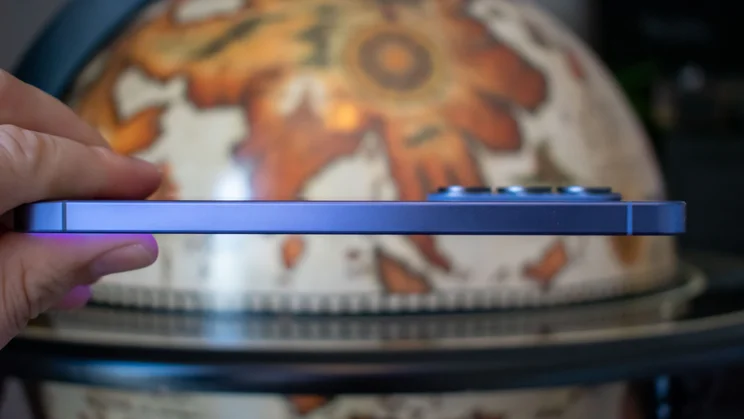
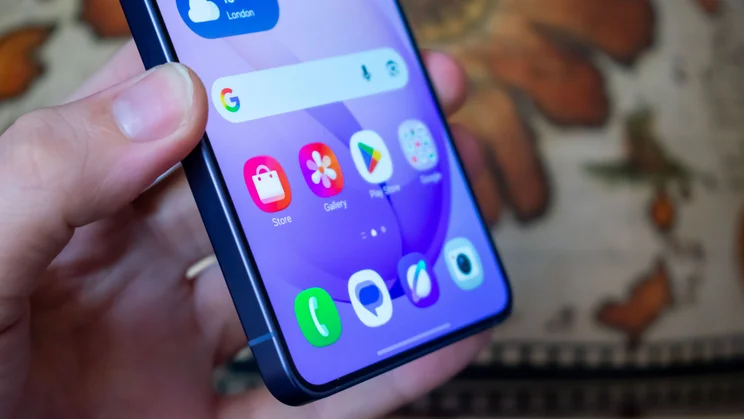
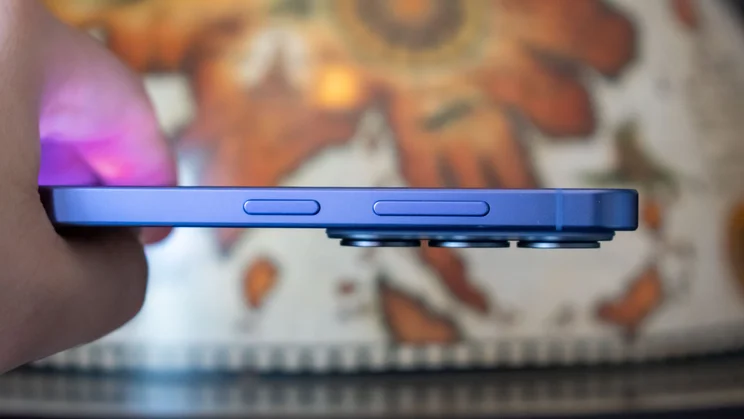
The design and general build have always been one of the key allures of the standard Galaxy S model, and the Galaxy S26 continues this trend. It’s a little taller and wider than last year’s Galaxy S25, measuring 72 x 7.2 x 150mm, and it weighs a couple of grams more, at 167g, but it’s still remarkably slight and wonderfully light. It’s the ideal form for those with smaller paws.
The edges are once again Samsung’s Armour Aluminium, and the phone is sandwiched between layers of Gorilla Glass Victus 2 on the front and rear for scratch protection. The IP68 dust and water resistance is the same as last year, too, certifying the phone as dust-tight and able to withstand submersion in 1.5m of water for up to 30 minutes.
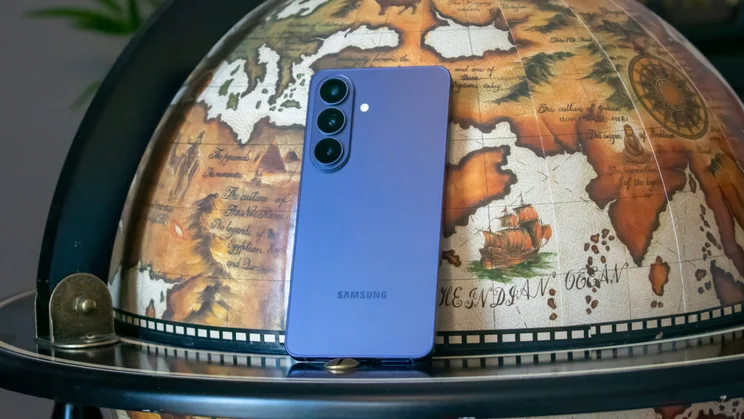
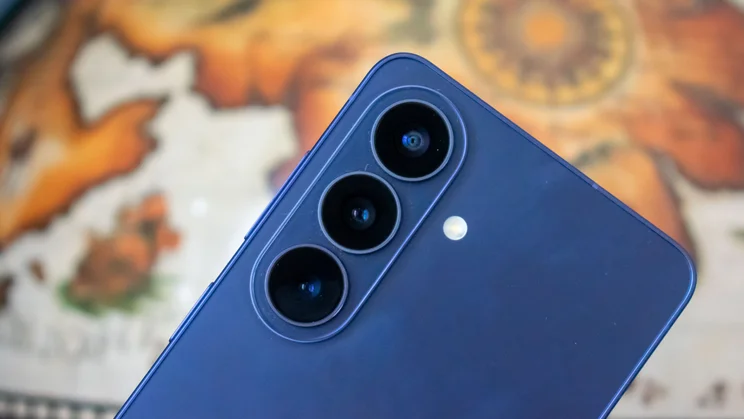
The rear of the phone is very similar to the Galaxy S25. However, instead of the three camera lenses “floating” on the glass, they’re now wrapped in a pill-shaped glass housing, replicating the same traffic light style seen on the Galaxy A56 last year. It’s a fine enough aesthetic change, but it does make the phone wobble on flat surfaces.
There are six colours to choose from: black, white, sky blue and the cobalt violet pictured here are widely available, while silver shadow and pink gold are exclusive to samsung.com.
In terms of features, we have a lightning-fast ultrasonic fingerprint sensor under the display, equally speedy face unlocking via the selfie camera and Wi-Fi 7 support – though at the time of writing, Bluetooth still only extends to version 5.4.
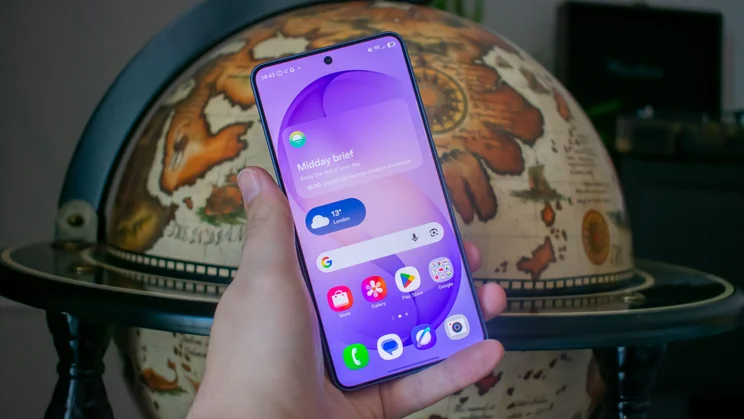
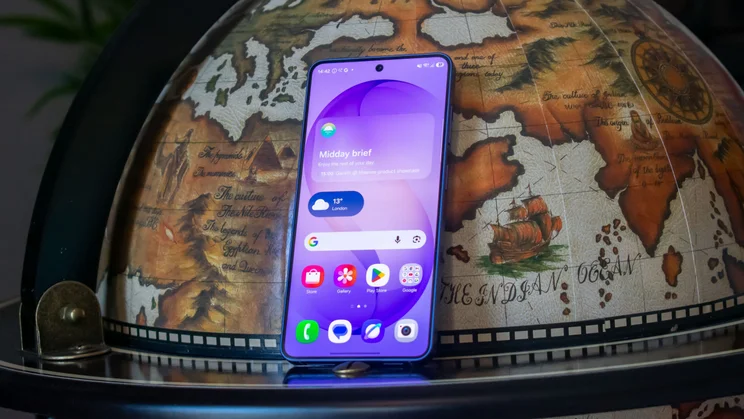
The Galaxy S26 runs Android 16 out of the box with Samsung’s OneUI 8.5 launcher sitting on top. This is one of the more fluid and accessible Android versions, and it comes with an excellent seven years of OS updates and security patches. You also get Samsung’s DeX feature, which allows you to connect the phone to a monitor, mimicking a desktop, and the Now Brief AI gets the new Nudge function, which dynamically suggests actions based on the screen content, similar to Google’s Magic Cue.
Display
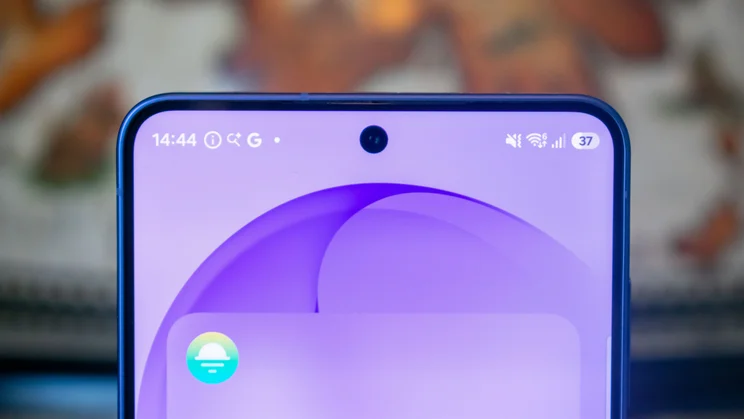
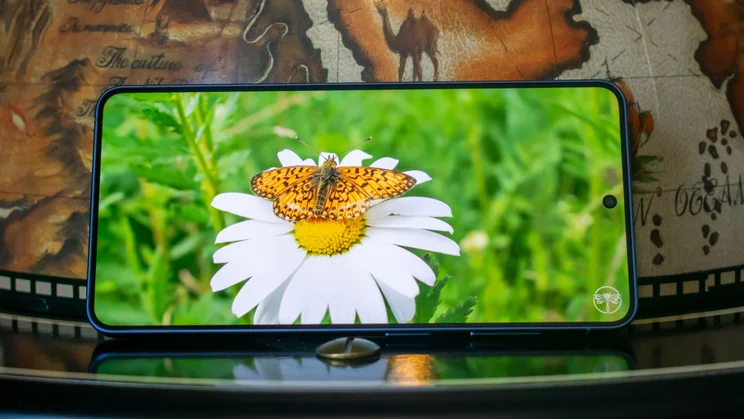
The 6.3in AMOLED display is a lovely little screen, with a sharp 2,340 x 1,080 resolution, LTPO dynamic refresh rate up to 120Hz and peak brightness of 2,600 nits. That will be when displaying HDR material in very bright environments – my testing showed a ceiling of 1,465cd/m2 with HDR content and 1,335cd/m2 on adaptive brightness with a torch shining on the light sensor, both of which are very good.
I like the colouring on Samsung screens, too; shades are vivid and punchy without drifting into oversaturated territory. That’s on the default Vivid profile, which is ideal for making streaming and gaming look their best. For authenticity, the Natural profile delivered an sRGB gamut coverage of 99.1% against a volume of 101.1% in my testing. The average Delta E of 1.69 was a little higher than our target (1 or under), but close enough that colours won’t look out of place.
Performance and battery life
As in some previous generations, certain international markets see the Samsung Galaxy S26 fitted with the same Snapdragon 8 Elite Gen 5 chipset as the Ultra model, while we here in the UK have to make do with the Samsung Exynos 2600.
This isn’t as big a deal as in previous years, because the 3.8GHz Exynos chip is still very speedy and doesn’t fall that far behind the Snapdragon in the performance stakes. Compared to the Galaxy S26 Ultra (which also has more RAM behind it), the Galaxy S26 was 20% behind in the single-core benchmarks and only 4% in the multi-core.
More to the point, as you can see below, the Galaxy S26 is the fastest in its price range for multi-core operations, eking out the incredible power of the OnePlus 15 – unsurprising, given that the Exynos is a 10-core chip. Most rivals performed better in the single-core tests, with the iPhone 17 pulling 24% ahead of the Samsung.
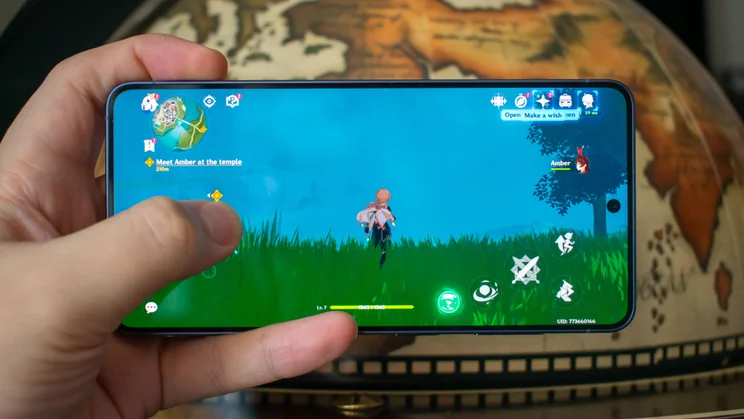
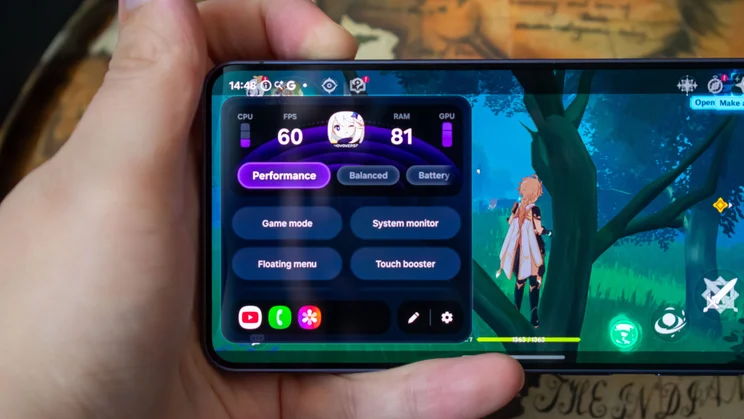
Gaming on this thing is a delight, too; the stereo speakers spit out impressively loud and clear audio, the punchy Vivid colour profile makes everything pop nicely, and the Exynos chip has the welly to keep things moving at a clip. I ran through Genshin Impact on maximum graphic settings and found framerates stayed at a fairly solid 60fps.
The phone did get a tad too warm for my liking, though – as I was warned it would when cranking the graphics up – so I quickly reverted back to default graphic settings and found that to be a much more comfortable balance that still looked fantastic.
The battery is only a little larger than the Galaxy S25’s, and, fittingly, it results in battery life that is only a little better than last year’s. The result of 32hrs 50mins is about an hour longer than the S25 and an excellent result – around three hours better than the iPhone 17 and ten hours more than the Pixel 10 managed.
Charging isn’t the fastest, supporting up to 25W wired and 15W Qi2 wireless, but the smaller battery means that charging still feels nice and nippy. In testing, it reached 56% after 30 minutes and a full charge took 1hr 16mins.
Cameras
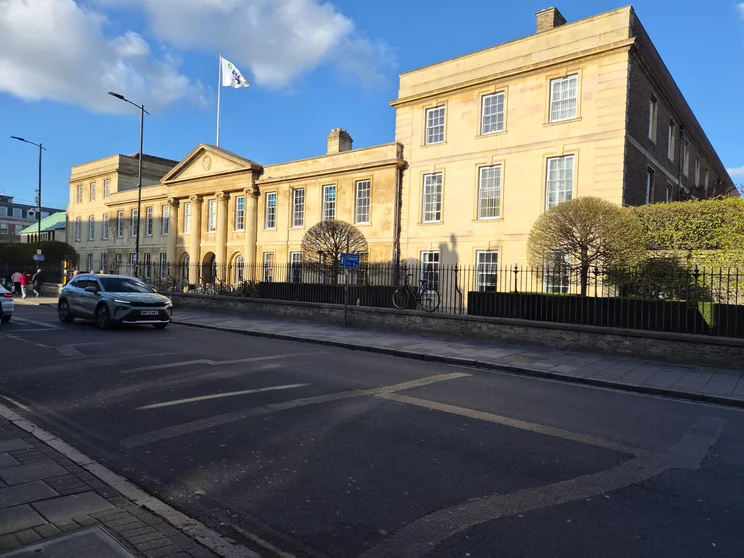
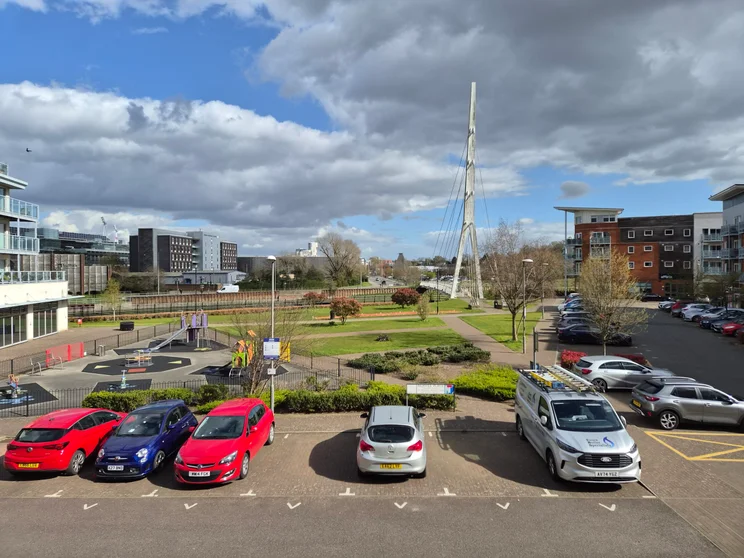
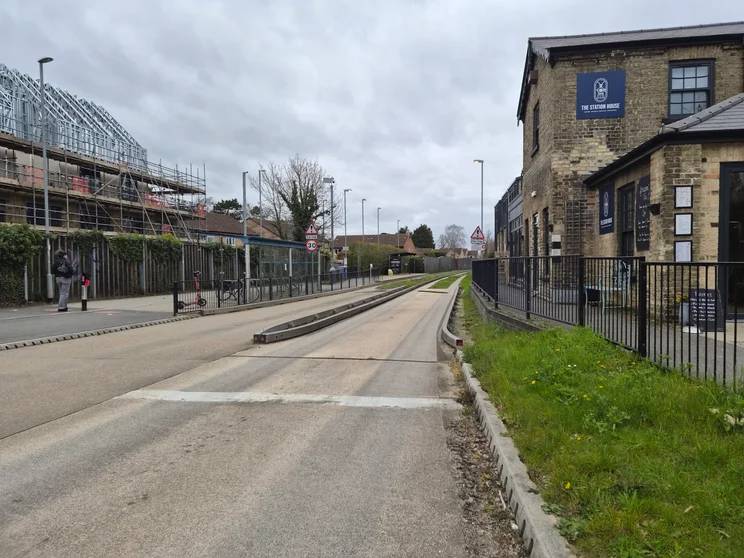
In his Samsung Galaxy S25 review last year, Jon Mundy noted that the cameras were the same setup as the Galaxy S24 and Galaxy S23. Well, make that four years in a row, because we have no camera upgrades to speak of here.
That’s a shame, but not a major issue, as the camera suite is a capable one. The 50-megapixel (f/1.8) main lens supports optical image stabilisation (OIS) and dual pixel PDAF, delivering crisp, detailed shots with excellent focus and efficient capture.
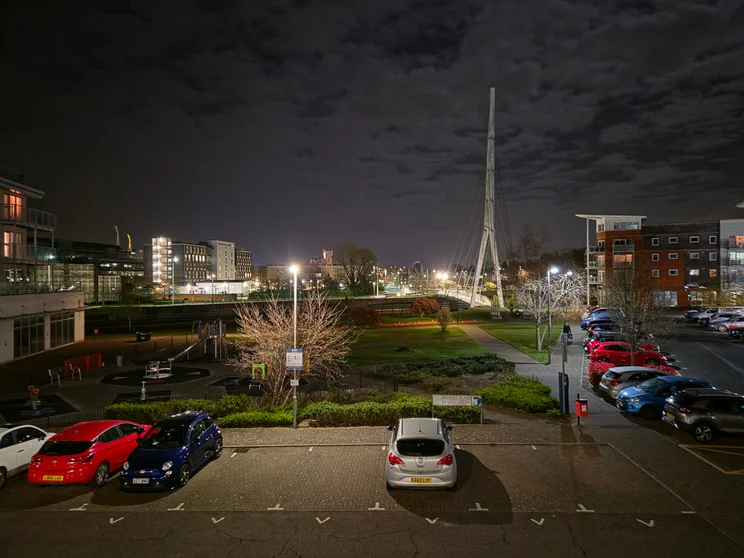
Night photography has been inconsistent on previous Galaxy S models, and, as the cameras haven’t changed, the same holds here. Brightening is effective, and colours are solid, but skies regularly attract visual noise, and bright light sources bloom more than I’d like.
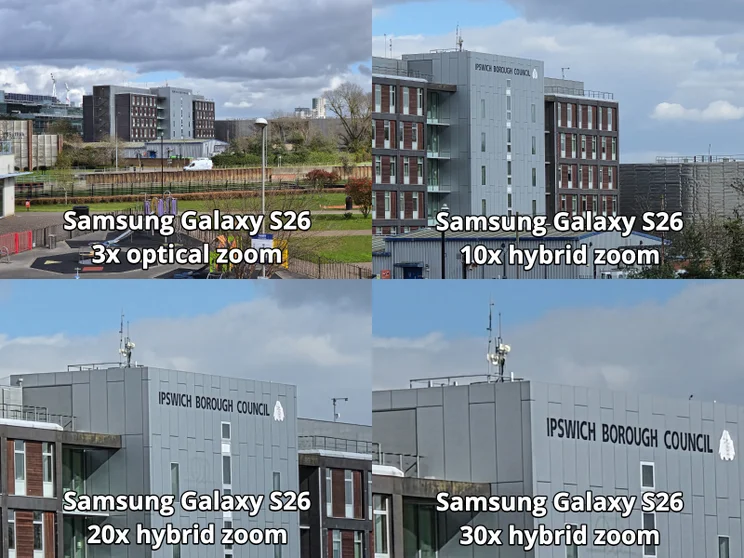
The 10-megapixel (f/2.4) telephoto camera is great for snapping sharp, striking 3x optical zoom shots, and especially good for portrait photography. Zooming extends to 30x, but by that point, you’ll see a substantial drop in detail – stick to under 10x for the best results.
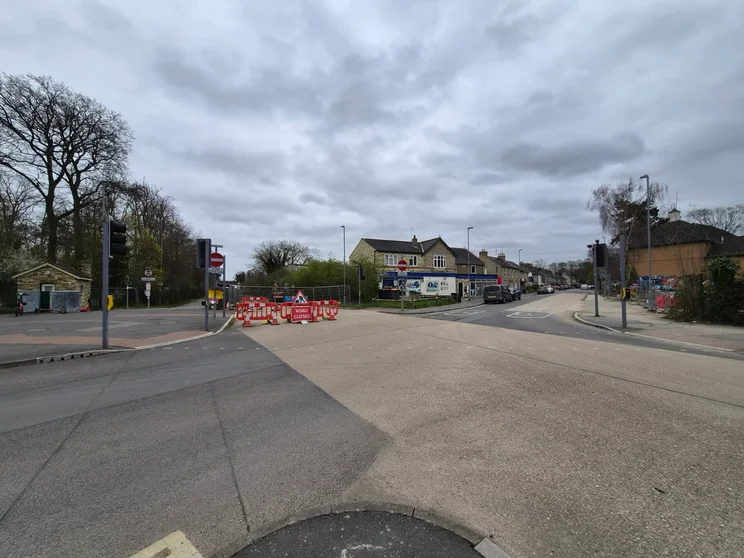
There’s a lot to like about the 12-megapixel (f/2.2) ultrawide, with a colour tone that broadly matches the main lens and decent exposure balancing, but detail isn’t as sharp as the other cameras, particularly around the edges.
I have no concerns about the 12-megapixel (f/2.2) selfie camera. Detail is good, and skin tones are naturally handled, and it records video up to 4K/60fps. Over on the rear, video extends to 8K at 30fps and includes additional options for 10-bit HDR and LOG recording.
Samsung Galaxy S26: Verdict
For all of my complaints regarding the lack of improvements, the Samsung Galaxy S26 is still a very good phone. On a graph measuring performance prowess against diminutive build, no other phone nails the balance like this.
It’s not the best value for money, especially with the retirement of the entry-level 128GB model, and anyone looking to hit most of the key points achieved here may want to consider hopping the fence and spending less on an iPhone 17 – or settling for weaker battery life with the otherwise excellent Google Pixel 10.
Otherwise, Samsung has this particular niche completely cornered, and it knows it. The lack of upgrades irks me, but it doesn’t change the fact that, for anyone seeking plenty of power in a compact frame, there’s nothing that I’d recommend over the Galaxy S26.