To help us provide you with free impartial advice, we may earn a commission if you buy through links on our site. Learn more









- Blisteringly powerful
- Excellent battery life
- Four 50MP cameras
- HyperOS 3 is a chore
- Rivals are more lightweight
- Some camera quibbles
The Xiaomi 17 sees the brand stuck between a rock and a hard place. On the one side, you have the smartphone juggernaut that is Apple, with its iPhone range providing clear (sometimes painfully so) inspiration for Xiaomi. On the other, we have Samsung: the brand Xiaomi is hoping to supplant as the defacto Android alternative to Apple’s supremacy.
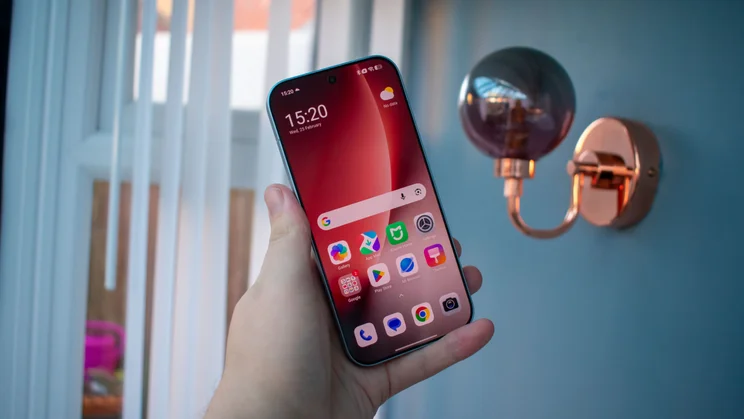
To its credit, the Xiaomi 17 most definitely deserves to be in that conversation. It’s an impressively powerful compact flagship with excellent stamina, keen cameras and a lovely display. Unfortunately, it’s also got messy software and is both chunkier and heavier than its leading rival, the Samsung Galaxy S26.
I don’t think that it will end up being my compact phone of choice for this year. But if you prioritise top performance and battery life over things like accessible software and an impressively lightweight design, the Xiaomi 17 is well worth considering instead of the Samsung.
Xiaomi 17: What you need to know
Those who pay attention to such things will note that the Xiaomi has skipped a generation, following last year’s 15-series with the Xiaomi 17. The omission of a 16 range is reportedly to inescapably position Xiaomi’s smartphones as direct rivals to Apple’s iPhone 17 series – see also the familiarly named Xiaomi 17 Pro Max being added to the lineup in China.
Neither Pro nor Max, the Xiaomi 17 is the brand’s entry-level flagship, tucking powerful hardware inside a compact frame. The processor is the latest Snapdragon 8 Elite Gen 5, clocked up to 4.6GHz, backed by 12GB of RAM and either 256GB or 512GB of storage. The battery is a 6,330mAh cell that supports wired charging up to 100W, as well as 50W wireless charging.
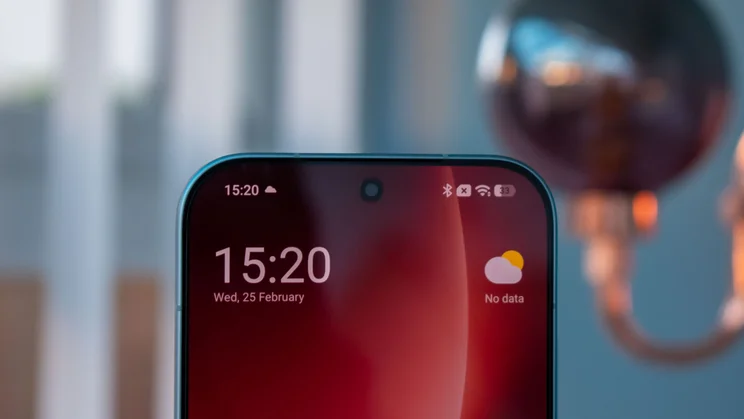
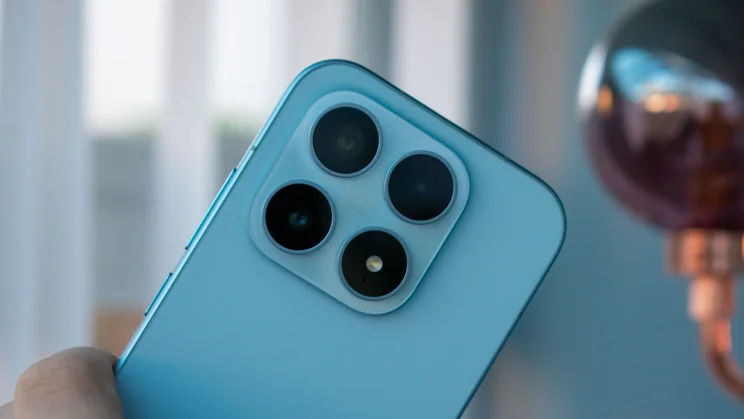
The 6.3in AMOLED display has a resolution of 2,656 x 1,220 and a peak refresh rate of 120Hz. There’s a 50-megapixel selfie camera set in a hole-punch notch near the top, while over on the rear, we have three more 50-megapixel lenses: the main camera alongside an ultrawide and a 2.6x telephoto shooter.
Prince and competition
As much as Xiaomi wants to project that the Xiaomi 17 is head-to-head with the iPhone 17, the pricing doesn’t support that notion. Not completely, at least. Starting at the same £899 as its predecessor, the Xiaomi 17 is £100 more expensive than the £799 starting price shared by the iPhone 17, Samsung Galaxy S25 and Google Pixel 10.
In fairness, the latter two only have 128GB of storage for that price. But the iPhone 17 has the same 256GB as the Xiaomi 17, so Apple has a clear edge here.
The biggest threat to the Xiaomi 17, however, is launching near-enough concurrently. The Samsung Galaxy S26 has ditched its 128GB model, so it loses the major advantage in terms of price, but still undercuts the Xiaomi 17 slightly, with the 256GB version costing £879. The 512GB model, meanwhile, costs £1,049 – the £999 512GB Xiaomi 17 has the edge there.
Outside of the compact flagships, we have an excellent, similarly priced big-screened rival in the OnePlus 15. Starting at £849 for the 256GB or costing £979 for 512GB of storage, this powerhouse runs on the same Snapdragon 8 Elite Gen 5 chipset as the Xiaomi 17 and currently holds the record as delivering the best battery life we’ve ever recorded.
Design and key features
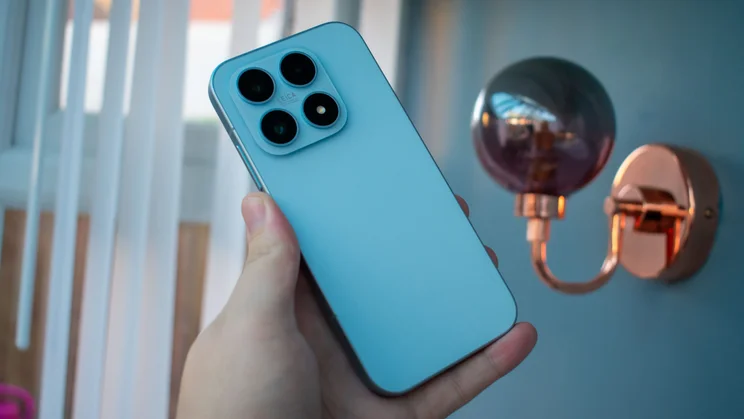
There’s only one notable design change in the jump from Xiaomi 15 to Xiaomi 17, but it’s one that I’m in favour of; the last couple of generations, regardless of the phone’s colourway, have had a square of black glass around the rear cameras that I found to be quite ugly on all but the black model.
Here, Xiaomi has opted to surround the cameras with a rounded square of silky glass, coloured to match the rest of the phone – black, white, pink or the luscious sky blue pictured here – and each lens is encircled by an aluminium ring in the same shade as the edges of the phone. It’s a subtle shift but the end result feels much classier.
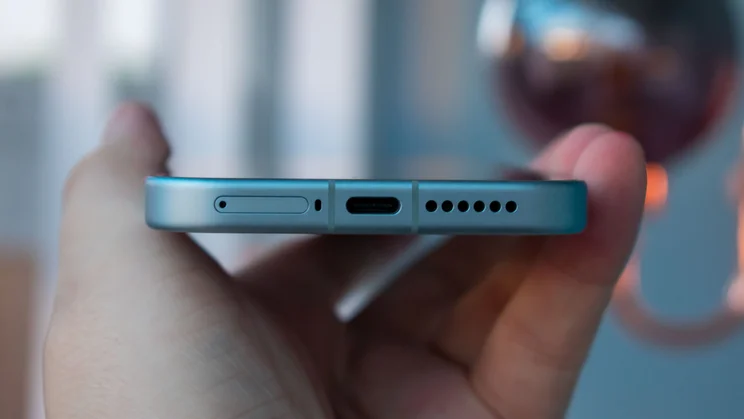
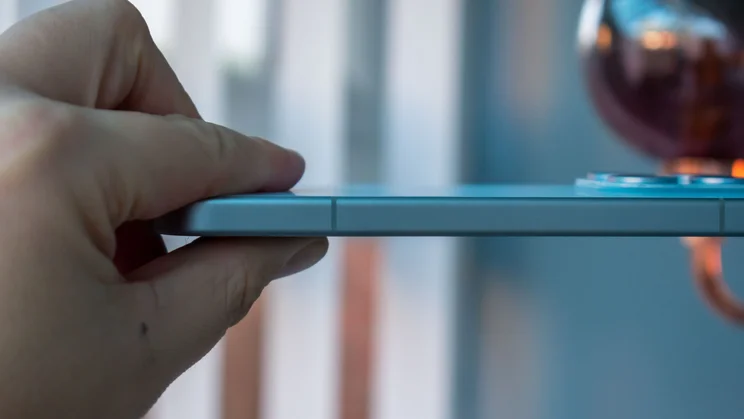
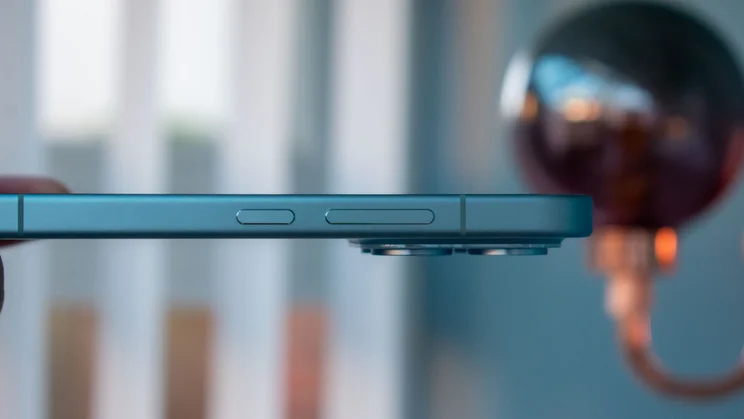
Otherwise, this could easily be a Xiaomi 15. The 72 x 8.1 x 151mm (WDH) measurements and 181g weight are near-enough identical to last year’s model, and it’s once again rated IP68 for dust and water resistance. The protective glass over the display is a little different this time, however, swapping out Xiaomi’s Shield Glass for its excellently named Dragon Crystal Glass. Details are fuzzy on exactly what the difference is but expect a similar level of scratch protection.
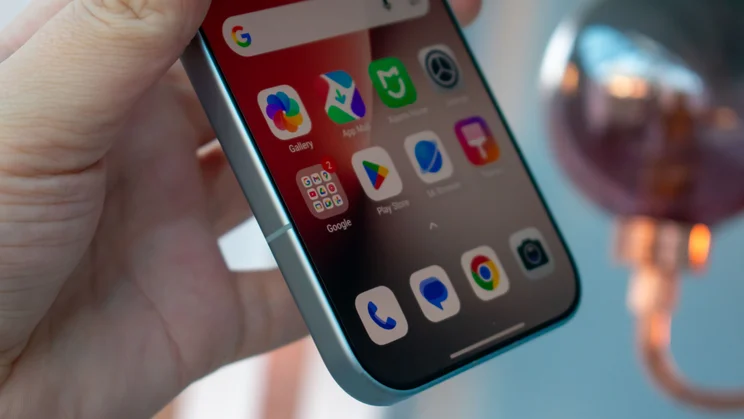
As with all Xiaomi products, my fondness for the hardware is undermined by the obnoxious software. The Xiaomi 17 runs on the latest HyperOS 3 update, which is undeniably polished, but is still messy beneath the sheen. The excess of bloatware is as galling here as ever and baffling design choices, like mixing the general settings in with the (unlabelled as standard) control centre quick tiles, continue to confound me.
Software support is decent enough, with four years of OS updates and six years of security patches pledged, but it still doesn’t match the best in the business. Samsung, Google and Honor, for instance, all offer a more robust seven years apiece for their flagships.
Display
The 6.3in AMOLED display is sharp, with the 2,656 x 1,220 resolution yielding a pixel density of 464ppi, and the refresh rate can dynamically adjust between 1 and 120Hz. It also delivered impressive brightness in my testing: on manual mode, I recorded it at 542cd/m2, while switching to adaptive and shining a torch on the light sensor pushed it to 1,042cd/m2. Best of all was when the phone was displaying HDR content, during which it reached 1,883cd/m2.
Colour accuracy was just as impressive. There are two colour profiles to choose from, with the default Original Colour Pro shooting for authentic colouring and Vivid dialling things up for those who prefer excessive vibrancy. On the former setting, I recorded an sRGB gamut coverage of 98.4% with a volume of 101.3% and the average Delta E colour variance score came back at 0.81 – we’re looking for 1 or under here, so that’s excellent.
Performance and battery life
The Snapdragon 8 Elite Gen 5 chipset is set to be the flagship darling for 2026 so, unsurprisingly, it empowered the Xiaomi 17 to deliver exceptional performance – though the gains over last year’s Snapdragon 8 Elite aren’t massive. In my Geekbench 6 testing, single-core results were 9% up on the Xiaomi 15 and multi-core results up 7%.
These results have the Xiaomi 17 joining the OnePlus 15 as being faster than any other phone we’ve tested in the multi-core stakes and atop the Android pile for single-core operations – the iPhone 17 Pro Max still holds the overall crown there.
Things are looking similarly improved on the gaming side of things, too. In the Geekbench 6 Vulkan GPU test – in which higher results indicate more efficient and stable graphics processing – the Xiaomi 17 returned a score of 27,142. This is a solid improvement over the Xiaomi 15’s result of 24,178 (figure taken from the Geekbench archives).
My practical testing gave me no reason to doubt these figures, either. I opened up Genshin: Impact and nudged the graphical sliders up to maximum, to see how much pressure the Xiaomi 17 could weather. Results were impressive: gameplay was still fluid and responsive, even with the sharpest of graphics, and checking the phone’s gaming deck showed that it was sitting at a fairly stable 60fps during gameplay.
While recent launches like the OnePlus 15, Oppo Find X9 Pro and Honor Magic 8 Lite have finally seen UK variants getting enormous battery capacities like their Chinese counterparts, Xiaomi has decided not to follow suit. The Xiaomi 17 we get here in the UK has a (still impressive, especially for such a small phone) 6,330mAh battery, whereas the China-only model has a 7,000mAh cell.
That’s a shame but battery life is still very good, at least. The Xiaomi 17 ran our standard looping video battery test for a total of 34hrs 35mins – more than seven hours longer than its predecessor, and comfortably among the best phone battery life results we’ve ever recorded.
An upside of the smaller battery is that it doesn’t take an age to charge, going from empty to 50% in just 23 minutes in my testing. Things did slow down a little from there, however, with a full charge taking a little over an hour.
Cameras
Xiaomi’s colour science is that slightly surreal kind of vibrant that you’re either going to love or find a little uncanny. I sit more on the latter side of the fence, so these shots tended to come out feeling unnatural and overblown to my eyes. That aside, I was fairly pleased with the results of my camera testing.
I took the Xiaomi 17 on a little field trip around Shakespeare country and the 50-megapixel main camera served as a worthy Grumio to my Petruchio. Or something like that. The shutter speed was pleasingly efficient, allowing me to capture moving targets with relative ease, and the optical image stabilisation ensured that the resulting shot still looked tidy.
Things continue to look good after dark. The Xiaomi 17 keeps colours feeling natural (or, at least, Xiaomi’s version of natural) while effectively brightening the overall scene. Detail levels are solid in shadowy areas but there was the odd occasion in my testing where big blocks of darkness, such as the night sky, introduced a fair bit of visual noise.
I was rather impressed with the 2.6x telephoto camera for the most part; detail levels are exquisite – just look at the individual scales on the very handsome iguana below – and colouring is excellent. My only complaint is that portraits taken with this lens had a habit of blowing out the highlights when in well-lit conditions. It’s not the biggest of deals but it’s worth bearing in mind if you regularly snap outdoor portraits.
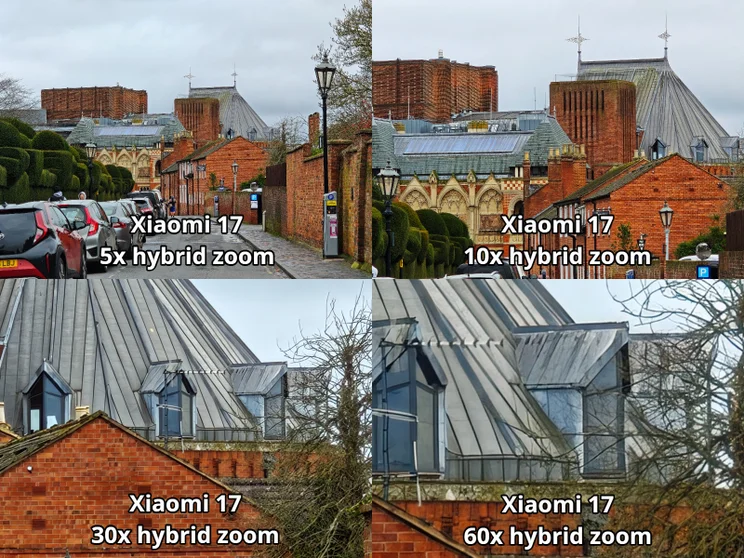
Beyond the optical zoom, the Xiaomi 17 does a great job with hybrid zooms up to around 10x, with crisp detail and not too much overblowing of the colours. It can shoot all the way up to 60x but, at that magnification, you start to see some sloppy AI smoothing that makes everything look very plasticky.
Love it or hate it, the main camera’s colour tone is effectively carried across to the ultrawide lens, and I was impressed by the detail levels here. Even the notoriously finicky corner areas don’t look too bad in the below shot – all around a solid lens.
Video is also very good for a phone of this size. You can shoot 4K up to 60fps – including Dolby Vision HDR footage – or 8K at 30fps, with stabilisation available up to 2.8K at 30fps.
Xiaomi 17: Verdict
The Xiaomi 17 is a wonderfully powerful and refined compact smartphone. Performance and battery life are excellent, the cameras perform well across all lenses and the display is sharp, bright and colour-accurate. From a hardware perspective, I can confidently say that you will not be disappointed if you choose the Xiaomi 17.
The unsaid implication there, of course, is that the software is a different story. I find Xiaomi’s software frustratingly obnoxious, so intent on imitating Apple that it fails to keep up with the rest of the Android crowd. The Samsung Galaxy S26 may end up not matching the Xiaomi 17 in performance and battery life, but its superior software (along with its sleeker and lighter build) are likely to make it a more appealing compact phone overall.
With Samsung bringing this kind of ammunition to the fight, Xiaomi would do well to spend a little less time trying to be Apple and a little more time figuring out how to compete with rivals inside the Android stable.