
To help us provide you with free impartial advice, we may earn a commission if you buy through links on our site. Learn more
Huawei won’t be at the upcoming tech extravaganza in Las Vegas for obvious reasons, so it’s taking a moment before Christmas 2025 to launch a small selection of products that would otherwise be swamped by a flood of other products in January.
The most interesting of these is its second-generation open-ear headphones – the Huawei FreeClip 2 – but Huawei has also launched the MatePad 11.5 S, a mesh Wi-Fi system with a twist and the Mate X7 foldable phone.
Huawei FreeClip 2: a big improvement on the original
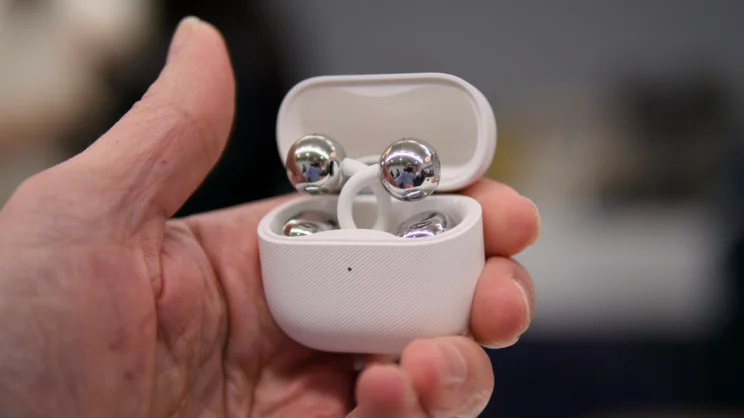
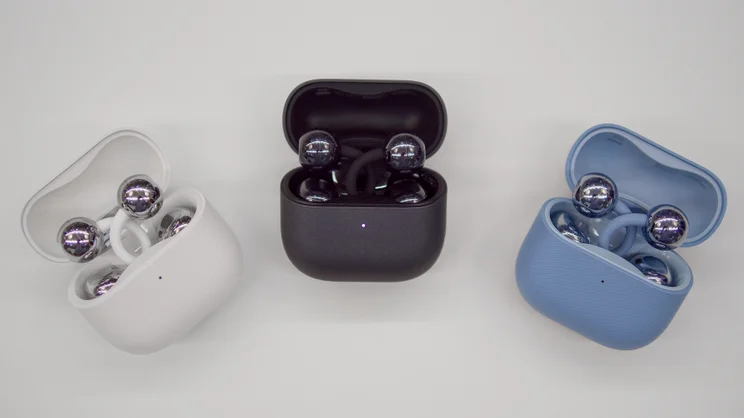
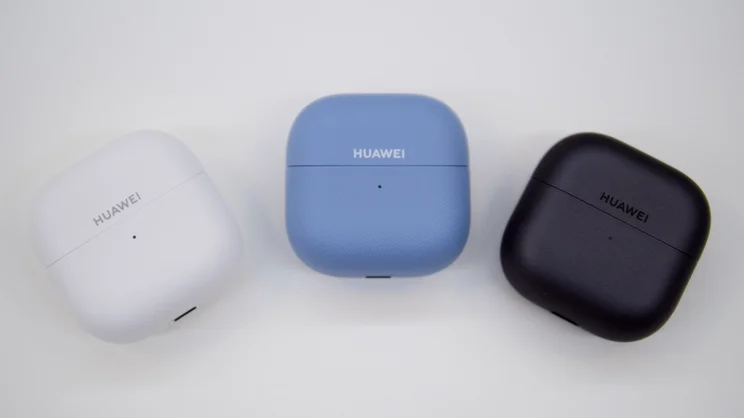
Huawei’s innovative take on the open-ear headphone genre were a revelation when they were first released and they’ve been popular enough to get a second release. The FreeClip 2 bring several key improvements with them, one of which is the charging case, now 10% smaller than before and square in shape.
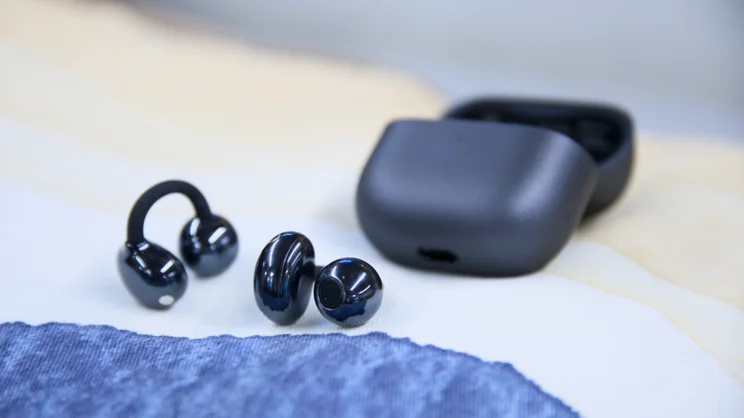
The earbuds themselves are also smaller and lighter and come across a touch more elegant as a result, although they remain quite extrovert in their overall appearance. They’re available in new denim-inspired light blue colourway, as well as white, black and rose gold.
Other improvements include a new softer coating on the arm that connects the two parts of the earphones together and IP57 dust and water resistance (you can submerge the headphones in up to a metre of water for 30mins). There’s better battery life, too, with 38 hours total from case and earphones, 9 hours playback from the headphones on their own, and a quick 10-minute recharge in the case will get you around three hours of extra listening.
Huawei has also added extra controls to the FreeClip 2 this time around. You can now swipe back and forth along the surface of the “comfort bean” (the bit that sits behind your ear) to control the volume, and you can accept or reject calls by simply nodding or shaking your head.
Finally, audio quality also gets a boost with a claimed doubling of perceived bass via a re-engineered dual-diaphragm driver design which is able to shunt more air around.
There’s also better anti-leakage noise cancellation and boosted voice pickup thanks to faster AI-accelerating silicon. I haven’t had much chance to test these out yet, but do have a pair on hand and am enjoying the balance they provide between audio quality and environmental awareness.
All I can say so far is that bass still isn’t particularly deep , but I’ve been able to listen to my usual selection of house and Euro pop without wincing.
The new Huawei FreeClip 2 will be available from 21 January 2026 at a price of £180.
Huawei WiFi X3 Pro: Network couture
Up next in the Chinese company’s pre-Christmas launch list is another unusual-looking product: the Huawei WiFi Mesh X3 Pro.
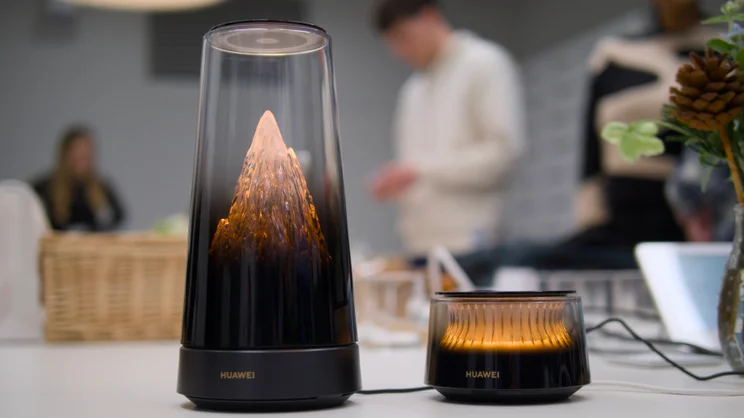
I say unusual because the main unit looks like no other Wi-Fi system I’ve ever seen. It looks rather like a cross between a Himalayan salt lamp and one of those trendy filament light bulbs so beloved of specialty coffee stores, while the smaller, squatter extender unit looks a bit like a Christmas candle.
The X3 Pro isn’t as advanced as it looks, though. Under the exotic exterior, it’s as basic as Wi-Fi 7 mesh systems get. It operates in the 2.4GHz and 5GHz frequency bands (no 6GHz here) and has a total speed rating of 3.6Gbits/sec, while coverage is up to 170m2.
It does support MLO, though, and the price, I’m told, should be pretty reasonable compared with most Wi-Fi 7 mesh systems – so well worth looking out for.
Huawei MatePad 11.5 S
Next up is the MatePad 11.5 S, another release in a seemingly endless stream of tablet launches for the Chinese company in the past year or so. How does it differ from the MatePad 11.5 released earlier this year, though, I hear the Huawei hawks cry?
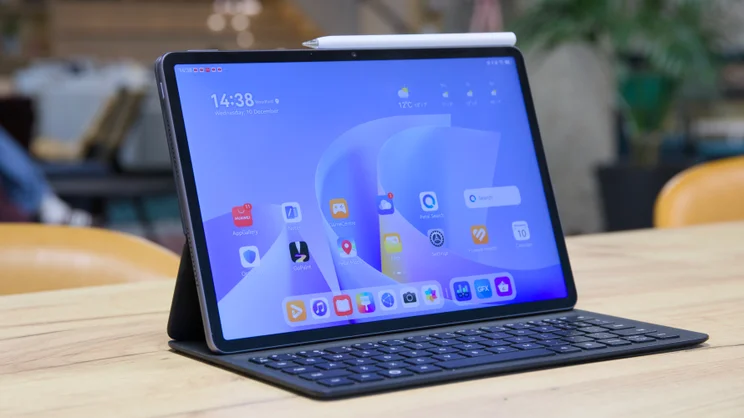
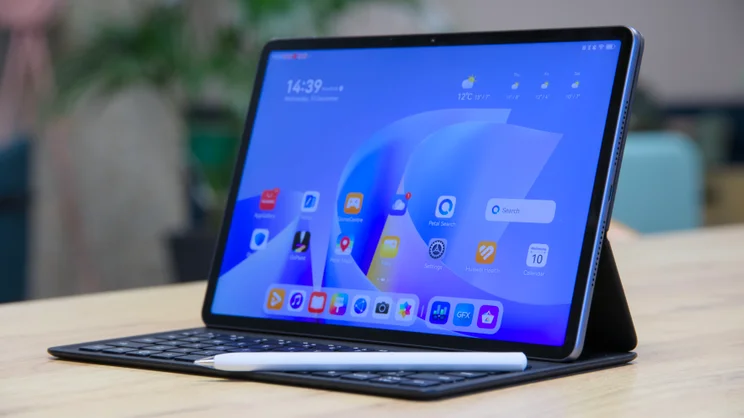
Well, not by much. Like the 11.5, the 11.5 S comes with Huawei’s matte-finish PaperMatte screen treatment, which is great at reducing distracting reflections from harsh overheat lighting, plus it’s very slim and light. Just like that tablet, its display uses standard LCD tech and it measures 11.5in across the diagonal and it supports Huawei’s excellent Smart Keyboard case for productivity on the move.
However, there are differences. The display has a sharper 2,800 x 1,840 resolution, there’s more RAM and storage – 12GB and 256GB compared to 8GB and 128GB – and it’s compatible with the M Pencil Pro rather than the regular M Pencil. This latter upgrade adds a pinch sensor to bring up tools, barrel-roll detection to change brush angles and a status light on the top, surrounding a quick-launch button.
The tablet is powered by HarmonyOS so, alas, there are no Google Apps installed by default and if our experience with previous Huawei tablets is anything to go by, getting YouTube running on it will be a right old pain. The one positive thing is that it is steadily getting easier to sideload apps via third-party stores such as Aurora, so other apps should be relatively easy to come by.
The MatePad 11.5 S will be available in the UK from 15 January at a price of £350. That doesn’t include the M Pencil Pro or the Smart Keyboard, but I imagine there will be initial deals offering both for free (or a hefty discount) when it first goes on sale.
Huawei Mate X7: The best foldable yet?
Altogether more interesting is the Mate X7, Huawei’s flagship foldable phone for 2026, although, again, this is another product that runs HarmonyOS and lacks Google apps, due to Huawei’s ongoing US trade ban. Although that might be forgivable on a tablet, it’s much more of a problem on a device you’re going to run your life on.
That’s a shame because this looks it’s going to be one hell of a smartphone. For starters, it’s incredibly thin – 9.5mm when folded and a ludicrous 4.5mm when unfurled – and if looks are your thing, it’s new “light-woven brocade” silk screen effect finish looks like it’s going to be a stunner.
In terms of the tech specs, you’re getting a 6.49in 1,080 x 2,444 variable refresh rate 120Hz OLED screen with peak brightness of 3,000 nits on the outside and an 8in folding display with similar core specifications on the inside.
What’s intriguing about the Mate X7’s interior screen, however, isn’t its brightness, sharpness or vibrancy, it’s that it’s coated with what Huawei calls a non-Newtonian fluid protective layer, which hardens upon impact, protecting the display from damage.
Elsewhere, there’s Armour Kunlun glass protecting the exterior display, carbon fibre in the phone’s frame and hinge, and IP59 and IP58 ratings for protection against water jets at up to 80 degrees Celcius; this is Huawei’s first fully water-resistant foldable. It also comes with a massive 5,300mAh silicon carbon battery and, so says the company, the best cameras Huawei has ever put in any of its smartphones.
The main sensor is a 50MP unit with a 1/1.28in LOFIC CMOS sensor that delivers a claimed 17.5 stops of dynamic range. There’s also a 50MP 3.5x telephoto camera with a 1/2.51in sensor and a macro mode that lets you capture subjects from as close as 12cm. Finally, there’s a 40MP ultrawide camera for capturing landscapes, city scenes and big groups of people from close range.
There’s no word on pricing yet, or a final release date, but we fully expect Huawei’s new foldable to be reassuringly expensive.


