To help us provide you with free impartial advice, we may earn a commission if you buy through links on our site. Learn more









- Vibrant, accurate display
- Strong performance
- Excellent battery life
- No wireless charging
- Camera merely adequate
- Xiaomi’s HyperOS, as ever, isn’t great
Xiaomi’s Poco budget sub-brand is starting to show signs of real ambition with the release of the Poco F8 Ultra, but the Poco F8 Pro arguably stays truer to the brand’s tradition of impressive smartphone performance at a bargain price.
It’s much less flashy than its brother, but provides a compelling combination of flagship speed, solid stamina, and a cracking display – and all for half the price of most phones with ‘Ultra’ or indeed ‘Pro’ in their name.
With Google producing the startlingly well rounded Pixel 9a for even less money, Xiaomi’s budget sub-brand can’t claim to be the cheapest phone in its class. But can it claim to be the best?
Poco F8 Pro review: What you need to know
Despite the Poco F8 Pro’s mid-range status, the presence of a Snapdragon 8 Elite processor ensures flagship-grade performance. Other premium specs include a 6,210mAh battery and 100W wired charging – though, there’s no wireless charging in this model.
The screen is a well-balanced 6.59-inch 120Hz OLED with a sharp 2510 x 1156 resolution and a claimed maximum brightness of 3500cd/m2. That’s going above and beyond what we typically expect of a mid-range smartphone.
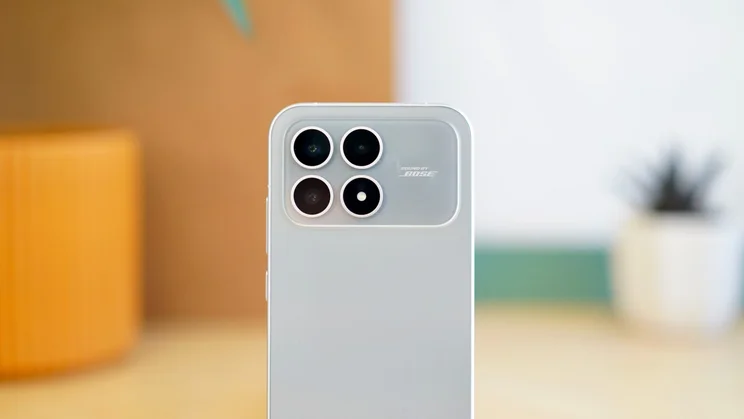
This year’s Pro model also adds a 50-megapixel telephoto camera to its 50-megapixel main and 8-megapixel ultrawide, and there’s a 20-megapixel camera around front.
Poco F8 Pro review: Price and competition
With prices starting from £549 for the 256GB model, and moving up to £599 for 512GB, there’s been a flat £50 price hike over the Poco F7 Pro. That’s never good news, but for the specifications you’re getting, the Poco F8 Pro would seem to justify the bump.
While it’s £50 more expensive than our current mid-range standard bearer, the Google Pixel 9a, it gives you superior performance, a significantly larger battery, faster charging, and a dedicated telephoto camera. Conversely, Google’s mid-ranger packs in wireless charging and far more appealing software.
At this price, the Poco F8 Pro also runs smack bang into the Nubia Z80 Ultra – a phone that, on paper, more directly rivals the Poco F8 Ultra. It’s got a superior Snapdragon 8 Elite Gen 5 processor, a larger and more fluid display, and an ostensibly more advanced camera set-up, albeit in a much clunkier design.
Poco F8 Pro review: Design and key features
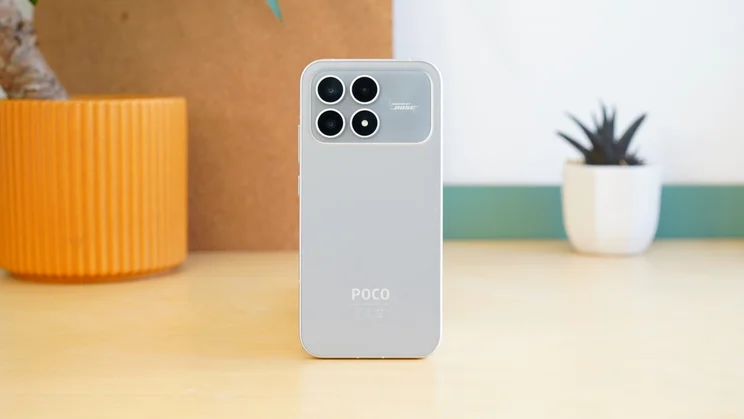
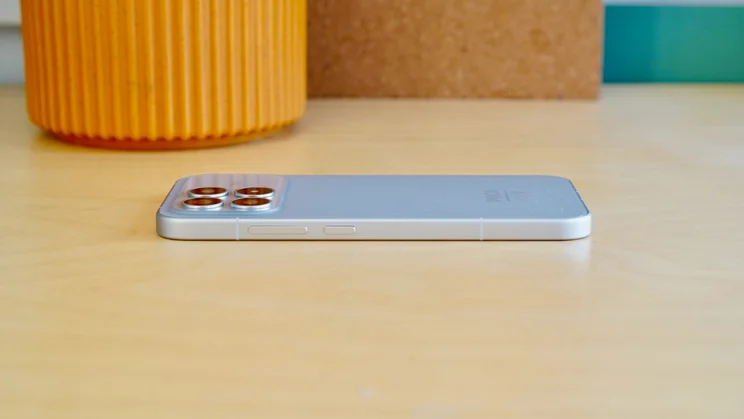
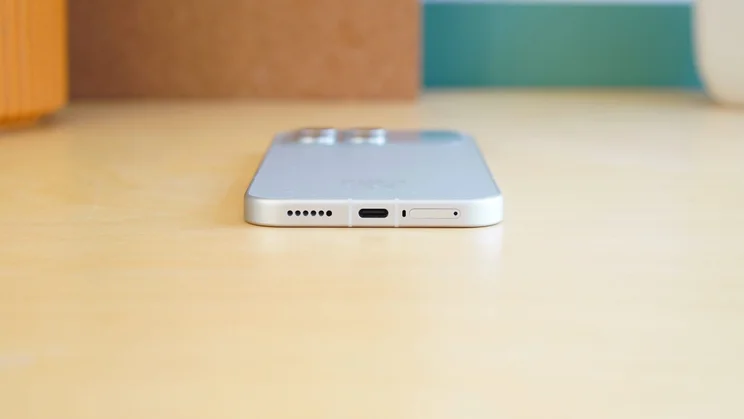
Both Poco F8 phones have taken a leaf out of the iPhone 17 Pro’s book for their design, in much the same way as the Google Pixel 10 and Pixel 9 have. We’re talking a flat metallic rim, dead-flat surfaces, tightly curved corners, and a nice uniform screen bezel.
The Poco F8 Pro, specifically, doesn’t have the material finish option of its Ultra big brother – just some fairly uninteresting Titanium Silver (my model), Blue, and Black colour options. It’s also a smaller phone at 75 x 8 x 158mm (WDH) and 199g, which renders it more comfortable to lug around on the daily.
There are a couple of flagship flourishes in the form of proper IP68 certification and a speedy ultrasonic in-display fingerprint sensor, which is good to see. There’s also a solid set of symmetrical stereo speakers here. They’re supposedly provided by audio specialist Bose, but you don’t get the impressive low-end kick that the Ultra’s sub-woofer supplies.
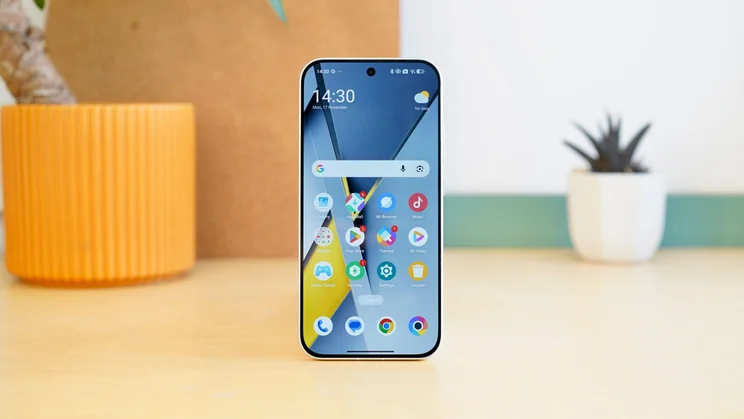
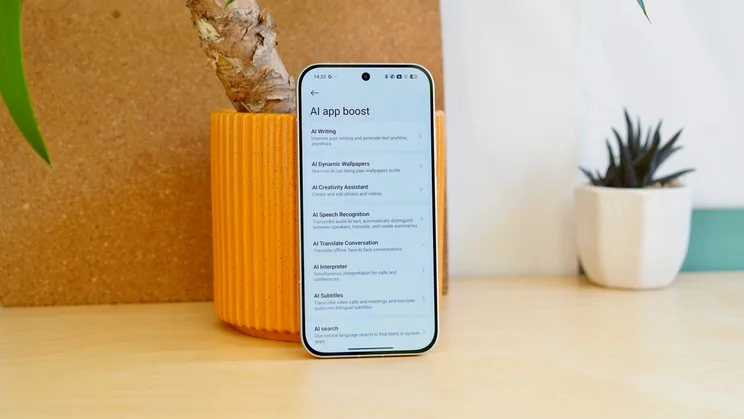
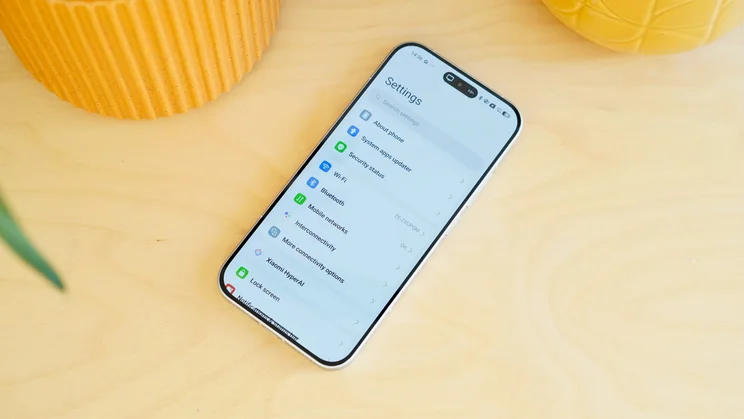
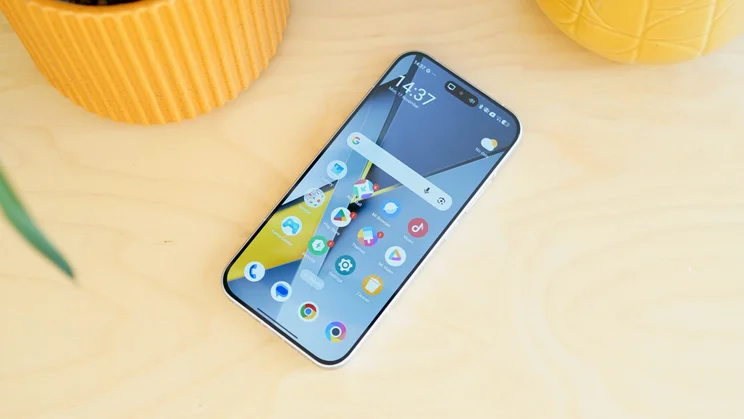
The software offering isn’t as strong as the hardware, with Xiaomi’s HyperOS 3.0 (on top of Android 16) pulling its usual iOS impression. It’s sufficiently fluid and perfectly customisable, but it doesn’t look as clean or cohesive as Google’s stock Pixel UI.
It also suffers from a familiar bloatware issue, with the likes of AliExpress, Amazon Music, Facebook, LinkedIn and TikTok taking up space whether you want them or not. I was also annoyed to find, for whatever reason, recommendation notifications for terrible apps that I would never wish to download being pinged at me.
Poco F8 Pro review: Display
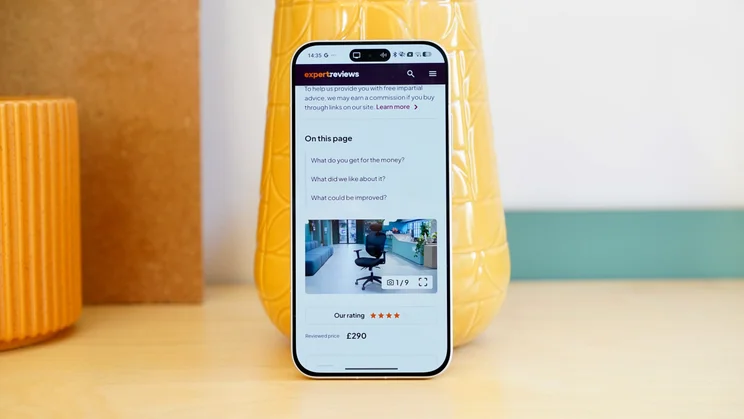
Xiaomi has reduced the size of the Poco F8 Pro’s OLED display slightly to 6.59 inches, but you wouldn’t call it small. It gets nice and sharp at 2,510 x 1,156, with a smooth 120Hz maximum refresh rate.
So-called ‘HyperRGB’ technology fully utilises the red, green, and blue sub-pixels, efficiently producing a vibrant picture. Regardless of the jargon, I recorded an excellent sRGB gamut coverage of 99.2% with a volume of 103.8%, and an average Delta E colour variance score of 1.08 (1 being the ideal). Those are high-end results, and are of a similar quality level to the Poco F8 Ultra.
Also like the Poco F8 Ultra is a recorded maximum brightness (with auto-brightness turned off) of 600cd/m2. Xiaomi claims that it can hit 2000cd/m2 with auto brightness on and in direct sunlight, and 3500cd/m2 across a limited area during HDR content playback. It’s a very impressive display given the price of the phone.
Poco F8 Pro review: Performance and battery life
The Poco F8 Pro has been fitted out with the Snapdragon 8 Elite processor. That’s a flagship chip, albeit one from late 2024 and early 2025 rather than the current Snapdragon 8 Elite Gen 5 that powers the Ultra.
Paired with a solid 12GB of LPDDR5X RAM, it’s enough to yield results that I’m still comfortable referring to as ‘flagship’, though in benchmarks it falls a little short of even the early 2025 flagship crowd. In our usual Geekbench 6 CPU and GFXBench GPU tests, it hammers the likes of the Google Pixel 10 Pro, while dropping slightly short of the Samsung Galaxy S25 and the OnePlus 13 on the CPU front.
This remains sufficient to run high-end games like Grid: Legends and Destiny: Rising on higher graphical settings – though the latter game peaks at 60fps, rather than the 90fps provided by the Snapdragon 8 Elite Gen 5 in the Poco F8 Ultra and the OnePlus 15.
Again, this isn’t the fastest phone you can get for the money. The Nubia Z80 Ultra and the RedMagic 11 Pro both give you more performance for a similar price. But it is an impressive amount of power for such an unassuming mid-priced phone – it’s fast, but it doesn’t like to shout about it.
Such unassuming performance is present in the Poco F8 Pro’s stamina, too. With a 6,210mAh cell, it falls a little behind the Poco F8 Ultra’s 6,500mAh, but it actually outperformed its big brother in our looping video test. With airplane mode active and the screen brightness set to 170cd/m2, the F8 Pro lasted 32hrs 6mins – about 2hrs 30mins longer than its brother.
This would seem to lend further weight to the suggestion that the new Snapdragon 8 Elite Gen 5 chip isn’t quite as efficient as we’d like it to be. It also means that the Poco F8 Pro will last you through a full day of seriously heavy usage, or two full days of more regular usage, without issue.
When it comes time to recharge, the Poco F8 Pro supports 100W wired charging. Using a compatible Xiaomi charger (there’s nothing but a cable in the box), this got me from empty to full in about 40 minutes. It’s a shame to note that there’s no wireless charging provision, however.
Poco F8 Pro review: Cameras
Perhaps the most consequential difference between the Poco F8 Pro and its Ultra brother lies with the camera set-up. The Poco F8 Pro hasn’t made the same great strides forward, utilising the same 50-megapixel Light Fusion 800 main image sensor as the Poco F7 Pro.
You get the same underwhelming 8-megapixel ultra-wide, too. The biggest addition – and it’s not an insignificant one – is a dedicated 50-megapixel 2.5x telephoto camera, yielding proper optically zoomed shots.
When it comes to image quality, the Poco F8 Pro yields mixed results. That main sensor is a dependable performer, producing vibrant, sharp images with strong contrast. In good lighting, it isn’t a million miles away from the Ultra with its larger sensor, perhaps lacking a little of its brother’s ability to pull detail out of shadow. Ditto for 2x zoomed shots that crop in on that main sensor.
The difference in quality manifests itself in night shots, which pack much less crisp detail and take longer to capture on the Pro. They’re passable, but lack the sheer clarity of the Ultra. As you get deeper into those zoomed shots, the Poco F8 Pro’s quality shortfall manifests itself too. An optical zoom length of 2.5x isn’t particularly extensive, and as you get to 10x and 30x, detail really falls away.
Another flaw with the overall camera system is that the three main cameras have noticeably different tones to them. It’s particularly noticeable when you jump the ostensibly short distance from the cropped 2x of the main sensor to the natural 2.5x of the telephoto. It’s also evident with the 8-megapixel ultra-wide, which has a noisy, overprocessed look all of its own.
I wasn’t too impressed with the selfie quality from the 20-megapixel front camera either. It’s technically a larger sensor than the Ultra’s, but my selfies lacked the latter’s natural colour balance and HDR capabilities.
Video support extends to 4K at 60fps, aided by OIS. Footage captured at this maxed-out setting looks just fine, without approaching iPhone levels of quality.
Poco F8 Pro review: Verdict
While not as aspirational as the Poco F8 Ultra, the Poco F8 Pro is quietly impressive in its own right. It’s a mid-range phone that exudes a certain flagship energy, chiefly through its snappy performance, excellent display, and brilliant stamina.
A somewhat inconsistent camera set-up and the lack of wireless charging give the game away that you’re dealing with a mid-range option, which is something the similarly priced Google Pixel 9a managed to overcome for a little less money.
Aside from the usual grumbles over Xiaomi’s unlovely HyperOS UI, though, it’s difficult to find major fault with the Poco F8 Pro. It performs and handles well, and it won’t eat up all your spending money like those flashy flagships.