To help us provide you with free impartial advice, we may earn a commission if you buy through links on our site. Learn more
Samsung is playing something of a shell game with its new foldable smartphone selection, shuffling things around in front of our eyes and trying to conceal a price increase.
Specifically, instead of calling its new, wider format the Galaxy Z Fold 8 Wide, as many expected, that wide model is now the defacto Galaxy Z Fold 8, and this one, which is for all intents and purposes the generational follow-up to last year’s Galaxy Z Fold 7, is now the Z Fold 8 Ultra. Keep your eye on the ball here.
The naming convention falls into line with the Galaxy S26 series, I suppose, so there’s a certain amount of brand synergy to it, but I can’t help but feel that Samsung is slapping on the “Ultra” suffix to try and convince people that this phone is a big step up from the Z Fold 7, and therefore worth the price hike, instead of the generational update that it actually is.
Samsung Galaxy Z Fold 8 Ultra: Specifications
- Processor: 4.74GHz Qualcomm Snapdragon 8 Elite Gen 5 for Galaxy
- RAM: 12GB, 16GB
- Storage options: 256GB, 512GB, 1TB
- Internal display: 8in, 2,184 x 1,968, 120Hz, LTPO AMOLED 2X
- External display: 6.5in, 1,080 x 2,520, 120Hz, LTPO AMOLED 2X
- Rear cameras: 200MP (f/1.7), 10MP (f/2.4) 3x telephoto, 50MP (f/2.2) ultrawide
- Selfie cameras: 10MP (f/2.2) x2
- Battery: 5,000mAh
- Charging: 60W wired, 25W wireless
- Dust and water resistance: IP48
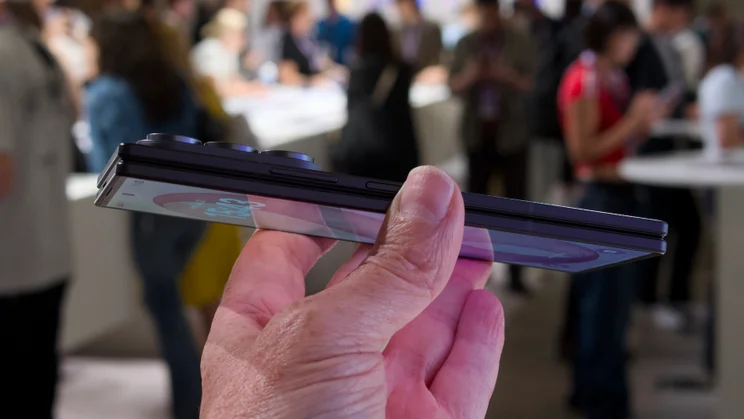
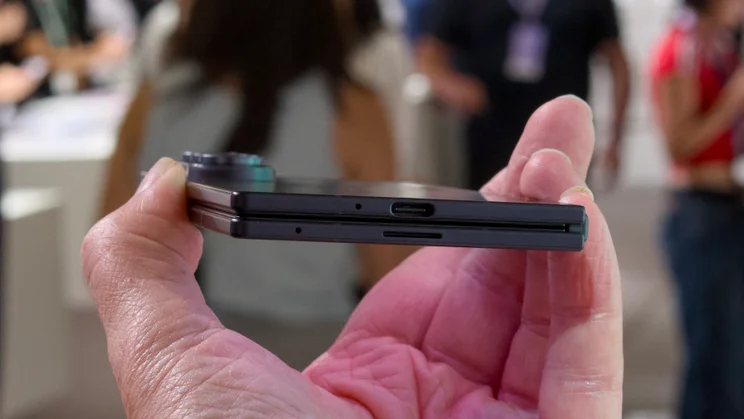
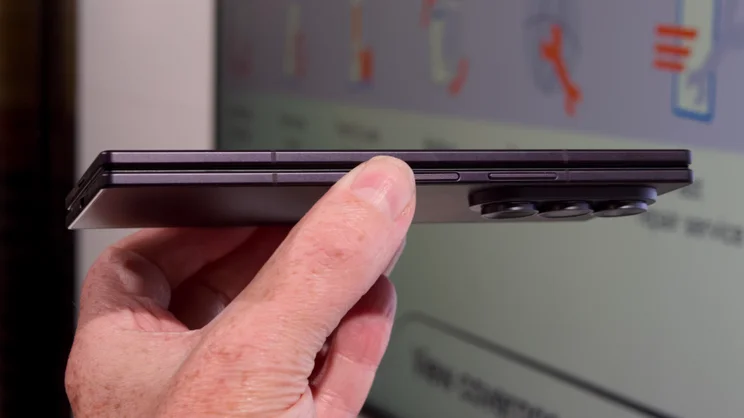
- Dimensions (WDH): 73 x 8.9 x 158mm (folded); 143 x 4.1 x 158mm (unfolded)
- Weight: 215g
- Colours: Graphite, Violet Shadow, Cream, Green Shadow
- UK price: £1,899 (256GB); £2,069 (512GB); £2,319 (1TB)
- UK release date: 7 August, Preorder now from Samsung
Samsung Galaxy Z Fold 8 Ultra: New features and first impressions
If you were to line that specs sheet up next to last year’s Galaxy Z Fold 7, you’d notice that it’s very similar – but there are a couple of notable improvements.
For starters, we have the expected upgrade to the Snapdragon 8 Elite Gen 5 for Galaxy chipset, the same processor used by the Samsung Galaxy S26 Ultra and generally just one of the most powerful processors on the market. In short, I expect the Z Fold 8 Ultra to do gangbusters when it comes time for our benchmark testing.
The chipset is backed by either 12GB of RAM and 256GB or 512GB of storage or 16GB of RAM and 1TB of storage, depending on what configuration you choose. Prices are a little more than last year but, to Samsung’s credit, I’ve seen worse. The 256GB model now starts at £1,899, which is £100 more than last year.
Also new with the internals is the 5,000mAh Si-Ca battery, which is a decent improvement over the 4,400mAh capacity on the Z Fold 7. Charging is faster, too, with wired now supporting up to 60W and wireless extending to 25W Qi2.2.
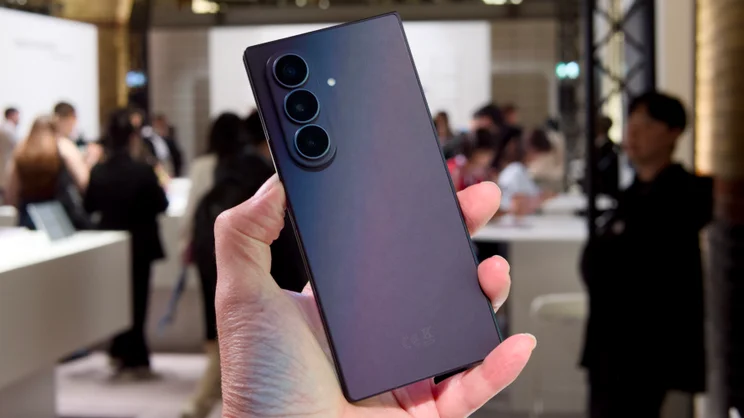
And then there’s the ultrawide camera, which replaces last year’s 12-megapixel (f/2.2) lens with a more pixel-dense 50-megapixel sensor and a wider f/1.9 aperture. This joins the same 200-megapixel (f/1.7) main camera and 10-megapixel (f/2.4) 3x telephoto that we saw on the Z Fold 7.
It’s a shame to see no improvements to the telephoto camera, as the competition all offer stronger shooters – both the Honor Magic V6 and the Motorola Razr Fold have far more pixels, at 64MP and 50MP, respectively, and the Pixel 10 Pro Fold offers a more impressive 5x optical zoom.
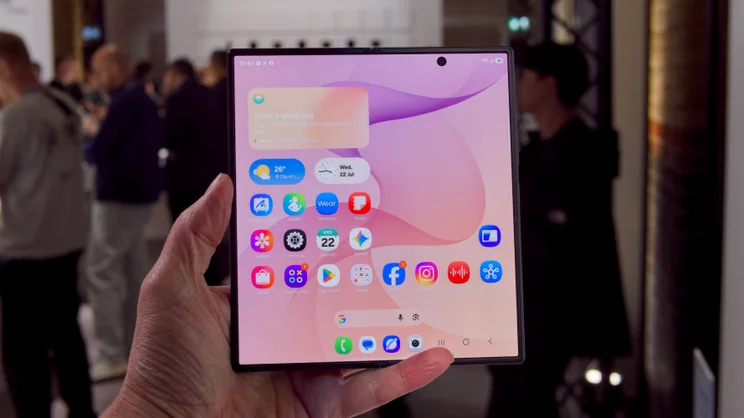
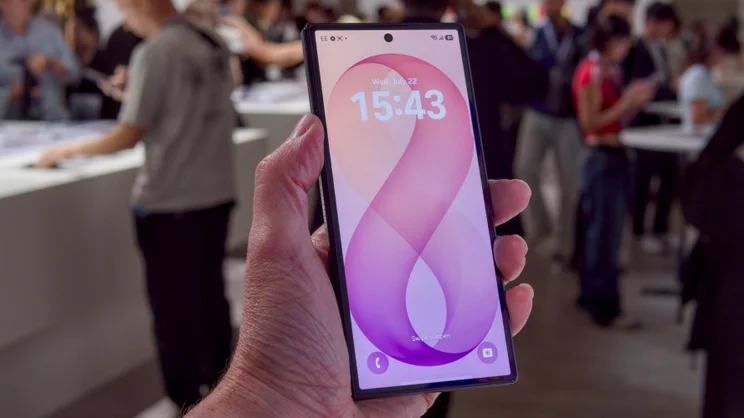
The displays are mostly the same as last year: the cover is a 6.5in AMOLED 2X panel with a resolution of 2,520 x 1,080 and a peak refresh rate of 120Hz, while the internal display is an 8in AMOLED 2X with a 2,184 x 1,968 resolution and 120Hz refresh rate. The internal display gets a new Flex Titanium design, however, that is sturdier than the previous generation and disperses stress more evenly, resulting in a slimmer hinge crease.
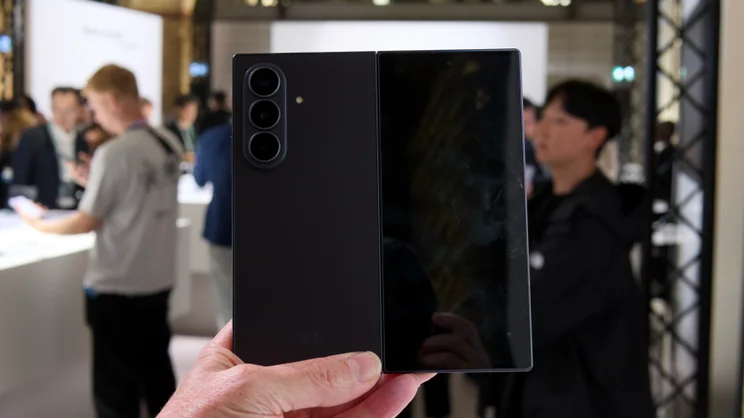
The hinge itself is redesigned to match, with the ArmorFlex structure said to provide smoother and more sturdy opening and closing. In use, I didn’t notice much of a difference here, but it’s still as good as the Z Fold 7, at least.
The IP48 rating is once again identical to last year, and it’s the one area in which the Galaxy Z Fold 8 Ultra falls behind the competition: the IP68 Pixel 10 Pro Fold and the IP68/IP69 Honor Magic V6 are both fully dustproof – Samsung lagging in this area doesn’t feel very ultra now, does it?
Software sees the debut of of Android 17 and Samsung’s own OneUI 9, once again backed up by seven years of software support. The focus here is on AI, with agentic features like Now Brief and Now Nudge further personalising your recommendations, retrieving contextual information when you’re asked questions in texts and suggesting relevant next steps when making plans.
Samsung Galaxy Z Fold 8 Ultra: Early verdict
The lack of an IP68 rating really hurts Samsung’s foldable output this year, but none feel the sting more so than the Ultra model. With this kind of money being laid down, you want to see premium features in every corner, and the fact that it’s being outdone by both Honor and Google is not a good look for Samsung.
And that’s a shame because, aside from that flaw, the Galaxy Z Fold 8 Ultra looks like another killer foldable from Samsung – even accounting for the new, higher price. Power is likely to be unmatched, battery life should be better thanks to the power-efficient processor and higher battery capacity, and the new ultrawide camera joins an already very good main shooter, further bolstering the photography credentials.
I feel that the wide Galaxy Z Fold 8 is likely to be the better of the pair this year. I’ll have my full review soon, and perhaps the Ultra will surprise me, but as things stand right now, I feel like anyone seeking the most premium experience possible from their foldable phone will much prefer the Honor Magic V6.