To help us provide you with free impartial advice, we may earn a commission if you buy through links on our site. Learn more







- 5x telephoto camera
- Excellent battery life
- Flawless AMOLED display
- Plastic frame and rear
- HyperOS is too fussy
- Getting expensive
Before we get into this review, I want to make one thing clear: the Xiaomi 17T has impressed me. It’s the kind of smartphone update I really appreciate. One where the company has clearly listened to feedback regarding the previous model and made steps to improve it, rather than belligerently sticking to its guns.
Where its predecessor was staid and failed to move the needle, the Xiaomi 17T represents actual advancement, making some key improvements that lessen the sting of the (seemingly inevitable) price increase.
It doesn’t all work flawlessly. The software remains a sticking point, and some may find the use of plastic composite in the frame and rear plate not to be as premium as they’d like for the money. Even still, the Xiaomi 17T works overall as a well-rounded mid-ranger, and it’s a great alternative to flagships as prices rise in all corners of the market.

Xiaomi 17T: What you need to know
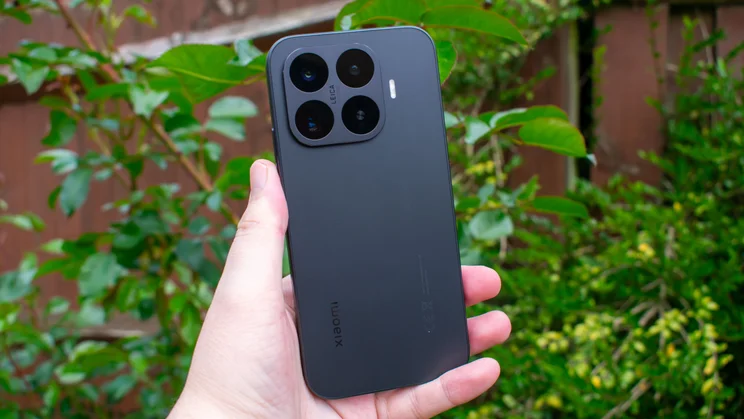
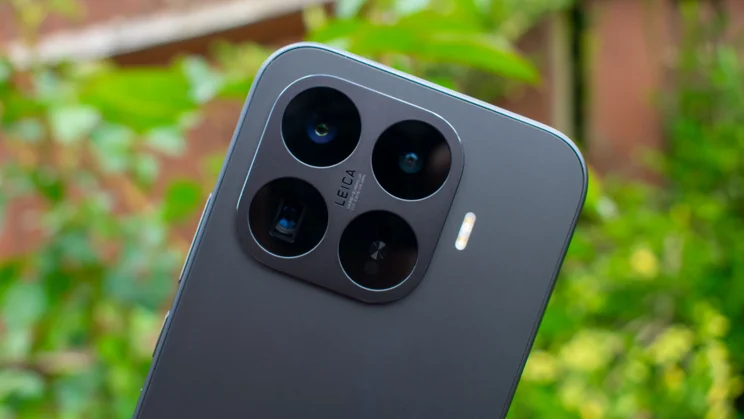
There are several changes with the Xiaomi 17T, but the most exciting is the telephoto camera. Where last year’s Xiaomi 15T had a perfectly fine 2x optical zoom lens, the Xiaomi 17T upgrades this to the same 50-megapixel (f/3.0) 5x telephoto as its Pro sibling.
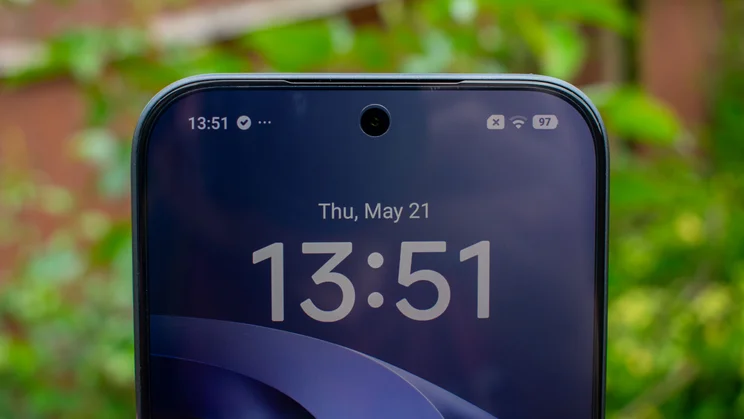
In fact, near-enough the entire camera offering matches the Xiaomi 17T Pro. It has the same 32-megapixel (f/2.2) selfie camera, 12-megapixel (f/2.2) ultrawide and a 50-megapixel main lens. The latter is the only one that’s slightly different. The Pro model’s main camera has a larger sensor and a slightly wider f/1.6 aperture, compared to f/1.7 here.
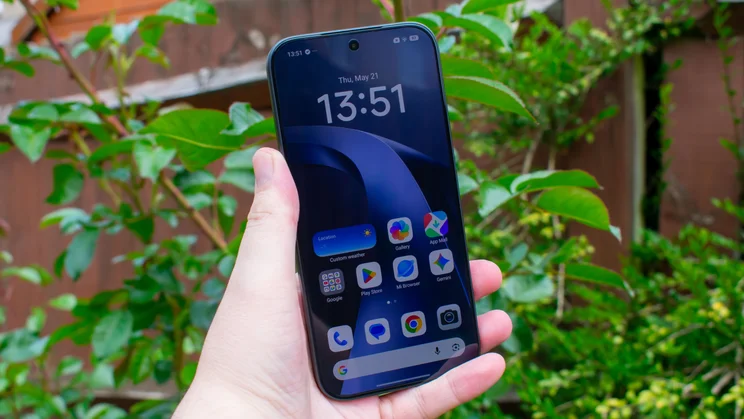
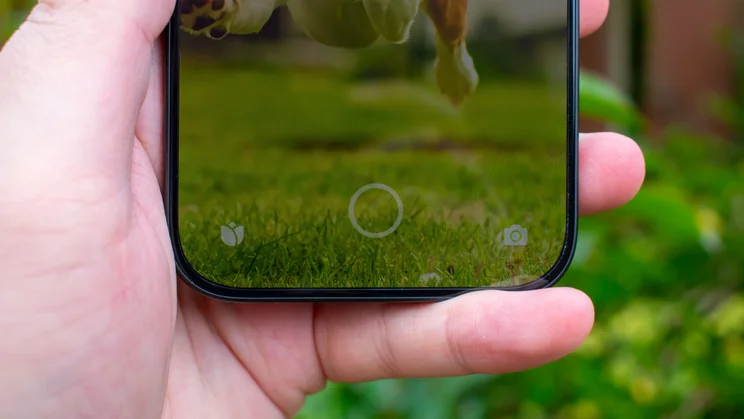
The next change could be considered a weakness but personally, I like it. The display is smaller than last year, now a 6.59in AMOLED (down from 6.83in), with the same 120Hz peak refresh rate and resolution of 1,268 x 2,756.
Inside, we have a minor upgrade to the processor, incrementally increasing from the MediaTek Dimensity 8400 Ultra to the 8500 Ultra, with a tiny uptick in peak clock speed (3.4GHz, compared to 3.25GHz) and backed by 12GB of RAM and either 256GB or 512GB of storage space.
Last, but certainly not least, is the battery, which has a much larger capacity of 6,500mAh this year (up from 5,500mAh on the 15T) thanks to the switch to Silicon-Carbon technology. Charging is still limited to just wired but the speed remains a nippy 68W.
Price and competition
There are two variants of the Xiaomi 17T: the 256GB model costs £649 and the 512GB version is £699, both £100 more than their 15T counterparts from last year.
That increase puts it firmly in the crosshairs of the Google Pixel 10, which currently starts at £549 for the 128GB model, with the 256GB costing the same £649 as the Xiaomi 17T. The main benefits here are Google’s excellent seven years of software support, the PixelSnap magnetic wireless charging and a 5x telephoto camera – albeit at a lower resolution of 10.8 megapixels.
Also worth considering is the iPhone 17e, which costs £599 for the 256GB model or £799 for the 512GB version. This delivers excellent performance and beautiful shots from its camera, but it lacks a telephoto camera.
The same holds true for the OnePlus 15R. It has no zoom lens on the rear, but attempts to make up for this shortcoming by punching well above its weight when it comes to performance and battery life. There’s only one variant, with 12GB of RAM and 256GB of storage, and it will set you back £549.
Design and key features
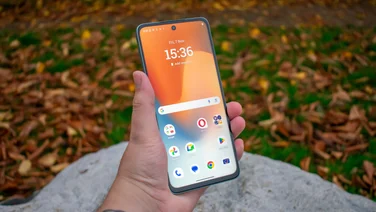
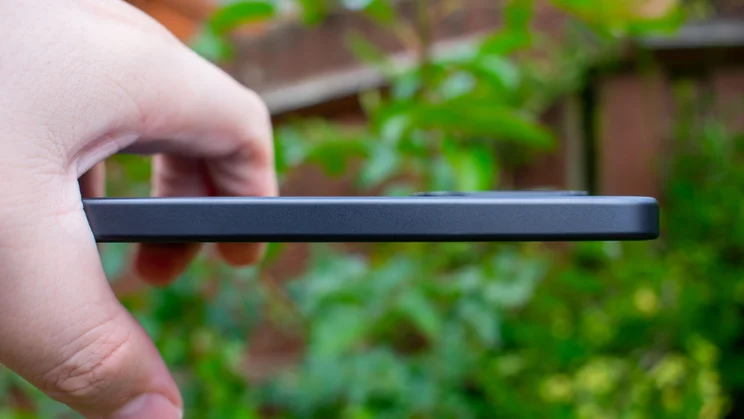
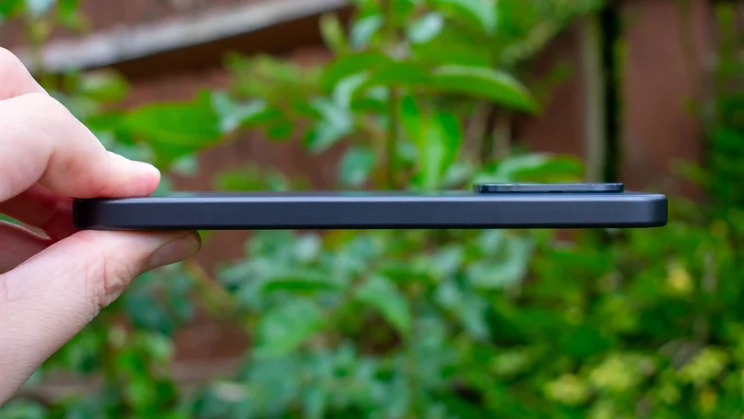
That smaller display leads to a more compact build and this is why I like it. The Xiaomi 15T looked too much like its Pro sibling, lacking that physical distinction to go with the price disparity. Now, the 17T better looks the part of the little sibling, measuring 75 x 8.2 x 158mm (WDH) – a solid “mid-size” build that offers plenty of display real-estate without aggravating the smaller-handed among us.
Interestingly, both that thickness and the 200g weight are a little bigger than last year’s Xiaomi 15T, so it feels decently hefty in the hand, despite its smaller dimensions. It’s robust as ever, too, with Gorilla Glass 7i over the screen for scratch protection and the same IP68 dust and water resistance rating as its predecessor.
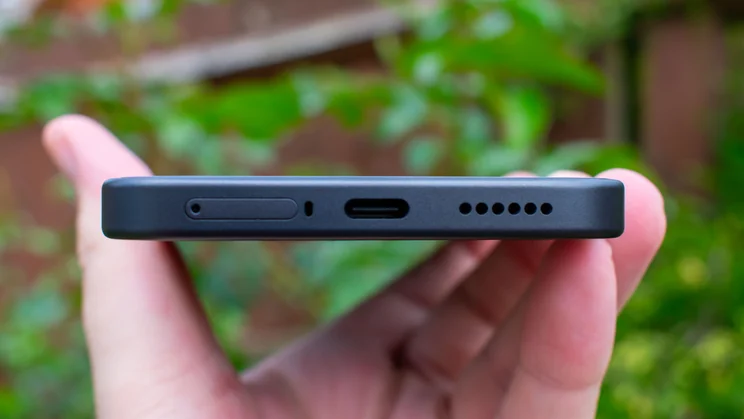
The only downside to the quality of the build is the plastic used in the frame and rear. Both are clean and smooth enough, but for this kind of money an aluminium frame and a sleek glass rear don’t feel like too much to ask for.
There are four colour options to choose from this year. My review sample came in black, but there are also Opal White, Violet and Blue colourways. The latter is my favourite of the bunch, rendered in a soft, sky blue that feels similar to the shade we saw on the Xiaomi 17 earlier this year.
The optical fingerprint sensor is placed a little low on the display for my liking but otherwise functions efficiently and reliably enough, and I had equally consistent results from the face unlocking via the selfie camera. Connectivity is the same as last year, covering up to Wi-Fi 6E and Bluetooth 6.0.
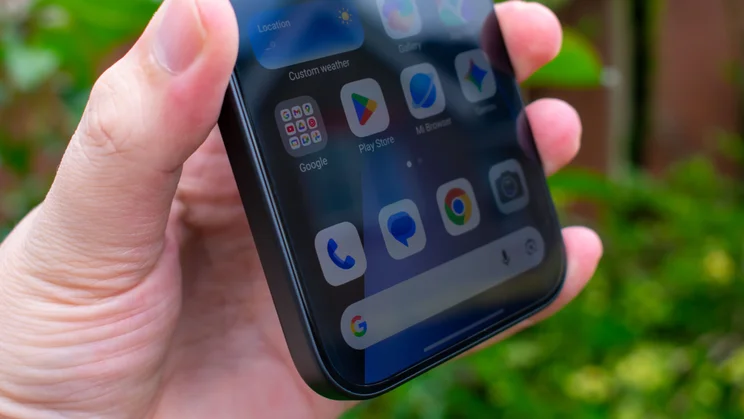
The software is Xiaomi’s own HyperOS 3, based on Android 16. I struggle to look past certain cluttered design elements of this OS: I’ll never tire of complaining that general settings are muddled in with the quick launch tiles; and there’s too much bloatware preinstalled. Beyond these issues, though, it’s slick and accessible enough.
Xiaomi’s software support pledge is decent, too, with four years of OS updates and six years of security patches promised, but the competition is just that little bit better. The Honor 600 (yet to be reviewed) is set for six years of both and the Google Pixel 10 offers seven apiece.
Display
It may be smaller but the AMOLED display is as excellent as ever. The 1,268 x 2,756 resolution yields a pin-sharp pixel density of 460ppi, there’s once again 3,840Hz PWM dimming for eye-strain prevention and peak brightness is up from a claimed 3,200 nits to 3,500 nits.
That will just be in very specific conditions during HDR playback, however; In my testing, brightness was still very good: it hit 600cd/m2 with everything set to manual, 1,006cd/m2 on adaptive brightness with a torch shining on it and it peaked at 1,928cd/m2 when displaying HDR content.
Xiaomi is also one of the best in the business when it comes to colour accuracy. The default Original Colour Pro setting is so good that I don’t even really feel like you need the other option – a more saturated Vivid profile, in case you’re interested. Gaming and streaming still look nice and punchy and the reproduction of the sRGB colour space is excellent. In my testing, I recorded gamut coverage of 97% with a volume of 98.9%, and the average Delta E came back at 1.06 – near-enough dead on for our target of 1 or under.
Performance and battery life
The 3.4GHz MediaTek Dimensity 8500 Ultra chipset is a relatively minor upgrade over last year’s version. In the Geekbench 6 CPU test, the 17T only scored 6% higher than its predecessor in the single-core benchmarks, and a mere 3% in the multi-core.
These speeds are fine, and I never found daily operations to be lethargic or plagued by extensive micropauses when opening and swapping between apps, but as you can see below, there’s better available for this kind of money. The OnePlus 15R in particular is blisteringly powerful, with leads of 70% and 41% over the Xiaomi 17T in the single- and multi-core stakes, respectively.
I was more impressed with the improvements to gaming performance, with the Xiaomi 17T beating its predecessor in the Geekbench 6 Vulkan GPU test by 13%. I ran through a few laps of Asphalt Legends to test it out and found that gameplay was wonderfully fluid, while scenery textures whipping past remained nice and sharp throughout.
Switching the battery to silicon-carbon technology and upping the capacity to 6,500mAh yields a decent improvement to stamina as well, with the Xiaomi 17T lasting 31hrs 17mins in our looping video battery test. That’s a little over three hours better than the Xiaomi 15T.
This is a fiercely competitive price range, however, and there are a couple of options that deliver battery life that’s even better. The Pixel 10a just inches ahead of the OnePlus 15R to be the best in this corner of the market, lasting for around seven hours longer than the Xiaomi 17T.
Upping the battery capacity without improving the charging speeds means charging is initially a tiny bit slower than its predecessor. In my testing, 26 minutes on charge brought the battery from empty to 50%, but things sped up from there, achieving a full charge in the same 1hr 10mins as its predecessor.
By comparison, the Google Pixel 10a takes around an hour and a half to hit 100%, while the OnePlus 15R’s 80W charging gets the job done in just under an hour.
Cameras
Lack of camera improvements was one of my biggest issues with the Xiaomi 15T so it’s great to see the 17T trotting out a new lens. The f/3.0 50-megapixel 5x telephoto is the same shooter that we saw on the Xiaomi 15T Pro, and that’s a very good thing.
Like the rest of the cameras, this lens is co-engineered with the photography wizards at Leica, and it features both optical image-stabilisation (OIS), and phase-detection autofocus (PDAF), all of which amounts to it being well-suited to capturing striking portraits and crisp, detailed macro shots.
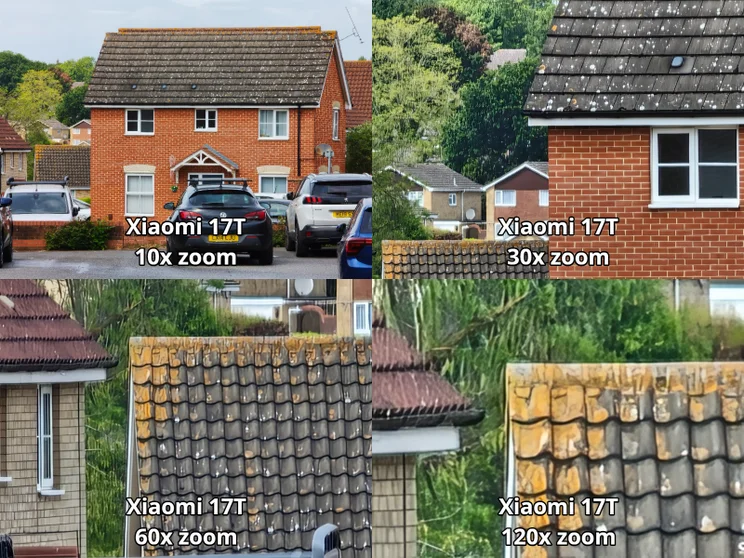
Upping the optical zoom also has the knock-on effect that the Xiaomi 17T can digitally zoom twice as far as its predecessor, now reaching all the way up to 120x. That’s overkill, and results at that distance are quite smudgy and over-processed, but 10x shots look fantastic and you can get solid images in the 20x to 40x range.
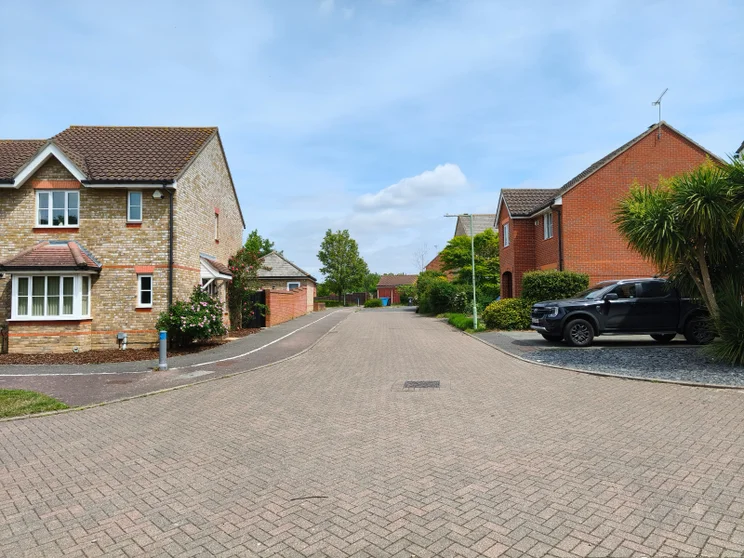
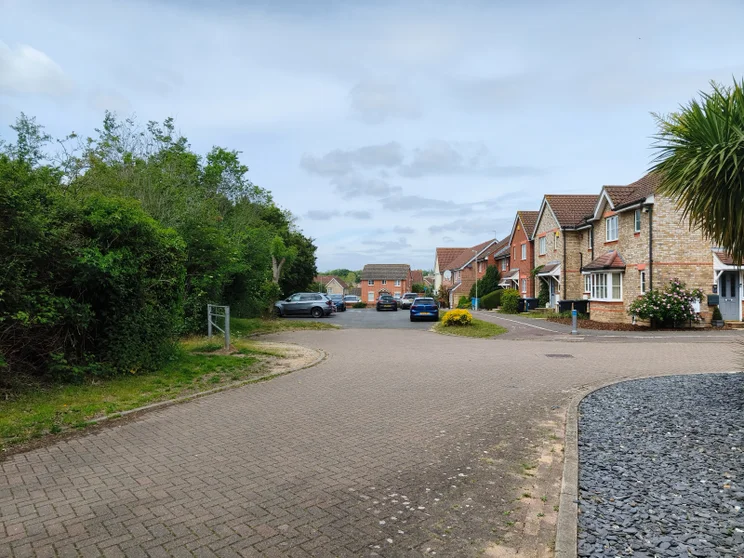
The main lens is another 50-megapixel unit with an f/1.7 aperture, again supporting both OIS and PDAF. Shots captured here are bright and detailed, with gorgeous dynamic range and punchy colouring. Greens are a little exaggerated for my taste on the default Leica Vivid profile (below) but you can switch to the Leica Authentic colouring for more natural-looking shades, if you prefer.
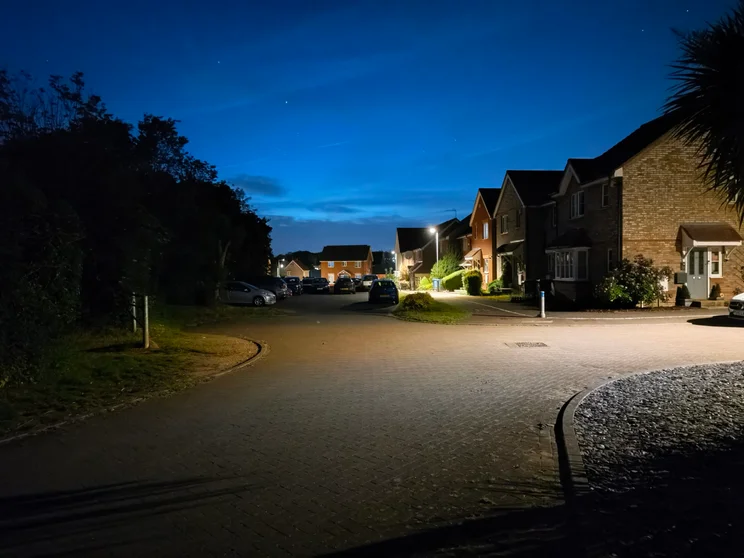
Night photography is decent, too: detail levels are solid, colours are consistent with day shots and big blocks of darkness are mostly free from excess visual noise.
The 12-megapixel (f/2.2) ultrawide could be sharper, but otherwise it’s a solid enough inclusion. The colour tone sticks closely to the look of the main camera, and the detail fall-off in the corners is small enough to not be noticeable for the most part.
The selfie camera is still decent, capturing portraits with good focus and rich skin tones and shoots 4K video at 30fps or 1080p at 60fps. The rear video ups this to 4K at 60fps, with options to record 10-bit HDR and LOG formats, too.
Xiaomi 17T: Verdict
The overarching theme here is that the Xiaomi 17T shares a great deal of features with its Pro sibling. So many, in fact, that my recommendation is firmly to forgo the Pro and save some cash with the standard model. You still get brilliant battery life, a pixel-perfect display, and that fantastic 5x telephoto camera – plus the rest of the cameras are great, too.
More to the point, the issues that plague the Xiaomi 17T are, for the most part, flaws of the Pro model, too: the software is fussy, but universal across Xiaomi phones; the 17T Pro uses the same fiberglass on the rear (albeit with an aluminium frame) and, as is the case across the smartphone spectrum this year, prices have increased.
So of the two, the Xiaomi 17T is firmly my favourite. As for how it compares to the rest of the competition? Well, that 5x telephoto camera is doing a lot of heavy lifting, but it is a unique feature that the chief players in this price range can’t match. If you favour photography above all else, the Xiaomi 17T is well worth your consideration.