To help us provide you with free impartial advice, we may earn a commission if you buy through links on our site. Learn more
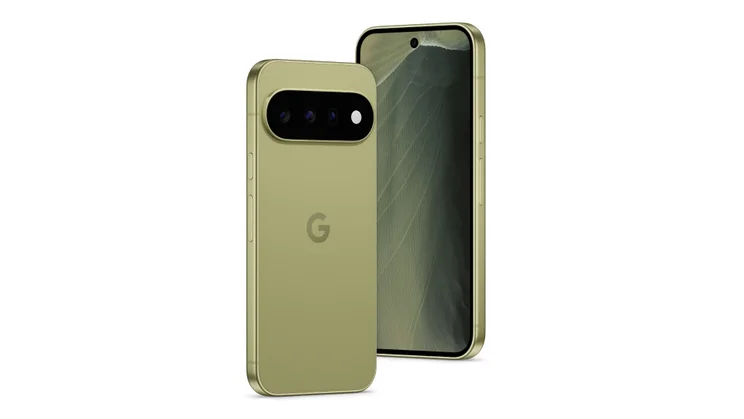
The Google Pixel 11 is the latest in a line that has historically been the least appealing option of the big three’s entry-level smartphones; Apple’s popularity and dedicated iPhone fanbase speak for themselves, and Samsung’s Galaxy S series regularly pip the Pixels in both portability and performance.
However, the Pixel series has recently made some great leaps. Last year’s Pixel 10 proved a huge advancement for the series, thanks to a sharp new 5x telephoto camera and useful PixelSnap magnets built into the rear.
The Pixel 11 builds on this strong foundation with a new processor that Google claims is its fastest yet, higher storage capacities and improved charging. It’s not as big a leap as last year, but the Pixel 11 is shaping up reasonably well.
Google Pixel 11: Specifications
- Google Tensor G6 processor
- 12GB of RAM
- 256GB or 512GB of storage
- 6.3in, 2,424 x 1,080, 120Hz OLED Actua display
- 4,985mAh battery
- 30W wired charging
- 25W Qi2.2 wireless charging
- IP68 dust and water resistance
- Rear cameras: 48MP (f/1.7), 13MP (f/2.2) ultrawide, 10.8MP (f/3.1) 5x telephoto
- 10.5MP (f/2.2) selfie camera
- Dimensions: 72 x 8.6 x 153mm (WDH)
- Weight: 204g
- Colours: Obsidian, Frost, Pistachio, Hibiscus
- UK price: £899 (256GB), £999 (512GB)
- UK release date: 19 August 2026; Preorder now from Google
Google Pixel 11: Key new features and first impressions
The most exciting feature here isn’t immediately obvious, but sees Google following the path laid out by Samsung: the 128GB model is no more. The Pixel 11 now starts with the 256GB variant, which costs the same £899 as its counterpart from last year. On top of that, this generation debuts a 512GB model, which costs £999 and is the highest storage yet for any non-Pro Pixel.
The look of the Pixel 11 is similar to the Pixel 10, but the rear camera bar has had a slight change, dropping the colour-complementing metal plate that houses the flash and borders the lens glass in favour of a completely glass panel. I thought the metal element was a classy touch to the camera bar, so I’m not the biggest fan of this change, but it’s subtle enough that I’ll likely get over it quite quickly.
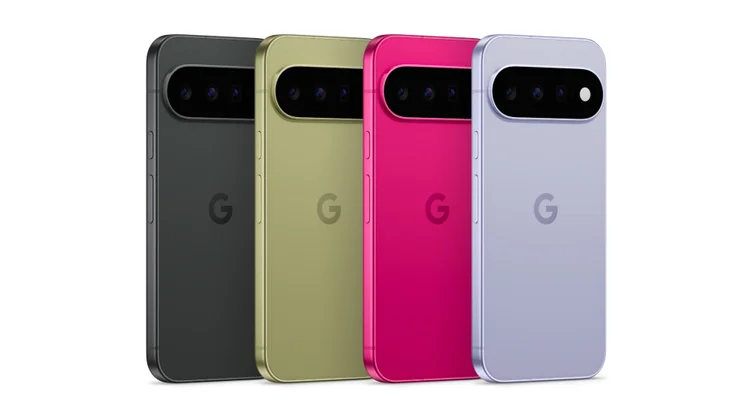
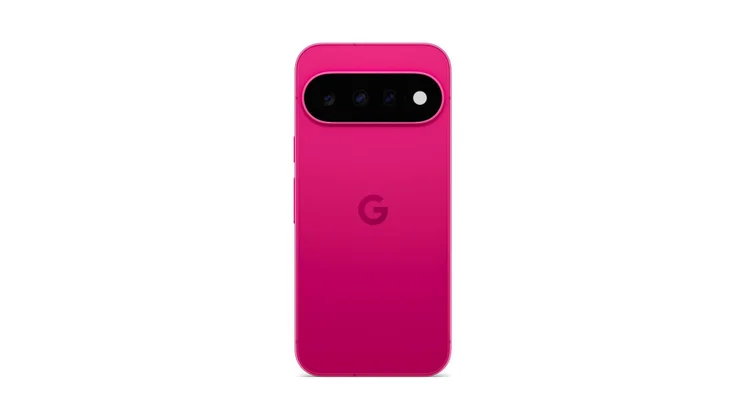
The black glass doesn’t stick out like a sore thumb on the Obsidian model. However, it looks more obviously tacked onto the more colourful Hibiscus (shocking pink), Frost (icy, lavender blue) and Pistachio (a rich mossy green) finishes.
The Pixel 11’s rear bar omits the new HiLight notification system that’s arriving on the Pro models. This sees an array of LEDs around the flash illuminate when someone is calling you or when you engage with Gemini AI. It’s a fairly rudimentary feature and not one I see many people missing.
The cameras themselves are similar to last year’s, with a 48-megapixel (f/1.7) main lens, a 13-megapixel (f/2.2) ultrawide and a 10.8-megapixel (f/3.1) 5x telephoto on the rear and a 10.5-megapixel (f/2.2) selfie camera on the front. The only difference is that the main camera uses a much larger sensor (1/1.56in compared to 1/2in), which should theoretically allow for greater light intake, improving night photography and overall detail.
The Tensor G6 processor apparently pairs an improved Image Signal Processor (ISP) with a TPU that is up to 50% more powerful than last year, delivering several camera improvements, including night photography that captures up to 4.5x more efficiently and the new “Magic Capture” mode.
The latter essentially takes a video and extracts high-quality stills to use as photos, with automatic cropping and unblurring. The idea is that you can just set it to record and sit back to enjoy a moment, instead of snapping endlessly or only watching your viewfinder as you wait for the perfect moment. I don’t see this as an everyday thing, but it sounds useful for situations where you want to be present in the moment and document it as well.
Other upgrades to the Tensor G6 include web browsing that is up to 25% faster than the previous generation, 15% faster app loading and, most critically, up to 20% better power efficiency compared to the Pixel 10 series.
One of my biggest issues with last year’s Pixels was that each model underperformed in my battery testing. Considering the batteries all had decent capacity, I suspected the issue lay in the Tensor G5 chipset’s power efficiency. As such, it’s heartening to hear that Google has addressed this area. Fingers crossed the Pixel 11 series fares better in my stamina tests.
The battery here is a tiny bit bigger than last year (and I mean a tiny bit; it’s 4,985mAh, up from 4,970mAh) and wired charging once again supports up to 30W. Wireless gets a little boost, however: last year, only the Pixel 10 Pro XL supported the faster Qi2.2 wireless charging standard, but this generation sees the love shared across the whole lineup, upping the potential speed from 15W to 25W.
Google Pixel 11: Early verdict
There is a lot to like about the Pixel 11 based on this initial introduction: faster wireless charging and a 512GB storage option are appreciated, and the Tensor G6 may well prove a boon to both battery life and camera results.
The removal of the 128GB model means the starting price is £100 more than last year, but at least Google has kept the cost of the 256GB version at the same £899 as before. If the Pixel 11 performs well in my CPU and battery life testing, it could well prove to be a fantastic comeback for the series after a lacklustre offering last year. Check back in soon for the full review to see how it goes.