To help us provide you with free impartial advice, we may earn a commission if you buy through links on our site. Learn more



- Display crease is barely there
- Excellent new ultrawide camera
- Better battery life
- Still only IP48 rated
- No stylus support
- Price increase for all configurations
Samsung has thrown a slight spanner in the continuity of its foldable smartphone series, but to make things very clear the Samsung Galaxy Z Fold 8 Ultra is the direct successor to last year’s Galaxy Z Fold 7. The Galaxy Z Fold 8, meanwhile, is a new addition to the lineup with a fresh design and form factor.
The addition of the “Ultra” suffix creates some pressure to be a big step up from the previous generation and yet, despite a couple of solid upgrades, the Z Fold 8 Ultra doesn’t feel like a particularly “ultra” successor. In particular, the fact that Samsung still hasn’t figured out how to make its foldables dustproof puts it firmly on the back foot compared to the Honor Magic V6 and its robust IP68/IP69 rating.

What you need to know
While its non-Ultra sibling blazes a new (sort of) trail, the Galaxy Z Fold 8 Ultra is sticking to more familiar roads, with just a couple of adventurous deviations here and there.
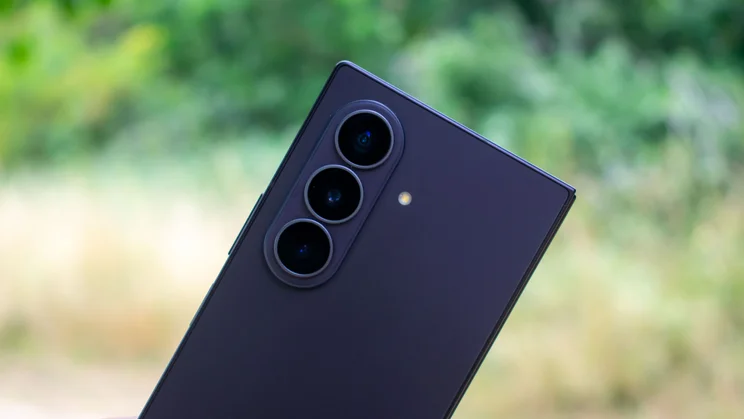
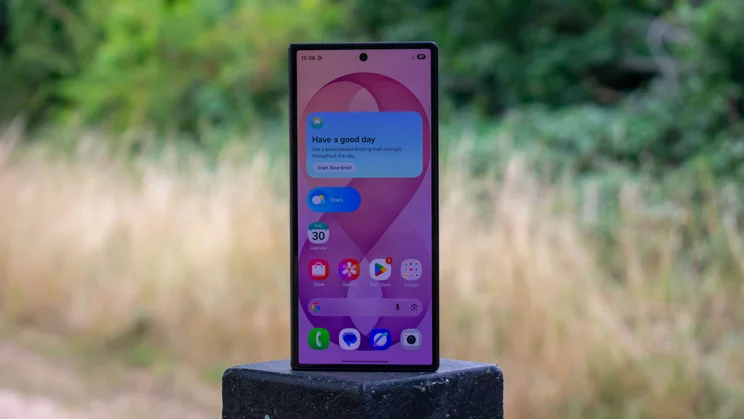
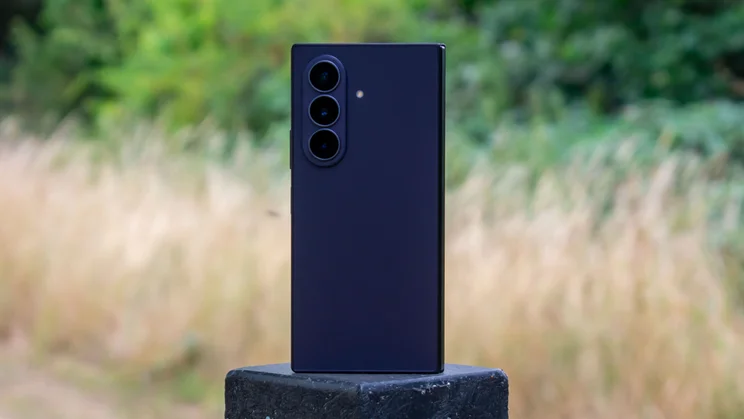
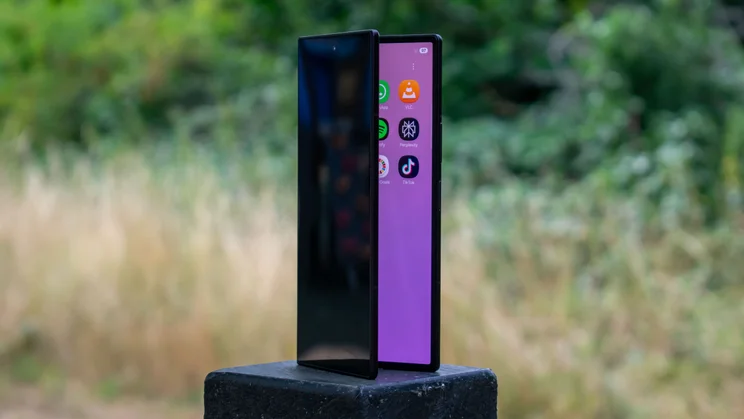
For the most part, the design is a dead ringer for last year’s Fold 7, with the exception of the colour palette, the Violet Shadow colourway shown here joined by Cream, Green Shadow and Graphite.
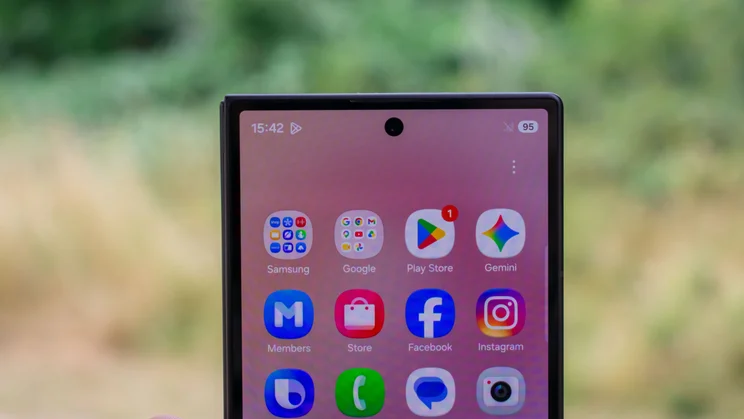
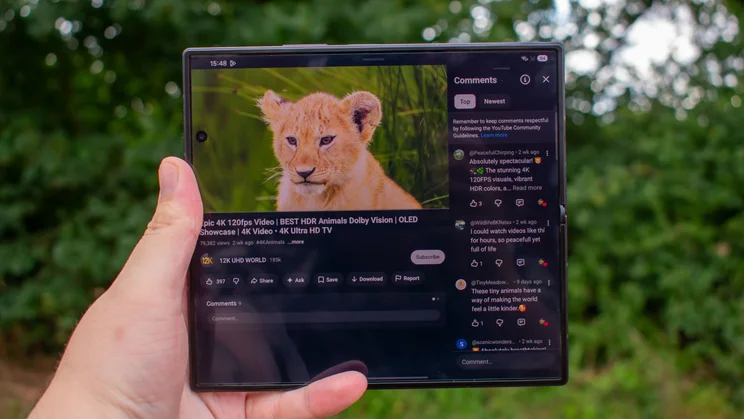
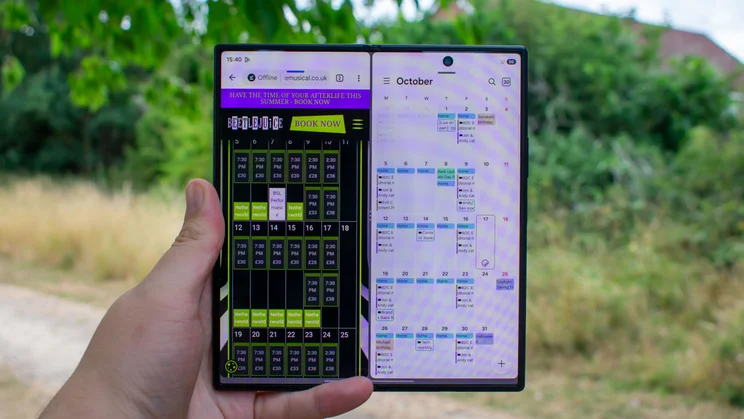
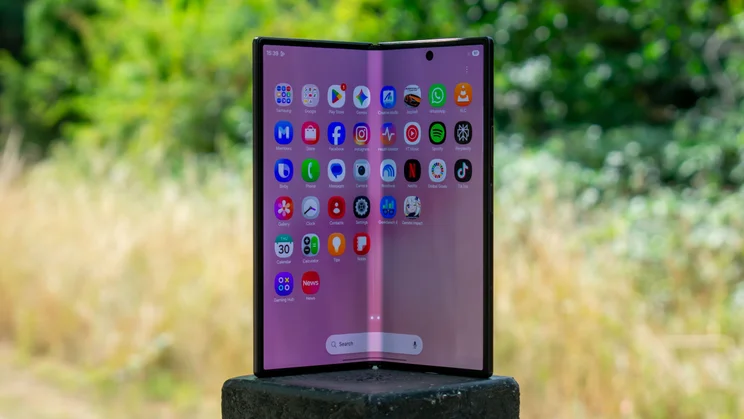
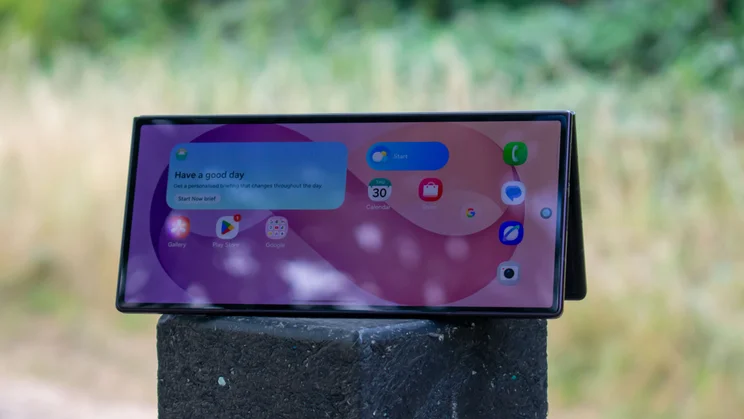
The cover screen has the exact same specifications as last year. It’s a 6.5in AMOLED panel with a resolution of 1,080 x 2,520 and an LTPO refresh rate peaking at 120Hz. However, the 8in foldable display has a slightly sharper resolution of 2,256 x 2,504 this time around, again paired with a dynamic refresh rate up to 120Hz.
Samsung has also made a minor change to the camera suite, swapping out last year’s 12MP ultrawide lens for a more pixel-packed 50MP sensor. It joins the same, massive 200MP main camera, 10MP 3x telephoto and twin 10MP selfie cameras as last year.
Finally, there’s also an upgrade to the latest Snapdragon 8 Elite Gen 5 for Galaxy chipset, and a higher-capacity 5,000mAh battery with support for faster 45W wired and 25W Qi2.2 wireless charging.
Price and competition
Starting at £1,899, the Galaxy Z Fold 8 is £100 more expensive than its predecessor, which in fairness is far from the worst price bump I’ve seen this year. That’s for the 256GB model, while the 512GB version now costs £2,069 and the 1TB model is £2,319, which is so ridiculous that it doesn’t feel like a real amount of money.
Prices are high in all sectors at the moment, however, and the Z Fold 8 Ultra’s main rival also saw a big increase this year, with the Honor Magic V6 (512GB storage) priced at £1,999. Honor is going for the jugular on pricing right now, however. On top of a £500 early-bird discount, Honor responded to Samsung announcing its latest foldables by cutting another £100 off the Magic V6, meaning that at the time of writing, you can nab one for £1,399.
That’s just through to the end of July, however, which may have already passed by the time you’re reading this. For a more consistently cheaper option, the Motorola Razr Fold is the most affordable 512GB foldable (deals not withstanding) at £1,799.
The Google Pixel 10 Pro Fold is currently discounted to £1,299 for the 256GB model, but that’s last year’s model and is likely to be replaced soon.
Design and key features
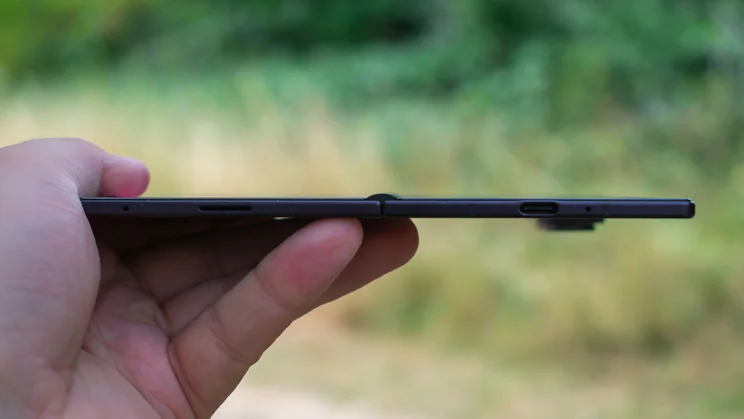
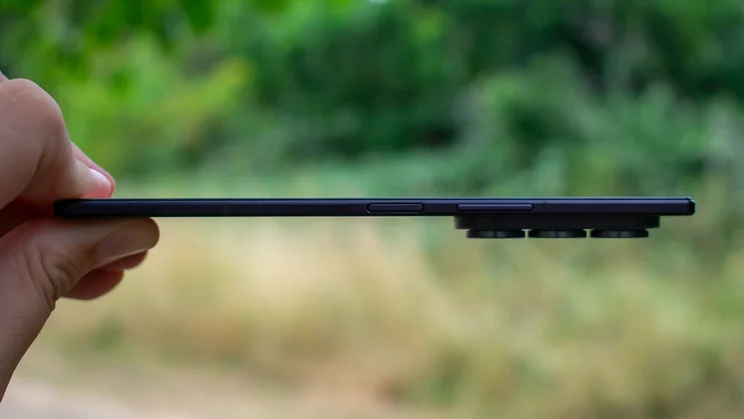
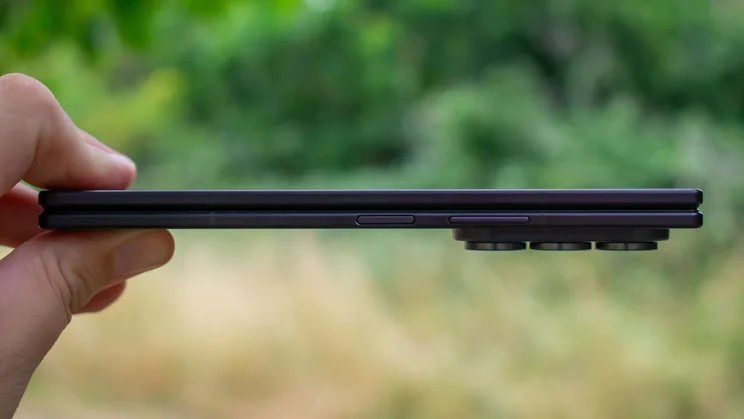
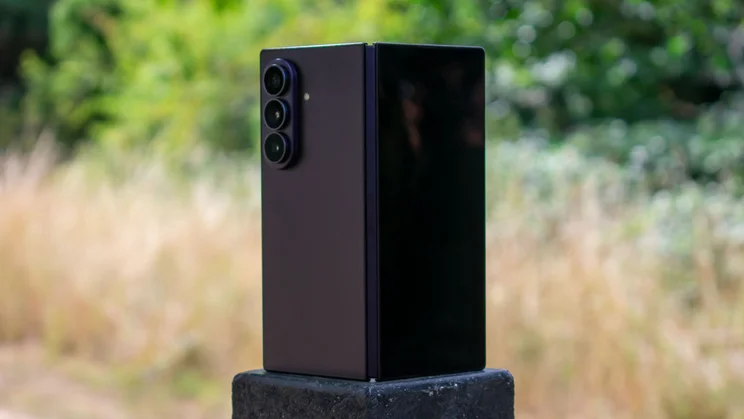
The dimensions of the Z Fold 8 Ultra are almost exactly the same as last year’s model, with the exception of the unfolded thickness, which has dropped ever so slightly from 4.2mm to 4.1mm. It still weighs the same 215g, which means it’s still one of the lightest foldables around, only undercut by Samsung’s own 201g Z Fold 8.
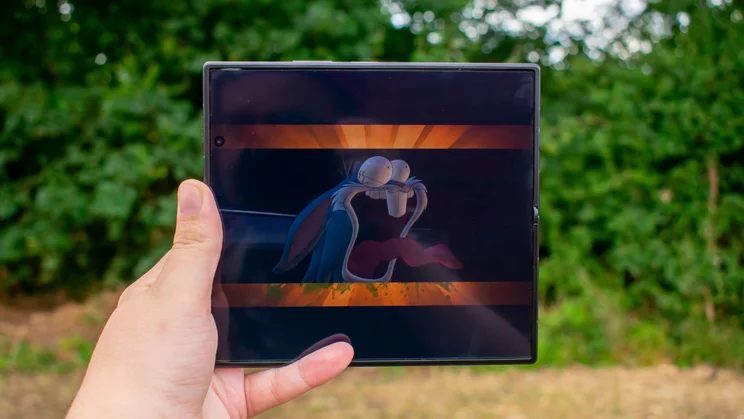
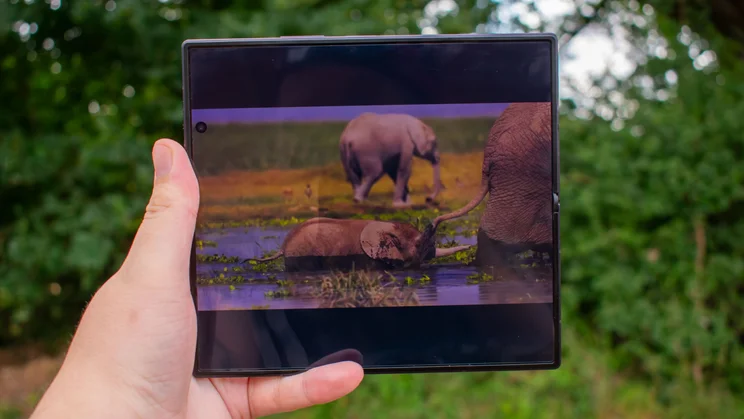
The marginally slimmer depth is due to an overhaul of the internal display architecture, with the new Flex Titanium material allowing the screen to be slimmer yet more durable. Most important, however, is the fact that this panel disperses the stress from the hinge more effectively, meaning the crease in the middle of the screen is near-enough invisible. It’s very effective and even when you run your finger over the display you can barely feel it.
Otherwise, the design is mostly the same as last year, in good ways and bad. The Armor Aluminium frame is paired with Gorilla Glass on the front and back (Ceramic 3 over the cover display and Victus 2 on the rear) and again is rated IP48 for dust and water resistance. This is a big shame as both Google and Honor have managed to produce fully dustproof IP68 foldables with the Pixel 10 Pro Fold and Magic V6.
Another feature the Z Fold 8 Ultra misses out on, for the second year in a row, is stylus support; both the Honor Magic V6 and the Motorola Razr Fold still have this feature so it’s disappointing to see that it hasn’t resurfaced. These massive displays feel like a natural fit for a stylus, so it’s a little baffling Samsung chose this particular corner to cut.
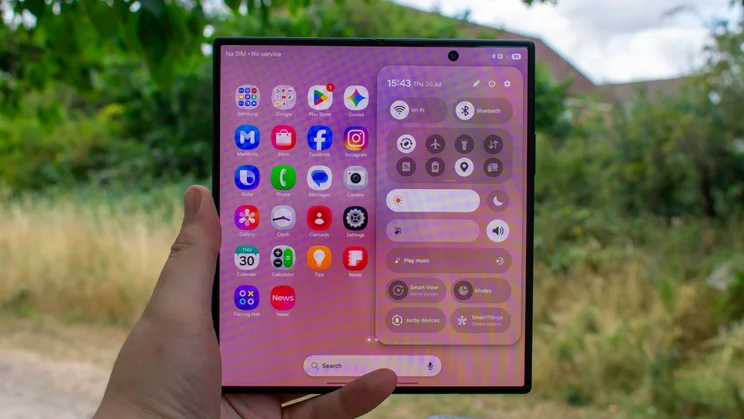
The software is OneUI 9.0, based on Android 17, and Samsung is once again committing to seven years of software support. New features have been added to the Now Brief and Now Nudge features, with additional contextual understanding and recommended next steps based on the content on your display, but there’s nothing particular to get worked up about here.
Display
Because I reviewed the new, wider Z Fold 8 first, my initial impression of the displays on the Ultra ended up being that they’re too skinny. I’ve been fully converted to the wide side and I’m not sure that I’ll ever want to go back.
That personal preference aside, however, these screens are near-enough the same as last year, and performed roughly as well in my testing, too. I recorded the peak brightness at 677cd/m2 on the internal display and 655cd/m2 on the cover screen with adaptive brightness disabled. Switching it on and shining a torch on the light sensors pushed them up to 1,303cd/m2 and 1,270cd/m2, respectively, and they topped out at 1,425cd/m2 and 1,346cd/m2 when displaying HDR content.
Colour accuracy is pretty good on both screens, too, though not quite as spot-on as some others I’ve tested. On the standard colour profile, which targets the sRGB colour space, the Z Fold 8 Ultra delivered an average Delta E of 1.5 on the cover screen and 1.63 on the main display. I’m looking for 1 or under here so chalk these two up as not perfect but close enough.
Performance and battery life
The phone’s Snapdragon 8 Elite Gen 5 for Galaxy chipset runs at frequencies up to 4.74GHz and backed by 12GB of RAM if you choose the 256GB or 512GB models, or 16GB of RAM for the top-end 1TB version.
It’s a very powerful chipset and comes with a frequency bump over the standard Elite Gen 5 in the Honor Magic V 6, but I’m not convinced the Z Fold 8 Ultra is able to make full use of that extra power. There’s barely any difference between the two in the Geekbench 6 multi-core stakes.
Now, fair enough, the Magic V6 uses a laptop-style power management system, and those scores were recorded on the “Performance” setting, whereas the Galaxy Z Fold 8 Ultra does the optimising in the background, without you having to manually select anything. But it seems the extra speed that the “for Galaxy” branding gets you, doesn’t result in much of a performance advantage.
The wider Z Fold 8 really proved its worth when it came to gaming, and it’s now hard to look at other foldables in quite the same way. The square main display on the Z Fold 8 Ultra is still very good for mobile games but its little sibling felt more comfortable in my hands and the broader view of the game world was more useful in most games than the extra height you get from the Ultra.
In performance terms, the Z Fold 8 Ultra is an excellent gamer, however, with a Geekbench 6 Vulkan GPU score that’s essentially the same as its non-Ultra sibling and not too far behind the Honor Magic V6 – again, the difference isn’t enough for the Honor to play any better than the Samsung.
The 5,000mAh battery is a fair bit higher in capacity than the Z Fold 7’s 4,400mAh cell, but despite this, battery life is only a little bit better here. The main display ran our looping video battery test for 24hrs 51mins, which is around an hour and a half longer than the previous generation, and running the test again on the cover screen saw it last 30hrs 49mins.
Both of those scores are decent but the Honor Magic V6 leveraged its Satanic power (which is what I like to call its 6,660mAh battery) to run the same test for 26hrs 36mins on the main display and an outstanding 39hrs 34mins on the cover screen.
Likewise, the new 45W charging is solid enough but, with a bigger 5,000mAh battery to fill, the Z Fold 8 Ultra doesn’t end up charging much quicker than its predecessor. Some 32 minutes plugged in saw the battery go from empty to 50%, and it trickled along to 100% in 1hr 22mins. That’s just three minutes faster than last year’s model and seven minutes slower than the Honor Magic V6.
Cameras
As I noted in my review of the Galaxy Z Fold 8, it’s a shame that new ultrawide is the only camera upgrade – it would have been great for Samsung to put some more effort into the telephoto camera, too – but that shouldn’t take away from how good the new ultrawide is.
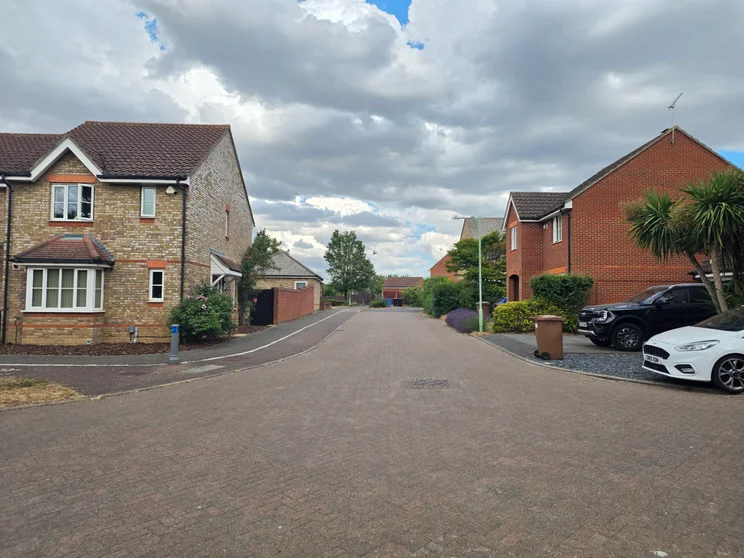
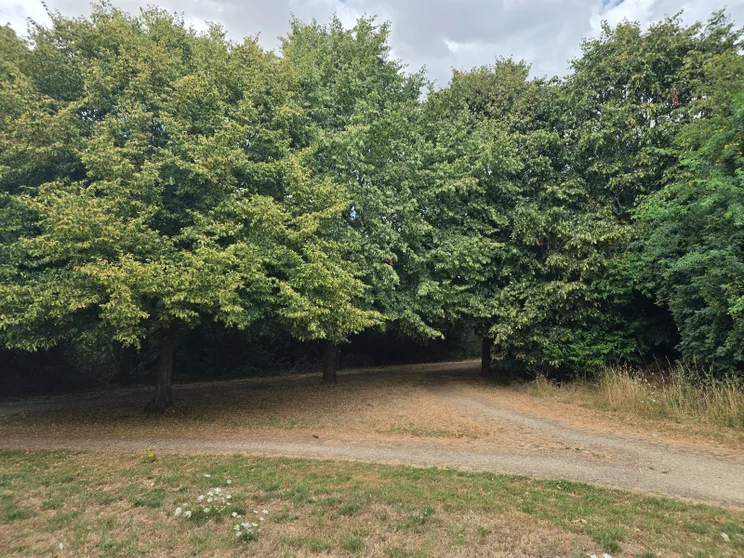
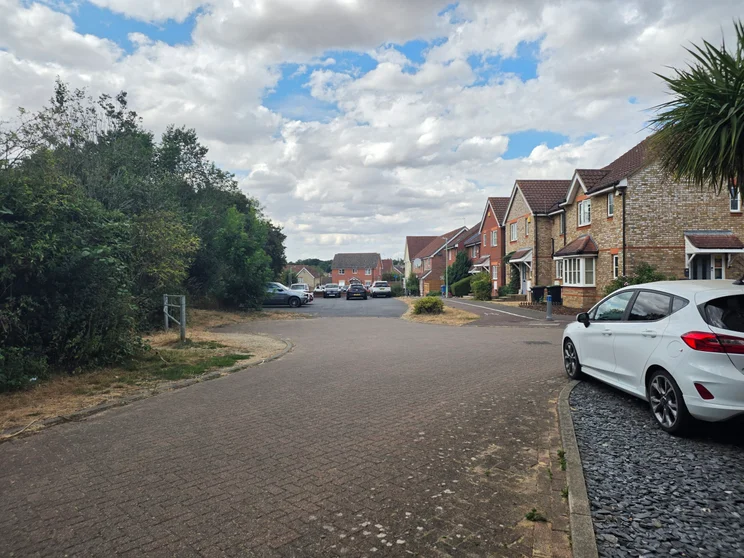
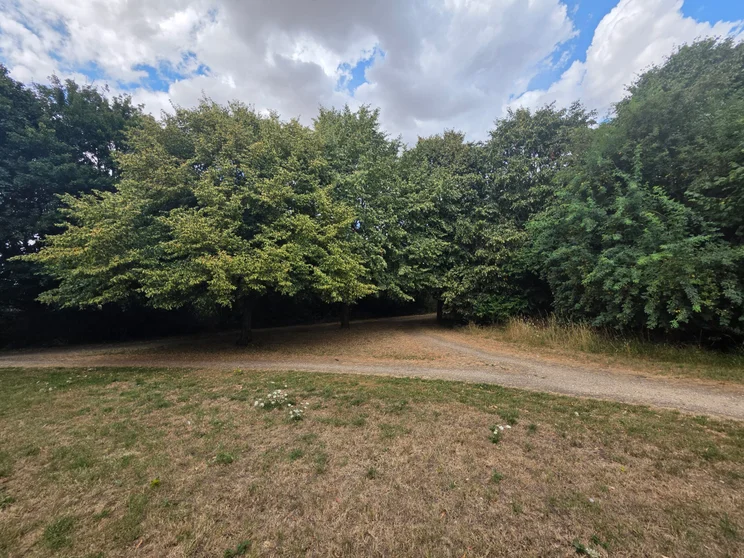
It’s backed by a 50-megapixel sensor, has a wide, bright f/1.9 aperture, and it delivers some of the best ultrawide shots I’ve seen from any smartphone. The colour tone is near-enough the same as the main lens and it captures impressive levels of detail, particularly in the centre of the frame.
I was already a big fan of the main camera last year, so I’m not that worried about it cropping up again. This has a massive 1/1.3in sensor, a 200MP resolution, support for optical image stabilisation (OIS) and phase detection autofocus (PDAF); in short, it’s superbly well-equipped, and the images it produces are punchy, with excellent detail and decent dynamic range.
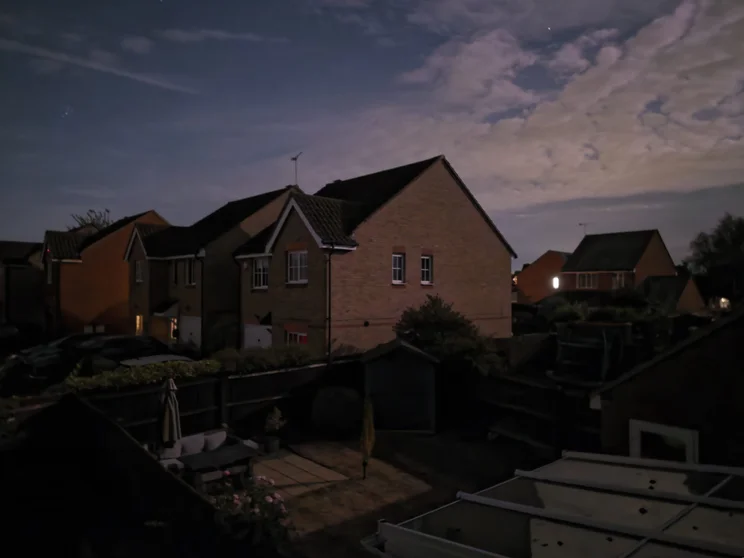
The only thing the main camera lacks compared to the otherwise very similar shooter on the flagship Galaxy S26 Ultra is the latter’s wide f/1.4 aperture. The f/1.7 aperture here is still solid but it doesn’t let in quite as much light, so night photography suffers a little.
Colouring remains natural enough for my tastes but the level of detail is a step down from the S26 Ultra, and there’s more visual noise in the sky than I’d like to see.
Where I’d really have liked some improvements is with the telephoto lens. The 10MP (f/2.4) 3x lens is far from bad, it’s just a little bit behind the quality you can get from other foldables. Both the Honor Magic V6 and the Motorola Razr Fold, for instance, have larger sensors with far more megapixels.
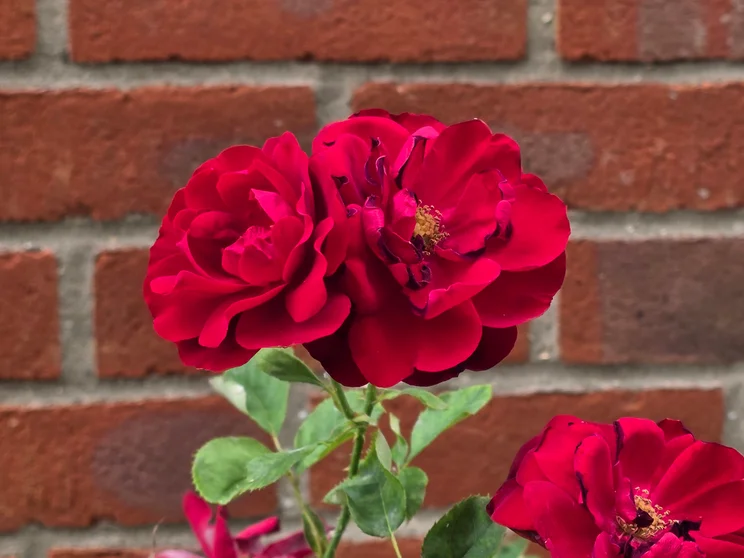
Still, this telephoto gets the job done with lovely detail and strong background separation when shooting portraits and macro images.
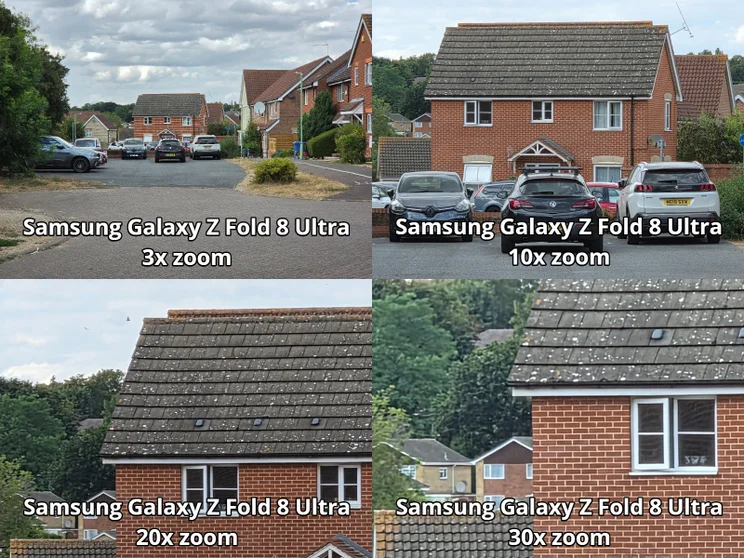
The zoom goes up to 30x, which is better than on the Z Fold 8, but it can’t match the Honor Magic V6’s maximum magnification, which extends to 100x. It’s diminishing returns as you get closer to that maximum zoom, but while the Honor achieved good results at 20x and under, the Z Fold 8 Ultra’s image quality tailed off after 10x.
The one area in which Samsung handily trounces Honor is with video features and quality. The Z Fold 8 Ultra can shoot 4K video at up to 120fps in 10bit HDR and also includes options for 8K recording up to 30fps and in LOG colour for more headroom when colour grading in video editing software such as Davinci Resolve. Honor’s video is decent but it lacks these extra touches that make the Z Fold series appealing to creators.
Samsung Galaxy Z Fold 8 Ultra: Verdict
The Samsung Galaxy Z Fold 8 Ultra gets a few minor upgrades that are worth celebrating: the new 50MP ultrawide camera is excellent; the higher-capacity battery delivers a small bump in battery life; and the new Flex Titanium display is as close to creaseless as a Samsung folding screen has ever been. It’s not a huge improvement on last year, but it’s a tight refinement of an already well-established formula.
It’s not, however, a patch on the Honor Magic V6. Between the superior battery life, the stronger telephoto camera, the brighter, more colour-accurate displays and, perhaps most crucially, the more rugged IP68/IP69 dust and water resistance rating, the Honor Magic V6 is better in just about every way and it costs less, to boot. The Samsung Galaxy Z Fold 8 Ultra is a stronger competitor than I expected it to be, but the Magic V6 remains my favourite folding phone.