To help us provide you with free impartial advice, we may earn a commission if you buy through links on our site. Learn more


oplus_2097184
oplus_2099232

oplus_2097184
- Fantastic battery life
- Excellent telephoto camera
- Sharp, accurate display
- Not the fastest performer
- Big price increase
- Rivals have better software support
The Oppo Reno 16 is one of several smartphones that represent an interesting new trend that I’ve noticed this year – Pros are out. Rising costs due to an ongoing global shortage of key components have made it more difficult to endorse Pro models when their siblings offer a better balance between price and features.
None embody this more than the Oppo Reno 16, which differs from its Pro stablemate in just a few, marginal ways, and yet costs £200 less. It retains an excellent camera suite, a beautiful display and fantastic stamina, making it a more appealing prospect than the model above it.
It’s not exempt from the price gouging, however, and it finds itself priced among some particularly stiff competition. So how does it fare?
Oppo Reno 16: What you need to know
The Oppo Reno 16 differs from last year’s Reno 13 (Oppo didn’t bring the 14 and 15 series to the UK) in several ways, starting with the build: it’s a more compact phone, with the display shrinking from 6.59in to 6.32in. It still uses a 120Hz AMOLED panel, however, and the resolution remains roughly the same, at 2,640 x 1,216.
Going in the other direction, the battery capacity is now larger, up from 5,600mAh to 6,000mAh – though international markets get 6,700mAh cells, so we are getting a little shortchanged here in the UK. Charging once again supports up to 80W, but there’s no wireless charging.
oplus_2097184
oplus_2099232
oplus_2097184
Powering the Reno 16 is a 2.8GHz Snapdragon 7 Gen 4 processor, backed by 8GB of RAM and 512GB of storage space.
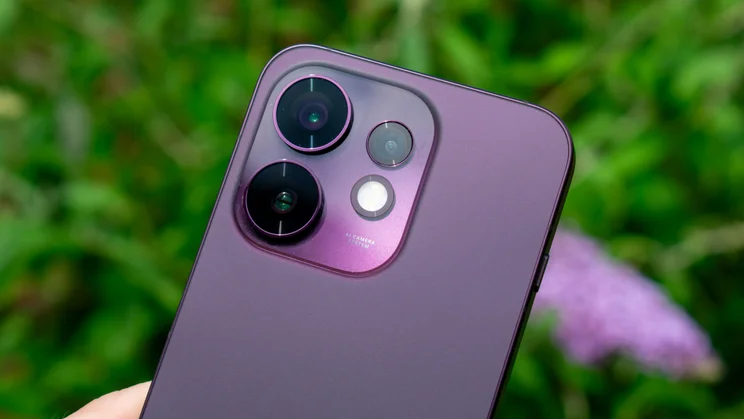
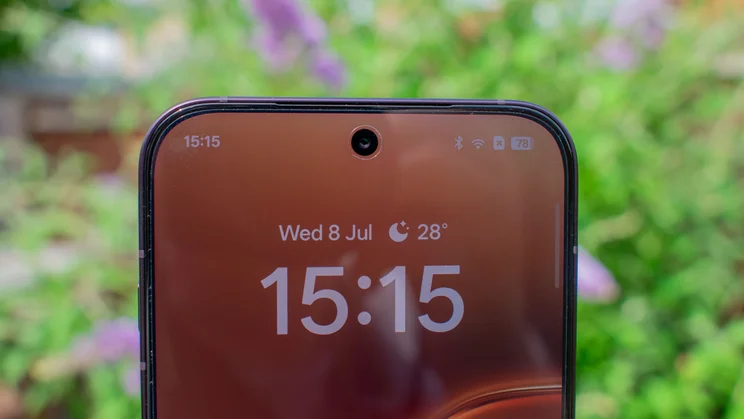
The selfie camera is again a 50-megapixel sensor, as is the main rear lens, but there are some big changes elsewhere. The ultrawide has been upgraded from an 8-megapixel (f/2.2) shooter to a more pixel-dense 50-megapixel (f/2.0) lens. Oppo has also added a telephoto camera – the same 50-megapixel (f/2.8) 3.5x shooter that appears on the Pro version.
The latter inclusion was a crucial one, because…
Price and competition
The Oppo Reno 16 costs a whopping £699 – £200 more than the Reno 13 did at launch. We saw the same astronomical rise for the Oppo Reno 16 Pro, but this is far from just an Oppo issue, with tech across the board struggling with price increases in 2026.
oplus_2097184
oplus_2099232
oplus_2097184
The Xiaomi 17T is in the same boat as the Reno 16, with the 512GB model bumped up to the same £699 price point – but it has an edge with its 256GB version, which goes for £649. The Honor 600 nearly joined this crowd, but it was swiftly discounted upon release, with the 256GB model now at £399 and the 512GB version at £429. It lacks a telephoto lens, however, putting it at a disadvantage next to the Oppo and the Xiaomi.
Also lacking a telephoto lens but coming in quite a bit cheaper than the Oppo is the Google Pixel 10a, which starts at £429 for the 128GB model, with the 256GB at £479 (no 512GB here, unfortunately). The iPhone 17e does offer a 512GB version, but it costs a ridiculous £799 – the 256GB model is slightly more bearable, at £599.
Design and key features
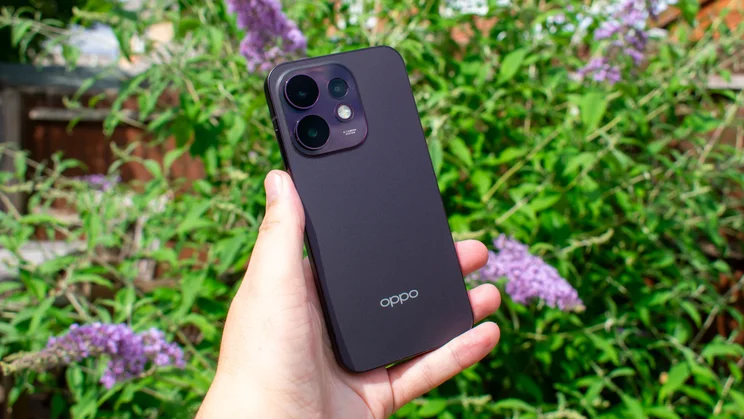
Put the Oppo Reno 16 side by side with its Pro sibling, and you’ll struggle to tell the two apart. The build is identical, with a footprint of 72 x 151 (WxH) and a thickness of either 8.2mm or 8.4mm, depending on which colourway you choose. The same holds for the weight – the 8.2mm model weighs 188g, the 8.4mm version is 191g.
My review model came in the understated Purple Black colourway, which has a thinner and lighter build. The slightly chunkier, heavier version is the Pop White design, which earns its extra grams and micrometres with a cool 3D planets design on the rear.
oplus_2097184
oplus_2099232
oplus_2097184
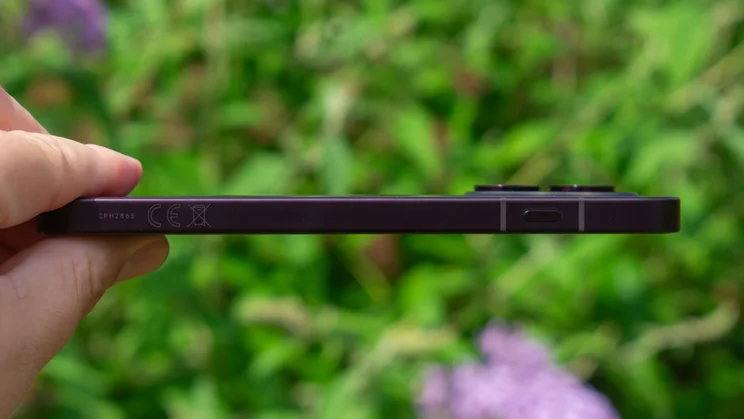
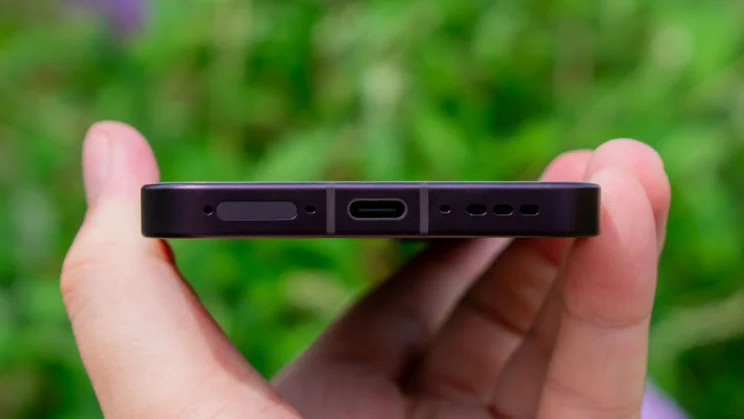
My Purple Black model’s rear isn’t as interesting, and it’s plastic so it shows fingerprint smudges more than I’d like, but otherwise the design is solid enough. The aluminium frame feels rigid, and the IP68/IP69K rating certifies it as dustproof and able to withstand high-pressure, high-temperature jets from any direction, as well as submersion in 1.5m of water for up to 30 minutes.
We have the usual selection of features, including an under-display fingerprint sensor and face unlocking via the selfie camera, both of which proved efficient and consistent in my testing. However, there are two features I want to highlight specifically: first, the IR blaster on the top edge is a rarity among modern phones and enables you to use your phone as a universal remote for your TV.
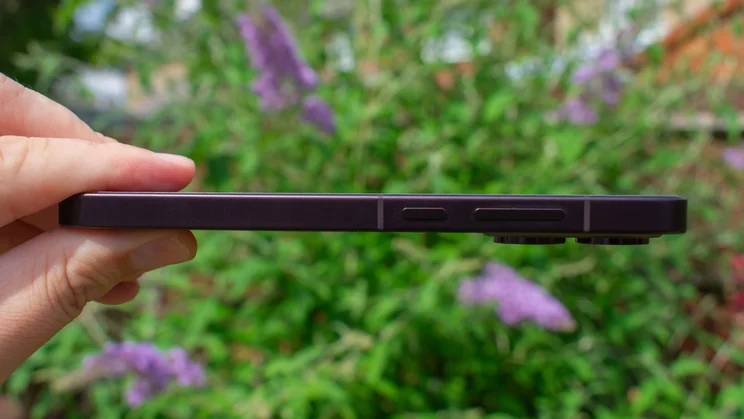
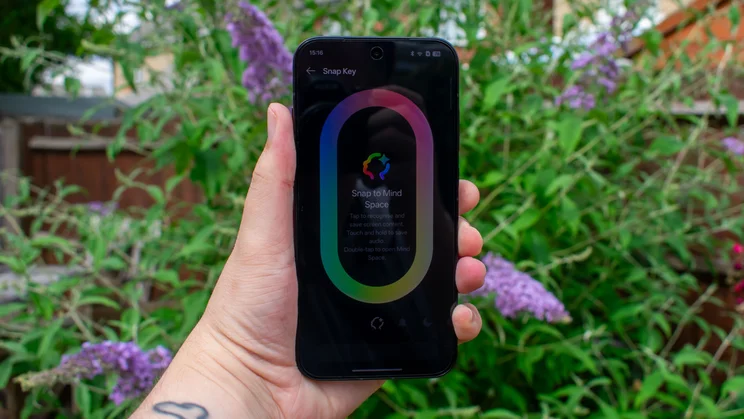
Secondly, Oppo has added the Snap Key high up on the left edge, carrying over from the Find X9 series. By default, this takes screenshots you can add notes and voice memos to and then saves them in the Mind Space app, serving as an AI-powered notes app that allows you to organise your thoughts. If that’s not for you, the good news is that you can reprogram the key to open the camera or toggle the torch instead.
oplus_2097184
oplus_2099232
oplus_2097184
Oppo’s ColorOS 16 software, based on Android 16, is a mixed bag; it’s relatively smooth and accessible but comes preloaded with a frustrating amount of pre-installed bloatware, ranging from naff mobile games to trashy frequent flyers like Temu and AliExpress.
Software support is pledged for five years of OS updates and six years of security patches, which is solid enough for this price but not quite the best – the Honor 600 is getting six years of both while the Pixel 10a is set for seven.
Display
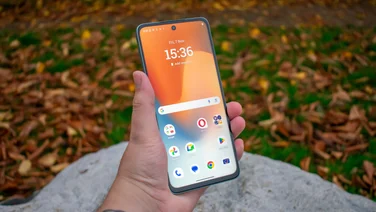
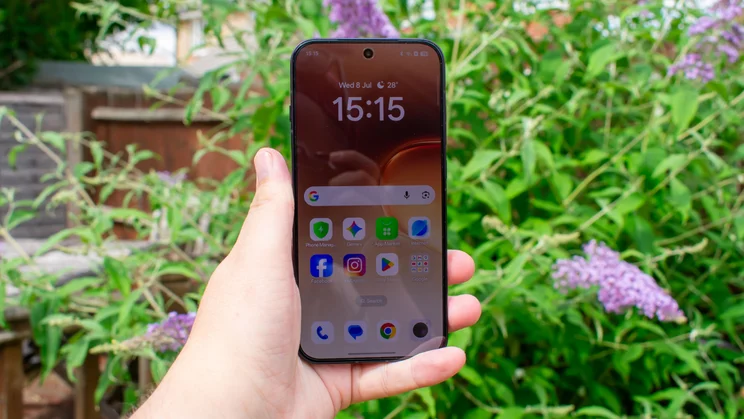
It may be smaller than before, but this 6.32in AMOLED display is no less mighty. The 2,640 x 1,216 resolution is sharp with 460 PPI (pixels-per-inch); the refresh rate can switch between 60Hz and 120Hz based on your screen content to better manage battery life, and it gets nice and bright – testing with a colourimeter, I saw brightness peak at 1,380cd/m2 when displaying HDR content.
oplus_2097184
oplus_2099232
oplus_2097184
Colour accuracy proved excellent, too. There are three colour profiles to choose from – Vivid, Standard and Natural. I found myself using the Standard setting the most, as the colours looked more natural. My testing confirmed this, showing an sRGB gamut coverage of 99.1 against a volume of 102.8% and an average Delta E colour variance score of 0.93. Anything under 1 is essentially perfect here.
Performance and battery life
The Snapdragon 7 Gen 4 chipset is used in several of this year’s mid-range phones, and scrolling, swiping, and switching between apps were responsive and smooth. In the Geekbench 6 CPU test, however, I saw that it doesn’t perform as well as others around this price point.
Xiaomi’s 17T shows how much faster you can get for similar money, with a lead over the Oppo of 38% in the single-core benchmark and 70% in the multi-core. And then there’s the notoriously powerful Apple silicon in the iPhone 17e, beating the Oppo Reno 16 by 185% and 121% in the single- and multi-core tests, respectively.
This trend continues in the Reno 16’s gaming performance, with the phone delivering one of the weakest Geekbench 6 Vulkan GPU test results of this selection of devices. Only fellow Snapdragon 7 Gen 4 user, the Honor 600, proved weaker, and once again, the Xiaomi 17T and iPhone 17e are way ahead of the pack.
In real-world testing, I found the Reno 16 fine for low-maintenance games like Asphalt Legends. However, anyone who regularly enjoys intense 3D mobile games would be better off with the Xiaomi 17T – the iPhone 17e is more powerful, but its 60Hz display really hurts its appeal for serious gaming.
Things proved far more favourable for the Oppo in our standard looping video battery life test. The chunky 6,000mAh cell managed to keep the lights on for a total of 37hrs 12mins. Not only is that better than the Pro model, but it’s also one of the best we’ve seen from a phone of this price – only the excellent Google Pixel 10a outlasts it.
The 80W charging can technically fill the battery in around an hour, but you’ll need a compatible (likely Oppo-made) charger to see those speeds. With my non-Oppo charger, I saw speeds tick along around the 20W mark, bringing the battery from empty to 50% in 31 minutes and on to full in around 1hr 12mins.
Cameras
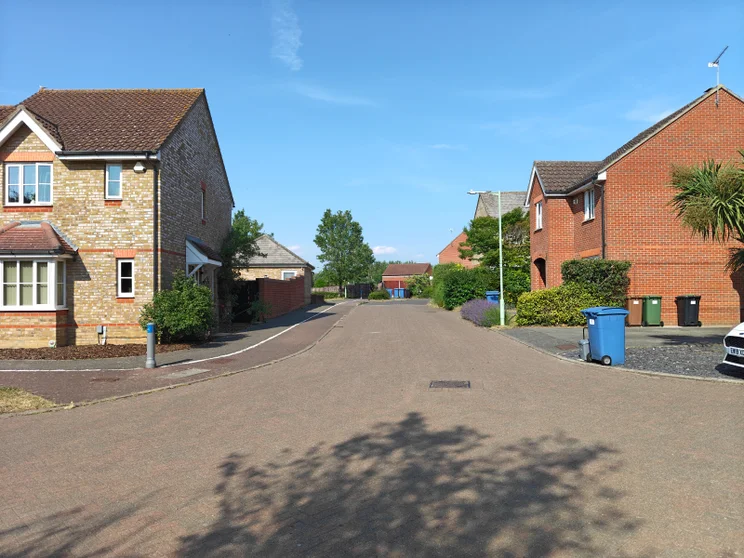
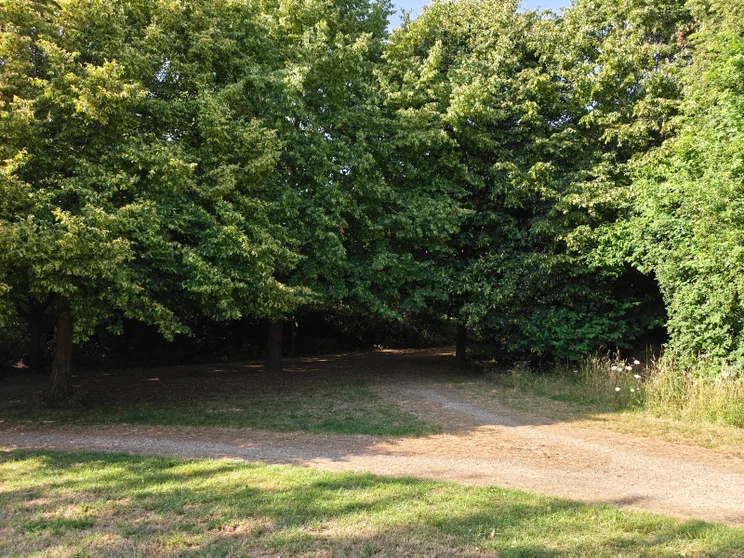
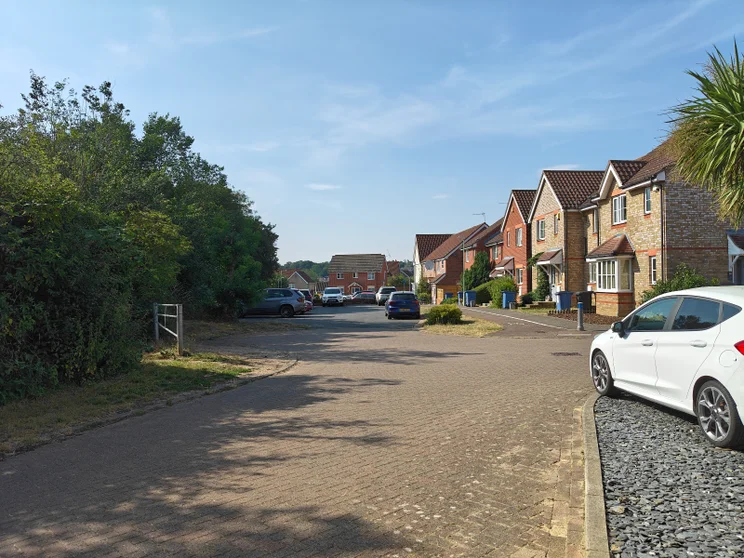
The most notable area of improvement (and the biggest argument for justifying the big price increase) is the camera suite. What’s especially interesting here is that the selection of lenses on the Reno 16 is almost identical to those on the Pro model – quite the coup, given the £200 gulf between their prices.
In fact, the only lens that’s weaker is the main lens. It’s a 50-megapixel shooter, compared to the Pro’s 200 megapixels, and uses a slightly smaller sensor (1/1.95in vs 1/1.56in), but the pixels themselves are slightly larger (0.8μm vs 0.5μm), so light intake roughly balances out.
Shots captured in good lighting are bright and clear, with crisp detail and a decently broad dynamic range. I like the colour science here, too – it’s vivid without drifting into oversaturation, keeping images looking natural yet punchy.
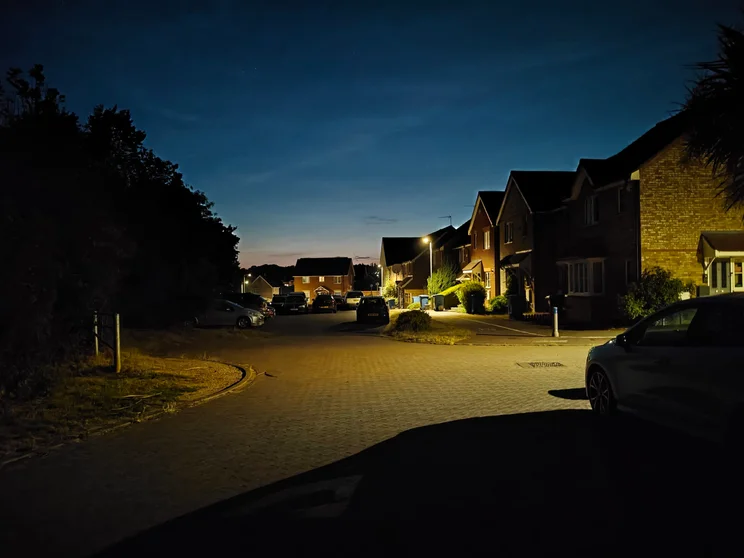
The f/1.9 aperture allows for solid night photography, with strong colouring and decent levels of detail. I appreciated that it’s a very efficient night mode, too, snapping the shot in around a second, whereas plenty of competitors take two or three to capture.
The new 50-megapixel (f/2.8) 3.5x telephoto shooter is a great addition, and just like the main camera, it supports both optical image stabilisation (OIS) and phase detection autofocus (PDAF), for stability and swift focus, respectively. This results in a versatile lens that can quickly and consistently snap striking portraits or highly detailed macro shots.
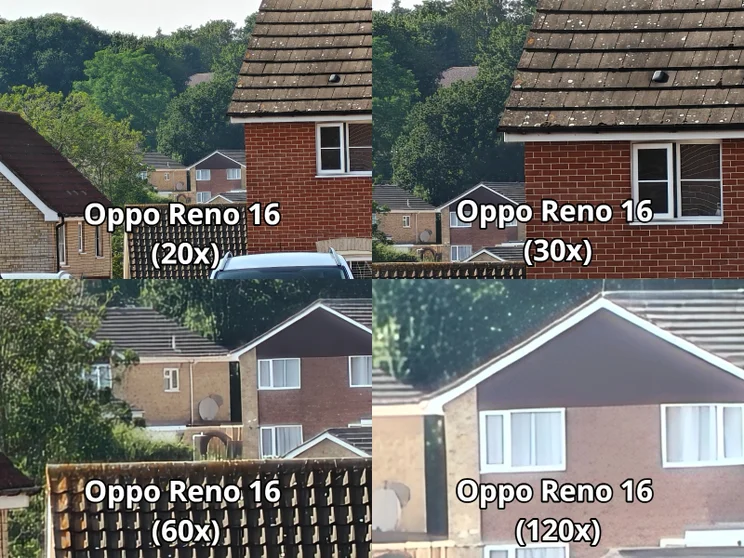
You can technically zoom up to a frankly silly 120x, but results at that reach are washed out and lacking in detail. I was impressed with the colour and clarity retained up to around the 30x mark, however.
I generally really like the 50-megapixel (f/2.2) ultrawide camera; detail is excellent, the colour tone remains true to the main lens and decent contrast provides good depth to the shot. The only issue I have is that, when zooming in on my test shots, I noticed quite a lot of visual noise in the bright summer skies.
Video is decent, too, shooting up to 4K at 60fps on both the front and rear, and even allowing you to record both simultaneously with the Dual-view feature.
Oppo Reno 16: Verdict
There’s a lot to like about the Oppo Reno 16, not least of which is the versatile camera array that is all but directly lifted from the more expensive Pro model. Add in the outstanding battery life and the crisp, colour-accurate display, and the Reno 16 hits several of the key boxes with aplomb. If you’re a fan of the brand, I wholeheartedly recommend that you pick up the standard Reno 16 in place of its overpriced Pro sibling.
Performance lets the side down somewhat, particularly for those interested in mobile gaming, and anyone looking to get the most powerful phone possible for their money should instead consider the Xiaomi 17T: it’s much faster, stronger for gaming and has a superior 5x telephoto camera – though its software and update roadmap aren’t as good as the Oppo.