To help us provide you with free impartial advice, we may earn a commission if you buy through links on our site. Learn more




- Fantastic battery life
- Killer performance
- Eye-catching design
- More expensive than the competition
- Only three OS updates
- Middling zoom photography
The Motorola Razr 70 Ultra is the brand’s latest competitor in what has, over the years, become a decidedly two-horse race for clamshell folding phone supremacy. While I generally tend to prefer the flexibility of the Razr series over the more locked-down Galaxy Z Flips, there’s one area in which Samsung repeatedly outshines Motorola, and as each year goes by, this disparity grows more and more egregious.
Despite catching up and then surpassing Samsung in the performance and battery life stakes, and maintaining its lead when it comes to external display customisation and sheer eye-catching aesthetics, Motorola flatly refuses to match Samsung’s seven-year software support pledge.
The Razr 70 Ultra is about as good as clamshells get right now, but until Motorola gets less stingy with its updates, any recommendation it receives will always come with that big, fat asterisk. And Motorola will never truly inherit its destiny as the ultimate flip phone brand.
Motorola Razr 70 Ultra: What you need to know
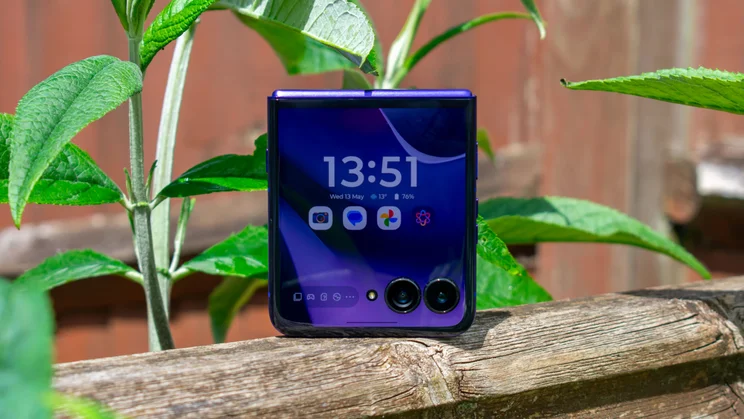
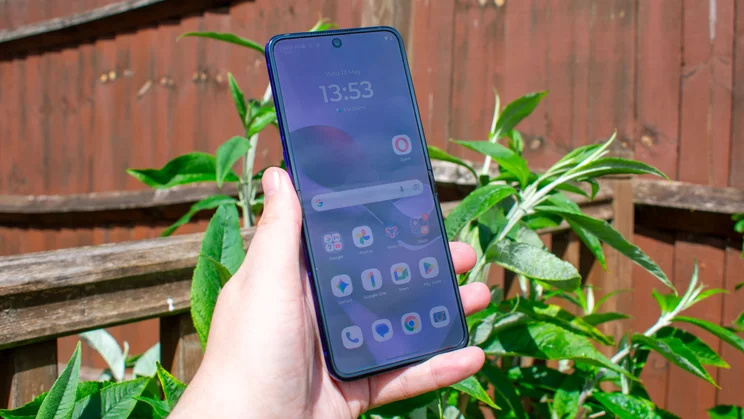
More of a refinement than an overhaul, the Razr 70 Ultra ticks most of the same boxes as last year’s Razr 60 Ultra. It features a 4in AMOLED cover display with a 1,272 x 1,080 resolution and a 165Hz LTPO refresh rate (probably overkill), unfolding to reveal a large 7in AMOLED main display. This has the same dynamic 165Hz refresh rate and a resolution of 2,992 x 1,224.
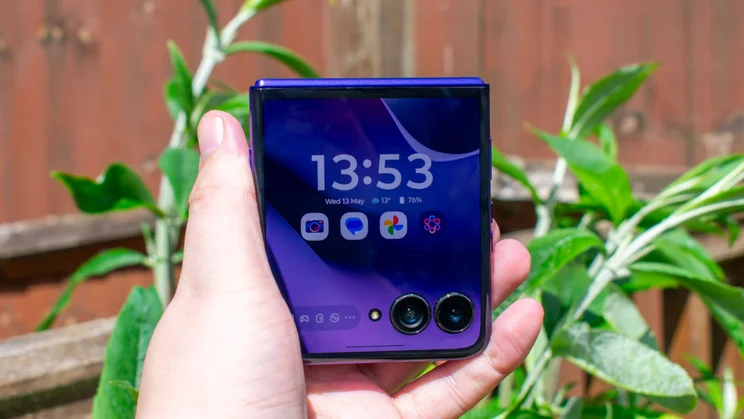
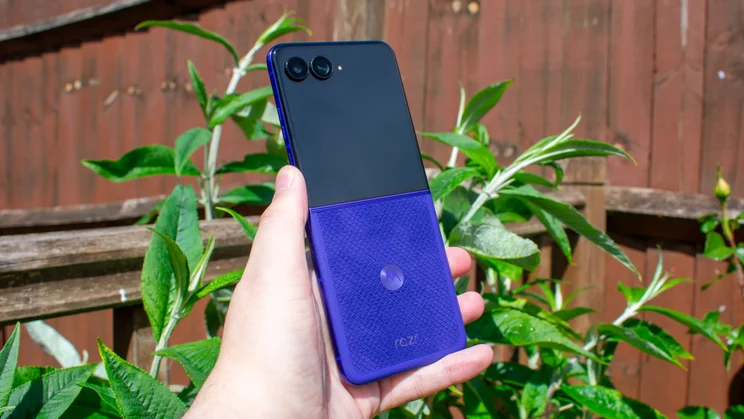
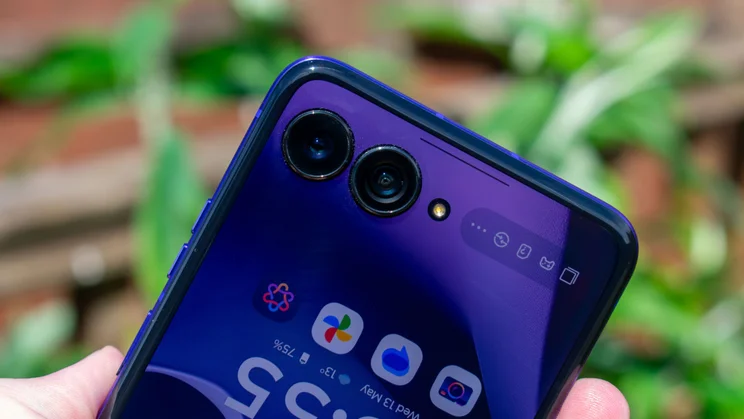
A 50-megapixel selfie shooter sits atop the main display, while over on the rear, encircled by the width-spanning cover screen, are two further cameras: a 50-megapixel main shooter and a 50-megapixel ultrawide lens.
Most of the changes occur inside. Powering the Razr 70 Ultra is the Snapdragon 8 Elite chipset, clocked up to 4.47GHz and backed by a generous 16GB of RAM and 512GB of storage space. The battery is also improved, now a 5,000mAh cell (up from 4,700mAh last year), again supporting the same 68W wired and 30W wireless charging.
Price and competition
The Motorola Razr 70 Ultra costs £1,199, which is £100 more than the Razr 60 Ultra. This is unsurprising (issues with RAM production are expected to cause price bumps across the board) but it does position the Razr as a fair bit more expensive than the competition.
Last year’s Samsung Galaxy Z Flip 7, for instance, is still very much a viable threat, with its excellent software support keeping it relevant for years to come. It started life at £1,049 but now you can pick up the 256GB model for £899, or the 512GB for £929.
Of course, Samsung is bringing its own 2026 model soon enough, and odds are fairly good that the Z Flip 8 will get a price bump of its own – we’ve already seen higher prices from the Galaxy S26 series and the Galaxy A57 this year. So, it may well be the case that the Razr 70 Ultra isn’t particularly expensive by comparison, especially considering that you get 512GB of storage as standard.
I’m less inclined to recommend you pick up a Razr 60 Ultra. It may be cheaper (now down to £898) but it only has two more years of OS updates. If you’re happy to shop in last year’s section, you’re much better off going with the Samsung, which is promised updates through to 2032.
Design and key features
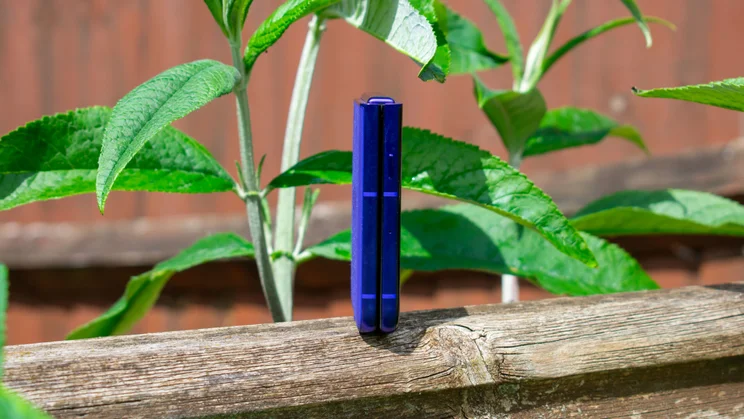
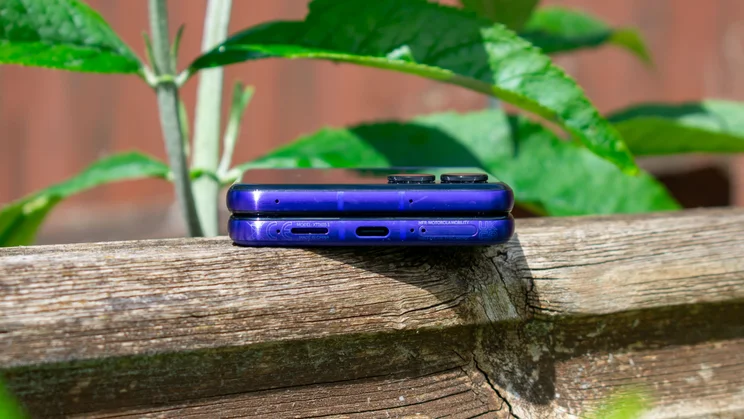
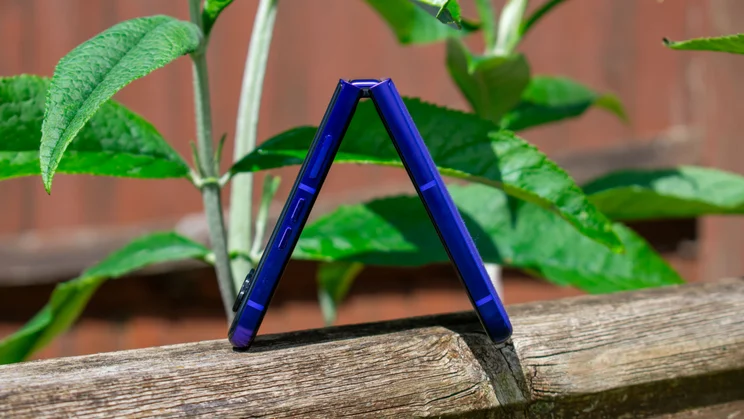
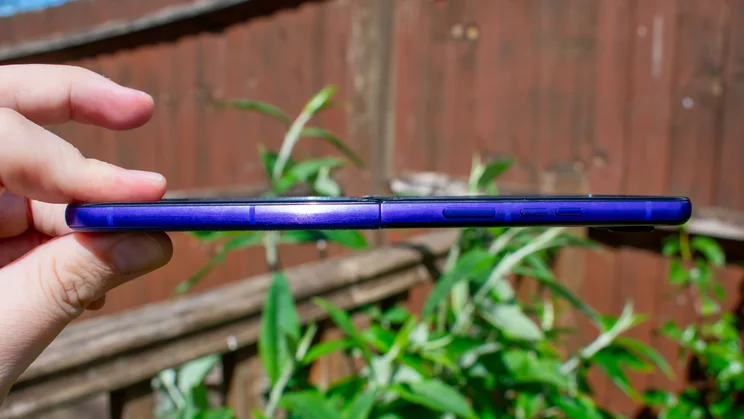
Flip phone design is going in two directions right now, and which path you prefer will boil down to personal taste. The Samsung Galaxy Z Flip 7 prioritises utilitarian form, with skinnier dimensions and a lighter build, but a slightly plain, industrial aesthetic. Motorola, meanwhile, have made no such advances: the 70 Ultra measures the same 15.7mm and 7.2mm thick (folded and unfolded, respectively) as its predecessor and weighs the same 199g.
Instead, Motorola landed on a build that it finds acceptable enough (the Razr 50 Ultra from two years ago was roughly the same measurements, too) and has turned its attention to improving the internals, such as fitting the 70 Ultra with the biggest battery on any clamshell to date, and experimenting with striking colours and unique materials that make Razrs look unlike anything else on the market.
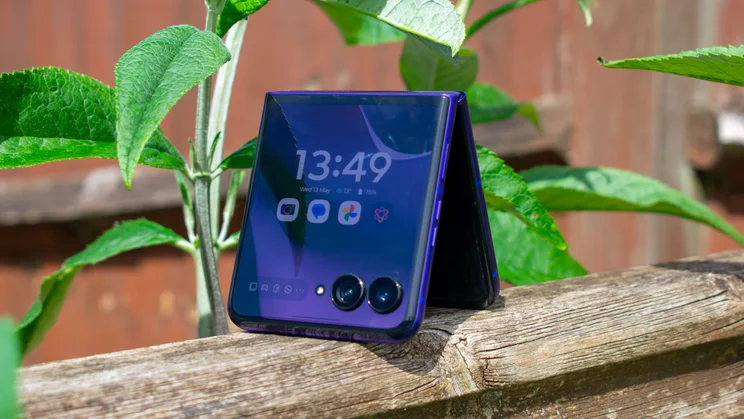
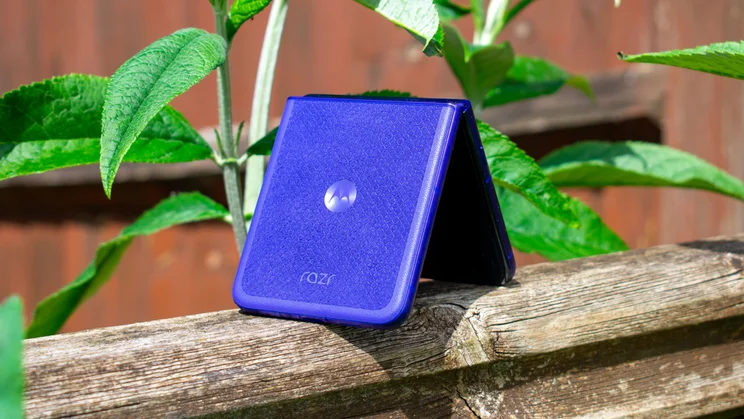
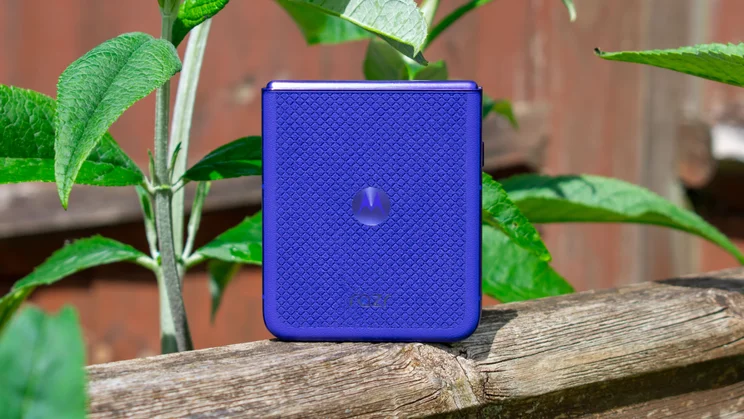
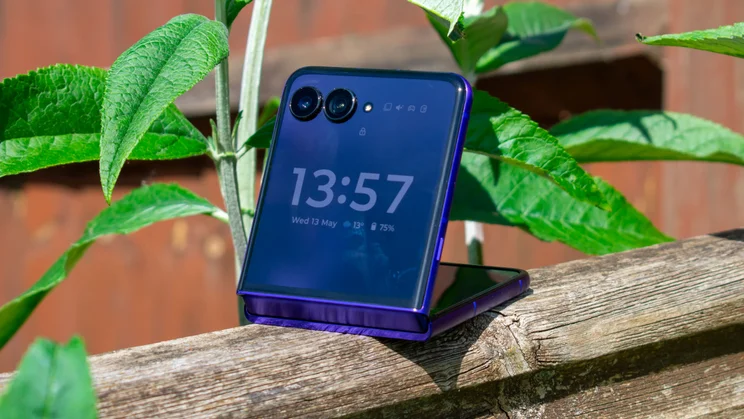
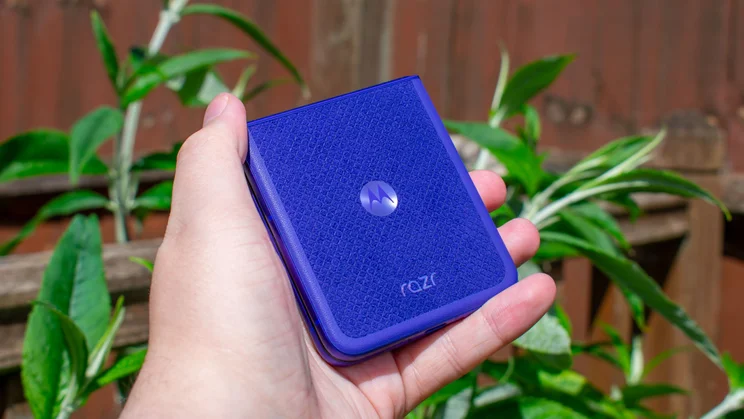
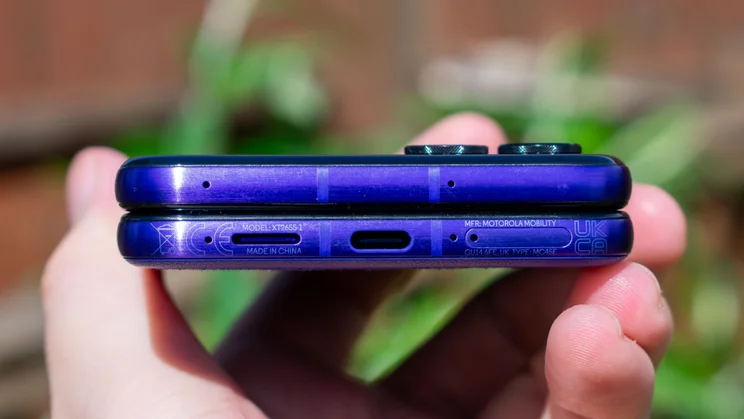
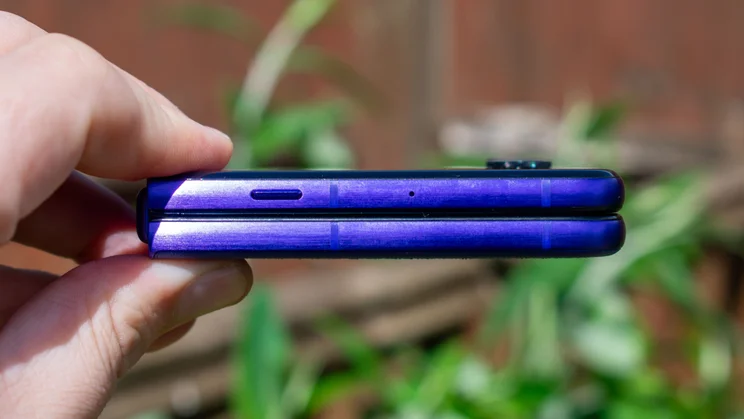
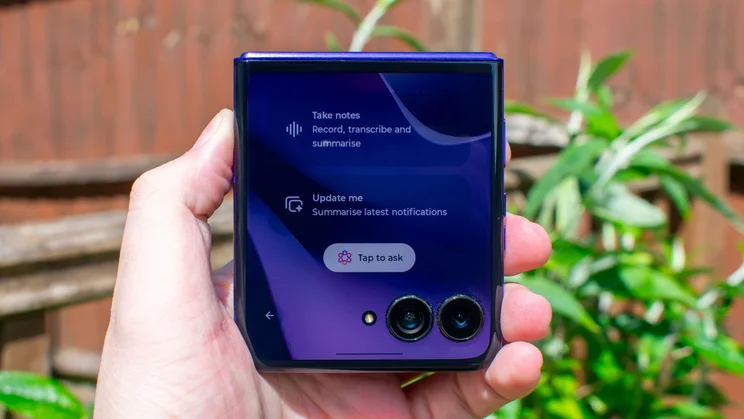
We only get two of these Pantone-approved colour and material combinations this year – which is a bit of a shame, considering that the Razr 60 Ultra came in four different styles – but they’re both very attractive and distinct. My review sample is Pantone Orient Blue, which pairs a vibrant, purpley-blue with an Alcantara rear (a soft, tactile, suede-like material). But there’s also the Pantone Cocoa look, which is a rich golden brown and has a grainy wood veneer on the rear.
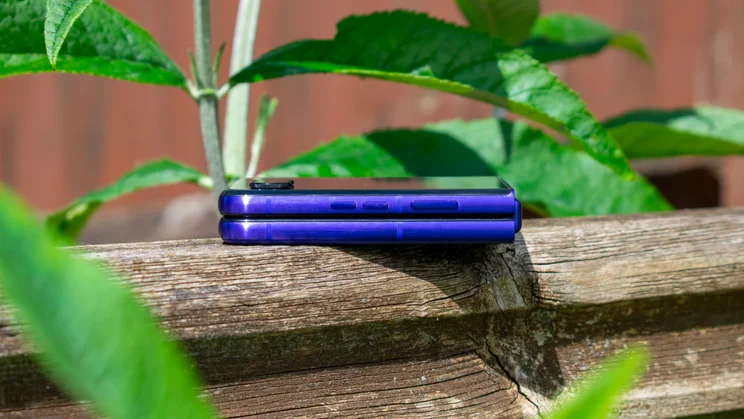
Aside from the new styles, this setup is exactly the same as the Razr 60 Ultra. We’ve again got a reliable fingerprint sensor in the power button on the right edge, face unlocking that works with both internal and external cameras, Gorilla Glass Ceramic over the cover display and an IP48 dust and water resistance rating. That means we have the same waterproofing as traditional flagship phones (able to withstand submersion in 1.5m of water for up to 30 minutes) but dustproofing still only protects against particles over 1mm in diameter.
As much as Samsung’s slimness and Motorola’s impressive internal components are appreciated, this is one area in which flip phones have stalled, and it would be great to see someone finally nail a properly dust-proof clamshell.
Software is based on Android 16 and Motorola is once again committing to three years of OS updates and five years of security patches. The latter is fine but three OS updates for this kind of money is beyond cheeky. By comparison, Samsung’s Galaxy Flip series receives the same seven years of support as its non-folding flagships. If you plan to keep your next phone for a long time, it’s hard to recommend a Razr over the longevity of the Galaxy series.
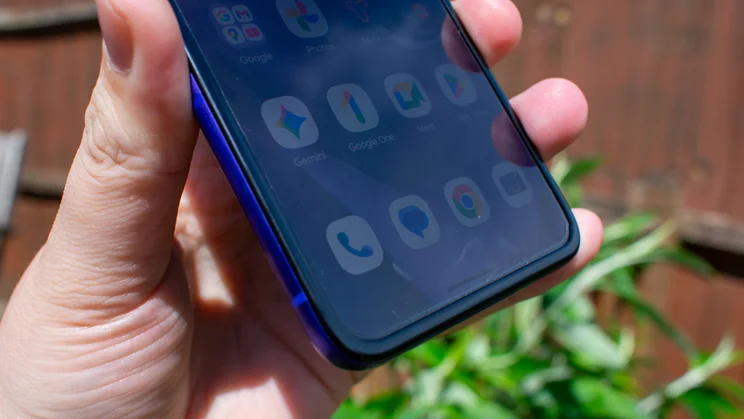
Otherwise, Motorola’s OS is generally tidy and accessible – though the amount of preinstalled bloatware has been creeping up over the past few generations, and is getting a little egregious. I’m also still not sold on the necessity of Moto AI (not to mention its dedicated button on the left edge of the phone) as the phone also supports Google’s Gemini, which is generally more accurate and useful than Moto’s own-brand variety. Having both seems like overkill, and it’s clear which one can be ditched.
Display
The one way in which the main display differs from last year’s is that it’s now rated for a slightly higher peak brightness (5,000 nits, up from the Razr 60 Ultra’s 4,500 nits). This will only affect very specific parts of the screen during HDR playback – case in point, my testing only saw the display going up to 1,043cd/m2 on adaptive mode with a torch shining on it, and 1,109cd/m2 in the HDR video test.
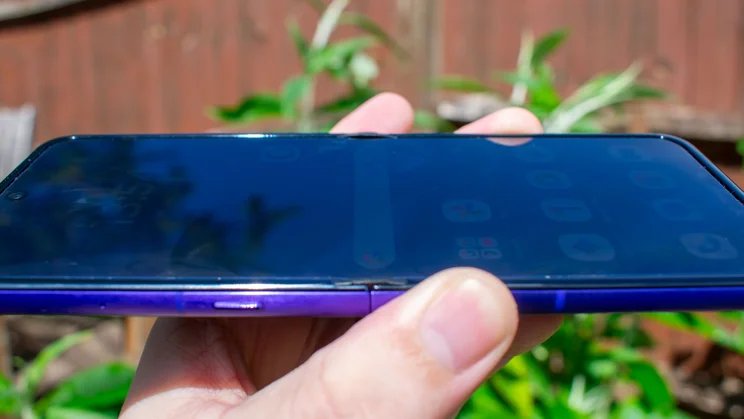
That’s still fine enough, and I never encountered any issues seeing the display, even in bright sunlight. Moreover, Motorola has near-enough nailed the art of hiding the hinge crease now, with the seam that used to plague all foldables being essentially invisible with the screen illuminated.
The 4in external AMOLED display is exactly the same as last year but that’s not much of a problem, because it’s still the best in the business. It’s sharp, bright and wonderfully customisable, allowing you to open any app of your choice without having to unfold the phone, reply to texts and even watch Netflix, if you’re so inclined.
There are three colour modes to choose from, with the standard Vivid setting (likely the only one you’ll need) joined by the bright Radiant setting, and Natural, which ostensibly offers better accuracy. I say ostensibly because my testing didn’t reflect this, showing an average Delta E of 2.18. This is quite far from our target of 1 or under but it’s not bad enough for colours to look out of place.
Performance and battery life
While technically the same chipset as last year, the Snapdragon 8 Elite has been tweaked for the Razr 70 Ultra, with the two prime cores delivering a higher peak clock speed of 4.47GHz. The result of this is a small but welcome uptick in performance across the board.
In the Geekbench 6 CPU tests, we can see below that the Razr 70 Ultra is roughly 7% faster than its predecessor in single-core operations and 6% with multi-core tasks.
Until the Samsung Galaxy Z Flip 8 arrives this summer and potentially upsets the applecart, the Razr 70 Ultra is the fastest flip phone you can buy in the UK.
It has an even stronger lead when it comes to GPU performance, surpassing its predecessor by around 5% in the Geekbench 6 Vulkan GPU test, and pulling 32% ahead of the Samsung Galaxy Z Flip 7. In practical use, the Razr ran my usual test games – Genshin: Impact and Asphalt Legends – smoothly and crisply, with no visible signs of frame rate dips and, more importantly, without overheating from the exertion.
The Razr 60 Ultra already had decent battery life (the best on any flip phone we’ve tested) but I’ll never turn my nose up at extra capacity. This new 5,000mAh battery (along with the power efficiency of the Snapdragon 8 Elite) takes the battery life to impressive new heights, lasting for an outstanding 34hrs 14mins.
Not only is that more than two hours better than its predecessor and three longer than the Samsung Galaxy Z Flip 7, it’s broadly one of the best results we’ve recorded, landing in the same neck of the woods as flagship phones like the Samsung Galaxy S25 Ultra and the Xiaomi 17 Ultra.
Charging is yet another perk of the Razr series – the 60 Ultra delivered a full charge in nearly half the time of the Galaxy Z Flip 7, despite using a larger battery. The Razr 70 Ultra sticks with the same 68W wired and 30W wireless speeds, so while it takes a little longer than its predecessor to fill its bigger battery, it’s still very good.
Around 20mins on charge brought the battery from empty to 50% and it took 55mins to hit 100%. By comparison, the Samsung Galaxy Z Flip 7 takes around 90 minutes for a full charge, so the Razr is still well ahead in that regard.
Cameras
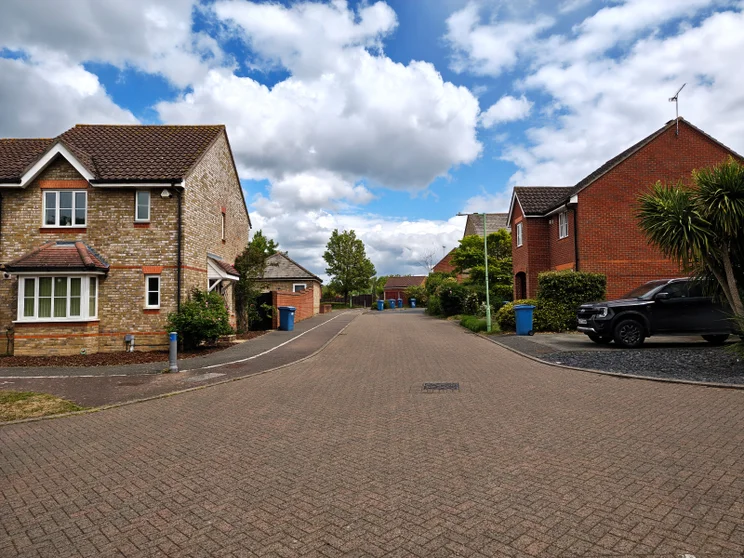
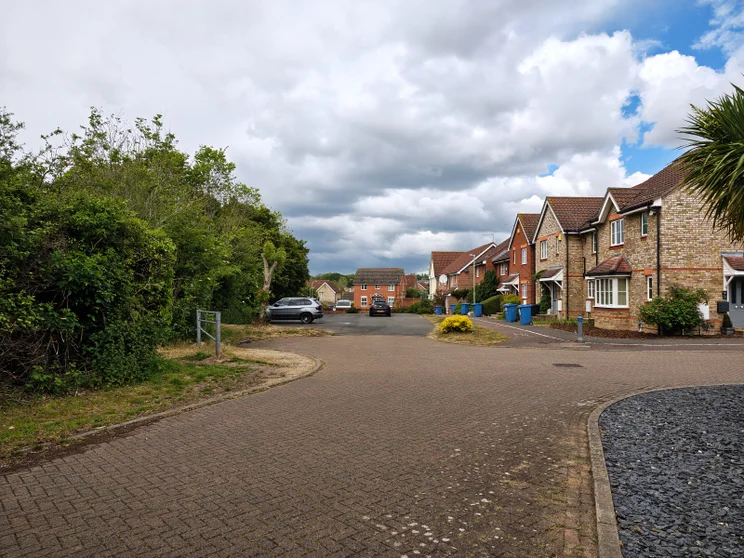
It’s a little disappointing to see the exact same cameras as last year but, in fairness, these are still about as good as flip phone cameras get right now. It’s a triple 50-megapixel lens set-up, with a main and ultrawide on the rear and a selfie shooter sat at the top of the internal display.
The latter could be considered wasted pixels, as it’s easy enough to take selfies with the rear cameras, but it doesn’t hurt to have the versatility. Regardless of which you use, the selfie shots are solid, with good focus and a smooth background blur. My only complaint is that, even though the beautifying filter is disabled, my skin is a little too smoothed out.
In a similar vein, Motorola’s colour science skews marginally towards larger than life, even when shooting on the default Natural profile (you can also opt to shoot in Vivid mode or train the AI to produce your own signature style by feeding it images you’ve edited).
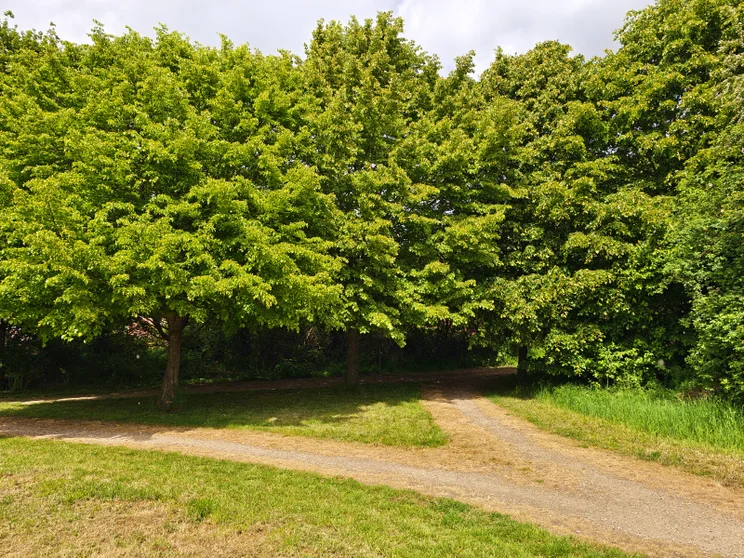
Greens in particular are a touch oversaturated but otherwise, shots captured on the main lens are gorgeous, with exquisite detail and broad dynamic range. And yes, if the vivid tone works for your tastes, it’s very striking colouring.
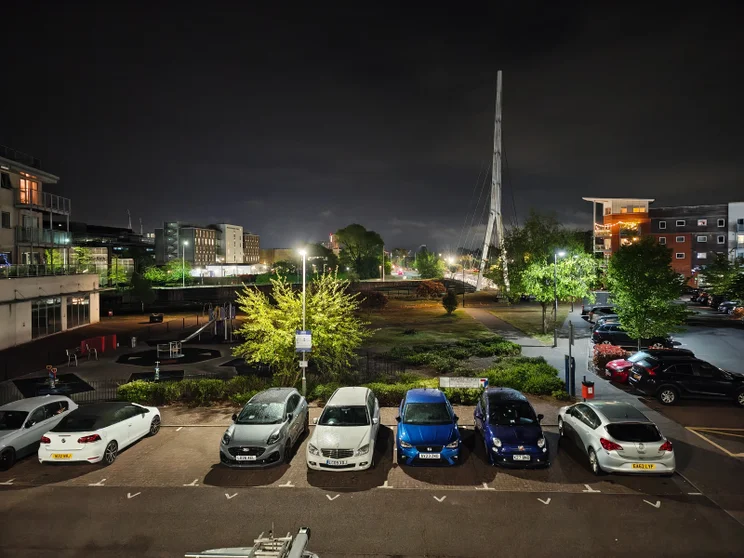
The 50-megapixel (f/1.8) main lens also performs well after dark, plucking out plenty of fine detail from the shadows and reining in the bloom from artificial light sources – though I did notice some visual noise in big blocks of darkness like the night sky.
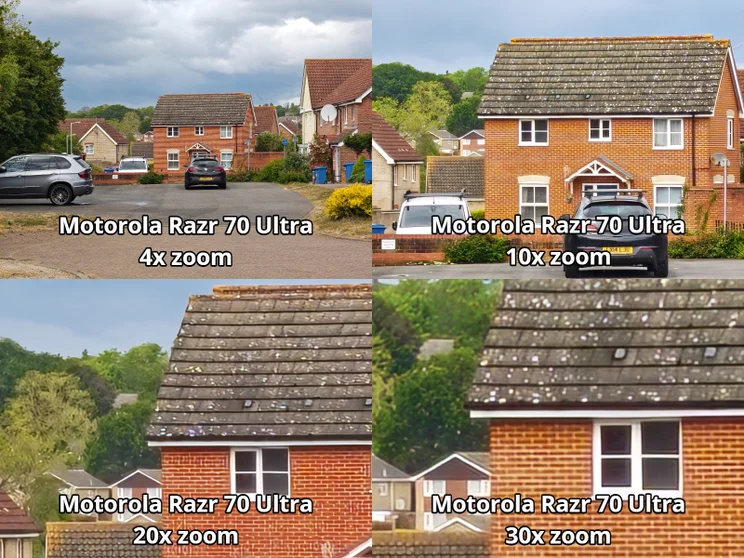
The only area in which I feel that the main lens struggles is with zoom photography. 2x and 4x digital crops are fine enough but, past there, colouring starts to seep out and details get blurry. Shots up to the maximum of 30x are perfectly usable but I wouldn’t go as far as to say that they’re good.
It’s back to positives with the ultrawide camera. The colour tone is near-enough indistinguishable from the main lens, detail is solid and the contrast is nice and bold.
Video is great, too, shooting in 4K up to 60fps, including a Dolby Vision HDR mode, or 8K at 30fps. Camcorder mode returns as well, allowing you to fold the phone 90-degrees and hold it like an old-school camcorder, but this time it’s upgraded with a more intuitive zoom.
Previously, you had to angle your thumb and swipe up and down on the trackpad to zoom in and out, but now you can adjust the zoom by tilting your wrist slowly left or right. It’s far more intuitive and, as long as you tilt slowly enough (judged by the little level animated in the top-left corner of the screen) the video compensates and keeps the horizon locked, delivering smooth footage that shows no sign of tilting.
This joins other gyroscopic features like twisting your wrist twice to open the camera app or shaking the phone a couple times to toggle the torch, and it’s a great use of the foldable format that actually enhances the functionality.
Motorola Razr 70 Ultra: Verdict
If you’re into the flip phone format and it’s simply a case of deciding which suits you best, it’s worth considering the Razr 70 Ultra for that outstanding battery life alone. Not only is it the best we’ve seen from a clamshell foldable, it beats out plenty of non-folding phones, too.
Add in the brilliant performance, bold and unique designs, a cover display that’s as wonderful as ever and fun new tricks like rotate to zoom, and the Razr 70 Ultra is the best representation of what foldables should be right now: it’s fun to use and defiantly different.
The only thing holding it back – and it is, unfortunately, a big thing – is Motorola’s lacklustre software support. No phone that costs four figures should be tapping out of OS updates after a paltry three years, and until Motorola addresses this issue, there will always be those who will (and should) opt instead for the safer long-term bet of a Galaxy Z Flip.