To help us provide you with free impartial advice, we may earn a commission if you buy through links on our site. Learn more

- Excellent 3.5x telephoto camera
- Bright, punchy AMOLED display
- Essential Key placement is better
- Only IP64 rated
- Middling performance and battery life
- Weak ultrawide camera
I have mixed feelings about Nothing’s self-insistant status as a disruptor in the smartphone industry, but after spending a couple of weeks with the Nothing Phone (4a) even I cannot deny that the London-based brand is making moves.
From bringing telephoto photography and dedicated AI to such a cheap phone, to the subversive design language that rages against the iPhone-led smartphone hegemony, the Nothing Phone (4a) continues the brand’s mission to offer something different in an otherwise bland mid-range market.
It’s not a clean sweep – performance and battery life lag are behind the competition, and I wouldn’t have minded a little more water proofing – but, overall, this is still a brilliantly stylish phone with features that you won’t find on anything else at this price.

Nothing Phone (4a): What you need to know
The most notable new feature on the Nothing Phone (4a) is the telephoto camera. The previous generation’s 2x shooter was already quite the rarity for this price range but the (4a) upgrades that to a 3.5x periscope lens, the same telephoto camera that’s found on the Nothing (4a) Pro. That’s good news for the standard Phone (4a) – we’ll see if I have other thoughts when we get to my Pro review.
There’s also the new Glyph Bar – a series of seven LEDs that picks up the duties of the now discarded Glyph lighting system – illuminating in various patterns to indicate timers, phone calls, how close your Uber is and more. And the display is now a 6.78in AMOLED panel with a sharper 2,720 x 1,224 resolution and the same 120Hz refresh rate.
Internally, the processor is now a 2.7GHz Snapdragon 7s Gen 3, backed by either 8GB or 12GB of RAM and 128GB or 256GB of storage. The battery is marginally larger at 5,080mAh (up from 5,000mAh last year) and the phone again supports wired charging up to 50W.
Price and competition
The Nothing Phone (4a) starts at £349 for the model with 8GB of RAM and 128GB of storage, which is a £20 price hike over the previous generation. There’s also a model with 8GB RAM and 256GB storage for £379, or you can get 12GB/256GB for £399.
At the time of writing, only the 8GB/256GB and 12GB/256GB models are available on Amazon. You can still buy the cheaper 8GB/128GB model directly from Nothing:
The shadow looming over this entire price range is the new Google Pixel 10a, which costs £499 for the 128GB model or £599 for the 256GB. This lacks a telephoto lens but otherwise has class-leading cameras, and benefits from Google’s seven years of software support.
We also have the OnePlus Nord 5 close to this price, costing £349 for the model with 8GB of RAM and 256GB of storage (£429 for 12GB/512GB). And then there’s the Honor Magic 8 Lite, which delivers the best battery life in this class. There’s only one model, with 512GB of storage, and you can nab one for £370.
Design and key features
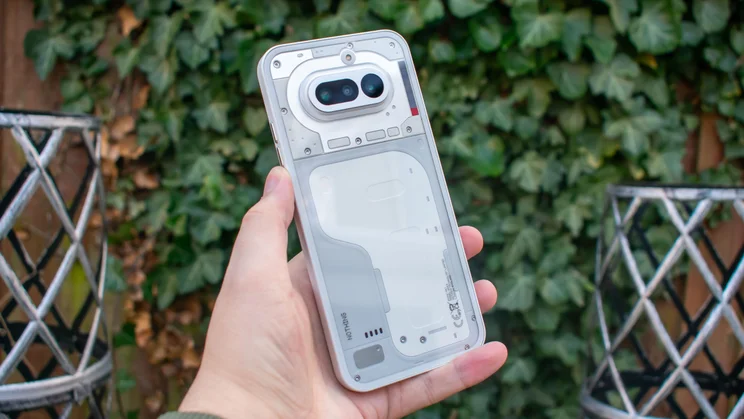
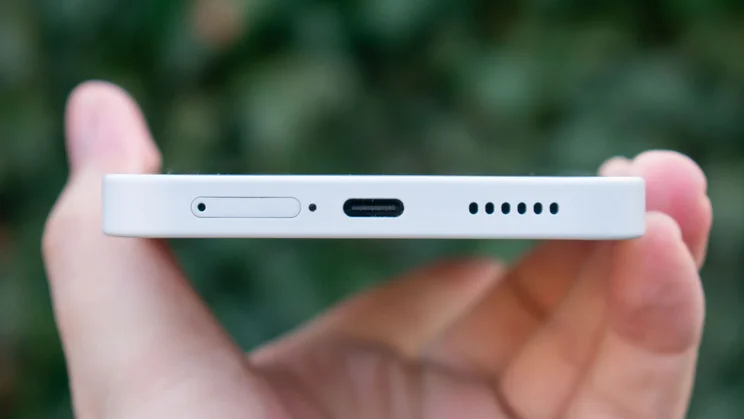
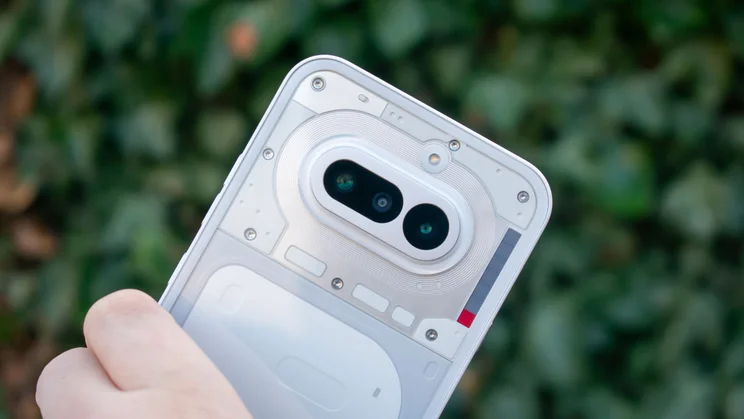
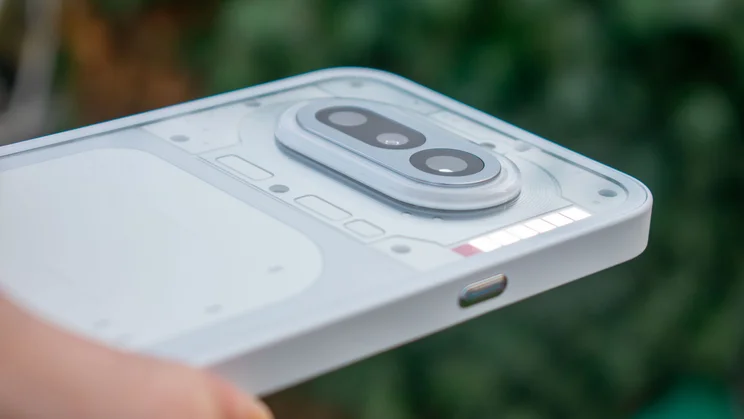
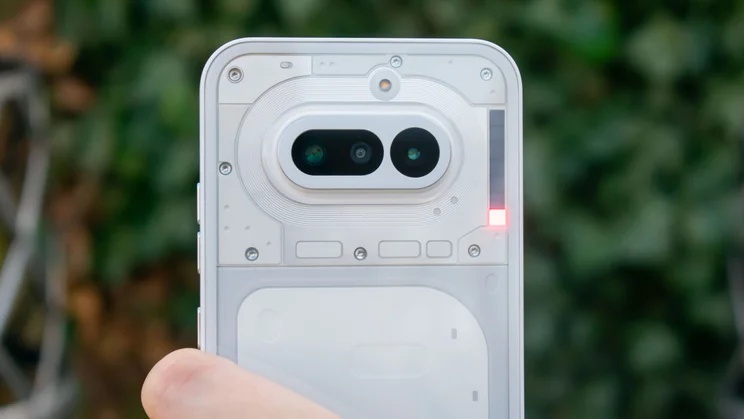
For the most part, the design of the Nothing Phone (4a) is similar to that of the Phone (3a). We’ve again got a glass rear that features the same “exposed internal components” aesthetic, a plastic frame, a pill-shaped bubble that houses the rear cameras and IP64 dust and water resistance that certifies the phone as splash-proof and dust-tight.
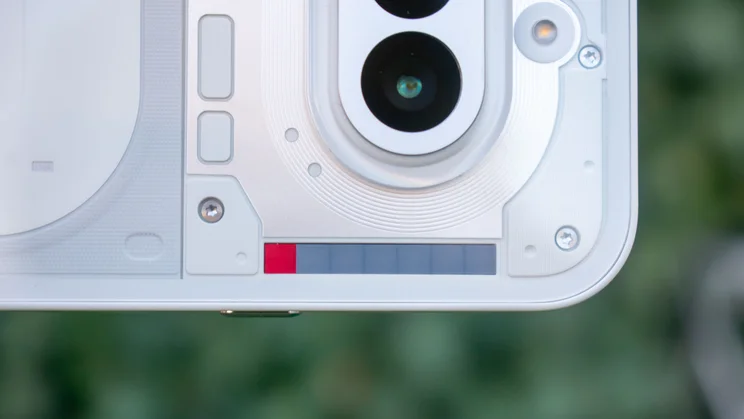
Where both the Phone (3a) and the Phone (2a) before it had three distinct light strips around the camera housing, however, the Nothing Phone (4a) ditches them in favour of the latest evolution of the brand’s iconic Glyph lighting: the Glyph Bar. This is a series of seven square lights arranged vertically to the right of the cameras, six white and one red at the bottom.
Each square contains nine individually controllable mini LEDs and the strip offers the usual selection of functions, from unique lighting patterns for different ringtones to flicking down with your timer. It can even integrate with third-party apps, though right now, the only notable option is to have it visualise how close your Uber is to arriving.
The Glyph Bar doesn’t feel quite as striking or distinctive as the full-body lights we had on earlier Nothing Phones but I still prefer it to the Glyph Matrix that comes with the Nothing Phone (3) and Phone (4a) Pro, which is a little too busy for my tastes.
Elsewhere, we have Gorilla Glass 7i protecting the display against scuffs and marks, and a total of four colours to choose from: the standard black and white models are accompanied by a splash of vibrant colour with the striking blue and pink variants. The latter is easily the best-looking version this year, with subtly different shades of pink making the “internal components” stand out beautifully.
The software is NothingOS 4.1, based on Android 16, with Nothing pledging three years of OS updates and six of security patches. Most rivals at this price are in the same rough ballpark but Honor is showing everyone up this year, extending the Magic 8 Lite’s roadmap to six years of both OS updates and security patches.
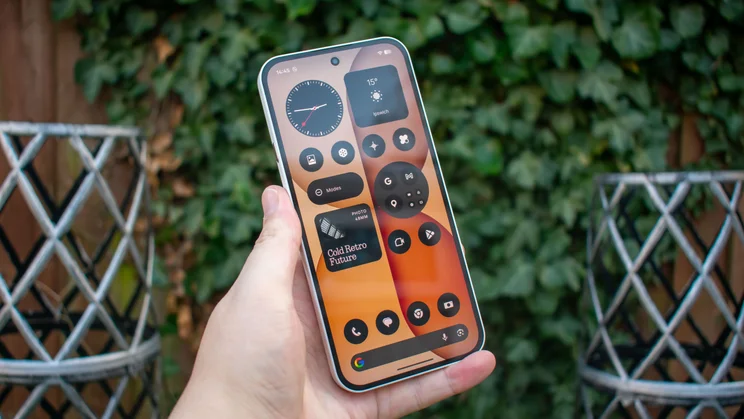
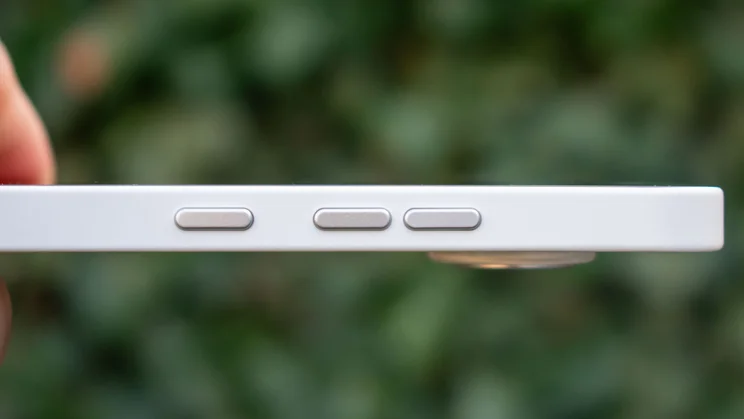
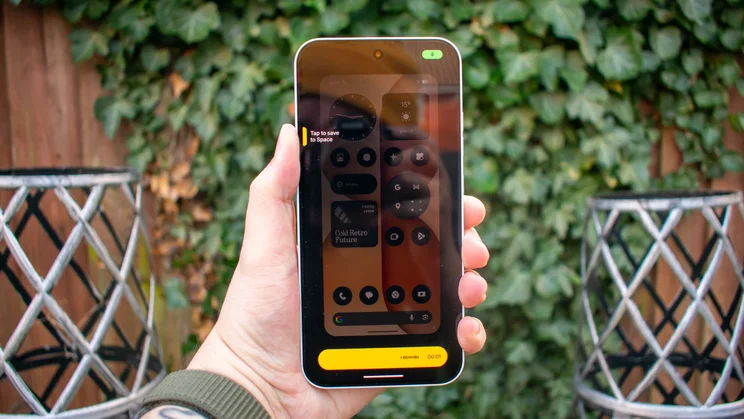
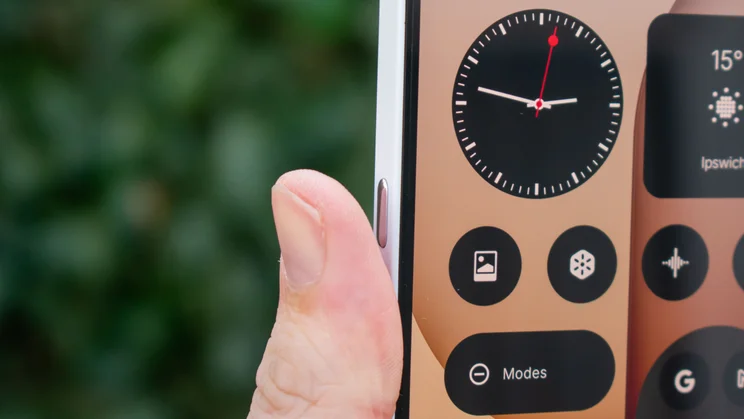
Otherwise, Nothing’s software is just as unique and thoughtfully designed as ever, with a wide selection of widgets to populate your homescreen (or the option to just load stock Android if you prefer) and the return of Essential Space AI. I find this to be one of the more useful iterations of AI, essentially collating your thoughts in a central space, and the placement of the Essential Key used to access it feels much smarter this year, too.
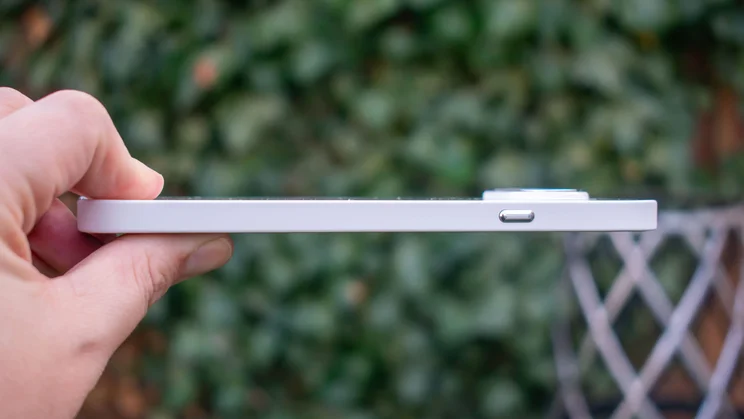
Last time out, it was positioned below the power button on the right edge, but it’s now high-up on the left edge – similar to where you find AI buttons on the likes of OnePlus or Motorola phones – and the volume buttons are tucked over on the right edge, next to the power button. This set-up feels much cleaner to me, and makes quick-launching the Essential Space more intuitive.
Display
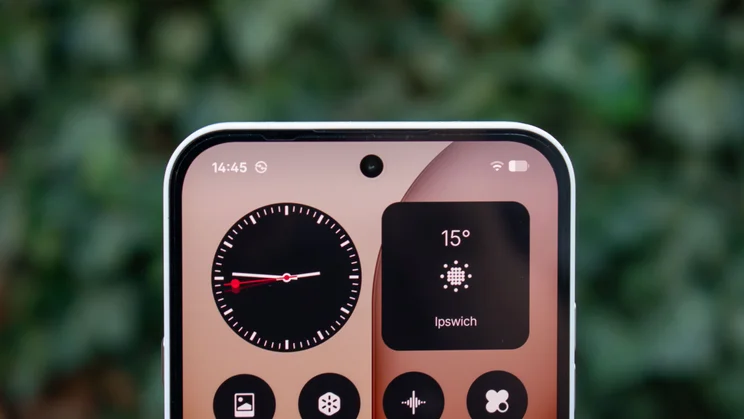
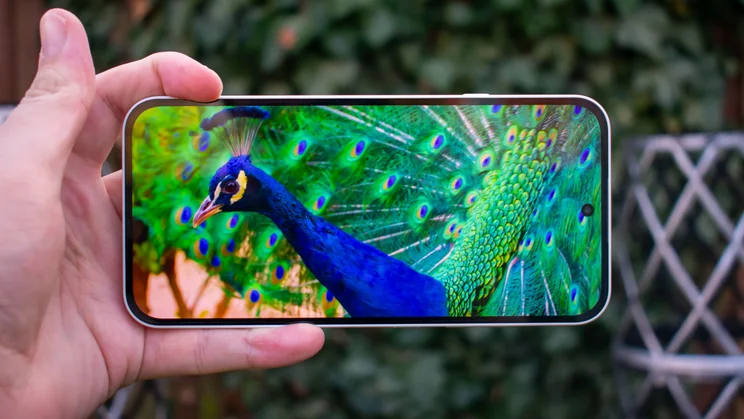
In addition to getting that higher 2,720 x 1,224 resolution, the AMOLED display is also capable of much higher brightness than last year’s model, with Nothing claiming a peak of 4,500 nits, compared to the (3a)’s 3,000 nits.
These ceilings will only be in very specific circumstances, but my testing certainly confirmed an improvement in brightness: on adaptive mode with a torch shining on the light sensor, the Phone (4a) hit a fantastic 1,495cd/m2, whereas the Phone (3a) stopped at 1,232cd/m2.
Nothing gives you two colour profiles to choose from, with the default Alive profile delivering punchy, vibrant shades that make your streaming and gaming really pop, while Normal aims for authentic reproduction of the sRGB gamut. On the latter, I recorded a gamut coverage of 93.5% and a volume of 95.2%, with the average Delta E colour variance score coming in at 1.21. That’s a little less accurate than the Phone (3a), which scored 0.85, but still close enough to be considered very good.
Performance and battery life
Performance has never been the strong suit of the Nothing A-series and that certainly doesn’t change here. The Snapdragon 7s Gen 4 chipset is speedy enough for it to feel fluid in general use but, when we break down the raw speeds, it’s a different picture.
Compared to the Snapdragon 7s Gen 3 chipset that was used in last year’s Nothing Phone (3a), the Phone (4a) is barely any faster, despite its processor having a slightly higher clock speed (2.7GHz compared to 2.5GHz).
Moreover, it’s quite a way off the fastest phones in this price range. In the Geekbench 6 CPU test, the Google Pixel 10a scored 37% better than the Nothing Phone (4a) in the multi-core part, and the OnePlus Nord 5 was around 50% ahead.
I’d also temper expectations when it comes to gaming prowess. Like the Phone (3a) before it, the Nothing Phone (4a) has enough horsepower to run something like Asphalt Legends, but textures did look a little muddy in my testing. You’ll have no problem playing the likes of simple card games or Candy Crush, but complex 3D games may be asking a little much.
But while both CPU and GPU performance are roughly stagnant compared to the previous generation, battery life is actually a little worse. I suspect that this is at least in part due to the display being both a little bigger and a little sharper, but it could also be the case that this processor simply isn’t as power-efficient as before.
Either way, the Nothing Phone (4a) ran my looping video battery test for a total of 24hrs 57mins before giving up the ghost. That’s a drop of 5.5hrs compared to the Phone (3a) and generally quite mediocre for phone battery life these days. It’ll see you through a full day of moderate use, but not much beyond that.
The phone’s charging speed is still decent, at least. The 50W support brings the battery from empty to 50% in around 20 minutes, while a full charge takes roughly 1hr 10mins.
Cameras
I was already appreciative enough that the Nothing Phone (3a) included a telephoto camera of any kind, so to see that solid 2x lens replaced with a farther-reaching 3.5x shooter is very good news indeed.
It has a 50-megapixel sensor – the same as before – but with a slightly narrower f/2.9 aperture, and it uses a periscope optical structure, as seen on the Phone (3a) Pro. The camera housing doesn’t stick out as much, though, which is a relief.
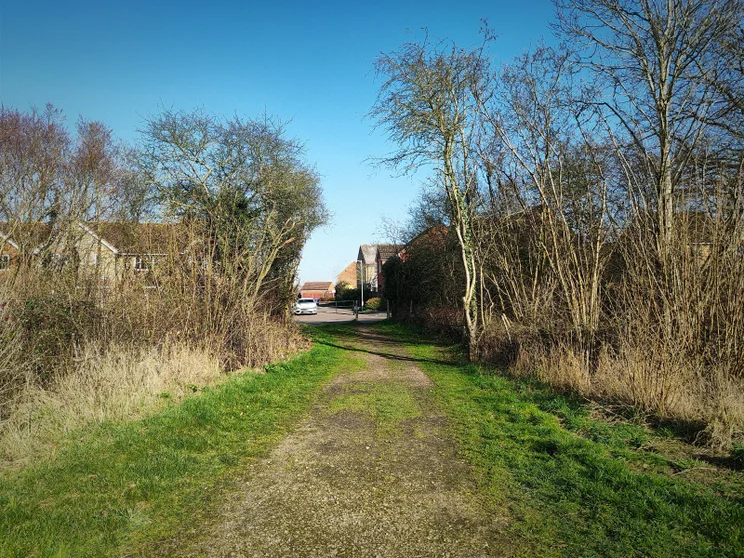
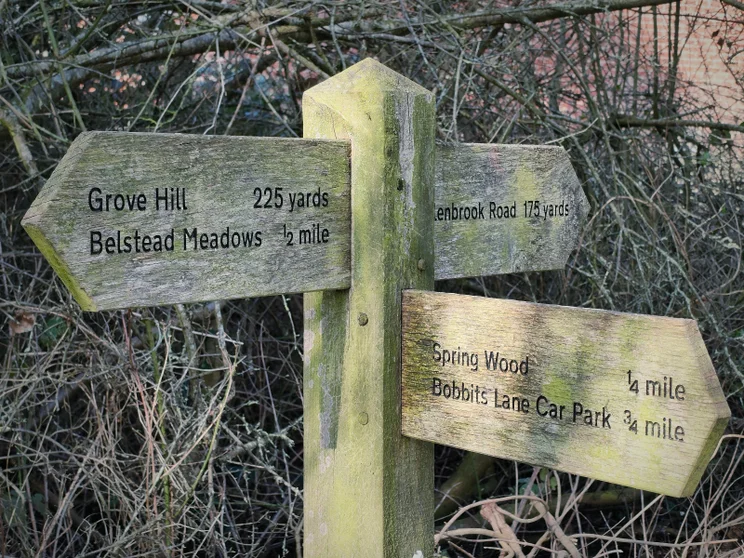
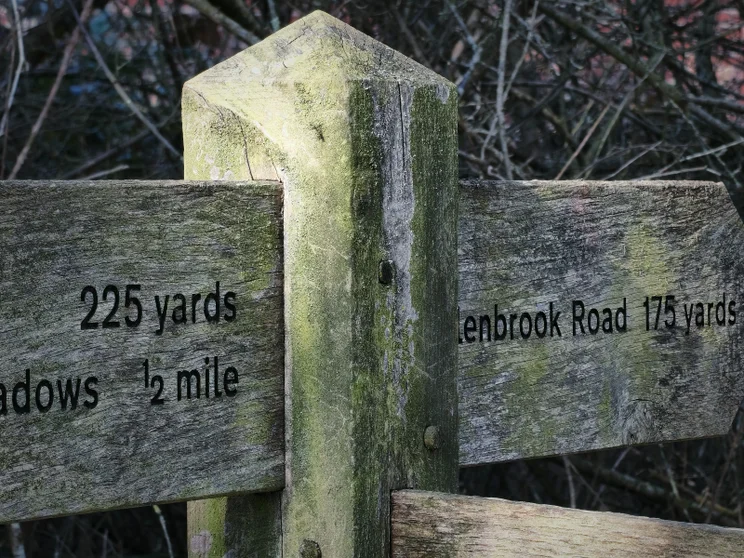
The results are generally excellent, with keen detail and good colouring at the standard 3.5x optical zoom (below), as well as some striking portrait-style shots at 7x hybrid zoom.
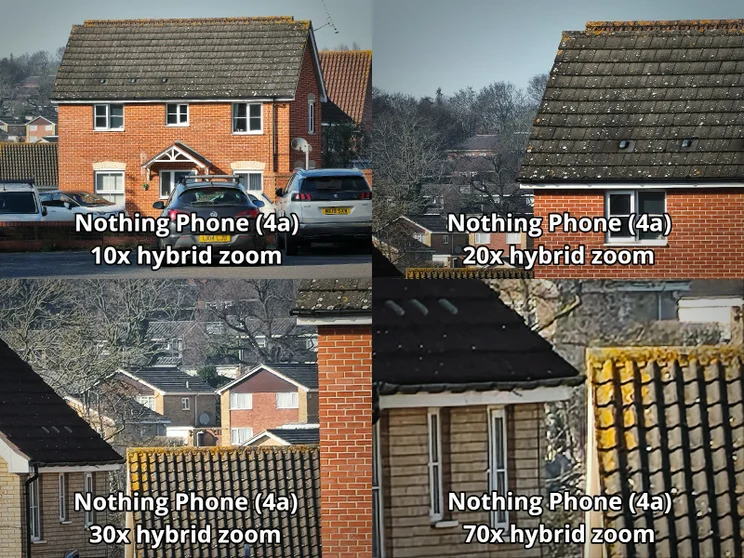
In addition to extra optical magnification, the maximum zoom distance has also been upped from 30x to 70x. At maximum distance, the detail capture isn’t great, but I was impressed by the quality up to around 30x. Some textures are overly smooth but the detail retention is mostly solid and colours are nicely natural.
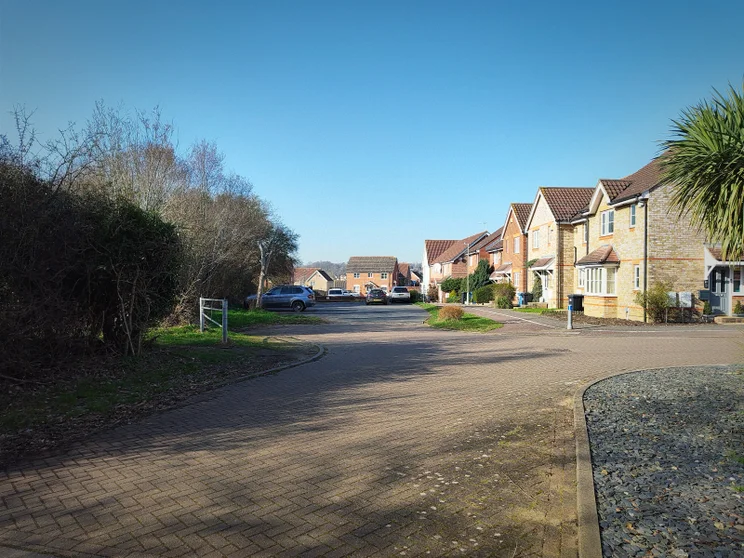
The 50-megapixel (f/1.9) main camera is a direct carry-over, which is fine enough when we’re talking about shots in good lighting. Here, the camera captures sharp, beautifully coloured images with decent dynamic range.
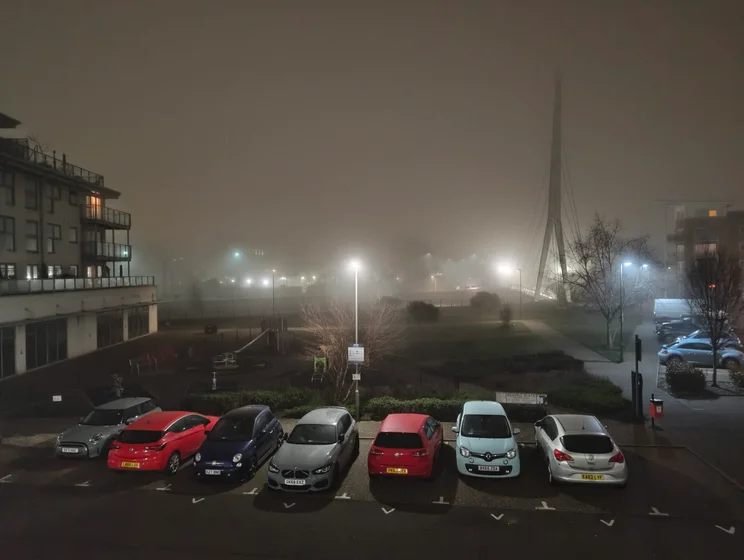
Night mode is mostly solid, too. The broad strokes of the foggy night below are captured well, with natural colours and good detail in the foreground, although further back and off to the sides, things get rather smudgy quite quickly.
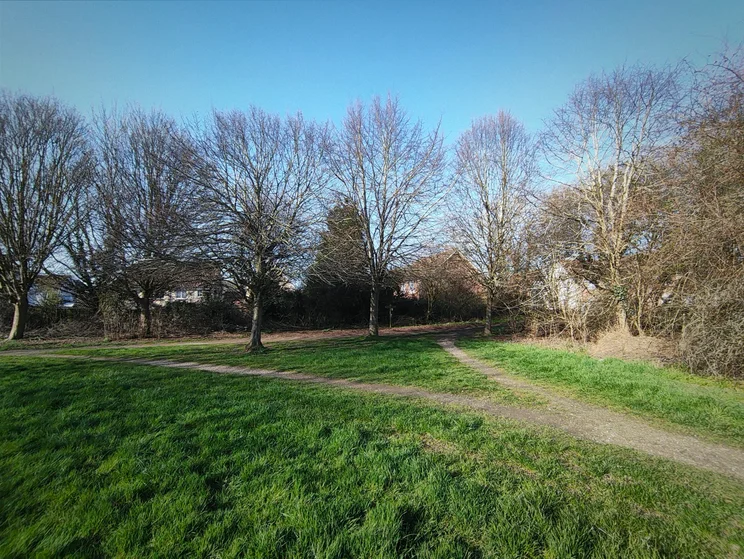
It is more disappointing to see the 8-megapixel (f/2.2) ultrawide camera return here. I already found this lens disappointing last year and time has done it no favours. Detail is middling at best, especially around the corners, and the overall colour palette is more washed out than on the main camera.
The 32-megapixel selfie camera is yet another returning favourite from the Phone (3a), and it does a good job at capturing natural-looking skin tones and sharp portrait shots with decent background blur. Video capture is unchanged, and while it’s good that we have 4K capabilities here, it’s once again capped at 30fps – it would have been nice to see Nothing up the frame rate to 60fps.
Nothing Phone (4a): Verdict
I have something of a soft spot for Nothing Phones. It’s more than just home-team pride for the London-based brand – I appreciate brands that make concerted efforts to deliver phones that are different from the crowd, rather than trying their best to emulate the iPhone in order to lure customers away from Apple.
For better or worse, the Nothing (4a) is defiantly itself. This works very well in some ways, with a gorgeously eye-catching design (especially in that new pink colourway), clean and thoughtful AI in the Essential Space and unique features like the excellent telephoto camera and quirky Glyph Bar.
And in other ways, the Phone (4a) falls behind the competition: most rivals offer faster performance and better battery life, and a good chunk of them are IP68 rated for dust and water resistance, making them more durable. Whether or not this is a dealbreaker is up to you but, if you’re looking for something that stands out from the pack, the Nothing Phone (4a) is as unique as mid-range phones get right now.