To help us provide you with free impartial advice, we may earn a commission if you buy through links on our site. Learn more
- Ingenious design
- Horizontal and vertical modes
- Customizable oscillation
- Too noisy for sleeping
- Unimpressive airflow
- Pointless turbo mode
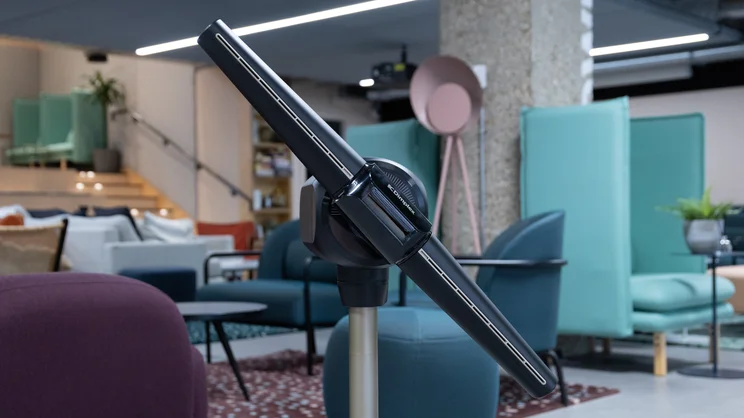
Is going bladeless the next big thing for tower fans? Judging by the Dimplex FlexBlade, it might be. Like the Shark TurboBlade we reviewed last year, it ditches the visible conventional fan blades for a design whereby air is dragged into a concealed motor, then pushed out through vents in the two long wings to deliver a cooling airflow. The FlexBlade also borrows the TurboBlade’s party trick, with wings that can pivot through 90 degrees to make airflow horizontal at a height perfect for spreading air across a sofa or a bed.
Dimplex’s design isn’t quite as elegant or sophisticated as Shark’s, but the upside is that the FlexBlade isn’t as expensive. I had it in for testing over the hottest week in the June 2026 heatwave, so I’m well equipped to let you know how it measures up.
Dimplex FlexBlade: What do you get for the money?
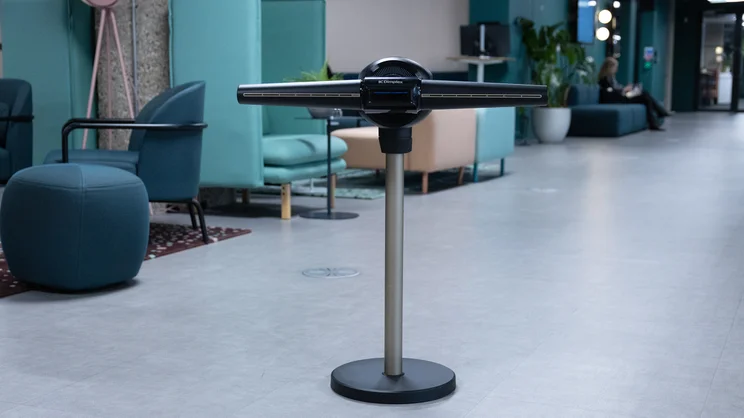
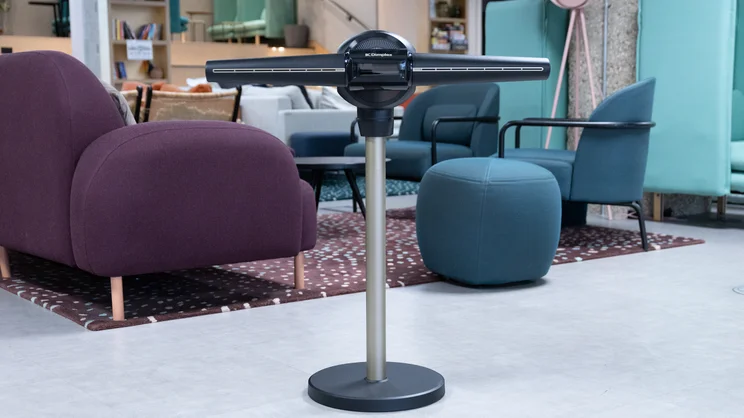
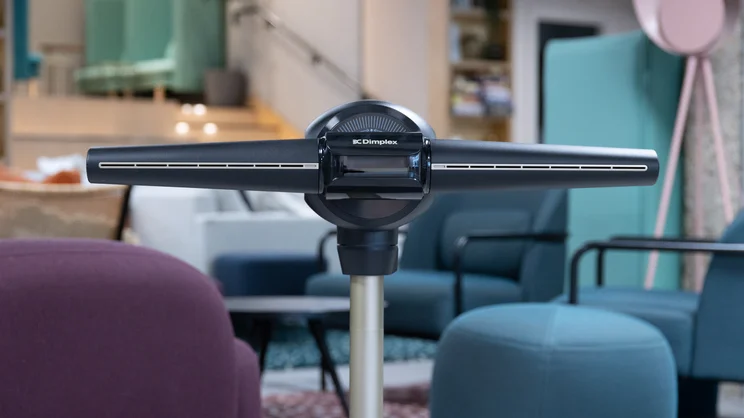
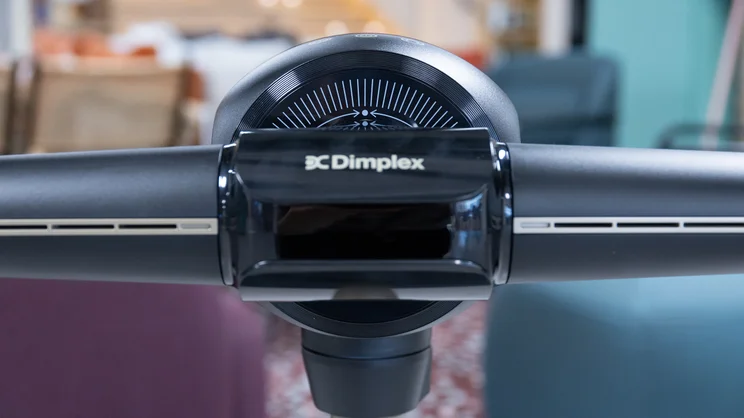
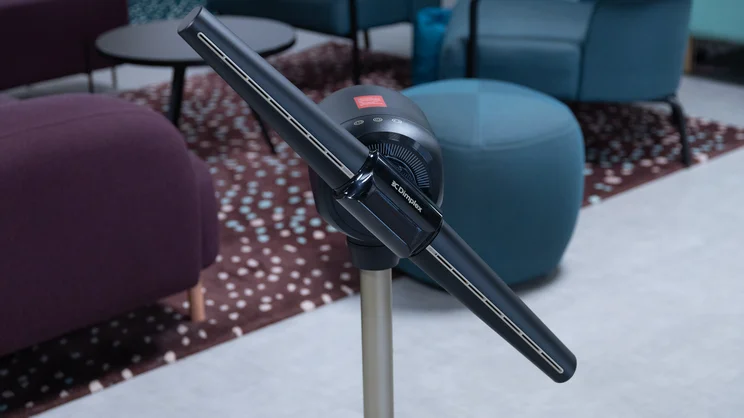
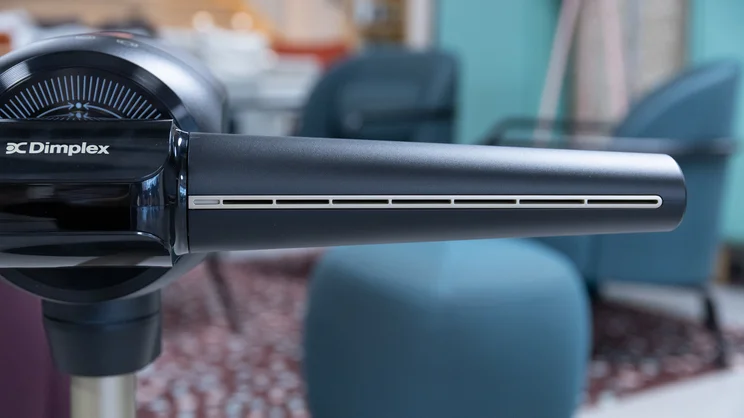
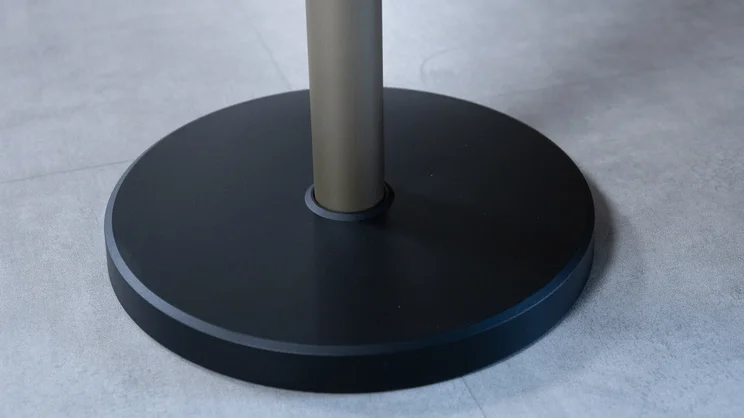
The FlexBlade is an ingenious tower fan with – despite its name – a bladeless design. A motor is hidden away inside a central fanhead section, supported by a three-part stem which slots into a large round base. Air is pushed through vents in the two “wings” that jut out from the fan head.
This is a simpler design than the Shark TurboBlade, where air is pulled in through a central column and expelled through the wing vents. You can twist the wings to direct the airflow to the left or the right, as with the TurboBlade, though you might not realise this at first – the mechanism on my test sample was incredibly stiff to start with. It’s also a fair bit cheaper than the TurboBlade: £199 instead of £249.
The FlexBlade fan stands 1.1m tall with the wings aligned vertically, with most of the weight in the central fanhead section, roughly 69cm up. The plastics in the stem and base feel robust but fairly lightweight, meaning there’s a bit of wobble when it oscillates, or when you touch or move the fanhead. Rotating the wings into their horizontal position is easy enough – they move smoothly and click into place – and you can direct the airflow upwards or downwards, just as you could with the Shark. You can shift the wings back into a vertical state by rotating them either to the left or to the right.
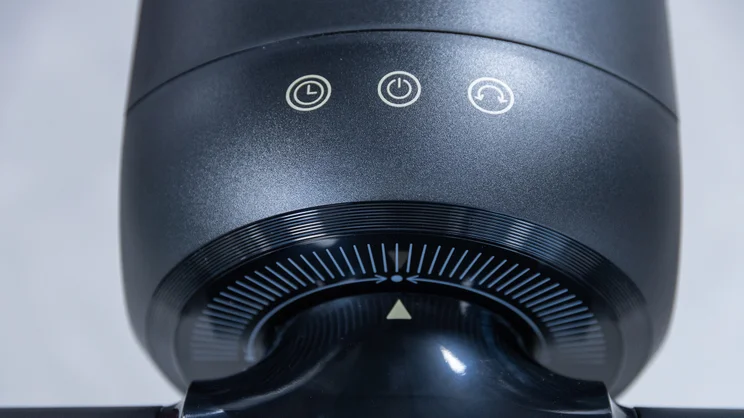
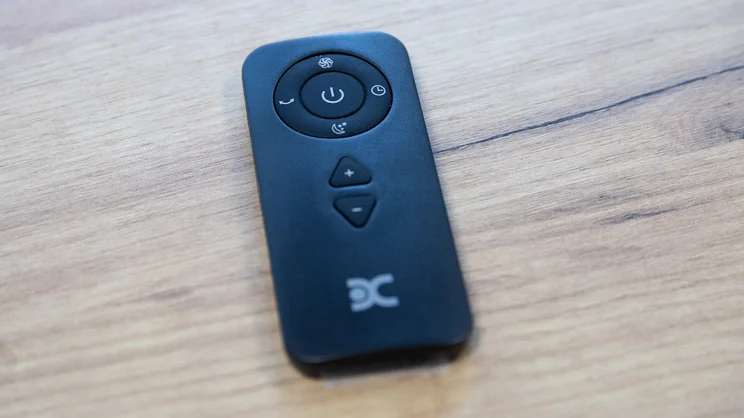
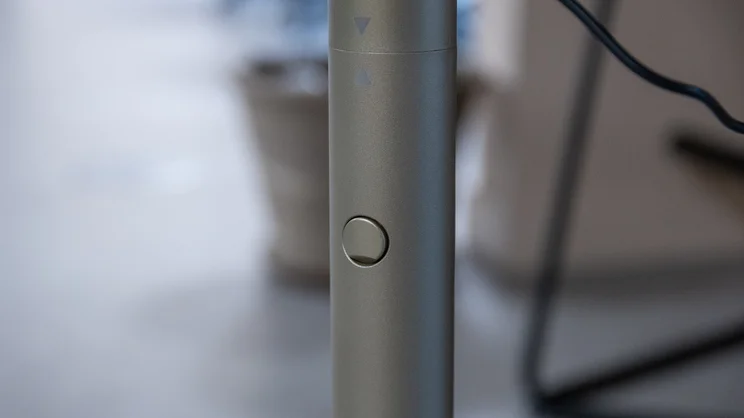
The controls are fairly minimal, with three touch-sensitive buttons on the fan itself plus a compact remote with an odd four-way circular pad, speed up and down buttons and a power button. The power button on the fan itself doubles as a speed control, toggling through the five available fan speeds, while the oscillation button cycles through three angles; 30, 60 and 90 degrees. There’s no display as such on the fan, so you’re reliant on the subtle glowing indicator LEDs for fan speed, as well as a beep when you tap a button.
What features and settings does it have?
There isn’t much in the way of modes or features beyond the custom oscillation angles and five speeds.
There is a Sleep mode, but it simply runs the fan at speed 1 with the LEDs turned off. Meanwhile, the Boost mode ramps up the fan speed one more notch (this can only be activated via the remote control), while the timer turns the fan off after two to ten hours, set in two hour increments.
How I tested the Dimplex FlexBlade
I carry out the same tests across all of the fans I review, measuring air flow, noise levels and power consumption.
I use an anemometer to record air speeds (in m/s). With the anemometer positioned a metre away from the fan, I take readings for its lowest, medium and highest settings, plus any settings I want to check for additional data. I then use a smartphone meter app to record sound levels (in A-weighted decibels, dBA) at the fan’s lowest and highest settings, also from one metre away. Finally, I use a plug-in energy meter to measure power consumption.
These standardised tests allow me to better compare fan performance across different brands and models. However, I also make sure I test the fan anecdotally through day-to-day usage, taking note of how well it keeps me cool on hotter days, how easy it is to use and how useful any modes or smart features are.
How well does it perform?
Like the Shark TurboBlade, this fan isn’t any kind of powerhouse. Tower fans are often fairly modest in terms of airflow, but the TurboBlade put out 2.6m/s at full whack and the FlexBlade isn’t much better, with an air speed of just 2.7m/s on setting five. On the medium setting, this drops to 1.7m/s, while on the lowest speed you’re looking at 1m/s. At that speed you can still feel the airflow, but it’s a fan that’s better suited to close quarters use than stationing across the room.
On the more positive side, it’s quite energy efficient by tower fan standards, using 38.73W when turned up to full and 5.9W on its lowest setting. The maximum is 12W lower than the TurboBlade and the minimum 1.4W higher.
Meanwhile, the rotation feature is a winner in stuffy bedrooms, giving you a blanket of cooling airflow provided your bed sits at roughly the right height. Oscillation doesn’t make a whole lot of sense in horizontal mode, but spreads the airflow nicely when the wings are vertical. Being able to control the arc of oscillation is a definite plus too.
Is there anything we didn’t like?
The big issue here is noise. While I liked the fan’s horizontal mode for snoozing, I found the low hum difficult to sleep through. Even on the minimum speed setting, it puts out a very noticeable 35.8dBA. If you want more breeze than that, the medium setting takes the noise level up to 46.3dBA, while speed five takes that up to 49.8dBA. I stuck to the lowest settings, but still found the noise disturbing.
By comparison, the TurboBlade made even more of a racket on its highest setting, but it was more bearable on low, at 30.2dBA. Many pedestal and tower fans can go even quieter.
There’s not much point to the Turbo setting, either. In my tests, it raised the air speed by roughly 0.2m/sec, and the noise output to 51dBA. It’s not really worth it.
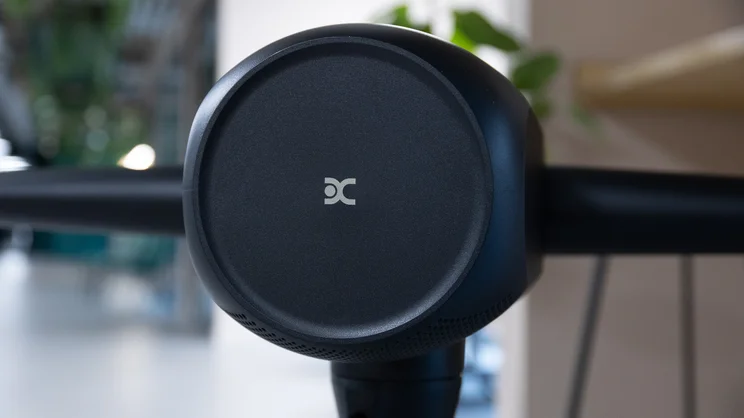
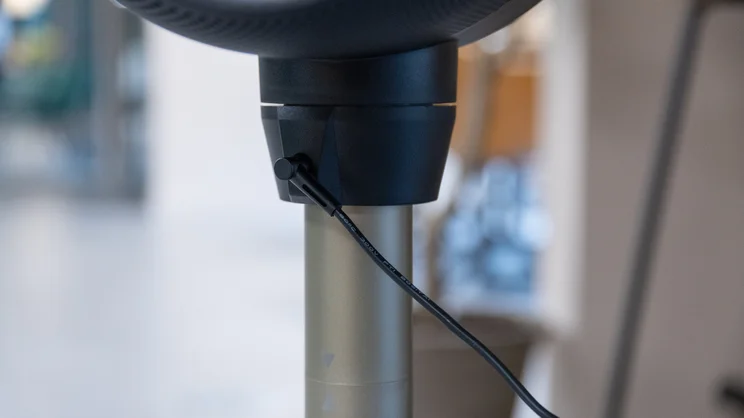
Finally, the FlexBlade isn’t where it should be when it comes to cable management. The power supply plugs into the bottom of the fanhead at the rear, while the cable can be secured to the stalk using the clips provided. This leaves you with roughly 1.4m of cable remaining to connect the fan to the mains. Having a connection in the base would be better, and ideally we’d have more cable to work with too.
Should you buy the Dimplex FlexBlade?
Like the Shark TurboBlade, the Dimplex FlexBlade is a bit of a missed opportunity. There are aspects of the design that work really well, especially for lounging or sleeping, but the fan is too noisy to make the most of them. The result is a fan that looks like a propeller, but that never quite takes off.
Its saving grace is that it’s cheaper than the Shark, which might sway things its way if you’re after a bedroom-friendly tower fan and aren’t too bothered about some background hum. All the same, I’d rather stick to a more conventional pedestal or tower fan that can dish out more air while keeping the volume down.