To help us provide you with free impartial advice, we may earn a commission if you buy through links on our site. Learn more
- Slimline design
- QI2.2 wireless charging
- Fantastic wired charging performance
- Expensive
- Wireless charging slow on some phones
The Iniu SnapGo Air powerbank comes primed to charge the latest flagship smartphones on the move, with twin USB-C ports and a QI2.2 wireless charging pad all crammed into one slimline unit. The pad gives you 25W of wireless charging, ready for the iPhone 17 and Samsung Galaxy S26 series, while each of the USB-C ports can deliver up to 45W.
That’s a lot of power for such a compact power bank, but can the SnapGo Air match these claims in real-world use?
What do you get for the money?
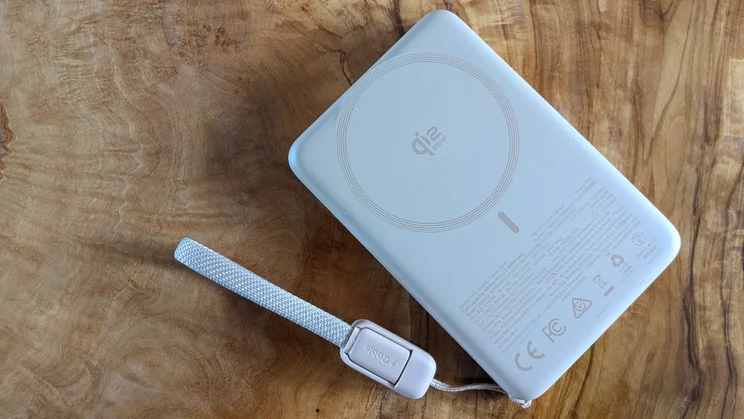
A feature-packed, mid-range power bank with a 10,000mAh capacity, which should be enough to charge an iPhone 17 or 17 Pro twice and do the same for any smartphone from the Galaxy S26 series. It’s slim, at just 13.8mm thick and relatively light at 196g, with small enough proportions that it can be concealed below or behind most smartphones when charging via the QI2.2 pad.
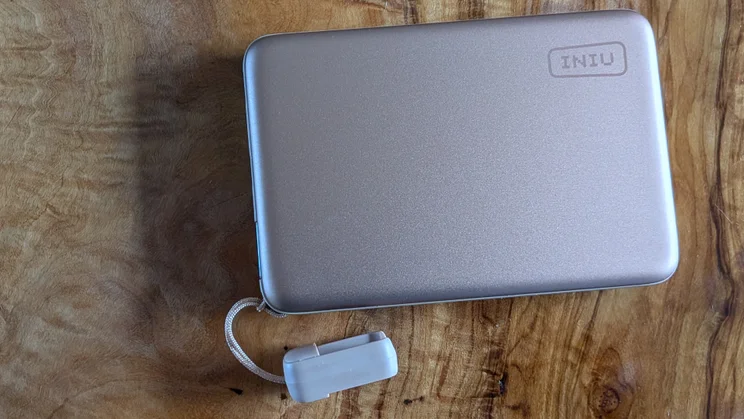
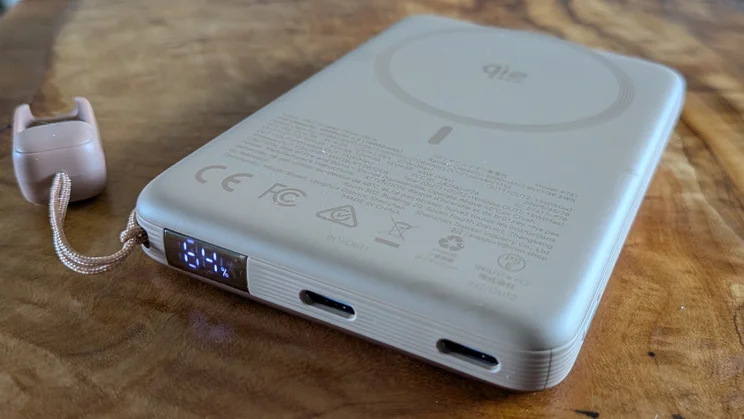
It’s also fairly stylish by PowerBank standards, with a tough, anodised aluminium body that’s available in six finishes, including metallic orange, lilac and dark blue, plus the rose-tinted copper finish of our test sample.
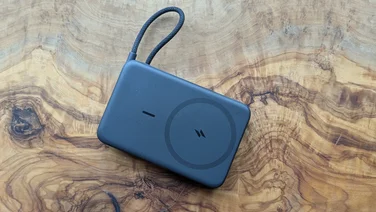
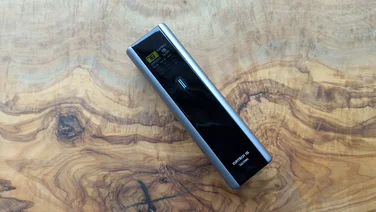
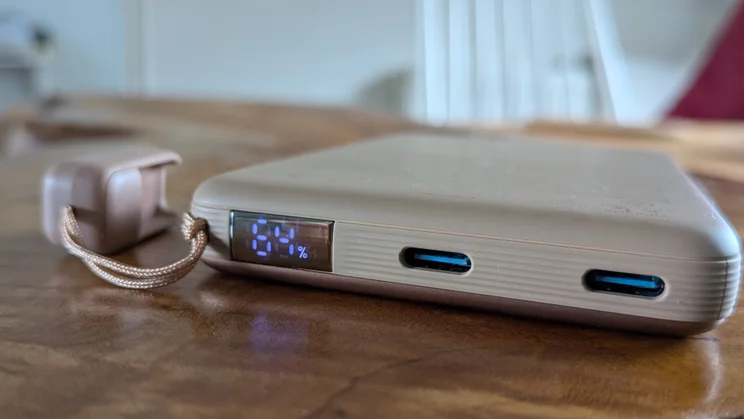
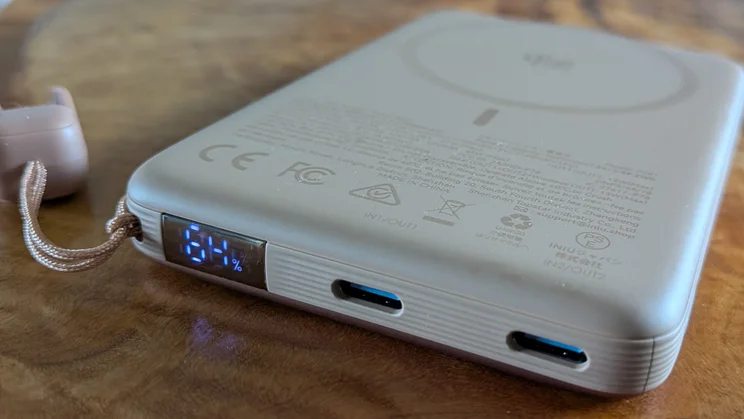
Both USB ports sit at the front edge, with either capable of charging up the battery itself or providing up to 45W to your devices. A small digital display on the left gives you the current charge level at the press of a button on the left-hand edge, and this flashes while the power bank is charging. Iniu claims the QI pad has 13 Newtons of magnetic grip, to hold on tight to MagSafe phone, which is useful if you’re charging while your device is still in use.
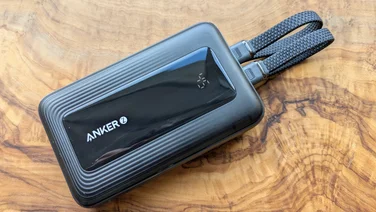
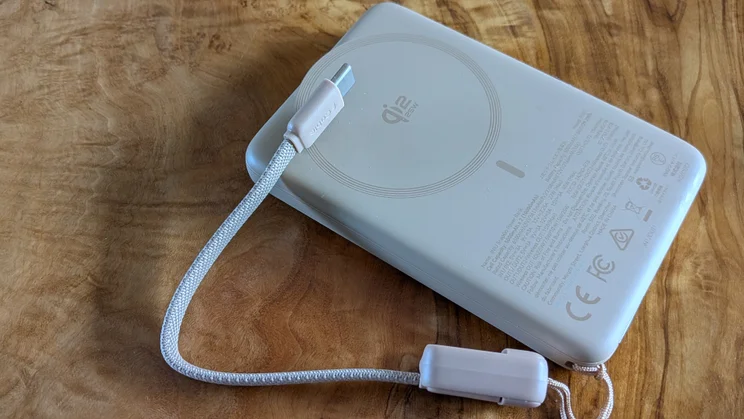
There’s one further design touch that I thought was a great idea: what looks like a tiny wrist strap turns out to be a USB-C cable, with each connector clipping into a plastic housing attached by a fabric loop. It’s an effective way to keep the cable with you on the move, without the potential downsides of a captive cable.
What do we like?
The SnapGo Air is undeniably a speedy charger. Plugged into my test Android phone, it delivered a steady 36.6W flow, and while plugged into a laptop it maintained a consistent 43.5W. To put that into perspective, the Anker Zolo A1680 put out 19.65W to the same phone and 29W to the laptop. And where the Zolo A1680 recharged the phone by 32% in 15 minutes, the SnapGo Air hit 47% in the same period. It performs like a next-generation power bank.
That performance drops when it’s charging multiple devices, however. With both laptop and phone plugged into the USB-C ports, the phone charged at a less impressive 8.9W. All the same, you can charge using one USB-C port and the QI2 pad at the same time, though using both USB-C ports seems to put the pad out of action.
Sadly, I don’t have an iPhone 17 or Samsung Galaxy S26 to fully test QI2.2 charging speeds, but the SnapGo Air charged my iPhone 13 Mini by 25% in 15 minutes, which is the best result I’ve seen from any QI power bank.
What didn’t we like?
Wireless charging speeds vary from device to device. My Motorola Edge 50 Neo supports 15W wireless charging, but I couldn’t get a charging rate higher than 4.2W. On a Google Pixel 10a, which should do 10W wireless charging, I couldn’t get much above 3.1W.
Otherwise, the main point against the SnapGo Air is its price. £45 is fairly high for a 10,000mAh power bank, and if you’re not fussed about the fastest charging speeds, you could go for something like the Anker Zolo A1684 and save some cash.
Should you buy the Iniu SnapGo Air?
The pricing may be too high for owners of more modest devices, who won’t be able to take advantage of all that performance, but if you’ve just splashed out on a cutting-edge smartphone, then this is the perfect power bank accessory.
Not only will you get faster wireless charging with MagSafe compatibility, but impressive wired charging speeds to boot. What’s more, you’ll get them in a well-designed unit with an ingenious way to stow the charging cable.