To help us provide you with free impartial advice, we may earn a commission if you buy through links on our site. Learn more
- Plenty of performance to spare
- Comfortable
- Solid battery life
- Far too expensive
- Screen is only IPS
If 2026 has been memorable in the tech world, it’s for price rises. Laptops, smartphones and tablets have all been affected, and the price of the MSI Claw 8 EX AI+ shows that handheld game consoles have been hit hard.
There are many reasons to like this new Claw handheld. It’s powerful, has decent battery life, a bright, vibrant screen, and is comfortable to use. But the price? Let’s just say I’m not sure many people will spend £1,400 on one.
I’m not going to mince my words: £1,400 is an outrageous amount to charge for a handheld games console. Even for one this good. You could buy three Nintendo Switch 2 consoles for that money.
What you need to know
I suspect the price will drop fairly rapidly in the next few months, just like the AMD Ryzen Z2 Extreme-powered Lenovo Legion Go 2 has done (it’s down to £1,149 right now, having risen to more than £1,600 at one point), but for now, the Claw sits at the top of the tree when it comes to cost.
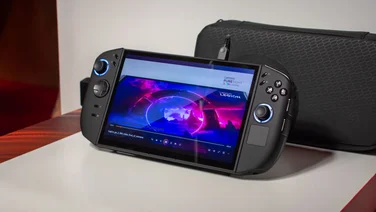
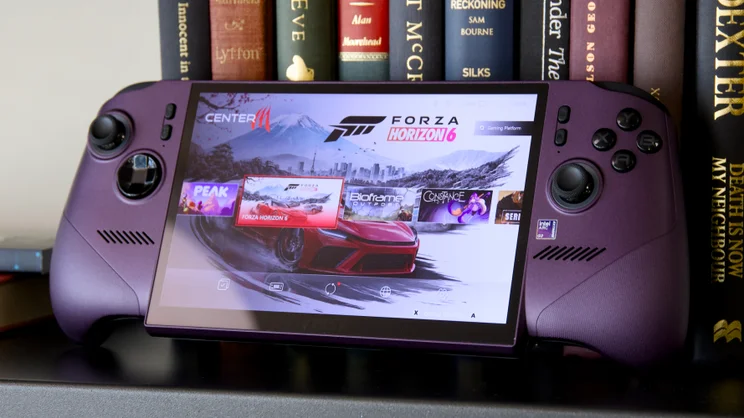
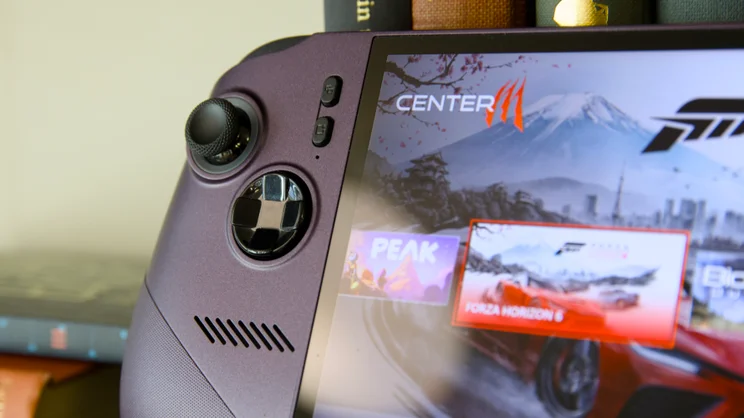
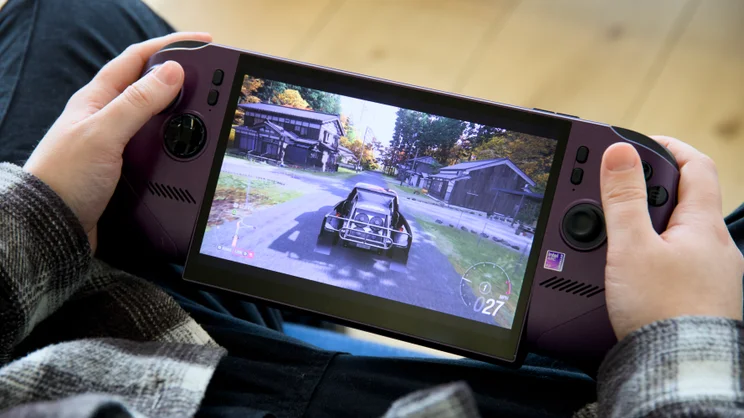
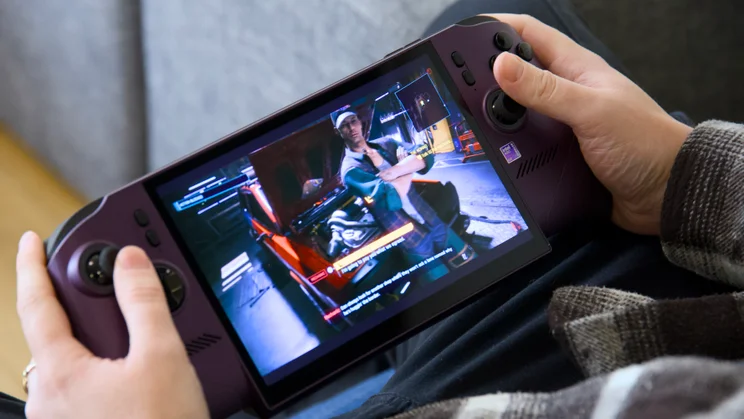
So what do you get for £1,400 of your smackeroos? Put simply, this is a Windows 11-powered handheld console like many others we’ve seen. Unusually, it’s finished in a rather fetching purple, which I rather like. However, the design is cookie-cutter standard, with grips and game-controller-style buttons and joysticks flanking the central display, and more controls and ports arranged along the top edge.
The display is an 8in IPS touchscreen with a resolution of 1,920 x 1,200, support for VRR between 40Hz and 120Hz. The whole thing is powered by the new Intel Arc G3 Extreme SoC backed up by 32GB of RAM.
Price and competition
At £1,400, this is among the priciest handheld game consoles you can buy right now. The console that previously held this dubious title was the Lenovo Legion Go 2, which, with its Ryzen Z2 Extreme SoC, was the fastest PC handheld we’d tested. It has a larger display than the MSI (8.8in), it’s OLED, and the controller grips can be removed, whereas the Claw’s cannot.
The Claw is also more expensive than its stablemate, the Ryzen Z2 Extreme-powered MSI Claw A8 BZ2EM and the Asus ROG Xbox Ally X. And it’s £100 pricier than the Intel Arc G3 Extreme-powered Acer Predator Atlas 8, a console that is its closest match in terms of specifications and design, albeit with 24GB of RAM to the Claw’s 32GB.
Design and controls
Inevitably, with that 8in display between the grips, the Claw 8 EX AI+ is a chunky old thing. It registered 787g on my kitchen scales, and measures 321mm between the outer hips of each grip and 130mm tall.
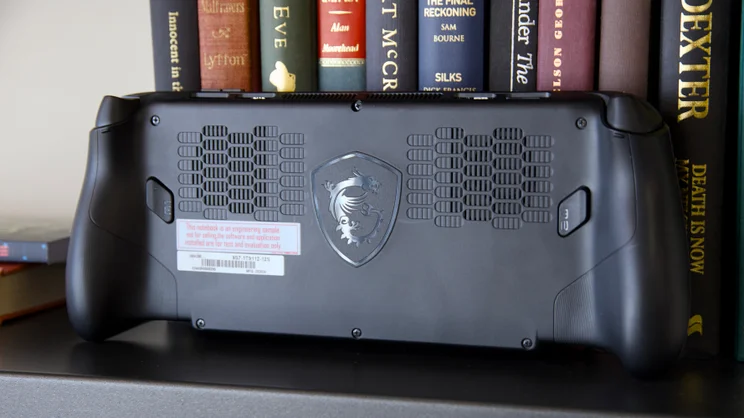
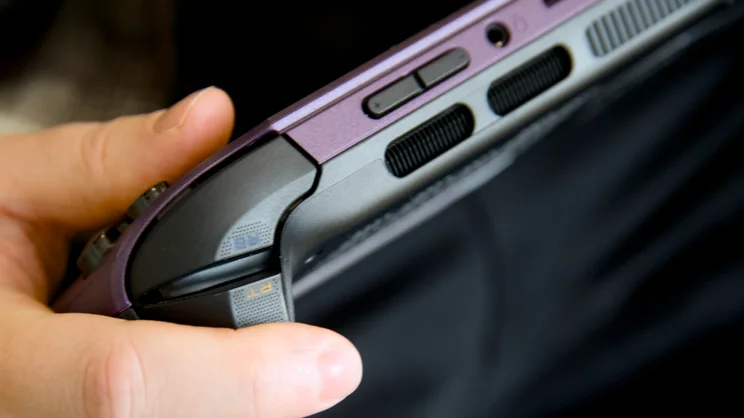
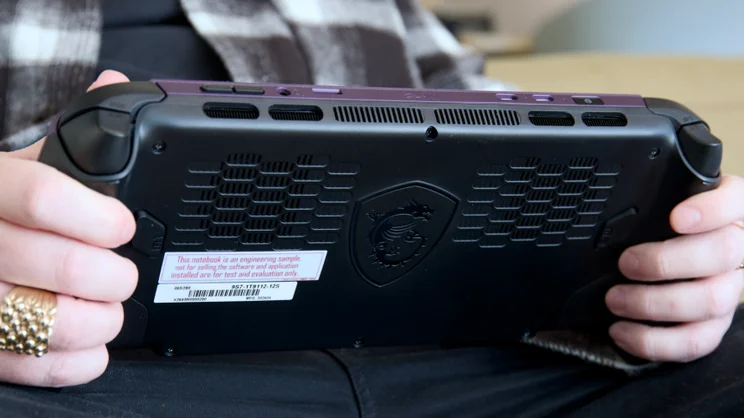
It looks great, though, with its purple, slightly sparkly faceplate, and it’s really comfortable to use, with roughly textured plastic on the lower part where your hands need it most. I’d have liked the coloured plastic to stretch all the way around, though. The rear is plain matte-black plastic, and it looks a little dowdy.
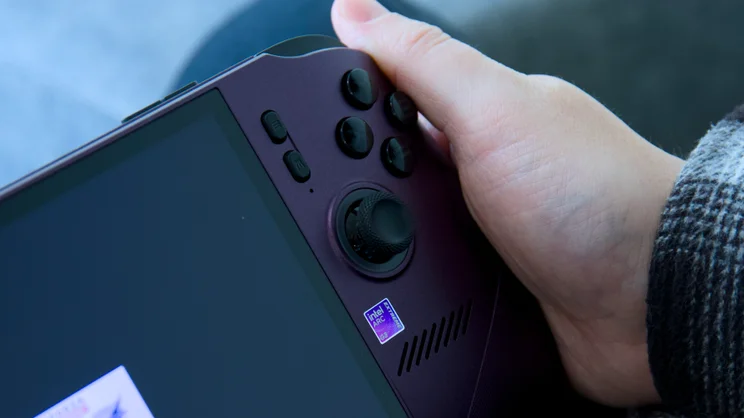
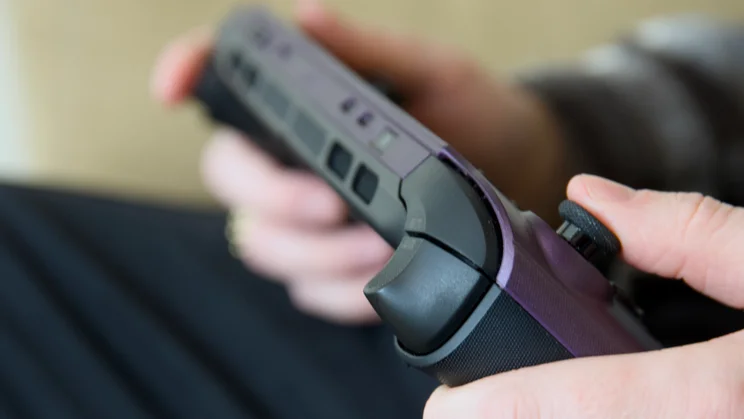
As with all these Windows-based handhelds, the controls closely mimic those found on an Xbox controller. There are two, slightly offset Hall-effect thumbsticks on either side, complete with RGB light rings and a diamond arrangement of XYAB buttons on the right, two small shortcut buttons and a four-way D-pad on the left and another pair on the right, plus the usual shoulder buttons and triggers (again with Hall-effect sensors) in the top corners.
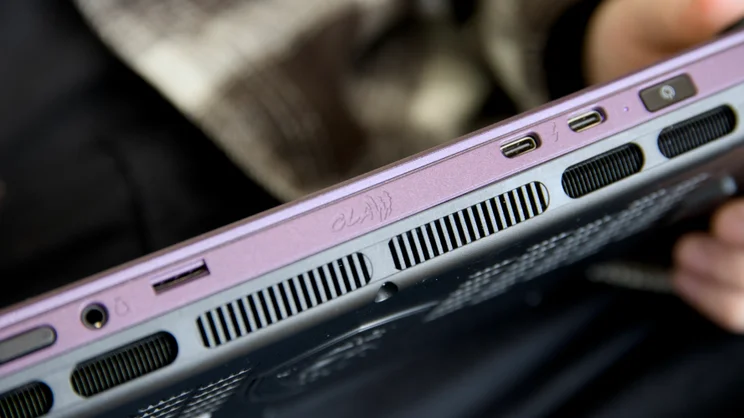
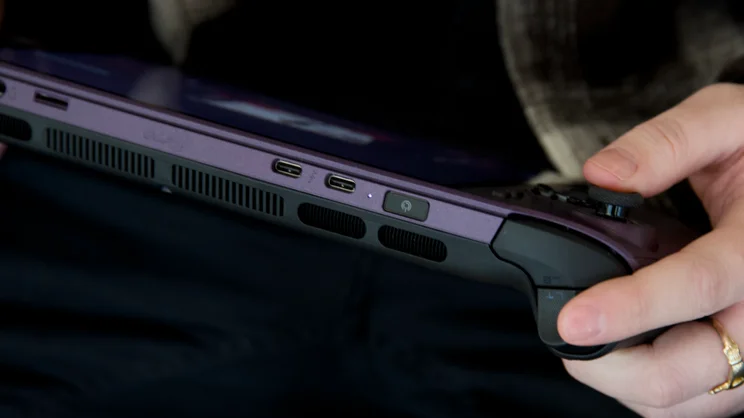
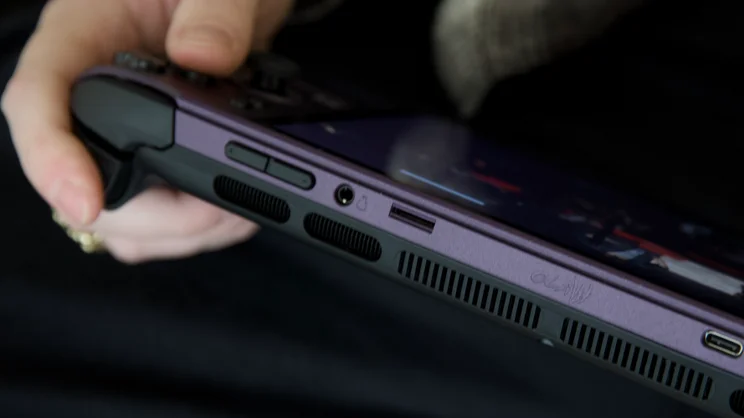
Two more custom buttons sit behind each grip on the rear of the console, and another selection of buttons and ports sit along the top edge, including a pair of Thunderbolt 4 USB-C ports with Power Delivery 3.0 and DisplayPort support, and a MicroSD Express card slot.
It’s all fairly standard stuff, and throughout my time with the console, I had no major issues with comfort or controller reliability. It felt extremely natural to hold and very grippy without ever making my hands feel sore or sweaty, and it never got overheated or uncomfortable after many hours of gaming. I was initially a little concerned that the rather stubby Hall-effect triggers might cause issues in racing games, but I got used to them reasonably quickly.
That’s not to say I wouldn’t have appreciated a little extra length, and I think a small touchpad would make using Windows a little easier, too.
Control modes and software
As with all Windows gaming handhelds, you can run whatever UI you want on the MSI Claw 8 EX AI+. By default, the console runs in Xbox mode, which makes it easier to operate with sticks and buttons alone.
MSI’s MSI Center M launcher app is preinstalled and can launch downloaded games, set up the RGB lighting for the thumbsticks and tweak the console’s power settings. You can install and run Steam in Big Picture mode, or any other Windows-compatible launcher.
Otherwise, the system has all the usual strengths and weaknesses of Windows. On the positive side, the catalogue of games you can install is huge; as the Arc G3 Extreme is x86-based, pretty much any PC and Xbox title will run. On the negative side, touch commands always feel sub-optimal when navigating the Windows 11 desktop via the touchscreen.
It’s flexible, of course, but Windows remains a bit of a mess of a UI for gaming handhelds.
Display
The display is the one area of the MSI Claw I had issues with. Claimed brightness is 500 nits, which should be enough to game comfortably in most lighting conditions, but I found the glossy screen caught reflections rather too readily.
Still, the Full HD+ resolution (1,920 x 1,200) is about right for a console with this level of GPU grunt, as is the maximum 120Hz refresh rate, and the display measured up well in my testing, reproducing 99.7% of the sRGB colour gamut with no huge accuracy discrepancies. I measured peak brightness at 526cd/m2, which is slightly brighter than claimed.
I liked the sound of the forward-facing stereo speakers, and found they delivered in-game audio with good body and warmth. Perfect if you’re gaming and you need to keep an ear out for the front door, but not if you want full immersion.
Performance and gaming
We’re generally more willing to accept performance limitations in handheld game consoles than laptops. Smaller screens mean small differences in detail are less noticeable, so dropping the quality a bit doesn’t affect how a game feels so obviously. That said, you won’t need much tweaking to reach playable frame rates for even demanding AAA titles on this handheld.
The MSI Claw 8 EX AI+ is powered by Intel’s Panther Lake-based Arc G3 Extreme chip, which comprises a 4.7GHz 14-core CPU (split into 2 performance cores, 8 efficiency cores and 4 low-power efficiency cores) and an integrated Intel Arc B390 GPU with 12 Xe graphics cores. This is backed up by 32GB of RAM and a 1TB SSD. That’s almost the same level of power as in the 2026 Samsung Galaxy Book Pro or the Acer Swift 16 AI laptops we reviewed earlier this year.
As far as settings go, those are fairly easy to manage. There are three core power levels to choose from. AI Engine mode will adjust the power levels depending on the situation – if you’re gaming or browsing, plugged in or on battery power and so on. This is the mode I left the console in most of the time I was using it.
You can force the console into “Endurance mode”, which caps performance heavily in favour of longer battery life. Or you can use Manual mode to adjust the PL1 and PL2 (power limit) levels yourself and game at the system’s maximum power levels, at the cost of shorter battery life.
In terms of gaming potential, the system shows a lot of promise. I set the system to manual and adjusted PL1 and PL2 to their maximum (35W and 45W), connected the handheld to mains power, then ran the Cyberpunk 2077 benchmark with quick presets set to High (XeSS Super Resolution 2.0 set to Quality) at 1080p.
This returned an average frame rate of 72fps, much more impressive than the Legion Go 2, which returned 31fps for this test. Not that you’d need much more performance here, but boosting the XeSS Super Resolution 2.0 upscaling to Performance lifted that frame rate to an average 83fps.
Pulling the power cord has no effect with Manual settings enabled, so I switched to AI Engine and saw the frame rate drop to an average 64fps in the High preset (with XeSS SR2 set to Quality) and 72fps with XeSS SR2 set to Performance. Very, very playable, in other words.
The MSI Claw’s impressive performance continues with Doom: The Dark Ages. I set the resolution to 1,920 x 1,080, XeSS upscaling preset to Balanced and resolution scaling to Static, and recorded an average frame rate of 90fps in manual mode (with the power plugged in) and 70fps in AI Engine mode on battery. Changing the upscaling preset to Performance boosts this to 98fps and 71 fps, respectively.
I’d prefer higher frame rates in this particular game, and you can get it above 100fps by dropping the resolution or switching upscaling to Ultra Performance. However, you start sacrificing visual quality at this point.
In Geekbench 6, the Claw 8 EX AI+ matches Ryzen Z2 Extreme handhelds for single-core performance, edges ahead on multi-core performance and is significantly ahead on raw GPU power. It’s also well ahead in our in-house 4K media conversion and multitasking benchmarks.
Battery life
As you might expect, battery life depends largely on the type of gaming you’re doing and the settings you’re using. But anecdotally, I was impressed with the Claw 8 EX AI+.
For the majority of my time, I played on battery power with the AI Engine setting enabled, and I was seeing between two and three hours for heavy, AAA gaming (mostly Doom: The Dark Ages and Forza Horizon 6) and between three and four hours of lighter gaming (mostly metroidvania-style games).
I also ran the same low-level video playback battery test we run on laptops, phones and tablets, to get an idea of maximum runtime. Here, with the display set to 170cd/m2 and all wireless communications disabled, the Claw’s 80Wh battery lasted 14hrs 12mins, which is not bad at all for a handheld. It can’t match the Asus ROG Xbox Ally X here, however; that console lasted more than 18 hours in this test.
Verdict
The MSI Claw 8 EX AI+ is an impressive handheld gaming console. With the settings in the right places, you can run the most demanding AAA games at playable levels, battery life is decent, and it’s supremely comfortable to use. It looks swish, too, and it keeps its cool while running at full tilt.
The only issue for me, and it’s a fairly major one, is the price. At £1,400, this MSI is simply too expensive. We may be living in an era of sky-high RAM prices, but I can’t see many consumers paying this much, even though you could use it as a desktop PC if you connect a monitor, keyboard and mouse.
Maybe that price will fall once the manufacturer realises it won’t sell many at this price and it needs to free up warehouse space for the next big thing. For now, though, anyone seeking a competent Windows-based handheld game console should probably opt for the Asus ROG Xbox Ally X.