
To help us provide you with free impartial advice, we may earn a commission if you buy through links on our site. Learn more
- Great mix of vivid and accurate picture modes
- Fantastic gaming experience
- The allure of Ambilight
- Overly elaborate settings menus
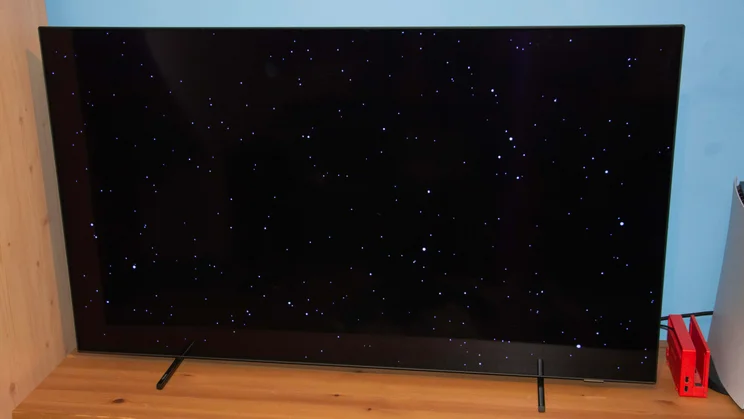
- Entry-level OLED brightness
- Limited clearance under the panel
The Philips OLED760 combines two of my favourite words in the TV world: OLED and Ambilight. Perfect black, infinite contrast, precise highlights, wide viewing angles, plus an immersion-enhancing light show on the wall behind your TV is a strong formula for success.
It’s a formula that earned both the OLED809 and OLED759 our Recommended award in 2024, and it’s the latter of those TVs that the OLED760 replaces. While it may not feature the Primary RGB Tandem OLED panel found on the brand’s flagship OLED+910, it combines an appealing set of specs at a very attractive price.
I’ve spent the past few weeks putting it through a series of subjective and objective tests to determine just how much of a step up it is from its predecessor, and to judge whether this entry-level OLED is everything it’s cracked up to be.
Philips OLED760: Key specifications
| Screen sizes available | 48in (48OLED760/12), 55in (55OLED760/12), 65in (65OLED760/12) and 77in (77OLED760/12) |
| Panel type | OLED EX |
| Resolution | 4K/UHD (3,840 x 2,160) |
| Refresh rates | Up to 120Hz |
| HDR formats | HDR10, HLG, Dolby Vision, HDR10+ Adaptive |
| Audio enhancement | 2.0-channel 20W system, Dolby Atmos, DTS:X |
| HDMI inputs | 4 x HDMI 2.1 (1 x eARC) |
| Freeview Play compatibility | Yes |
| Tuners | Terrestrial Freeview HD |
| Gaming features | Game Bar 2.0, ALLM, VRR, Dolby Vision Gaming, FreeSync Premium, G-Sync |
| Wireless connectivity | Wi-Fi 5, Bluetooth 5.2, Apple AirPlay |
| Smart assistants | Amazon Alexa built-in, works with Google Home |
| Smart platform | Titan OS |
What you need to know
The OLED760 is the entry point into Philips’ 2025 4K OLED lineup and the successor to the OLED759, to which we gave four stars and a Recommended award. It’s supposedly available in four screen sizes – 48in, 55in, 65in and 77in – although I’m unable to find any evidence of the smallest panel size being sold in the UK at the moment.
It’s powered by the seventh-gen iteration of Philips’ P5 AI Intelligent picture engine, which isn’t as advanced as the ninth-gen chip found in the OLED+910 I saw in Barcelona, but can still harness deep learning to optimise image quality.
Like the other OLEDs in the Dutch brand’s four-strong range, the OLED760 supports all four HDR formats (HLG, HDR10, HDR10+ and Dolby Vision) as well as Dolby Atmos and DTS:X audio. However, it also comes with a basic 2.0 down-firing speaker system and a maximum refresh rate of 120Hz, whereas its stablemates all benefit from built-in subwoofers and can deal with 4K at 144Hz.
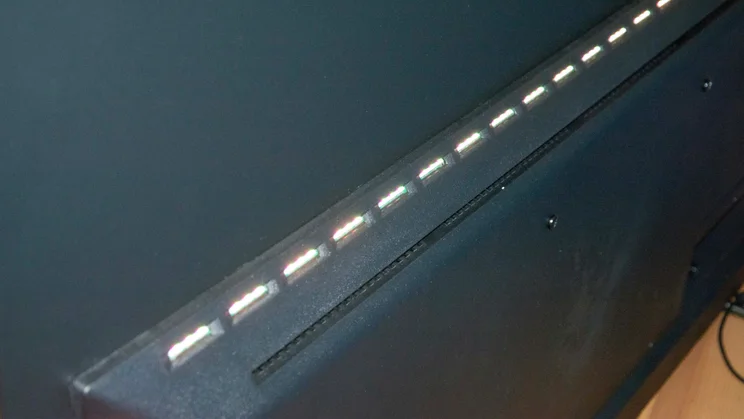
The most significant difference is the use of Titan OS rather than Google TV. That might be an issue for some, but it’s great news if you’re a fan of Freely, like I am. Another bit of great news is that the OLED760 incorporates a three-sided Ambilight. Though not to everyone’s taste, the LED lighting technology sets Philips apart from its competition in a bedazzling fashion.
Price and competition
At the time of writing, the 55in Philips OLED760 I tested cost £899, the 65in option was priced at £1,099, and the 77in model will set you back £1,599. Those prices make it one of the most affordable OLEDs on the market, although Philips has some big-name competition and prices fluctuate, meaning other rivals may be less expensive at the time you’re reading this.
As I write this review, LG’s 55in B5 OLED is £1,099, the 65in model is £1,499, and the 77in option is £2,299. Samsung’s S85F costs £1,099 for the 55in variant, while the new Hisense A85Q starts at £999 for the 55in model and can be picked up in 65in size for £1,399.
I can’t comment on how those other models perform, as the OLED760 is the first of the quartet we’ve tested, but they all share pretty similar specifications. All the non-Philips trio use WOLED (white OLED) panel technology, have a maximum refresh rate of 120Hz, and offer a low-latency gaming mode and game customisation features. The biggest differentiator is the three brands’ proprietary processing, features and operating systems: LG runs webOS, Samsung has Tizen, and Hisense uses VIDAA.
If you don’t have your heart set on an OLED TV, there are plenty of Mini LED options available for similar, and often less, money. I recommended the 55in Panasonic W95B at £899, while the TCL C7K delivers incredible value at £699, and earned our Best Buy award when we reviewed it recently. If you’re not sure about the pros and cons of the premium TV technologies, check out our OLED vs Mini LED explainer for more details.
Design, connections and controls
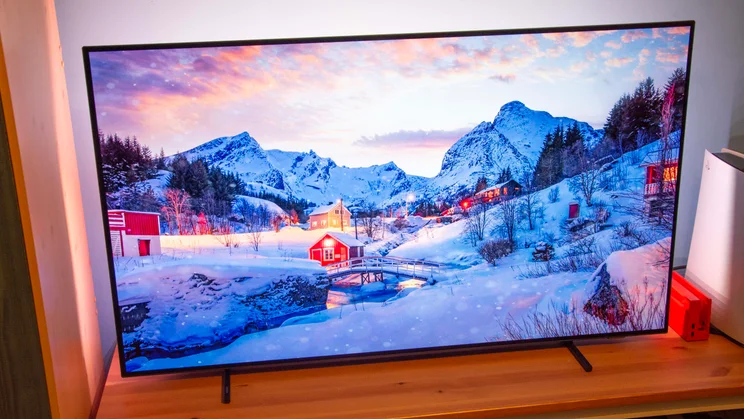
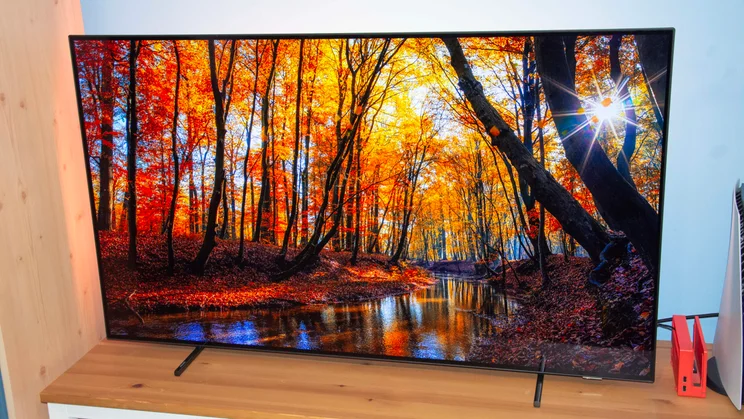
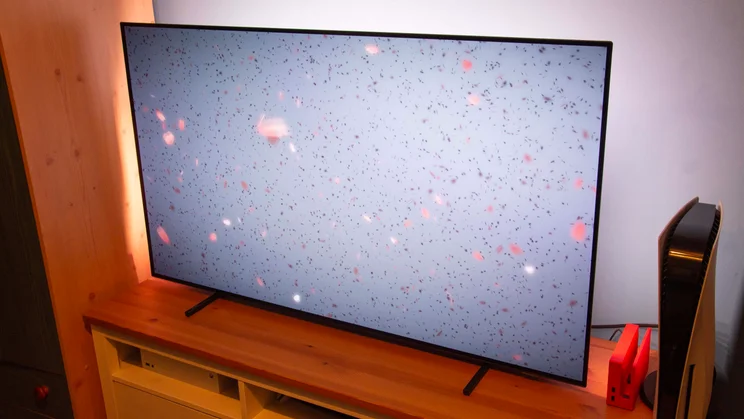
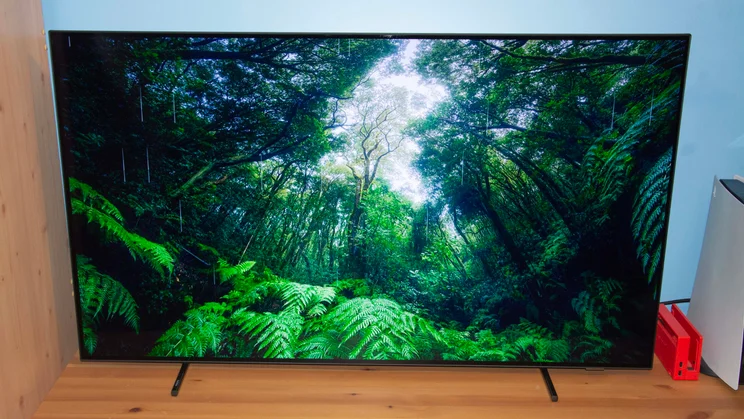
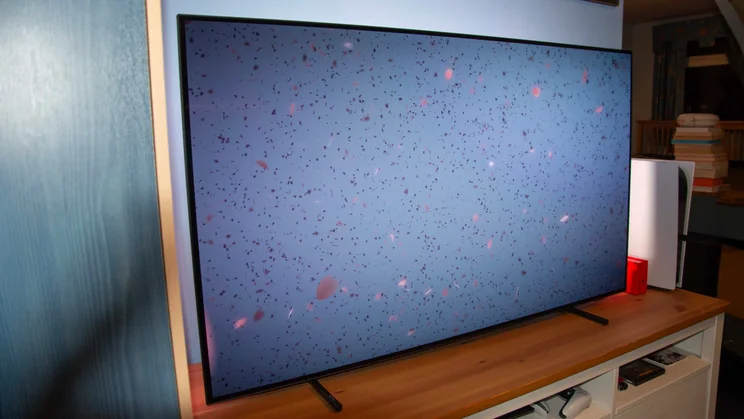
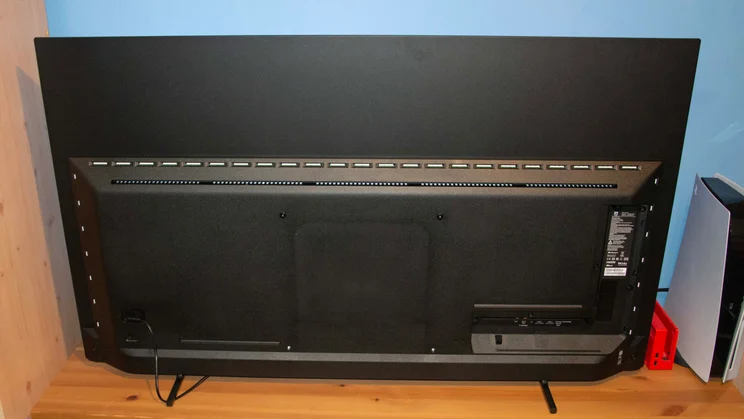
The OLED760 is a very smart-looking TV. As is the case with most OLED sets, the panel is extremely slim, and the section housing the Ambilight LEDs doesn’t jut out far behind the screen. The bezel around the screen is inoffensive, and the overall construction of the OLED760 feels reassuringly robust, despite the slender nature of the panel.
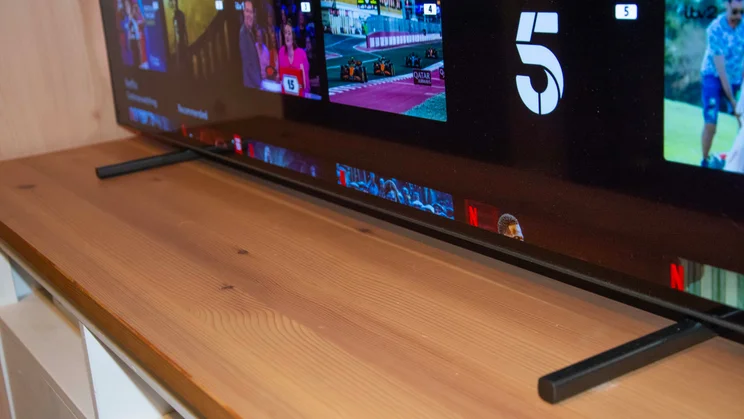
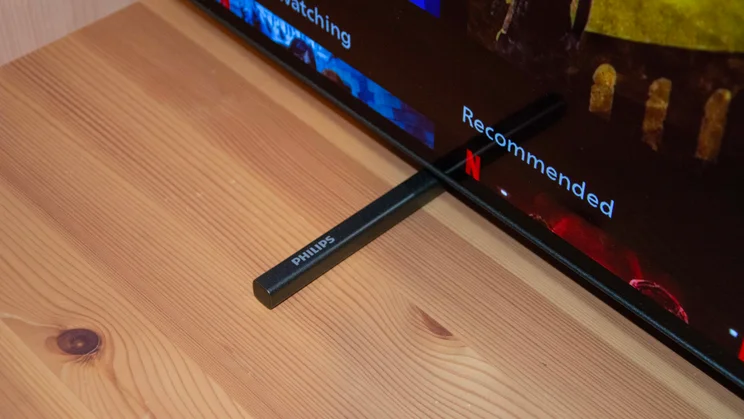
The main aspect of the design I’m not fond of is the feet on which the TV stands. These are set quite wide apart, which isn’t an issue for me as I have a wide TV cabinet, but it does limit the types of units you can put it on.
More frustrating limitations are the amount of clearance beneath the panel and the inability to adjust the height of the feet. The gap under the panel is only 20mm, meaning a soundbar is likely to obscure the bottom of the screen. That was the case with the JBL Bar 1300 MkII I was testing at the time; it didn’t ruin my viewing experience, but it’s an irritation worth mentioning. I much prefer the central stand on models like last year’s Philips OLED809, as it’s more practical and allows the panel to swivel.
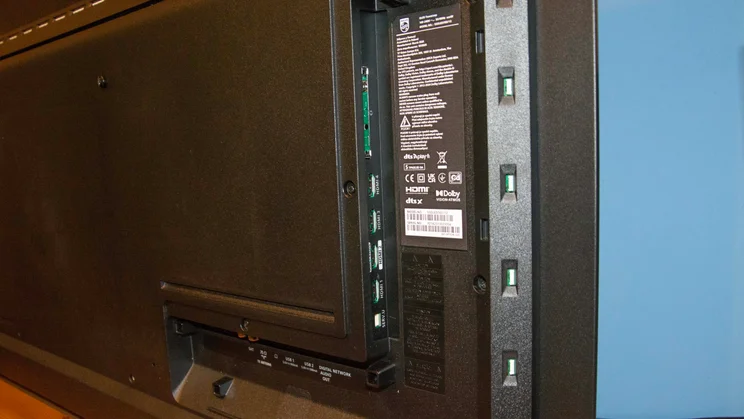
Connection options remain a strength, though. All four of the HDMI ports are of the 2.1 specification, meaning they can handle 4K at 120Hz, which isn’t the case with more expensive OLEDs like the Panasonic Z95B and Sony Bravia 8 II.
It means that those with two current-gen consoles and a soundbar don’t have to make any compromises. The soundbar can be connected via the single eARC input, and you’ve still got a choice of three full-fat HDMI inputs to deliver the most fluid gaming experience possible. Other physical connections include satellite and antenna inputs, two USB-A ports, an Ethernet port, an optical port, a headphones output, and a Common Interface slot. Wi-Fi 5, Bluetooth 5.2 and Apple AirPlay round out the connectivity options.
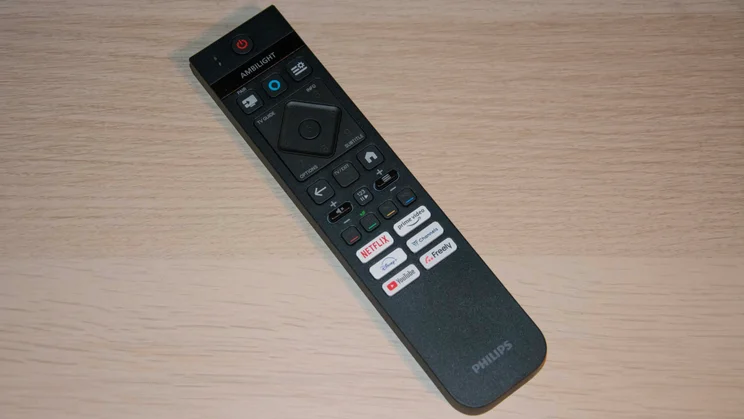
I also like the remote the OLED760 ships with. It has a reasonably premium feel to it, with easily accessible shortcut buttons for key streaming platforms (Netflix, Prime Video, YouTube, Disney+ and Freely, along with Titan channels), and the buttons are backlit, which comes in handy for late-night or dark-room viewing. Amazon Alexa voice controls are available via an in-built microphone, and the TV is also compatible with Google Home if that’s your preferred smart home ecosystem.
Smart TV platform
The OLED760 is the most advanced TV in Philips’ lineup to use Titan OS; all models above it – the OLED810, OLED+910 and OLED+950 – use Google TV. I first got a look at Titan OS in April 2024, but this is the first time I’ve spent an extended period with it on my primary television.
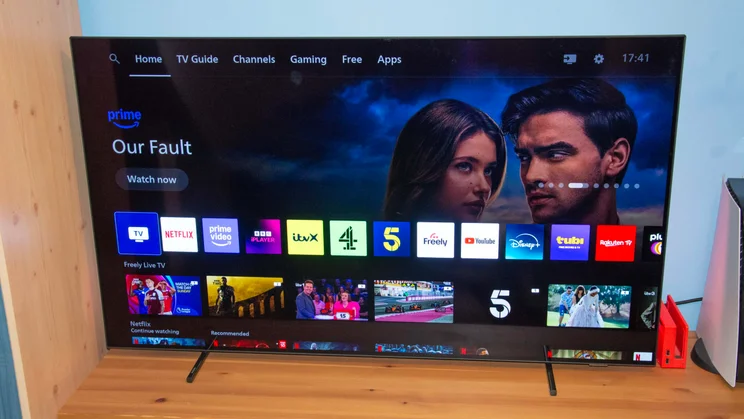
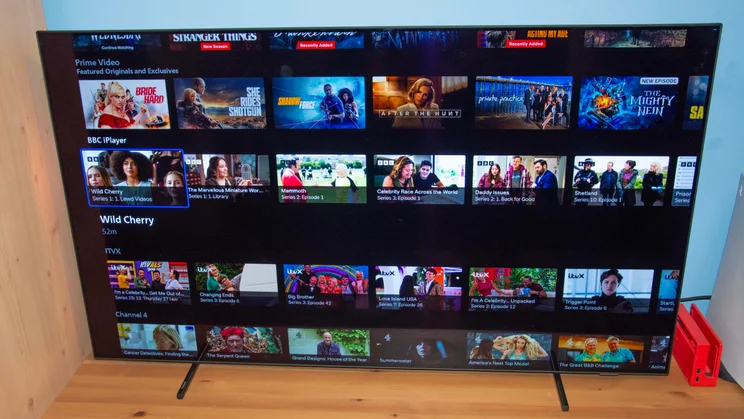
I’m pleased to report that my feelings about it are largely positive. On the plus side, there’s a good selection of content available, and navigating around the interface is smooth. On the main screen, there’s a row of installed apps, making it easy to jump into your favourites, and stacked rows of shows and films from various platforms, free movie options and a list of rather random “Most Watched Channels”.
Titan’s own list of free streaming channels is available in another tab, and there are also tabs for gaming, free content, and the app store hub. I was able to access the content I wanted quickly, and doing so never felt overly sluggish. John Archer experienced a couple of crashes while testing the OLED759, but I had no such issues.
A big tick in the OLED760’s smart box is the integration of Freely. I’ve been banging the drum for Freely for a while now and feel that it adds something to any TV it runs on. It offers access to more than 70 live UK channels over your internet connection, eliminating the need for a set-top box, aerial or satellite dish. Additionally, it allows you to quickly open all the UK TV catch-up apps from a very neatly laid out EPG (electronic programme guide).
Titan does have a couple of blind spots. Apple TV is still conspicuously absent from the app selection. You can, however, access Apple TV through Prime Video if necessary. The OS isn’t very forthcoming with content recommendations, either. So, if you’re stuck for ideas about what to watch, be prepared for somewhat of a rigamarole.
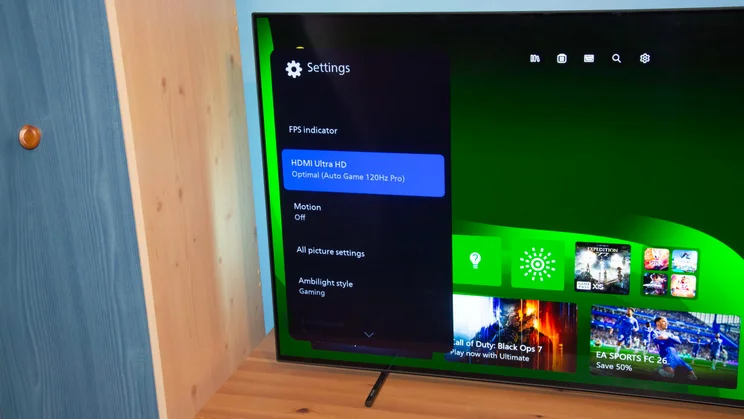
Away from Titan, Philips’ menus require quite a bit of legwork to navigate. They’re some of the more elaborate ones around, with settings and customisation options tucked away in obscure places. There is a Quick Menu, but this doesn’t include picture or audio settings, which are the ones I wanted access to most frequently. Less would have been more in the menu department, and I can see some people getting overwhelmed by the labyrinthine layout.
Image quality
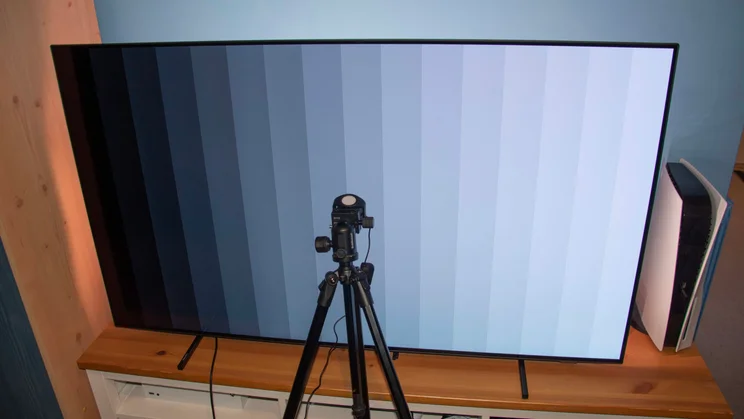
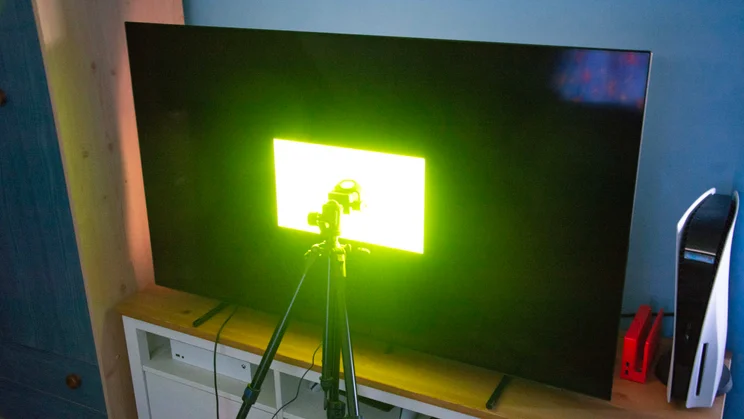
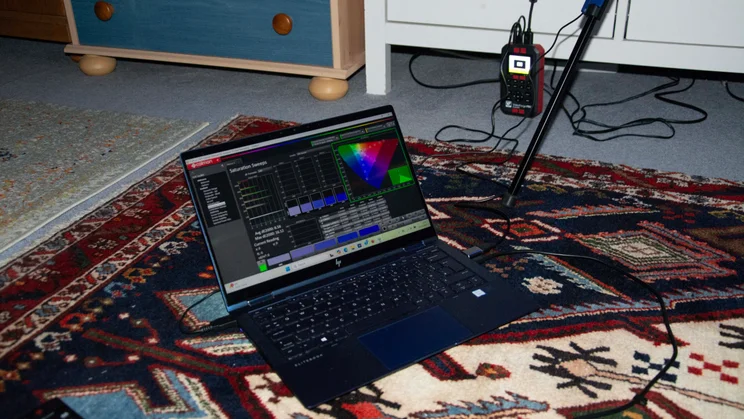
The OLED760 offers several picture modes, which impact your viewing experience considerably. Whether you decide to engage the three Ambient Intelligence options (light level optimisation, dark detail optimisation and colour temperature optimisation) also impacts brightness and colour accuracy, depending on the ambient conditions picked by the TV’s light sensor. To ensure consistency, I turned all three of these off when taking measurements using Calman Ultimate.
The Crystal Clear mode proved the brightest during my SDR testing. Here, the OLED760 reached a peak brightness of 718cd/m2. Given that most SDR content is mastered at 100 nits, the Crystal Clear preset is clearly more concerned about wowing you rather than reproducing images with fidelity. This is reflected in the Delta E numbers for greyscale and colour saturation sweeps. Results of 10.5 and 9.4 are well above the visible threshold of 3.
The Home Cinema mode is more restrained, returning a peak brightness of 328.9cd/m2 and Delta E scores of around 8 for both greyscale and colours. However, if you want the most accurate reproduction of artistic intent, then Filmmaker Mode is the way to go. Here, brightness is reined in even further – I recorded peaks of 261.7cd/m2 – while the greyscale and saturation sweep errors drop dramatically to 2.5 and 2, respectively.
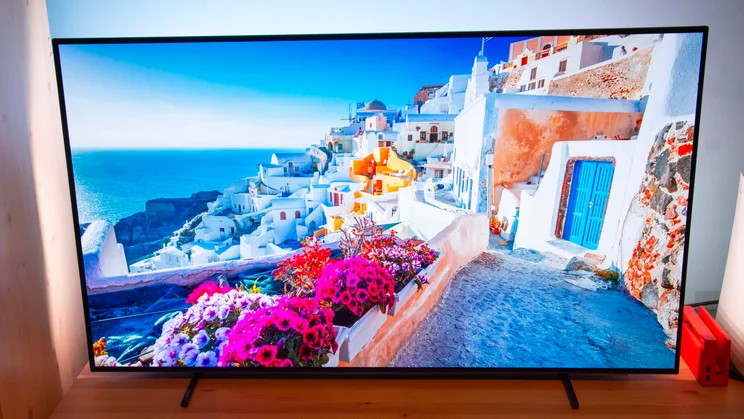
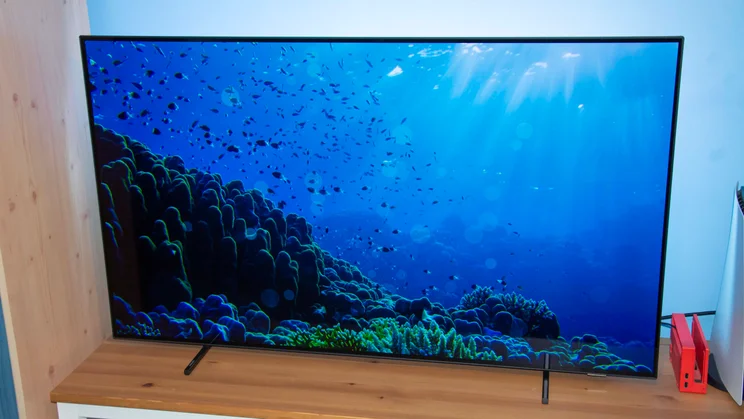
These numbers represent a strong performance for an OLED costing significantly less than £1,000. And, subjectively, I really enjoyed what the OLED760 had to offer when watching SDR content. Watching Rip Off Britain in Crystal Clear mode, I was struck by the vividness of the colours in the landscapes that set the scene for a particularly galling catfishing story of a woman living in Scotland. The razzmatazz of the FIFA World Cup draw was boldly and brightly articulated. However, certain colours, especially blue, were a touch overcooked, and skin tones looked a little cartoonish at times.
Switching over to Filmmaker Mode left proceedings looking a little less glitzy but in no way dull or muted, and the colour palette was better balanced overall. There was enough brightness for the scenes to be enjoyable (in a cringey, hate-watching way), in a relatively well-lit room.
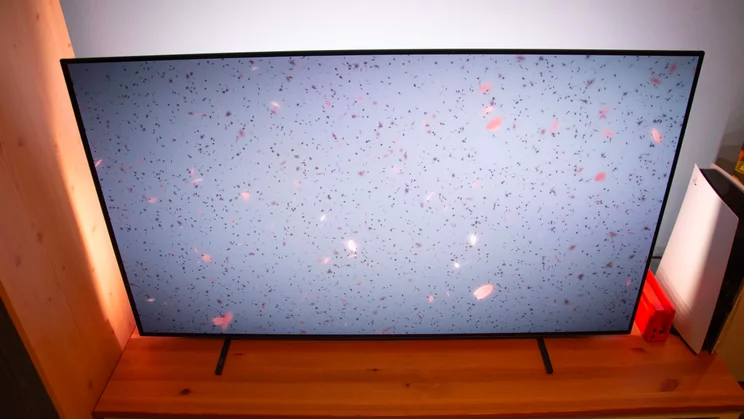
The OLED760 is also an effective upscaler. Its AI-enhanced picture engine supplemented lower-resolution pictures with enough detail to convince me that what I was actually watching was native 4K content. And it did so while retaining an appropriate level of sharpness and without introducing noise around the edges of objects.
The animated fantasy The Mighty Nein on Amazon Prime showcased Crystal Clear mode’s ability to articulate vibrant, colourful 1080p SDR content successfully. Despite not having the wider colour palette of HDR to draw on, the show looked great, even with the curtains wide open on a day uncharacteristically free of December gloom.
Naturalism isn’t the aim of a show like this, so the heavily saturated colours only added to the visual spectacle. Magical blue torches burned in contrast to the dark corners of a palace, while everything from blood-soaked decapitations to exploding portals and burning barns was reproduced with striking effect.
More frantic scenes demonstrated the OLED760’s ability to handle motion. With motion compensation switched off, swings of swords felt slightly abrupt, though not distractingly jarring. However, I leaned towards the Smooth setting most of the time, as this added natural fluidity.
HDR performance
The biggest trade-off you’re making by buying the OLED760 instead of a more expensive OLED is brightness. We’ve seen flagship OLEDs such as the Panasonic Z95B and LG G5 pump out some ludicrous luminance figures using their Primary RGB Tandem OLED panels. The former reached over 2,100cd/m2 in Normal mode, while the latter recorded an eyeball-searing 3,050cd/m2 on a 5% window in Vivid mode.
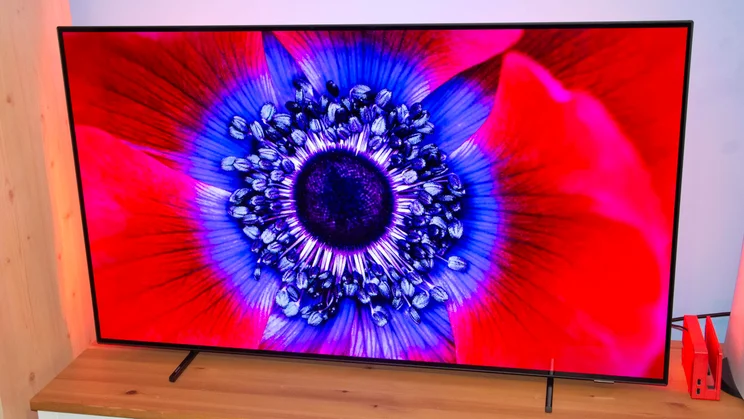
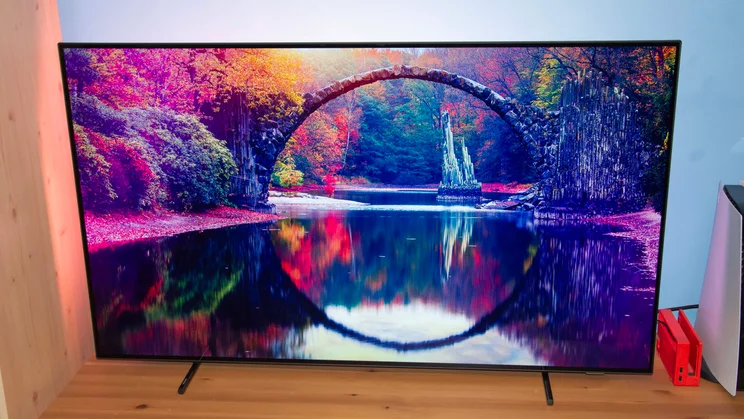
The OLED760 achieved a peak brightness of 904cd/m2, which I recorded on a 2% window in Crystal Clear mode, and a full-field brightness of 145cd/m2. This means that it’s not as well-suited for viewing in bright rooms, but it covers over 99% of the DCI-P3 gamut, and a respectable 74.2% of the even wider BT.2020 colour space. That latter number is significantly behind more premium OLEDs we’ve tested this year: Panasonic and LG’s flagships reached around 85%, while Sony’s and Samsung’s, which use quantum dot OLED panels, cover around 90%.
Still, this TV is significantly cheaper than those models, and I thoroughly enjoyed its pictures while watching The Boys in HDR10+ on Amazon Prime during a daytime testing session.
The punchy colours of Firecracker’s red and blue “supe” costume popped as she did her bit for unbiased journalism on the Vought News Network. Meanwhile, the intensity of gun muzzle flashes and the gory human and poultry demises in a scene involving V-infected chickens were strikingly graphic.
There are still accuracy compromises here, with multi-point greyscale and P3 saturation sweeps within BT.2020 returning an average error of 11. As a result, I was able to discern a bluish tinge in greys, while purples, light blues and yellows didn’t always look as natural as they might. However, there’s no denying the dramatic and arresting nature of the presentation.
As was the case in SDR, you can achieve an experience closer to the artist’s vision by switching into Filmmaker Mode. Once again, the OLED760 delivered stellar numbers, with both the greyscale and P3 saturation sweeps tests returning errors below the visible threshold of three (2.8 and 2.2).
Here, brightness peaked at 716cd/m2 on a 2% window, 616cd/m2 on a 10% and 127cd/m2 on a full-field pattern. The results looked great watching The Fantastic 4: First Steps on Disney+. As the quartet sought to take down Galactus, I appreciated the balanced reproduction of the cityscape, titular characters and gigantic antagonist. Without wanting to spoil anything about the film, the less hyperbolic colours in Filmmaker Mode felt far better suited to the tone towards the end of the movie than those found in the Crystal Clear mode.
What you’re getting with the OLED760 is pretty much the best of both worlds, as and when you can be bothered to switch presets. At one end of the spectrum, you’ve got sumptuous, saturated and reasonably bright images, while at the other, you’ve got natural, precise rendering that tracks established industry standards marvellously.
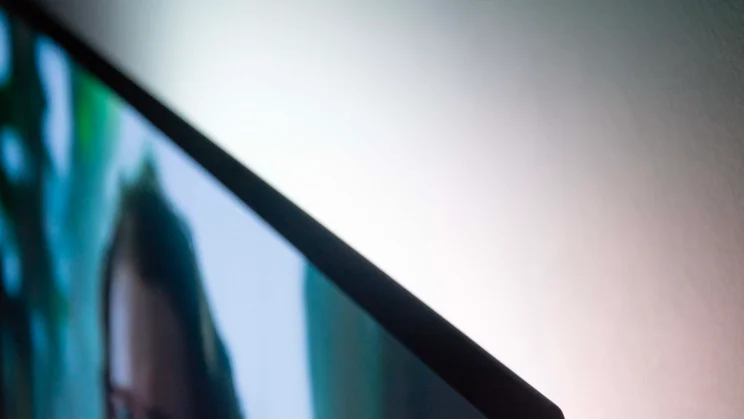
The icing on the cake is the three-sided Ambilight. This is a technology that some TV purists take issue with, but having introduced exes and colleagues to its charms, I can say with confidence that it’s a crowd pleaser. I generally let AI do its thing and match the lighting to the content on screen, but if you think you’ll become easily distracted by the dynamic colour shifts, there are plenty of other options to play with. You can turn it off entirely should you wish, although this isn’t something I considered doing at any stage.
To test the Philips OLED760, I used Portrait Displays Calman colour calibration software.
Gaming
Those with a beefy PC rig capable of 4K resolution at rapid refresh rates will be better served by more expensive models such as the LG G5 (165Hz), Samsung S95F (165Hz) and Panasonic Z95B (144Hz). However, the Philips OLED760 is a console gamer’s dream. All four of its HDMI ports support 4K@120Hz, VRR and ALLM, and you’ve also got access to a dedicated Game mode as well as Philips’ Game Bar.
The Game mode strikes a keen balance between brightness and accuracy; I recorded peak brightness of 792cd/m2 with an HDR source, with multi-point greyscale errors at 7.4 and P3 saturation sweeps even better at just 4.5. This level of deviation from the targets of three here is not imperceptible, but small enough not to detract from a very satisfying gaming experience.
I found the OLED760 to be highly responsive in Game mode, a subjective feeling that was confirmed by the numbers recorded using my Leo Bodnar 4K HDMI Video Signal Lag Tester. The TV rendered 4K graphics at 60Hz in just 9.2ms, a superb result that few televisions can match. If you’d rather go with the brighter, more punchy colours of the Crystal Clear setting, you’re looking at a lag of around 70ms.
The Game mode was my preference, though, with Dolby Vision Gaming on hand to enhance the visual experience through its smart use of metadata. The varied locations of The Outer Worlds 2 were brimming with personality, and regardless of whether I was roaming the lush, tropical “Paradise Island” on the starting moon of Eden or navigating the ice-covered Cloister deeper into the story, the level of fidelity and visual interest remained engaging throughout.
Bright highlights were treated with impressive adeptness. Bursts of colour from the explosions of my plasma grenades looked gorgeous as the panel’s self-emissive pixels illuminated orange, red, yellow and blue particle effects dancing around the screen. Dark caves and dimly lit interiors were equally well handled.
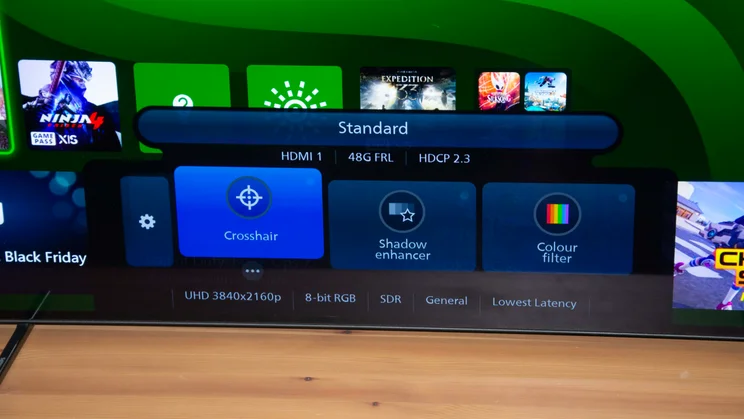
The level of shadow detail meant I didn’t need to engage the Shadow Enhancer within the Game Bar, but it’s a nice option to have for gloomier games. The other Game Bar options are also welcome inclusions, but I don’t think many people will use them. I found excluding certain colours or having only one colour displayed with the colour filter fun for about five minutes before leaving it disabled, and the same went for the on-screen crosshair.
Sound quality
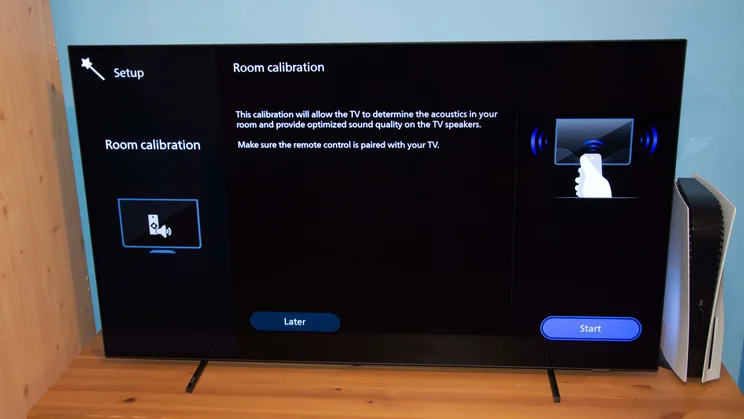
I’ve owned a couple of Philips TVs over the years, and while I’ve always been a fan of their picture quality, I’ve been less enamoured with their audio output. The same is true here. That’s not to say it’s bad: the 20W system has enough power to reach volumes suitable for your average living room without distorting, and there’s a room calibration that improved the soundstaging slightly without being a game-changer.
The AI audio mode worked well for different types of content, keeping dialogue nicely centred and always intelligible, and the detailing of minor audio cues was executed skillfully. This extended to Atmos soundtracks; sounds were positioned believably within the soundstage. However, I didn’t get a powerful sense of three-dimensional immersion.
I also missed the weight and low-end grunt that an integrated subwoofer would have added. The OLED760 sounded a little thin at times, but fortunately, it avoided becoming grating or too sharp until I pushed the volume to its maximum.
Testing the OLED760 at the same time as the JBL Bar 1300 MkII probably didn’t do the TV any favours, here. That 11.1.4-channel surround sound soundbar system highlighted the shortcomings of the TV starkly, although you’d expect it to, given it costs more than the TV with an RRP of £1,299.
Still, you’ve got a very solid selection of audio personalisation options at your disposal if you want to get into the weeds, and I wasn’t disappointed by the audio performance of the OLED760. It got the basics right without wowing me, which is about what you’d expect from an OLED in this price bracket.
Philips OLED760: Verdict
It’s tricky to evaluate how good the OLED760 is without the context of having tested its entry-level OLED rivals. But judging it on the numbers it achieved in my objective Calman tests, and my subjective experience while consuming a wide variety of content on it over a month or so, it’s a winner.
It’s got everything a modern console gamer could ask for, looks the part on your TV stand, in no small part due to its alluring Ambilight, and serves up a visual treat whether you want fidelity or flair. I’d have liked more clearance under the panel to accommodate a soundbar, particularly given the lack of low-end potency, but the all-around package is compelling.
The debate over whether you’re better off with an OLED or Mini LED TV will rage on, and there are Mini LED TVs such as the TCL C7K that give it a real run for its money in terms of value. Both panel technologies have advantages, so which one you choose will come down to your preferences and viewing conditions. However, if you’re after an affordable OLED TV, the Philips OLED760 is going to take some shifting as our number one pick.


