To help us provide you with free impartial advice, we may earn a commission if you buy through links on our site. Learn more
- Cosori Turbo Tower 10.8L Air Fryer: What do you get for the money?
- How I tested the Cosori Turbo Tower 10.8L Air Fryer
- Cosori Turbo Tower 10.8L Air Fryer review: What’s it like to use?
- Cosori Turbo Tower 10.8L Air Fryer review: How well does it cook?
- Should you buy the Cosori Turbo Tower 10.8L Air Fryer?
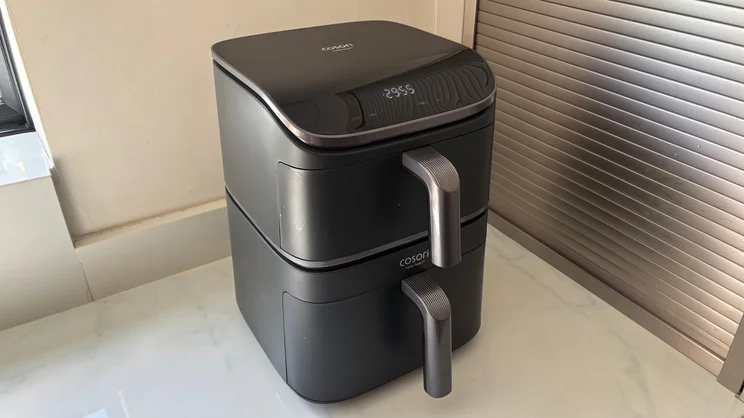
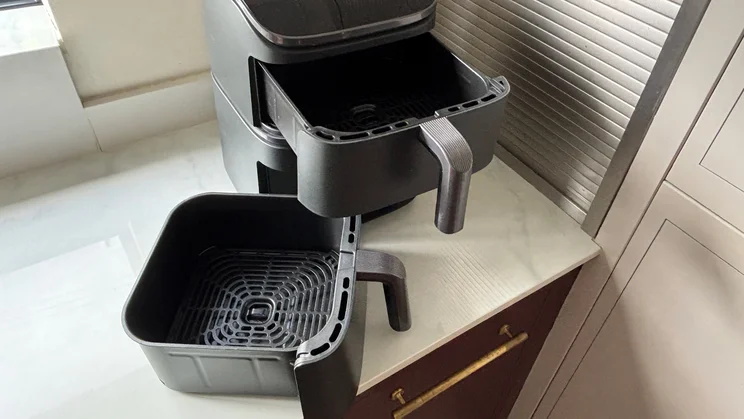
- 6.5L and 4.3L drawers
- Dishwasher-safe parts
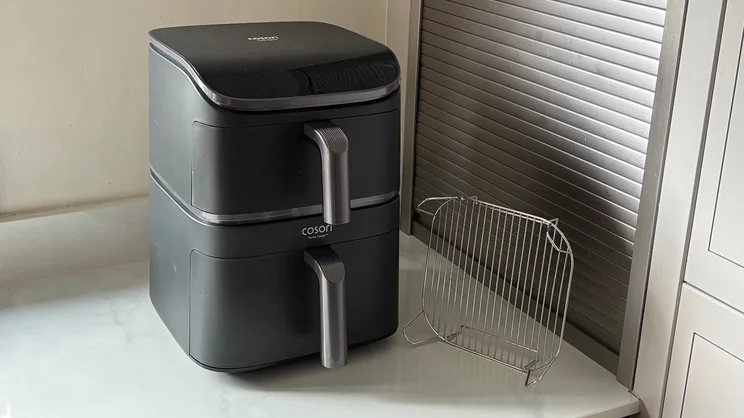
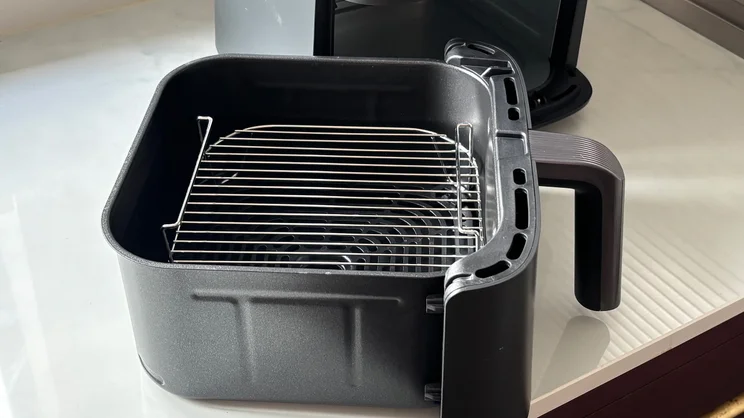
- Roasting rack provides an additional cooking level
- Display is tricky to read in bright light
- Crowded controls
- Heavy
Nestled amongst its list of features, the Cosori Turbo Tower 10.8L Air Fryer makes an interesting claim: that of being able to replace your microwave, hob, oven, and more. This idea isn’t as farfetched as it sounds, as the Cosori Turbo Tower 10.8-L Air Fryer offers a lot for a small appliance.
You get two drawers of different sizes – one 4.3l drawer for quick heating and a larger 6.5l one – plus a roasting rack and flat space galore. The temperature range is wide, dipping as low as 30°C and going as high as 230°C for crisping. Along with its combined drawer capacity of 10.8L, the Cosori Turbo Tower brings plenty of programmes to the table, including baking, reheating and proofing.
Crucially, it does all this with a relatively compact worktop footprint: its design makes it 41% smaller than the brand’s Dual Blaze Twinfry, for instance. Could it be one of the best dual air fryers? Or one of the best air fryers overall? In testing, it delivered a brilliant performance, was pretty simple to use, and showed off some clever features.
Cosori Turbo Tower 10.8L Air Fryer: What do you get for the money?
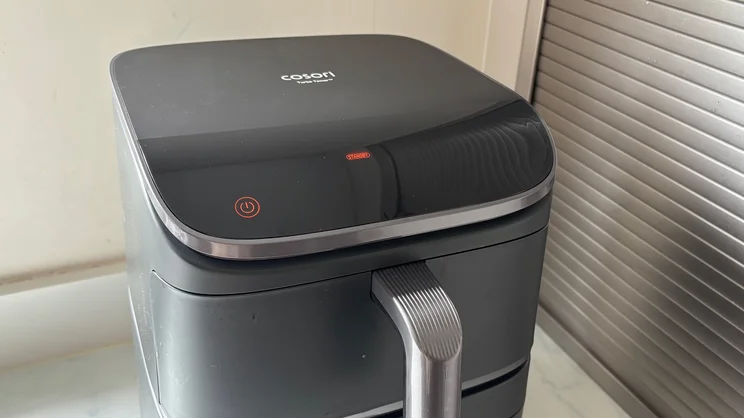
While the footprint of the Cosori Turbo Tower 10.8L Air Fryer might be smaller than some rivals, it’s still a sizeable appliance in height and depth. It measures 30 x 41.3 x 40.5cm (WxDxH) and is a weighty 9.3kg, so you won’t want to regularly move it around your kitchen.
The upside of this is the capacity: a 6.5L and 4.3L drawer add up to 10.8L of cooking space, while a pair of interchangeable non-stick crisper plates each provide 22.5sq cm of flat space. Its smaller drawer is ideal if you’re only cooking a small amount of food, while the larger drawer can fit a whole chicken. More space comes courtesy of the roasting rack, which only fits in the larger drawer. This rack has a clever reversible design, meaning you can grill large items or flip it over to cook two things at once – veggies below and a steak above, for instance.
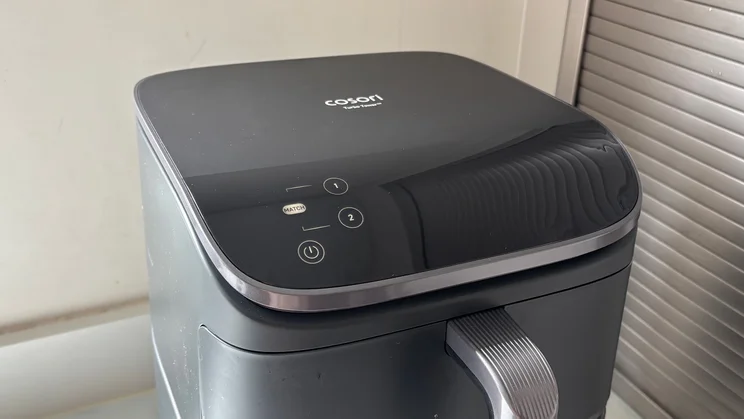
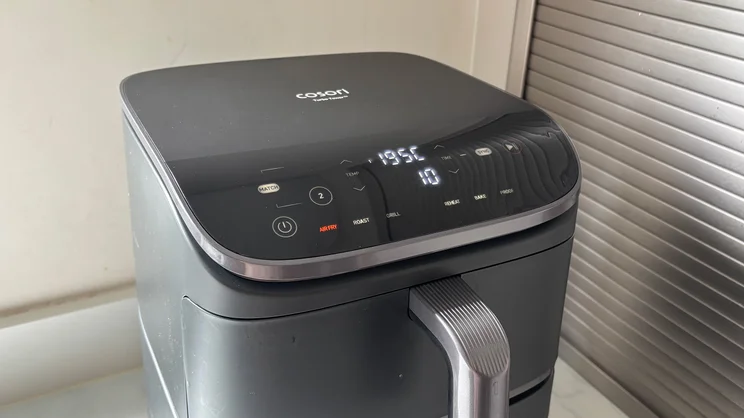
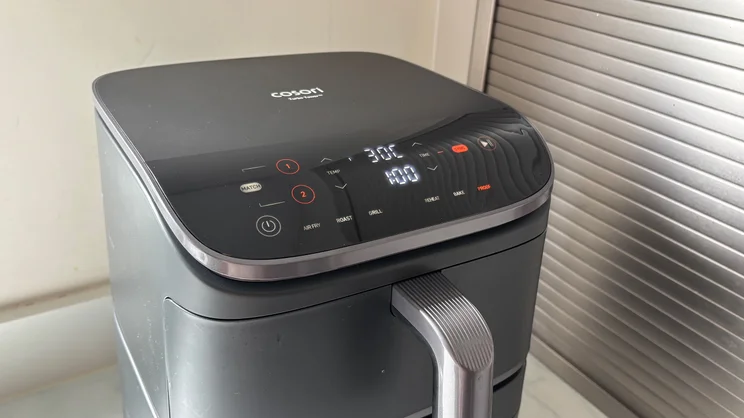
As with most dual air fryers, there’s a fair amount going on within the control panel: six presets cover everything from air frying to grilling and cooking at lower heats, with syncing options that let you match settings for both drawers or set them to finish at the same time. Maximum run time goes up to 12 hours, allowing you to take advantage of the lowest temperature of 30°C for fermenting, proofing dough or dehydrating. A handy quick start guide provides a breakdown of each programme’s times and temperatures, as well as cooking advice for different foods and amounts. There’s also a two-year warranty.
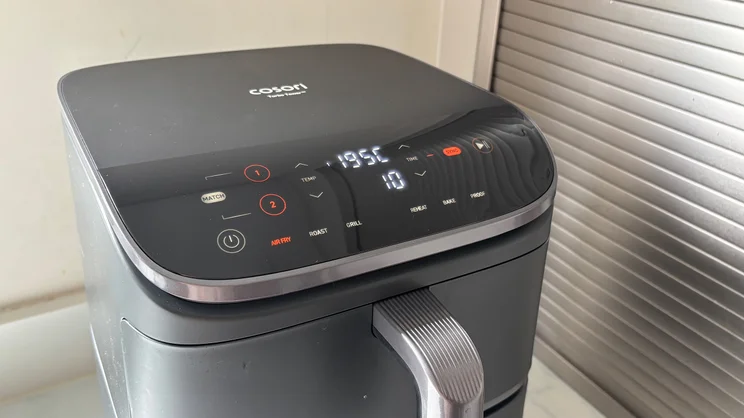
Settings turn orange once selected, which is a useful visual indicator as to what’s activated. Unusually though, it’s not possible to select settings for a drawer unless it’s in place and ready to go, and there also isn’t a shake/turn alert, which feels like a glaring omission.
The Cosori Turbo Tower, which comes with a two year warranty, is a pretty expensive appliance at £240. At 2,630W, it’s also quite power-hungry: from cold, one hour’s usage of both drawers at 200°C consumed 1.284 kWh of electricity. At a rate of 25p per unit this would cost around 32p.
It’s not quite as dear as the £300 Smart model, which adds a seventh function (dehydrate) as well as WiFi connectivity.
How I tested the Cosori Turbo Tower 10.8L Air Fryer
Before any cooking happens, the first thing I do is test the power consumption of the air fryer by running it empty for 1 hour at 200°C, using a plug-in power meter to record usage. If the air fryer has two drawers, I will run both. If it’s one large drawer, I’ll make sure I remove any dividers before running it.
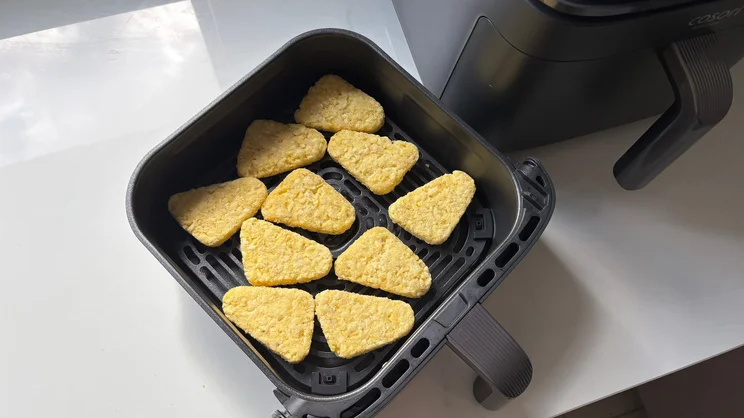
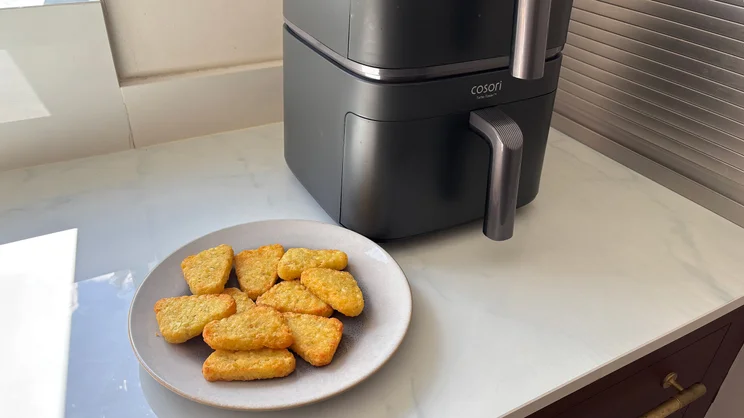
The first test is frozen food: I fill one section of the air fryer with frozen hash browns and note how many the drawer/s can comfortably fit. If the manufacturer provides cooking guidance, I will follow its recommended settings. Otherwise, I cook them for 18 minutes at 200°C, turning them over halfway through cooking. Once cooked, I note how soft or crispy the hash browns are, and how evenly they’ve been browned – if at all.
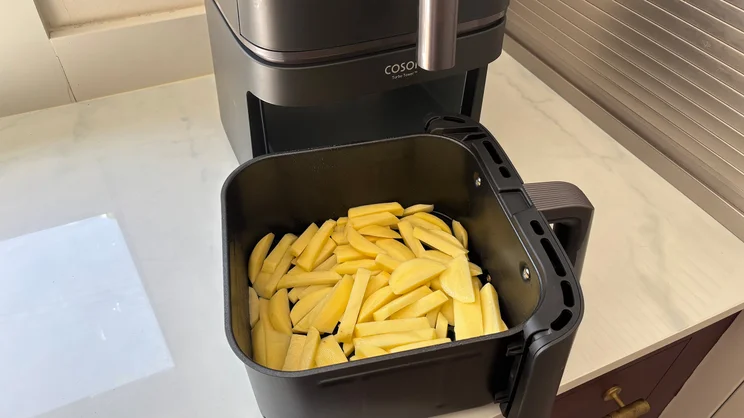
Next is homemade chips. After peeling and chopping potatoes into pieces, and soaking them for a few hours, they’re patted dry, and tossed in a small amount of oil (I use a blend of avocado and rapeseed oil). Again, if there’s cooking guidance for homemade chips, I follow it, but my go-to setting is 200°C for 30 minutes, shaking multiple times throughout cooking. I note how crispy the resulting chips are, if cooking is even throughout the batch, if any pieces are not cooked properly, and if they’re soft in the middle.
Finally, I’ll use the air fryer to cook chicken. A whole bird is ideal, usually at 180°C for 50 minutes, but I’ll opt for chicken legs if there’s limited space. I’ll turn the chicken over halfway through cooking. And once roasted, I carve the flesh, and note if the juices are running clear, if there is any pink flesh remaining, especially around the bone, and if the skin is crisp or brown.
In addition to my standardised cooking tests, I’ll make a note of how easy the air fryer is to use, how intuitive its settings and cooking instructions are, how quick and efficient it is, and how much space it takes up on my kitchen worktop.
Cosori Turbo Tower 10.8L Air Fryer review: What’s it like to use?
As I mentioned above, the control panel of the Cosori Turbo Tower 10.8L Air Fryer is crowded. And while it’s fairly straightforward to set, it’s not as intuitive as some, so you’ll need the instructions to hand on your first few uses.
For example, if you select the wrong drawer by accident, it’s not as simple as tapping it again to deselect it – instead, you have to press and hold that drawer’s button. In bright light, I also found the display on top of the air fryer hard to read, especially when at the other side of the kitchen.
On the plus side, the settings on the Cosori Turbo Tower have some features that many air fryers don’t offer. You can switch from celsius to fahrenheit and it’s possible to adjust the default time and temperature of the presets, which is handy if you cook a certain dish often. I also like that the presets are named, rather than the open-to-interpretation icons that some air fryers – such as the Philips 5000 Series – offer. The Cosori Turbo Tower 10.8L Air Fryer’s quick start guide is also detailed, which is better than many I’ve come across, making it a good model for those new to air frying.
Another small detail, but one that I really appreciate, is that each drawer’s handle is clearly labelled. While these drawers are different sizes, it’s not immediately apparent which is which when you take them out of the air fryer. So, this is a win for those with visual impairments. A final perk to mention is that the crisper plates and drawers are dishwasher-safe, although it’s not clear if the roasting rack is as well. Nevertheless, all the removable parts are simple to wash by hand.
Cosori Turbo Tower 10.8L Air Fryer review: How well does it cook?
Whether it’s the design of the air fryer, its DC motor, or a combination of both, one thing is certain: the Turbo Tower 10.8L Air Fryer heats up rapidly and works fast. Throughout testing, I was consistently surprised how quickly food cooked.
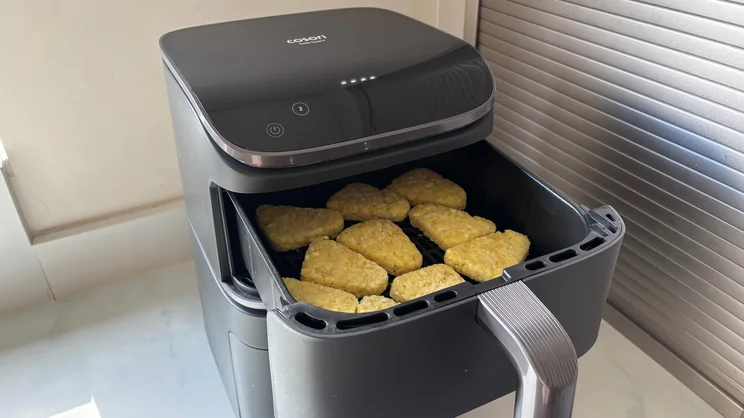
I began by cooking frozen hash browns, fitting ten in either drawer comfortably. The quick start guide suggested 205°C for a frozen potato equivalent (tater tots), and 12-20 minutes air frying. I opted for 18 minutes, turning halfway through. The lack of an alert to shake or turn was an irritation, which meant I had to keep an eye on the display.
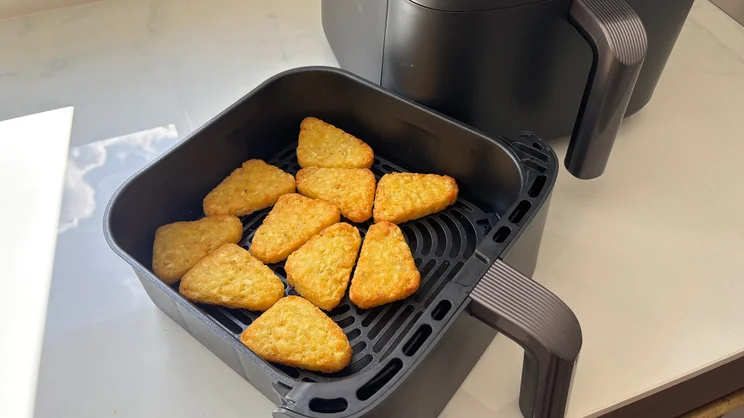
Once cooked, the hash browns were well browned at the edges and corners and very crisp overall. Despite the good crunch, I found them to be drier in the middle than I would have liked, suggesting that a slightly lower temperature or shorter cooking time would have been advisable.
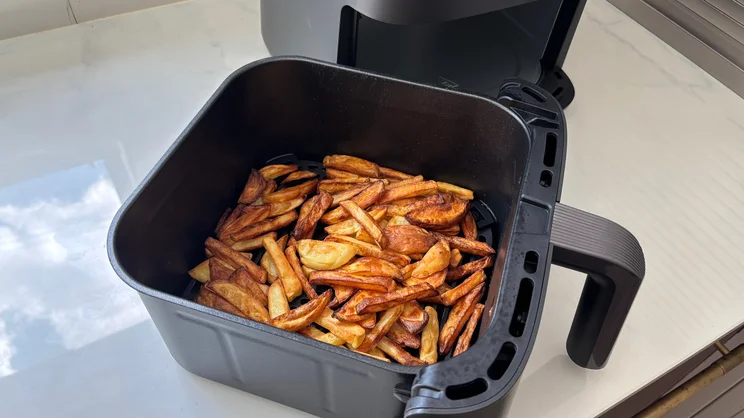
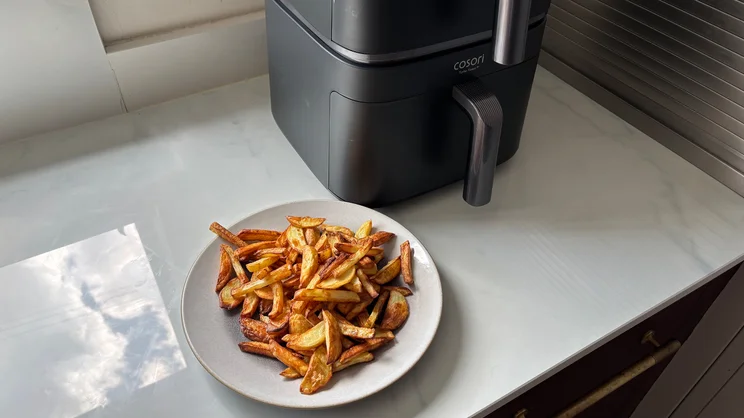
Next, I made homemade chips: 500g was the amount suggested in the cooking table, which I’d argue isn’t a practical amount for a family. I raised the cooking time suggested from 24 to 26 minutes, but stuck to the 200°C temperature listed in the guide. I used the lower, larger drawer, which provided plenty of room to frequently toss the chips. Once cooked, they were evenly browned with good bubbling and crispiness, fluffy inside and no pale pieces. In fact, they were some of the best chips I’ve had from an air fryer.
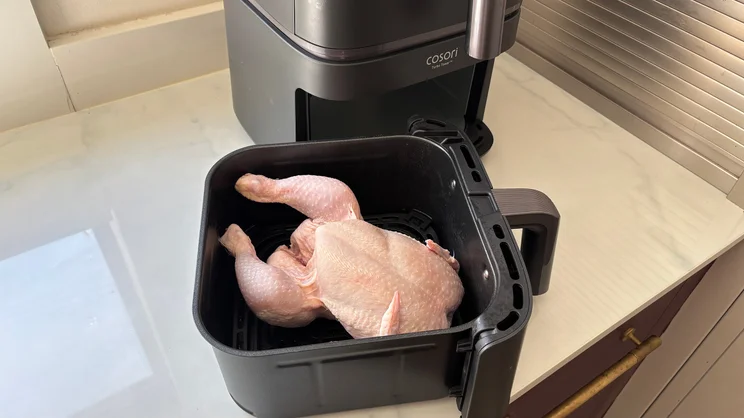
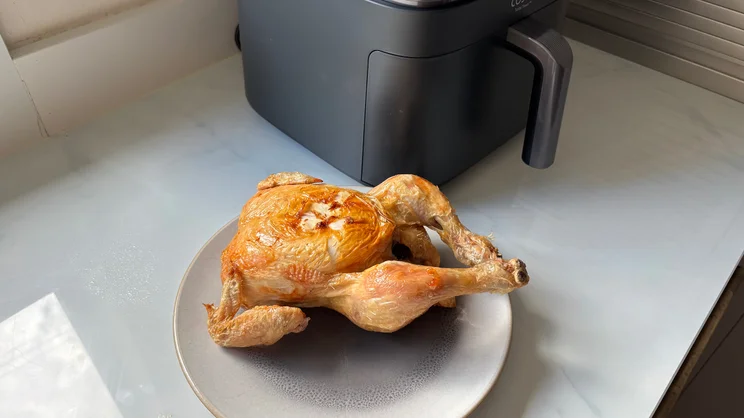
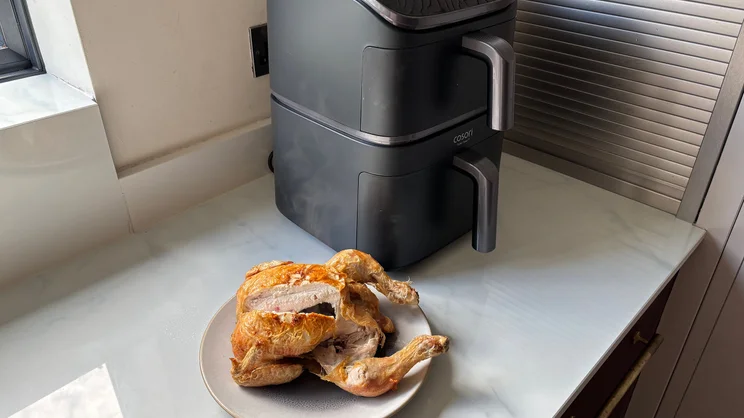
Only the larger drawer is big enough to fit a whole chicken, and guidance suggested 45-60 mins at 180°C for a 1.5kg bird. I opted for 52 mins for the 1.47kg chicken I was roasting, and I turned it over halfway through cooking. After the time had elapsed, the chicken was cooked with clear juices, although there was a tiny amount of pink in the breast. Its skin was well browned and bubbled though, so overall a good result.
Should you buy the Cosori Turbo Tower 10.8L Air Fryer?
As an air fryer, the Cosori Turbo Tower 10.8L Air Fryer is impressive – cooking performance was excellent overall and it’s more versatile than many rivals. However, it’s not going to replace your oven if you cook anything bigger than a chicken or a personal pizza. Neither will it replace your hob: I can’t imagine trying to heat soup or make crepes in it for instance. It could possibly stand in for a microwave with quick heating in the smaller drawer. And it would definitely supplement all of these in a busy household or when entertaining.
It’s pricier than you might anticipate. While it’s cheaper than the Ninja DoubleStack XL air fryer, or the Philips 5000 Series, more affordable options include the Instant Vortex Plus Dual Drawer air fryer or the Philips 1000 Series FlexDrawer Dual Basket Air Fryer. Bear in mind, though, that these are both more space-hungry than Cosori’s Turbo Tower 10.8L Air Fryer.