To help us provide you with free impartial advice, we may earn a commission if you buy through links on our site. Learn more
- Super slim and portable
- Convenient integrated USB-C cable
- Affordable price
- No built-in kickstand
- Basic four-dot battery indicator
- 15W Qi2 wireless isn’t that fast
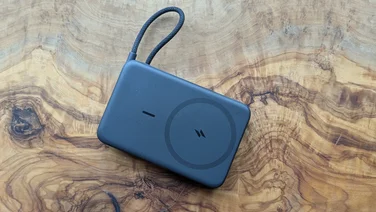
Power banks often fall into one of two categories: “too small to have all that much juice” or “too big to be portable”. But in recent years, more batteries have come along to deliver decent stamina in a pocketable package. The UGreen MagFlow Air falls into that growing category, with a slim build and magnetic wireless charging.
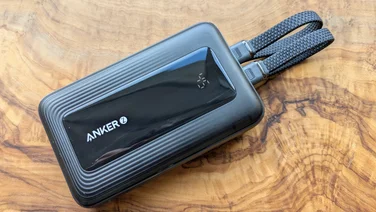
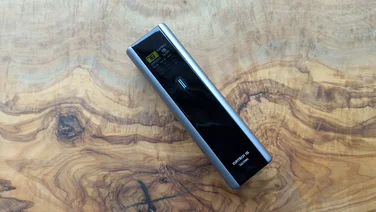
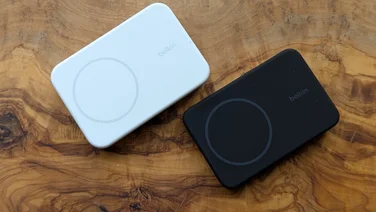
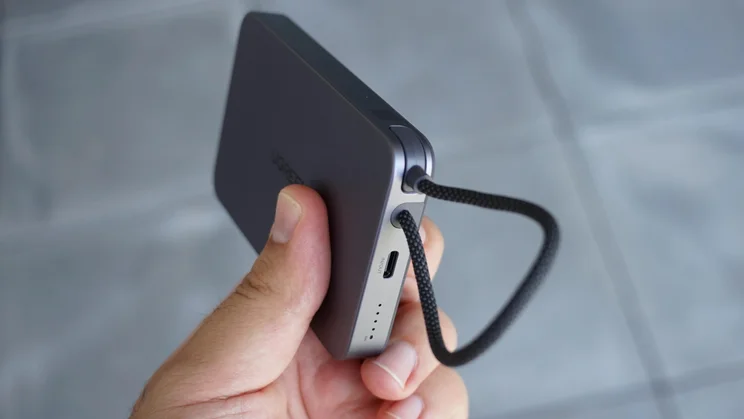
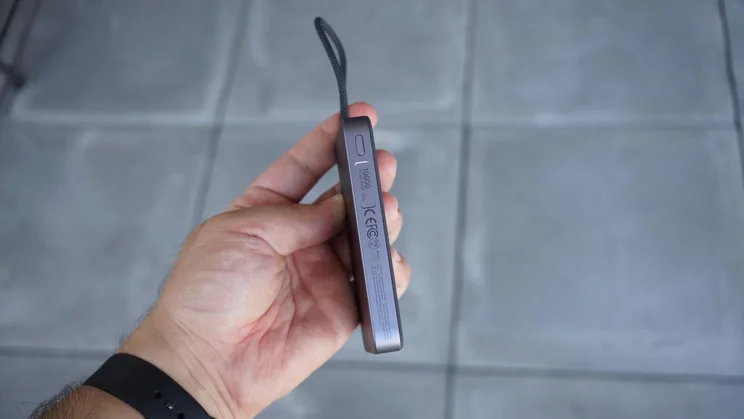
The best examples of this kind of power bank I’ve tested include Anker’s MagGo Ultra Slim model, Belkin’s BoostCharge Magnetic and the EcoFlow Rapid. But there have always been trade-offs to include desirable features like a large capacity, accurate battery level display, wired charging options and a kickstand. And none of those power banks beat the slenderness of the MagFlow Air’s 13.9mm chassis, which somehow manages to find space for an integrated USB-C cable.
I’ve been using this Qi2-certified model as my main power bank for the last couple of weeks, and I brought it with me on a recent holiday, along with running controlled charging tests. Is it worth it over the other options?

How much does it cost?
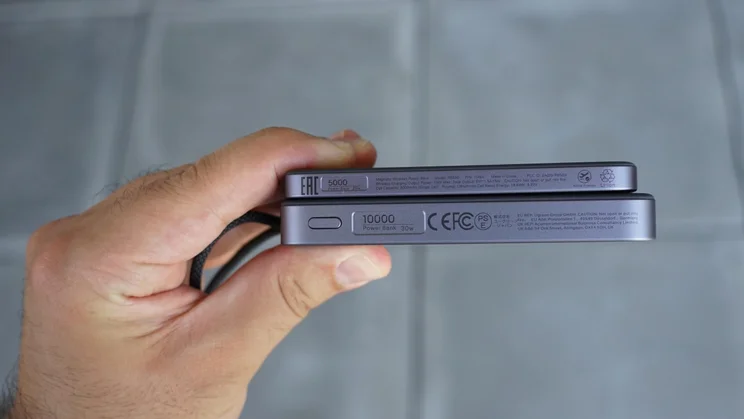
The 10,000mAh variant of the UGreen MagFlow Air costs £65. If you want an even more portable version, there’s a 5,000mAh version, which is super slim, lacks the USB-C cable and isn’t quite as capable of fast charging, but only costs £45.
Our current favourite MagSafe power bank is the Anker MagGo 10K, which has a £90 RRP. We also like the Belkin BoostCharge Pro with Qi2 (£80 RRP). As touched on above, the UGreen has two main advantages over that pair: its slimmer build and its built-in cable, the latter of which makes a big difference in charging speed.
What features does it have?
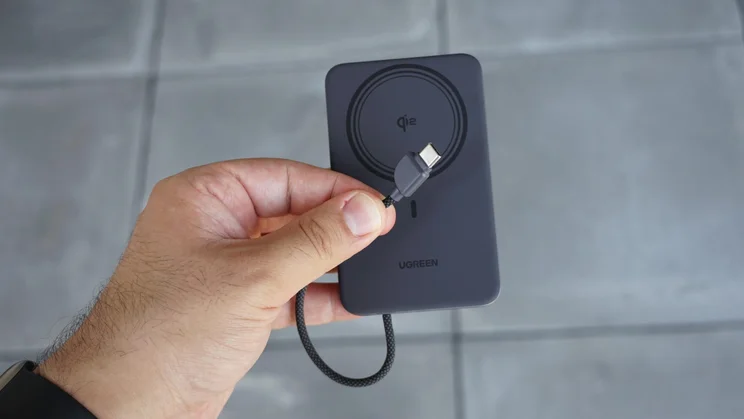
While I’ve used both the 5,000mAh version and the 10,000mAh version, it’s the 10K that’s on test for this review – and it’s the more feature-packed of the two. It’s built around two 5,000mAh cells in series, a Qi2-enabled magnetic wireless charging surface and a fully built-in fabric-coated USB-C cable, enabling wired charging at 30W speeds.
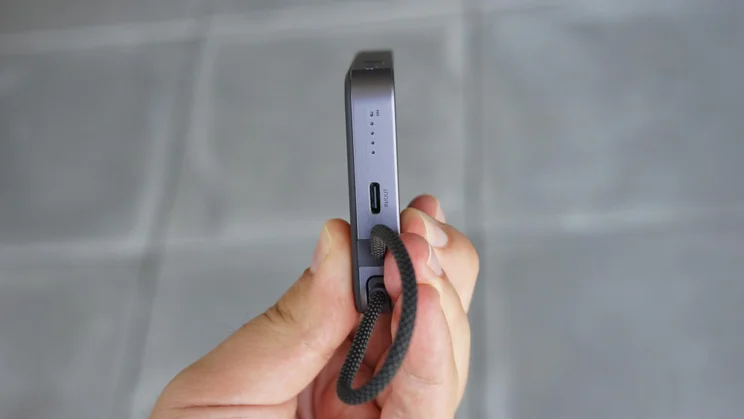
From a single power bank, you have convenient wireless top-ups and a quick-charge cable that saves you from needing to carry your own cord. There’s also a spare USB-C port, so you could charge from this, the built-in cable and the wireless surface all at the same time. You can recharge the power bank from its built-in cable or any 30W USB-C wall plug.
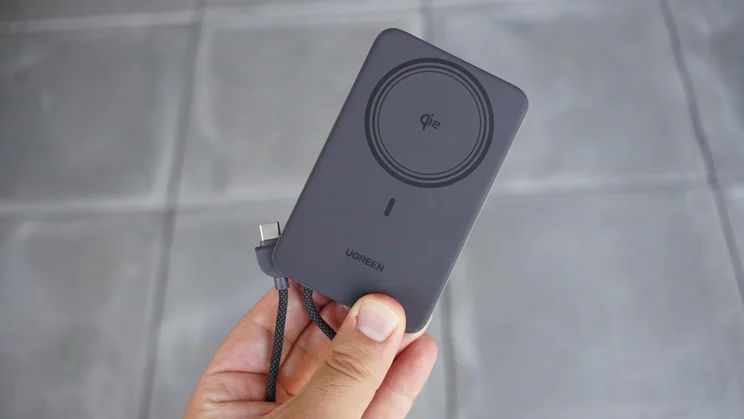
What does it lack compared to some of the Anker, Belkin and EcoFlow rivals? There’s no kickstand, which can be handy for propping your phone up and watching a film on a flight. And there’s no numeric battery display to show how much juice you’ve got left; the MagFlow Air uses a four-dot indicator, with each dot representing 25% of its capacity. The lowest dot will flash when it’s under 5%, and there’s a fifth dot, which just tells you if wireless charging is in use.
How I tested the UGreen MagFlow Air
I used a mix of real-world trialling and controlled charging tests. I brought the MagFlow with me on a recent holiday to Rome and used it to keep my iPhone 17 Pro going when it started to run low on battery. At home, I’ve used it to charge both my iPhone and a Google Pixel 10 Pro, and I’ve used both the wired and wireless modes extensively.
I timed the iPhone 17 Pro’s charging speed from 0-50% via both the built-in cable and the Qi2 wireless surface, and I also used a basic thermometer for some temperature checks throughout the wireless charging test. When it was fully drained, I timed how long it took to recharge via a 30W wall charger.
Why you can trust me
I have over a decade of experience writing about consumer electronics and have tested loads of power banks, assessing their charging speed, suitability for travel, durability and portability. I’ve used power banks from all the leading brands, at all capacities, and at a wide range of price points. I’ve written for several titles including Esquire and Digital Spy, and was most recently Technology Editor at Good Housekeeping UK.
How portable is it?
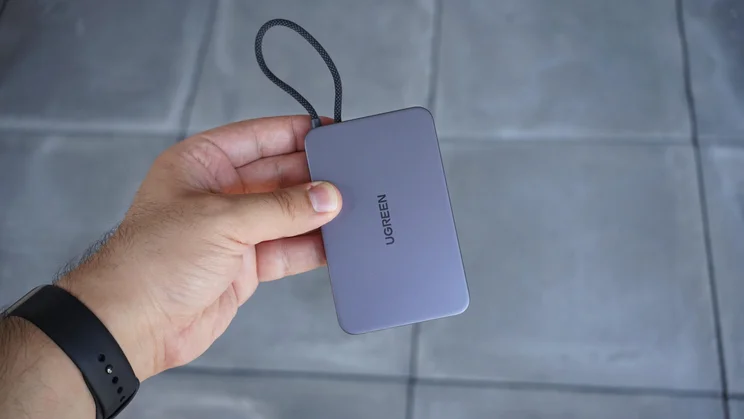
The UGreen MagFlow Air has a highly portable design and is the slimmest magnetic 10,000mAh power bank I’ve ever used. At 111.5 x 69.8 x 13.9mm and 213g, its pocket-friendly form factor fits in any bag or coat pocket and won’t weigh you down.
The Belkin BoostCharge Pro and Anker MagGo 10K are noticeably thicker and heavier. Even something designed to be svelte, Anker’s Ultra-Slim, doesn’t quite match the MagFlow Air. Previously, I’ve said people needing a slim charger with a cable would need to step down to a 5,000mAh one, like the great EcoFlow Rapid Mag Power Bank. That’s no longer the case.
I like how the MagFlow Air comes in grey, blue or white finishes. One functional thing I noticed immediately, though, is that the connector end of the built-in cable is slightly too chunky for certain iPhone cases. It’s fine with Apple’s official one, Nomad, Casetify, Mous and more, but it didn’t comfortably connect in certain rugged cases made by Peak Design and Beats, which have more bulk around the charging port.
How fast does it charge?
Wireless charging comes with an inevitable loss in efficiency, and it’s always worth noting that phones taper charging speed before reaching higher percentages. That’s why I tested between 0 and 50%, before any trickle charging kicked in. I found the iPhone 17 Pro went to 50% in a 1hr 54mins via the Qi2 wireless charging, but it managed the same refuel in 28 minutes via the 30W built-in cable.
That means a wireless charge takes roughly four times longer, which lines up with my past experiences with wireless power banks. What’s good here is the thermal management, especially as I conducted these tests during a heatwave in the UK. In a chassis this slim, continuous wireless charging generates loads of heat. To combat this, the MagFlow Air’s internal safety system protects battery health instead of prioritising speed.
The MagFlow Air stuck to a steady 34˚C throughout the wireless charge test, never getting uncomfortably warm. While wireless charging won’t feel fast, it’s convenient, and I’d always be sceptical of any brand making claims of faster charging without any serious thermal management (such as a built-in fan, as we see on 25W Qi2.2 charging stations).
In practice, you should use the cable as much as possible. It’s significantly faster. You can still use the magnetic attachment, then connect the cord. The power bank will prioritise the faster cable. I did this while waiting at the gate for my delayed flight to board, and found I got loads of battery back in a short space of time.
How much battery life does it offer?
On paper, the 10,000mAh capacity here works out to a little over two and a half full charges for an iPhone 17 Pro. In my real-world experience, I was able to do several top-up charges on my phone without needing to recharge the power bank. However, it’s worth noting that using wireless charging results in faster battery drain.
Thankfully, it doesn’t take long to top the MagFlow Air up. UGreen’s spec sheet says it’ll take two hours to fully restore its battery, and this proved accurate in testing. The exhausted battery was replenished after 2hrs 7mins connected to a wall charger with a display, which I used so I could see the power draw and note exactly when it finished.
This result is excellent: many other 10,000mAh units recharge at a maximum of 18W rather than 30W and take between three and four hours.
Should you buy the UGreen MagFlow Air 10,000mAh?
The UGreen MagFlow Air 10K is a great power bank for anyone focused on portability. It has passthrough charging (you can pop your iPhone on while the power bank refuels, so it doubles as a makeshift bedside charging dock), a braided built-in USB-C cable that charges quickly, and a great Qi2 magnetic attachment along with excellent thermal management. That this all fits in a thin 13.9mm body is highly impressive.
However, it doesn’t have a digital display to show an accurate battery percentage, nor does it have a kickstand. Also, 15W Qi2 wireless charging isn’t particularly fast or efficient, so you may want to look for a Qi2.2 model for more speed; just be ready for the extra heat it generates.
Overall, the MagFlow Air 10K is a strong option if you want a slim, well-built magnetic power bank that doesn’t force you to carry a separate cable, especially as it undercuts its rivals.