To help us provide you with free impartial advice, we may earn a commission if you buy through links on our site. Learn more
- Well-built with a compact footprint
- Good airflow at most speeds
- Very quiet on slower speeds and sleeping modes
- Illuminations don’t turn off
- Natural mode has sudden shifts in speed
If you’re looking for a fan that can deliver a lot of cooling airflow without taking up much space, the Devola Platinum 38in DC Tower Fan could be a tempting option. It’s a tall and rather elegant tower fan, fairly simple in terms of features but promising enough power to help you stay cool through a stifling summer day.
It’s competitively priced in comparison to similar models, yet doesn’t feel cheap or poorly put together. But is it as easy to use as it is on the eye, and can it keep its noise levels under control? I’ve been testing this tower fan over a boiling hot week during a crazy summer, and I’ve got a clear idea where it succeeds and where there might be some room for improvement.
Devola Platinum 38in DC Tower Fan review: What do you get for the money?
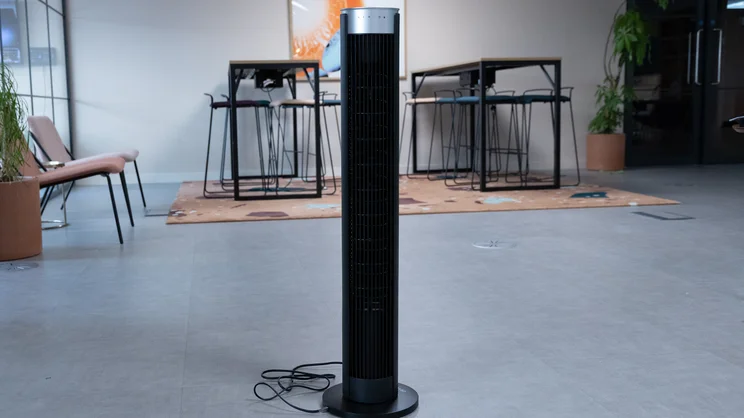
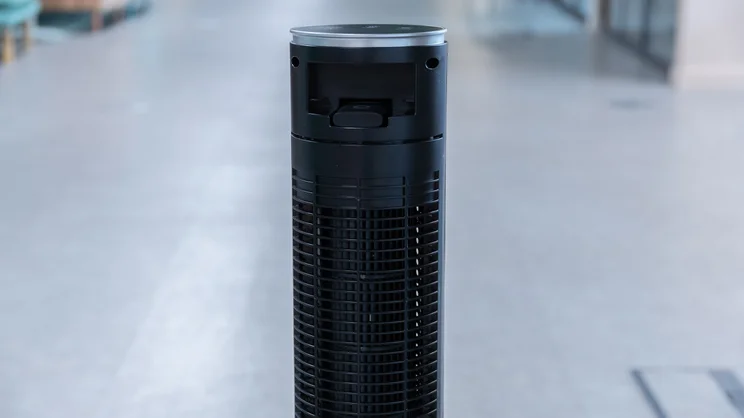
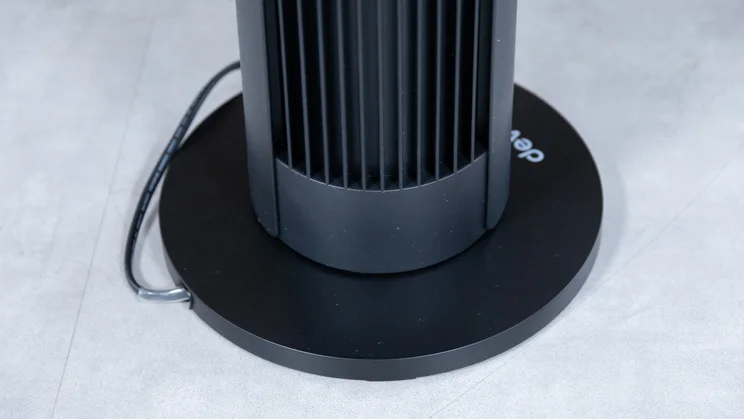
At £90, Devola’s tower fan is 38in tall and houses a quiet, energy-efficient DC motor. It stands just 6cm short of a metre high, with a base 28.5cm across, and you can find it in black or white versions, each sharing the same silver accents.
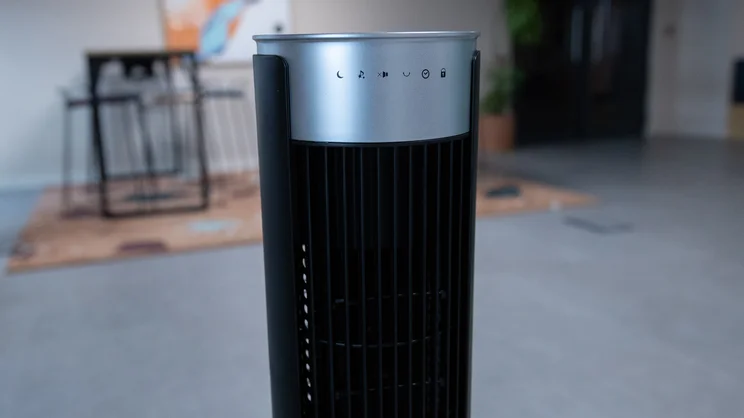
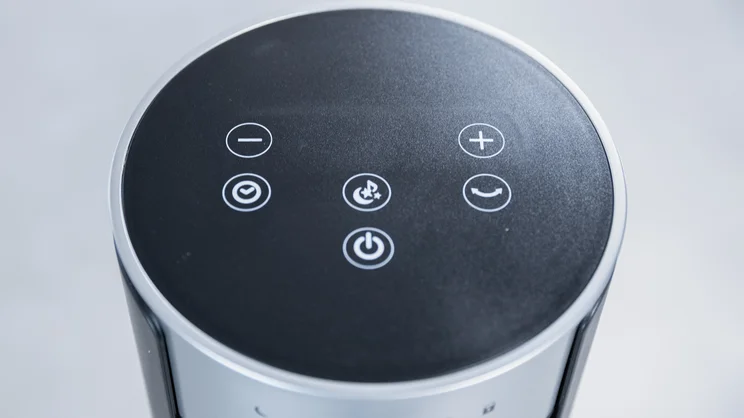
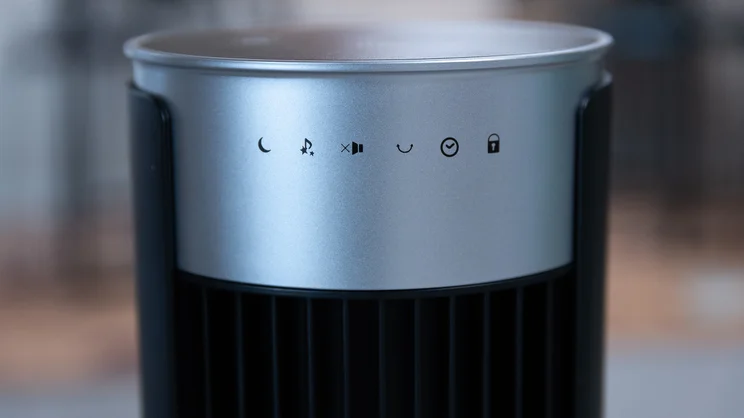
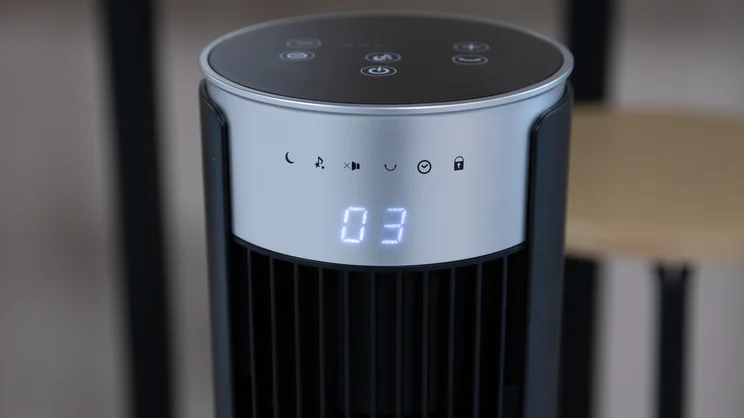
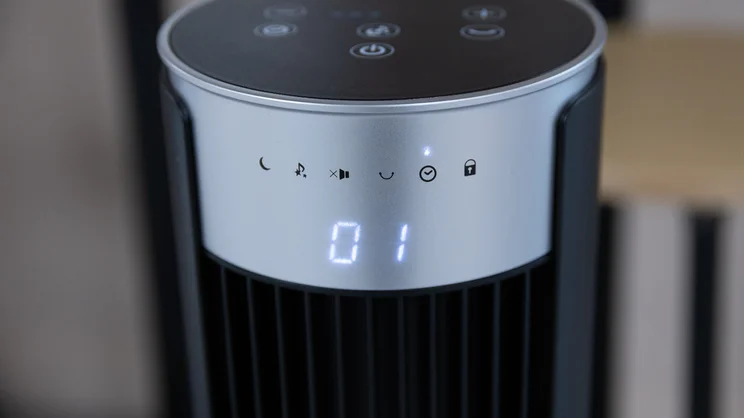
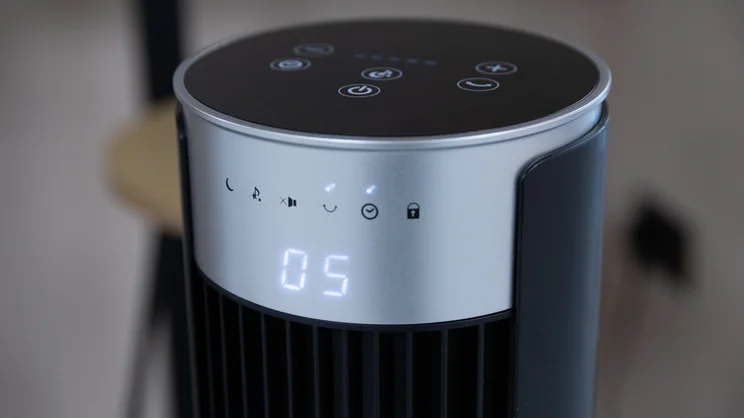
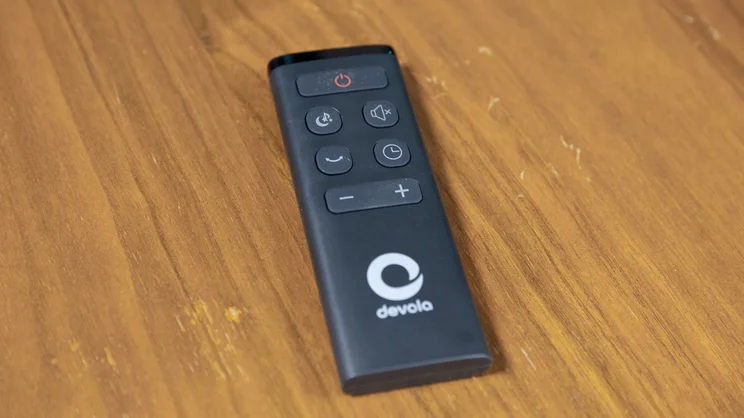
The design is straightforward, with touch-sensitive controls on the top of the unit and a digital display on the front, plus a row of indicator LEDs just below. The digital display, which dims when you’re not actively interacting with the controls or the bundled remote, shows you the current fan speed. It’s not a particularly luxurious fan, but it feels solid and the plastics don’t feel hideously cheap. It doesn’t wobble excessively every time it’s touched either, or even when it oscillates left and right.
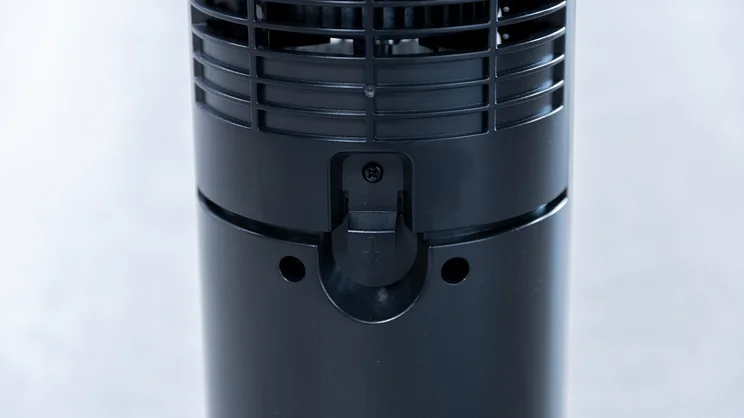
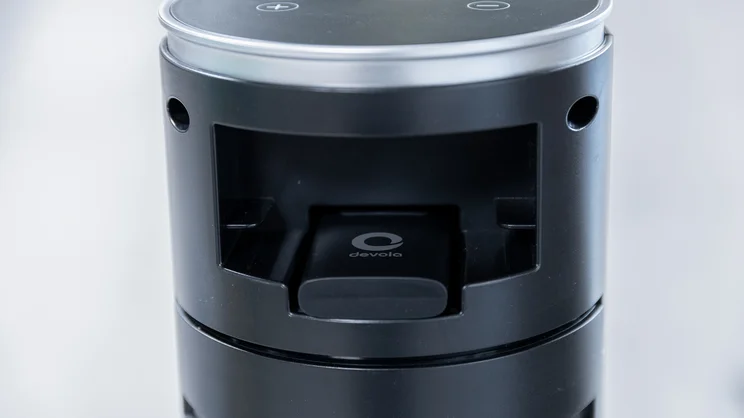
There’s minimal assembly in getting this fan up and running; just slot the base onto the bottom of the tower then screw in three plastic-capped wingnuts to secure it. The interior fan mechanism and protective grill can also be removed for cleaning, clicking in and out of place, as required.
What features and settings does it have?
Just the six speed settings, a timer and four modes. Normal mode is your standard default with full control of fan speed, while Nature mode varies the fan speed to give you an impression of a natural breeze: a feature I see a lot on tower fans. Sleeping mode runs the fan at a slow speed, while Silent mode runs at the lowest speed setting with oscillation turned on.
Beyond that, there’s nothing fancy. The timer switches the fan off after one to 12 hours, set in single-hour increments. The oscillation, meanwhile, is a set 90 degrees with no way to adjust it. However, you can adjust the vertical angle of the airflow through two sets of louvres, adjusted by two tiny levers protruding through the grill.
The touch controls are sensitive enough to operate without much in the way of prodding, with a couple of the controls having dual press-and-hold functions to activate the child lock or jump straight to the maximum speed.
How I tested the Devola Platinum 38in DC Tower Fan
I carry out the same tests across all of the fans I review, measuring air flow, noise levels and power consumption.
I use an anemometer to record air speeds (in m/s). With the anemometer positioned a metre away from the fan, I take readings for its lowest, medium and highest settings, plus any settings I want to check for additional data. I then use a smartphone meter app to record sound levels (in A-weighted decibels, dBA) at the fan’s lowest and highest settings, also from one metre away. Finally, I use a plug-in energy meter to measure power consumption.
These standardised tests allow me to better compare fan performance across different brands and models. However, I also make sure I test each fan in everyday use, taking note of how well it keeps me cool on hotter days, how easy it is to use and how effectively it can spread its airflow around. I also run through all the different modes, and find out whether they work as the manufacturer intended.
How well does it perform?
Tower fans don’t often excel when it comes to airflow, which is spread over a larger vertical area than the more focused airflow of a conventional bladed pedestal or floor fan. The blast from the Devola Platinum isn’t too weedy, though, reaching 3.1m/s on its maximum speed setting and a decent 2.2m/s on setting four.
You’ll need to be within 1m to feel the 1m/s flow at the fan’s minimum setting, but you can feel the 1.3m/s flow at setting two from a couple of metres away. With the fan in our living room or in my office as I worked, I was pretty grateful for its gentle cooling at these speeds, and the 90 degree oscillation does a good job of spreading the airflow across a wider area.
Crucially, it’s one of the quietest tower fans we’ve tested, particularly at its slower speeds. On speed settings one and two the sound is barely noticeable above ambient levels, at 25.4dBA and 25.6dBA respectively. Noise levels ramp up to 36.9dBA on setting four and hit 49.8dBA on setting six, but that’s still quiet by tower fan standards, and actually competitive with quiet pedestal fans. Rival towers like the Levoit Classic Pro Smart Fan are noticeably louder, while the quieter options, like the Dimplex DXACF Anthracite, struggle to produce the same kind of airflow.
What’s more, this fan doesn’t cost too much to run. Even at its maximum speed it uses a reasonable 26.4W, while at the slower speeds you’re looking in the region of 2.39W to 4.89W.
Is there anything we didn’t like?
This should be a great fan for sleeping, but – for reasons that baffle me – the LED indicators and digital display remain on even in the Sleep and Silent modes. They’re dim, but they might still disturb you while you’re trying to get some shuteye.
I also found the icons used for the modes confusing, while the Natural mode is one of those where the fan speed varies too much. A little variation is fine for a lifelike breeze, but I found the sudden speed changes here distracting.
Should you buy the Devola Platinum 38in DC Tower Fan?
This isn’t the most innovative or exciting fan I’ve tested recently, but it’s good on all the basics. There’s enough airflow here to cover all but the most spacious rooms, and it’s nice and quiet on the lower speed settings. If Devola had turned off the illuminations in the Sleeping and Silent modes, it would be a brilliant bedroom fan. As it is, it’s a solid all-rounder, and decent value at the price.