
To help us provide you with free impartial advice, we may earn a commission if you buy through links on our site. Learn more
- Lightweight, compact, luxurious design
- Accurate heart rate and GPS
- Loads of runner-focused features
- Can’t set power-based interval targets
- Some onscreen metrics are tiny
- App still messy
Ask any runner what smartwatch he or she uses and the answer is unlikely to involve the Huawei brand name, which means any attempt to win over park run enthusiasts, trail runners and marathon masochists was always a pretty stern challenge. But I’m here to say that there are plenty of reasons to opt for something different – like the latest Huawei GT Runner 2 – over the usual suspects.
And no, it’s not because one of the most famous endurance athletes of all time, Eliud Kipchoge, was involved in the development of some of its new features. Although that is true. Or because it matches the likes of Garmin, Polar and Coros feature for feature. In the case of Garmin, it definitely doesn’t.
It’s because the Huawei GT Runner 2 delivers a solid overall running watch experience, coupled with impressive all-round accuracy, top-level design and long battery life all at a very tempting price.
What do you get for the money?
As is the case with most Huawei wearables, the GT Runner comes in at a highly reasonable price. It costs £350 at launch and that puts it in direct competition with the likes of the Garmin Forerunner 265 and the Coros Pace Pro.
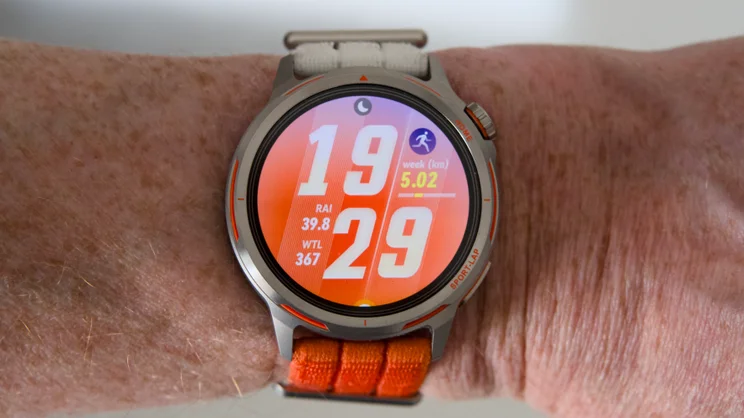
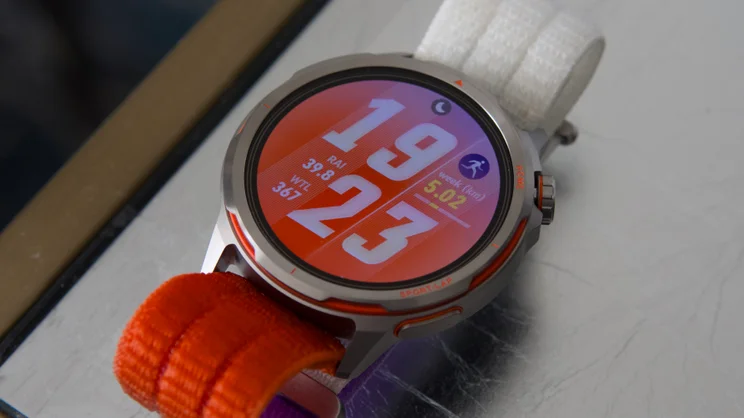
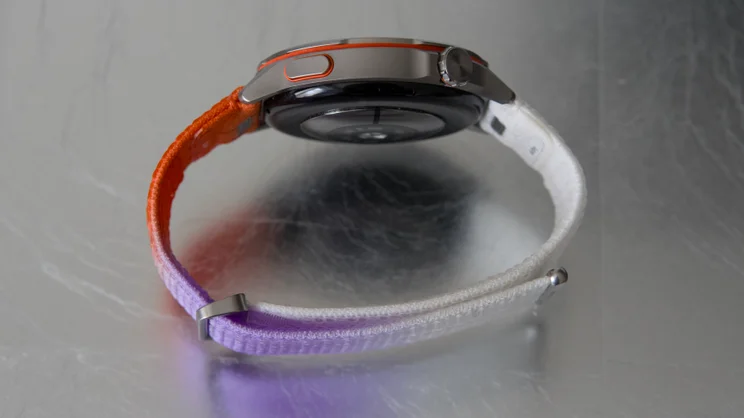
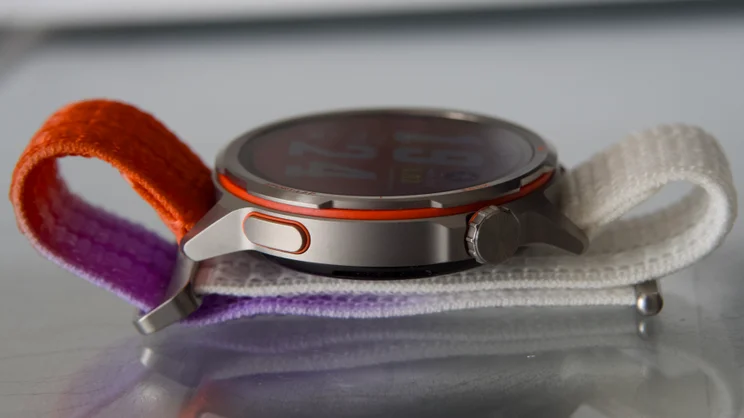
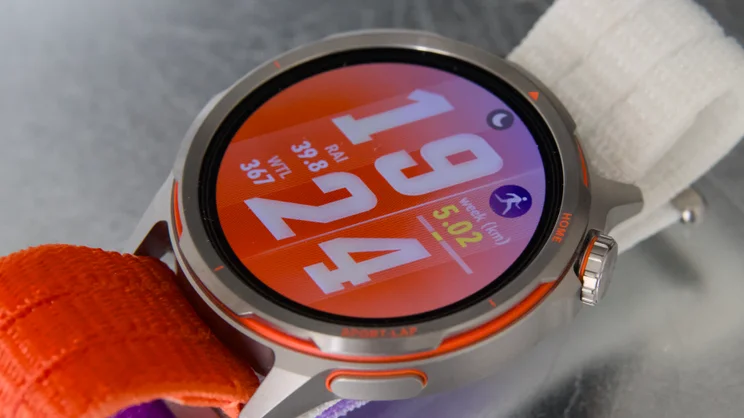
Neither of those wearables can compete with the level of design that Huawei is bringing to the table, here, though, because the GT Runner 2 is a fabulous-looking thing. It comes with a compact, lightweight titanium alloy body that sits securely on your wrist when you’re running and is available in three colourways.
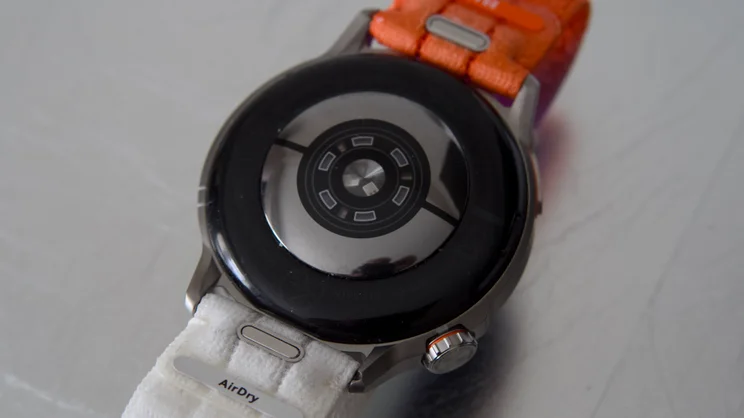
The model you see here is my favourite – the “Dawn orange” model, which is silver with tangerine highlights – but you can also get it in “Midnight black” with red highlights and “Dusk blue”. The watch also comes supplied with two wristbands: a stretchy, colour-matched fluoroelastomer band that’s best for water-based activities, and a nylon hook and loop band that’s best for running.
All of this goes together to produce a running watch that’s not only super comfortable to wear but also one that fits superbly well. And a quick read through the rest of the watch’s specifications reveals a laundry list of high-end features.
Its OLED display peaks at a super-bright 3,000 nits for easy readability in bright conditions. This is topped with scratch-resistant Kunlun 2 glass whose light weight, Huawei says, is the reason it was chosen over Sapphire Crystal glass.
It helps the watch come in at a remarkably low 43.5g with the hook and loop strap, which is lighter than all its competitors, save the Coros Pace 4. That watch is 40g but made of plastic, and doesn’t feel nearly as premium as this wearable.
The GT Runner 2 is capable of measuring all of the metrics you’d expect of a high-end fitness watch, along with several new additions over the original model. It’s good to see Running Power make an appearance for the first time. And likewise training load, which the watch can track to identify optimal training times, or detect if you’ve been over training and recommend a day off.
As you’d expect of any serious running watch, there’s also recovery time guidance, which gives you a rough idea of when you’ll be ready for your next training session.
And there’s now automatic lactate threshold detection, which should help in determining your heart rate zones more accurately, without having to run a specific test to determine it.
What did we like about it?
Light weight and secure fit are key in a running watch, partly because you don’t want something bulky bouncing around on your wrist for mile after mile, but also because it’s easier to get a stable fit. And a stable fit usually means more accurate heart rate readings.
It’s one of the reasons I liked the Huawei Fit 4 Pro so much when I tested it last year, and it’s why I rate this watch, too. Now, I haven’t run hundreds of kilometres with it yet, but in the workouts I have done so far, it’s matched my Polar H10 EKG chest belt pretty much beat for beat.
Accuracy is the name of the game when it comes to distance and pace, too. As I always do with every smartwatch and fitness wearable I review, I ran these comparisons using my Stryd 3rd gen footpod – a product I have found to be unerringly reliable and accurate over the years – and though the GT Runner 2 wasn’t exactly spot on all the time, it was always very close. Over a recent 9.6km run with intervals, it recorded 9.5km – a difference of only 100m. And on another run in the more challenging circumstances of a high-rise city centre, it did even better, recording 5.28km to the Stryd’s 5.27km, for a difference of just 10m.
I was also surprised to discover, given that this is Huawei’s first attempt at implementing running power on the wrist, that this metric looks spot on, too, with peaks and averages on the runs I’ve completed so far that are again very close to what I’d expect to see.
Running power
Now, running power numbers are different across different devices because every manufacturer has its own way of gauging it, and that makes comparison tricky. However, the leading brand in this space is Stryd, and the numbers the Huawei GT Runner 2 has so far produced have been pretty close to what my Styrd 3rd gen footpod generates.
Marathon mode
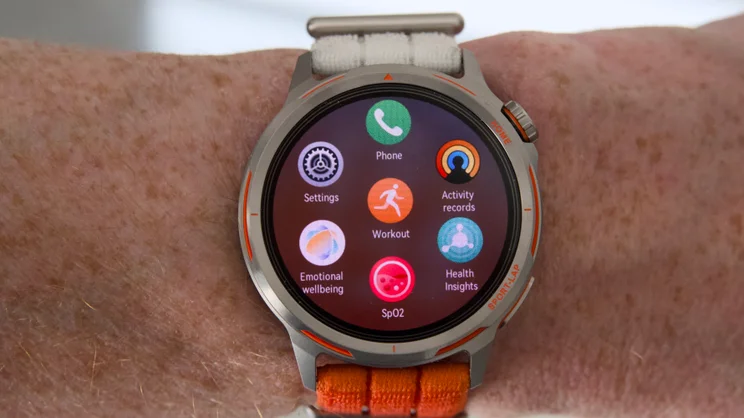
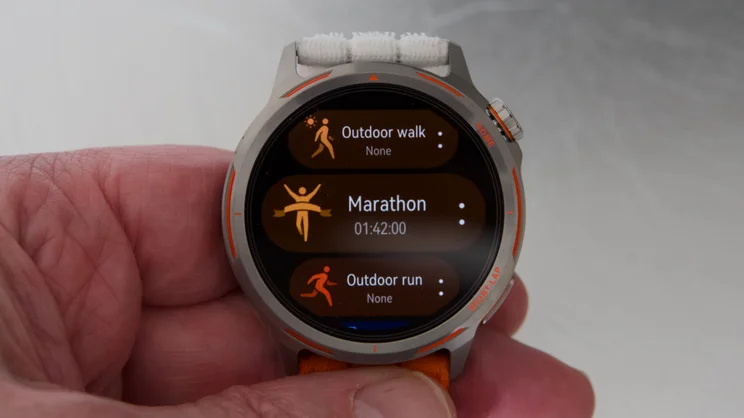
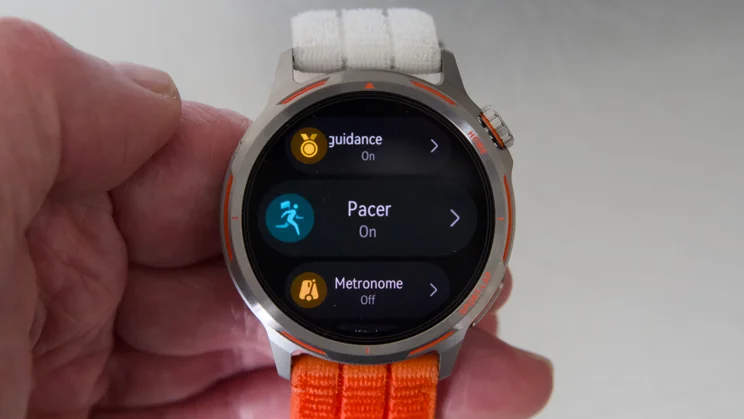
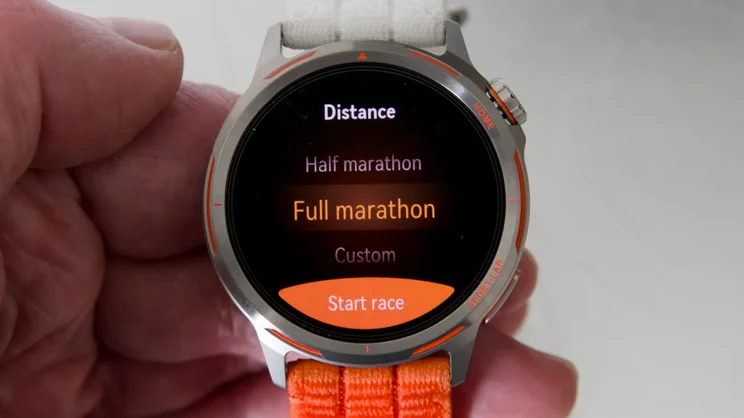
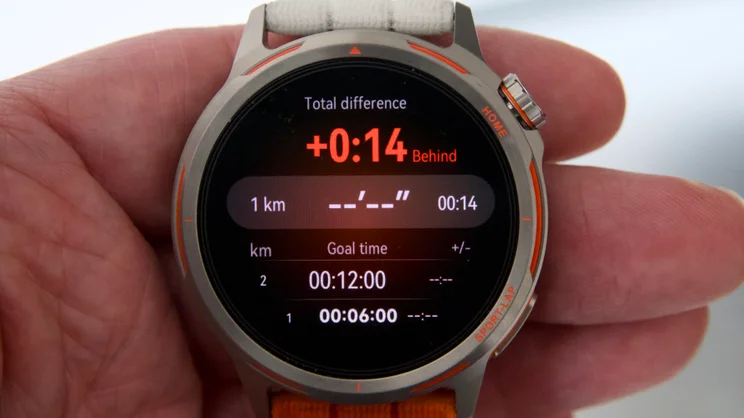
It’s great to finally see a race mode on Huawei wearable, too. Select it from the workout menu and the GT Runner 2 will ask you which marathon you’re running – all of the majors such as London, Boston, Berlin and Chicago are covered – what your goal time is and it will keep tabs on your pace throughout the race, letting you know when you’re falling behind or running too fast.
It will also remind you to drink and refuel – because if you don’t you’re not going to finish. And it provides a continuously updated estimated completion time on-screen, too, for extra motivation. Although I’m not too sure I’d want to see that if I was struggling badly in the latter stages of a long race.
But don’t be confused by its name. Marathon mode is not just for 26-mile suffer-fests; it can also be used for half marathons, 10km and 5km events, too. In fact, you can input any distance 3km or longer into the watch’s UI, along with your goal time and get similar guidance.
Training plans
To go with this mode, there’s an expanded range of training plans for all the popular running distances. Simply plug in your preferences and the Huawei app will set up a training plan based on what it deems are your current fitness levels.
It also schedules strength training sessions on your running days off, which is something a lot of runners (including me) avoid, and provides estimations of your finishing time, should you stick to the training plan, and remain injury free.
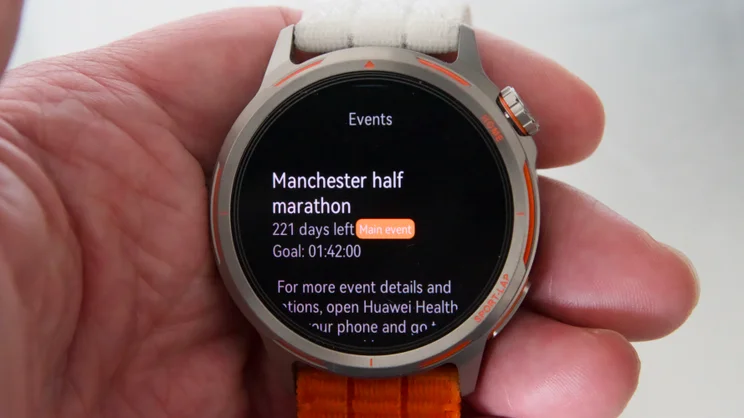
I think its estimate of me being able to beat my half-marathon PB by a full six minutes when I run the Manchester Half Marathon later this year, however, is a little fanciful.
Battery life
As always, one of the other key attractions of Huawei’s wearables is battery life. Despite the super bright OLED display, Huawei says the GT Runner 2 will last a whopping 14 days of light use or 32 hours continuous GPS use. My usage appeared to verify those figures.
After charging the watch to 100% and using it as my regular training watch (with always on display mode disabled), I found it lasted just short of nine days. During that time, I used it to track a 10km run, a couple of 5km efforts and a load of short, autodetected hikes. A pretty solid effort from such a small watch.
And don’t forget that this is not a wearable that’s restricted to either the Android or iOS ecosystems. The Huawei Health App is available on both the Apple App Store and Google Play, and it can receive messages and make Bluetooth calls using both platforms.
What could it do better?
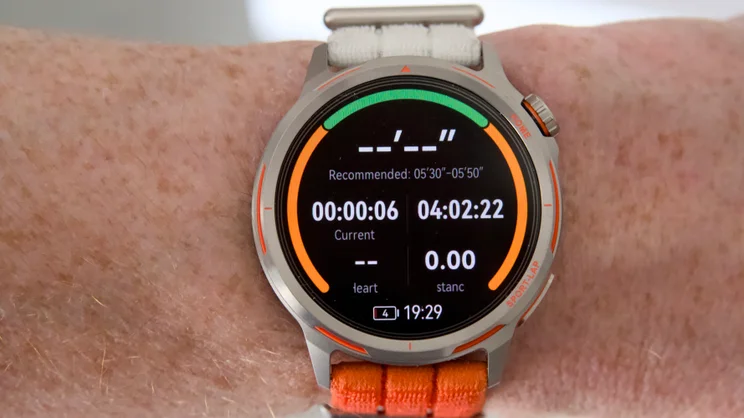
The Huawei GT Runner 2 is a great all-rounder, but it is not without its weaknesses. The first of these focuses on its UI. Put simply, some of the text that appears on screen during workouts is on the small side.
Now, I’m a touch long-sighted and don’t wear glasses to run in so I’m well aware that this is a little unfair, but I think even those with 20/20 vision are going to struggle to make out some of the metrics on this small screen. That’s especially true when you’re pushing limits.
The second thing I think Huawei ought to have addressed in the GT Runner 2 is the inability to specify any other intensity target than pace and heart rate for workout intervals. This is an oversight I’ve criticised before, but it matters even more now the watch is capable of measuring running power – quite accurately, too – from the wrist.
I simply don’t see the point of providing a metric like this unless you can use it as a target in your training. Running power, like cycling power, is all about providing a single number to represent effort level that’s independent of gradient.
The idea behind it is that it helps you keep your intensity constant, whether you’re running up or down hill or on the flat. Pace doesn’t give you a way to do that, and although heart rate does, it isn’t an instantaneous measurement. If you up the intensity levels, your heart rate will take a while to catch up.
Otherwise, my gripes are relatively trivial. It would be nice, for instance, for the marathon mode to let you set positive or negative splits, in the same way as Pace Pro on Garmin running watches does.
I’d love for the watch to be able to handle NFC payments like the Apple Watch and Pixel Watch do so well, but I can’t be too hard on the GT Runner 2 for this when Garmin and Coros lack broad support as well.
And, finally, I would appreciate a root and branch redesign of the Huawei Health App. It’s a perfectly capable piece of software, but the layout and settings are a mess and make it difficult to locate the stuff you need.
Should you buy the Huawei GT Runner 2?
There’s absolutely no doubt that the Huawei GT Runner 2 is a competent running watch. It’s beautifully designed, lightweight and accurate, and it’s packed with advanced features that are specifically targeted at runners, from beginner to advanced.
It lacks the facility to take full advantage of its running power capabilities, and the marathon mode could do with the ability to plan your race in a little more detail, but these are small complaints.
Overall, this is a superb running wearable. It’s likely to go under the radar, somewhat, simply because other brands are more established, but if you get the chance to try one out, I encourage you to give it a go – you might just be surprised at how much you like it.


