
To help us provide you with free impartial advice, we may earn a commission if you buy through links on our site. Learn more

- Slick design for its class
- Responsive and nicely animated interface
- Reliable dual-band GPS
- Minor to moderate issues with HR accuracy
- Always-on screen mode dramatically reduces battery life
- Very limited smart features
The OnePlus Watch Lite is not like other recent OnePlus watches. Where the likes of the OnePlus Watch 3 run Wear OS and offer full-on smartwatch functionality, the Watch Lite forgoes more advanced smarts in favour of longer battery life and a lower price.
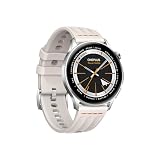
It costs £179, comes in black or silver, and still looks pretty smart, thanks to OnePlus’ use of premium materials. In fact, the OnePlus Watch Lite feels about as close as you can get to a smartwatch without truly being one.
It’s particularly solid on the health and casual fitness front, though you do need to prepare yourself for life with a middle-ground wearable – it doesn’t have cutting-edge smart features, or all the fitness prowess of a Garmin Forerunner.
What do you get for the money
The OnePlus Watch Lite is a full-featured fitness watch, just not a smartwatch. What’s the difference?
There are no downloadable apps, and the baked-in ones either concern health and fitness stats or are basic tools like a timer, weather display and calendar, which syncs data from your phone.
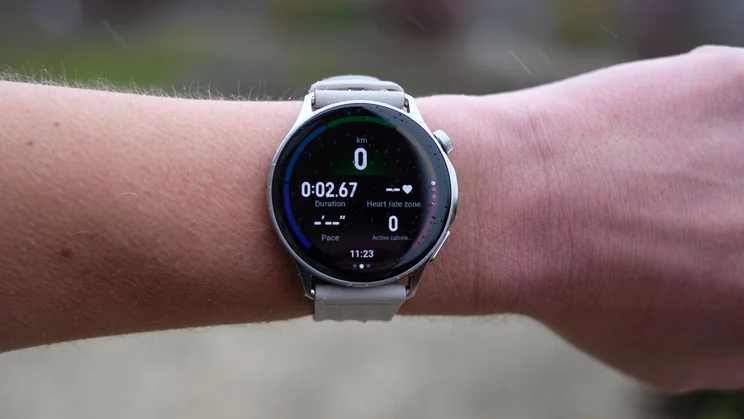
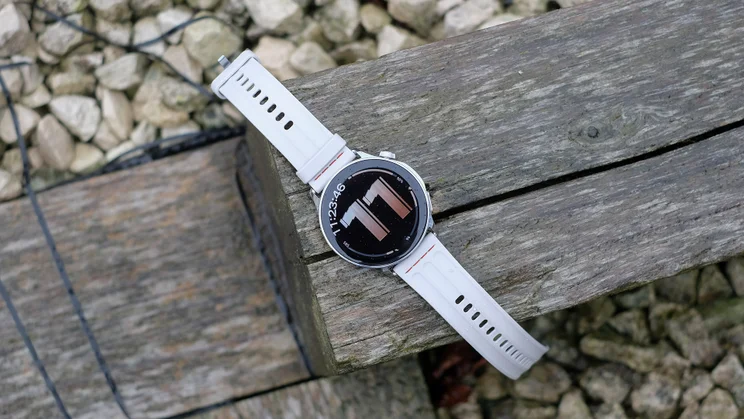
Most people may assume the OnePlus Watch Lite is just a smartwatch, though, as it has the gloss of one. Its shell is smart-looking stainless steel with lightly domed, highly scratch resistant Sapphire Crystal on top.
While some go a step further with lighter titanium instead of steel, this is luxe-enough stuff. And although the screen bezel is larger than that of a recent Apple Watch, it’s mostly hidden if you use a watch face with a black background.
That’s because the OnePlus Watch Lite has an OLED screen, with a perfect black level and screen architecture advanced enough not to reveal where the border between screen and surround lies in most light conditions. This is a good-size 1.46-inch OLED panel of 464 x 464 pixel resolution.
You don’t get any control over the brightness level in the OnePlus Watch Lite, but it proved consistently decent both indoors and outdoors during testing; it sat around 600 nits in normal conditions and hit 1,500 in high brightness – though OnePlus claims that it can reach up to 3,000 nits when recording an activity.
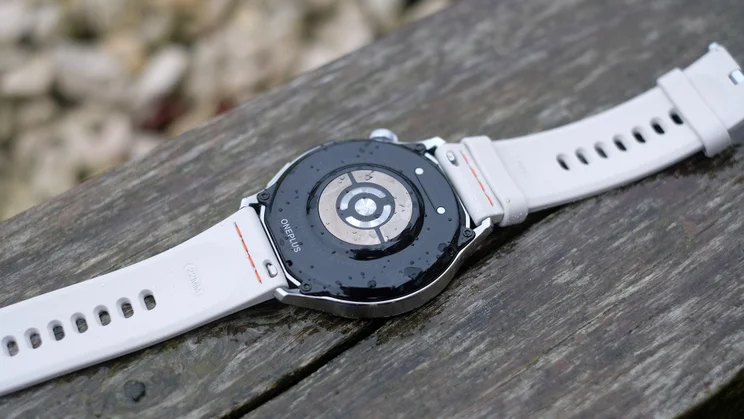
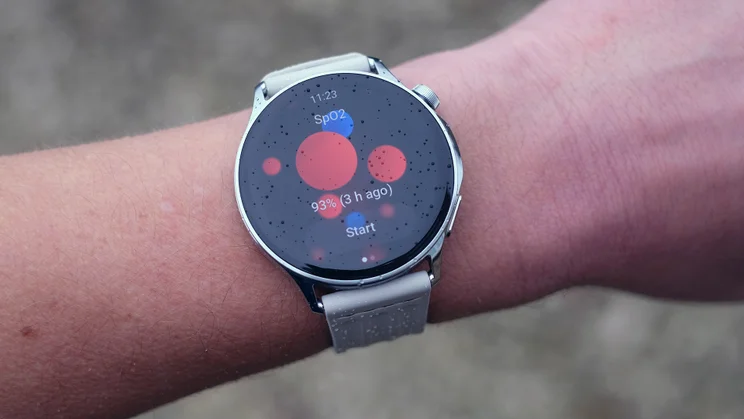
The watch has the full complement of fitness watch sensors. There’s dual-band GPS, handy for skyscraper-packed cities and dense forests, and its heart rate array can record blood oxygenation as well as plain old heart rate readings. Additional sensors include motion, a barometric altimeter, temperature sensor (for cycle tracking) and ECG.
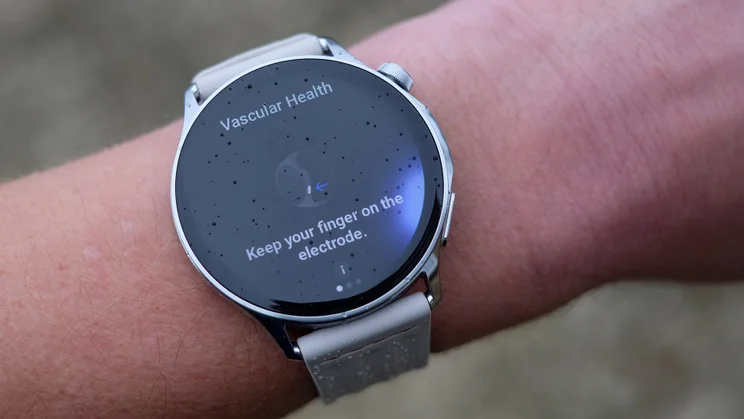
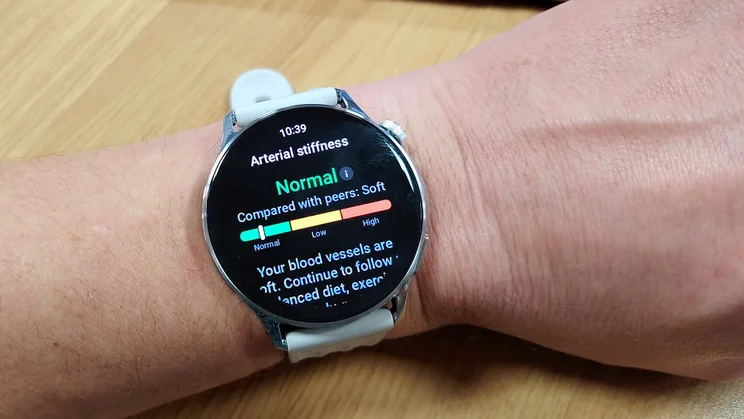
On the side of the watch, you’ll find what looks like a button, but is in actuality an entirely non-clicky pad that is employed for two very specific modes. There’s the aforementioned ECG, which looks for evidence of arrhythmia in your heart’s pattern, and the more unusual vascular health mode, which rates the stiffness of your veins, another indicator of overall heart health.
For features related to more smartwatch-like tasks, the OnePlus Watch Lite supports phone notifications, and also has both a microphone and speaker. I initially didn’t expect to see these as OnePlus doesn’t make a fanfare about them.
That may be because they are somewhat underutilised. You can take calls from the watch, effectively like a Bluetooth headset for a connected phone, as the OnePlus Watch Lite doesn’t have its own cellular connection. However, you can’t play music or use it to connect to your phone’s assistant. The latter could theoretically be added in a software update, but don’t count on it.
OnePlus rates the Watch Lite’s battery at up to 10 days. This is not quite as good as the 14 day span that is quite normal for one of these fitness-first watches, but is still miles better than a true smartwatch. OnePlus’s Watch 3, for instance, is a contender for the longest-lasting Wear OS watch, but even that is still only fit for up to five days of use.
During my testing, the Watch Lite lost 44% charge over just over three days. That suggests stamina of about seven days. But that did include a long 30km run and an hour-long gym session.
Further testing showed you can expect an hour’s worth of running to shave off around 7% battery, suggesting OnePlus’s 10-day claim is absolutely achievable with less hardcore use.
Stamina does tumble pretty rapidly if you use the watch’s always-on display mode, though. I found the watch lost 41% charge in just 24 hours, making the claimed 4 days seem optimistic.
Charging is fairly swift – for top-ups, at least. 30 minutes on charge brought the battery up to 72% but it slowed down in the later stages, taking 85 minutes to reach 100%.
What does it do well?
The OnePlus Watch Lite has a pleasant layer of superficial gloss that works on a couple of fronts. First, its haptics feel refined. They give the rotary dial a tactile sense of physicality it otherwise wouldn’t have, given that it’s actually an entirely smooth-scrolling thing.
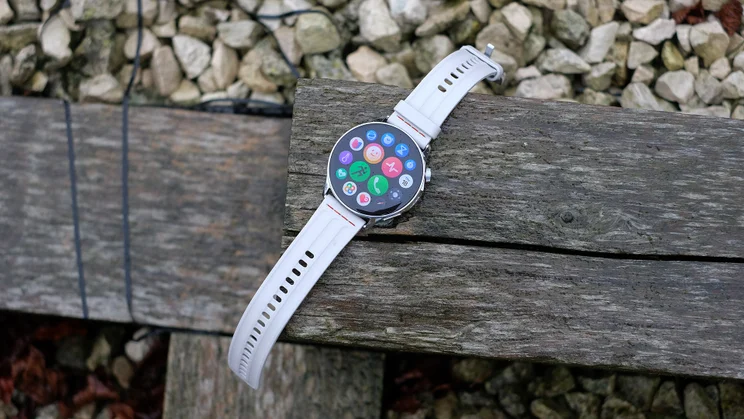
The app home screen is unnecessarily flashy too. OnePlus has borrowed liberally from Apple’s Watch style here, with an extremely responsive matrix of app icons you can zoom in and out of using the dial.
The software is designed to bring that slick and responsive smartwatch sensibility, as opposed to the simpler style typically seen in fitness watches. Everything moves with an animated bounciness, and not one that slows down your interactions. It’s good stuff.
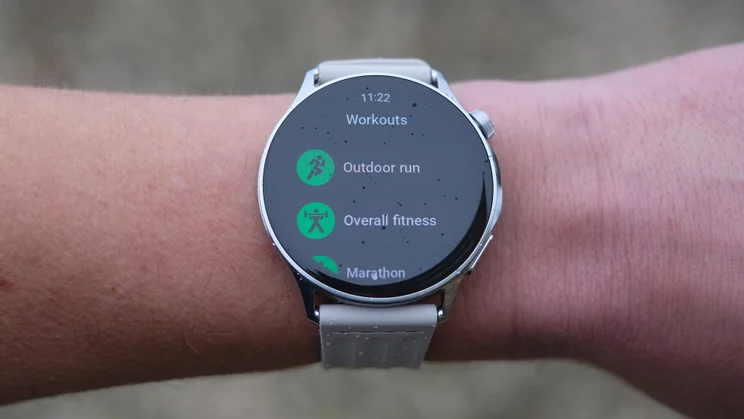
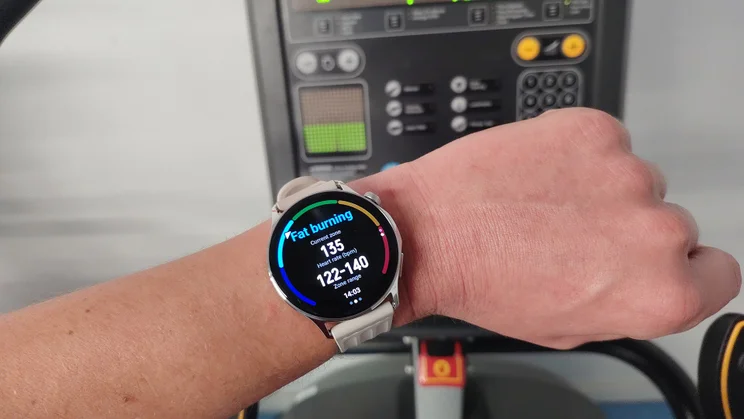
Extra attention is paid to the activity side too, to give core modes a greater sense of depth. Like so many wearables, the OnePlus Watch Lite has “100+” activity modes, but not all of them are cookie cutter repeats with different names. For example, there’s a marathon mode with a pacer tool, a running mode for classic 400m athletics track workouts and badminton/tennis modes that use the motion sensor to estimate your swing speed and style.
This is OnePlus pulling a Garmin, in attempting to go beyond just using primarily GPS and heart rate to reap key stats. Effort has been applied.
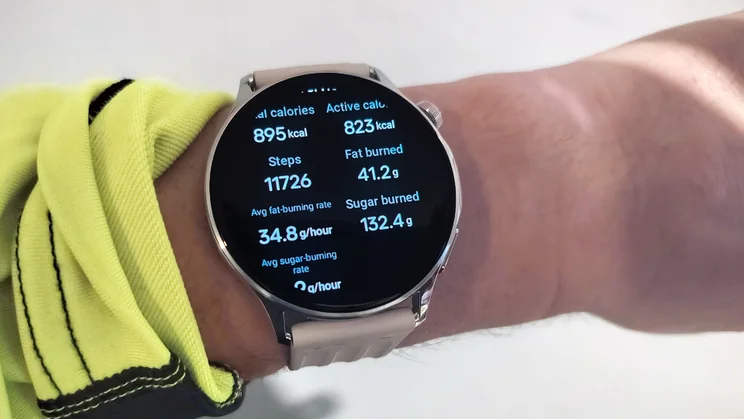
For the casual runner, the OnePlus Watch Lite brings a take on the VO2 Max score, and some running form stats like vertical oscillation and ground contact time. There is more than the basics here for fitness, and it’s all buoyed by dual-frequency GPS location tracking that is fast to attain a lock and generally reliable. It routinely recorded 1% higher distances than my test Garmin Forerunner, likely due to different route calculation idiosyncrasies between the two.
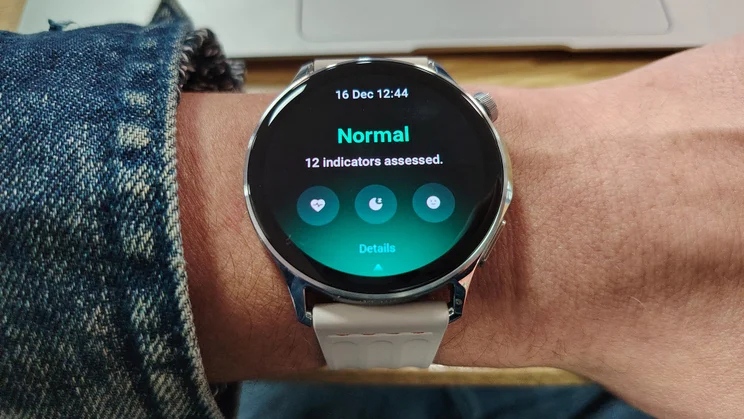
That extra effort is true for the health side too, although here we get a certain doubling up of features to pad out the set. The 60-second Health Check-In takes up to a minute (it can take around 30s with a good reading) to record heart data with both the ECG and optical sensor. And any abnormal stats are highlighted – low heart rate in my testing.
OnePlus has followed Huawei in offering Arterial Stiffness values too, which involved the same process as an ECG — holding a finger on the lower electrode panel for up to a minute. However, a 2024 study on Huawei’s solution found it was not accurate enough for its results to be trusted. We have no reason to associate higher expectations here, and OnePlus covers itself in all cases by saying the Watch Lite is not a medical device. It’s an industry standard “get out of jail free” disclaimer.
What could be improved?
One of the key potential issues of the OnePlus Watch Lite has already been covered — battery life nosedives in the always-on display mode, even more so than in some other watches.
After using the OnePlus Watch Lite, it’s not entirely surprising. In comparable Garmin watches like the Venu 4, the always-on watch face gets dramatically simplified when idling in order to minimise power consumption. Fewer lit pixels means lesser battery drain.
That doesn’t happen here. The OnePlus Watch Lite simply displays a dimmer version of the standard face much of the time: a lot of lit pixels in most of the hundreds of faces you can download.
There are also clear limits to the depth of the OnePlus Watch Lite’s fitness features. You can’t upload gpx route files to the watch for navigation during runs, hikes or bike rides, and that is one of the neatest abilities of even more fitness-centric watches like the Garmin Forerunner 165. There are no on-watch maps, either, and no music support beyond basic playback controls for stuff playing on your phone.
The OHealth companion app, on your phone, could also do a much better job of interpreting data and signalling whether you are making progress, or showing what you could do better. For example, there’s no training readiness stat and the Mind and Body score intended to indicate your general condition feels too amorphous to be particularly useful.
And while I talked-up the inclusion of athlete stats like ground contact time and vertical oscillation, the OnePlus Watch Lite will only tell you if they’re poor (I got a very poor score on one such stat) or good. There’s no wider insight on the issues of poor performance in these areas, or how you can improve. Further self-driven research is needed.
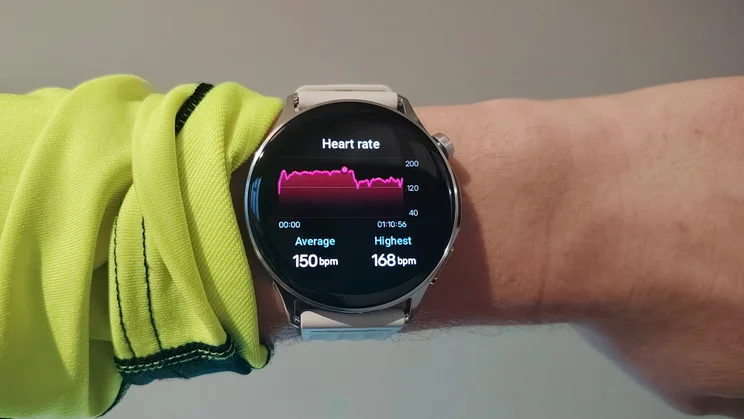
Heart rate accuracy could be a little better too. The OnePlus Watch Lite can determine your heart rate just fine, and does a fairly good job for runs. On multiple test runs, however, it overestimated heart rate substantially during the first section of a workout before locking in properly. It wasn’t quite as hot as a Garmin Forerunner 970 on tracking heart rate spikes during gym workouts, either – too many were flat-out missed, a common symptom of a mid-tier performance HR array.
On one very long run, the Watch Lite also lost the thread of my heart rate half-way through, recording a dramatic and sustained drop of HR despite no corresponding drop in exertion. It has only happened once, and may well have been down to a not-tight-enough fit — which itself could have been impacted by the limited stretchiness of the high quality fluoroelastomer strap.
The OnePlus Watch Lite’s results here are comparable with plenty of fitness watches, and certainly good enough for most. But this OnePlus is still clearly surpassed by the Apple Watch series and Garmin’s best for accuracy.
Should you buy the OnePlus Watch Lite?
The OnePlus Watch Lite doesn’t go “lite” on design or materials, instead dropping the Wear OS smart software in favour of something far simpler and more stripped-back.
You don’t want a OnePlus Watch Lite if you’re expecting the full smartwatch experience, then. It just doesn’t provide it. It is also not quite as capable as an entry-level Garmin Forerunner 165 on the fitness side.
And awkward middle ground then? Not really. It actually provides an entirely pleasant balance of health and fitness features in a fairly trim package, without looking or feeling like a budget watch.


