To help us provide you with free impartial advice, we may earn a commission if you buy through links on our site. Learn more
- Decent cleaning
- Brilliant manoeuvrability
- Minimalist design
- Expensive
- Fiddly to fit water tank cassette into floor cleaning head
- Dirty water tank design could be better
A couple of months after we reviewed the Dyson PencilVac – an astonishingly slim and nimble hard floor cleaner – Dyson introduced its mopping equivalent, appropriately named the PencilWash.
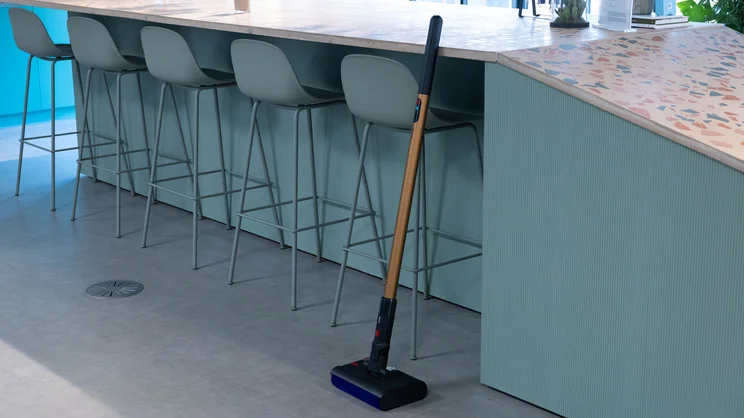
If you’ve bought into the Dyson ecosystem, it’s a decent companion to the PencilVac – in both appearance and functionality. The PencilWash is slim and easy to manoeuvre, which is exactly what made its vacuum counterpart so attractive.
But, like the PencilVac, it’s not cheap, which leads me to the question: at what point does a mop become unjustifiably expensive?
Dyson PencilWash: What do you get for the money?
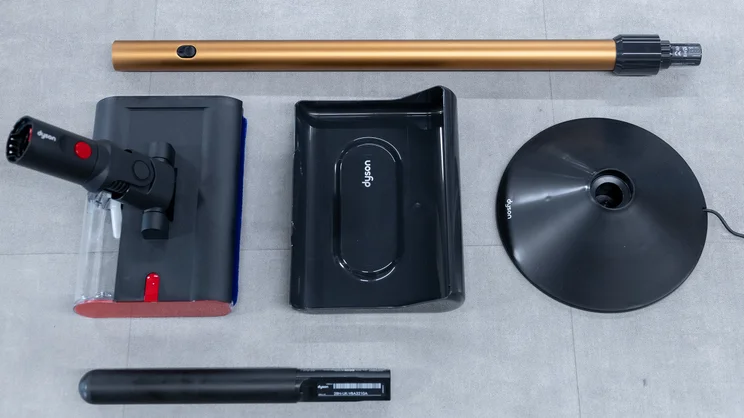
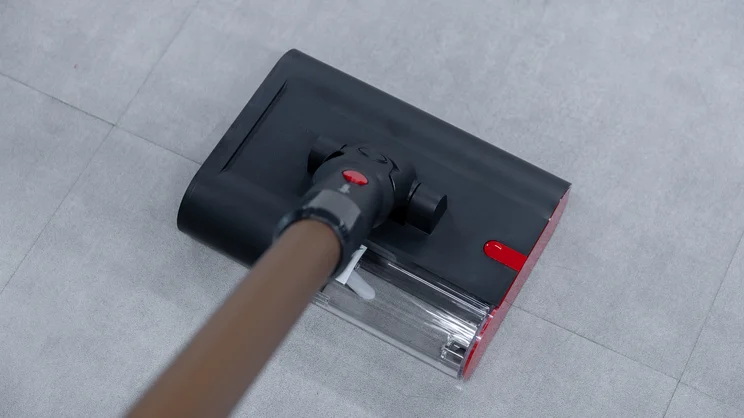
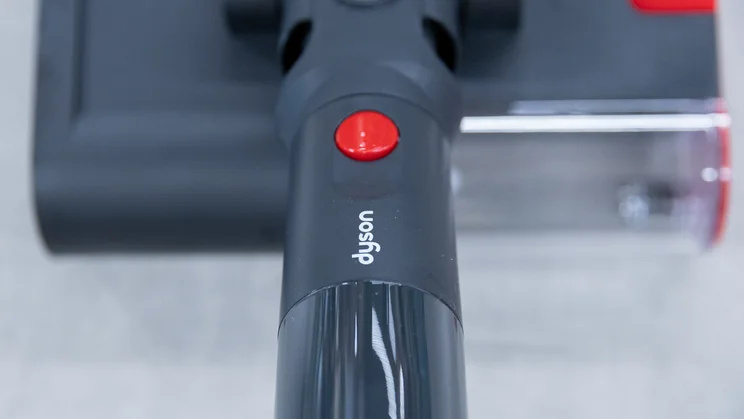
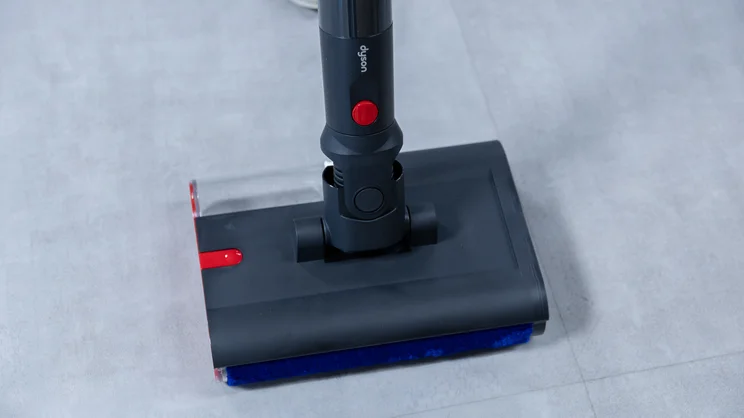
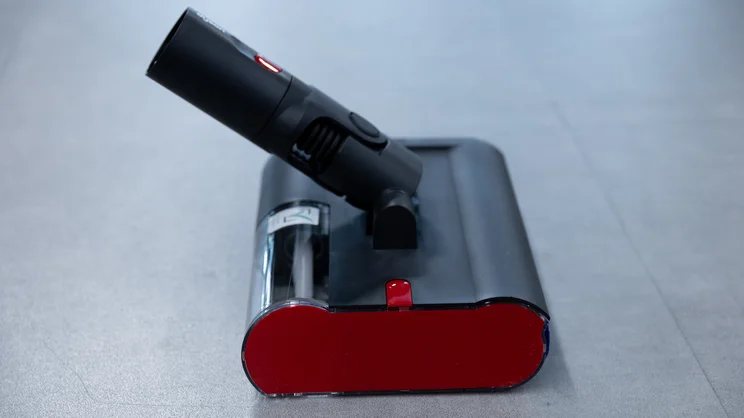
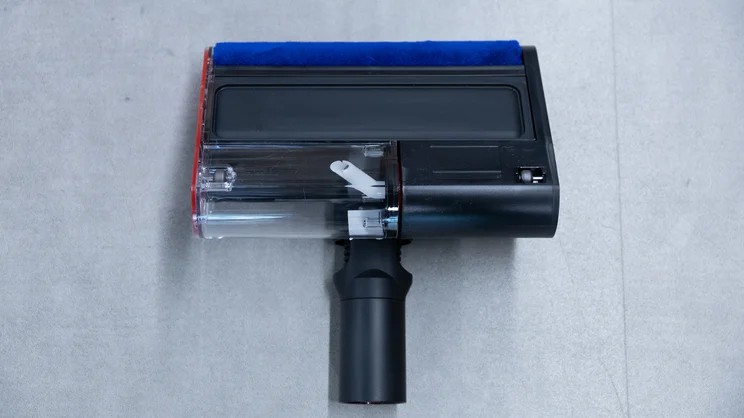
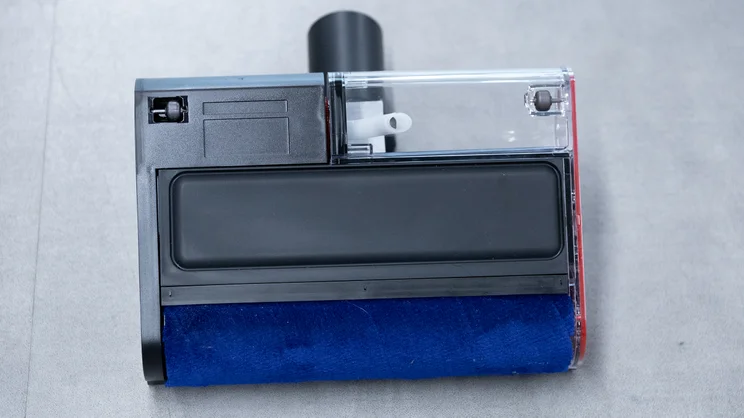
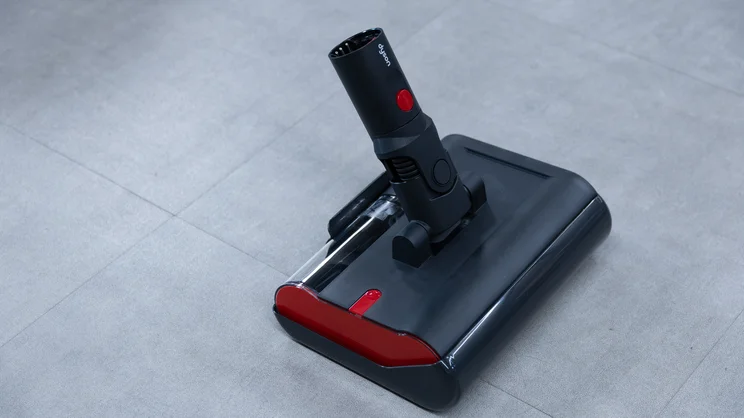
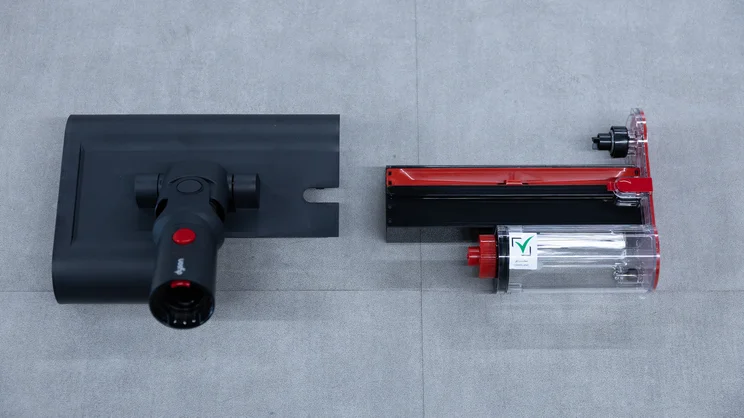
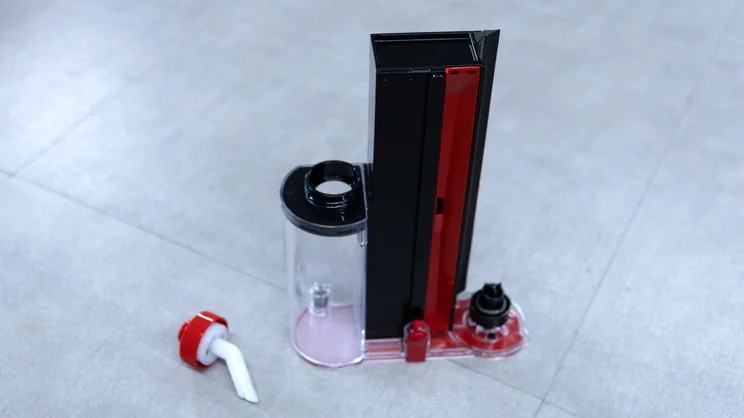
The Dyson PencilWash is a cordless electric mop. Its motorised cleaner head uses the brand’s soft Submarine roller, with a removable “cassette” housing a 0.3l clean water tank and 0.34l dirty water tank. The handle is made up of a 72cm long wand, with a removable Li-ion battery that slots into the top: the exact same battery as on the PencilVac.
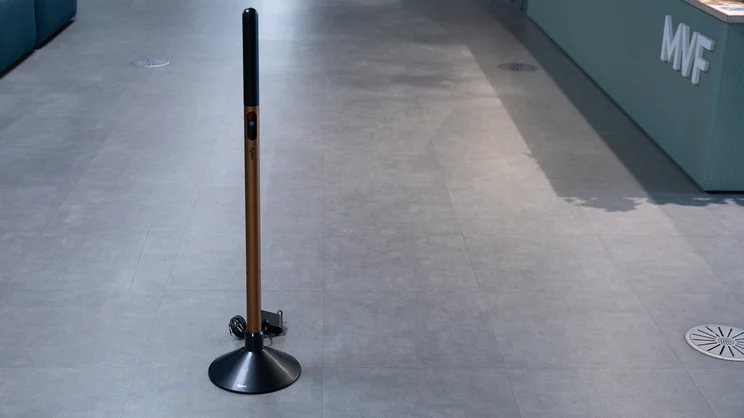
With all constituent parts attached, the PencilWash measures just under 115.5cm in height – which is ever so slightly shorter than the PencilVac – while the head measures 26.7 x 19.8cm (LxW). As its name suggests the Dyson PencilWash is slim, and I measured the circumference of its handle at around 13cm, the same again as the PencilVac.
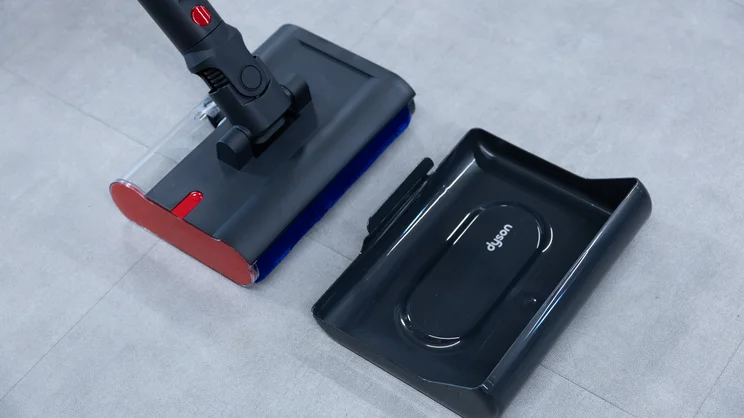
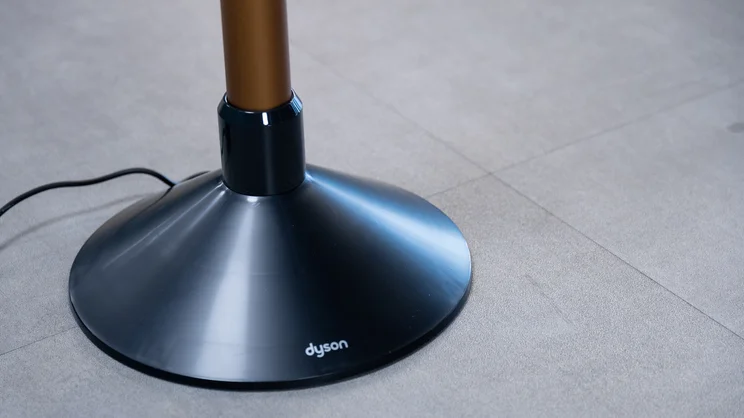
In terms of accessories, you get a circular charging dock into which the handle slots neatly, as well as a clip-on drip tray for the cleaner head.
The PencilWash will set you back a cool £300, making it a particularly expensive mop considering it has no vacuuming function (Dyson claims it removes both wet and dry mess, but I’ll discuss this later). However, given Dyson’s penchant for high-end products, this is hardly surprising.
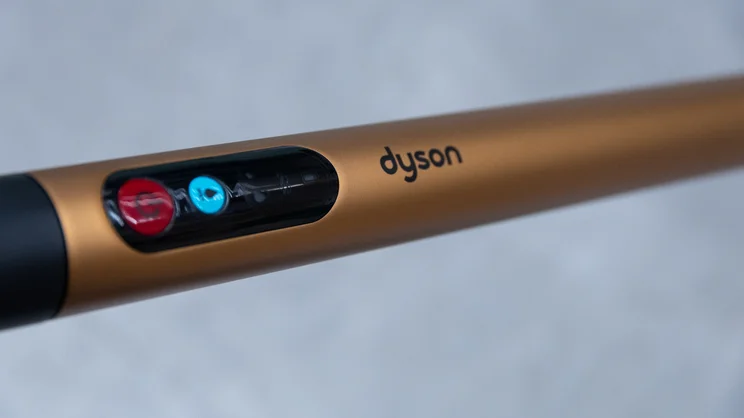
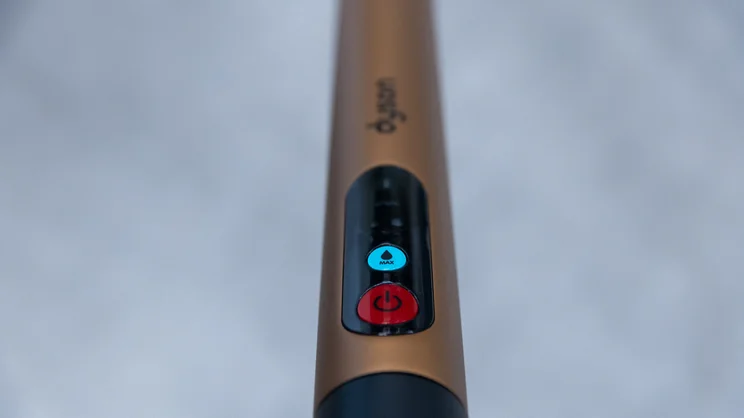
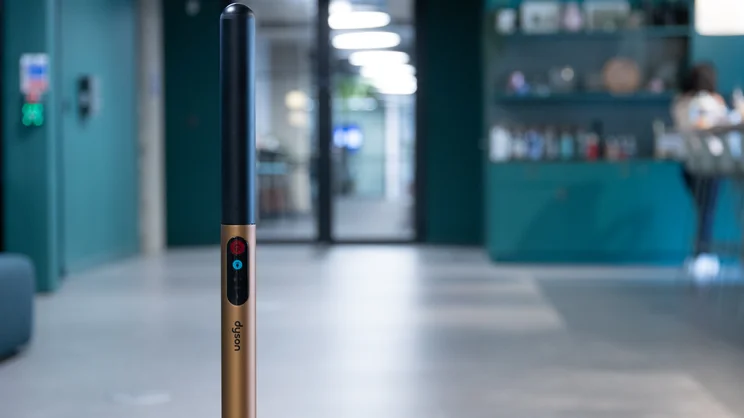
In use, the motorised head propels the PencilWash forward, while the “64,000-filament microfibre roller” mops up messes. The controls are simple, with just two buttons: one to switch it on/off and another to activate its “Max” mode, which can be pressed or held to increase the clean water flow for tackling stubborn stains. Rather than the LCD display of the PencilVac (with its handy battery life timer), an LED display indicates the selected mode, and alerts you when the 30-minute battery life is running low.
What’s it like to use?
Side by side, the Dyson PencilVac and PencilWash make a pretty attractive couple – and if you’ve already got the former, I can understand why the latter might appeal. At the time of writing, both are standing in the corner of my living room, where they live pretty unobtrusively.
In use, the PencilWash excels for the very same reasons that the PencilVac does. It’s lightweight, supremely easy to manoeuvre and can get into hard to reach places with minimal fuss: in use I could steer it around my living room and in between table and chair legs without having to move lots of furniture out of its way. And with its self-propelling motor, it glides across the floor with very little pushing effort required.
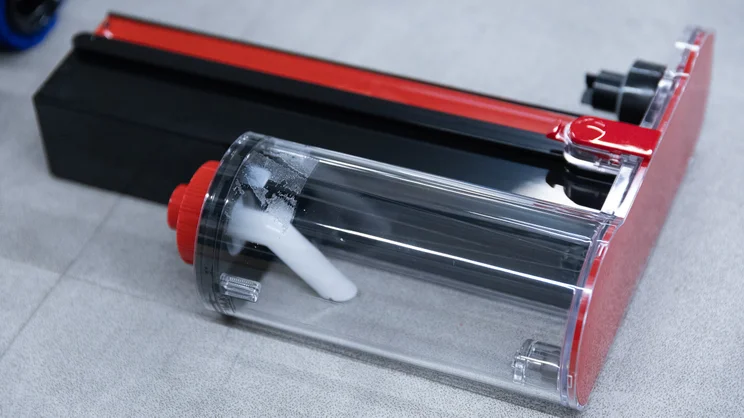
So far, so good. What I found harder was fitting the cassette back onto the floor head once I’d filled the clean water tank or emptied the dirty one. In theory this should slide onto the head alongside the roller brush, but finding the sweet spot that allows it to click into place is easier said than done. I eventually found that the best way to do this is to place both parts flat on the floor, line them up as accurately as possible, slide them slowly together and hope for the best. While I’ve found that it’s gradually become easier with repeated use, this process requires quite a bit of trial and error, made more frustrating if you’ve pre-wet the roller as per Dyson’s instructions.
I also found the dirty water tank irritating. Alongside the clean water tank, this is fixed to the cassette and can’t be removed. What’s more, its covering is not sealed, so it’s easy to spill dirty water if you’re not careful. Provided you don’t tip the floor head on its side and take care when removing the cassette after mopping, you should be fine, but it’s a bit of an odd design.
I’ve noticed complaints that the Dyson PencilVac doesn’t have a self-cleaning function. Considering how much it costs, these complaints are well-founded, but I nevertheless found it pretty simple to clean the respective parts. The roller doesn’t usually retain too much filth, and only requires a rinse under the tap after use, while the cassette can be wiped down easily enough. Once you’ve done all that, the clip-on drip tray is a boon when it comes to putting it away.
How well does it clean?
The PencilWash’s ease of use is a bit of a mixed bag then. But how well does it clean? To find out, I carried out cleaning tests on a series of common stains.
Our stain tests
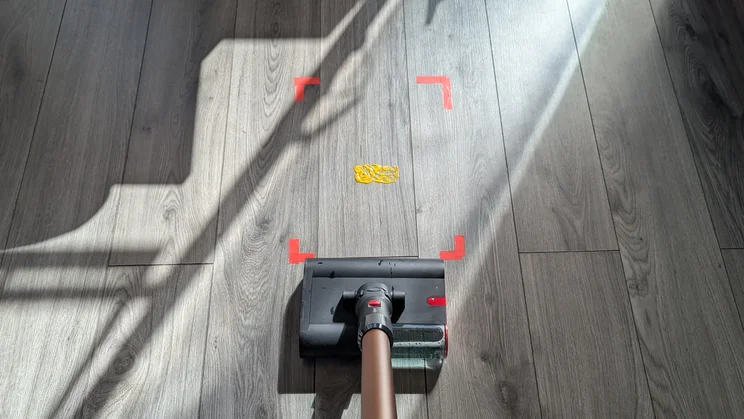
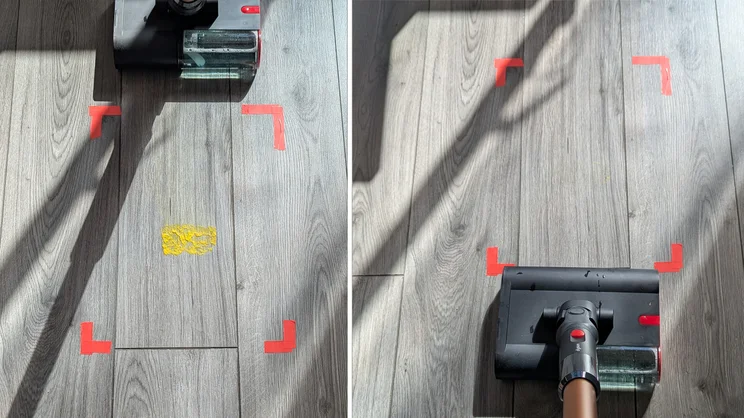
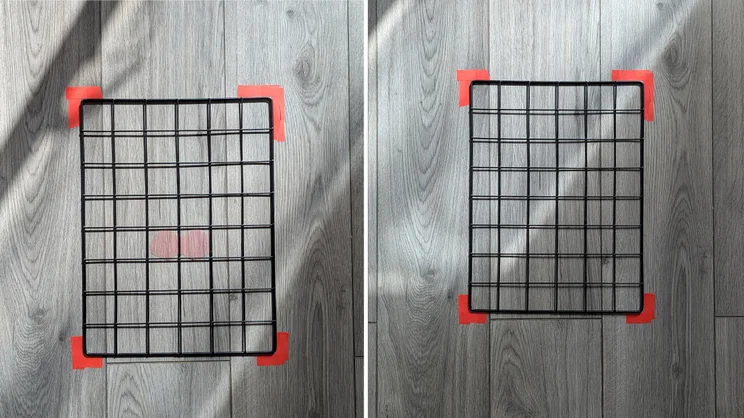
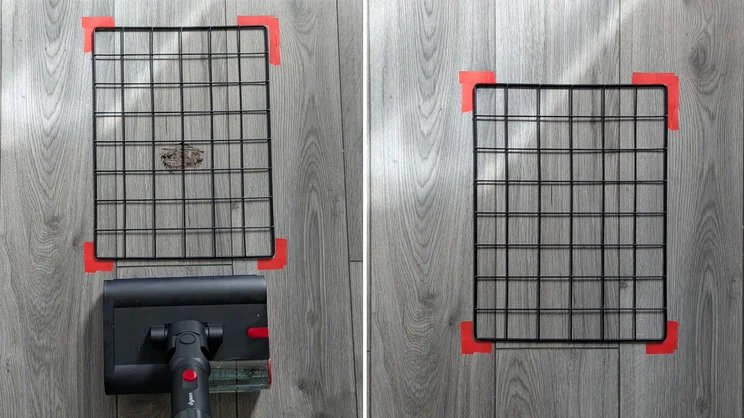
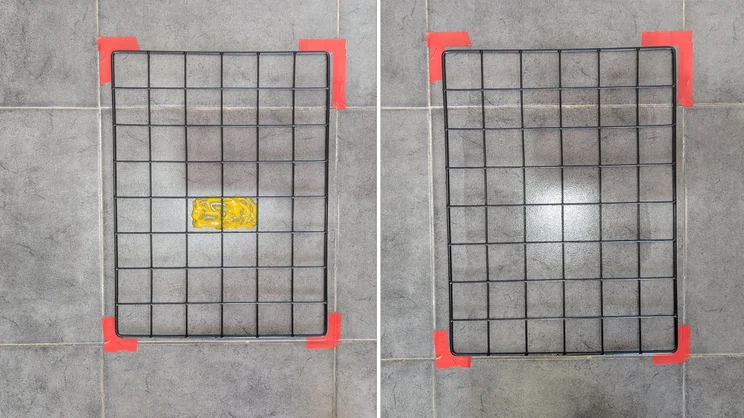
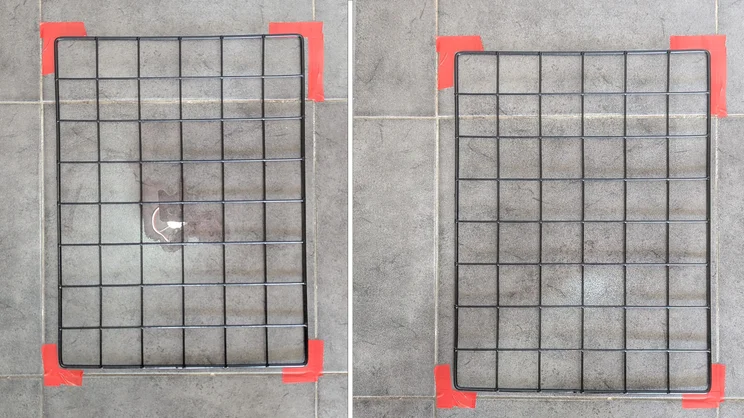
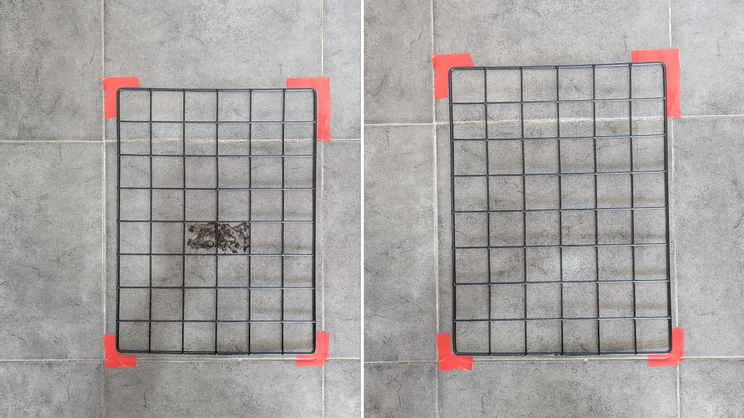
Testing the PencilWash on both vinyl flooring and tile, I spread a small stain within the middle of a squared grid. After making two passes (one forward and one back) with the mop, I determined how much of the stain it had cleaned. And if any mess remained, I then counted how many more passes it required to fully remove it.
In the PencilWash’s clean water tank I used a solution of Cif floor cleaner diluted in water, and I tested the mop on mustard, blackcurrant squash and dried-on mud. The PencilWash performed well across all tests, with occasional repeat passes required for the mustard stains.
On vinyl flooring, the Dyson PencilWash cleaned up a decent amount of our mustard stain (about one teaspoon) in two passes, but it required a total of seven passes to fully remove the stain rather than spreading it thinly across my floor. Cleaning on the tiled flooring of my hallway proved more effective, with the vast majority of mustard cleaned up in two passes – save for one or two specks and some mustardy water, which was soon mopped up and collected in the dirty water tank with another pass.
The blackcurrant squash and mud stains were less stubborn on the whole. The squash required two passes on vinyl and just one pass on tile for a perfect clean, while the mud was shifted in two passes on both vinyl and tile.
In real-world testing, I found the Dyson PencilWash very well-suited to cleaning my one-bed flat: it performed quickly, easily and efficiently, and floors were dry not long after I’d finished. Its 30-minute runtime was more than sufficient for my living space and, having carried out my stain tests as well as two full cleans around the flat, I’ve not yet encountered the mop’s battery-low indicator – though those with larger living spaces may not have such luck.
To push Dyson’s claim that the PencilWash cleans “wet and dry mess” to its limits, I sprinkled a few crushed bran flakes over my kitchen floor. The result was that the cereal was picked up by the Submarine roller, but because its dirty water tank is not designed to contain solids, the offending cereal became trapped between the roller and the body of the floor head.
This was helpful for picking the flakes off the floor, but made for a bit of a mess when it came to cleaning the head and roller afterwards, thus illustrating the limits of the PencilWash. Dyson’s use of “dry mess” should perhaps be interpreted as dried-on stains rather than more substantial solids: the PencilWash doesn’t claim to be a vacuum mop, and shouldn’t be expected to perform as such.
Should you buy the Dyson PencilWash?
If you’re won over by the idea of the Dyson PencilWash as a companion to the PencilVac for a comprehensive hard floor-cleaning system, it’s certainly not a bad choice. My qualms with setup aside, it feels great to use, zips about with gay abandon and tackles day-to-day messes with relative ease.
However, sooner or later you’re going to have to face up to the fact that the Dyson PencilWash is a £300 mop. A very good mop, yes. But a mop nonetheless. What’s more, that £300 doesn’t get you any of 02 Probiotic hard floor cleaning solution that the brand recommends using: this is a £20 extra, and it feels a bit cynical for Dyson not to include your first bottle in the cost of the cleaner. You’re also looking at a downgrade from the PencilVac’s LCD screen and battery timer to a more basic LED display. Considering that both the PencilVac and PencilWash use the same battery, I wonder if Dyson should offer the choice to buy the unit only, so that customers who already have one or the other can choose to pay at bit less and share the one battery between the two cleaners.
Ultimately, the PencilWash is meant for people who have long been invested in the Dyson ecosystem, preferably those who also own the PencilVac. The two really do feel like companion cleaners. However, if you don’t feel that PencilWash’s ease of use, minimalist stature and motorised Submarine head are worth that much money, consider the Philips OneUp Electric Mop: it cleans effectively, has a long runtime and, crucially, costs half the price.